Topics / Creative decisions
Happy accidents
132 commentaries in the archive discuss this, with 443 total mentions and 53 sampled passages on this page.
Filter commentaries
Filter this topic by the film's decade or the type of commentary.
Showing 23 of 132 commentaries
Clear filtersBy decade
Across the archive
ranked by mentions · click any passage for the moment in the transcript
-
multi · 2h 19m 9 mentions
Martin Scorsese, Nicholas Pileggi, Ray Liotta, Lorraine Bracco + 9
-
He told me that, yes, they were interested in selling it. And he also happened to casually mention that Marty Scorsese, who was in Chicago shooting The Color of Money, was interested in the story as well. So I proceeded to negotiate. Regardless of Marty's interest, I thought the story was good. So I started negotiating with the
4:55 · jump to transcript →
-
provoking Henry, saying, Do you think I'm funny? Why do you think I'm funny? Ray Liotta. It was in rehearsal. We were talking, and Joe was telling a story about he was with somebody, and the guy was saying something funny, and it's just something that happened to him. It supposedly is a true situation. I know that, to a certain extent, I mean, just the way he moves and what he says, I know it's true. So Pesci has too much of a familiarity with what happens in that scene. It's too real.
19:56 · jump to transcript →
-
And we all wanted Joe from the very beginning. And we were very lucky to get the Bob, who we didn't think would want to do that character, because he's not the most... Well, he doesn't have that... He doesn't have as much to do as either Joe or Ray did, but Bob is not that kind of actor. He liked the part and wanted to work again with Marty, and he accepted it, and then everybody fell into place after that. Writer Nicholas Pileggi.
38:56 · jump to transcript →
-
-
-
Warwick was so good and just he never complained and he had to go in three hours in makeup or whatever hours it took and so I was very lucky to get him. It's great I remember once he was cast about almost a week later he came to the States and we did the head mold hand mold measurements and then he went
28:03 · jump to transcript →
-
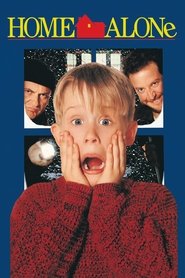
Right, Samantha's in the booth to the left. Okay, this is a very interesting thing that there's a rumor on the internet that we had to reshoot this because he came in and takes a box of Lucky Charms and spits them out. And then we showed it. There it is, Lucky Clovers. This is the only thing we ever shot. This was always shot this way, but there's a rumor that somehow Kellogg or whoever does Lucky Charms saw
45:55 · jump to transcript →
-
him take a bite and spit it out and said, we don't like that. And we don't like the movie, so you have to reshoot it and put a different cereal. And at the end of the movie, when the kid says, fuck you, Lucky Charms, and gets him with a slingshot, that was my way of getting back at the cereal company. And none of that is true. We always had Lucky Clovers for copyright problems. And we always shot this. And this is the only thing we shot.
46:24 · jump to transcript →
-
-
-
See, it's just built for that anamorphic frame. The whole landscape. Got lucky with some birds.
29:41 · jump to transcript →
-
I mean, I was lucky, yes, but, and fortunate, but to have an editor as good as Steve Rosenblum was to really bring his own thing to it. I mean, he took what I gave him and he managed to sort of make it better, you know, which is, when it comes right down to it, the edit's just the final rewrite. And he's a master of it.
2:03:35 · jump to transcript →
-
I saw him copy this bit on pizza commercials and stuff, you know. The monk running up the top of the mountain. But it's phenomenally beautiful, Scotland. You get lucky with the patchy sunlight. And initially this whole montage, you know, with those people talking about Moses and the Red Sea and all that, that was much earlier in the film. It was like in the first act or the beginning of the second act.
2:17:51 · jump to transcript →
-
-
-
Alexander Payne
need to thank their lucky stars and be very, very grateful that the entire school didn't find out about certain indiscretions that could have ruined their reputations and their chances to win certain elections. And I think certain older people, like you and your colleague, shouldn't be leching after their students, especially when some of them can't even get their own wives pregnant.
56:18 · jump to transcript →
-
Alexander Payne
Looks like today's your lucky day. You're off the hook. Tammy here has confessed. I told you. We like the irony, we meaning Jim Taylor and I, my co-writer, we like the irony that this is set at George Washington Carver High School, but it's a completely white school.
58:38 · jump to transcript →
-
Alexander Payne
set painters. I happened to notice that she made them or they were pointed out to me somehow and I said, oh darn, let's use those in the film. Sora. That's her name. Dear God, thank you for all your blessings. You've given me so many things like good health, nice parents, a nice truck, and what I'm told is a large penis and I'm very grateful.
1:07:32 · jump to transcript →
-
-
-
Michael Mann
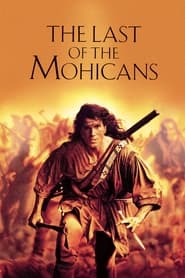
The way they may approach a woman has to do with something that happened to them when they were 16 or is a function of a particularly adverse environment they may have lived in in their early 20s or some bad prehistory as a child. The way all these things are to connect inside all of us is of course true playing a Hawkeye. So it's only an artist like Daniel who immerses that totally in it that makes Hawkeye
20:00 · jump to transcript →
-
Michael Mann
in a way that has the potential of being mythic and enduring and standing the test of time. And I think Daniel's work as Hawkeye does stand the test of time, and it's not by accident. We became lifelong friends during the making of this picture and still are. He is one of the most pleasant and unique people and of a very high standard and a very high personal caliber and high integrity around.
20:28 · jump to transcript →
-
Michael Mann
I thought all our colonial scouts were in the militia. The militia is fighting the French in the north. I ain't your scout. You sure ain't in no damn militia. Going back to Cora, the frontier is going to present itself to her in circumstances such as this massacre that happened to the Camerons. And doing that is going to cause her to confront
24:09 · jump to transcript →
-
-
multi · 2h 12m 4 mentions
Andrew Sarris, James Ellroy, Brian Helgeland, Michael Nathanson + 10
-
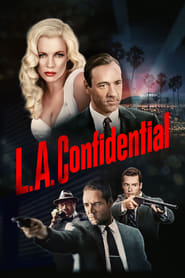
Funnily enough, ironically, just as I got cast, just as I was told that I got the role in the film, I came back to Australia and Ellroy happened to be doing a world tour and he happened to be coming to Melbourne. And he was doing one of his sort of one-man, you know, he does like a one-man show where he reads from some of his books and there's actually a band and he performs stuff. It's a really interesting show. So he was at a theatre in St Kilda and I went along and I'm sort of sitting at the back and at the end of his show,
18:35 · jump to transcript →
-
We found it, and we were very lucky. We managed to find it. This election
1:07:31 · jump to transcript →
-
There was, what happened that went wrong? That's right, I have to jump up on a, I jump up on a sort of deck by a window to shoot out the window. And I, as I jumped up onto the deck, I sort of gripped with my hand, the wrong hand and fired three shots off in the actual, in the motel. So lucky it was, there were blanks and not real bullets. I don't think I killed anyone. It was really well orchestrated obviously from a stunt point of view and
1:59:00 · jump to transcript →
-
-
-
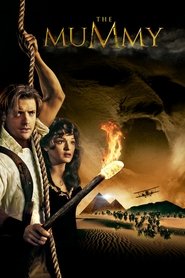
This, we'd already picked a courtyard in Marrakesh for the jail scene. And on our way back to the hotel, we pulled up to somebody who needed to buy some stamps or something. I happened to look down an alley and saw this thing. So that's how we found this courtyard.
19:15 · jump to transcript →
-
It turned out well. It rained the entire summer in London. Every single day we were there, except this day. This is incredibly lucky. Although in Brendan's close-ups, you can actually see the sky clouding up a little bit. All the rest of this is in fairly good light, and his close-ups are a little bit overcast.
24:15 · jump to transcript →
-
The part where the mummy comes back to life, that's based on a true story, right? That happened to me when I was younger, yes. I love the photography in this scene. You really, well, you feel like you're there. Torch lit. Creepy. Although, before we added sound effects, it sounded like they were walking on...
41:51 · jump to transcript →
-
-
-
A, I'm not that lucky. Two, we have smoke detectors.... One of John's funnier lines. "A, two." "D"? Is it "A, two, D"? I think so, yeah. - Yeah. There it goes again. This guy went on to... This guy who played the pizza guy moved to L.A. and had a couple of roles... ...but I haven't heard from him since I think we shot this. I've seen him in a couple things, yeah. But watching this movie again today, I thought to myself, "This was really--" You know, you think about how fun it was to shoot the movie... ...and I think that fun translates to the screen because we did laugh a lot. There was a lot of laughter, a lot of good times. Okay.
47:41 · jump to transcript →
-
I have to say, you know, sometimes you get... Critics complain about certain things, but Dan Stern in this scene... IS SO funny because of his body language. He's like a combination of a giant bird and a human being. And just the way he reacts in this scene... ... Just, again, was one of those situations that brought the house down. And the audience was So.... You wouldn't have thought that it would... Like you said earlier, that this would work twice, this gag, but... He sells it. - He sells it. All right, Johnny. I'm sorry. I'm going. One, two...70. Another improv... Improvised moment, again, from you here. I remember asking you to just say the line... ...and kept in the movie, and the audience roared. Keep the change, you filthy animal. See, you're just about ready to laugh there. You can see it cut right before I start giggling. I don't know who, but somebody got blown away. Huh? - Somebody beat us. They're in there. Two of them. There was arguing. One blew the other one away. Who? - I don't know. I thought I recognized one of their... Dan is so wonderfully stupid in this scene that it makes it... It makes it work. Sometimes Pesci becomes De Niro. Did you notice that? Yeah. "I don't know no Snakes." - He just became De Niro for a second there. I think they spent quite some time together. Yeah. - Suppose the cops finger us on a job.... I don't know. I read this article, I think in Premiere, saying: "What ever happened to Joe Pesci?" And I have no idea. He is now... - He came out with an album, I think. I think he came out with a singing album. Seriously? - I-- Like, year... Like 1998, '99 or something like that. He had some tasteless record in the '60s, like the early '60s... ...called Something the Stuttering Donkey or something. Some ridiculous novelty record, so he's got... And supposedly he's in Jersey Boys as a character. The play Jersey Boys, yeah. He's at the beginning. He hangs out with the Four Seasons or something. Now, this is-- This, to me, is amazing. This happened three weeks ago. I get a call from a guy doing a documentary on Elvis Presley. The guys says to me, "We've heard--" This guy's convinced Elvis is alive. He's doing a legitimate documentary. He goes, "Elvis supposedly was an extra in Home Alone." I'm like, "What?" - Awesome. He sends me this thing that is a huge... See the guy--? The bearded guy behind the woman in white. They are convinced, these people, that this is Elvis Presley. He's come back. He's faked his death, and he was now... Because he still loves show business, is now an extra in Home Alone. So they've got stills. This guy sent me all these stills of this guy with El... Compared to Elvis in this movie Charro! where they look... Look at this guy. He's not Elvis Presley. I remember talking to the guy. But these people are convinced that that is Elvis Presley, so it's now... It may appear in this documentary, so... - And this is recent? This is--? This is-- It's a couple-- Yeah. Few weeks ago. But more importantly... Forget about Elvis Presley. Yeah, look over the other shoulder. Look over her other shoulder. There we go. John Candy, who was at the time friends with John Hughes, who later... John and I became very close. He was, I have to say... ...one of the sweetest guys in the world to work with, and one of the... And probably the funniest man I'd ever met. There's no question about that. He loved improvising, he loved trying anything... ...and his entire supporting role in Home Alone was shot in one day. Yeah. I actually-- I came in. It was my day off. I actually came in to go see him again. And we started at 7 in the morning, and we finished at 6 a.m... ...SO It was a 23-hour day. And I don't know, uh.... I don't know if I've ever seen that kind of energy from a guy who was big... John's a big guy. That kind of energy was remarkable. He liked being on set. - He loved working. Loved working.
55:40 · jump to transcript →
-
That's another thing John Hughes would be very helpful for. I don't know if Gus Polinski was a polka king, if he was in the original script. I can't remember how she got home, but I don't remember it being a polka band. So it'd be interesting to go back there and look at those early.... Those early drafts? - Although... ...I don't know if I ever have that kind of time unless... I've gotta go see those old Home Alone scripts. I do it every day. This is all I think about, is this movie. Consumes my being. It's always interesting, because I wonder: "How do you really feel about the movie?" Because it's the thing that... Like you said, it's like a blessing and a curse. It's the thing that propelled you to international superstardom in one sense... ...and then in the other sense... . it's this thing-- It's all... Not that it's an albatross, but it exist... It's part of your career forever. Personally, I don't think about it. - That's a good thing. Ha-ha-ha. - Yeah, right. You know, it's just something I did, you know? It was just something I've always done. It just happened to be on a bigger scale, really. Right, exactly. - But, you know.... It's just the way... You know, just the way the... The way the whole thing worked out. - The way of the business. Yeah. Now, there was a certain critic in Chicago-- This movie... When Home Alone was released... .It was not favorably review... It was-- It got some good reviews... ...but some people really didn't like the movie. Two people who didn't like the movie, Siskel and Ebert, gave it two thumbs down. In your face. - But what was amazing about that... .IS I had to sit there and watch that, watch the show. And then three weeks later... ...after the film was this runaway success that couldn't be stopped... I think it was number one at the box office for 16 weeks, maybe? A couple months. - Some insane amount of time. So then they take... The late, great Gene Siskel. I met him. Nice guy. But then he was forced to go back to the house... ...and report on where Home Alone was shot. So after slamming us... ...he appeared in that window where Joe Pesci was... Pesci poked his head in. --and said, "This is where the scene was shot." And I thought to myself, "Well, this is sweet revenge in one sense." Had to go all the way out to Winnetka. Mom, where are you?
1:00:32 · jump to transcript →
-
-
multi · 2h 24m 3 mentions
Alex Thomson, Terry Rawlings, Alec Gillis, Tom Woodruff Jr. + 3
-
I liked Sigourney Weaver. She was clever, charming, intelligent. She seemed, um... I even liked the impression that she was, in fact, rather more for theater in New York and literature, than this particular lark. She never said as much, but I always got the impression it was all, not beneath her, but, you know... Movies are OK, but theater's where it's at. I liked that. We had some good conversations and she gave as good as she got, as is well known. She palpably had power, control, but never wielded it or made you feel uncomfortable. No, she seemed charming and good to work with. A fine actor. If she didn't like you, you'd soon find out about it, but then this is a professional scene, a professional outfit. I liked her. She demanded respect, and she got it. And these changes'd come by, these script changes, and we'd hear news from the front, and you'd take it in your stride. Where my character was concerned, Golic, there was this whole other subplot of the story for people who may not have seen it. When we shot the footage, Golic escapes from the sanatorium, from the hospital wing. He kills somebody, breaks out of there and he goes to where the monster is incarcerated and manages to free the monster in order to appeal to the monster, to join forces. A "You and me, monster, can go and kill them all, they all deserve to die" kind of scene. We shot this scene. Again, this is nothing unusual for a picture of this scale. We shot two or three different endings. If you were undecided, you would decide later. This is fairly standard, but it kept you on your toes. And also you could run a sweep as to which ending they were going to use. If you were lucky, it might be yours! It was like a multiple-choice thing. I worked on a Spielberg picture once, and it was exactly the same circumstance. Spielberg is good enough to call on the telephone and say "You know I told you I shoot three pictures at once? You ain't in the final picture." But what can you say? You enjoy the experience. You put it down to experience.
42:46 · jump to transcript →
-
The Sulaco was left from the last movie. We had one shot of it to remember it. It had to be modernized and tricked out for this show, and there it is. You borrowed that back from Bob Burns, who had been given it? You borrowed that back from Bob Burns, who had been given it? I think you're right. - Burns really helped this series out cos on Resurrection we also got the queen-alien head that Jim Cameron gave him, and refurbished that. Thank God he's around. He saved Fox a lot of money. That was nice of him. At Fox there's some wonderful people, and good that they saved a few bucks. When you're setting up a shot, sometimes you get an accident. Somebody wrecks something and you think "Oh, let's do that." That's a lovely thing about filmmaking - you have the ability to change your mind. And there's certain things that happen by accident that are just magic. I'll always remember Conrad Hall talking about putting a light through a window, and this guy's in a room, and it's raining outside and it created tears, shadows of the rain dripping like tears on the man's face. Purely by accident. There were elements here that were shot months and months apart. She sees, or she thinks she sees, the alien tucked up here among the ductwork and pipes. It was a miserable sequence. I had to be in this suit, completely still, while David shot her POV. But, again, we had dumped these crickets all over the suit. This is the scene I remember most vividly. The crickets had crawled down through the neck in the suit and I could feel them. It's like they were moving between my skin and the suit. I know these things weren't biting me, but you could feel their little claws digging. Their evil intent. - I knew they were after me. There was some oxygen deprivation too, cos he couldn't really breathe as well as he should have. He was all crammed up... All this stuff of Sigourney, shot in London, I'm up on top of that ledge overhead, waiting for this moment to crawl out and fall on her. This is the cricket shot. So this is a mislead here, right? I was crying, I was weeping inside that suit. These lines, I remember hearing them over and over during each take, and I was wedged up in this ledge. And Alec was behind me, giving me something to push off against so I could crawl down and drop off in front of her. Yeah, but the cue came, right? And you, Tom, I couldn't believe it, you were asleep, weren't you? It wasn't sleep as much as I had gone unconscious from the lack of oxygen. It was oxygen-deprivation apoplexy. It was amazing because... - He was asleep back there. Look how motionless I am. The only reason he gets up to make his cue is that I pounded him on the foot. His foot was hanging over. I'd hear "Action", and Sigourney, and I would just pass out, take after take. Well, that's what good dialogue does, Tom. There a masochistic aspect to this. But it's so worth it when you sit in the theater and see the audience crawl. You make them squirm like the crickets did you. I am the cricket on their skin. Wasn't that the song from Beaches? But it is amazing how much stuff goes on behind the scenes, that nobody's aware of at all, that's required to get all this stuff to happen. And it just fleets by, but sticks in the mind. Sometimes. It's good that people aren't aware of it. Oh, no. Of course not. But that's what we're talking about today. All the nightmares that we... - Yeah, right.
1:42:29 · jump to transcript →
-
If you line up all of Fincher's movies, you can see that it's a Fincher movie. I still think he did a great job with this. Not a lot of people could have really pulled it off, given the obstacles that he was facing. I think he did a great job with it. He did have a great team, from production designer, camera, you guys... And you. Don't forget that, Richard. I know you can't say it yourself, but we can. Well, I can say you guys. And the track is good too. You know, Goldenthal. Elliot Goldenthal. You know, the creature work that you guys are doing now is better than this work, because you've just been able to play the violin for longer. If you could start again, you'd have done it differently. Cos that's the interesting thing about this kind of work - you figure a way to do something, and later you figure, I could have done it this way, and it would have been better. And even within the context of when this was done, I think had we finished this movie, and then started immediately right after, and done it all again, even without any advances in materials or technology, we so would have done things differently. It's like anything: the more often you do it, the better you get at it. What draws me to this business is that it's always prototypical. Everything you do, you haven't done. So it's always interesting and new. You build off your experiences, but you look for ways to put a different spin on it. And you're working with a different psychology of people too. Every director's different... It's like a family. It's interesting how movies create a family of people, all these crew members, and they all come together and become this interwoven, well-knit group. And then at the end of the production, they explode. Then you work together again, but never in that combination. But it is fun. When we see you here in the hallway, it's like, "Hey, there's Richard." And you recall those experiences. It's almost like being war vets or something. And you say "What happened to...? Where's this guy? He still alive?" It is like going to war, except your enemy is time and money. I'll bet you don't hear this kind of warmth and love on the other audio tracks.
2:20:17 · jump to transcript →
-
-
-
I went to CityWalk and I thought, what if all of Los Angeles was CityWalk? And this also predicts a couple of technologies. So this is kind of a precursor to the iPad. And obviously you saw a self-driving car earlier. And we were very lucky because one of the biggest costs on the production like this is the vehicles itself. So to make vehicles for science fiction movies is incredibly complicated.
12:48 · jump to transcript →
-
I got very lucky finding a lot of corporate architecture that we didn't have to do very much, uh, to, to make it futuristic. And this is the jingles coming up now. Well, I had a, I had a CD of jingles and like, I just remember we'd play them one after the other and go, who, who would, why did I buy this CD? The CD is so grating. And like, I'm like, oh, wait, wait a second. And then when I got hired to do this movie, I'm like, wait a second. What if this is the music of the future?
42:55 · jump to transcript →
-
I mean, we were so lucky. I was so lucky to get Sandra Bullock because we started the film with a different actor, actress. And the scene you just saw in The Habitation was shot originally with Laurie Petty. And there was no chemistry between the two of them. And we had really unfortunate, one of those terrible things that happened.
1:15:42 · jump to transcript →
-
-
-
So I couldn't believe how lucky we were. And he has been a huge support and fan of it. And the hardest thing was just everybody being so hot 24-7 on the show. I remember being comfortable one day of 92 when we were in Liquid Silver. One day. Oh, that's right. Oh, Liquid Silver. I can't wait until we get to that part. Yeah.
9:44 · jump to transcript →
-
And then we did all this stuff where we didn't show Malcolm Kesslee's face because we didn't want to give away what had happened to him for all this time. After he got his head cut off. So you don't know what's trying not to give stuff away. I remember this shot of you guys going down in the filthy, dirty pit. Oh, yeah. And...
56:54 · jump to transcript →
-
just looking over the top of those. And when we first arrived and just looking at it, then you get there and you think, are we ever going to be able to light this and shoot this? And then there you are, and it's, oh, wow. How lucky am I to get to make this movie on every level? It took me a year, though, to option the project initially. I spent a year convincing them that I would be respectful to the project. Wow. And that I was the right person to get the option. And when I'd finally given up,
1:28:51 · jump to transcript →
-
-
-
did not prepare him for when it happened to him. He was still very taken aback by it. And I think didn't have a ton of time to get used to it because it was just one movie after the other. So he rarely had any downtime. And when he did, he couldn't go to a regular bar anymore without people coming up to him all the time. Also regarding Platoon, Emilio had been offered that
56:33 · jump to transcript →
-
Happened to him after that. He's kind of a hard guy to find any biographical information on. Well, it's interesting since you mentioned Quest for Fire. The bad guy here that they can't leave behind, that they have to kill in the end, is played by Nicholas Caddy. Katie Caddy. And he is the son of a Middle Eastern career diplomat, but he moved to the U.S. as a kid. And then he went on to study acting at Juilliard and mime in Paris.
1:39:29 · jump to transcript →
-
-
-
Release after that, I think it was what, the True Trans EP has a still of the dance scene on the cover. Yeah, I was an Against Me fan before even Lorde came out. And it's kind of weird to have one of your idols be on the same transition timeline as you, which is what happened to me. But yeah, that was major. And I know there was...
1:37:22 · jump to transcript →
-
is not without its baggage but again as i said when kind of looking closely ahead sort of the sort of textual elements of this character and what happened to them like i'm sympathetic to every degree and i would say even to some extent that demi is like demi does kind of see a broken bird here
1:38:22 · jump to transcript →
-
-
-
He's so, and I didn't realise he was in this. I was like, I recognise that guy. But obviously, I picture him much older and kind of- He's very thin. Sturdier, shall we say. Yeah, yeah, yeah. But you've got Clive Mantle in this, you know, who, famous of Casualty, but was, you know, to me, he was in Superman IV, the first nuclear man. But I spoke to Clive over 20 years ago, and I said to him, what happened to you in Alien 3? You don't see him get killed.
26:45 · jump to transcript →
-
You only find out what really kind of happened to her through a little tiny flashback in the film, but also just as a prologue trailer they put out that was directed by Ridley Scott's son, where they're on board the ship and they're trying to fix things. She's fixing David. And what else was there? Some other little tidbits before they arrive on the engineer's planet. So that was just released as a trailer. It wasn't part of the movie.
1:14:46 · jump to transcript →
-
-
-
Tony Scott
When we shot the sequence of the three of them driving around in the car, I gave Patricia a disposable camera, and she kept shooting shots of the top of Christian's bald spot on his head, which pissed him off. Shots of Dick Richie's big nose. And I don't know what actually happened to those stills that she took, but I remember I kept them, and I wanted to do some sort of animated sequence.
59:54 · jump to transcript →
-
Tony Scott
My God, what happened to Patricia? She looks terrible. Yeah, so obviously the makeup guy had done a good job. Floyd, you sure that's how you get to the Beverly? Yeah, man, I'm positive.
1:29:23 · jump to transcript →
-
-
-
explain it rationally, but that's why I think the film does have this psychoanalytic sort of structure, right? It is about revealing these layers and being able to strip them away so that the characters themselves are able to come to terms with what they've experienced. They know what has happened to them, but they haven't fully absorbed the levels at which that's affected them.
25:13 · jump to transcript →
-
that she can actually tell this story for the first time in terms of what's happened to a complete stranger. But that stranger has actually been designed and planted there. You've been there?
1:10:22 · jump to transcript →
-
-
-
I understand. I mean, even while we were making it, I knew I loved it because I was recreating sections of my own life. And I really thought when it was done that all of my friends were going to love it, too, for the same reasons. But I had no idea that somebody who didn't live through these times was going to find this so fascinating. But obviously, the character transcended the time. And it became, in a sense, a period movie that happened to be our period. Mm-hmm.
25:54 · jump to transcript →
-
and his mouth like open a lot like that, you know? So that was his, I can't take credit for that. Lieutenant Dan sure knew his stuff. I felt real lucky he was my lieutenant.
43:02 · jump to transcript →
-
-
-
we see that my character is losing it. All of a sudden, he gets totally freaked out after what happened to Melanie. And he thinks he's the next. And he wrote it down and came and showed it to me. And I liked it. So let's do it. Let's shoot the scene. It's a powerful scene. It's very good. So when you asked before about, do we change sometimes things with the script, you change all the time. I think it's always a constant work in progress.
1:08:21 · jump to transcript →
-
Iraqis. It was more like they, more or less by accident, now run into Iraqis because they go just over the border to Iraq, and now the Iraqis come and fight Air Force One. And it was a first try to do something like a dogfight, but I think it didn't really work that well, because we were then thinking, what can we do to connect it more to the story, and to say, well, why not just
1:43:25 · jump to transcript →
-
-
multi · 1h 54m 2 mentions
Jean-Pierre Jeunet, Hervé Schneid, Alec Gillis, Tom Woodruff Jr. + 5
-
This one I love. With the hair on the shoulders - it's great. I asked him to take his T-shirt off, but he didn't want. Another scene from Pitof. In fact, he made everything. He made one scene with me. - Exactly. Later on. This guy was great - a flash-frozen soldier. We were lucky this guy was so big. We could hide his arm behind his back when we added the artificial extensions to his limb so his hand could break off. This was breakaway pieces. Garth Winkless did a lot of design work on this. I think, Steve Kuzela as well. I remember, I asked the studio about the violence. They told me no problem with the violence, because for this kind of movie... the teenager wants violence. They want to have gore, gory shots, and this kind of stuff.
41:30 · jump to transcript →
-
Can you imagine? This is almost 20 years later. She's still playing Ripley. Yeah, and you have to understand, this is take after take, after day after day with this emotional commitment. Very, very heavy. All the permutations from where that character started in the Ridley movie to where she sort of journeys, leading... This is, like, the culmination of it all. The future and the present and the past all sort of melding together. And you're right, she really... You see sequels, you see people kind of walk through them. She's... you know... She has a notebook filled with... She keeps herself up to the moment, connected with her character, for every take, every scene, every day of shooting. It's an amazing thing, especially in a genre like this, in sci-fi. It's not like Terms of Endearment here. But just as an acting exercise to play the same character for almost 20 years, as you grow as an individual and you see that character in so many different situations and grappling with technologies and the relationship of where she finds herself with regard to her humanity. It's fascinating and she is in this film. Her commitment to it is off the chart. These were the victims of the chestbursters. We had to come up with a very simple way to do this because of the numbers of them. We sort of took our cue from those T-shirts that came out after Alien and Aliens that just had these rubber bones applied to them and we made these slip-on appliances that had the broken-out ribcage and all the guts. We made a male and a female version and I think there were a couple of guys that ended up getting women's torsos on them. They were lucky. There he is, ladies and gentlemen. The beautiful and talented Mr Leland Orser. My friend and, if you knew him, yours. This is Leland Orser. I love this actor. I saw him in a very small character in Se7en of David Fincher. For this scene I used maybe four cameras because I had just one day to shoot this. I remember. I hate that because I prefer to shoot with a short lens very close to the character but I had no choice for this scene. I had quite a lot of material for this one. This is pretty rare I use many cameras, because I prefer to make a storyboard to be very precise, and usually for all my films I put maybe at the end one minute and a half in the garbage, especially with Amélie, the last. But I remember at the editing room you didn't have a lot of material. I prefer to shoot exactly what I need and it's better for everybody. You save money. You save time. You save energy. I don't understand a director - they make some film with three hours and you have to cut one hour at the end. It's so silly. I prefer to think before. That's the reason I like to make a storyboard, because it's a pretext to find ideas when you have the time to think. Because when you are on the set it's too late. You have to run. The master is the clock. It's too late to find ideas.
1:01:40 · jump to transcript →
-
-
-
-
-


Related topics
Other topics that frequently come up in the same commentaries.