Topics / Creative decisions
Happy accidents
132 commentaries in the archive discuss this, with 443 total mentions and 67 sampled passages on this page.
Filter commentaries
Filter this topic by the film's decade or the type of commentary.
Showing 32 of 132 commentaries
Clear filtersBy decade
Across the archive
ranked by mentions · click any passage for the moment in the transcript
-
director · 1h 24m 11 mentions
The Naked Gun: From the Files of Police Squad! (1988)
David Zucker, Robert K. Weiss, Peter Tilden
-
That guy happened to have that birthmark. That's how you cast him? Yeah, he had the birthmark. It was going to save time. Did anybody ever notice it's in the shape of North Vietnam? No, no one commented. A wasted joke. Well, there was going to be a contest, you remember, like a geography thing. We never did it. I meant Gorbachev's real birthmark. It's actually in the shape of Vietnam. Do you remember our worries when we released the picture? We were concerned that the Ayatollah would kick off before the picture came out ruining this joke.
1:21 · jump to transcript →
-
That's a snot. Now what did you use for the snot? It was actually snot. Bob had a cold at the time. So it was real snot. It happened to be convenient. They didn't have the technology. Leslie's kind of a method guy and insisted on it. Yeah, there's only three channels and no snot. Today, of course, there's digital mucosas. You don't have to. CGI. Exactly, whatever that means. But I think that's only common sense.
12:03 · jump to transcript →
-
And that's important to future writers? It is. Fluker dialogue? Know your Fluker. How many pages of Fluker dialogue is in a good script? Most of it. That's right, we have the whole glossary of terms. I know. Well, we might talk about some of those. Terms, rules, well, nothing worked. And here comes the joke from the set-up. This actually happened to our rabbi. Was it based on that story or did it happen after the fact? He was with the mayor guarding the queen. Life imitating art.
14:33 · jump to transcript →
-
-
-
Oliver Stone
I wanted to introduce the men in the platoon in this sequence, quiet silence of the jungle moving through bush. Men fell, men slipped, men cut themselves. It's hard to move through bush and I wanted to establish this is a young point man, Charlie Sheen. He never been around, doesn't know much and he's cutting point practically the first day. It's a very, it happened to me.
3:28 · jump to transcript →
-
Oliver Stone
How come we always get fucking ambushed? Because it's politics, man. Politics. Hey, Chris. Did I show you a picture of Lucy Jean? No, you didn't. She's the one for me, all right. That Lucy Jean. She's waiting for me, too. Yeah, she's real pretty. You're a lucky guy, Garner. Hey, you got a picture of your girl? No. I guess that leaves some unlucky girl back at home, don't it?
13:41 · jump to transcript →
-
Oliver Stone
This is one of those nights. It happened to me right away, early on in my stay, where I was on an ambush where I fell asleep, as you'll see. They wanted me to be just like them. Respectable, hardworking, a little house, a family. They drove me crazy with their goddamn world, Grandma. You know, Mom.
15:30 · jump to transcript →
-
-
-
And one of the things we came up with for this was Joel Meyerowitz, who was great at photographing cities, and this took place in Washington, D.C. He gave us this whole notion of red, which you're gonna see again and again in the film. This is the young Bill Hurt we're looking at right now. I think one of the things that happened to us that I was...
0:49 · jump to transcript →
-
And there I started to hang around with some news people, and that's basically what this came out of. You know, I felt the pressure because I had a friend, my late friend Jerry Belson, who used to heap the pressure on me every day that you're not going to be able to follow it up, and that was an adaptation. You haven't done an original. He used to just do this to me every morning. But it was just... Because of what happened to me on the first movie I directed, it was surreal. I mean, there's no way that you...
2:17 · jump to transcript →
-
wore it as something that happened to you. It was always a little beyond belief, so it didn't impact me as if I had done five pictures and this happened. It was just weird, but I felt... So doing broadcast news was sort of, not that you don't go crazy and not that you don't always have the pressure and not that you don't go to bed sometimes hating the pages you've written, but the research was great. I was fascinated by the subject.
2:47 · jump to transcript →
-
-
-
And he tries to hug her and then pushes away. It's really, really brilliant. I don't know if you remember, because do you remember that we were filming in a home for people with Down syndrome? And they asked us to come for an assembly. One of the most surreal things that ever happened to me in my life. So you and John Mahoney and I said, sure. They said, will you come and say something? They're all gathered in this assembly.
15:12 · jump to transcript →
-
To me, it seemed like all of them stood up and booed me. Oh, man. And I just, like, time stopped, and I started laughing and, like, crying at the same time. And we all just sort of, like, walked down and then shut the door to the auditorium, and it was just, like, quiet. Isn't that surreal? That's surreal. And we never mentioned it. Don't go in there! That was one of the most surreal things that ever happened to me.
16:00 · jump to transcript →
-
They're so in love with the drama, it's so great. It's so amazing. That's like, they so believed in these characters. He hugs her, have sex with me. Yeah, it's true. It's such a unique feeling. That's why people love that. If you're lucky enough to have written it. Then he just goes for the beer after that. So great, yeah, I love this. Lloyd now needs a beer. Here's the keys, give me a beer. Why am I yelling? I don't know. But when you get Lily and Lauren Dean
30:20 · jump to transcript →
-
-
-
What's fascinating to me about the two versions, if you are lucky enough to see them both, is that in one version, the MPAA unapproved version, there's a huge laugh when Johnson says, someone call a paramedic. But because they cut out the overhead shot where the guy is just made into a hamburger, that you don't get a laugh anymore.
12:25 · jump to transcript →
-
and then develop it. So it's not an optical printer technique. So you develop after the painting is added. Yes. So you're guessing to a large degree, isn't it? Yep. Especially as a director, of course. You have no idea. Anyhow, I had no idea about special effects when I started to do this movie, which was the first one I did, a special effects movie. And I was very lucky to fall in the hands of Jon Davison, who knew all these people, like Rob Bottin and Phil Tippett and Craig Hayes. And Peter Kuran. And Peter Kuran.
14:42 · jump to transcript →
-
Now, again, the other thing that was fun for me as a writer on this show was this scene and a scene coming up where they're celebrating were scenes we just made up based on props that showed up that day. And I remember, you know, I literally, this was Mary Kay Cosmetics. I ran down the hall. I wrote a scene on a selector typewriter in somebody's office, brought it back, and they shot it. It was the most satisfying thing that's ever happened to me as a writer. Come here, Arthur.
27:37 · jump to transcript →
-
-
director · 1h 29m 5 mentions
Jeff Kanew, Robert Carradine, Timothy Busfield, Curtis Armstrong
-
And if you just listen to this next scene, you'll see why Bobby's character has such a positive attitude and such a geeky laugh. This is one of my favorite scenes. You're going to do fantastic here. Try not to break too many hearts, I'll lose. That hasn't been a real problem yet, Dad. Oh, come on. You're going to make some lucky girl very happy. You're smart, easygoing.
5:04 · jump to transcript →
-
We never get to see them tarred and feathered with molasses or whatever they were tarred and feathered with, but we did shoot that. Now, we're all laughing, but imagine how that must have felt if it really happened to you, which it did. I was in a high school fraternity where I did get tarred and feathered like that, and it's a horrible feeling. And you kind of wonder why you're doing it. I mean, why is it worth taking this kind of abuse and humiliation just to be able to do it to some guys next year? Oh, yeah, that's why.
21:31 · jump to transcript →
-
I love the music. This piece of music, which is a bicycle built for two in Japanese, was just a lucky find and fits the scene beautifully, as some people have pointed out. Poindexter's wearing garters. A nice touch. Times are changing, Betty.
1:01:00 · jump to transcript →
-
-
-
Roger Moore
This is a lovely Swedish lady who was... I think she was Miss World. Yeah. Yeah, Bond was a lucky fella. Got to work with all these nice ladies.
5:17 · jump to transcript →
-
Roger Moore
I was very lucky when I did a television series, Ivanhoe, and I had a wonderful 17-hand grey called Shane. He was a bit of a camera hog. He'd be galloping across screen and he would go sideways when he saw the camera. But he would always hit his mark. I could always rely on being centre screen because Shane would get me there.
48:22 · jump to transcript →
-
Roger Moore
When we were shooting the Sicilian cross, we had a little problem with controlling traffic until we had a little chat with the chief of police who happened to be Italian. And then all of a sudden we had a lot of motorcycle policemen who were all in Italian. They said, come on the set. And the great thing for us shooting in San Francisco
1:03:32 · jump to transcript →
-
-
-
He was great. He was quite the gentleman about everything. He was a very elegant and wonderful man and a very serious actor. I used to joke that in order to get him to cross the room, I had to tell him a story about when his character was a child. Something had happened to him that now, these years later, he needed to cross the room.
24:56 · jump to transcript →
-
But we had some luck with Oingo Boingo and some of the other groups. Yeah, it's like you were lucky because some other films have had a pretty hellish time with some of the songs they try to get in their movies and always cause problems later on. But yeah, this one kind of lucked out. By the way, I love seeing one of the original Whole Foods shops in here. It's a little... Compared to what it turned into, it's kind of fun.
47:31 · jump to transcript →
-
Yeah, unfortunately, René and David are no longer with us, but, yeah, I think everybody else is. Yeah, no, they were both great gentlemen and very special talents that I was lucky to work with them. I had watched them for a long time. And, I mean, they really are just a huge advantage to this film. They just bring so much, like, I don't want to use the word gravitas, but they kind of just give it this sort of, like,
52:09 · jump to transcript →
-
-
-
Well, you know what's nice about it is it happens rarely, but you meet someone that you play opposite and you like them as a person, really honestly like them. And if you're lucky, you get that on camera, which I think we did here. You sure got it with her. That's why everybody asked me. There's Patrick Labyorteaux. You're good at names, boy. I know Pat, and I've worked with him before and since, so he's one of the ones I do run into.
9:57 · jump to transcript →
-
You actually used judgment. My God, do you realize that if anything had happened to these kids, the lawsuits, you could have bankrupt the entire district. And messed up your chances of being elected to the state assembly. Yes! Now watch your pants. And you did it, too. One shot. I remember that. See, that's having a quarterback in the part. You and I.
26:58 · jump to transcript →
-
to tell the people that the goldfish that were in that tank, we bought dead. That was a dead goldfish. I remember there was talk about that, that dead goldfish just happened to show up like that. We told people, don't throw your dead goldfish away. We're going to use them. So we called every store in the area and said, save your dead goldfish.
43:49 · jump to transcript →
-
-
-
Paul Davis
Yes, Doctor. No surprise. The brilliant John Woodvine. What exactly did he call out? He said, Jack. That would be Jack Goodman, the boy who was killed. What happened to them? The police report said they were attacked by an escaped lunatic. One of the things John Woodvine was very quick to tell me while we were making the documentary was that John Landis' directing methods were unlike anything that he'd...
18:38 · jump to transcript →
-
Paul Davis
And that's when references are done right, I believe. I'm torn between feeling very sorry for you and finding you terribly attractive. So this is back to day one of filming when they were up on Hay Bluff. Dr. Hirsch is going to do some investigating into what happened to the two boys.
47:19 · jump to transcript →
-
Paul Davis
to him to revisit it but then he had this idea of Debbie Klein who is the character that the two boys are talking about at the beginning of the movie she was now a literal agent and comes to London to work but on the side she's investigating what actually happened to Jack and David and she tracks down Alex who is now a recluse and lives with Dr. Hirsch who
50:58 · jump to transcript →
-
-
-
The only thing he can see for himself to do is to rid himself of everything he cares about so that he's reduced to that nihilistic state in which there is no meaning in his life. And then he's that dangerous guy. Which is what he was when we meet him in the very beginning. Right. And which is what he was in prison. It was made him dangerous in prison. He didn't give a shit about what happened to himself. Well, that's... He didn't have anybody else. That would be coming up and is made, I think, hopefully very clear in that scene in the diner with Tuesday. Here's Tuesday.
31:44 · jump to transcript →
-
right dead in the center would, if you drilled it, that would be. And the reason that Richmond-Lockett's were so valuable is that they would hand make them and they would place these drops or fences, whatever you want to call them. They'd place a lockbox in a different place and each individual safe. So you couldn't just, you'd be there all day, you didn't have to make 3,000 holes to get lucky. So that's what this scene is about, getting a tool to cut a door and walk in.
50:50 · jump to transcript →
-
You're lucky you got such a nice baby, huh? Thank you. Thank you very much. Can you warm this up? No problem. What is his name, huh? No name. Not yet. So, here we are. Are you okay?
1:10:18 · jump to transcript →
-
-
-
Peter Greenaway
The front of the house that faces west... We were very lucky to find a Jacobean country house, which already would have been at least 60 or 70 years old in 1694, at a place called Groombridge in Kent. The layout of the house, the original fabric, probably made in the 1650s, maybe even earlier, certainly still exists right at the time of filming in the early 1980s.
16:46 · jump to transcript →
-
Peter Greenaway
on a contract exactly like her mother's, so that another 12 drawings are now ordered to be manufactured for the house, but this time it's the woman who demands sexual satisfaction from the man. The man himself, of course, could consider himself lucky. He now has 24 sexual liaisons with these two interesting women of the house in order for him to complete his job as a draftsman.
52:42 · jump to transcript →
-
Peter Greenaway
to provide either the old woman or the younger woman with an heir who will be completely in their control so that they can continue to live and prosper in the same estate. The draftsman now finds himself to be either in the lucky or the unlucky position.
53:41 · jump to transcript →
-
-
-
I'm Frank Morriss. I'm the editor. Lucky enough to be the editor of this movie. It's a very interesting picture because though a lot of people... ...thought it was science fiction... ...we always looked at it as science fact. And so the message here is mostly true. And many of the things that are not quite true... ...were not quite true at the time... ...such things that we'll run into as "whisper mode" and so on. And yet, a lot of these innovative things... ...weren't actually happening at the time. Reiss. Maloney. The Los Angeles helicopter squad... ...is one of the best in the country... ...and it's the only way that they're able to cover this huge area of Los Angeles. They're up in the air almost 20 hours a day. Where we're shooting right here is a brand-new facility... ...that they had not moved into, and they let us use it.
0:11 · jump to transcript →
-
We were very lucky to have what was the last performance... ...from Warren Oates, who's on the right of Roy Scheider. And then a very young Daniel Stern here, who's, you know... ...a wonderful comic influence.
2:05 · jump to transcript →
-
Photographing this helicopter at night was a serious challenge. Because the normal way that they had done it... ...was to have another helicopter fly along... ...and spread light all over the chopper. But it looked just terrible, you know. It looked all lit up and phoney. And Alonzo came up with the idea-- He said: "I'm gonna make this helicopter light itself." I said, "What did you mean?" And he said, "I'm gonna put lights all over it that are hidden... ...and wherever it goes, it will have light on it." So he and his electricians built lights that are... ...hidden along the bottom of the skids of the helicopter. They're hidden up in the tail, all over the place. Just little tiny guys spreading light along the body of the helicopter... ...so you could see it against the real night sky. And it took them a long time to develop it. And they would keep coming back with test footage... ...where I'd say, "Oh, this looks very nice. When do we get to see the helicopter?" And they'd say, "Well, it's right in the middle of the frame." But it was so pitch black. Because we had to make a helicopter... ...that was, like, midnight blue. And, of course, that was terrible. The only thing worse than that... ...would have been if it were painted black. Then we never would have seen it at all. Well, we're actually very lucky, because right now... ...we've just been joined in this session... ...by an absolute genius in the area of special effects. Hoyt, would you introduce yourself?
56:36 · jump to transcript →
-
-
director · 1h 31m 4 mentions
Alex Cox, Michael Nesmith, Victoria Thomas, Sy Richardson + 2
-
That's happened to me like I can't remember how many times. I didn't know there were that many kings of Sweden. Well, you should never insult anybody unintentionally. Who's this woman? She's an English lady. Well, yes. Her name is Helen. Helen Markham? No, no, no, no, no, no. No? She's great. She's also, you can see she's impromptu here. She's totally ad-libbing. You might be right. She might be, huh?
27:06 · jump to transcript →
-
And if you look real closely, there I am over to the side, bawling to Vicki about... It was actually that night. But you know, that's a really nice shot too, just that nice two shot there, and the wide shot also when it goes wide is really nice. We were very lucky, we were extremely lucky that we got Robby Müller, because at that time he hadn't shot, I think he'd shot one other American film, hadn't he? If that, that was it. And we were shocked when he called. He said he'd do it, yeah.
34:01 · jump to transcript →
-
You're awful, Del. This is all before Arnold Schwarzenegger, Hasta La Vista, and that kind of stuff. Another first. So what I want to know is what's happened to Kevin? Well, I believe what you told me, Al, was that...
1:19:24 · jump to transcript →
-
-
-
Now, the ping here, we spend ages, Andre and I spend ages trying to find the right ping. I don't know, I quite felt we got quite the right one. Thank you, thank you. We tried to do our best. Well, do carry on. I think this says so much about what's happened to medicine, what's happened to broadcasting. The accountancy has taken over and the management has taken over.
23:26 · jump to transcript →
-
We were just so lucky that the sky was blue today. Sorry about the mess, sir. We'll try and get it cleared up by the time you get back. We'll show them, don't we, sir? Yeah. Yeah, we've got a search party. Leave that alone. This is fun, sir, isn't it? All this killing, bloodshed. Bloody good fun, sir, isn't it? Yeah, it's very good. Morning, sir. Plastic wounded out there, Potter. Thank you very much, sir. Come on, Private. Making up a search party.
56:56 · jump to transcript →
-
Whatever happened to all these Python performers? They were so good. They're really brilliant. They've gone on to what? I guess fame and fortune, but they've never been as good as they are here.
1:06:30 · jump to transcript →
-
-
multi · 2h 34m 3 mentions
James Cameron, Gale Anne Hurd, Stan Winston, Robert Skotak + 8
-
Pat McClung
This scene was shot really quickly. It was pretty much all handheld, 48 or 60 frames a second. I think 48. Then Sigourney had to loop all her lines at slow speed, which is always odd. Our first effect in the movie. It's great, because it's what you expected to happen and then it's not what you expect. She was actually under the bed for that sequence. We built an artificial body from her neck down. Someone is under the bed with her. I can't remember who the lucky guy was that created the illusion of the chestburster. Pushing its way through her. It sets up the character. This is her nightmare. You know that she never wants to have to face it in real life again because she's haunted by it in her dreams and her nightmares. This effect is as if you're outdoors. When the camera dollies over, you see it's just a video projection. The idea was that in outer space there would be places you could go to get a feeling you were in a natural environment. So that plate behind her was shot out in the garden at Pinewood Studios. It was a VistaVision plate. Originally, there was supposed to be a birdhouse in the background in that garden, and she would have Jones on her lap and a bird would fly in and Jones would jump up and hit the screen and that's how the audience would find out that she wasn't actually on the earth. This scene was cut from the release version of the film, which became the source of some controversy with Sigourney. She later said in print that she had based her entire character on this scene, and she was devastated when it was removed. At the time she first screened the film, she told me she didn't like the scene, and then we wound up reading interviews where she had a big problem with that. We didn't have a chance to talk about it because of the postproduction schedule. We were working in England, kind of in isolation.
7:47 · jump to transcript →
-
Pat McClung
Obviously, this is the heart and soul of the movie, which is Ripley's internal demon. I think Sigourney's just great in these scenes. Interestingly, Sigourney herself had an issue with my take on her character. She didn't think that Ripley hated the alien. We had a long creative dialogue and I said "No, she hates him." She hates the alien that killed her crew members and put her through the most traumatic event of her life, and wants to see them destroyed. But I think the way I finally sold it to her was - because Sigourney's very liberal - that Ripley would want to prevent the trauma she went through happening to anybody else, and she knows there are colonists on that planet. So I displaced it outside of her, when in reality I saw it as a very straightforward revenge story. But I think that was beneficial, because that creative tug of war between us actually caused me to think outside of my limited box as a writer at that time, and see that her motivation was on a higher plane as well, she was acting out of a sense of duty. That spoke to some of the themes I already had in the story with respect to her relationship with Newt. Once she finds out that the colony is lost and that battle is lost, she really only has one thing to fight for, and that's the little girl, the one survivor. Her mission has been to help these people avoid what happened to her and her crew.
24:19 · jump to transcript →
-
Bill Paxton
Spunkmeyer. In the pipe. Five by five." I always liked the way she said that. Actually, those are the hard ones. What did Mark have on there? I don't remember him wearing all those... Scars and bones. I think Jim had put the chin-up bar up there to make the line "Anyone ever mistaken you for a man?" work, cos in the T-shirt no one would have mistaken me for a man. He said "How can we make this line work?" So he said "Can you do behind-the-neck chins?" I said "Yeah." Is this the scene where you guys do the thing with the knife? I remember saying at the time "Jim, what about...?" "Shut up, Michael." Why did he put your hand on top of his? What happened was that Jim had wanted me to do it like a demonstration. And we got right to the moment and I said "Jim, this is really gonna be boring." I said "What if I put my hand on Billy's hand?" And since I won't hurt anybody, I would never hurt him, it would make it more interesting. I never understood what Bill was so scared of, because his hand was underneath. After the movie was done, we all went out and partied and drank a lot of beer, and I remember a voice in the middle of the night saying "You gotta come back because when they sped up the film it looked phony." Remember? We had to come back. And that's when I caught your pinky by accident. Just barely touched it and he almost died. I had to have reconstructive cuticle surgery. But, anyway, it was more interesting on his hand. This effect was one of the first uses of this camera with a variable speed. Magic Cam? - Yeah. Which is used a lot now, but it was a first here. What's great about it is that you could start out at 24 frames per second and then the camera, without having to cut and set up a separate camera, would automatically adjust for a faster or slower frame rate and then go back. Change the aperture while it was changing its speed. Do you remember Lance brought over his knives? No. I met Lance Henriksen at the airport when he was coming over from the US. They have much stricter weapons laws in England. He'd packed the knives that he'd been practicing that effect with in his suitcase. He said "I'm always the one that they check to do the luggage search." Going through customs he said "Stick with me." It was the first time he hadn't had his luggage searched. I thought "That's great. An actor coming over here with concealed weapons."
29:38 · jump to transcript →
-
-
-
Eleanor Bergstein
So I wasn't until the movie became this great hit. And then Emile swore that he went into theater after theater shouting, who is that woman? Let's see more of her. And when we were in Deauville, I was sitting between Patrick and Emile at the Deauville Film Festival. He had not seen the final cut. And when this part came up, he said in this loud voice, Eleanor, what happened to our turn? What happened to our dip down to the floor? So small as it is, we do feel that it is probably one of the reasons the movie has been a hit.
26:13 · jump to transcript →
-
Eleanor Bergstein
oh my god and i still think this is one of the most extraordinary and sexual scenes in the movie i love this i love this this trio and so we set that up but we just came upon it by accident and we just thought oh it's just wonderful now this this was shot very very late at night and we were trying to pick up some stuff
36:53 · jump to transcript →
-
Eleanor Bergstein
I'm So Sick of the Rain has to stand for all the days that we couldn't have a rain machine and all the shots of the rain that we wanted to have. So, of course, Jane went right back to it. Oh, Johnny's Cabin, which was something that we found by accident that we loved. Now, here, song, let me explain what I mean by spin. This is a little girl's song with a woman's question. And this song, again, was expensive, and it was taken away up until the last minute. And Emile finally said, as we tried many, many songs, he finally said...
1:03:33 · jump to transcript →
-
-
-
Richard Donner
This is amazing. You know, we happened to be out there doing a documentary, and these guys... We actually were filming this, and then these guys showed up, and the attack started and we were lucky. Bob Goulet. Did I really make this movie? Robert Goulet in the Everglades. Cajun Christmas. Great man. Well, it's a great cast. Great names, great people. All a lot of fun.
2:19 · jump to transcript →
-
Richard Donner
He is cheap. Look at that. Were we lucky? Bob Mitchum. You all better know who Bob Mitchum is, or else go do your homework.
10:54 · jump to transcript →
-
Richard Donner
Look at the famous Karen Allen eyes. Is that not the happiest, sweetest face you ever wanna know in your life? Look at that, Karen Allen. Very special. Very special. As I keep repeating, it was a great cast. Makes the director real lucky.
27:15 · jump to transcript →
-
-
-
So this is a slice of... This is the true story, gang. In Park Ridge, Illinois, it really happened to a friend of mine. I'd be proud if it was me, but it was a famous story in our high school that this happened. Whatever happened after that? Could he be in the sequel? The real guy is now, you know... 12 kids later? Exactly. May I say, Ricky Paull Goldin, the swagger this kid has is true to him, undirectable.
13:02 · jump to transcript →
-
We're lucky the actors were good sports. It's putting them in uncomfortable situations. But you're doing something beyond what they're... They're in their comfort zone and it legitimately... They sign up for something and it's like, oh, and then we're going to shove a bunch of methicill up your nose and do all this stuff. I don't remember that in my contract. And we had people that were really up for experimenting with us to figure it out and they really made it part of a collaborative process. So it was really easy...
1:20:10 · jump to transcript →
-
I would not be here today, for better or for worse, who knows, without the collective work that you guys put into this film. And knowing that you make movies, you do affect people around the world. Maybe you knew that when you were making The Blob, maybe you didn't. We're lucky we get to make movies. At all. Can I just say one thing? Please. I love the remixes I'm seeing on YouTube, especially whoever did something called, I think it's called Blob Meat Harvest. It's like amazing recuts.
1:32:38 · jump to transcript →
-
-
-
That having been said, welcome the entrance of Mr. Jeff Spicoli. Yay. Hey, you guys had shirts on when you came in here. Something happened to them. And just for the record, I'd like to point out that he's wearing half a wig. That was like his taps hair on the top and a wig on the bottom and fake braces and red
5:27 · jump to transcript →
-
And the shot of the light, so it's what she sees and not the idealized version. It's so cool. Well, the graffiti, that was in the book. It was like that was the thing that she was reading, Surf Nazis, as she was losing her virginity. So we were on the same wavelength. Yeah, but you wrote it. Well, I got lucky. Well, we both agreed. This is good. Well, it's powerful. That sort of starts to really send a message, I think.
19:50 · jump to transcript →
-
-
technical · 1h 35m 2 mentions
Steven Lisberger, Donald Kushner, Harrison Ellenshaw, Richard Taylor
-
One little thing I noticed... I mean, I didn't catch it when I was directing Jeff with this, is that when he plays Clu, he plays it with this strange computer accent, this mechanical accent. And now, when he's being tortured, he loses that, and I wonder whether he noticed it. We got so caught up in being in the scene that nobody realized that at the time. Clu's torture sequence is a great example of how light is used to create emotion. Lots of different filters were used on him as a part of that torture sequence. There are, basically, ripple glass effects, there's silk screen steel mesh, exposure changes, hand-done animation. When he's energized by the MCP, there are other filters that were used on the camera to give him that multiple-effect look. In this particular case, it was silk screen mesh, steel silk screen mesh that was on the taking camera and was spun around on the lens as a part of that effect. Dillinger's arrival to ENCOM in his personalized chopper was an interesting sequence. I took drawings of the chopper, schematic drawings, and created the design motif that you see on the chopper. And then over a two-day period, I applied these designs to the chopper myself with these varying sized, 3M reflective tapes. So, when we are shooting this sequence, what we are basically doing is flying air-to-air in another chopper parallel to this chopper. And we have a very low-intensity light source right near the lens of the camera, which is shooting across and reflecting directly back at the camera off of this 3M material. And it was a red light source, so it gives you the appearance that the chopper is either backlit or has some kind of neon lighting system on it. Again, there was the attempt to, for the outside, the window, to have the grid type of atmosphere and, kind of, cross-pollinize the electronic world with reality. Oh, I remember this stuff. Nice desktop computer built right into the glass. Touch screen. - Touch screen. I still want this desk. This was done with rear projection under the desk. The whole set had to be built up on the stage so that we could put a giant mirror under the set and project it in the old-fashioned way. There were technicians who were basically controlling light switches to different light boxes underneath this desk to light up different areas. The type itself, when it writes itself on, is actually matted into the scene from a computer graphics created type. And again, the view behind Dillinger is indistinguishable from the electronic world. And whose voice is the MCP? It's David Warner's voice. - Yeah. Yeah. It was just electronicized a little bit. End of line. Someone pointed out that they finally figured out that the reason that Bruce Boxleitner's character was wearing glasses is because he was supposed to be a little bit of a nerd. I think that was the intent. Just the readouts on the computers in the real world had to be pre-programmed ahead of time so that they wouldn't have rolling bars on them when we photographed them. Here you see another attempt to link the electronic world with the real world. The cubicles that the office workers are in are not dissimilar to the cubicles that the game players are in. And the intent was to have them go on forever or almost for infinity. Now, what thematically is happening is that at the time, computer people... Programmers were very concerned that the IBMs were going to take over the world of computers and exclude people. That they were going to be... That the system was going to be tyrannical. And what we're trying to show here is that the... Corporately, they've put a stranglehold on the system, and that the programmers are not being allowed the access that they want. And access for them is vital for their work. This character, Alan/Tron, is still inside the world of ENCOM and is more in balance. He seems... He's one of the people that's going to deal with the system from the inside. He's got a very methodical program in Tron, whereas Flynn is no... He's a renegade now. He just doesn't fit in and he's at war with the Dillinger character. The name Tron is derived from electron. Some programmers think it refers to "trace on, trace off." But that... We learned about that afterwards. There's a program in Japan called TRON, which is an educational school program, which has been running since 1985. And ENCOM was the only name we could find that wasn't already registered as a corporate name. Whereas Alan and Flynn are aligned with their counterpart programs, Dillinger has aligned himself with the tyrannical Master Control Program. So, the MCP is the ultimate controller, the big mainframe, the antithesis of the personal computer. The sequences that take place at the Lawrence Livermore Laboratory were interesting in their concept and in production. It was a very complex place to work. It was a very tight area, and we worked on this film with 65-millimeter equipment. And Bruce Logan, the DP, had his hands full. Sixty-five-millimeter film technology is quite cumbersome compared to Panaflexes and Panavision cameras. The size of the camera body itself, the limitations of the lenses, blimping the cameras... They're huge, so to get them in these cramped quarters was difficult. We were the only ones... Only film company ever allowed access to shoot in there. And nobody's been back since. A lot of this was lit, practically, by the fluorescents that are in there. It almost looks like a set. Yeah. We were very lucky that Lawrence Livermore let us use this facility. Because the cost of building a set this elaborate would have been astronomical. The Lawrence Livermore Lab is where they had the largest laser in the world. I don't know if it still does today. And they did a lot of research for NASA. Lawrence Livermore Lab was very cooperative with us, and allowed us to, really, kind of, run free through this particular area of the laboratory, which was their linear accelerator. So, we went into the one particular area, which we found most interesting for the area where Flynn gets de-rezzed, and where you first see the matter transportation effect, where the orange is digitized and deteriorated and then reassembled. In this particular case, we are seeing an orange, which was created by CGI by Triple-l. Animation that was done by the effects animation department, which was headed up by Lee Dyer and the effects animators, John Van Vliet, and John Norton, Barry Cook and Michael Wolf, Chris Casady. The name of that laser, by the way, Is Shiva, the Hindu goddess of creation and destruction. The 16 billion-year life cycle, she's got the drum of creation in one hand and the fire of destruction in the other. ...femain suspended in the laser beam. Then, when the computer plays out the model, the molecules fall back into place and voila! So simple. Why didn't I think of that? - That's right. Use that on Star Trek all the time. It's funny how they just kind of, just blow it off. Another afternoon's work down in the lab. Exactly. - Teletransportation, okay. Just digitized matter, no problem. Tomorrow we'll do watermelons. In a week, a human being. No, that comes sooner than that. A-ha! Oh, you're giving it away now.
7:08 · jump to transcript →
-
So, the maligned Flynn, the persecuted Flynn, has completed his journey. Right. He has returned with the information. Look at that printer. - Yeah. That looks pretty funky. - I know. Lucky it's not a Teletype. Yeah, I was just going to say that's what it reminded me of.
1:29:02 · jump to transcript →
-
-
-
You guys were schoolmates? We're not university material. Harry, you were gonna play a southern guy that came into the band... ...but then it just became more fun to do accents from another country. It's just more fun. I was living at the Chateau Marmont. This was in the 70s, in fact. And a band came into the hotel lobby. I happened to be sitting there.
17:01 · jump to transcript →
-
flashy lead guitar player who could also sing a million times better than David. And so what happens is we shot some scenes. We found this kid who was in fact this rock and roll guy. What was his name? I don't remember his name. Lucky? Peter, I think. Lucky sounds good. Not because that was the name, it just sounds good. But he really had, I mean, all the women on the crew. Yeah, very handsome, blonde, dazzling guitar player, could sing. And we shot scenes where
1:04:38 · jump to transcript →
-
-
-
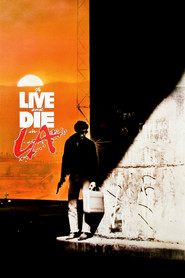
William Friedkin
extras, our own extras. But I wound up shooting a lot of people who just happened to be there. And one of the other restrictions that they put on us was under no circumstances could Petersen get up on those rails and run along the rails, largely for his own safety. They felt that their insurance wouldn't cover it if he got hurt. But Bill assured me that he could run those rails with immunity. And Bill had been an ex-college football player, very athletic.
26:04 · jump to transcript →
-
William Friedkin
What happened to your daughter? I don't know. She was in a park in those little monkey bars. You do see in the scene where Turturro leads Chance astray, ostensibly to a hospital, which was the Queen of Angels Hospital in Los Angeles, to visit his daughter, who's supposedly sick in the hospital. It's all a ruse. And you see Chance let his guard down there.
1:03:49 · jump to transcript →
-
-
-
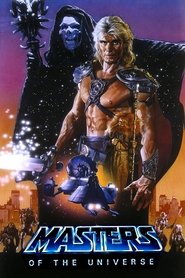
Gary Goddard
I was able to pull a shot out where he happened to snap his head in a direction, and you'll see how we were able to do that after the fact and make it appear as though he was in the area, and therefore no one any longer questioned the fact that he was in the area close enough to help save her. So just put that in the back of your mind. That'll come up later. Now they're investigating the key, having no idea that they are, of course, sending signals back to the attorney every time they turn it on.
27:49 · jump to transcript →
-
Gary Goddard
set up the fact that there's a conflict between good and evil. You'll see the soldiers swarming over the rooftops here in a minute. Those are the rooftops that were gone in the earthquake, so I always thought back, I thought, you know, we were really lucky the earthquake didn't hit while we were shooting. Because we were on every one of those roofs. And the roofs that the actors weren't on,
1:12:51 · jump to transcript →
-


Related topics
Other topics that frequently come up in the same commentaries.