Topics / Creative decisions
Happy accidents
132 commentaries in the archive discuss this, with 443 total mentions and 31 sampled passages on this page.
Filter commentaries
Filter this topic by the film's decade or the type of commentary.
Showing 12 of 132 commentaries
Clear filtersBy decade
Across the archive
ranked by mentions · click any passage for the moment in the transcript
-
-
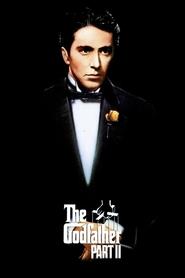
Francis Ford Coppola
boy's eyes are being examined or it was all done to still photographs. The story of the boy getting marked and then having to be on quarantine in Ellis Island was told to me by my Aunt Caroline and this had happened to her when they came over on the original immigrant ship. She was a little girl of nine or so and she had glaucoma or some
8:20 · jump to transcript →
-
Francis Ford Coppola
Interestingly, this set is really a platform up overlooking the window of the fish market, which had the Ellis Island set in. It wasn't even a room out there. Of course, his number is number seven, my lucky number since I was a child. Everything in my movies, I'm sure there will always be a number seven somewhere.
9:45 · jump to transcript →
-
Francis Ford Coppola
I obviously got very lucky with Michael V. Gazzo because he was just a wonderful character and actor with that extraordinary voice, and he was so authentically Italian, you know, like one of your uncles. And to think that was such an important part that ultimately was just cast like a day before it started to shoot really is a wonderful tribute to Michael.
1:07:11 · jump to transcript →
-
-
multi · 1h 59m 5 mentions
David Naylor, Guy Hamilton, Tom Mankiewicz, John Barry + 14
-
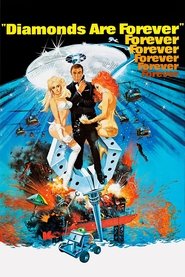
as good as they would, and we were able to shoot a sequence in downtown Vegas, which I don't think you could do now. In the Las Vegas chase scene, the sheriff is played by Leroy Hollis, who just happened to be the production's Teamster captain. Hollis again worked for the Bond producers when they filmed Live and Let Die in New Orleans.
1:04:08 · jump to transcript →
-
which wasn't very difficult to do because we got one of the jackpot mechanics to come and fix the machine, and sure enough, the jackpot comes up every time. The mechanic is quite interested because he works very hard. On weekends, he has to tighten them all up, and on Mondays, which is the slack day, the ones outside by the door loosen them up so that people pull and say, oh, this is my lucky place, and come inside.
1:31:02 · jump to transcript →
-
But the oil industry was going down a little bit, and oil rigs were quite cheap to hire. So we plonked our own oil rig off San Diego, which is a convenient place, and the unit ran out in little boats every day, or if you were lucky, you got a ride on the helicopter.
1:41:22 · jump to transcript →
-
-
-
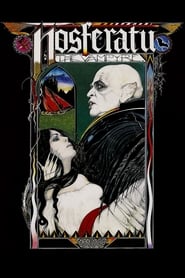
This was your first film in English, the first with big stars and a big budget, correct? Well, not really. "Aguirre" is also a big movie with a big star and great effort. But I have to say, we shot "Aguirre" for about 700,000 deutschmark... $360,000. What matters is what you manage to get on screen with the resources you have. To come back to paintings, I like this vase. Yes. Okay. This reminds me of a painting by Seurat. I think the still life-like and emotional atmosphere is phenomenal. But be careful, I always want to show inner landscapes. This was done very quickly, by the way. On that day we happened to have some time and drove to the beach. It was freezing cold, windy. There was foam. We set up the camera in three minutes and sent the two actors, Bruno Ganz and Isabelle Adjani, into the image. We only told them that the music would most likely be slow and solemn. We already had received ideas for the music from Florian Fricke from Popol Vuh. These two, three shots here we did in 15 minutes. We never thought about paintings. It was born out of the situation... - Spontaneously. ...that we found there. Bruno Ganz has tears on his cheek because it was freezing cold. Lotte Eisner came to visit for a few days. We had to wrap her in 20 blankets because it was so cold. I was so proud that she could be there. She was very important for me and maybe for the new German film in general because she bridged the gap to the expressionistic movies back then that she knew very well. She also knew all the representatives of that time. She was friends with Fritz Lang, Murnau, Pabst. She knew them all. For us she was like a bridge to the generation of our grandfathers. We were a generation of orphans who did not have the generation of our fathers. Here I see your wife. Yes, Martje. Martje Herzog on the left. Essentially everyone who was there is in the movie at some point. Later you see the executive producer, the costume designer, the sound technician, and the gaffer. It was also a matter of how quickly can you get something done with very little money. This is the farewell. Bruno Ganz was actually pretty good at riding horses, which was great for me. Now he travels to Transylvania. The choice of the production company... Was this a Century Fox production? No, I produced it myself. Many people believe that 20th Century Fox produced it. But 20th Century Fox only bought an advance guarantee to the U.S. rights for very cheap. They only bought the rights for the U.S. A distribution guarantee. I believe this was... - German Romanticism. Well, you have to be careful. There is a hint of that, but I always try not to be connected with Romanticism because I myself have no real connection with that cultural epoch. Usually I refer to eras before that. The Late Middle Ages speak to me much more. They inspire me. This was shot in Eastern Slovakia. I was not allowed to shoot in Romania where I had scouted locations for months in the Carpathian Mountains. But you also have to see the context. That was when Ceausescu had just been awarded the honorary title of the new Vlad Dracula by the parliament. So he was named the new Count Dracula. That was an honorary title because the historic Count Dracul had been an important figure in the defense against the Turks. This is in the High Tatras, just 1,000 feet to the left was the Polish border. Bohemia? No, Slovakia. - Slovakia? Eastern Slovakia. This is a real group of gypsies that I had brought in from the very East of Slovakia. Among them are a few Czech actors. The gypsies actually speak their own language. Unfortunately I don't remember what it was called. ...my food.
8:53 · jump to transcript →
-
The sound and the music are used very sparingly here. These sounds are so strange to create a certain atmosphere. Even though this is very carefully designed, you are an opponent of overly designed sets... It does look overly designed, but... No, I don't think so, but I think a normal studio production would have to work on this for weeks. No, it was a great find, and I was quite lucky. You don't find locations like this easily. For example, the hallway in the back. And the wood. The light here is beautiful, too.
36:03 · jump to transcript →
-
This was a gypsy boy who could barely play the violin, but sometimes I... A well-known Herzog theme, exactly. In "Fitzcarraldo", there is a similar boy. He plays in front of the prison. The prison guard feels sorry and lets "Fitzcarraldo" go because you just can't resist something like that. You already have the theme of madness in "Signs of Life", if I'm not mistaken. Yes, that's right. There is a situation where four German soldiers are imprisoned as convalescents on a Greek... In a Venetian fort at the end of the World War. Also the sense of confinement and breaking free from it... ...play a big role. That is one of the central themes. Obviously, this was shot in fast motion. But on film with single-frame exposure over a long period of time. In your movies, what makes them go insane? Something inside of them or other occurrences? I don't think that they are really insane. They are the core of what makes us human. I believe it's more that everything around them is insane. But there is always this slight hallucinatory... That's possible, yes. With this image we were also lucky because it was so foggy and strange. We took advantage of that situation. I always had the impression of an inner landscape. In my work, landscapes are never merely a beautiful and scenic backdrop, like in commercials or many Hollywood movies. This is different. The whole time I've wanted to ask what the importance of this movie for you is. Seeing Bruno here... For Wim "The American Friend" was something like the qualifying exam for the international film culture, to be accepted as a legitimate European filmmaker. You are talking about legitimacy or legitimization of German culture after the war. That took a long time. There was a gap of 25 or 30 years. The connection was lost. What was very important to us, which may be difficult to understand for people outside of Germany or Europe, was to rebuild a legitimate cinematic culture. Lotte Eisner was the person who reconnected us with our grandfathers, Expressionism, and these films. After finishing this movie, I felt that I had rebuilt the connection and reestablished the continuity of the German cinema. Only a few years earlier, Lotte Eisner had been on her death bed. I walked to Paris on foot in the winter to forbid her to die. And she actually did survive. She lived for another eight or nine years, and was very important for us. What we had created was still too fragile, too feeble, and too sensitive. Lotte Eisner had experienced the entire film culture, beginning with the Lumiere brothers, Méliès, Eisenstein, Pudovkin, Kurosawa. Everybody knew and respected her. It was her who said, "Now we have a legitimate German cinema again." That helped so much and was enormously important. In contrary to the films of the 1920's and 30's, which were quite crude, this is much more delicate. It also already has a universal atmosphere, I think. Possibly, but if you watch Kinski especially in this movie I have to say that he was the last expressionistic movie actor over all.
38:13 · jump to transcript →
-
-
-
Nick Pinkerton
Sidekick to Wild Bill Elliott's character Wild Bill Hickok through 13 film westerns. Then in the same role, sidekick to Tex Ritter, Russell "Lucky" Hayden, Charles Starrett, the Durango Kid, and Jimmy Wakely. More recently, he'd shown up as a member of the Sam Peckinpah Stock Company.
14:16 · jump to transcript →
-
Nick Pinkerton
Fox Farm Road, Great Falls, Montana. What the hell happened to it? Lightfoot asks of the one-room schoolhouse with the fortune stashed inside, and Thunderbolt's response, given with a detectable sneer, is progress.
43:18 · jump to transcript →
-
Nick Pinkerton
but about 60 pages in got a piece of news that he was going to get his first opportunity to direct his own script for the film that would be 1973's Dillinger, starring Warren Oates, released through American International Pictures. So Milius was off, and Eastwood needed someone to finish the job on Magnum Force, and who happened to be hanging around at the moment but Michael Cimino. And so Cimino...
47:08 · jump to transcript →
-
-
director · 1h 28m 4 mentions
Don Coscarelli, A. Michael Baldwin, Angus Scrimm, Bill Thornbury
-
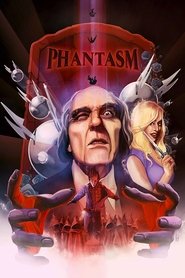
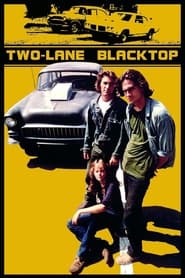
Sort of worked it into the film. What happened to this car? This car, that's a good question. Didn't you own it for, you had it for a while and drove it around, didn't you? Yeah, then Dave had it for, Dave Brown, the art director, wound up with it. And then, you know, there were some articles in the newspaper, I mean, in the car magazines about this car. And, you know, there have been numerous sightings around the country, supposedly, of this car. Occasionally, I'd say every...
11:31 · jump to transcript →
-
There was a stop sign right in the shot that destroyed the composition, but Roberto Quezada, our visual consultant, got in the van and just happened to accelerate in the wrong direction. And the composition was perfect after that. Creative independent filmmaking. Yes.
31:28 · jump to transcript →
-
almost a student type production I got my father to be the sole investor in the film but we were lucky enough to get Universal Pictures to pick that up. Based on that success he was actually able to get a couple of his friends interested in investing in another film and this one was called Kenny and Company which 20th Century Fox released in 1976. Mike Baldwin was the star of that film.
41:04 · jump to transcript →
-
-
-
It reminded me, you know, Marianne Moore was talking about flying and why she didn't fly. And she says, you can get on a plane in New York, and five hours later, you're in San Francisco. And you don't know any more when you get there than when you left. And that's the difference. I mean, I feel so lucky to have grown up in a time when you didn't...
47:48 · jump to transcript →
-
I also think that it's when the trouble begins, when everyone's too conscious. Now, you see the car up on the lift? I think right now there's a license plate on there. Well, that license plate disappears in a little while. I love having little... We didn't plan this, but...
57:40 · jump to transcript →
-
You know, it's like I'll take any risk as long as the story's going to be pretty good, you know. And I can, you know, make it even better, of course. But I still do it today. But if I'm telling an anecdote, something that happened to somebody, I'll embellish it. I'll make it a little bit better than it was. Yeah, it's, you have to. It's a gift to the person that's listening. Exactly. Oh, God. Come down the hall, will you? You know the way?
1:20:02 · jump to transcript →
-
-
-
Francis Ford Coppola
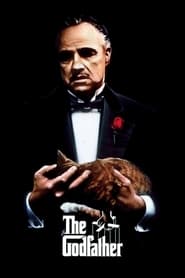
And so what we did is we looked through all the shots and after I had said cut, there would be maybe a few feet of just empty corridor and we took those. And you'll see later in the sequence when you cut to an empty corridor, those are just the little ends of shots that happened to be after the actor walked out of the frame, there was a little piece. So advice to directors, very often the most important stuff that you get
1:02:33 · jump to transcript →
-
Francis Ford Coppola
As I said, we had two cameras doing this. We did one take. And when the take was over, I had not barely said cut and when this guy said, lunch, you know, and everyone went off to lunch. And I often think how easy it would have been for this scene not to exist because they didn't want it. And we just got lucky, really, that we got it.
2:31:36 · jump to transcript →
-
Francis Ford Coppola
or images that it suggested, really right down to the last image was there in the book. You know, in a movie, every element, when you're lucky, comes together. In The Godfather, we had this wonderful cast
2:51:50 · jump to transcript →
-
-
-
The operator was a wonderful man, Gordon Heyman. There's an extraordinary relationship between director and the operator. He is the eye, he's your eye, and I was very lucky. I've enjoyed working with him many, many times. He's an extraordinary operator, but on many occasions, even he couldn't get into the room with me at the same time and the actors. I had to operate myself on a lot of that handheld stuff.
43:45 · jump to transcript →
-
Quite private, secret people. It was an experience that had changed their lives. It's quite interesting to find the history of the astronauts, what happened to them all. The early ones, from Gagarin, who apparently ended up in an asylum. The experience was totally extraordinary to look down on the world. There's been conjecture about Gagarin having been put away because at the time it was the height of the Cold War to look down on...
1:38:03 · jump to transcript →
-
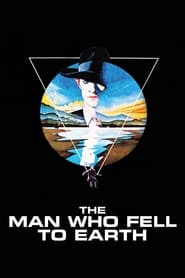
I think they weren't looking at the subject. They weren't looking at the people involved. They were looking at, oh, that's a movie with David Bowie. They looked at record sales and they looked at everything except, probably has David except the script. They looked at everything, which was very lucky. I think this script was the casualty of this movie. Which was very lucky that it got made as a lot of things to really by accident.
2:14:43 · jump to transcript →
-
-
-
Roger Moore
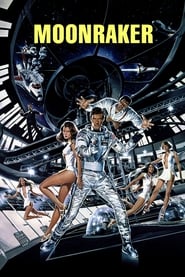
Now, this sequence... ...I was called for 8:30 in the morning and this was the back... This was before the La Fenice theater burnt down... ...and this was shooting just across from the back of the theater. In fact, that's the stage door over behind us. And... ...I was ready at 8:30, and came on the set, and we were all standing there... ...ready to go, and there were adjustments being made... ...and, you know, I have a cup of coffee and this went on. And I finally said, "Lewis, why can't we get on with this? You know, we must do this shot." And he said, "Well, it's a little embarrassing." You see, it was the time of the high tide of the equinox... ...and the boat that had all the props on it... ... had been tied up with the tide very high... ...and then when the tide started to drop, one of those numerous poles... ... that are in the water in Venice was underneath the boat. And as the tide went down... ...the pole came up through the bottom of the boat. Then the boat went up again and the water rushed in... ...and the prop boat sank. And on the prop boat, apart from all my wonderful Ferragamo luggage... ... that I was looking forward to stealing... ...Was a prop that was essential in this scene. ...Was a prop that was essential in this scene. And they had to get somebody to dive down and find it. Now, this shot of the Concorde landing... ... has a bit of a story for me. We had been ready to leave Paris to come to Rio... ...to shoot our sequences there. And Lewis Gilbert and Ken Adam and Letizia... ...and my then wife, Luisa, we were... ...at Charles de Gaulle Airport in Paris, all ready to leave. We got on to the Concorde, and then they said there was a slight problem... ...and we would have to disembark and wait in the lounge. They then said, well, there'd be a little time... ...so we could go into any one of the five restaurants in the terminal... ...and have lunch. So off we went. We had something. I wasn't feeling that good, and I sort of just picked at something. And then before we finished, I said, "Lewis, I really don't feel good at all. Would you come with me to the pharmacy? I think I'm beginning to have a Renal colic." Meaning that-- Something that had happened to me... ...before with kidney stones. And they're extremely painful when they start on the move. And really pethidine or morphine... ... is necessary to stop you falling on the floor... ...with your knees underneath your chin and start screaming. So I went to the pharmacy in the airport, and they said: "No, I'm afraid we can't." And I said... They could tell that I was very ill and in great pain. But they did suggest that there was a doctor in the airport. You know, a surgery. So I went to see him. He took one look at me... ...and pulled a syringe out and started drawing off painkiller. Lewis never liked needles... ...and started shuffling sideways... ...With the "Lewis Gilbert shuffle," I call it. And he said, "Well, I think I'd better tell the others what is going on." And that was the last I saw of Lewis.
54:35 · jump to transcript →
-
Roger Moore
As on most locations, you only ever... ...If you're lucky, get one day off in a week. And I don't remember too much what I did with my leisure time. I know at one point we went with Ken and Letizia on a boat. But otherwise, there wasn't much spare time.
1:05:01 · jump to transcript →
-
Roger Moore
I'm looking at this and I'm thinking: "I wonder where that actor or that actress is today... ...and how are they." I remember a line of David Niven's when we were... ...I think, making a film in Goa. And he said, "You know... ...making a movie is like going on a cruise for a month... ... two months. You have the same people at breakfast... ...at lunch and at dinner. You see them all through the day. And then when the ship docks, you might never see them again. Unless you get on another cruise that they happen to be on." And it's true. You know, I made a few films with Niv... ...and So we were very lucky, or I was very lucky. I got to get on the right cruises.
2:01:00 · jump to transcript →
-
-
-
Maybe experts are not the best viewers for any kind of thing. But one thing in this film that has kind of come into its own in the 21st century, it's a film about the depletion of resources. Yes. Now we have what's happened to the rainforests. This is about the preservation of forests. Yeah, but it's interesting. It's about the preservation of forests, but it's not considered what a world without rainforests would actually be. Here, it's almost as if...
16:02 · jump to transcript →
-
over a project. And you feel that he probably would not have been a great actor's director. It's the nuts and bolts that appeal to him. He is very lucky to have Bruce Dern in this film. My memory is that in Brainstorm, Louise Fletcher is brilliant.
39:08 · jump to transcript →
-
-
multi · 1h 43m 1 mention
The Taking of Pelham One Two Three (1974)
Nathaniel Thompson, Steve Mitchell
-

Related topics
Other topics that frequently come up in the same commentaries.