Topics / Creative decisions
Happy accidents
132 commentaries in the archive discuss this, with 443 total mentions and 11 sampled passages on this page.
Filter commentaries
Filter this topic by the film's decade or the type of commentary.
Showing 4 of 132 commentaries
Clear filtersBy decade
Across the archive
ranked by mentions · click any passage for the moment in the transcript
-
-
David Kalat
The crew of the Daigo Fukuro Maru, that's lucky dragon number five to you, figured that they were being extra clever. By heading out to trawl for tuna, there's no competition, they congratulated each other. Then there was a flash in the sky like a second sun. The light was so bright, it could be seen as far away as Okinawa.
2:12 · jump to transcript →
-
David Kalat
The lucky dragon was so far from the blast, they didn't hear its accompanying thunder for another eight minutes. It was clear to them that they'd made a mistake, but the consequences were now impossible to outrun. They pulled in their nets, stowed their catch, and returned to the mainland as quickly as possible. They were sick. The radio operator, a fellow named Aikichi Kubayama, would die from radiation sickness. And let's be clear.
2:36 · jump to transcript →
-
David Kalat
I started out with that story about the Lucky Dragon as a way of demonstrating that this movie had an urgency and a relevance to current events for Japanese audiences. I'm going to talk more about this. I'm going to talk about the atomic bombings of Hiroshima and Nagasaki, about Robert Oppenheimer and the nuclear arms race. All kinds of big historical issues which have been deftly folded into the fabric of what has at times been misapprehended as just another monster movie.
5:23 · jump to transcript →
-
-
scholar · 1h 32m 5 mentions
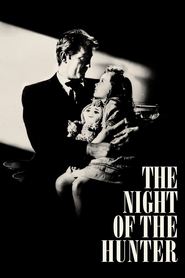
The Night of the Hunter (1955)
Terry Sanders, Robert Gitt, F. X. Feeney, Preston Neal Jones
-
Yeah, Mitchum was the idol of Elvis Presley, and you can really see why. Oh, yes. It's the way he moves with his whole body. It's interesting that Lawton originally wanted Gary Cooper for the part. He had worked with Cooper in the 30s. I don't see that at all. No, I don't. He was very lucky that it worked out with Mitchum. But the point is that he was always thinking in terms of a handsome leading man for this villainous part. He explained it to Davis Grubb. As Davis Grubb remembered it, Lawton told him, Davis, people who...
21:26 · jump to transcript →
-
Also, Gary Cooper moved beautifully, and that's what you need for the part. It's understandable that Lawton was thinking in those terms, you know. But wouldn't he have been too old at this point? Wouldn't Cooper have been too old at this stage of his career? Maybe the young Gary Cooper. He was still playing leading man. Well, he was. And the cragginess of his age might have actually fit Preacher. It's the high noon Gary Cooper period, but how lucky we are that it worked out how it did. Yes, Cooper didn't want to do it. He was scared off by it, and the rest is history.
22:01 · jump to transcript →
-
Now this, the close shot here of Mitchum, it's going to be wonderful. When the game begins, by a lucky accident, he does something with his eyes that is just able to catch the highlight. It's coming up here. See, this is where the game begins. Now watch this evil glint in Mitchum's eye. There you go. So that's the moment that was delayed from the ice cream parlor scene. One characteristic of the...
26:58 · jump to transcript →
-
-
-
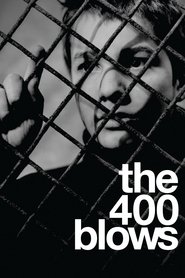
Balzac wrote of Parisian life largely, and particularly of what happened to the ideals of ambitious young men who came to Paris from the provinces. In a sense, Balzac's own ambitions as a writer were on the epic scale, as he sought in the 20 novels of what he called his human comedy to paint a broad canvas of every stratum of society. Truffaut works on a much smaller, more intimate scale that would seem to rule out any strict comparison.
49:53 · jump to transcript →
-
I went to live in a hotel just opposite to the shop. I spied on her every night. But after a while, I got tired of seeing her go to the movies with other guys, so I enlisted in the army. After six months in the army, they gave me a leave before going to Indochina. But I had enough of the army and didn't go back. The trouble was, though, that I didn't have a penny to my name, no civilian clothes, and didn't dare let Bazin know where I was. One night, I happened to meet Chris Marker in a cafe. He was very surprised and said to me,
1:19:19 · jump to transcript →
-
That's exactly what happened to me. I only went that once, though, because on top of the ordinary rules, his father had given specific instructions that if Lacheney comes, be sure you don't let him in. He thought I was a bad influence, evidently. My parents were the same way about Francois. They called him Truffaut, the evil genius. What did they know?
1:33:05 · jump to transcript →
-
-
-
Alan K. Rode
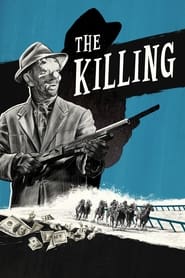
Of course, Hayden doesn't buy Marie's transparent lying. Sterling Hayden was a fascinating man, a handsome fisherman, a man of the sea, who happened to be good-looking enough as a young man to stumble into a Hollywood career that alternately shamed and enriched him. I have a 40-year-old paperback edition of The Killer Inside Me that includes a back-cover blurb from Stanley Kubrick that reads, quote,
25:45 · jump to transcript →
-
Alan K. Rode
And there's one more thing. Suppose by accident you do get picked up. What have you done? You shot a horse. It isn't first-degree murder. In fact, it isn't even murder. In fact, I don't know what it is. But the chances are the best they could get you on would be inciting a riot or shooting horses out of season. Killing horses out of season.
34:20 · jump to transcript →
-

Related topics
Other topics that frequently come up in the same commentaries.