Topics / Creative decisions
First feature
99 commentaries in the archive discuss this, with 256 total mentions and 38 sampled passages on this page.
Filter commentaries
Filter this topic by the film's decade or the type of commentary.
Showing 20 of 99 commentaries
Clear filtersBy decade
Across the archive
ranked by mentions · click any passage for the moment in the transcript
-
-
Paul M. Sammon
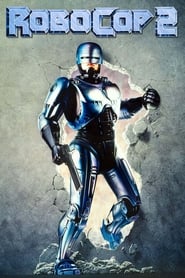
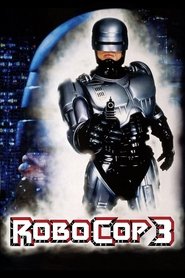
Hi everybody, this is Paul M. Salmon, author of Future Noir, the making of Blade Runner, and a person who has worked on many motion pictures, including this one for Orion in 1989-1990 called Robocop 2, for which I was the computer graphics supervisor, the publicist, and a lot of other jobs. Just like the first film, we open up with a commercial that is satirizing the future that Robocop takes place in. This is called the Magnavolt commercial.
0:26 · jump to transcript →
-
Paul M. Sammon
And here we have John Glover, a wonderful character actor, who throughout the 80s had just a really great run. One of my favorite pictures that he did was a thing called 52 Pickup for John Frankenheimer, when he plays one of the sleaziest criminals you could ever think of. And now we have a media break. Now, media breaks carry over from the first film. And, of course, this is supposed to be essentially the news, the Twinkies, the happy news that comes in
1:20 · jump to transcript →
-
Paul M. Sammon
talking about what's going on in OCP. Here we have Ed 209 from the first film, the guy who's actually backing up the truck there and putting his arms up. That's a guest appearance by Phil Tippett. Phil Tippett was the stop-motion supervisor who did the puppet animation on the first film and did the stop-motion animation on the second.
1:47 · jump to transcript →
-
-
-
different jobs all around the film industry. And then in 1974, so like 10 years after he did the Alfred Hitchcock episode, he made his feature film directorial debut with an exploitation movie called Dirty O'Neill, which he co-directed. But really, I think, you know, the path of his career as we know it really began in earnest, not even so much with that movie.
36:55 · jump to transcript →
-
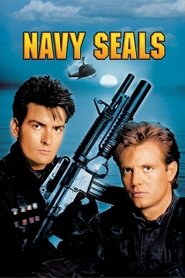
then I guess I should maybe talk about some of these other Navy SEALs that we've got, which my first thought when I rewatched this movie was...
1:08:22 · jump to transcript →
-
He made his directorial debut in 1978 with a comedy I'm a really huge fan of, FM, which is set in a radio station and has this great rock and roll soundtrack. It's often wrongly attributed with inspiring the TV series WKRP in Cincinnati. But in fact, I learned while researching Alonzo for this that that TV show, which was created by the guy who directed, Hugh Wilson, the guy who directed Police Academy and a bunch of other movies. Oh, wow.
1:24:47 · jump to transcript →
-
-
-
And it's funny, I look at, there's Levi, Levi Isaacs, who really, this is my first directing ever. I had written and produced a lot of television, but this is my, you know, my intro into directing, and Levi was terrific because your DP, as everyone knows, is your right-hand person. And he was, he taught me a lot, actually. Ah, that was our...
5:01 · jump to transcript →
-
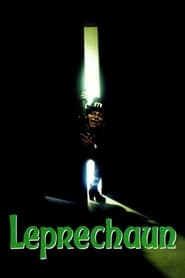
And as you can see, I really didn't want to take ourselves too serious. I really wanted to have not a straight-ahead horror movie, which my first draft of the script that Trimark bought, that was very horrific and no personality in a leprechaun. He was just kind of a killing... There's Gabe's credit. He was just a killing machine that became a monster, and then through rewrites and prepping this thing,
6:54 · jump to transcript →
-
But again, this was Simi Valley, Little House on the Prairie sets. We had a crane. I remember this was a beautiful intro shot. I remember Isaac up there on the crane. It was excellent. And there's Jennifer, who's adorable and was wonderful to work with. And again, I always have to apologize for putting her in this movie. I'm sorry, Jennifer. Forgive me. But it was her first movie, my first movie, and we had a lot of fun. Yeah, she's great.
11:27 · jump to transcript →
-
-
-
Tony Scott
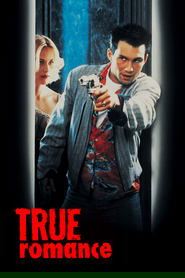
I went to Charlie Sexton, who recorded this particular track for us. At the time, I thought, God, nothing can ever be as good as Elvis. But in the end, I think it served his purpose, and it's a great track. And Charlie has a great voice. This first scene was the first scene I shot in the movie. It was my first day of shooting.
2:32 · jump to transcript →
-
Tony Scott
Um, and, uh, it was my first day with Christian, you know? And Christian and I had been talking about the characters and who his character was, and I felt, you know, we're never quite in sync with what we were both thinking, who this character was, yeah? And, um, you know, you never really truly get an understanding of where the actors, or what the actors, where his head's at until you start to do the scene, yeah? And, um...
2:56 · jump to transcript →
-
Tony Scott
Anyhow, after my first day of shooting, I realized that Christian was off to the right and I was off to the left. And I said at the end of the first day of shooting, you know, I want you to take a look at Taxi Driver. And I wanted Christian to take a look at Taxi Driver in terms of the darkness of the character because I felt his character in this first scene in the bar, he was pushing it a little too light. And I wanted a much darker soul. And...
3:26 · jump to transcript →
-
-
-
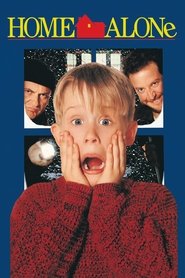
Hey, that's you. - That's me. So this was, uh-- I guess we... We could start about... Talking about the beginning of how this whole movie came about, really. I was in dire straits at the time, in terms of my career. I had just come off of a complete disaster, a big bomb. I didn't know if I was gonna direct again. I thought I'd have to go back to writing. So I was in Chicago staying at my in-laws' house... ...and my first daughter was just born... ...and John Hughes sent me, out of the kindness of his heart, two scripts. One was called Reach the Rock and the other was called Home Alone. One of them, it was rumored... I think it was this one. was written over a weekend... ...which some critics would probably jump on the bandwagon... ...and say, "Well, we always knew that." - Exactly. Ha, ha. So I read Home Alone and immediately responded to it. I thought it was just a great, great piece of material. And it talked about some of the things that I was interested in making a film about. Now, we had a meeting, I remember, in New York. I just-- It was-- You and my father were talking most of the time... ...and I was just imitating everything you were doing. Everything I was doing. - Yeah. You'd drink your water, I drank my water. Like that. I think I did that... I think I way overdid it. I think I just kept doing it the whole, like, hour. Well, you know, the interesting thing is we... Again, it was the kind of situation where we looked at hundreds of kids, again. And I was like-- Even though I didn't know if I'd ever direct a film again... ...I was like, "Well, you know, Macaulay was in Uncle Buck... ...and I don't wanna just cast him based on John Hughes producing the movie... ...because then it looks like I'm gonna give in to John Hughes and be a wimp." And I met all these... I met hundreds of kids. And when I met Macaulay, there was just no one else who came close... ...to what we needed for this film. I mean, really, in terms of an actor... ...a Child actor, at the time, you were the most unique, original kid I'd ever seen. So that was pretty... - Oh, thank you. I mean, I totally agree with you, but thank you anyway. But it really is-- It's sort of, uh... Because it was the fact that you, um... The camera loved you, obviously. You see the shots from the film. The camera loves you, but at the same time, uh... ... you were relatable to every kid in America... ...because you weren't an idealized version of a kid. Kids are used to-- Accustomed to seeing this ridiculously... Shirley Temple, and the curls and the whole thing, you know. And there was just something enormously real about you. That, and I could remember my lines and I had a lot of energy. That is true. You did have a lot of energy. Almost a sad amount of energy. It was, I mean.... Still do too. Uh, now, do you remem--? Like, this particular scene. We're starting from the beginning of the film. And I'm curious, because there were so many scenes in the film... We were talking before we started. where we would shoot your coverage first and then send you home... ...or I'd still be in jail. - Child labor laws. Yes, I'm still well-versed in the child labor laws. So there are obviously certain elements of the film-- Like this. Do you remember this being shot? - No. Because you weren't here. - I remember we did the whole... There was a whole sequence with, you know... ...people coming up the stairs, down. - Right. He's there, and the pizza guy's there. I remember that, and just like, you know, trying to coordinate that whole thing. But, no, in general, there's a lot of stuff... There's a lot of holes in it... In my memory. And this guy went on to do something on Nickelodeon. My kids know him. Yeah, Pete & Pete. - Yeah, Pete & Pete. Is it still on the air? - No, no. It lasted a couple years. It was actually a really kind of neat show. Yeah, my kids loved that show. But what was interesting about the whole look of this film... I guess we could talk about it a little bit. You'll even notice... Some people will think, "Well, this wasn't intentional." But we intended the film to feel like Christmas sort of. I wanted the house to feel very warm. You look at... - Greens, reds. Macaulay's wearing greens, a green and red shirt. There's a green and red jumper sweater on this guy back here. The wallpaper is all... - That's very clever. All conveying a warmth of Christmas and something that, uh... It just was interesting to us. So it wouldn't be over-the-top, but it'd feel warm. I wanted the house to feel like a warm place. Joe Pesci. What do you remember about Joe Pesci? What is, like, your first--? My first-- Gosh, I don't even... I have-- I still show this. I have a scar on my finger. - Uh-huh. We'll get to that part near the end... - Ha-ha-ha. ...when, you Know, he says, you know: - Okay. "I'm gonna bite each one of your fingers off, one at a time." During rehearsal, he actually bit my finger a little harder than I think he thought. I still have a little scar on my finger. It's my little Joe Pesci tooth mark. I'm telling you something, I believe... And I know Joe would probably get a little upset with me about this... ...but there was a little professional jealousy from a lot of the actors on set... ...because you were the star. There's this little kid who was the star, who we were all paying attention to... ...who was carrying the film. And there was a lot of passive-aggressive stuff going on. And I don't think Joe meant to bite through your finger... But, heck, you know, you never know. He was not particularly happy during the course of making this film. And I don't-- I think he would probably say the same thing. He had just come off of Goodfellas and Raging Bull, and he was... I don't know, did he win the Academy Award? He won for Goodfellas. His acceptance speech was, "Thanks," and that was it. Okay. Well, there you go, so, um.... And when he... I remember I was such a fan of his. Asking him to do the Goodfellas... The clown speech, you know. "Make me laugh," you know? "What do--? Am I funny to you like a clown?" And he would do that every day, and it was great. But at the same time, I could feel it from the actors. Because there's always a sense of rivalry between actors. There was this feeling of, you were the star of this movie, and that was un... That was not really common at the time. - Yeah, yeah. It created an interesting tension on the set, I have to say. Yeah, see, I never really felt that, but I was 9. Everyone around here knows he did it. It'll just be a matter of time... ...before he does it again. What's he doing? He walks up and down the streets every night... ... Salting the sidewalks. Maybe he's just trying to be nice. No way. See that garbage can full of salt? That's where he keeps his victims. The salt turns the bodies... ... Into mummies. Wow. - Mummies!
0:21 · jump to transcript →
-
This is a... You know, this is an interesting scene... ... because, again, the comedy... These two really worked well together. You believe them as a couple... ...and the comic timing is really pretty sweet, I have to say. I remember when I watched a lot of the dailies... ... they would always fool around whenever you... You wouldn't yell, "Cut," and they kind of just... They'd keep going a little bit and do some silly stuff. I think they really-- You know, again, it was a kind of... At times, it was tense being on the set... ...because these actors, who are so good, didn't know why they were there. And on the second one, that eased up completely. Because everyone felt that they had a responsibility... ...because they knew a lot of people would see this movie. Now, here's something I always felt pretty horrible about because... ...particularly once you have your own kids, this is the last thing you want them to do. This was a big worry, I remember. - Oh, yeah. Whether or not this was gonna stay or not. See, no one really ever understood when I'm lining up the sled... . that it doesn't exactly line up with the door. There's people who watch it who actually giggle, I remember... ...saying, "That doesn't line up. How is he gonna do that?" Yeah. You would've smashed into the wall. Yeah. But that was Larry. I remember watching the dailies. That was hilarious. Larry, our stuntman. - Yeah. Stuntman, literally. - He was probably 20... No, maybe he was about 30 back then. - Yeah. And he was your size. - Yeah. He was built like me too. Now, he was amazing. He would do anything. There's one moment coming later when we'll talk about Larry. Where he falls? - Where he falls, and he froze that day. He didn't wanna do it, but Larry had... As most of the stuntmen did in this movie... I don't know if these types of stuntmen exist anymore. Yeah, I know. - Willing to kill themselves for... It's amazing. I have a lot of that, yeah.... ...a lot of memories of these guys doing all kinds of crazy stuff. Oh, yeah. - They were my favorite, the stunt guys. The stunt guys were great. - When you're 9... ...they can do all kinds of neat stuff. - That's true. Ha, ha. Oh, yeah. They were always my best friends. We'll talk about-- A little later, we'll talk about Troy Brown and Leon Delaney... ...the two stuntmen for Joe Pesci and Daniel Stern, who were truly... Truly went above and beyond the call of duty. I haven't spoken to them in years... ...but they probably are still in a great deal of pain... ...because of some of this stuff. Daniel Stern is interesting... ...because Dan Stern was my first choice for this role... ...and the studio didn't wanna pay him at the time. We cast another actor, unfortunately-- This is the only time in my career this happened. and we did a screen test with the other actor and Joe Pesci. And the screen test was flat... ...and the other actor just couldn't really improvise with Joe... ...and you didn't believe him in the role. And I had the-- I had the horrible situation of actually telling the actor... ...I couldn't use him. Basically firing him. Oh, boy. And then the studio then understood. They saw the screen test, and they were willing to hire Danny... ...which was really an amazing working situation for me. He's one of the funniest guys I've met. And he truly was up for anything, as we'll see later in this commentary. I still have that sled in my office.... In my office here in San Francisco. I just saw it before I came over here. Signed by everyone. Signed by everyone. That's really cool. - Yeah. And when I get a little older, and things start not working out in the career... ...1 can sell it. - EBay. Yeah, eBay.
25:39 · jump to transcript →
-
Nothing to Chicago? This is her first film role. - You got a good cast there. She's obviously not French, but she is-- She did a great job.
34:39 · jump to transcript →
-
-
-
He was also on The Adventures of Briscoe County Jr. And he's also here with... Oh, yeah, this is Taylor Nichols playing his partner here. This is a guy who I was a big fan of in this period, mainly from the Whit Stillman movies. This is pretty early in Nichols' career. He made his debut five years before this in Whit Stillman's first film, Metropolitan.
5:00 · jump to transcript →
-
So Marshall went and worked for Bogdanovich as an unpaid production assistant and kind of all-around gopher on Targets, Bogdanovich's first feature film as a director. And he got a real crash course in low-budget filmmaking as Bogdanovich called on him to fill a variety of different roles throughout production. But he actually didn't work on a film again until a couple years later. He was sort of kicking around working as a waiter and a musician. Wow.
43:14 · jump to transcript →
-
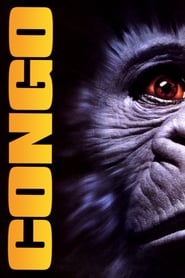
made happen. And they technically left Amblin in 1991. I mean, they keep working for Spielberg a bunch, which I'll talk about. But they left Amblin in 1991, not long after Marshall made his directorial debut with Arachnophobia. And they formed the Kennedy Marshall Company, which produced Congo, as well as some other movies Marshall directed, Alive, which he did between Arachnophobia and Congo, and Eight Below, which he made in 2006.
47:44 · jump to transcript →
-
-
-
Darren Aronofsky
One take, I was like, Sean, just keep saying 1-8, 1-8, 1-8, and walk down the stairs the whole way. And when he did it, everyone applauded. It was really great. This shot, the Tai Chi shot, is perhaps my favorite shot in the film. And it was actually improvised. We showed up on set at 8, 9 AM. And there was a bunch of people doing Tai Chi. And I talked to my first AD, Laura Zuckman. I was like, let's shoot it. Let's get them. And they were up for it. So we did it.
3:08 · jump to transcript →
-
Darren Aronofsky
cover up the brain and cover up the blood and you know have people you know tell people watch their step and but luckily there were no cops and middle of the night I don't know it was probably four o'clock in the morning I was off on one end of the platform and suddenly my first AD was like Darren uh how many more stops to Coney Island and I'm like
35:59 · jump to transcript →
-
Darren Aronofsky
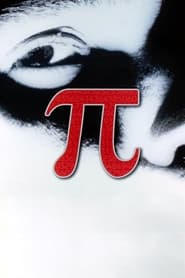
Um, you know, sometimes you get an actor with a uniform, and all it is is an actor with a uniform. Nuff said. So here we are in Coney Island. I'm from South Brooklyn. I grew up about two miles away from Coney Island. And the first film I wanted to make actually took place all in Coney Island. And so when I started working on Pi,
37:47 · jump to transcript →
-
-
-
Stephen Prince
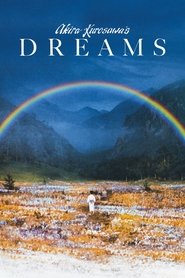
This is the first film entirely scripted by Kurosawa since 1945 when he made The Man Who Tread on the Tiger's Tail. Kurosawa typically worked with at least one other screenwriter, sometimes more. His shift to writing solo correlates with some changes in the films that he made. Dreams and the two that followed, Rhapsody in August and Matadayo, are much more personal and meditative.
0:57 · jump to transcript →
-
Stephen Prince
He used slow motion occasionally, but always to very powerful effect. He drops a slow motion insert into the action in his first film, Sanchiro Sugata, and he intercuts slow motion with normal speed in a violent sequence in Seven Samurai. That intercutting set the template for using slow motion in violent action that generations of filmmakers copied, including Sam Peckinpah and Arthur Penn in The Wild Bunch and Bonnie and Clyde.
31:59 · jump to transcript →
-
-
multi · 2h 19m 2 mentions
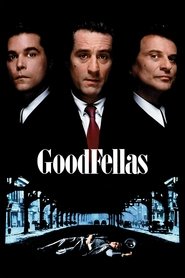
Martin Scorsese, Nicholas Pileggi, Ray Liotta, Lorraine Bracco + 9
-
It taught me a great deal because I directed my first film right after that, right after Goodfellas. And I learned two things in that regard is be prepared, tell everybody what you're planning on doing, and then when you get there, do whatever you think is best at that moment. So you have your parameters, but then the freedom to work within those parameters. Hey, I'm trying to bang this fucking broad. You want to help me out? It's, it's, it's...
27:53 · jump to transcript →
-
Paul Sorvino. At my first screening of Goodfellas, I was expecting good things because, you know, Bobby De Niro, who's better than he is...
2:07:59 · jump to transcript →
-
-
-
collaborative. And she had also done a show for Michael Mann called Crime Story, which I was a big fan of. And so I knew that she could pull off that kind of stylized kind of retro stuff that I gravitate towards. Because I think this was her first feature as a full-fledged production designer. Yeah. She had done work before this, obviously, but this was her first big feature as a production designer.
42:13 · jump to transcript →
-
And again, it's subconscious. We talked about this a little on the other films. It's not a plan. It's not like, I want to make something that's character-based. I just feel like we have to because the story is fantastical and we want to ground it somehow. And here's the inversion of the line. That's right, from the first film. And the idea there was, there's the new family unit. If this movie was successful...
1:37:11 · jump to transcript →
-
-
-
Alexander Payne
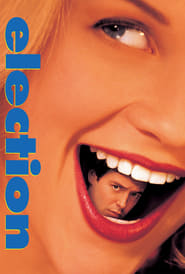
He read and nailed it, and I knew that he was Paul. And he really took to it like a duck to water. This was his first professional acting job and obviously his first film. He really was not nervous ever and always delivered the goods much better than I had even imagined it. Student, counsel,
22:02 · jump to transcript →
-
Alexander Payne
Did I ever know if she saw me? Probably not. But in that moment, all the bad memories, all the things I'd ever wanted to say to her, it all came flooding back. My first impulse was to run over there, pound on her window, and demand that she admit she tore down those posters and lied and cheated her way into winning that election. But instead, I just stood there.
1:37:28 · jump to transcript →
-
-
-
multi · 2h 24m 1 mention
Alex Thomson, Terry Rawlings, Alec Gillis, Tom Woodruff Jr. + 3
-
-
-
-
multi · 1h 54m 1 mention
Jean-Pierre Jeunet, Hervé Schneid, Alec Gillis, Tom Woodruff Jr. + 5
-
multi · 2h 12m 1 mention
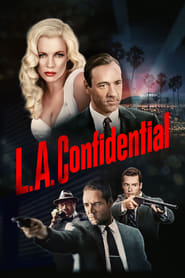
Andrew Sarris, James Ellroy, Brian Helgeland, Michael Nathanson + 10
-
-

Related topics
Other topics that frequently come up in the same commentaries.