Topics / Creative decisions
First feature
99 commentaries in the archive discuss this, with 256 total mentions and 10 sampled passages on this page.
Filter commentaries
Filter this topic by the film's decade or the type of commentary.
Showing 5 of 99 commentaries
Clear filtersBy decade
Across the archive
ranked by mentions · click any passage for the moment in the transcript
-
-
Nia DaCosta
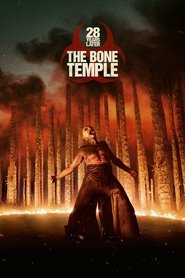
So here you can see a bit, 'cause of the way Jimmima was moving just then in that scene, that the shutter angle is changed. It's not sort of a standard angle. And that's something that Danny did in the first film. Whenever the infected were attacking, the shutter angle would change, the image would appear more choppy to the human eye. And... Sean Bobbitt, my DP, and I, we really wanted to use that, in a way. It was really the only visual reference from the other films that we took. But because, again, we're starting this film with the Jimmies as the real mortal threat, we thought the Jimmies and the infected should have the shutter angle change when violence happens. And this is the first infected of the film coming up, which, again, wasn't written in, but we added, 'cause we were like, "We need infected." And I like infected scenes and things like that, so, yeah.
6:42 · jump to transcript →
-
Nia DaCosta
And what I love about the way this is written versus what we see in 28 Years Later, the first film, is that you're seeing how he remembers what happened, how he has come to understand and what his memory has done over the past 28 years, with the memory of seeing his... his family murdered, his father turned. And you can see, "This is where "his belief system and his dogma came from."
1:09:07 · jump to transcript →
-
Nia DaCosta
I love how his hair just seems like it has muscles of its own. It's just, like, flying all over the place. This is sad, you know, killing her friends. But, you know, they would have killed her, so... It's like there's a balance of, like, obviously, they do terrible things, but also, they're people. So... And then, you know, Spike's story through this film and the first film is really this coming-of-age. Not that coming-of-age has to end when you murder or stab someone, but I think it is interesting. The journey he goes on in the first film, like where he ends up, he's like, "I'm leaving home." Like, "I don't like what's going on there." Like, "I can make this on my own." And then this film, he's like, "I definitely can't. "I need people, but not these people." And he starts to find his own sense of community. But to me, it's very much like prodigal son. Prodigal son goes out, sees the world, but eventually, the prodigal son will return. So maybe we'll see some of that in the third film.
1:34:12 · jump to transcript →
-
-
-
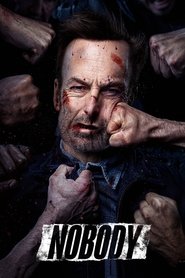
So, this I love. He should just walk home, right, Ilya? That's correct. He's good. Tell us who he is. Fuck! Sasha? - Sasha is not just... Sasha is a very good friend of mine. He's a big actor from Russia. Big in the sense that he has quite a big following, he's been in a bunch of great movies. And I did... He was in my first film for a little cameo, and then we did a couple of music videos together, and I've just been a huge fan of his. And soon as Universal said, "Let's make the Russians more interesting," I said, "Well, the way you make it more interesting "Is you get Russians to play Russians." And... Which is rare for a studio film, not just a studio, for an American film to really go out and get you know... If you have a... If you have a certain nation portrayed, then you actually get people from there, which is what we got with this film, which is fantastic, makes me very happy. And also, I can go back home and people won't look at me weird. Which is also something to consider.
29:48 · jump to transcript →
-
Well, he's gonna get into his car and then he decides, "Forget about that. "Remember that car that neighbor told me about that was so good? "Let's take that and do that." I love how his neighbors come out of their houses to see his house burning down. This was the first scene that I storyboarded because it's a music video and I thought I'd start with easier stuff. Right. - And... I just loved the idea of everybody seeing... And then Hutch, he doesn't give a shit, 'cause he steals the car in front of everybody, while everyone's seeing. Yeah. - One thing I do miss, though. lf I was a little bit smarter, I would have had Paul Essiembre, as Jim the neighbor, run out after screaming. That would've been a perfect ending to this drive off. Yeah. But I realized in the edit, great. My character's probably upstairs in his bedroom with a stripper, knocked out from two nights of drinking and partying. Wait. The nursing home? What's this? Yeah, remember he warned his dad that he was tangling with some big, bad guys and to watch out. And speaking of big bad guys, there's Ilya Naishuller, our director, right there on the right. My first Hollywood part.
1:02:07 · jump to transcript →
-
This was not filmed on the actual PCH. This is all green screen in Winnipeg. Oh, yeah. We were lucky that these plates exist, and the light matched. Congratulations, Ilya. I love this little movie. It's not so little. It's big. I love this movie. - I love it. I love it. - I enjoyed working on it very, very much. I never would have imagined I could feel such affection. I knew this would be a challenge. I knew I'd be out of my wheelhouse. I'd be pushing myself. I knew I wanted it to be non-ironic. I've done a lot of comedy in my career. I've made fun of action movies a million times. I've made fun of the swagger and the surety that action stars put forth. But I think I've now had this experience of years of playing someone without that safety net of comedy and making fun, and I find it to be the greatest magic to try to conjure up the non-ironic and intense big feelings that TV shows like Better Call Saul and Breaking Bad, and movies like Nobody work to present and to explore. And so I was thankful to have you. I mean, you just did a great job here, and we all understood what we were making. And Derek did such a great job, and we were so lucky to have these producers. Kelly McCormick was the first one to... Well, Marc Provissiero, my manager, understood immediately. Braden Aftergood also seemed to immediately connect with it. Kelly McCormick was the linchpin, because Kelly has great experience with action movies. And David Leitch then joining and leading, I think, tonally, this whole project. David has been a part of the biggest action movies of the past 15 years. And so that's what brought us all to where we are. I just gotta thank you and, you know, you were with this movie through two different regimes, two different companies. Yep. - And you hung in there with it. And, of course, your experience... We didn't once mention Hardcore Henry, your first film. And I'm sure that's worthy of hours of talk too. Anyway, thank you. - Thank you very much for listening, guys. This was Ilya and Bob, talking about something we spent a couple years of our life on. Thanks for watching. Thanks for listening. And have a nice day. Thank you so much. I'll see you next time. Bye.
1:28:04 · jump to transcript →
-
-
-
Hello, I'm Ray Mendoza, former Navy SEAL, 17 years in the Navy. And this is my directorial debut with Alex Garland, who's sitting next to me. Hello, I'm Alex, and I was, yeah, I was Ray's co-director and co-writer on this film. Brian Philpot, shipwreck, military consultant, SWCC, JTAC.
0:07 · jump to transcript →
-
You can't criticize them, I can. But just explain why the Bradleys look the way they look and also explain what a show of force is. Great job using that show of force to kind of segue into this, my first, what we talked about, the blackout stuff. Yeah, so a show of force is a non-lethal, essentially, tactic that an aircraft can use
58:56 · jump to transcript →
-
-
multi · 1h 25m 1 mention
Marcel the Shell with Shoes On (2021)
Dean Fleischer Camp, Jenny Slate, Nick Paley
-


Related topics
Other topics that frequently come up in the same commentaries.