Topics / Creative decisions
First feature
99 commentaries in the archive discuss this, with 256 total mentions and 37 sampled passages on this page.
Filter commentaries
Filter this topic by the film's decade or the type of commentary.
Showing 19 of 99 commentaries
Clear filtersBy decade
Across the archive
ranked by mentions · click any passage for the moment in the transcript
-
multi · 2h 34m 19 mentions
James Cameron, Gale Anne Hurd, Stan Winston, Robert Skotak + 8
-
James Cameron
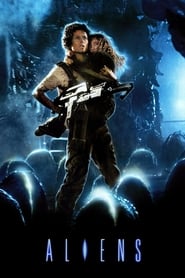
This is Jim Cameron. I wrote and directed this film back in '83, and directed it in '85 through '86. It was released in the summer of '86. July 17th, if I'm not mistaken. It started as a treatment. I was having a meeting with David Giler and Walter Hill, talking about another project, and that pitch was not going very well. I could tell by their sagging expressions that they didn't like any of my ideas. But they had read my 7erminator script and wanted to work with me on something. I was getting up and making my way toward the door and David Giler, one of the producers of the first film, said "We do have this other thing", and I said "What's that?" He said "Alien 2." And all the pinball machine lights and bells went off inside my head but I maintained a straight face and said "That could be interesting." And I suggested that I write a quick treatment, a quick outline, just to give them an idea of what I might do with it. So I raced home and stayed up for three days straight, drank about eight pots of coffee and wrote a 40- or 50-page treatment. Really what I did was I adapted a story I had already written, which was called Mother, which was an "alien on a space station" kind of story. It had the power loader machine in it. I had written this treatment a few months earlier. So I adapted it, dropped Sigourney's character and a bunch of marines into it, and in that one quick stroke created all the character names - Gorman and Hicks and Vasquez and all those folks - and dropped it on them a couple of days later. I think they felt like they'd hit the jackpot. That was the film they wanted to make. So they authorized me to go ahead and start writing the script. The problem was, that day I landed the job to write the script for the second Rambo film. So I called them up and asked David Giler what I should do. And he said "Don't be stupid. Take both jobs." So I took both jobs. I also had to do a rewrite of my 7erminator script to start production in February, so I had a three-month period where I had to write three scripts. So I decided that each script was gonna be two hours long, so it'd be 120 pages. So I figured out the total page count, whatever that is - I guess 360 pages. I divided the total number of waking hours I had during that three-month period by 360 and figured out how many pages per hour I had to write, and then I just wrote that many pages per hour.
0:04 · jump to transcript →
-
Stan Winston
I'm Stan Winston. I created the creature effects and the alien effects for A/ens. I remember Jim trying to figure out how he could make the beginning of this movie impressive. He said he wanted to use a robotic laser. It was an afterthought and it wasn't in the budget and I remember having the gall to say to him "If you wanna use it, you have to pay for it." And he did. - Is that right? This robotic arm and the laser came out of his pocket. I wanted a seamless blend from the end of the first film into the beginning of the second film. I certainly wanted to honor all the things that were good about the first film. So I went to school on Ridley's style of photography, which was quite different from mine, cos he used a lot of long lenses, much more so than I was used to working with. But the smoke, the backlight, the textures, the way he forces the frame by putting a lot of equipment, machinery and foreground pieces, I really studied all that. I wanted there to be a stylistic continuity. I also wanted to have my own style grafted onto that so that I felt enough of a sense of authorship to make it worth doing.
2:51 · jump to transcript →
-
Pat McClung
This is Pat McClung. I was the model-shop supervisor on the film. They're wearing modified costumes from Outland, or the basic suit is from Outland and it's been redesigned and they put some stencils on it. This is microglitter and fuller's earth blown on there. I remember in this scene the batteries in the flashlights kept going out. You would think this would be an easy scene to do, but, as with everything in this movie, it was harder than it looked. There are no easy scenes with Jim. There's that nice dissolve, the contour of the earth matching her face. When we shot this, a matte painting combined with miniature and perspective, there are some perspective gags going on there. We used a clip of Sigourney's face in the viewfinder to line up the curvature of the earth, so we had a nice match. I wrote the piece obviously with Sigourney in mind for the character. I was told she was on board and I should just toddle off and write the film when in fact no deal had been made with her whatsoever. So here was a script that was written that everybody wanted to make, in which she was in every scene, and they hadn't made a deal with her yet. That's why she got her first big payday of her acting career. She got a million bucks, which was a big deal. She might have been the first actress to get a million dollars for a movie in movie history. It was all because it was mishandled by the producers. She was the main character and they hadn't made the deal. She was worth every penny of it and more. When people saw the film, they realized that. I Knew what a phenomenal actress she was. I'd never met her. I had her picture up while I was writing the script. I went off the character that had been created in the first film, took her much further. Of course, this is Paul Reiser. I certainly had no idea what a great comic actor he would prove to be, and certainly that's how people think of him, not as a dramatic actor. I just read him in a lineup of actors in the normal casting methodology, and I thought he was really interesting, that he could play this really sincere but slightly smarmy guy who could then turn evil. This is a dream sequence, but you don't know that yet. I remember from the premiere screening of the film that the incomplete chestburster scene here really got people cranked up and on edge, set the tone for the whole movie, that you were here to be messed with, which is a good way to start off, I think. The way you get a cat to hiss like that is you put another cat close to it. I had no idea. I didn't know what you did to make a cat do that. But that's standard procedure. Bring a cat it doesn't know close to it and it'll do that.
4:32 · jump to transcript →
-
-
-
Tim Lucas
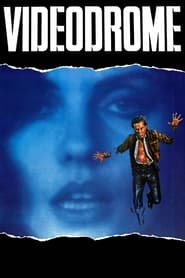
Harlan Ellison was Michael's favorite writer, and when Michael passed away in November 2014, Harlan spoke at his memorial service the way Brian O'Blivion would have done, by Skype. Harlan is played by Peter Dvorsky. He had made some TV movies prior to this, but Videodrome was his first feature. He went from this to a less conspicuous role in Cronenberg's The Dead Zone, and his career since has mostly been in Canadian TV movies and live theater.
7:08 · jump to transcript →
-
Tim Lucas
Its cover art by H.R. Giger may have influenced some of this film's ideas. This was practically Lally Cadeau's first feature film, but she became a major Canadian television star in such shows as Hangin' In, Road to Avonlea, which won her the Genie Award for Best Actress in a Continuing Leading Dramatic Role, and Five Years of X-Men, episodes before the feature franchise was launched. Her character of Rena King is said to have been inspired by Dini Petty,
9:17 · jump to transcript →
-
Tim Lucas
who had a talk show on Toronto's City TV. Videodrome was the first film that David Cronenberg made after going on his first press junket in the United States to promote scanners for Avco Embassy. David told me that this scene was written directly out of this new experience of appearing for short bursts of publicity on local talk shows, where he often had to field aggressive questions about whether his gory movies might be contributing to a climate of social malaise.
9:45 · jump to transcript →
-
-
-
Hello, my name is Stephen Thrower. I'm a film writer and journalist. And I'm here with George Pavlou, the director of Underworld. Hello, George. Hello, Steve. Nice to do this again with you. So we're going to be talking about your first feature film, Underworld. So I guess maybe we should start off by just...
0:05 · jump to transcript →
-
the second ever episode of Doctor Who when he was a child as well. Playing a caveman's child, I believe. He was also in Black Joy. Yes, that's right. Anthony Simmons' movie. And Anthony, in fact, was going to give me my first break in movies, but I was still in college. And I decided it was a bit too early for me to try and...
8:28 · jump to transcript →
-
We'd have to stay out there all day. We couldn't come back to shore. And it was just a horrible experience, they said, being stuck on this. And they're small boats. They weren't very large boats. Ships, I should say. But yeah, it was quite an ordeal, apparently. So tell me, as a director, making your first feature film, under a lot of pressure, time pressure, money pressure, how did you find...
32:21 · jump to transcript →
-
-
-
John McTiernan
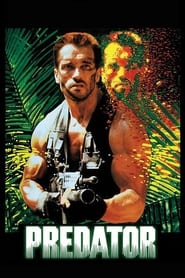
This film was, was quite a long time... It was the beginning of my career. It's my first studio film.
2:20 · jump to transcript →
-
John McTiernan
Jesse Ventura. I had no idea. I mean, I found out that the guy was a lot brighter than he pretended to be. And a lot more of a professional. But I was truly astonished... To find out that, you know, that he'd been nominated for governor of, what is it, Minnesota? Minnesota. I think this was his first feature, maybe his only feature, I don't know. You wanna know how I really got hired? You wanna know the real truth about how this happens? My agent said, "Look, "you want this job. "I think you need to sign up "with this particular lawyer." It's Jake Bloom's law firm. Jake Bloom is a business lawyer, he looks like, he looks like Pancho Villa. He has a wonderfully phlegmatic manner and he looks, he looks like an old hippie. He's very bright. But his law firm also represented Arnold at the time. My agent was very astute. That 5% was what got me the job.
8:43 · jump to transcript →
-
John McTiernan
And because it was my first feature, I didn't have credibility enough to say...
12:24 · jump to transcript →
-
-
-
And this was intended to be my first directing contest. I remember hearing that, because you did a Q&A at the New Beverly years ago, and that was the first time that I had ever heard that. Hey! The maestro himself. Yes. And Lyle Conway, the blob maestro as well. The blobinator. The blobinator. Oh, goddammit, that's good. This is going to be a good commentary, everybody. Hoyt Yeatman, visual effects maestro as well. Dream Quest.
2:24 · jump to transcript →
-
But this was designed to be your first film, Chuck. I was looking to get that directing break, and Mark Irwin, sitting right beside us, had done The Fly with Cronenberg and proved that a really kitschy film about a human fly could become a great classic. And I'd already learned at that point in my career how commercial Hollywood, so my more original ideas, I was having a hard time breaking. I thought, let me take the blob to its furthest extent.
2:49 · jump to transcript →
-
And Jack Harris was nice enough to give me the opportunity to go out and put it together. Hey, I know those guys. There he is. Shout out to Frank. Yes. So you and Frank supposedly went off after the success of Nightmare 3. That being your first film with New Line, you had taken the Blob remake to New Line and they passed, correct? New Line passed. By the way, what an amazing misdirect here from going from
3:17 · jump to transcript →
-
-
director · 1h 31m 3 mentions
Alex Cox, Michael Nesmith, Victoria Thomas, Sy Richardson + 2
-
Designed by J. Rae Fox and Lynda Burbank. Those are the aliens. That's another memorable line. Laugh away, fuck face. That's another line that people quoted. This is like the first film about Roswell, New Mexico, isn't it?
28:30 · jump to transcript →
-
I mean, there must have been about 50. Alex, it's the first film about anything. Just about anything! All this was taboo. Nobody was dealing with any of this stuff. It scared me to death. I'd gone to Roswell, New Mexico. I was so interested in the idea that there'd been these aliens there on this Air Force base and stuff. And I went there, and Waddell was from Roswell, New Mexico. I'm born in Roswell, so it was really funny that I ended up in this movie. We actually put in, I had lived in Roswell, New Mexico in another scene, actually.
28:57 · jump to transcript →
-
I like the fact that the Slim Jim makes the car alarm go off inside. It doesn't make them bat an eye. I know. I know. Yeah, you're wonderful on this side. Beautiful. That was my first scene. My very first day. This is the first thing you did? Yeah, first thing I did. That's great. So calm. Because you have to break the steering wheel column, don't you? Yeah. Yeah. But, like, it's very methodical.
31:08 · jump to transcript →
-
-
-
Making the film, I think, was a real attract to that complexity. I'm just looking at Laszlo Kovacs. Laszlo Kovacs did an amazing job. I'll never forget the day he got into it. John Mahoney. I had a lot of... Polly Platt. Polly Platt. A lot of talent helping me out on my first time here. She did art direction on Paper Moon.
3:30 · jump to transcript →
-
He pays her the ultimate tribute. He's going to keep it because he might be able to sell it someday. Oh, my God. I thought he was so funny. That's my hand changing cassettes. Thank you. I didn't get it right. You never do. I mean, Joe was my first love. He was my first sex, and the whole time he was going out with Mimi.
27:48 · jump to transcript →
-
Lloyd had, because there was just one shot that you had just like so much that they just thought it was a sick character. Well, that probably happened because I don't know how much I was ever looking at the sweat. I was probably just looking at how amazing you are in the scene, Ione. This is like kind of a... This was my first real kind of love scene, and I just thought you guys made it so... real. And you both look great.
51:48 · jump to transcript →
-
-
-
My first love scene, and it's with myself. I think we actually tried a song underneath it, One is the Loneliest Number, to sort of go with the hand movements. Ray Walston comes to play. Am I hallucinating here? Just what in the hell do you think you are doing? Learning about Cuba, having some food.
54:16 · jump to transcript →
-
And I said, wow, it was great. She says, what are they saying about me? And I, you know, this is like my first lesson in how to talk to actors. I thought I was being like the coolest guy, you know. So I said, well, Phoebe, I think people are really, really loving what you're doing. And she said, well, what did they say? I said, well, God, I heard someone say she's really great for a model. Oh, God. And...
56:12 · jump to transcript →
-
-
-
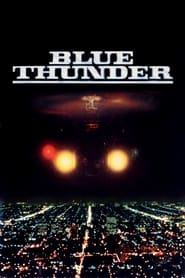
Hi, I'm Hoyt Yeatman. I was the Visual Effects Supervisor for Blue Thunder. And this was the very first film that Dream Quest Images... ...the company I founded a number of years ago, worked on. So it was our big break. And John was so nice... ...giving a chance to show what we could do. Does Cochrane drive a grey Corvette? Yeah. Why? Check 9:00. At the time... ...the shots that we needed done-- And there were many shots needed for this movie. --Were very expensive. And when we got a quote on them... ...they were in the area of $25,000 a shot. And a shot may only last for two seconds or something. So Columbia said, "Oh, that will never work." And... And so the Columbia guys went out and they found some guys that said: "We can do this for $5000 a shot." And that particular group, that will remain nameless... ...came and did some test shots, and when they finally came back to us... ...they were unwatchable. And the producer, Phil Feldman... ...would not even show them to me. I said: "Well, Phil, I can see it. I'm a big boy. I know what stuff looks like." He says, "I'm not showing you these shots." So at this point, we discovered Hoyt. And Hoyt, if I remember right, you, or you and your company... ...was working in kind of a garage in Culver City. That's right. It was a very small little room where we had built... ...our first motion-control system. And on this show, what we did, instead of building exotic models... ...we went down to the hobby store, basically, and bought a Tamiya... ...a very finely made, you know, model of an F-16... ...and Greg Jean, a renowned model maker, built it for us. And so that was the first real model shop that we had. It was Greg building a standard, off-the-shelf model. And that's what we used for the model work in Blue Thunder. So the shots that came in from Hoyt were just fabulous... ...and at an amount that we could afford... ...a little bit more than the $5000 that Columbia wanted to spend. But on the other hand, thank goodness we were backed by Ray Stark... ...who was powerful enough to tell Columbia... ...that we had to have the thing look right... ...and not cheesy-- - Right. --like some old horror movie. Right. Believability, I think, in this picture, was of prime importance. Yes, we always wanted to have things very, very believable. And with the helicopter... ...to do as much real stuff with the helicopter as possible. But then when we get into areas with F-16s... ...and some trick things the helicopter did... ...we would have to rely on, you know, some new technology. Right.
58:30 · jump to transcript →
-
This sequence, I was told by the assistant director... ...would never wind up in the movie because it was too silly and too crazy. But it is definitely one of my favourite, favourite scenes in the movie. And, yes, it's silly, but, you know, it's just great fun. This is-- Hoyt, you were there shooting. - That's my first day of shooting. Kind of woke me up, because after the explosion... ...we looked at our matte box and it had melted the front element of it... ...so it got pretty hot.
1:31:49 · jump to transcript →
-
-
-
Jim Piddock
A real tour de force cut, isn't that wonderful? Cutting from one side of the window to the other, and we see it's not actually a window, but one-way glass. To what end, I'm not quite sure. Still, you have to admire that cut. Perhaps the one-way mirror was put there so that we won't see the movie camera that was filming the sad fellow on the other side, which would obviously spoil the illusion. You see, you must keep the movie camera out of shot at all costs, something these filmmakers knew so well, even though this was their first film.
9:46 · jump to transcript →
-
Jim Piddock
And you can run this video back if you like, and I think you'll confirm that you didn't see any of those things in the mirror. And this, remember this, their very first film. Absolutely marvelous. And now we have some more talking here, some more bi-play. And once again, I think you have to admire the human face. I, in fact, defy you not to. They've been joined here by the sad, unpleasant character. We know him from the other side of the mirror, don't we? And we know we're not going to like him, really. And that's what storytelling is.
10:44 · jump to transcript →
-
-
-
Roger Moore
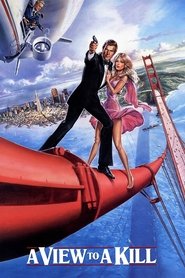
I can always remember the great thrill I had in 1954 having been brought up as a kid seeing MGM movies and going to a sneak preview of my first film at MGM. The last time I saw Paris. John Barry,
8:13 · jump to transcript →
-
Roger Moore
in Udaipur. And Maud would speak to him every day on the phone, and then he finally arrived. And he said my first words to him were, you don't by any chance happen to have a Hershey bar with you? Desperately missing Hershey bars in India. But they were visiting the set, so...
59:53 · jump to transcript →
-
-
-
-
technical · 1h 35m 1 mention
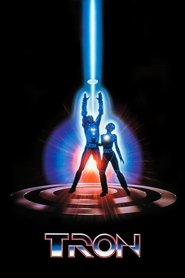
Steven Lisberger, Donald Kushner, Harrison Ellenshaw, Richard Taylor
-
director · 1h 30m 1 mention
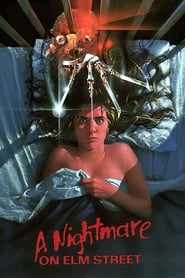
A Nightmare on Elm Street (1984)
Wes Craven, Heather Langenkamp, John Saxon, Jacques Haitkin
-
-
-
-
cast · 1h 36m 1 mention
The Garbage Pail Kids Movie (1987)
Mackenzie Astin, Katie Barberi, William Morris

Related topics
Other topics that frequently come up in the same commentaries.