Topics / Creative decisions
First feature
99 commentaries in the archive discuss this, with 256 total mentions and 21 sampled passages on this page.
Filter commentaries
Filter this topic by the film's decade or the type of commentary.
Showing 12 of 99 commentaries
Clear filtersBy decade
Across the archive
ranked by mentions · click any passage for the moment in the transcript
-
writer · 1h 35m 5 mentions
Simon Barrett, Adam Wingard, Greg Hale, Eduardo Sánchez + 5
-
implanted breasts back to back. You know, we're basically saying, hey, you saw the first film? Okay, great, we're moving on. You know, we did that with the first film. We're not apologizing for it, but we're also not exploiting anyone more than ourselves. So, by the way, I was a licensed crime investigator. I still am a licensed crime investigator in the state of California. That was my day job while Adam and I were making movies like the first VHS and A Horrible Way to Die because we were
2:30 · jump to transcript →
-
Tape 49 is a prequel, correct? That's correct. But we saw footage from the first film, but this is still a prequel. So it's not really a prequel. It takes place in the middle of the first movie. Well, it takes place at the very beginning of the first movie. The idea is Tape 56 takes place over several months. So you see them attack the people in the parking garage, and you see them watching that, and then they go to the house. Whereas Tape 49 is just a couple nights. So it actually takes place after...
5:52 · jump to transcript →
-
That was like Tom's thing. Anyways, but this actress is Hannah Hughes and I've known her for a long time. She was in one of my first films, Pop Skull, back when she was still only 16 when we did that. So I've known her.
17:16 · jump to transcript →
-
-
-
Joss Whedon
But I think the most important thing about the movie is that it's mine. That it's all me, and that really because I'm the director and the writer, I really created it all myself. I think that's important to bear in mind. Especially because, while I've been talking, you've already seen the work of two other directors, not to mention the insanely large village, possibly a metropolitan area, full of people who are working in every frame to fulfil whatever vision it was I thought I had. One thing about this movie that you're gonna hear a lot is how extraordinary the crew, the post, the pre, uh, the production people, how they not just carried or fulfilled, but inspired this movie, which begins with this rather iconic image. Um... A very deliberate decision on my part was to start off with the hardest thing in the movie from the first one, what we refer to as the "tie-in shot." Rather than getting the Avengers back together, I wanted to say right up front, "No, they're in it. "And here's the very climax of the first film. "Here's the very thing you always showed up for, "all of these guys in one enormous shot "with a big slow-mo, kind of, uh, comic book panel moment." And my original concept had been that the very first frame would be the slow-motion part. Kevin Feige very rightly argued that without some context, people just wouldn't know what they were seeing, um, and wouldn't appreciate it as much as they would at the end of the shot. Which, um, turned out to be very true. When I talk about the other directors... There was a short shot of people running up the stairs that my producer, Jeremy Latcham, went ahead and got with our "C" cameraman, Sam, while we were in Dover Castle, which is right here and played as the interior of the fortress. Um... We were mostly stuck in big, beautiful rooms filled with equipment, and there are so many lovely little spaces. He said, "Shouldn't we go and get soldiers running about, "and show some of the stairwells and the halls, "and all the things that make this space more than just big rooms?" And we ended up using a lot of that footage. It was just grand. And, of course, the other director I'm referring to is John Mahaffie, who is an actual director, um, the second-unit director, who shot so much great footage for this movie. I shot about 100 days, he shot over 50. And some of them are elaborate. That's another, what I was referring to before. Some of the more elaborate stuff inevitably gets shot by second unit because the characters in it are CG, and requires camera setups that take hours and hours. And so on the one hand, I, being the most important director, the director of the first unit, I'm busy getting really the heart of the piece, and he's getting these secondary shots. Except that the "secondary shots" he was getting, I just used air quotes, you cant tell, but I did, were very much some of the most beautiful footage that was shot in the film. And I started to feel like Reaction-Shot Joe. I would just see these glorious things he'd stitch together, and then I'd... There'd be a close-up of somebody reacting to it. I was like, "That's me! I did that. I'm also a part of the team." Um... Because the team is how this gets done. You're gonna find that's also part of what we have to say in the movie. But in the making of the movie, it's very much the same thing. Both of these guys, Thomas Kretschmann and Henry Goodman, extraordinary thespians, who would come in to do smaller roles. I actually said, "If we made a movie with only the day players..." They worked more than that, but just literally people who were there for just a day. "we'd have the most star-studded cast you could work with." It's wonderful. It's probably a terrible thing about the industry that you can get amazing actors to play these smaller roles in franchise films, but it works for me.
0:42 · jump to transcript →
-
Joss Whedon
So I asked the question, "Why would I do this, again?" And the main answer was because I wanted to make a new movie. A different Avengers movie. And while providing the things that people expect from the Avengers movie, i.e. the tie-in shot that you saw before, I also wanted to not just tell a different story, but tell it differently. And a lot of that can be seen in the editing and framing and general style, the lenses. In the first film, I was very slavish to 3D. I was playing it as though anything not in the vernacular of 3D was going to be confusing for the audience. And in the couple of years in-between, it became clear that, that isn't really the case. And, besides, 3D really spoke to the way I was used to shooting. I like wide lenses. I like understanding the space around me very Clearly. I didn't like a lot of heavy cutting. I liked shots that would deliberately go from one place to another, very old-fashioned. For the second film, I wanted to do something unlike anything I had really done. It's a little bit like the film I shot right before, Much Ado About Nothing, which was kind of... We had a bunch of great actors standing around, speaking Shakespeare, and, as often as possible, three cameras, occasionally four, at least two, getting them. And quick side note, the mercenary who speaks right here... No, it wasn't. That was a bit I added very late in editing. And that's actually Jeffrey Ford, one of the editors, who just, uh, did it on a mic in the room, and we liked it so well, we kept it. You're also gonna hear his name and Lisa Lassek"s name, those editors who... I don't wanna say saved my life, but I just did. They are so much a part of everything that works in this movie. I'm incredibly grateful. Lot of moving parts, partially because of the way, um, I, uh... As I said, I wanted to shoot this differently. Where the first one was very deliberate, this one was deliberately casual. Yay. [hat little "Yay," by the way, for which both Robert and I have been given credit, was actually Jeremy Latcham, again, saying, "He needs to make a noise there," um, in post-production. And I was like, "Oh, no, he doesn't. "We could do it, but no one's gonna hear it." So, he gets all the credit for that. And we have fo talk about ILM, too, and the extraordinary work they did with the Hulk and with Ultron. I mean, what they did in the first movie was amazing, but this is a completely different level. This is a real performance. And even with all the reference that Mark gave them, it's something that has to be crafted pixel by pixel, and then made human. And I can never stop looking at these guys. Because, again, with all of these cameras and this very different way of shooting, we ended up with something like that, an over, where you see just a blurry shoulder. That blurry shoulder is about as expensive as a face. It's something we could never do in the first movie. But we talked about it specifically as wanting to have the Hulk play a character in the film, not an effect, and to use the same casual vernacular when we were shooting him as we would with any of the other, um, players. And their thing, the idea that Natasha has this power over the Hulk, and obviously this, uh, budding romance with Banner, really came from that scene. That's where it all started. The idea of the lullaby as how they deal with him spiralled up into the idea that Bruce Banner and Natasha Romanoff are actually very similar. And so the scene always made perfect sense to me, and we had Scarlett's side of it, but we really didn't have the scene until just a few weeks before we delivered the film. And even I was kind of stunned by the physicality, the sensuality, and the emotion of that encounter. And it's one of those things where you all say, "This will work," but then you get to feel it and It's like nobody ever told you about it. It's an extraordinary thing to work on something for two years and not understand it until you see it. Or not understand the power it will have.
5:19 · jump to transcript →
-
Joss Whedon
And I love the two of them. I did at one point realise that I had sort of turned Maria Hill into a girl Friday in this movie, because there were too many heroes for her to do that much. But it makes it all the better, I think, when she shows up in her old gear, firing a gun like she should ought to. This shot was very difficult. Again, one of the last shots we got. Kevin is very leery of shots that feel artificial, and when you are flying with someone and you do a camera move around them, you're in great danger of feeling artificial. And so we worked hard in the colouring and the way New York was and in the textures, to try and mitigate that and keep it real. And then we went right through that glass, which is a beautifully crafted effect. This shot is something slightly similar to what I did in my first film, Serenity, in that every member of the team is in it. Not all of them speak, but they are all visible at some point. And we get, basically, a tour of the place. Obviously, because they come in through the "A," it has only been referred to as the "A-hole shot," but what it is for me is a very important way to explain the space of Avengers Tower to the audience. There is a bit of showing off. There is a bit of, "Look at all our grandeur." But what I'm really doing is explaining exactly where everything is in relation to everything else, because later on we will need to know. Robots are down here, and party's over here, and Pietro is gonna be standing on that glass later. Charlie Wood designed the set, and it's the biggest and one of the most beautiful things I've ever set foot on. It is glorious. Sometimes it's almost overwhelming. And besides wanting to show the scope of it, to play into the epic nature of the thing, it allowed me to come up with gags like Pietro getting... Like Hawkeye shooting out the glass from under him. And it allowed me to create action, and also to just have an enormous amount of fun. Sometimes the least fun. This particular space is so big and that sort of holo area so empty that it was sometimes difficult to shoot in, to figure out what to do with people. But every frame is such candy because the work these guys put into it, building it and dressing it, and the depth in frame that you can get in these instances is never not exciting. I literally finished shooting on this set, and on that day walked into a corner I had never been in downstairs, and was like, "Wait a minute, "there's 100 cool ideas I have for this area."
15:34 · jump to transcript →
-
-
-
Francis Lawrence
One of the fun things for me about this whole sequence is the intercut. I just thought that it could be a great introduction to the two characters and to the two worlds. And one of the things that I played with throughout the sequence is screen direction. So if you notice even from the very beginning, I typically have Jennifer facing left to right, and Joel facing right to left, as you can see here. It was a trick that I learned. I remember watching old Hitchcock movies, and watching Strangers on a Train, and there's... In the opening sequence, you see the two men who are moving toward one another, and eventually gonna meet. And it's something that I've employed a lot, I think, that screen direction is actually a huge benefit in storytelling. But especially in a sequence like this where you feel like these two characters are gonna end up on a collision course with one another, that narratively, you know that at some point, that they're gonna come together. American! Most of this ballet sequence here was shot in the Budapest opera house. And we had support of the Budapest opera, and the Budapest ballet company. And most of the other dancers there are all dancers with the Budapest company, and from a variety of places. There's some Americans, actually, and some Hungarians. Great group of people. And there was our nice leg break, one of the first specific, kind of, tonal hits in the movie. It was something I wanted to do with the movie, was to not hold back too much in terms of some of the shock, and audacity of some of the moments that take place within the story. And so to see the real damage done to her leg there... I just remember seeing, you know, there's been sports injuries over the years. And not too long before we shot this, there was a French athlete in some, I want to say some Olympic games or something, who had done some vaulting, and just kind of landed slightly wrong and bent his leg at this really horrible angle. And it was really difficult to look at, but we basically modeled the bend in her leg based on the images of this French Olympian. Word is they were vice cops, looking for Chechen dealers... or some family guy getting a blow job in the bushes. They weren't there for Marble. They just got lucky. Chances are they would have questioned you, and let you go. You can see here, one of our really cool locations. Maria, my production designer, was just really fantastic at looking for locations and scouting. And I think she had gone out to Budapest a few months before me. And we had also hired Klaus, who was our location manager for the Berlin portion of the Hunger Games films, and we liked him a lot. And he was nearby, and so he came down to Budapest and they worked together, and they found these fantastic places. These old abandoned hospitals, where the surgery Is, and where she's about to wake up, was this old, abandoned maternity hospital. And this fantastic space is part of a library in the seventh district of Budapest. Undercover narcotics agents saw what they thought... was a drug deal in process. You can see outside of Jen, too, that we really put together a fantastic cast for this movie. Jeremy Irons, who's an icon and a fantastic guy, and I think one of the best actors to have ever existed, was my first choice to play Korchnoi. And luckily he said yes. And Matthias, we brought in. I'd been a fan of his since seeing him in Bullhead and Rust and Bone and things like that. And he's so versatile. But he became a choice when we actually decided to skew the age of Dominika's uncle down a little bit. I wanted to add a little bit of creepiness to their relationship. And so the idea that, you know, maybe her father had a much younger brother, so that, as she was growing up, there was this, you know, charming, handsome, much younger uncle, you know, somebody that she might have even been attracted to, and he might have been attracted to her, was something that I wanted to play with in the course of this. And I thought he was just perfect for it. He's such a fantastic actor.
6:35 · jump to transcript →
-
Francis Lawrence
Here's a little cameo. This is one of Jen's best friends, Laura, who also acted as her assistant on the movie. What a pleasure. May I join you? There's a fair amount of cameos in this movie, probably more than I've ever done in terms of people who work on the movie. And friends, and things like that. If you notice the policeman in the beginning of the film that's on the subway train with Joel, in the furry hat, is actually Chris Surgent, my first assistant director, who I've worked with since I Am Legend. I actually met him on I Am Legend. He was the first assistant director of the second unit, and did all the big New York City lockdown sequences for us, for the opening, and I was really impressed with him. And we've become good friends, and work together all the time now. Tell me the real reason you are here. This was actually a really, really beautiful location in downtown Budapest. It's the New York Cafe, which is attached to the hotel that we used for the exterior. And it's become a very popular tourist attraction, and a place to go eat because of its opulence. But I just thought it would be a fantastic spot for this character, for Ustinov's character to hang out. One of the things that I wanted to do, and also Maria, the production designer, was to show different facets of Russian architecture, right? The kind of classic, opulent stuff like places like this, or the ballet, the kind of socialist, Brutalist structures like her uncle's office. Some of the government housing-type environments like where she lives with her mother. But one of the things that really excited me that we got into was the idea of color. I think, honestly, people tend to expect in movies like this for it to be very gray, you know, just bleak. And what Maria and I found in our research was that there is plenty of color throughout the environments. And we had decided to really try and utilize that, and she pulled, I don't know, hundreds and hundreds and hundreds of photos that we used, that gave us a real sense of color palette and a sense of mood and a sense of light. And we ended up using that also for Jo, the cinematographer and I, in terms of how the movie kind of looks in terms of lighting styles as well. And that led us into a direction of, you know, post-World War I/ Russian art, and found that a lot of the, kind of, colors that are in that art were also found in a lot of these environments that we were finding in Central and Eastern Europe. And we ended up really trying to utilize those. And it was something really exciting for me, because to discover that this movie could be quite colorful was a lot of fun.
19:29 · jump to transcript →
-
Francis Lawrence
Here, we deal in psychological manipulation. You'll be trained to determine a target's weakness... Sparrow School was always one of the aspects of Jason's book that really intrigued me. It was one of the really, truly unique pieces of the story. And I always thought that it was gonna be a standout segment in the movie. But it was something that Justin and I had to really, kind of, develop out specifically. And it was fun to try and figure out what makes it hard for her, the kinds of horrible things you have to learn to do, but what specifically they would teach you that's not the obvious, right? Not just how do you put makeup on, how do you look sexy, how do you act sexy and, you know, walk in heels or something like that. It was the idea of having to get past what you might find disgusting to try and foo! somebody. But more importantly, to figure out the human puzzle, right? There's a great line that Justin came up with that every human being iS a puzzle of need. Find the missing piece, and they'll give you what you want. So that idea of really learning how to figure out the target, figure out what they need, and become what they need was really interesting, because that actually becomes the sort of, the objective for her later, as She Starts to target Joel. She has to really be smart, because she's not dealing with an amateur when she's dealing with Joel. Simon... I've been with this guy for three years. He is not going to deal with anybody... You can see here Joe! now. He's such a fantastic actor, I mean... He was my first choice for this role. I think he's probably one of the best working actors of his age right now. I've been a fan for a really long time. I mean, all the way back from Animal Kingdom. And he was in my friend Scott Cooper's movie, Black Mass. But what I always really like about him is that he feels really honorable and feels really honest, and I wanted those elements to the character. And I think he brought that in a big way. And it was really fun to work with him, too. He's just a good guy, and kind of gelled in with the group. Worn on the hands, after intimate contact... the subject will be traceable for up to six weeks.
31:56 · jump to transcript →
-
-
director · 1h 34m 2 mentions
Scott Stewart, Jason Blum, Brian Kavanaugh-Jones, Peter Gvozdas
-
also from a practical point of view no one really wants to you know night shooting is hell and a cinematographer friend of mine on my first movie described it as akin to waterboarding and said never make any major decisions in your life while shooting nights don't refinance the house don't buy a car don't have an affair don't do any of these things because you're under tremendous emotional and physical distress um
20:48 · jump to transcript →
-
But David used the sun and we just ended down the windows and colored them blue and And that was a way for us to shoot days most of the time in the movie. There was almost no night shooting True all night long night shooting should talk about Josh Stamberg who played a police officer in my first movie Legion as well And even though I originally wrote the role of Mike for him Karen's husband that rich Hutchman plays Josh decided
21:18 · jump to transcript →
-
-
multi · 1h 39m 2 mentions
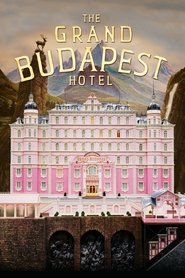
The Grand Budapest Hotel (2014)
Wes Anderson, Roman Coppola, Jeff Goldblum, Kent Jones
-
Wes Anderson
Thank you. Very kind of you. Well, here's where we had to do a cheated-- We had to do a fake painting to get the apple in the right place, you see. That, I will say, was some good advanced thinking. I said, "Let's just see how we're gonna rip this open." And then we said, "We're gonna need a different painting to get this..." That's something I would not have done on my first film. It took about 15 years for me to have a thought like that in advance.
1:24:09 · jump to transcript →
-
Kent Jones
He's there in your very first film.
1:39:44 · jump to transcript →
-
-
-
she can be giving a speech and watch her hand. You can see with her hand right there, she was actually, that's the one indication that she was actually singing. And we needed to feel the threat, but also we always talked about her and her brother, her character's brother, as being the daughter, son and daughter of Max from the first film. And that was always going to be a secret between us. Yeah, it was always like stuff that McQ and I loved and we cut the song out and he put it right there. I was like, oh man, you're going to do it. If you're listening. I loved it. I loved it.
36:46 · jump to transcript →
-
You're there going, you're going to be okay. We're going to get through this. It's going to be all right. We're going to live. Come with me if you want to live. And you can see, I would not be the filmmaker that made this movie had I not been making movies with you since Valkyrie. And you can see a clear delineation between the first film I made and the three subsequent films I made with you. And so all of those things that you're saying, which are on the one hand very kind, they're also greatly influenced by...
2:22:39 · jump to transcript →
-
-
-
multi · 1h 33m 1 mention
Wes Anderson, Peter Becker, Roman Coppola, Jake Ryan + 3
-
-
technical · 1h 22m 1 mention
Måns Mårlind, Björn Stein, Gary Lucchesi, Richard Wright + 1
-
-
Related topics
Other topics that frequently come up in the same commentaries.