Topics / Creative decisions
First feature
99 commentaries in the archive discuss this, with 256 total mentions and 19 sampled passages on this page.
Filter commentaries
Filter this topic by the film's decade or the type of commentary.
Showing 11 of 99 commentaries
Clear filtersBy decade
Across the archive
ranked by mentions · click any passage for the moment in the transcript
-
-
Francis Ford Coppola
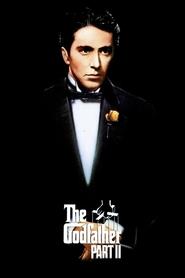
bring these actors back. Even the ones that had been almost extras in the first film started to have more developed important characters in the second film and then certainly on the third film whenever possible.
21:46 · jump to transcript →
-
Francis Ford Coppola
A playwright, I think he wrote A Hat Full of Rain, and a fabulous improvising actor and just a wonderful character. Well, you know, kind of right up there with the people from the cast of the first film. I believe he had a nomination for this picture. I'm not sure, but I think he did.
30:01 · jump to transcript →
-
Francis Ford Coppola
really the same philosophy and structure. It's just that the ease between us was much greater and there was room to express ideas. I didn't feel as I did on the first film, up against this, you know, kind of crotchety school norm that just said it had to be this way. And I think I felt more free with the second Godfather. I was running the production. I pretty much had no one to answer to.
33:36 · jump to transcript →
-
-
-
Nick Pinkerton
This is the first feature for Cimino, who by the end of the 1970s would have a massive critical and popular success with The Deer Hunter, and who by the beginning of the 1980s would be persona non grata in Hollywood due to the massive losses incurred by his 1980 film Heaven's Gate, whose failure would essentially sink United Artists, the studio that underwrote Thunderbolt and Lightfoot.
0:32 · jump to transcript →
-
Nick Pinkerton
Eastwood's character asks Bridges, you Indian, on hearing the name Lightfoot. Bridges responds, nope, just American. For good or ill, Michael Cimino is a filmmaker who conceived of himself specifically as an American artist, and that's already very much evident in this, his first feature. The song we're hearing is by Paul Williams, titled Where Do I Go From Here, written expressly for the film.
9:50 · jump to transcript →
-
Nick Pinkerton
in the relationship between Eastwood and Bridges, also perhaps Eastwood and Cimino, the first-time director. Eastwood himself was fairly new to the director's chair, having started out in 1971 with his directorial debut, Play Misty for Me, released when he was 41 years old. It had been a very long trip from the days of Francis in the Navy and TV westerns to A-list status.
11:54 · jump to transcript →
-
-
-
Francis Ford Coppola
Partly because Al had twisted his ankle jumping on a running board of a car in the scene in the hospital. And so he had to go off to the hospital and I didn't get to finish it because I lost the actor. And they made a big stink of how my first week was embarrassing and stuff. But the first week, if the records be checked, the first day was in Best Company, Polk's Toy Store. And I have to remember what the second day was. But the third and fourth day was the Sollozzo murder in the restaurant.
41:14 · jump to transcript →
-
Francis Ford Coppola
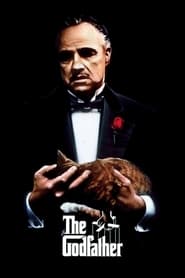
firm ideas about structure and how things should be done. And on the second picture, the second Godfather picture, I think it was much more mutually harmonious and respectful. But, you know, on the first film, I was, like, not really... The crew didn't kind of understand what I was doing there, why I was chosen to be the director. And, you know, the crew, you know, these kind of New York...
1:14:05 · jump to transcript →
-
Francis Ford Coppola
So this Sollozzo murder, I've heard it said, you know, years after the fact, people talk about how the godfather got made, and Paramount never denied that I was on the outs with them, they were going to fire me, but they said that it was sort of justified because my first week, you know, wasn't as strong as it should be.
1:24:15 · jump to transcript →
-
-
multi · 1h 59m 5 mentions
David Naylor, Guy Hamilton, Tom Mankiewicz, John Barry + 14
-
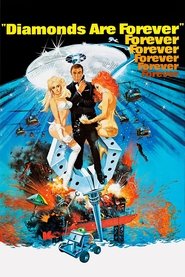
Diamonds of Forever's production designer was Ken Adam. His first film for co-producer Cubby Broccoli was 1960s The Trials of Oscar Wilde. Now back to Tom Mankiewicz. I think Ken was the first production designer on Dr. No, and he had been on most of the pictures. He was a tremendously artistic, finicky fellow. Very charming, or still is. A German who had flown for the RAF during the war in England. And he's a brilliant, brilliant production designer.
19:58 · jump to transcript →
-
who was more a button-down sort of fellow. Now here, the diamonds are hidden in the quartz. That was my first fight with Cubby. Felix says, I give up the diamonds. I know the diamonds are in there, but where are they? And Bond says, alimentary, my dear lighter. And Cubby said to me, and what the hell does that mean? I said, Cubby, it's the alimentary canal.
27:10 · jump to transcript →
-
Look carefully at Shady Tree's acorns, and you'll see that the one on the left is actress Valerie Perrine in one of her very first film appearances. Perrine went on to star opposite Dustin Hoffman in Lenny, for which she was nominated for an Academy Award, and made a memorable impression in Superman the movie. Jill St. John recalls shooting in Las Vegas. Because wherever we went, it was comped. You know, those are the days in Las Vegas where everything was free.
35:45 · jump to transcript →
-
-
-
-
-
-
-
-
director · 1h 28m 1 mention
Don Coscarelli, A. Michael Baldwin, Angus Scrimm, Bill Thornbury

Related topics
Other topics that frequently come up in the same commentaries.