Topics / Creative decisions
First feature
99 commentaries in the archive discuss this, with 256 total mentions and 11 sampled passages on this page.
Filter commentaries
Filter this topic by the film's decade or the type of commentary.
Showing 4 of 99 commentaries
Clear filtersBy decade
Across the archive
ranked by mentions · click any passage for the moment in the transcript
-
-
Tim Lucas
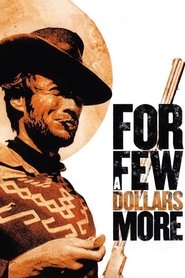
With a series of minimal but effective touches, Colonel Mortimer has already defined himself as a man who lives according to his own rules, rather than the laws laid down by weak and corruptible men. The second appearance of those snake eyes, you will find it's something of a motif. The Tucumcari station clerk is played by Roberto Carmeldil. He played the role of Cersei in Leone's first feature, The Colossus of Rhodes, but you may remember him better as the sheriff from The Big Gun Down.
6:20 · jump to transcript →
-
Tim Lucas
exhilarating, such a daring stylistic advance over anything in the first film, and thrilling not only for Morricone's inspired frissons of sound, but in part because it confirms something that we won't actually learn for another couple of hours. Leone shows Mortimer and Manco occupying the same or at least similar space, and then he proceeds to contrast the laughing eyes of El Indio on the poster with Mortimer's pleasured bloodthirst as he identifies his next quarry.
24:25 · jump to transcript →
-
Tim Lucas
Kinski, also a renowned stage actor, had no respect for that trash, as he called it, and likely thought of himself as a failure at this point in his career. Yet this film turned things around for him forevermore. This was the first film he made that was literally shown everywhere around the world to great success. It was followed by David Lean's Dr. Zhivago, which I believe he actually shot first, but it happened to be released later.
44:12 · jump to transcript →
-
-
-
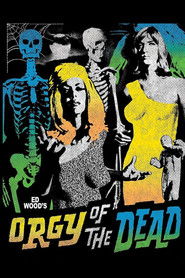
Well, this is, wait a minute, let me interrupt this for a minute. This is Pat Barrington now here. Yeah, okay. Doing the Golden Girls sequence, which Apostolof said was done, you know, obviously based on Goldfinger. I'll get back to what he was talking about. With John Andrews as one of the giants, and I think John Bealey is the other guy. Yeah, and let me just... Well, you mentioned that John Andrews, of course, plays the wolf man. Yeah. Yeah, now Pat, I think this is her first film.
24:50 · jump to transcript →
-
Motel Confidential was his first film after this one. And what's so surprising about Apostolof's other films, which we should get into, especially the ones with Ed, was they were contemporary. You know, suddenly they were dealing with, you know, contemporary subjects, the black and whites. I mean, College Girls, the name of the sorority is LSD, isn't it? I mean, it's... He didn't write College Girls. Well, I said he made it. Well, he claims he wrote all those. Apostolof.
37:04 · jump to transcript →
-
was a big shot motion picture attorney. So I'm at her cocktail party and I see a person who she introduced as her father. Now here comes the one-two pitch. I could swear I had met him before, but I couldn't remember where. We started talking and both of us brought up a lot of mutual acquaintances and, stupid me, I suddenly realized her father, who was a rich industrialist, bought out Republic Pictures. Now, Apostolof's first film was that journey to freedom was released by Republic Pictures.
57:33 · jump to transcript →
-
-
-
Tim Lucas
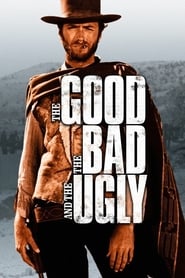
The graying beard is the same, but it's mostly that soulful, hangdog look about the eyes that they share. Antonio Casas might have made a good Cheyenne. Casas' association with Leone went back as far as Mario Bonnard's The Last Days of Pompeii in 1959, which Leone had assistant-directed, and also his 1961 directorial debut, The Colossus of Rhodes. His other films prior to this included Juan Antonio Bardem's Death of a Cyclist,
9:38 · jump to transcript →
-
Tim Lucas
This film was shot in 1966, but its U.S. release was withheld until Christmas Day, 1967. When I first accepted this assignment, I was a little annoyed that my first commentary had to be for the last film in this trilogy. I prefer to approach these things chronologically. However, the events in this film appear to precede those in the two films that come before, so in a strange way, this film is the first of the three. Bastards! Come here!
27:47 · jump to transcript →
-
Tim Lucas
It was this opportunity that led to his casting in his first film, the Western classic High Noon. In this film, he played Jack Colby, one of the three desperados seen waiting at the train station for the arrival of Frank Miller, the scene that inspired the pre-credits sequence of Once Upon a Time in the West. So he was central to Leone's American Western DNA. This debut was quickly followed by two other Westerns, Raoul Walsh's The Lawless Breed and Hugo Fregonesi's Untamed Frontier.
1:26:40 · jump to transcript →
-
-
multi · 1h 49m 2 mentions
John Cork, Ursula Andress, Eunice Gayson, Margaret LeWars + 20
-
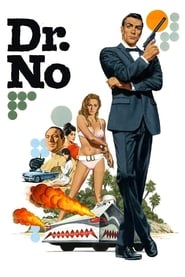
who was location manager on Dr. No. And my first request for Chris was, can you find me a room with a piano and preferably no windows, but certainly darkened room because I couldn't work in that wonderful lotus life sunshine. So he did find that for me. He was also instrumental in introducing me to the Byron Lee
56:37 · jump to transcript →
-
made a partnership with Cubby. I don't know the details of that. And they both came over and started a production company, which they called Warwick Films. And their first film was Red Berry, I think, with Alan Ladd. Stanley Sopel, who had worked with Dr. No producer Cubby Brockley on many of the Warwick films, remembers receiving a fateful phone call from the producer. Stay right where you are.
1:15:04 · jump to transcript →
-
Related topics
Other topics that frequently come up in the same commentaries.