Topics / Cinematography & lighting
Coverage
52 commentaries in the archive discuss this, with 110 total mentions and 55 sampled passages on this page.
Filter commentaries
Filter this topic by the film's decade or the type of commentary.
By decade
Across the archive
ranked by mentions · click any passage for the moment in the transcript
-
director · 2h 43m 23 mentions
Mission Impossible Dead Reckoning Part One (2023)
Christopher McQuarrie, Eddie Hamilton
-
That says, good luck, by the way. That's Russian graffiti there. And Eddie can expound a little bit on the challenges of editing this. Yeah, this was, the coverage, the raw footage was extraordinarily good. And it's beautifully lit. It was quite an easy sequence to build an assembly of because there was just so many great options and great angles.
3:45 · jump to transcript →
-
And then we come in and redress whatever actors were in that coverage. Yeah, you can see here. Was it SweatCon 4, the highest? I think SweatCon 3 was the highest. Right now we are in SweatCon 3. Yeah, there we go. And that should give you a sense, by the way, of the atmosphere on this set. As much as this is a scene about extraordinary pressure and tension, it was a lot of fun. They really quickly became a crew. They were all enjoying this work enormously. Yeah.
5:01 · jump to transcript →
-
that tends to paint you into corners. I really wanted the movie to tell me what its look was, and obviously I want every mission to feel different. And Chunky Richmond, our camera operator, Fraser Taggart, cinematographer, Martin Smith, our gaffer, we were finding the look of the movie, of the sets, here on day one, and this was the first shot, was Carrie's close coverage. And what you're seeing
16:48 · jump to transcript →
-
-
-
And right away, you just know the division. One's on one side, one's on the other. I will give credit where credit is due. You watch this scene. And originally, there was a slightly different cutting order. And I was playing it as a sort of moment between you guys. I was playing more in the close coverage of you. And you said, no, no, no, no, no. It was like, make it about them. Don't worry about us until Scalpel and Hammer. You remember? Yep. And I thought that was a really great note. And it created this...
20:01 · jump to transcript →
-
Yeah. As you're editing it, go ahead and send me those surprises daily. I just look like, oh, my gosh, this is just amazing. This was originally not a hard cut. This was originally a long establishing shot, and there was more dialogue at the top of the scene. Great shot. And you're talking about 6 o'clock in the morning. You had to go there. You only had about an hour to shoot the establishing shots of the scene before you went into close coverage and we could hide that the sun was coming up.
46:48 · jump to transcript →
-
And also it meant he didn't have to walk around on his hips. But he just also understands story and understands this movie so well that he was able to... I mean, look at the stuff that he brings. Yes, and this whole scene was shot over two days. All this dialogue took so long because of all the coverage and all the little bits of storytelling that are required. And...
1:21:14 · jump to transcript →
-
-
-
William Friedkin
And he wasn't very happy about that. Robby Müller is the kind of a guy that likes to envision a scene and the light that it's going to play in. And if it's natural light, you can't keep moving around to cover it. But often you need coverage in an American film to keep a scene moving. So there are several sequences that we shot that just didn't work because I didn't get coverage on them.
1:14:39 · jump to transcript →
-
William Friedkin
I think about my shots in my head. And I often, you know, I'll think about how I want a scene covered or if I want coverage at all or where. And I may even...
1:28:24 · jump to transcript →
-
William Friedkin
write down some notes for myself so I don't forget the coverage the next day after I've worked it out the night before or even weeks before. And then I'll come to the set and tell the whole crew what I want to shoot. I'll say we're going to cover the scene this way, this is what's going to happen. I'd like to pick up the following setups and I will encourage the crew and the cast to make suggestions and I'll very often alter my plan
1:28:35 · jump to transcript →
-
-
-
Now, this next scene is another little fun thing. John Hannah was just petrified that this next shot would never work. He knew I wasn't going for any coverage. It's all done in one big one-er. And he was so nervous that he would come across badly or that it wouldn't work. There was no coverage.
1:24:28 · jump to transcript →
-
It was a big winner for audiences in every screening I ever saw. Sometimes you just got to go for it and do it with no coverage. This was one of those times. If you notice, Daniels's right arm, he's always having, it looks like he's always hiding it or playing with it.
1:24:47 · jump to transcript →
-
This was really difficult. That was Rachel acting to a blue screen out in the desert. This was a very complicated shot, sequence to shoot, just because of all the special effects and the mechanical effects involved and the amount of coverage. It was just, it seemed like, as well as we had it storyboarded and figured out, it always seemed like a jumbled mess until the special effects were completely finished.
1:33:36 · jump to transcript →
-
-
-
was shot at three separate times of day. Juliette's, all of Juliette's coverage in this scene is shot at 10 o'clock at night on a process trailer in a parking lot, and I am standing to her right, just outside the door. Wow. And I'm watching the monitor and jostling up and down with my fat ass on the trailer to create the motion of the car. That's good. Dick Pope's great. Dick's phenomenal. And who was the lighting guy?
23:26 · jump to transcript →
-
the surrogate mother notion. And here's Geoffrey Lewis. Steals a show. Always. Just point a camera at Jeffrey. This was one of the scenes where Ken, well, in every scene, Ken Kokin would say, you've got to do more coverage. You've got to do more coverage. And I said, this is one instance where we will not need the coverage. Just let Jeffrey run. We both had worked with Jeffrey before. I was just going to bring that up. A pilot that we did.
32:49 · jump to transcript →
-
Dylan and Scott Wilson. Scott actually pushed me to add coverage to this scene. Originally, I was only covering the scene from this angle in my rather foolish obsession
50:49 · jump to transcript →
-
-
-
So although we had a lot of... As we talked about earlier, we shot so much of it in the main C3, the main control compartment, that that in itself was a challenge to keep the scenes different and alive and not have the same coverage each time we arrived there. When we did get out of the submarine, we had a couple of really interesting...
41:04 · jump to transcript →
-
Of course, you could build scaffolding on the submarine itself, but then, you know, once you get out in the open water, the ability to take away that scaffolding or move around on it certainly limits the amount of shots you can or the coverage and necessitates bringing it back to the harbor to remove that stuff. So Mark Manchester and Greg Musson, our two key grips, came up with a wonderful solution to that dilemma, and we got this vintage...
1:03:43 · jump to transcript →
-
And what an honor to work with somebody that's gifted as Walter. I was quite intimidated at the beginning, thinking that I would be getting notes on a daily basis of what was wrong with the coverage. And it was so wonderful to see somebody that has such passion and is still so young-minded that whatever we presented to him, he was excited about and encouraged us to continue on those trains of thought and work the scenes, made these scenes really unique and covered it in a unique way.
1:11:07 · jump to transcript →
-
-
director · 4h 13m 4 mentions
The Lord of the Rings The Return of the King (2003)
Peter Jackson, Fran Walsh, Philippa Boyens
-
Of course, this was just a little bloody tin shed, wasn't it, near the airport. It's always difficult to make studio sets look like they're really exteriors. It's always to do with the lighting, because you can't actually get the huge degree of light that you have from the sun. And the lights of the studio are too close. They're not as far away as the sun, so the angle of the light feels all wrong, and the coverage of the light, and it just, they always look a bit fake. But, you know, we did our best here. We've put a lot of smoke into it,
1:48:38 · jump to transcript →
-
And Kieran did Frodo pretty much, didn't he? Billy worked very closely with Fawn, who was a female, a lady. And Billy really got on well with her and instructed her how to walk like him and perform like him. And she was very, very good. Some of these shots of Gandalf were little pickups that we did because we had all these wonderful big wide shots, great vistas, but we didn't really have much coverage of Ian himself.
2:29:54 · jump to transcript →
-
because that's all we had time for. We started by shooting the closeups of Sean and Elijah and we shot them together. So we had one camera, our A camera on Elijah and our B camera on Sean, which you don't normally do. Normally you shoot one actor and then you turn the cameras around and you shoot the other actor separately, but I didn't have time for that. So I actually did what they call cross coverage where you're shooting them both simultaneously. And we did three takes.
3:24:03 · jump to transcript →
-
-
-
Except I'm not on my island. And Stephen of Ireland was referred to in the epic poem of Blind Harry the Minstrel about William Wallace. He figured big in it. He was kind of like the right-hand bodyguard watching over the shoulder of Wallace. And, uh...
1:09:45 · jump to transcript →
-
to display exactly what was going on, almost like sports coverage, so that there wasn't a dull moment where you lose interest because you don't know what's going on, where it just turns murky. So that was very, you know, we got a table and little plastic soldiers and myself and the stunt coordinator and the first AD and the camera guy and all the heads of department got together and we planned this battle. And we made it up as we went along. I mean, of course, we borrowed from medieval battles.
1:21:27 · jump to transcript →
-
But for time, we'd just do handheld stuff, you know, like this. And we were running out of day this day, and we just had a lot to do. John Toll is the master at handheld. He's able to anticipate stuff before it happens. He did a lot of it in the actual battle. And kind of knows, has a sixth sense about where something is going to happen next so that his movements are coordinated with the movements of everyone else, and it's not planned.
2:09:23 · jump to transcript →
-
-
-
Tom Hooper
to filming each song in one take. I mean, interestingly in this, we shot some other coverage, you know, from the side and some wides, but through the editing process, we felt that the emotional power of the soliloquy was best served by this concentrated meditation on Hugh's extraordinary performance. Because, you know, when you come wide to show the world he's in, it's not really giving you an insight.
13:24 · jump to transcript →
-
Tom Hooper
were to a fixed tempo. So Mike Jibson's wonderful bit here. He's controlling the tempo and he's got complete freedom. And here we've gone back into a fixed tempo because it's quite tricky doing chorus stuff with free tempo, which also allows me to do, you know, coverage slightly more easily. And again in that intercut, we set up that sort of theme of
19:17 · jump to transcript →
-
Tom Hooper
from the same camera angles as the master shots we use in the sequence, so that when we multiply them out, we're not using computer-generated extras, but we're actually using real extras from additional plates that we kind of stitch together like a big sort of cloth to create these huge crowds.
1:37:55 · jump to transcript →
-
-
-
Starting with this very first shot, which lasts nearly a full minute, you can see Bazin's protege, Francois Truffaut, striving for a kind of sincerity in his film, exactly as the master would have suggested, by prolonging the integrity of the individual shots. The 400 Blows is a treat for students of film and of what is termed visual literacy in many ways, not the least of which is the film's use is here of what we will refer to as expressive editing.
4:17 · jump to transcript →
-
Truffaut, who spoke and wrote often of his admiration for Alfred Hitchcock's films, in this scene emulates one of the master's more playful tricks. For Francois Truffaut himself can be seen, briefly and intermittently, as one of the adults also taking the ride along with Antoine. Truffaut is the slight dark-haired man in the dark cloth jacket. Right there. Several critics have pointed out, accurately I think,
22:22 · jump to transcript →
-
-
-
Peter Greenaway
with enthusiasms for the French Revolution in France's greatest enemy, which had been Great Britain. And William Beckford created this large estate called Fonthill Abbey, which on the opening night he invited Lord Nelson and his mistress Emma Hamilton to come and be the master and mistress of ceremonies. And the original intention was to create a scenario which was very much related to this place,
13:24 · jump to transcript →
-
Peter Greenaway
It suddenly becomes apparent that in all the relationships between the draftsmen and the women of the household, the owner of the house is absent. Various comments are being made about this, and gradually it'll be established that probably the master of the house is away in Southampton, probably on a sexual adventure
35:24 · jump to transcript →
-
-
-
Terrific shooting, colonel. It was beautiful. Beautiful, was it? Goddamn it! I had another stoppage. Interesting that... This is in the early days of Steadicam, which was being used a lot. But John Alonzo felt that he could operate hand-held... ...better than any Steadicam. And so what we're watching here, for the next several minutes... ...is all completely hand-held by John Alonzo, out in the desert. It no more looks like hand-held than something on a dolly... ...but he always felt that he had a flexibility to it... ...and he was able to manoeuvre quickly. So I would just turn him loose on these scenes. Stage the scene and say, "John, you shoot it." And he would go along and shoot the scene beautifully... ...get all the coverage. I almost could've gone home or taken a nap... ...while he was doing this. John said he was built for hand-held. Because he was not very tall... ...and he said his centre of gravity is low to the ground. And a taller person has real trouble staying as steady and stable... ...as he could do. But this is-- It's just wonderful, as I'm watching here... ...how steady the hand-held is and how manoeuvrable it is. We're on a rough desert floor... ...and no special kind of plywood floor laid down for him... Twelve sharp. On a hard surface, he had his little apple-box dolly too... ...that he would scoot around like a monkey with. Yes, apple boxes are kind of hard wooden boxes... ...that we'll use on a movie set for all kinds of things: For people to sit up higher or prop something up. And they're used all the time. And John attached casters to an apple box... ...and he would sit-- if it was on a concrete floor or a hard surface... ...he would sit on what he called his "silly dolly"... ...and push himself around with his feet. And it was another kind of wonderful operating trick that he had.
35:07 · jump to transcript →
-
Let's see what's on HBO tonight. Now, this movie is filmed in widescreen. Sometimes that's called Cinemascope, or anamorphic. And 35 mm film is not wide enough to contain this frame. It wouldn't fit. So Panavision and some other people... ...invented lenses that actually take this image that you're looking at... ...and squeeze it to the width of a 35 mm frame... ...which is almost half as wide as what you're looking at. If you hold up a piece of anamorphic film to the light and look at it... ...all of these guys would be tall... ...and skinny and mushed together. The whole image would suddenly get all squinched. When you project the image, then you have to have a similar lens... ...that unsqueezes the image. But this was an effort to make big, widescreen movies that-- Not necessarily in Cinerama or techniques like that... ...but that you could make on ordinary film, and have an experience that was... ...different from what you're seeing on television. It had a different aspect ratio, real wide screen. And the challenges of shooting it are quite interesting... ...because those lenses require a lot more light... ...and give you a lot less depth of focus. So you're always kind of struggling with it. It's a very special kind of look that I actually prefer. And it gives you some real challenges in composition and so on. But you don't see too many pictures shot in anamorphic nowadays. They have another process called Super 35... ...that isn't quite so difficult to shoot. I think, Frank, we did Bird on a Wire in Super 35. Right. Well, from the standpoint of coverage in this movie... ...it was an editor's tour de force almost. It was covered so well. You mean, in terms of you having the footage that you needed. Yeah. We had very, very, very few problems. Well, thank goodness we had enough time to shoot this movie... ...so that we could get the coverage that we needed... ...because it was so tricky to tell this story along the way.
51:44 · jump to transcript →
-
-
-
Robert Axelrod, that's who was in my Faith No More video. Do you remember him? He was one of the scientists. There's the blob. We forgot about it. Oh, yeah, that's right. Now he's coming back behind everybody. When you have a scene like this, though, like in terms of coverage, you know. Yeah, it's tricky. There's a trick. Eyelines. There's a lot of axes. There's a lot of eyelines. Look at that reverse gag. Simple reverse gag. Yeah.
1:18:49 · jump to transcript →
-
But you shouldn't be scared. But then you also run the risk when you have that master, having been through this myself, you run the risk of just becoming coverage friendly instead of going like working dynamic. I was an assistant director briefly on it. I say briefly because it's the only time I was ever fired. I had to fire somebody on Bay City Blues, which was a brief baseball series. And the angles, getting the angles in that series.
1:28:18 · jump to transcript →
-
-
multi · 2h 19m 2 mentions
Martin Scorsese, Nicholas Pileggi, Ray Liotta, Lorraine Bracco + 9
-
this gentleman on stage, Henny Youngman, then he forgot his lines. That happened a couple of times. So that was kind of unfortunate. Take my wife, please. And that's a four-minute shot with no coverage. You can call it daring, or you can call it that he knows exactly what he wants, and that's what he gets. And there are other scenes.
34:21 · jump to transcript →
-
late at night they were all people who had to get up at seven in the morning and go to work and they were screaming stop shooting go home we're sick and tired of you and Marty's mother came over and said look you got the master shot why don't you why don't we go home and he said go over there and stand in the corner it was the first time she ever saw him as a director instead of as her son
57:53 · jump to transcript →
-
-
multi · 2h 24m 2 mentions
Alex Thomson, Terry Rawlings, Alec Gillis, Tom Woodruff Jr. + 3
-
The light coming from the top was a 4K xenon lamp, which gives you very straight beams, which I thought would be quite a good idea. I shot it up through a mirror because you can't tilt them down or the condenser burns. But we had a mirror above the set and I shined it from the floor onto the mirror. This autopsy scene was a favorite of Fincher's, too, because we had created a body of Newt that had multiple layers of tissue, skin and musculature that could be cut through, and the bones opened up. It's a lot of graphic coverage that's not in the final movie. The body of Newt was actually based on... Alec and I had done a life cast of Carrie Henn during Aliens, and while we were in London Bob Keen's shop actually had a casting of the head. We were able to get that and remold it, so we were able to duplicate what the actress had looked like some five or six years previously. There is intercutting here with the real girl as well. She has a lot of fuzz on her face. - Yeah. Backlit fuzz.
17:31 · jump to transcript →
-
There was a makeup on that guy's face, too. But it was hard to see. Well, that's a classic example of less is more, like the hugger in the original Alien. It was a few frames, but it sticks with everybody forever. Yeah, that was great coverage and editing. It really makes the puppet work well. We always depend on editors and sound-effects people to make us look great. You watch this stuff in dailies and you go "How's it ever gonna work?" And then the sound effects of whipping tails... Jim Cameron used to say that as a way to make us feel better after a shot - I think he thought he made us feel better - "Don't worry. This is all 70% sound effects." I guess that means we only accomplished 30% of our goal!
39:02 · jump to transcript →
-
-
-
Any of the scenes like with Tom and Gary in his apartment or anything like that, I would never waste an artist's time to draw coverage and over the shoulders and things like that. But whenever you have to do something that you have an army of people that have to work on the shot, it's always a good idea to have storyboards. Being there and seeing these actors pull this stuff off was really a lot of fun.
1:07:34 · jump to transcript →
-
My ultimate vision for everything is ultimately compromised. And I think that that's what you have to do as a filmmaker. You have to just turn it over. You have to give up. Because in the morning, you're going to the set, and you've got this long list of 20 setups to do this sequence really great and get all the coverage you need and have everything you need. And then by lunch, you haven't gotten one single shot yet. And you just start crossing them all off. And at the end of the day, you've been able to scramble and get four setups.
1:08:31 · jump to transcript →
-
-
multi · 1h 54m 2 mentions
Jean-Pierre Jeunet, Hervé Schneid, Alec Gillis, Tom Woodruff Jr. + 5
-
Can you imagine? This is almost 20 years later. She's still playing Ripley. Yeah, and you have to understand, this is take after take, after day after day with this emotional commitment. Very, very heavy. All the permutations from where that character started in the Ridley movie to where she sort of journeys, leading... This is, like, the culmination of it all. The future and the present and the past all sort of melding together. And you're right, she really... You see sequels, you see people kind of walk through them. She's... you know... She has a notebook filled with... She keeps herself up to the moment, connected with her character, for every take, every scene, every day of shooting. It's an amazing thing, especially in a genre like this, in sci-fi. It's not like Terms of Endearment here. But just as an acting exercise to play the same character for almost 20 years, as you grow as an individual and you see that character in so many different situations and grappling with technologies and the relationship of where she finds herself with regard to her humanity. It's fascinating and she is in this film. Her commitment to it is off the chart. These were the victims of the chestbursters. We had to come up with a very simple way to do this because of the numbers of them. We sort of took our cue from those T-shirts that came out after Alien and Aliens that just had these rubber bones applied to them and we made these slip-on appliances that had the broken-out ribcage and all the guts. We made a male and a female version and I think there were a couple of guys that ended up getting women's torsos on them. They were lucky. There he is, ladies and gentlemen. The beautiful and talented Mr Leland Orser. My friend and, if you knew him, yours. This is Leland Orser. I love this actor. I saw him in a very small character in Se7en of David Fincher. For this scene I used maybe four cameras because I had just one day to shoot this. I remember. I hate that because I prefer to shoot with a short lens very close to the character but I had no choice for this scene. I had quite a lot of material for this one. This is pretty rare I use many cameras, because I prefer to make a storyboard to be very precise, and usually for all my films I put maybe at the end one minute and a half in the garbage, especially with Amélie, the last. But I remember at the editing room you didn't have a lot of material. I prefer to shoot exactly what I need and it's better for everybody. You save money. You save time. You save energy. I don't understand a director - they make some film with three hours and you have to cut one hour at the end. It's so silly. I prefer to think before. That's the reason I like to make a storyboard, because it's a pretext to find ideas when you have the time to think. Because when you are on the set it's too late. You have to run. The master is the clock. It's too late to find ideas.
1:01:40 · jump to transcript →
-
This shot was a complicated one, to be able to get inside the mouth. There he is. Oh, look at that. Oh, it's beautiful. Birth is a lovely thing, isn't it? It's a miracle, really. - And that's the end of me. It started with the camera in my throat, pulling it out, and then reversed the film. Oh, is that how they did it? - Yeah. This scene was gonna be shot upside down. All these cocooned humans were actually upside down above a pool of blood and guts and alien goo that was quite liquid. As we drew closer to the end of the shoot, which pretty much happened chronologically, Ripley was supposed to be upside down on the wall, free herself and wind up on the floor. The reason is it became too complicated and too costly to turn the set into a liquid set. It would have had to be waterproof and that cost too much money. But the whole idea is the queen was lying in that pool of goo. All you saw was her belly just stick out of the water and she gave birth like that. Ripley fell into the pool, freed herself and then battled a few aliens. But there were all kind of logistical problems. If the actors were hanging upside down, you'd have had to have had swiveling panels on the walls so you could relieve them from that position every few minutes. So it was just too costly to build. When you have some close-up on Sigourney, the set was unfinished, and she had to imagine exactly what's happened in front of her. I remember we worked exactly like for a silent movie. I spoke with her. "And now the newborn moved, and now the queen is going to die." And she listened to me. It was pretty funny to make. Pitof made all this, this scene with the newborn. So this is the birthing of the newborn. The concept behind the newborn was to show a creature whose genetic makeup had been as affected as Ripley's had been, but in the opposite way. Instead of it being a human tainted by alien DNA, it's an alien that's been tainted by human DNA. Even down to the eyes. The big concept change on this was to show an alien creature that had eyes. So much has been made of the fact that these things don't have eyes and there's no way of telling how they're aware of what's going on around them. But because this thing had been tainted, Jean-Pierre's feeling was that the eyes would be a great way to lock that whole idea in. A rather momentous event in the Alien saga. This was a big day. We had 30 puppeteers to do the queen and the newborn. The newborn was completely hydraulic. I think we had ten puppeteers on the newborn and maybe another ten on the queen. We had another handful inside that egg sac. I think it was 30 puppeteers. - I guess it was 40. Yeah, 30 or 40. I had five cameras. It was a crazy day. Pitof, you directed most of this. We did some stuff with Sigourney like this over-the-shoulder stuff, but then everything else was broken down into pieces. You told me the story of Sigourney when she acted with gorillas. Exactly. She made a film with gorillas and she knows you have to avoid to look on the eyes of the beast as always and she looks on the side. Was that an accident? I don't remember if it was something that was directed or... Sometimes we'd get weird little lurching movements. I can't remember. Oh, there's that tongue.
1:33:55 · jump to transcript →
-
-
-
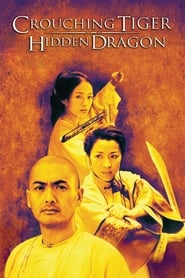
Actually, the first time I saw that weapon, that's the shot I had in my mind. Right. Sticking in someone's head. Yeah, sure. Why does his head look so much like a, I don't know, like a pumpkin or something? Yeah, back to the master thing. Yeah. It's utterly very important. I think in the, at least in the martial art film, or in the Jianghu world,
38:19 · jump to transcript →
-
and what kind of rules I have to follow, what kind of guidance I took from him, take that as your honor. But it's also about the level of skill and keeping your skills below those of your master, because if you're better than your master, how do you master? Because the master is always hiding the highest skill to himself or herself. Right. That's why the Chinese get worse and worse from 3,000 years down. Because it's a tradition.
39:13 · jump to transcript →
-
-
-
Jonathan Lynn
and that means you have to shoot a lot of what we call coverage, different sizes, different angles. I worried about whether people would be concerned about why they were visiting a jazz club like that in the middle of the day. Nobody's ever worried about it at all. In all the other takes, we had a sign outside the club that said lunchtime jazz,
45:13 · jump to transcript →
-
Jonathan Lynn
Because there are no laughs in this scene, I was able to shoot it in a sort of a long, lingering crane shot. I didn't have to do any coverage because I didn't have to risk... I didn't have to, you know, envisage the possibility that something might be unfunny and have to come out.
1:14:21 · jump to transcript →
-
-
-
This is a great editorial thing. This line... I feel like I need a shower. ...' I need a shower" was on camera. Some lines you don't need to see the actor Say. No, of course not. So, yeah, I'm okay with it. I wish we had something better, but there's only ten days till the next full moon. We've got to rattle his cage. For me, the next shot coming up Is... This is one of the most beautiful shots, with this golden light on the street here. - We talked about cutting this at one point, but I like this little scene with the newsie here. I'm not sure that the audience can really follow exactly what's going on here, which is that this is a place where you can get a newspaper before anybody else can get it, which turns out to be important to the plot. I'm not sure they can follow that. Originally, it was written in an airport. - At an airport terminal. I just like the moment he gets here to be menacing. You told me what? It's another guy, part of the Ratner ensemble of actors, Gianni Russo, who was actually Carlo in the Godfather, who was married to Sonny's wife. I love this car. The Hoffman mobile. It scrapes the bottom. This is fun because it played in one. I shot coverage of it, but it just... Camera moves in... It's more of a surprise. This is great. His getting knocked out. Look how much acting went into that arm. This is just a fantastic set. Here's a chance to see more of the set, and a very difficult scene for the two actors. Difficult to play. It's very stressful and emotional, and to get the intensity they need for it, it took take after take probably. I got yelled at at least four times by Philip during this scene because he was in his underwear, glued to this chair. He wasn't actually glued. - Some kind of glue. Not stuff that ripped his hair out. - It's not much fun to sit there. It was uncomfortable, I can tell you that. It's not fun for Ralph, who had to be naked in so many of these scenes.
1:10:28 · jump to transcript →
-
Really, in the next scene, about how to link these together. It's amazing when you're pressed for time, how you come up with creative ideas, and I end up shooting this in one. This camera just moving around, building tension, and it worked so well. I didn't originally intend on doing this, but I had no time, so I couldn't do the coverage. I had to figure out how to do this in one, tell the whole story, then I went back, and shot the overhead shot later. The overhead shot is actually two extras, right? These are body doubles. That's one double. Mark really wanted it. He said, "You gotta show this tattoo. "You gotta go back and..." I was against this whole thing, even the spit. Here we are again with something we went back and forth on, whether it's necessary or useful to show that.
1:17:29 · jump to transcript →
-
-
-
This was a tough one. This was a tough one because we had a lot to... You know, every scene, there were a lot of actors in every scene, so we had a lot of coverage we had to get. But we rehearsed it. We went out and rehearsed it. We rehearsed it in the jungle. Yeah, we went out to the location and rehearsed it. Two-hour drive to the jungle. Yeah. And you know what? It worked. We were mentally prepared. Yeah, this was... God bless the 4x4. It's four patties of meat.
24:25 · jump to transcript →
-
Diplodocus. Don't be so diplomatic. What you got going on with the TC, brother? Got three projects in the pipeline. I want to work with that motherfucker. You got for sure at least one in the pipeline. I want to work with Bill Hader. Look at him. Look at him, right over the shoulder. He's a young buck, but he's got it. Bill Hader's really one of the most talented guys. He's the shit, man. He's got the goods. Yeah, and as an impressionist, it's insane. You can do an impression of anybody and find an essence of them. McConaughey's bringing it right here, too.
1:08:02 · jump to transcript →
-
-
-
Joss Whedon
This is another one of those shots that I don't get to take the credit for. We had so many extraordinary cameramen, and our pilot was amazing. And Matthew went out to Bangladesh, where these shipyards exist. We had originally been going to Wakanda, but since we weren't using anybody from Black Panther, it became... We kept going less and less to Wakanda, till I referred to it as "Wa-kinda." We're just sort of on the outskirts. And it became a tease, and not worth it. But we wanted the vibranium dealer, and the arms dealer, and all that. So Klaue was the suggestion. It was actually going through... When we thought of it Jeremy went through and looked at images of Klaue online, and some fan had put up Andy Serkis. "What if Andy Serkis played Klaue?" And obviously, we were already working with Andy. He and his Imaginarium were guiding both Mark and James in their movement, since he is the master of mo-cap. But we realised that we wanted him for something else. And when he showed up looking exactly like that on the day, I thought it was mo-cap. I could not believe how different he had become. And he's just the sweetest guy, but also an extraordinary player. He's not onscreen for that long, but you do not forget him. ...intimidating someone?
42:03 · jump to transcript →
-
Joss Whedon
and that wasn't all the time, but was as much as possible. Obviously, that scene was a little bit longer. All of Stellan's stuff, there was more of. Again, enjoy your DVD extras. The "Thor and Stellan go to a cave together" subplot is one of the more complicated issues in the movie. People either think there's too much of it or not enough, but what we have gets us where we need to go. I contacted our friends at the Nexus about that. Nexus? This scene, difficult, not unlike the scene in the lab, even though we had the table. Just difficult to get the energy. It's a very bucolic kind of setting. It's very deliberately the opposite of the Helicarrier. I mean, he mentions the Helicarrier, Fury does, on purpose, because it's important for him, A, because later on he's gonna show up with it and if you had forgotten it exists, you don't want that moment of like, "What?" But also because this portion of the movie last time, where everybody's sort of searching their soul and wondering what the heck to do and conflicting, came on the Helicarrier last time. And it was a very kind of science-fiction, kind of comic-book-y space, and the whole point of coming to the Bartons' farm was to do the opposite of that. To bring them, literally, back down to Earth. But having done that, you then have to allow for this moment of respite from the giant action set pieces, two more of which are coming up, and, at the same time, keep some kind of energy and momentum. For some reason, every time we did a shot on Mark, when he got to the line, "Has anybody seen Helen Cho?" he called her Anita. I mean, we came back the next day and did more coverage, and as soon as we were off him, he was fine. And as soon as we came back on him, it was Anita. I have no idea why. Nobody knows why. But, oh, my God, it made us laugh so hard. Poor man. It's so random. "Anita Cho." But when he did nail it, he did nail it. You look at that shot where he says, "
1:12:06 · jump to transcript →
-
-
-
multi · 1h 59m 1 mention
David Naylor, Guy Hamilton, Tom Mankiewicz, John Barry + 14


Related topics
Other topics that frequently come up in the same commentaries.