Topics / Cinematography & lighting
Composition & framing
139 commentaries in the archive discuss this, with 726 total mentions and 69 sampled passages on this page.
Filter commentaries
Filter this topic by the film's decade or the type of commentary.
Showing 27 of 139 commentaries
Clear filtersBy decade
Across the archive
ranked by mentions · click any passage for the moment in the transcript
-
-
Paul M. Sammon
Now, as this progresses, you'll see Frank Miller kind of making a commentary about the destructiveness and corruption of this particular society. I love those Dayglo graffiti things in the background. I get flashbacks of all that badass that I took in 1973 at all those concerts. All right, now, here we have the Violin Hookers. Anyone who knows anything about Frank Miller's oeuvre
3:54 · jump to transcript →
-
Paul M. Sammon
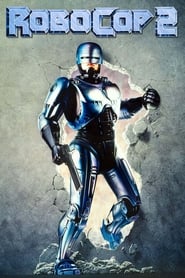
And that comes across, I think, in some of the effects. Now, this was, again, an empty office building in downtown Houston. And all of these machines you see in the background, this is supposed to be sort of the militarized showroom for all of the product that Omniconsumers are selling to the military. And there's Ed 209 back there.
24:25 · jump to transcript →
-
Paul M. Sammon
which I did on VHS-C cassettes. So every time you're seeing these shots, I'm usually just out of the frame with my little camera shooting the setups, shooting the direction, shooting everything else. And I remember doing this particular scene in the video arcade. It was very late, and Irv Kirshner, who at that time was seven years old, fell asleep in his chair. And I've got a shot of him sleeping and snoring.
31:18 · jump to transcript →
-
-
-
And that's where the dialogue came from. We shot this restaurant, we built this restaurant out of the lobby of the Herald Examiner building. And it used to be a little longer scene with Edie and Keaton, but we brought it down so I didn't get to see it. It was probably one of the prettiest sets. My folks are in the background. My dad actually and his wife. But you can't see them. You do see them at the end of the movie. They're out of focus.
7:38 · jump to transcript →
-
And of course, here at my hero, Gabriel Byrne, I do everything I can to get in the frame with Gabriel.
11:18 · jump to transcript →
-
And there's the side of your face, Chris. There we go. Before you had your... The hand with the ring. The hand with the ring. He was... He didn't blink during this, and I couldn't... You can't see my eye out of the frame there. I'm continuously blinking, because I was trying so hard not to blink when I looked at Gabriel, and my eyes were going like... Ow, Gabriel. Yeah.
11:31 · jump to transcript →
-
-
-
Stephen Prince
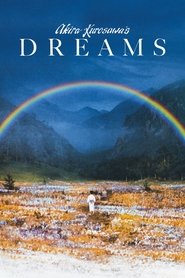
and hold the boy in the foreground. They sense he's there, perhaps they can smell him, but they don't yet know for sure. There's not a lot of camera movement in Dreams, and what there is tends to be fairly subtle, which is consistent with the evolution of Kurosawa's style in his later films.
7:27 · jump to transcript →
-
Stephen Prince
As we'll see, many scenes are shot with a camera in a lockdown position, filming from a distance, using long focus lenses, and watching while events pass by. This is very masterful widescreen composition. This is not the anamorphic 2.35 to 1 aspect ratio that Kurosawa used from the late 50s into the middle 60s.
7:54 · jump to transcript →
-
Stephen Prince
bringing them back into the frame and giving us another glimpse of them. So he establishes this connection between the peach blossoms and the doll festival in the opening moments. And as the action develops, the dolls themselves will become kami, or divine spirits that live in the peach orchard. The blossoms become the dolls. They are kami, and their energy is associated with an important person from Kurosawa's past. The ceremonial dolls are assembled on a tiered altar covered with scarlet felt.
13:28 · jump to transcript →
-
-
-
finish off her background and get into how this movie came about, she kind of grew disillusioned with her private law practice that she was in. And after she lost that state Senate election, she was really looking for a change. And she was friends with Jane Alexander, the actress, because she was also very involved in feminist politics at the time. And so the two of them talked about starting a production company together and actually went into the initial steps of it.
5:01 · jump to transcript →
-
And she kind of acknowledged at the time that this was a strange debut film for her as a producer, given her feminist background and leanings to do this guy movie. But A, she thought that maybe if it was a big commercial hit, it would open doors that she could walk through later to make all the feminist movies she wanted. And what she said in the press at the time, you know, because the LA Times and places like that were noting how odd it was that this woman who was known for her associations with Gloria Steinem and Ruth Bader Ginsburg was making this kind of movie.
10:39 · jump to transcript →
-
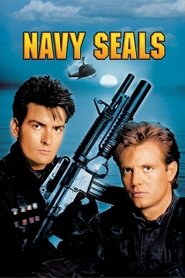
a time to talk about Louis Teague in general. Yeah, I mean, I'll give a little bit of background on him. I mean, I've always been a huge Louis Teague fan. I think he's, you know, kind of a great unsung action director and just action director in general. He actually was in the military, which is one of the reasons that this film appealed to him. He dropped out of high school to enlist in the army when he was 17 and spent a few years stationed in Germany.
30:49 · jump to transcript →
-
-
-
But the background, you just saw that building with the Moskowitz painting. So I think nowadays it's so great. And we come back and talk a little bit later about that because so interesting then you can do that even with moving images now so easy. Not necessarily easy, but you can do it. So the illusion is really perfect. You don't have the static shots anymore for the matte paintings. You can move the camera.
8:54 · jump to transcript →
-
Then you see it's a crane shot, a moving camera, but still the background, the building is painted. Here, you see? The whole, yeah, LAX. But the whole back there, the thing is a painting, the building. It was just nothing there, just dark. So they sent you where, to the end of the runway? It was a special, yeah, a special area of a very more quiet, deserted area of the airport. And we shot it there. Where did the jet come from?
11:43 · jump to transcript →
-
These planes, the F-15s, these are partly computer-generated planes and partly models. If they come very close to the camera, it will be a model. If it's not so close, generally, basically, the first one here, foreground, model. The others, computer-generated. So these elements are then together. In the shot, we just saw our Air Force One as a model, big model, foreground F-15 model, and the other planes are
25:13 · jump to transcript →
-
-
-
pretty disappointing and so you know going in i think a lot of people knew going in that ripley was going to die yeah i'm trying to remember now i'm trying to see the guy in the background there with these uh with the ox he's the guy from batman beginning he's yeah yeah he's a he's a yeah the the guy yeah batman throws off the top no on top of the building isn't it yeah of course he just goes he goes who are you yeah
24:58 · jump to transcript →
-
knackered and dilapidated and broken and nothing works so there's no technology there's no you know they don't use technology in any kind of clever way to to try and stay alive or to battle the alien so it isn't sci-fi isn't horror it's essentially a character study of a woman in breakdown almost with this yeah with you know with a monster running about in the background yeah yeah yeah
39:05 · jump to transcript →
-
Yeah, it's a different type of emotional connection, I think, with that. And it's also hard to root for prisoners who are rapists. Exactly, especially when they're not really given any kind of redemption. There's no redeeming arc, really, for anyone other than David Webb, who... Yeah, yeah, who basically is a mouthy guy in the background who then becomes more centre stage.
57:51 · jump to transcript →
-
-
-
And this shot here done by ILM, it's a combination of live action and matte painting. The whole background, the moon, the sky, a lot of those statues are visual effects. I love this shot. This will be fun. This is Allan Cameron, my production designer at his finest. Alan also did The Jungle Book with me. This sequence was a problematic sequence editorially.
4:00 · jump to transcript →
-
Right as the camera would roll, he'd walk away, and we kept telling him, no, no, stay until you hear background action, background action. And after about take 12, I said, don't move until the stone hits you in the head. See, that's what we're talking about, throwing things at the extras. It doesn't seem like a good idea to me. We actually never threw anything at them. This shot worked out really well, so we wanted to get very close to his tongue before that guy slid in.
5:26 · jump to transcript →
-
somewhere in the south of England. A pond, actually. Frencham Ponds, they called this. And with a little help from ILM, we put the boat and the Americans in the background. The Americans aren't big enough, I think, at the end of the day. You don't really get to see them back there. Also, I had to do a little...
32:48 · jump to transcript →
-
-
multi · 2h 24m 8 mentions
Alex Thomson, Terry Rawlings, Alec Gillis, Tom Woodruff Jr. + 3
-
You notice in these sequences, the camera is near the ground so the ceiling becomes more important than the floor and one is shooting up people's nostrils. This was an approach David Fincher wanted, which I think is terribly effective indeed and makes it more distinctive than the other three, rather, in my opinion. I tried to keep it fairly shadowy, so that it looks moody. Where I could, I brought the light from the top because it's unusual for the light to come from the floor, but one had to be careful about it obviously. The difficulty was getting light into the eyes so we could see what the actors were thinking but not at the expense of the mood. I remember at Pinewood Studios when the sets were going up, Fincher would have us walk through the sets just looking at the scope of them. It was truly amazing to see these things go up. Norman Reynolds is a great production designer. He builds the world. It's very difficult to control him cos George would tell him on Star Wars "Don't build that. We're gonna paint it", and the next day - "It's too late. It's built." When they sent us over, we said "Why are we going to London?" They said "It's the sets, the set design, the artistry and the craftsmanship." And it really was very true. British actors is another good reason to go there. Somehow the British accent does a lot for these movies, I think. Vincent has had a deep, abiding interest in Luddite monks, and had done a great movie called The Navigator, where these monks dig their way through the earth, coming out into the 20th Century. It was a great movie. But, anyway, the original idea was that this was a wooden planet built by the Luddites and in the bottom of the planet, symbolically, the reactor was kind of hell. The technology that kept this thing going was emanating from the bowels of Lucifer. What drew me to the project first was that it wasn't a retread kind of sequel. It was a completely new idea, and some of it survived in the final script. David was entirely in control from the beginning. He put his stamp on it. He was the director and nobody ever questioned it. He was completely in control of the set and everybody hung on his words. He was definitely doing it. There was no weakness in it at all. He was very, very confident in what he was doing and wouldn't be swayed. He had this vision and that was what he was going to do. He came under quite a lot of pressure from 20th Century Fox to hurry up or do it the quickest way or the most expedient way, but he wouldn't listen. He would do what he wanted to do, quite rightly, in my opinion. As I say, his compositions are marvelous and the use of the frame, and so on. David had been a cinematographer before he became a director, so he knew lighting. He knew what was good and what was bad. That's not to take away from David Worley, the operator. His contribution was enormous as well.
10:16 · jump to transcript →
-
Even for whatever he was, 26, 27, he'd seen a lot of pictures. He was a cineaste. He told me about his background, where he'd come from and how he'd got the gig. His ideas seemed very cinematic. Even then he'd joke and say "This is a Hitchcockian bit." "Here comes John Ford and here comes somebody else", so there are little nods. It was the kind of energy of somebody confident and someone who is a fan. When we'd work he'd say "Remember I told you this was that scene from The Third Man?" And you'd get it, whether it was some shots, some camera angles, some bit of lighting. It was nice. It was a bit of bravado, but he was very confident and decisive. Good to work with, and he also knew and liked actors.
18:54 · jump to transcript →
-
The commissary or canteen, whichever you'd like to call it, is one of the lighter places in this prison complex because it's lit from the top. I purposely tried to keep the fluorescent lights above different colors. I mixed the tubes so that it looked more run-down, less maintained, like they'd just put in any kind of tube that they had handy. I think the use of the frame is marvelous with the close-ups, and the composition's terrific, and this is mainly, well, entirely due to David Fincher. He would position the camera meticulously on each shot. He would position the camera meticulously on each shot. Coming onto the production four days late, most of the questions had been answered, in that I guess that David Fincher spoke to Jordan Cronenweth about how he saw it and also to the production designer, and so on. But that had been done before I got onto the production. They were four days into shooting, so all the decisions had been made. So I was faced with just getting on with it, basically, trying to match to Jordan's first conception of it.
35:13 · jump to transcript →
-
-
-
Darren Aronofsky
One of my favorite things about the sequence is in the background are all those numbers that you see sort of all the way in the background are actually numbers of pi continuously pumping by endlessly. And the sequence ends with a flash of brilliant white, which is how all the headache sequences end. And we begin the film.
1:22 · jump to transcript →
-
Darren Aronofsky
I bought the ants. He still doesn't know what they mean. So this little voiceover segment was written by Sean. Here we have the tree that I was telling you to look out for if you remember what it looked like in the first act. It was a little bit more contrasty. This we wanted to go for a lot more moody, and we also changed the frame rate. He's moving a lot slower, and the tree itself is moving a lot quicker and a lot more manically.
21:16 · jump to transcript →
-
Darren Aronofsky
you know, was just executed really well by the actors. This Archimedes story comes from, I think my dad told it to me first when he was in the bathtub once. I think he sort of told me this whole story about Archimedes and it just sort of stuck with me. My dad's a trained geologist who was a teacher for years and I think that science background is where I got some of my
23:14 · jump to transcript →
-
-
-
So we actually took colors and in fact the outside of the school scene that's coming up was taken literally from a composition of his. Looking at Sally Field now, I recall that Bob saying that for the first, you know, 20 minutes of the movie or so, the whole movie is
5:11 · jump to transcript →
-
You know, like, for example, when Kennedy's got the football at the very first shot, that was actually in Rose Garden. But we found that image of him and we put him in the Oval Office with our, you know, background plate. Stuff like that. So we just looked at everything. And then when we found the bits of film, we went back, revised the script to try to weave the story into what we had. And I know the joke of, like, when Kennedy says, I believe he said he has to go pee.
30:52 · jump to transcript →
-
Going to Vietnam in the service and not going and fighting the war and what made you a man of that generation? And Forrest just kind of was able to do all the right things. And right here, I mean, you know and you just feel how much he really, really cares. Now, this was on a bridge outside of Savannah, wasn't it? Yeah. Where we shot this? Yeah, and then we put in all the lights in the background.
38:35 · jump to transcript →
-
-
-
Well, I was going to say psychosexual, but it's not even... The sexuality is actually a camouflage for something else that they're trying to wrestle with. And so even though if you look at the background, you see Chrissy and Francis, played by Bruce...
11:57 · jump to transcript →
-
from high school. We were, she directed my plays in high school, so she had this very strong theatrical background. And so I think a lot of the theatricality and the feel of the place was something that I owe to Linda's imagination. And really, anyway, okay, so here we're seeing physically this theme as it's
35:16 · jump to transcript →
-
all these images of who her mother was. If you look closely, you'll see, you know, it was a much more glamorous place, right? It sort of, I think what you like about it, Mychael, is that it's kind of a little seedy, but we're seeing like pictures of young Chloe embraced by her mother in the background. There's the mother behind Mia right now. And so, you know, it's this idea of another life.
46:47 · jump to transcript →
-
-
-
Oh, I wanted to say about Shanley also is that, fun fact, 15 years earlier, he spent a year studying gorillas to write a play called Gorilla. So maybe that was part of how he came to this. I mean, he would obviously be probably Frank Marshall's first choice because they had worked together anyway, but he did have that gorilla background. This is probably a time I should bring up this hippo. The special effects on this movie, they had a physical effects...
1:00:36 · jump to transcript →
-
like he lets the actors improv and kind of find their own character. And that went for the grays also. And they had to kind of figure out what the gray society was like and kind of what the hierarchies were. And, you know, they did all the usual background kind of actor work. And same thing for like the carvings on the walls and how they laid out this.
1:18:12 · jump to transcript →
-
this village this mine or whatever um on the production design side like everyone is doing deep background work even though you can't necessarily you know see it on the script you feel it on the screen even if it's not explained on the screen um but they decided that the grays should be like chimps on steroids which the people who know about uh apes they don't speak very highly of chimps in general like gorillas are definitely preferred um but uh
1:18:33 · jump to transcript →
-
-
multi · 1h 54m 5 mentions
Jean-Pierre Jeunet, Hervé Schneid, Alec Gillis, Tom Woodruff Jr. + 5
-
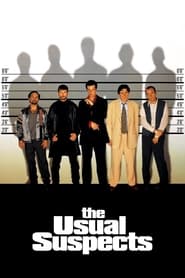
Dominique Pinon plays in all my films, and for me he is the perfect actor. He's so inventive, so nice, so perfect. It was amazing for me to bring this actor to the States, because Sigourney Weaver and the studio asked me to have Dominique Pinon. I told this story a lot of times, Dominique, but it's true: I didn't hire you, the studio wanted to work with you. I was very happy, obviously, but, I remember, when Sigourney wanted to call you by phone, and we called you in Paris and you didn't believe me. You said... "No. It's a joke." I remember very well that call, actually. The studio were a little bit worried about Ron Perlman. They appreciated the guy, but they weren't sure it was the right guy for the character. By luck, it was the first day of shooting and they saw the dailies. They came to see me on the stage and they told me "You're right. He is perfect." The set is basically what we call the Betty cargo bay, which is just a lovely, beautiful industrial piece of design. All the rust in the back of it. It's hard to convey just how incredible it was in real life, when you walk through it. It was just absolutely staggeringly detailed and gorgeous. Pitof, none of the ships were digital. That's all models? Pitof, none of the ships were digital. That's all models? I would like to make more digital stuff, but Nigel really wanted to have the real texture. I guess he was right because... They're beautiful. They are gorgeous. Is that background digital? Or was that a model also? The background is a mix with the digital and models. We had a model, but the size had been enhanced in postproduction. Also, it's a lot of layers of small things to make the texture real. So it's not just shooting the miniature as it is. There's a lot of work after that - to have the texture, to get the smoke, to give the depth, and all these things. Is shooting miniatures more time-consuming than doing it digitally? It was more efficient to shoot miniatures because the technology of digi was not as flexible as today. The idea about this film is that these guys are a bunch of hoodilums that are smuggling weapons on board a military ship. The thought was: they'll get strip-searched, and they have to have weapons at some point, so Jean-Pierre's take was that the only way you could bring weapons is by hiding them in plain sight. The two places where he thought you could hide them was a Thermos - which somebody is carrying, which turns out to be a gun - and the wheelchair. The thing about the wheelchair was designing it as a breakaway piece of technology, where every piece could reassemble itself into a weapon. Although the idea's really good, at some point the focus on that was a bit lost - you see all the characters breaking out weapons. I'm not sure how clear it is that they're recombining the wheelchair. But that's the way it was designed, as you could actually take pieces of it apart and snap them into weapons when the scene demanded it at some point. That little wheelchair was built on a structure which we called a mule, which is a six-wheeled radio-controlled robot which is a six-wheeled radio-controlled robot that's designed to lift enormous pieces of equipment in industrial settings. That mule was available to us, so Fox said: "If you can design the wheelchair around this, it'll save us money." So that's what we did.
17:58 · jump to transcript →
-
Pitof made this shot with the second unit. Pitof was a special effects supervisor for Delicatessen and The City of Lost Children, and now he's a director. At the beginning, he made the shot just for the small things, the creature, and little by little, day by day, he began to make some big scenes. Jean-Pierre said to us that he thought that the eggs in Aliens, I think it was, which we worked on, were lifeless, mechanical. So we said "OK..." So we put all this squirming stuff and bladders in the lips of the petals. So there's lots of organic movement in the lips there, and inflated bladders on the inside. A lot of layers of silicone - especially inside - to you give the feeling of all the gelatinous layers of this inner egg, before we see the facehugger... I was ashamed, Pitof, this day, because I had told you that we'd put a facehugger tail in there. Somehow it didn't get packed with everything. At the last minute I discovered it, and you said "Where's the tail?" And I went "Oh, it's in Chatsworth." Yes, I remember that. You do remember that? I let you down. Sigourney Weaver was so proud to do everything herself. She wanted absolutely to put the ball inside the basketball without special effects. I was very worried, because I thought "We are going to make maybe 200 takes." I said: "Sigourney, we won't use a machine, but please work with your trainer, because I don't want to spend a lot of time." She was so upset about that. She wanted to do so herself, she did that. It was amazing. You will see Ron Perlman... No, you won't see it, because... I had to cut before. The close-up of Ron just after the basket is just incredible. I used it until the last possible frame, because the frame afterwards he was so astonished.
25:26 · jump to transcript →
-
I love this shot because it's a simple effect. The ball is on the hand at the beginning of the shot, we do just a pan, and it works. I remember, Sigourney Weaver didn't believe me. She told me "Jean-Pierre, it doesn't work. It's so silly, so weird." I said "Believe me, I am sure." But I was pretty worried about this shot. And it works. There's a shot that you could claim, Pitof, as a digital shot, except it's real. When she throws that ball? It's amazing. This shot was supposed to be digital. What Jean-Pierre wanted is to make an impossible throw. Sigourney did it for real. This shot is real. Look at that. How many takes? I think it was six takes. - Six takes. Yeah. I was here when we shot that, and I feel in her eyes that something was weird. And she made it. Wow. - I had a little problem with Sigourney. The ball is going out of the frame and then back in the frame. I said "Sigourney, I'll fix that and I'll make a perfect path." So you feel the impression that the ball is always in the frame - like this ass - and... That's a silicone butt that we made. That's my favorite shot. I love this part of the film. And... Tell the story of this shot, Hervé. That's one of the famous Jean-Pierre Jeunet's favorite scenes, where somebody's putting polish on his shoes. When I got the rushes, I said to Jean-Pierre: "Well, you remember you did already that scene before." And you just didn't realize it. You didn't remember. The design of the wheels, something Eric Allard had developed way back, right after Short Circuit. Each wheel, instead of treads, they had ball bearings that would roll independently, so it could turn and maneuver. I think he had it patented, and I think NASA was using the design as well. This is a stupid idea. When you arrive in the States the first thing you see is the TV, because you don't sleep. And what do you see on TV? This kind of show. This miniature was not very big. This was pretty small - three meters diameter. That's nine feet to you non-metric folk. And this - you composited Aliens. Exactly. That's miniature and greenscreen. A very composite shot. Was a lot of passes to have the light and the texture and the depth and the atmosphere. For the alien, obviously, it's man in suit. It's very difficult to shoot an alien with a man inside, because it looks like a man inside. You are obliged to shoot very close. Here's Tom Woodruff. - Here's Tom. You were talking about being on the set. Here's the deal for me: being on set in these suits, it's even more claustrophobic than being on set, because I'm literally... I've got some slots for my eyes and breathing, but there's no real interaction between what I'm doing and anybody else on set, in terms of talking or just getting a break. I can interact with the actors and they can respond during the course of the action, but then, once the shot is over, it's like total isolation. But people love you when you're in the suit, Tom. Brad Dourif was great here. It was creepier for me on my side of the glass than it was for him being on his side watching me. I like Brad Dourif in this film. Yeah, he's twisted. Wonderfully imaginative actor. Brad and that creature were dating for a few months right after they completed this scene. I love what Darius did - the slime. He put a lot of care into shooting these and designing the lighting. He, at times, would almost build a cage of fluorescence around the alien, so that you'd get a million little kicks off of the slime. so that you'd get a million little kicks off of the slime. He kept coming back to us and asking for thicker slime, because the stuff in the other movies was too runny. He wanted a quarter-inch build-up, so we went to a slime that was almost like gel. It really had a different look. It was a pleasure to work with Winona Ryder. I remember, sometimes I tried to direct her, and she told me: "Jean-Pierre, take it easy." "I have a lot of imagination. I'm going to give you some improvisation." Remember, at the editing room, everything worked, all the time. In this scene, Winona was feigning drunkenness so she could slip out. Since she's a robot, she can't be drunk. This is a nice shot with the 10mm. It was a very short corridor and it looks so huge. This is a matte painting from a French guy, Jean-Marie Vives. He worked on Delicatessen and City of Lost Children, too. It's fascinating how there's a hint of City of Lost Children in the look of the sets. That's what I love about style, ultimately it just permeates everything that somebody does. That's a clever idea. That's gotta be Jean-Pierre. Very Jean-Pierre. It's great. This set is pretty high, and we used it again at the end of the film in the chapel. The same set but horizontal. - Really? Yeah. - I didn't know. When Jean-Pierre started the movie, he spoke little English - he always had an interpreter with him - and by the end spoke better English than me. Than I. - You see? That's what I'm talking about. It's amazing, because he didn't speak a word of English when he started. Sigourney Weaver loves to have the director very close to her. She hates when the director is very far away behind the video. It was a very good relationship, because, I remember, after a take she looked at me and it was unnecessary to speak. Just one look and we knew if the take was perfect or not. It was unnecessary to speak about the take - just a look. This is a scene that's almost vaguely erotic between Ripley and Call, the two females discovering each other inside of that tube.
27:46 · jump to transcript →
-
-
-
Taylor Hackford
At this point, seeing a guy walk up to him in the bar, Keanu is completely convinced... ...that one of his friends has put this guy up to it. And this actor, who is Ruben Santiago Hudson... ...is a fabulous actor. He won the Tony for an August Wilson play, Seven Guitars. I saw him on stage and just felt, "I want to work with this guy." So when the role of Leamon Heath came up, you know, I had Tony Gilroy... ...kind of tailor the role to fit Ruben, and then convinced Ruben to do the film... ...because he has a very unique quality. He's not your totally assimilated black character. He may have gone to Harvard, he may have gone to Yale... ...but he's maintained a lot of his own roots and integrity, and at the same time... ...he's smart like a whip and he knows he's got Kevin hooked. The next scene that you're about to see hot cut to Kevin's roots: A Southern church, and this congregation is real. Judith Ivey, who is being introduced here as Kevin's mother. You know Kevin was raised in this church, he's coming... ...and taking a look back at his past, was totally fundamentalist... ...and deeply, deeply rooted in Jesus and God. Judith Ivey is part of this group. I had to spend a lot of effort convincing Pastor Lovell and his church... ...in Gainesville, Florida to participate in this film, because I feel that... ...you know, the things that they believe in, the things they're after... ...have everything to do with establishing good and evil in the world... ...and fighting the devil, and that's what this film is about. But they were fabulous, and they really got the spirit of God in them. And I thought it was important to see that Judith Ivey is a believer. She is one with her God, she loves Him. And, you know, she's a formidable presence for good in this film. At the same time, she's a tough mother, and you can see that... ...she has raised him in a certain way and she doesn't particularly approve... ...of what he's done with his life. He's a lawyer, and you establish his wife... ...over at the car, Mary Ann, who obviously is a party girl, a liver, and not... Neither one of them are in church this morning, and Mother is not that happy. This sequence is important to understand that Kevin Lomax understands scripture. He may have made a choice at this point to stay outside the church. If you notice, he's half in, half out of the light. Tony Gilroy wrote this in the script. Kevin Lomax stands outside the congregation. He's half in, half out of the light. He is part of it and at the same time... ...he can't bring himself to walk in. There's a dichotomy in him, which you'll discover later. But in this instance, when his mother calls up and says: "Quote the Bible to me and mention scripture," he can quote it back to her. He knows what he's talking about. He was in that church and a devout member at one point. Now you get a sense of Mary Ann. She is a good person. She's trying to help this character. She doesn't want to get the company to repossess her car. But she's tough, and she's a businesswoman. You also have a sense, right here, of the fun that these two people have. Keanu, you know, biting off her earring and handing it back to her... ...that was totally spontaneous. He came in, did that. It was quite wonderful. Now you have a sense of the married couple. They've got Mother-in-law... ...and Mary Ann's no dummy... ...she knows exactly that she's persona non grata in that household. It isn't that she doesn't like her mother-in-law, but she understands... ...what she needs to do, like have a child. And right now you establish another theme of the film: "Let's give her a grandchild and everything will be all right." Mary Ann is ready. She's working. She's professional. But she's ready to start to have a family. But you hot cut to Kevin Lomax who's taken the deal. He's in New York. At the beginning it's just a vacation. He's going to consult on the selection of a jury. You see Foley Square, the seat of judicial power in New York... ...all the Federal buildings, the State buildings, the local... Everything is right there in one space. It's a very, very sobering look at the power of the legal community in New York City. And at the same time, for a guy from Gainesville, Florida, it's very impressive. Kevin's here. He's excited. He is working as a consultant... ...to one of Manhattan's best and most famous criminal trial attorneys. His name is Meisel, played by George Wyner. And in this moment I wanted people to see that Kevin Lomax truly has a talent. When you talk to criminal attorneys, you realize that they say... ...that between So to 95 percent of winning a case is selecting a jury. This is a scene that I think talks about the inside of lawyering... ...and the reality of how you win. You win by psyching-out everyone that's gonna be on that jury. Those are the people that are gonna make the decision of whether you win or lose. This is where Kevin Lomax shines. He has an intuitive spirit. At the end of the scene, you realize he's got something else. He's got a sixth sense. Now, it's important, when we see this courtroom, to understand... ...that I wanted authenticity in this film. You're in New York. You have some of the best looking courtrooms in, I think, the United States. At the beginning, Warner Bros. wanted me to go to Canada and shoot in Toronto... ...which is an entirely different judicial system and the courtrooms... ...don't look the same at all. I fought to shoot this film in New York... ...not only for the fantastic exteriors, but also for these interiors. This is a film about big-time lawyering, and you want to feel, when you see the sets... ...and these aren't sets, they're locations. You want to feel that this guy is in the big time. He's gone from Gainesville, Florida to the top of the food chain. We shot in probably seven or eight of the best courtrooms... ...you could find anywhere in the world. Look at these paintings up on the wall here in New York. You feel that this is the justice system. Now Kevin is exhilarated. He comes out of his first day... ...in the New York courtroom and he knows he's done well. He didn't know how he would measure up, and how he measures up is... ...he's smarter than they are. I mean, he has to feel great. He's walking down the street. He's saying I'm a guy from the hicks, and someone's watching him. This is the introduction of John Milton, who's played by Al Pacino. It was important to me to establish a very nice introduction to him. One thing that Al did, and you'll start to see into this... ...he chews on licorice all the way through this film. You don't explain it. You know he's doing something. And instead of just walking away, getting in a limousine, he goes downstairs... ...into the subway. Why would he do that? He's well dressed. That's it. But immediately I go into a time lapse sequence... ...and I wanted to see day and night change. I wanted it to also say that this trial's been going on for a long time. When Kevin walks in, Mary Ann says, "You're home early for a change." Time has passed here. You've seen it pass. But more importantly, you see Al Pacino going down into the subway... ...and you see that the next images are not real. There is a certain kind of power that this person... ...we don't even know who he is yet, exudes. I thought that the time lapse would be both unique in terms of time passage... ...and, at the same time, extraordinary in terms of the potential power... ...that this man has. Now you've got Wife and Husband in... Mary Ann's got room service all over the room. Clearly, they've been there for a long time. She's watching TV. She's having a good time. She's been shopping. She's been to a lot of things, but her husband's been gone every day. And now you see the way they play. Kevin looks like he's defeated. It looks like he's lost the case. She feels badly for him. You can really see how she would, you know, how warm and wonderful... ...and sweet she is. But he's kidding her. You can really see the slyness, I think, in Keanu Reeves here. And, at the same time, he killed 'em. He actually chose the jury... ...and won the case, almost an impossible case. It was like a savings-and-loan fraud. This is white-collar crime. The guy sitting there in the trial, with his white hair... ...looks extremely legit. But the fact is that, you know, he's like Charles Keating. You know, he stole not millions, but tens of millions of dollars. And in this instance, the next shot is, they are in John Milton's domain. This is Milton, Chadwick and Waters, and I wanted a location that immediately... ...established the power of this law firm. This is a real building. It's the Continental Plaza in Wall Street, in the financial district, Downtown... ...and you see what New York power is all about. That view is a three-bridge view. You're gonna see all the way up the island of Manhattan. But the important thing here was, this location was used before in other films. I didn't want to use that same look. There's a unique design look here. Bruno Rubeo, who is my production designer and my collaborator... ...on the last three films I've done... ...we spent probably six to eight months before this film began... ...talking about what we wanted from this film and the look. Right now you're looking at Christabella, the first time we see her... ...and if you notice as she walks forward, I slowed down. It goes in real time. There's no cut there. We ramped so she starts in real time... ...she slows down... ...and comes back out in real time. And Kevin Lomax, he doesn't know why he's fascinated by her. We'll find out later. But look at the design in this. It's ultra modern. We used both an Italian architect and a Japanese architect. This is the Italian. He used prefab concrete in the walls. Milton's office. You know, the rest of the building is very impressive... ...but this office is something else again. It's cold, it's austere, and it's incredibly impressive. Look at that fireplace in the background. It's set up off the floor. Bruno had a design in mind. The furniture in this place is... You have a big, massive place. But look at the furniture. That little settee in front of the fire: it's delicate, it's small. This whole room exudes taste and a certain stylistic quotient. John Milton, you know, it's a huge room, devoid of furniture, very minimal... ...this is a man who has real taste and real choices that he's made. At the same time, this whole law firm is very, very modern. For the design quotient of this film, I want you to be able to see this sequence... ...and then later on, when you see where Milton lives, see the dichotomy... ...the difference. This is cutting-edge modern architecture to the nth degree. What Bruno wanted to do, and I wanted to do in this instance... ...is establish Milton's environment. Here it's cold, corporate, but, at the same time, undeniably impressive... ...austere, ultra-designed. Milton is very smooth. You know, Al Pacino always gets this rap: "Oh, gee, he's over the top." He's not. Al Pacino can play everything. And everything he did in this film was calculated. I mean, it was one of the great experiences in my life to work with an actor of... ...his deep, deep ability, his deep, deep talent... ...and his uncompromising attitude towards all his work. At the same time, Keanu, who had this... I'm saying this because here's these... ...two actors meeting for the first time. Keanu, who had done a lot of young-man roles, a lot of teenage slackers... ...in this film is anything but that. Kevin Lomax is precise. He is not a Harvard educated, a Yale educated guy. He came from a small school in Florida, went to a small law school. But all criminal attorneys that are really great usually did that. They come from the street. He's street smart. He thinks on his feet. And he's up against a guy, for the first time, that seems to have a little bit more... ...on the ball than even he does. He's never met anybody before that is his equal. And Milton keeps blowing his mind, like he does right now. You see this office. All of a sudden, he goes and taps on the door... ...opens up, and I wanted this sequence to truly be a moment... ...that would blow everybody's mind, not only Kevin Lomax's. He walks out on a roof terrace and, effectively, I'm using... Again, this is from a Japanese design. Bruno and I saw an architect... ...that had a pond on the roof in Japan, and I said that is a perfect idea... ...for what we want to do here. Here is a man who has such a sense of design and such a sense of grandeur... ...that he has created for himself a balcony, if you will, a terrace, a park on top. But does it have greenery on it? No. It has water. He calls it calming, placid. And at the same time, he's going to take Keanu out there... ...and he's going to talk about his past. He's going to find out a little bit more about him. He asks about his father. Keanu says, "I never had one." He asks about his mother. And in this instance he's, you know, if you look at Al's reactions here... ...this is a long, talky sequence. This is what you do sometimes. By the way, this is real. This is not blue screen. We didn't put the artists in a studio. I fought to get this scene. I fought everyone, including Warner Bros. Nobody wanted me to go up and get this shot. It's on the roof of the Continental Tower. They had re-roofed the place. The building didn't want us up there. I just knew that this sequence was going to define this initial relationship... ...between Kevin Lomax and John Milton. And the two actors are basically 50 stories in the air right now. They're standing on an eight-foot platform. No, it's not right on the edge. It's about eight feet from the edge. But the fact is that they're standing there. We had to get this whole thing in one day, and they have to do... ...a very personal scene while they're perched on the top of this building. You can see Al, at that moment, trying to let us know a little bit how precarious it is. But do you notice any kind of nervousness from Pacino? Not at all. He's easy. And the whole essence here is that Keanu's sitting out there. One, his mind is blown... ...at the beginning, and then somehow he finds himself getting into it. And at the same time, he looks right here and says: "My God, John Milton's standing like a foot from the edge of a 50-story precipice. "What kind of guy is this?" He also wears elevator shoes, which I think is interesting. But the fact is, right here is what the film also is about. It's about pressure. It's about professionalism. And what John Milton has done is taken Keanu Reeves... ...or Kevin Lomax, in this case, up to the precipice. He's showing him: "All this can be yours." And what is it? It's Wall Street. It's the seat of capitalistic power in the world. And he's basically saying, you know, I know you're a hotshot... ...but can you take the pressure? Can you sleep at night? That little speech that Tony Gilroy wrote, I think, fits all professionals in this instance. When you have to deliver on a deadline, you know what he's talking about. Basically, Kevin is there. He's ready. He said, "What about money?" Milton laughs. "Money? That's the easy part." Kevin doesn't have any problem. He can sleep at night. He's a lawyer. He knows how to do it. We cut from that to Carnegie Hill, which is Fifth Avenue in the Nineties in New York. It's probably the most exclusive address in New York. Central Park is on one side. You have these beautiful, beautiful buildings with fantastic apartments inside. And the Heaths. You're meeting Jackie Heath for the first time. I reveal her with that wipe from the elevator, you see her in close-up. Leamon Heath and Jackie Heath, they are absolutely New Yorkers. They've maintained their integrity as black people, but at the same time... ...they are not about to resist the temptations of the city. They want it. They know how to deal with it. They're very sophisticated. Look at the clothes that Jackie's wearing. Leamon makes the money and she knows how to spend it... ...and she doesn't have any qualms about it. This apartment, I wanted to basically establish the sense of awe. You know, John Milton owns this building. He has it for his employees. Although it's usually for partners, and for Kevin Lomax to get an apartment first up... ...shows that he's a little special, and you can feel, right here... ...that they're a little jealous. "Took us six years to get in here." Every New Yorker will understand that when they really want to get into... ...a big building. This is a film about New York. Tony Gilroy, who lives in New York and understands it incredibly well... ...is able to put these nuances in here that are maybe not aimed at everyone. But certainly, you know, you make a film in New York... ...it was important to me that you do something real. Now, you know, Kevin has basically been offered the job. He's got to now sell his wife on it. And this is a big test. If she, you know... He says, "I'll take you home if you want." Of course, if she did, God knows what he'd think. She knows him. She knows what he wants. And at the same time, how could you turn this down? It's very important right now, at this moment... ...to understand that Mary Ann wants this as badly as Kevin does. I mean, who would resist? Come on. They're too big for a small pond. They both want this and, my God, she's looking at this and saying: "Hey, I want to have a family." She says right now, you know, she mentioned kids again. She's mentioned it in the back of the apartment... ...and she mentions it again right now, and she's saying, "I'm in. Let's go for it." And that moment is one of the last moments of true happiness... ...you're going to ever see them have. Now you're at the law firm, and I want to be able to show... ...what big time lawyering is about. These are all partners. It's an international law firm. John Milton has called a meeting. From all over the world, these partners have come. There's Eddie Barzoon, played by Jeffrey Jones, who is Milton's chief lieutenant. He's the managing partner of the firm. There are affiliate offices in major capitals all over the world... ...and you get a sense of what law is all about. It's about copyrights. It's about real estate. It's about EEC and EUC and those kinds of relationships.
11:08 · jump to transcript →
-
Taylor Hackford
...things that we did from research, looking at religions of Dahomey. But as Phillipe Moyez says here, played by Delroy Lindo, this is not voodoo. This is not Candomblé. This is not Santeria. This is his own amalgam of a very old religion. Now, in no way, shape or form was this a desire to put down African religions. More importantly, it's to say that individuals, whoever they might be... ...find ways to establish power, and we certainly know this... ...from preachers of all ilks, whether they be Jim Jones or whoever. The fact is that Phillipe Moyez seems to be in a very weird situation here. He's got body parts in the refrigerator. He is using a lot of superstition here. It looks like a very meager and downtrodden place. You'll find out later that he's quite a rich man. What we wanted is a little bit of a creepy situation here that Keanu is faced with. He's a lawyer. He's representing a client, and that client seems to be... ...completely oblivious to him. But, at the same time, the client was interesting. "I thought I would recognize you, but I do not." It's bizarre. Now meanwhile, Keanu's in this situation and he's now having to confront... ...using his brain, how he's gonna win almost an unwinnable case. They caught him. They caught him dead to rights, sacrificing animals. He's going to have to delve into the health codes. Is he gonna give up or not? You look at this sequence, and what I've done. Mary Ann is redecorating... ...and she's getting one frustration after another, after another. I used digital wipes here to kind of interconnect the two. While she's working and getting more frustrated... ...he's getting deeper and deeper into his research... ...until he finally finds a key that is going to help him in this trial. And Jackie, who is very, very helpful, Miss Helpful, Miss Best Friend... ...and just trying to help. She's very sophisticated. She's trying to help Mary Ann get into what it's like to live in New York... ...and really be a top-rated housewife. But Mary Ann's getting frustrated. Kevin, on the other hand, is getting deeper and deeper into his work. You see him eating hamburgers. She's eating Popeye's Chicken. They're no longer eating together. They're eating separately. They're separate. She's getting more and more frustrated and confused. She needs his help and he's not there. And in this scene that's coming up, you get a sense now of what her life is going to be. This is a scene in which Jackie kind of lays the law down. "You have to understand, it's a bargain. You've got a job. He's got a job." And this is not what Mary Ann bargained for. And I think Charlize and Tamara Tunie, who plays Jackie... ...Tamara is absolutely fabulous in this role, I think. You know, they're girlfriends. They're talking turkey. They're talking plain. Jackie is truly trying to help her. But there's another level going on here. There's a little bit of... ...an animal of prey and the preyed upon going on here. This decor, by the way, you get a sense of Mary Ann's empty apartment... ...and then you can see what Jackie did with hers. This is right across the hallway. It's done to the nth degree. She's paid a lot of money to a lot of decorators. "Look around, honey. "This is why I do what I do. This is what I get paid." And it's kind of establishing here a kind of life of sophistication in New York City... ...which is not exactly what Mary Ann had in mind in a marriage. Now I cut... ...directly to the bacon, as it were. Keanu has developed a defense for Phillipe Moyez, and it's based on religion. It's based on the fact that you couldn't have religious freedom. And I must tell you that this case is absolutely based on fact. There was a Santeria case in Florida in which the neighbors attacked a church... ...sued a church. They were sacrificing animals. And it was won on the basis of the fact that this is ritual and religion has ritual. I mean, religion has circumcision, as Keanu says here. You have kosher butchering... ...which is, of course, how he wins the case. He's got a Jewish judge. And he is defiant here. He is arrogant. He is using a system and pointing out... ...hypocrisies within that system. At the same time with this happening... ...his opposing attorney starts to cough. It might just be a frog in his throat, whatever. But remember, Phillipe Moyez was going to put nails in the tongue of that cow... ...down in his basement, and he basically says, "I have done all I can do for you. "I'm not gonna help you with the case. I'm doing what I can do." And in this moment, where you see a really brilliant piece of lawyering... ...you know, Keanu feels this is below him, but he does do a huge amount of work... ...on health codes and wins the case. He wants to show John Milton: "You may be insulting me with this case, but damn it, I will deliver," and he does. At the same time, his opponent can't talk. Phillipe Moyez, I intercut with Delroy's face, back and forth, and you kind of see... ...there's a moment here in which you start to realize maybe, in fact... ...Phillipe Moyez has more power than we gave him credit for. Maybe there is something else happening here. And these elements of subliminal intrigue, supernatural element, this is... ...in fact it has to have, because it's about the devil, some elements of supernatural. I tried to keep them questionable, are they real, or are they not? Throughout. But they're here. And meanwhile, after they win the case... ...John Milton has been there to watch. He snuck in to kind of watch his new protégé. Look at those frescos in the background. That's a real New York courtroom. You know, just fantastic. Again, another courtroom, a great location. Now I come out and I'm on Canal Street. When you know New York, it's so fantastic. The street life is so incredible. And to me, Chinatown in New York... ...is one of the great places. Canal Street, which is in lower Manhattan, is alive. It's vibrant. It's also a major thoroughfare. You see these huge trucks rumbling along. You see Chinese fish markets and vegetable markets... ...and all those things happening, and that crush of real New York. Now Al Pacino is the kind of actor... I first saw him in Panic in Needle Park. It was his first film. You see him in Serpico. You see him in Dog Day Afternoon. He is uniquely a New York street animal. And what I wanted with John Milton is a man who is incredibly powerful. He's head of an international law firm. He's smart as anyone you've ever met. And at the same time, he was not born with a silver spoon in his mouth. You know he's from the street. And in this scene, he takes... ...his son to the place that he loves. He wants, he feels the vibrancy here. He wants to say, "I saw you work. You're terrific. You're also arrogant. "You've got those good looks. You're tall. You're not short like I am. "You know what I've got are those eyes. What I've got is that ability." Look at those Pacino eyes. "What I've got is that ability to fool people. "I'm charming. I have to sneak up on them." What I wanted from my devil is not the obvious. I didn't want a godlike devil. Pacino said, "Why don't you go to Robert Redford or Sean Connery?" I said, "Well, you know, the devil looked like that before. "What I want is somebody who is bored. He needs a challenge. "He has to overcome obstacles," and in this instance, Pacino liked that. He could have got up and walked out of the room, but he loved it. "Because you never see me comin'." That's the key to this... ...and Tony Gilroy understood it, and we made this uniquely for Al Pacino. Now here's a sequence that I thought was another thing that's important. Pacino is a character you meet. He seems all powerful. He seems like a corporate lawyer. Now he looks, seems like a street guy. He speaks fluent Chinese. Pacino speaks five or six languages in this film... ...and every single one of them is accurate. He is speaking Chinese here. I think what you get out of the character is: here's a man who is all powerful... ...at the same time he says right here, "Stay in the subways. "I only take planes, or the subway. I don't take limousines. That's not me. "That's the only way I travel. Stay in the trenches. Stay close to the people." That's who Pacino is. But you also feel throughout: this is a man who has incredible intelligence. He can learn anything. Cut back to the apartment. There is an evolution happening. Mary Ann is starting to decorate. She's trying to get control of things. She's now become Jackie's friend. She's talking to all the wives in the building. She is building a nursery. That means she's telling him, in no uncertain terms... ...that this is what it's going to be. "I'm staying home.
32:35 · jump to transcript →
-
Taylor Hackford
You know, it's wordplay. It's foreplay. And, as every woman knows, the best foreplay is good words to put somebody... ...in the mood, and in this instance... ...it works with Mary Ann, as you can see. Now we cut and we're on the balcony, outside. There is Manhattan, the reservoir which is right across from Carnegie Hill. You see Downtown Manhattan on one view. You see the George Washington Bridge on the other. And in this instance I must admit to the fact that this is a green-screen sequence... ...because it was freezing cold. Connie's wearing no underwear and a beautiful dress with a lot of skin showing. To be able to get the kind of comfort I needed in this scene, we shot plates of... ...meaning views of this actual location, and then did it on a stage. I think the blue-screen work is very good. But it was important to kind of show... ...the grandeur of New York with these two people out here. Meanwhile, inside the party, you have the motto of the law firm: "Let's ride 'em as long as we can and then eat 'em." You get a sense of the ruthlessness of the law firm... ...and in the background you see the ruthlessness represented by that tapestry. Connie Nielsen is a wonderful actress and, as I said before... ...she speaks five, six languages. She is Danish, but lived in Italy for a long time. She is very sophisticated, and I think what Kevin Lomax is coming up against... ...is Christabella, who calls a spade a spade. She asks him if he's alone. He doesn't, he demurs, he kind of comes up with it and she says: "You're married." She basically is not about to play along. And at the same time she flirts. "You like to be on top," an unquestionably sexual innuendo. And he likes it. He's ready to pop, except Milton interrupts. And Milton has a sense of pride here. He's the head of a law firm. He owns a law firm with two really bright, young lawyers in it, but it's more than that. There's something that you'll discover as the film goes on. There's a relationship between these people he's particularly proud of. And I think, in this instance, you know, Al Pacino's smooth, he's walked around. He's spent about an hour at the party. He's talked to Mary Ann. He's talked to the senator. He's talked to the women. He's in no hurry. But in reality, he's got something else on Kevin's agenda.
46:47 · jump to transcript →
-
-
multi · 2h 19m 4 mentions
Martin Scorsese, Nicholas Pileggi, Ray Liotta, Lorraine Bracco + 9
-
He's dead another way, you know. And if you look at the two-camera setup, it was very important that the film was not widescreen, was not 2-3-5 aspect ratio, was not Panavision or anamorphic, I should say. I was still shooting 1-8-5, normal widescreen. But I packed the frame with everybody around Joe and packed the frame with everybody around Ray because there were no close-ups. Because a close-up would isolate them. What's happening in the scene is something that is essential to that way of life.
21:56 · jump to transcript →
-
framing of every shot is so important to him that I remember when he first started using Steadicams, he didn't like it because while it was allowing him to do something remarkable, for example, following Robert De Niro in Raging Bull from down in his dressing room all the way up into a gigantic ring for a championship fight, a very exhilarating shot, he
32:35 · jump to transcript →
-
prefers when he can absolutely control the framing of the shot and he doesn't have to, when the Steadicam operator sometimes is moving, he has to frame, he has to make framing decisions himself. And Marty would prefer to make those decisions. But as he's gone on, he's become more and more friendly to the use of the Steadicam. The famous Koppersad was, it was
32:58 · jump to transcript →
-
-
-
Michael Mann
issues in her own life of which she may have felt contradictory on a subconscious level, such as her inner doubt that she can't quite put a name to or get a handle on about Hayward's proposal to her in the earlier scene in the paltrons. In constructing her character and building a background for Madeleine Stowe, the notion was, what was her background? Where was she in 1755? What was her life in London? And we suppose that she lived in an
24:38 · jump to transcript →
-
Michael Mann
Right here, there's a father shamelessly putting his daughter, who's in the light blue dress in the background, in the film. She was 12 at the time we made the film and went to work with me every day and worked in wardrobe, getting extras ready with makeup and put in the same 16- and 17-hour days that everybody else did. And then she and many other people became extras.
52:14 · jump to transcript →
-
Michael Mann
In the accompanying documentary, you'll see some of the background scenes about the training of Daniel for battles such as these. There was a very interesting puzzle or mystery that we had. These moves in hand-to-hand combat with edged weapons are both elaborately choreographed and very accurate.
1:15:59 · jump to transcript →
-
-
-
Tony Scott
I, because my background is painting, spent eight years in art school, do my homework by doing storyboards. So I sit there, and as I'm drawing out each scene for the day, I'm not just thinking about the look of the scene. I'm thinking about who the characters are, how they interact, what the focus of the scene is, what the energy and the drama of the scene is. It's just the way of me exercising and, say, doing my homework. And also, pictures speak much louder than words, because when you get to a set, you give out
7:40 · jump to transcript →
-
Tony Scott
we shot all the exterior of the whorehouse in Detroit, on the outskirts of Detroit, with the city in the background, shot at a twilight, which gives me maximum depth in terms of seeing the city. All the interior of the whorehouse we shot actually in Watts in L.A. And this, the actor that brings clowns in the doors, is an actor we found in New York, and it's funny, he was a guy called Paul.
25:07 · jump to transcript →
-
Tony Scott
a little bit different, yeah, so the guy in the car is a little harder to move the camera, so the camera's more static, where Christian, we've got a phone box in Six Flags Magic Mountain, so I did a circular track around Christian at the telephone booth, yeah, so the background, the environment's always changing, which is a contrast to Saul Rubinick sitting in the Porsche. But you know, no matter what I do with the camera,
1:08:52 · jump to transcript →
-
-
multi · 2h 12m 4 mentions
Andrew Sarris, James Ellroy, Brian Helgeland, Michael Nathanson + 10
-
Lynn Bracken's house is going to be Spanish-style, and there's going to be a palm tree in the background. And we had set out by looking at those typical, very well-known, all-in-Hollywood, Spanish-style, beautiful apartment complexes, all of which slammed the door in our faces, sent us away,
1:06:36 · jump to transcript →
-
There was a question actually about the Formosa Cafe over the last 10 years about tearing it down, and thankfully it was preserved. The complexity of this movie with what we talked about is 80 locations shooting in a compressed period of time, most of these scenes at night. Very rarely were all three actors in the frame together, but their characters are all interlocking from each cut to another cut.
1:10:20 · jump to transcript →
-
gets kind of turned on their head one way or the other. I was always more interested in just those guys, especially the Bud character. I mean, it struck a chord with me because he's a guy who thinks he could be a detective, and no one thinks he can be a detective. And I always, as a screenwriter, I come from a blue-collar background and came out to L.A. to work in movies, and I think always felt like no one had too much expectation of me.
1:17:58 · jump to transcript →
-
-
-
Alexander Payne
If you need a reaction shot, you're kind of getting it in the corner of the frame with Tracy reacting.
41:36 · jump to transcript →
-
Alexander Payne
And we have to learn that our actions, all of them, can carry serious consequences. Here I love the glimpse of a tub of, I can't believe it's not butter in the background. I agree. And I also think that certain young and naive people...
55:55 · jump to transcript →
-
Alexander Payne
I mean, there are barely any people of color at all. And typically George Washington Carver is the name of a high school in a black part of town, but not here. And in fact, early in the film when there's a pep rally and Jim McAllister is playing like a cowboy villain, in the background you see a guy dressed up as a peanut.
59:06 · jump to transcript →
-
-
-
Beautiful backing there, by the way. That's fake. Yeah, that looks as real as anything. Okay, he jumps. Now, we were actually going to do a stunt and put him on a rappel line with a camera and follow him all the way down. Oh. And the night before, I could see Dick just had little beads of sweat on his brow like, okay, this will be great. Yeah, Fred, I'm looking forward to it. And then we just decided, you know what, it's really funnier if we just see him in the background splat to the ground.
46:57 · jump to transcript →
-
A gag, which was a gag that ended up being repeated in The Shadow about a year later. Oh, is that true? Yeah, there's a very similar gag where someone is thrown out a window and then they cut two characters walking out and then you see them in the background falling. Was that Russell Mulcahy? Yeah. Yeah, he stole it. Bastard. Now, we talked about tone earlier and the first Robocop movie, it's a very specific tone and I don't think...
47:30 · jump to transcript →
-
just do these really big wide shots and just do this really... This part of the movie feels really expensive. Well, that's very heartening. This was basically just a street in Atlanta. Yeah, and it feels... It's got a nice lived-in quality to it. Now, that tower in the background, that's actually a hotel, but it resembles a tower in downtown Detroit, does it not?
1:22:40 · jump to transcript →
-
-
-
And this is all Los Angeles. Air One, make a final sweep. This is Los Angeles and actually the buildings in the background were added in because it was a wide open street.
15:47 · jump to transcript →
-
rooms lead into other things. I'm fixated on the depth of a frame. The width of the frame is not as important to me as the depth of the frame, and I like having a fairly dark foreground and having an archway or a doorway that leads into a lighter area. It's not the most unique thing in the world. It's been done by people far greater than I, except I like when the eye is drawn to the depth of the frame.
33:28 · jump to transcript →
-
and you didn't want to see him put in this position. You'd be amazed what you agreed to when you're on fire. Don't do it, Bobby. You're better than this. You're better than him. You know, considering how you've lived your life when this is all over... I love long lenses. I guess you could see that because this film was shot with long lenses. It's gonna happen. Why shouldn't you have the best seats? Look what it does, though, when you take a close-up and you push in on somebody and you... Everything in the background is soft and the eyes are pin sharp.
1:36:45 · jump to transcript →
-
-
-
And this is another... Yeah, all the Christmas movies in the background. Well, this is at a time... ...before It's a Wonderful Life was purchased by NBC. Now It's a Wonderful Life can only be seen once a year. Back then, It's a Wonderful Life was on every... All the time. - For like two weeks. You had Miracle on in the background earlier... ...which is one of those just... You know, gives it the Christmas feel. But It's a Wonderful Life, people got sick of... ...because you could see it at any time of the day during the Christmas holidays. This was, again, shot on a sound stage somewhere in Chicago. I don't know if we were at New Trier.... We may have actually rented an apartment... ...and put a slide of Paris outside of the window there. I'm trying to remember.
46:19 · jump to transcript →
-
Marv. The Michael Jordan poster in the background, put back together. He's a crafty little kid. - He is. That Kevin. That was Joe's-- I saw that side of Joe a few times.
1:26:35 · jump to transcript →
-
-
-
have these visual cues and sort of breadcrumbs he gives the audience where there are real life trans people on the Phil Donahue show who are interviewed in these television segments that are played in the background of the film. And it is about a psychologist who has this dual identity crisis where they are
45:49 · jump to transcript →
-
background players or tertiary characters, it just feels significant that he sees these people and wants to put them in front of a camera. And again, though, for the time period, he is still seeing this character as gay. Not unlike how, like, Sidney LeMay, when he was making Dog Day Afternoon, did see the character of Leon as a gay man, not necessarily as a pre-operative transsexual.
1:31:41 · jump to transcript →
-
-
-
And I love the Hall of Violence coming up here. I used Robert Longo as a reference here. Oh, no kidding. Robert Longo was a big artist at the time. I got Robert to lend us one of his very early sculptures, which is in the background somewhere. It's like this gargoyle-style sculpture. And then the museum was actually designed around the action sequence that are going to take place there. So there's a glass floor, which becomes...
41:27 · jump to transcript →
-
Got to give credit to my friend Martin for that one. Oh, geez. Again, just gentle comedy, and then when people get hurt, they get hurt. Yeah, and I think that's the Robert Longo sculpture in the background. Oh, cool. There, the metal one. And this is where it switches gears again, and this is where we go into action territory. And then, you know, we...
44:48 · jump to transcript →
-


Related topics
Other topics that frequently come up in the same commentaries.