Topics / Cinematography & lighting
Composition & framing
139 commentaries in the archive discuss this, with 726 total mentions and 29 sampled passages on this page.
Filter commentaries
Filter this topic by the film's decade or the type of commentary.
Showing 12 of 139 commentaries
Clear filtersBy decade
Across the archive
ranked by mentions · click any passage for the moment in the transcript
-
-
oddly enough, in previous years to kind of grow up and more expectations to grow up than kids are now. What can I say? I love this introduction of this character so much. And that the jukebox is in the frame really does it for me. It's a Wurlitzer, too.
9:42 · jump to transcript →
-
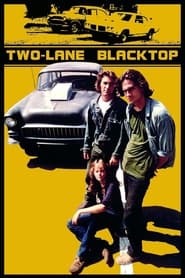
As you know, I just love so much how it's shot. I just love the widescreen. I love how actors got a chance in your movie to work against the frame, work with space, and not have to be so confined as we see in so many movies today. How did you work with that?
30:38 · jump to transcript →
-
composition and work with the actors within the space? Well, it was an interesting choice. I think part of it was economic because it was two perfs instead of four, so we were getting twice as much on every roll of film. So, you know, it was cheaper to shoot. But I think, you know, that long, thin...
31:07 · jump to transcript →
-
-
-
Robert Sommer
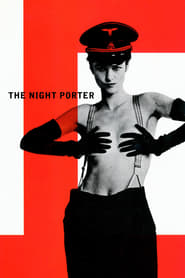
So I mean, she comes from the background, of course, with Italian fascism.
10:33 · jump to transcript →
-
Dr. Gerd Naumann
In the background there are, again, some scenes that we will certainly talk about, which one day do not work so well.
11:14 · jump to transcript →
-
Dr. Gerd Naumann
She comes back to films in the historical background of the 1930s, 1940s, 1950s.
41:11 · jump to transcript →
-
-
multi · 1h 43m 5 mentions
The Taking of Pelham One Two Three (1974)
Nathaniel Thompson, Steve Mitchell
-
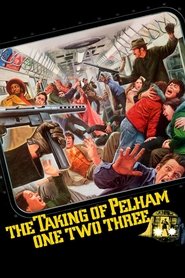
You know, he's trying to sort of seem enthusiastic about what's going on, and he doesn't know. The great joke is he doesn't know if they speak English. And, you know, again, if you know anything about New York, New Yorkers like to slack if they don't have to. I love the fact the guy's drawing on the cup. And then there's Jerry Stiller in the background as Rico Patrone. And so he is, in essence, Garber's partner.
11:56 · jump to transcript →
-
he played fast and loose with the geography. The thing that's so great about this is the frame for all of the geography is laid out in the book, and then it is held sacred by the production and Joseph Sargent, the director. By the way, that is Gracie Mansion, which is actually one of the few freestanding places
31:48 · jump to transcript →
-
The great Kenneth McMillan right in the middle of that maelstrom of people. You know, again, all of these great faces, you know, they're like your pals. And again, with the proper attitude. And I wonder if some of those onlookers in the back are extras or real onlookers. Sadly, there's the World Trade Center in the background there.
40:17 · jump to transcript →
-
-
-
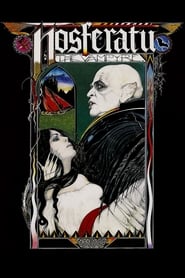
I wanted to integrate certain general rules of the genre into the movie. From there you can go farther and expand. But this right here is a very typical and traditional scene for this genre. The space has this wonderful of depth in the back. And the bed in the background. The set design was by Henning von Gierke who has a spectacular sense for these things. Yes. Spectacular. Parts of this we also built ourselves. The oven and things like that. It was a former hunting lodge of party functionaries. At that point there were only lumberjacks living there. During the day you only found lumberjacks there. ...were already on the other side. Here you have this sense of foreboding and doom. I liked the gypsies so much. They were very good. Watching this reminds me of Degas' "The Execution of Emperor Maximilian" in Mexico. Yes. Careful. Not too many paintings, otherwise... That's just a sign for how interesting and good this is. This is a wonderful face. I also enjoy the way they speak. Yes, definitely. He says you should... They said the dialogue I wanted but in their language, which I believe was not Romani. They translated it themselves and did it very well. You can see this was outdoors and at night which was always a problem for me because I'm not a night person. I had to stay awake until very late, and I've always hated night shoots. I had to force myself to stay up with gallons of coffee. This is also a recurring theme in your films... Native Americans, Mexicans, and Gypsies. Something completely foreign. But also the dignity of these people.
14:47 · jump to transcript →
-
What a great nose this man has. He also did a really good job. Obviously none of these people had ever been in front of a camera before. Casting Bruno and Isabelle...? Because of "The Story of Adele H", Isabelle was already a big star, which wasn't true of Bruno... - No, he was a star of the theatre. ...even though he had just done "The American Friend". There were several films that had made him very well known. He wasn't a big international star, but he was already quite important for the European cinema. Did you choose the cast yourself, or was that...? Yes. I decided that myself. And Kinski as we will see. We always knew we would not make the film without Kinski. That makes sense. For Kinski... The strange thing is that even though we haven't seen him yet, you can already feel his presence. The whole film works towards that. You get closer to him. Right, that is the result of the dialogue, images, and the text. We planned how we would work towards that. In total, I believe that Kinski is in the movie for less than 17 minutes runtime. Nevertheless, he dominates it completely. ...in the graves and the undead. That is great dialogue with the undead and... For this I read a lot of the vampire literature of the 18th and 19th century, and then used parts of it. Neither Bram Stoker nor Murnau have that. You have always been interested in liturgy and things like that, right? Maybe that's the result of a traumatizing religious period when I was younger. When I was 14, I converted to Catholicism. Texts like that, liturgies, or very ritualistic things... The ritual itself. All that resonates somewhere in the background in many of my movies. Along the street... The ritualistic and liturgy necessarily are connected with the film structure and the music. Yes. I also noticed that frequently you use references to the music of the Middle Ages... Yes. Without it being spherical. It confuses me...
17:11 · jump to transcript →
-
All of this was also shot in Delft. You have to know that this was tricky in Delft at that time. They had had a problem with rats for years and had finally gotten it under control. With difficulty, we obtained a permit to release 11,000 rats. Where you see the water were nets. All manholes, entrances, everything was hermetically sealed. In the back of the frame near a small alley was a wooden wall which was carried out when the rats came to close. Nevertheless, we got into trouble with the population, even though we didn't lose a single rat in Delft. Really? - Yes. Unfortunately, that complicated our lives for a while. This is Lübeck. Murnau also shot a scene right in front of these buildings. Oh, this is Lübeck? - That is Lübeck. I was confused because the structure does not match Delft. Granaries in Lübeck, I believe. They still stand today. In Murnau's film you see some bushes. To the left or the right you see the large old trees they've become.
1:07:28 · jump to transcript →
-
-
director · 1h 28m 4 mentions
Don Coscarelli, A. Michael Baldwin, Angus Scrimm, Bill Thornbury
-
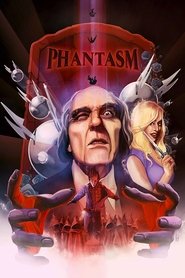
There's a crew guy, and there's my dad in the background, and Reggie's mother. We made this film on a very tight budget, to say the least. And it was very ambitious in a lot of ways. And so there are a few corners that we had to scrimp along the way. Now, right there, that was the first shot of the cuda, wasn't it? Yeah, well, we'll get to that in a second. But I wanted to talk here for a moment about this...
8:17 · jump to transcript →
-
This is a nice bit of acting on Bill's part. The other thing that I found in trying to make a film that had some payoff in it, where you'd have the scares, is that every once in a while you could throw in one of these scenes where there is no payoff, where it's just a suspense wandering around a graveyard, and it would work because the audience knew that since we demonstrated there'd be some payoff and there'd be some more later on. Now, is this a special framing for the LaserDisc?
24:15 · jump to transcript →
-
There was a stop sign right in the shot that destroyed the composition, but Roberto Quezada, our visual consultant, got in the van and just happened to accelerate in the wrong direction. And the composition was perfect after that. Creative independent filmmaking. Yes.
31:28 · jump to transcript →
-
-
-
From this point on, from this point on, we stop looking at him in the same way. Yeah, he also becomes... Yeah, there is... He's also mad. I mean, that's... Yeah. He's right and he's romantic, but he is also insane. Isn't there a touch here of Jack Nicholson in The Shining that really he's pretty much over the edge right from the beginning? Oh, yeah, yeah. There's nowhere for him to go. He's Bruce Dern. In fact, Jack Nicholson wouldn't have done this film because he was a bit... He'd moved on to doing different types of movies. But he would have been in the frame for the casting.
28:04 · jump to transcript →
-
Yeah, I suppose it's sometimes now when we look at visions of the future, what we see are the absences of things like the internet and mobile phones that we absolutely now have as central to our lives, but mysteriously will have disappeared by the time of the Star Trek series. Something we haven't talked about here, as we see the drones on the screen, is that there's currently a furore about actors playing something which is outside their own actual ethnic, whatever, background. Yeah.
35:24 · jump to transcript →
-
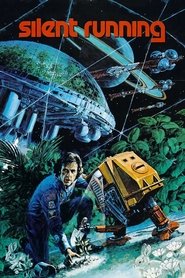
the thing that runs throughout his films. And it's odd that we were talking earlier about how the science fiction aspect of this film, the background, the world building, is very poor. But on a micro level, the technology is very good. It's very credible. And it's almost like that was what he was interested in. I mean, the writers of this script, who are a very...
41:23 · jump to transcript →
-
-
-
Francis Ford Coppola
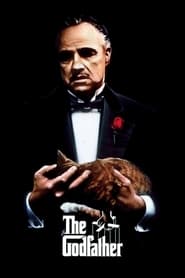
And so what we did is we looked through all the shots and after I had said cut, there would be maybe a few feet of just empty corridor and we took those. And you'll see later in the sequence when you cut to an empty corridor, those are just the little ends of shots that happened to be after the actor walked out of the frame, there was a little piece. So advice to directors, very often the most important stuff that you get
1:02:33 · jump to transcript →
-
Francis Ford Coppola
That actor along who has the lines in the background there is Sonny Grasso, who is one of the real fellows from the French Connection that that story is written about.
1:08:51 · jump to transcript →
-
Francis Ford Coppola
We of course didn't go to Las Vegas for the sequences in Las Vegas. These are second unit shots of signs of the period and we actually shot the scene, the interior in the hotel in New York. This is one of those really cheap second unit shots we did. I was very embarrassed by this because in the background you see there's like hippie looking guys that are not correct for period. Now we're in New York where we shot the Las Vegas sequence.
2:19:19 · jump to transcript →
-
-
multi · 1h 59m 2 mentions
David Naylor, Guy Hamilton, Tom Mankiewicz, John Barry + 14
-
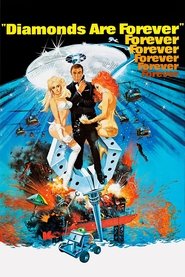
At war's end, he remained in Europe and became a theatrical and vaudeville booker. Director Guy Hamilton recalls Harry Saltzman's reaction to filming on location at Circus Circus. I think Harry was very happy with the Circus Circus, using it as background, because before the war, he'd worked for an agent in France who, amongst other things, handled circuses when they were out on the road.
47:06 · jump to transcript →
-
And I think we had to build it on a platform to accommodate him being shoved overboard. And I think for the background, I put a lot of crinkly material on the backings to give it the sea effect. We didn't use plates or anything like that. And it's a very funny scene. Very, very funny scene. Shashlik. Tidbits.
1:55:22 · jump to transcript →
-
-
-
Francis Ford Coppola
It's a pretty neat sequence now that I think of it. We resurrected all that machinery to make the fountain work. It was sort of, I believe, a theater that wasn't being used, but it had once been used like this. I've done this in movies since I was a kid, but I remember in the early days when I was doing some nudie film, I had sort of some burlesque dance going on. I had these two actors sitting at the table in the background to see this show going on,
1:35:27 · jump to transcript →
-
Francis Ford Coppola
fascinated with the use of a camera that ultimately didn't move and actors would walk in and out of the frame and sometimes you'd be looking at nothing or sometimes it would kind of a visual style that I had evolved with Bill Butler a photographer that did the conversation but I I was feeling more
1:47:54 · jump to transcript →
-
-
-
Nick Pinkerton
Remember that scene by the riverbank with Bridges in the foreground, Clint in the distant background, both perfectly in focus. Characters in foreground and background all sharp and lucid. We are here in Montana in big sky country and Cimino's just going for it, getting that whole overarching bowl of the sky. Also a somewhat suggestive crotch shot if you really want to get into the
33:08 · jump to transcript →
-
Nick Pinkerton
but it's not the usual trajectory, particularly into narrative filmmaking. That background will be reflected in a very impactful, graphically bold visual style, and this will also be a point on which some critics will harp over the years. Singling out Cimino is a style over substance filmmaker.
37:32 · jump to transcript →
-
-
-

Related topics
Other topics that frequently come up in the same commentaries.