Topics / Cinematography & lighting
Composition & framing
139 commentaries in the archive discuss this, with 726 total mentions and 69 sampled passages on this page.
Filter commentaries
Filter this topic by the film's decade or the type of commentary.
Showing 29 of 139 commentaries
Clear filtersBy decade
Across the archive
ranked by mentions · click any passage for the moment in the transcript
-
-
Peter Greenaway
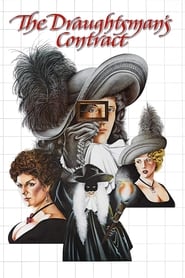
And since my background had been very much about documentary filmmaking, where essentially the address is made from the film directly to an audience, that I should consider probably film narrative conventions, and instead of getting people talking to the microphone, get people to talk to one another. So I went away, and after about six or eight weeks, I came up with a script called The Draftsman's Contract.
1:08 · jump to transcript →
-
Peter Greenaway
The background to the draftsman's contract, I suppose, is very much related to my experiences as an art student in London in the early 1960s. I was as much interested in painting theory as I was in painting practice. And amongst many, many subjects of discussion in consideration of Western cultural painting was one particular idea, was does a painter
2:28 · jump to transcript →
-
Peter Greenaway
I eventually reorganized the script to push it back, certainly to 1694. The circumstances of the history of that time, of course, are riddled into the background. But I suppose like all certainly historical novels, although it might be laid over known and authenticated historical periods,
14:09 · jump to transcript →
-
-
multi · 2h 34m 11 mentions
James Cameron, Gale Anne Hurd, Stan Winston, Robert Skotak + 8
-
Stan Winston
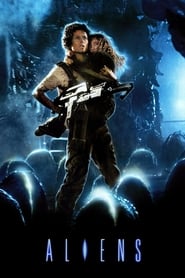
I'm Stan Winston. I created the creature effects and the alien effects for A/ens. I remember Jim trying to figure out how he could make the beginning of this movie impressive. He said he wanted to use a robotic laser. It was an afterthought and it wasn't in the budget and I remember having the gall to say to him "If you wanna use it, you have to pay for it." And he did. - Is that right? This robotic arm and the laser came out of his pocket. I wanted a seamless blend from the end of the first film into the beginning of the second film. I certainly wanted to honor all the things that were good about the first film. So I went to school on Ridley's style of photography, which was quite different from mine, cos he used a lot of long lenses, much more so than I was used to working with. But the smoke, the backlight, the textures, the way he forces the frame by putting a lot of equipment, machinery and foreground pieces, I really studied all that. I wanted there to be a stylistic continuity. I also wanted to have my own style grafted onto that so that I felt enough of a sense of authorship to make it worth doing.
2:51 · jump to transcript →
-
Pat McClung
This scene was shot really quickly. It was pretty much all handheld, 48 or 60 frames a second. I think 48. Then Sigourney had to loop all her lines at slow speed, which is always odd. Our first effect in the movie. It's great, because it's what you expected to happen and then it's not what you expect. She was actually under the bed for that sequence. We built an artificial body from her neck down. Someone is under the bed with her. I can't remember who the lucky guy was that created the illusion of the chestburster. Pushing its way through her. It sets up the character. This is her nightmare. You know that she never wants to have to face it in real life again because she's haunted by it in her dreams and her nightmares. This effect is as if you're outdoors. When the camera dollies over, you see it's just a video projection. The idea was that in outer space there would be places you could go to get a feeling you were in a natural environment. So that plate behind her was shot out in the garden at Pinewood Studios. It was a VistaVision plate. Originally, there was supposed to be a birdhouse in the background in that garden, and she would have Jones on her lap and a bird would fly in and Jones would jump up and hit the screen and that's how the audience would find out that she wasn't actually on the earth. This scene was cut from the release version of the film, which became the source of some controversy with Sigourney. She later said in print that she had based her entire character on this scene, and she was devastated when it was removed. At the time she first screened the film, she told me she didn't like the scene, and then we wound up reading interviews where she had a big problem with that. We didn't have a chance to talk about it because of the postproduction schedule. We were working in England, kind of in isolation.
7:47 · jump to transcript →
-
Pat McClung
Even though I liked the symmetry of the fact that she had had a daughter and lost her - that's Sigourney's mother, so there's an interesting inversion here. She's looking at the face of her mother but playing it as her daughter. As an actor, it allowed her to work the connection. All my movies are love stories. This one is about parental love, protectiveness and a sense of duty, and the ultimate sacrifice that a person would make, given that sense of duty. That was a nice touch. That was Sigourney's idea. This was one of the seminal scenes in the movie and was one of the ones that had to be deleted and omitted from the theatrical version because of length. We didn't have multiplexes, and there were only so many showings a day that you could have of a film, and we had to get it no more than two hours ten minutes in order to get the maximum number of screenings per day. Peter Lamont came up with a simple and austere look for our future sets. I watched this film recently and I was amazed at how little we see of the conventional future world, as opposed to the spacecraft interiors. She's actually on Gateway Station here. She hasn't returned all the way to earth. She never sets foot on earth in the whole series of films, which is interesting. This is as close as she gets until the end of the fourth movie, where she's re-entering the atmosphere. But this is earth for all intents and purposes. This is everyday life circa a couple of hundred years from now. And Peter came up with a very spartan look. It's not overworked at all, which I think was quite clever. We wanted to do it minimalist. We didn't have her walking around corridors. We didn't create a world because we weren't interested. We were interested in the through-line of her story and her character's dilemma and problems, the fact that she's not believed, that she understands there's this great threat. The same applied to the costumes. We didn't wanna suggest a wildly separated future from our present one. This might be one of the first science fiction movies where men still wear coats and ties. The thinking was people will still wear coats and ties. They may not look exactly the same. We turned up the collar on the jackets. It's no big deal but it's a subtle change. We wanted to have a place to go. We wanted the space environment once they get to the colony planet to be exotic and so we didn't wanna overwork earth. We also wanted to understand who these people were, and a Suit Is a suit. These characters are suits and we wanted to reinforce that. If everybody's in Star Wars type costumes, it's harder to relate to them as characters. I was thinking more of a writer than a designer when I was making my picks of what things should look like from amongst the suggestions made by the costume designer. Denny, did they shoot at 25 frames per second for all the video playback stuff? Do you remember? They did. The 24-frame issue was messy. It can be done, but it's such a big procedure. Shooting 25 frames per second on the camera puts the video in sync with the film camera very easily. There's a slight speed differential but it's almost impossible to perceive. In Britain they have a different television system, a 25-frame-per-second system. 625 resolution instead of 525. Later in the film there's some video footage that was used, appearing on video monitors. But the PAL system is better than NTSC, which is our system here in the United States. It almost looked like a slightly too fuzzy version of film, sort of in between. It's not as good as it should be for film, but it wasn't obvious it was video. Jim realized and made the video images noisier or break up more often so it was more obvious. The tag of this scene is gonna be a throw to this big sequence that takes place on the colony which is before the aliens attack. That's cut out of the release version, so coming up Is the biggest single change from the release version of the film. It's an entire reel. I'll never forget Gale Hurd, who was my wife and producer at the time, trying to shorten the film by 20 minutes. I just could not see how it was possible to do a cut here, a cut there, a few seconds, a bit of a scene, the tag of a scene maybe. She said "I've been thinking about this for days." I said "Go ahead." She said "Reel three." Which starts here. "You can take out reel three." I immediately rejected that as completely absurd. Then I thought about it. Reel three ends with Newt's scream when her father has the facehugger on his face. It works flawlessly. It's a brilliant cut and I have to credit Gale with that. I had poured a lot of energy into the design of these scenes and the alien derelict ship. The problem for me was that I couldn't imagine this film without the cognitive tether to the first film of the alien derelict, but it turns out that it works perfectly. A little dialogue bridge and it works fine. I like this tractor a lot, this tractor with this articulated leg design. This is one of my favorite effects. You see the big tractor driving by and in the background you see these people struggling to put a tarp over that tractor. That was done in perspective. There were full-size people back there, and a miniature in the foreground with distance between. It put everything in camera all at one time without any opticals or anything beyond that. The trick was that the actors had to act at double their normal speed of acting, because the camera was running at 48 frames per second. We had a Ritter fan on them to really kick those tarps around in excess of what it would be in real time, but because we were overcranking, that motion would then look normal. The multi-wheeled vehicle at the beginning is a fifth-scale miniature, radio-controlled, that Jim designed. On the airplane coming over from Los Angeles to London he just doodled it. Ron Cobb, I believe, fleshed it out.
10:08 · jump to transcript →
-
-
-
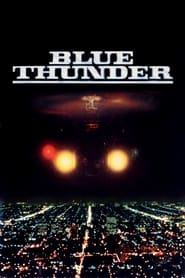
Is that right? Warren was so terrific in this scene. Oh, yeah. Warren had a wonderful, dry humour. With the other actor, Jack Murdock, I wanted somebody who sounded like... ...he could piss Jack Daniel's. Like he had had so much... ...go through his system with that gravelly, gravelly voice. Now, at the time that we did this picture... ...computer technology really did not exist. So that almost all the day footage... ...that we see here in the helicopter, was shot up in the sky. And our guys are actually up in the sky... ...as we fly along with them. And we're looking not at a computerised background here... ...but shooting from the little control tower that we had built on top of... ...what's known as the Piper Tech facility in Downtown Los Angeles. And it's where the city of Los Angeles keeps all of its vehicles... ...and including its helicopter that's on-- Helicopters, that is on the top pad.
2:42 · jump to transcript →
-
So a couple of things here of interest: This is a set that we built. Philip Harrison, the English designer... ...who did Outland with Peter Hyams... ...and several movies with me afterwards, built this set. And we wanted to see the background of Los Angeles... ...so we shot photographic plates at night... ...and we could project them during the scene. ...
14:26 · jump to transcript →
-
Warren Oates said something so interesting to me. As we were doing this scene, we were having trouble... ...with the background plates. And sometimes they would run out, or the film would break... ...so you'd just see a white screen behind him. So that wasn't any good. We have to do it again. So I apologised to him. At one point, I said: "I'm sorry, Warren, that we're having to go through this again." And he said, "Listen, son, I'll do this stuff all day long. I love doing this stuff." And that's the kind of professional actor he was, you know. Just brought all of his energy and all of his enthusiasm. All of these guys did. You know, what real pros are like... ...and how they can keep their enthusiasm take after take... ...and keep it fresh, so it doesn't sound robotic.
15:01 · jump to transcript →
-
-
-
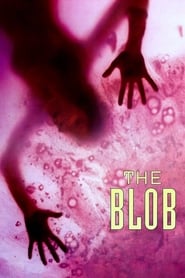
And the fact that he becomes the major threat in the cold clothes is just such a great way to bring it all in. I would say ironic threat. That's not a bad blob right there. That's a miniature. And that's a mat, right? It's a composite of something. Yeah, it's a composite that worked. So this is a miniature street with him? That's a foreground miniature. Did you have any challenges lighting the blob? You were saying before the fact that it's pink.
47:55 · jump to transcript →
-
with her performance, seeing, oh, shit, that's my friend under that thing. This was pre-Jurassic Park, wasn't it? Oh, yeah. With the shaking water glass, and so this is the telltale, oh, my God, with the giant vibrations. I heard a rumor that Spielberg had a copy of the blob on set when he was coming up with the glass scene for Jurassic Park, just saying. He did. Now, wait, one of my favorite afterthought moments is in this shot coming up, you see in the background the grenades go off.
1:21:04 · jump to transcript →
-
I love that. It's coming up here. There it is. I love it. It's like a wet fart in the background. It's just like, oh, yeah, remember those grenades that almost went off? Yeah, fuck those guys. It's still in my stomach. This is looking old school. This is great. That's very Ray Harryhausen. But it works. Very Ray Harryhausen. It's a twofer because you get the slap and then the peel back where it's like flat man comes up. Gum on the shoe. And what about you, Mark? What do you think was your biggest challenge on this one?
1:21:32 · jump to transcript →
-
-
director · 1h 24m 8 mentions
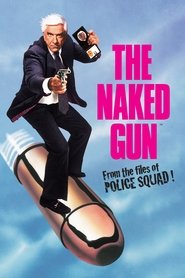
The Naked Gun: From the Files of Police Squad! (1988)
David Zucker, Robert K. Weiss, Peter Tilden
-
I think we did. Remember when he shot the bullet through the videocassettes? Or was that in... That was in the show, yeah. That was in the show. I think he watched. No, no, the thing where you have something on the big L who's out of the frame. I think the shoe was just for the movie. Swiss Army shoe. Yeah. This is one of my favorite lines where he says, Ted, why?
26:48 · jump to transcript →
-
I think that Vincent Ludwig was involved in a number of... Again, there was some laughter at that point. No, it's a compelling... There you go. That's pretty funny. Big laugh. Isn't this the part in the second act where you can go have a drink or something? This was another concession break. Yeah. I'm sorry. I'm worried about you. I don't trust you. But there was a very good, faint, you know, physical thing coming up. It's coming up right now. We're in the famous pass-out scene that she does not notice at all. Oh, yes. Done in the background.
50:46 · jump to transcript →
-
Now, it's good to put some jokes in the background, because if you draw too much attention to them, you can be held accountable. Or you can be disappointed. Exactly. He's such a gentleman. He's so generous. He just wants to have a talk with you and clear up any doubts that you might have about him. Wham.
51:15 · jump to transcript →
-
-
-
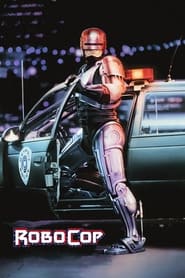
Getting ready to pound the nail. I mean, a lot of this, of course, is kind of part of the crucifixion, the passion story of Jesus, you know. And I always felt, for me, it was continuously a situation in the background that RoboCop somehow was an American replacement of Jesus. That's why at the end of the movie, as a modern Jesus, an American Jesus,
22:00 · jump to transcript →
-
And probably in death, we all have to assume that happens to us. You can't go back. And in fact, in terms of a classic storytelling, it's like this is the point where he can no longer return to the state he was before. And you really can't. He's dead. So it's really a complete... Yeah, Roboteam built an extra layer here so we can have all this gruesome stuff on the foreground.
25:51 · jump to transcript →
-
Anyhow, so what I said that this is what you see burning in the background is still the result, more or less, of the explosion. We had to shoot it very fast after the explosion. I think we rehearsed it even before the explosion so we could rush to this spot with the cameras and shoot it while the building was still burning. And the fire department was trying to get us out of town. Now, this is the CompuLab. And this is a sequence which, you know, normally would be an exposition sequence that would be pretty dull.
52:49 · jump to transcript →
-
-
-
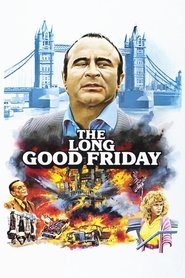
John Mackenzie
And as I said to the producer, I said, that's the one thing we shouldn't call it, because I don't want to reveal that this is about Ireland at the moment. I mean, a very discerning guy, if he was looking very closely at this particular bit of film, might notice that it's Fagin's pub in the background. But you'd have to be a fantastic aficionado, and I've seen the film many times, to realise that. So I didn't want to reveal the Irish connection at all, and so we changed the name.
5:01 · jump to transcript →
-
John Mackenzie
What was interesting about that pub, it was so real. We were on Wapping, right next to Wapping Steps, and next to it is quite a well-known warehouse, which is now lots of flats and things. But what was interesting is we built that, even those little pillars are ours, but you see the warehouse in the background, but we built a sort of what was a car park and everything. Well, you know, before we could get in there shooting, cars drew up, MGs, I remember, drove into the car park, they would walk into the pub,
49:25 · jump to transcript →
-
John Mackenzie
The casting of Derek, we had quite a difficult time with that because there were so many different characters, and I wasn't quite sure who to cast. And we didn't have him in the frame until I saw a television player, and he was in it. The thing that struck me was that he did have a very good film technique.
55:41 · jump to transcript →
-
-
-
That's right. ...his background was, which I think is a smart choice. Ultimately, that... Because he's such a bizarre character who has a life of his own. Exactly. Isn't there a porno, a bit of a porno melody? I think... Yes.
37:20 · jump to transcript →
-
I can't think of a better way to start a friendship. We haven't met. I'm Bobby Grady. Joanna Crane. I saw it on the mailbox. What are you, about 30? Still call yourself Bobby? I'll grow up when I'm ready. Oh, I think you're ready. Are you alone? Aren't we all? It's interesting framing of that shot. The two of them from a distance. And they're both going through their own...
1:14:28 · jump to transcript →
-
Again, framing her from a distance. Look, I'm sorry. I know it's late. But remember when you said, if you need me, I'm here? Well, I need you. Come on in. Yes, now she's facing him as Joanna. And it's, we'll see whether or not she can deal with that.
1:28:33 · jump to transcript →
-
-
director · 1h 31m 5 mentions
Alex Cox, Michael Nesmith, Victoria Thomas, Sy Richardson + 2
-
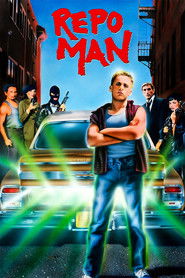
boom that did hurt that hurt that put a bruise on on my ribs even though i was wearing a protective girdle about the size of a cantaloupe well louis told me that he says he wants to be an actor i'm gonna initiate him yeah dick rude dick rude with a sid vicious t-shirt and in the background miguel sandoval prescience and the circle jerks playing and they're listening to the circle jerks later up here
6:07 · jump to transcript →
-
Pretty good. Yeah, yeah. That was nicely directed, too, Alex. You had that floating camera through there. That's right. It was all handheld, wasn't it? Robbie did a lot of handheld. Yeah. A lot of handheld. In that sequence. Check this out. They go to see Mr. Humphreys. Poor guy. And who's that in the background?
54:53 · jump to transcript →
-
Funnily enough, at the same time as we made this film, Penelope Spheeris made Suburbia. And there are lots of little similarities. There's a point at which the executive producer of Suburbia appears on a television within the frame, right about where Michael does in Repo Man. There's a guy who's a murderer. He kills a little kid in the car, and he's wearing a Dodgers baseball cap. And all these little things happen that sort of have something to do with Repo Man.
1:01:02 · jump to transcript →
-
-
director · 1h 29m 5 mentions
Jeff Kanew, Robert Carradine, Timothy Busfield, Curtis Armstrong
-
He developed the honk, and Bobby took it to another level. Yeah. Thanks. This song you're hearing, the Revenge of the Nerds, it's a group called the Rubinoos, but there is a version somewhere where Bobby Carradine and Anthony Edwards are singing the lead on this, but it never got into the movie. However, if you listen to the background track, whenever you hear somebody go, nerds, it's me. Dad, how fast are we going?
2:03 · jump to transcript →
-
When I first cast him, it was off a calendar. The men of USC, that's where I saw him. And he was a model. But he was great and he's still great. He's a great guy and he's funny and much funnier than you'd expect a handsome guy to be. Some of these college kids that we picked up as background players and put them in these scenes, this is a highlight of their life right here. I mean, these kids are... I remember the...
14:09 · jump to transcript →
-
Blonde and who knows what happens to the girl. His first love. Just like this. He's done with her. Use her and throw her away like an old sock. These guys improvised this. Yeah, this was a whole scene that they came up with. I remember they showed it to Jeff while we were there. The framing of this shot I think is classic and I will take credit for it.
44:03 · jump to transcript →
-
-
-
Cheap trick in the background, right? Cheap trick. You want it, you got it. You want it, you got it. And this also follows the great rule of you can repeat something until it's just not funny anymore. And it's still funny. Lily on the guitar is just... Great. I could watch it all day long. Parties are just never like this ever again. There's Spoonie, Greg Spoonie.
28:49 · jump to transcript →
-
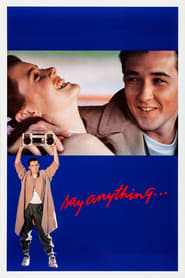
Like, I just held them far away from me, so they did the same to me. Nice car he drives, I gotta say, with the... What was that stuff? The thing on the... The bumpers on the... Yeah. What are those called? I don't know. Jack Lord always had them in Hawaii Five-0, so why not Lloyd? We can walk from here. Okay. We did this scene right across the street from where Lloyd holds up the boom box, so right to the right of the frame is where we...
34:13 · jump to transcript →
-
But I came to the set, and I was like, Laszlo, what if we have them like magpies up against the fence, and then they're going to be rapping in the background, and he's, is that cliche? And he's like, no, no, that's good. And this was the scene that the next day Laszlo came to the set and said, I get the movie. Wow. I also remember this was the scene. These guys were great. We were, you know.
1:09:40 · jump to transcript →
-
-
-
Paul Davis
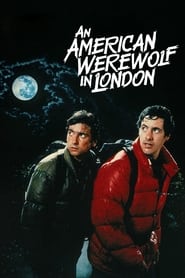
of something in the darkness. And they put scotch light in the eyes so that you could just see the eyes glowing in the background. But again, for whatever reason, I guess John wanted to conceal the monster as much as possible. And they kept it out of the movie. That guy laying there, right there, he was the former dean of British stuntmen, Paddy Ryan.
16:53 · jump to transcript →
-
Paul Davis
apartment that she's in on her own, so she kind of made up that this character obviously came from a wealthy background. It's one of the greatest scenes in the movie. I remember asking Rick Baker about that makeup, because David Naughton has always maintained that it was, you know, out of everything that he endures with the werewolf transformation, he always maintains that that makeup in the woods is
28:35 · jump to transcript →
-
Paul Davis
And the most, you know, the most horrid thing for him is losing loved ones. So it was the combination of those two things, which is why we ended up with these Nazi monsters completely decimating David's family. With the Muppet show in the background as well, which really people did not like.
31:07 · jump to transcript →
-
-
director · 1h 30m 4 mentions
A Nightmare on Elm Street (1984)
Wes Craven, Heather Langenkamp, John Saxon, Jacques Haitkin
-
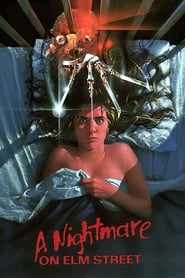
Ronnie could have ever been married. Well, it was appropriate. But they were divorced. What was some of the background on your relationship? That's what all their friends said. I can't believe those two ever got married in the first place. Oh, and you forgot to mention the fourth character of this film, my hair. I thought your hair was pretty good, actually. It was pretty large.
19:39 · jump to transcript →
-
And the other person that should be mentioned here is Rick Shaine, the editor, who did a magnificent job cutting this film. Has there been any background in the text about Freddy Krueger at this point? Uh, no. No. What do you mean, in the text? I mean, who he was and...
27:21 · jump to transcript →
-
talking about it. No, it was... That's a little later. In the film, yeah, it's Ronee Blakley's... Talks to me about it or something. Well, she tells Nancy what the background was. Oh, yeah. Until this time, we don't even have a name attached to this person. Hmm. You see the beginning of Nancy's ingenuity at this moment. This is kind of her defining brave action, burning herself on this pipe. Right. I love that.
27:48 · jump to transcript →
-
-
-
Jim Piddock
Plate shots, that is, shots that were filmed as background for titles. Although here, as you see, there are actually no titles, so they aren't in fact plate shots, but simply shots, I suppose you'd call them. Very, very lovely. They do set the mood, I think. Very effective. And now we've cut and we're driving. But are we driving? The picture is...
0:51 · jump to transcript →
-
Jim Piddock
garden hose piddling down on the windscreen, and so we think we're driving in the rain. Now, these pass-bys had to be precisely timed to the dialogue, so this shot had to be done in reverse. That is, if you were there observing on the set, you would have seen these passing lights being pushed, in fact, away from us into the background, not coming at us, so that their moment of entrance, that is, their apparent moment of exit, as it were, could be precisely timed.
2:06 · jump to transcript →
-
Jim Piddock
altogether, though, of course, for the sense of the frame, has been composed to exclude the nether regions. Always a sensitive time on the set, of course, the nudity, sometimes an occasion for embarrassment, although this actor, very manly. In fact, I understand that on the set as he stood up, the makeup girl fainted. And now we're in another place, an envelope. We'll get a look at the characters here in a moment. More people, a new place, the plot thickens.
6:00 · jump to transcript →
-
-
-
Oliver Stone
I love framing these landscapes, putting men into landscapes. I love that always in movies. It's fun to have guys all the way back out there. Two, three, four hundred yards from camera. Charlie's literary and quality, that's the way I was. I mean, he wrote about people like Captain Ahab. I love this shot. This is a toughie. Great hit on the back. Timing is good.
45:21 · jump to transcript →
-
Oliver Stone
Strange bilateral relationship we had with the Vietnamese. Two different directions, love, hate. It's like the knuckles on Ra's hand. We got some great light here. You can see the sun on the grass. It must be that magic hour around five o'clock, maybe six. The green is popping, the sun's popping off the green. And in the background, we blew the village. Two cameras, you see that?
58:28 · jump to transcript →
-
Oliver Stone
What the hell, it's only a movie. This is interesting, we have the NVA shooting at the, keeping the air support from getting too close and they're getting blown to smithereens. Squibs in the ground, that's tough, complicated. Great shot though, long lens, seeing them in the background.
1:19:54 · jump to transcript →
-
-
-
but he did frequently, and it was always so great when he did. And one of the things that happens when you hold the camera yourself is that you're not just trying to hold the frame. You're not just trying to keep everything. His wife was an actress. Michael's wife was an actress. And so that when a cinematographer with that kind of sophistication, that kind of feeling for actors puts his eye to it, he'll go wherever his instinct takes them because of feeling what they're doing.
1:19:59 · jump to transcript →
-
It's a pleasure to read, really. There's water on the set in case I get an attack of cottonmouth. Yeah, sure. You'll be fine. It's really important for me to use all the research, so a lot of the background conversations you hear is sort of based on an enormous time at research. Best severance pay in the business. He was lecturing me. Finally, I just said, I'm sorry. I refuse to look at it as a negative. I'm young, and my news appeals to people my age. And it isn't as if he just didn't hire a 26-year-old producer himself.
1:21:29 · jump to transcript →
-
I'd like to take everybody out. But I can't tell you how completely I feel as I look at it that in almost every role, the person that we had was indispensable to the picture as it turned out. And when you look at the people in the background, understand that most of them weren't actors and all of them are acting. I don't know how that happened to us. I've tried to repeat that experience since and I haven't been able to, not like this. Bill.
1:41:40 · jump to transcript →
-
-
-
Eleanor Bergstein
out a message where he was sequestered in his jury saying, please don't choose anybody else until I can talk to you. I'm the best person in the world for this. So unlike Emile to say something like that, that every time I reminded him of it, he blushed. But he was exactly right because he was a brilliant director of dance and just a brilliant and wonderful man. And at first, the studio was not sure that they wanted him because he had this huge ballet background and they wanted
7:39 · jump to transcript →
-
Eleanor Bergstein
So you see them at various places and sides of the frame practicing it so that when they come down the aisle at the end, it doesn't come out of nowhere if you look very closely. You see that all along they've been practicing it, and that's what at some point Johnny says to Neil, oh, you know, we've been practicing this Cuban rhythm kind of thing, and Neil says, no, do the pachanga. So they really have their own story, their own kind of dancing that they want to do, and at the end they're really totally confirmed with this, and this is the place that starts the...
32:14 · jump to transcript →
-
Eleanor Bergstein
and you can see life in every corner of the frame here. This will later be where Johnny comes to find Baby. Here we are in the rain. One day the camera crew came to me and said, Eleanor, we see that you have a camera instruction here which says the air is hung with silver. Do you mind telling us how you plan for us to do that? And I said,
40:02 · jump to transcript →
-
-
-
Most of us do. I assume he didn't need background. Like, what's in the actual book? Because we never really get to find out too many of the rules. He just keeps saying, I've got to read that book. Well, that book is blank. Yeah. Not much. It's whatever we made up as we went along. It's a good thing the book doesn't fall into somebody else's hand. That's a dangerous thing to have lying around. Well, I thought about that.
30:08 · jump to transcript →
-
You were talking about character motivation earlier on with David Warner. Did Rene come up with any sort of background? Because he drops these little funny comments about how old he is and all these famous people that he met over the years. Did he ever talk about maybe who his character was, where he came from? No. All those things came from the actual script. And I don't remember having those particular conversations with him.
51:14 · jump to transcript →
-
But I remember it very well because it is a tricky sort of thing to do. But I assume it went off without a hitch, though. Well, it did. And the stuntmen were really good in this. A guy named Spiro Razatos was in charge of it all. And he brought in good people and they did good things. And I like action. I used to race cars myself. So I have a little background in that sort of thing.
1:13:38 · jump to transcript →
-
-
-
John McTiernan
And a kind of traditional stunt style of shooting is just... Static cameras, you know, like this, what you just saw, you watch the guys get thrown out in the background and you rack focus to Dillon in the foreground, here you... Somebody signals Arnold and the rack focus to Arnold. Now, this is second unit.
23:19 · jump to transcript →
-
John McTiernan
This joke, is Shane's joke. It's entirely Shane's joke. Shane didn't write in an official way but he wrote in an unofficial way like the joke, the pussy joke. He was just there, and he would come up with stuff. Now, the heat vision here, when we first did the heat vision, they had a real heat vision. From the folks in New York City that did the effects stuff. And it was this enormous thing with the umbilical that was six-inches thick and it would, could only get maybe four-feet from the truck. And it really would see someone based on temperature. But there was this little tiny problem, which was the ambient temperature in Mexico was in the 90s. Consequently... People were the same temperatures as the background and they were perfectly camouflaged. So in order to deal with that, the splendid folks in the special effects field said, "Well, it's no problem. "We will put ice water on the jungle. "And we will have the actors stand next to a fire just before their, "the shot," So, they literally were doing that, and they spent about, I don't know, a week getting one shot, maybe two shots. It was just a nightmare, it cost a... Every shot cost a fortune. So, finally, I went off to a video special effects house. They did commercials and things. And I sat down for about three hours, we had to do this in secret. One of the studio...
32:42 · jump to transcript →
-
John McTiernan
these early shots of the predator, I am not sure where we did them, actually I think they were done in Los Angeles. We had, in order to get the predator, we had to, in effect make a hole in the jungle, a hole in the background. And so what they did is they dressed a man in a red suit, and I was desperate to try to get him to swing through the trees or do something that didn't just look like James Arness in The Thing, stalking around, stiff legged. And I got some stuff, I had them build this enormous bungee rig, which actually we got a couple of shots out of. I did some other things to get the guy looking semi-mobile in the trees. What I really wanted was a monkey. So I had them make a red suit for a poor monkey. And the problem was the monkey, once we got the red suit on him, that would separate him from the background and then I could make the effect out of. The problem was, the monkey was so embarrassed by the red suit that he hid! He'd go up in a tree, and he'd cower, and he wouldn't do what monkeys do. He wouldn't go from tree to tree or do anything, 'cause he's too damn embarrassed by the red suit.
42:44 · jump to transcript →
-
-
-
Barry Levinson
It just seemed to be appropriate, certainly in the shot coming up, as the car has to make the turn and the windmill's in the background. He's going to have to go to Cincinnati. It's always the logistical problems of having to shoot and chasing the sun.
7:18 · jump to transcript →
-
Barry Levinson
and sort of framing it in some fashion. Because this is really a talking kind of movie, trying to hold on to the visuals where you can find it and frame a certain scene gets to be difficult. You can only sit so long in some of these closer shots. So whenever you can add air to the film, I thought it would be beneficial.
1:01:16 · jump to transcript →
-
Barry Levinson
I like the graphic of that framing of that. It's very simple and straightforward in contrast to where we were just before this.
1:48:58 · jump to transcript →
-
-
-
And I had this really, really bad flu. I could barely stand when we were shooting this. And I was just in the background saying, oh, my God, I wish this day would end. Dual aspect. So with an actor like Stephen Berkoff, who presumably could command a reasonable salary at that point, how many days were you able to book him for across the whole film?
16:11 · jump to transcript →
-
really yeah we only have 30 days to shoot this whole film and uh there's a lot going on frankly uh quite a few locations it must be quite difficult to shoot directly into such a bright light and yet preserve detail around the edge of the frame that's quite a quite an ambitious shot really and comes off perfectly so
52:29 · jump to transcript →
-
questions about how on earth you can make a character who's a pimp with such a questionable background work as a heroic character, he would have found a way and said, yes, I guess you're right, let's see if we can pull him up by his bootstraps a bit and sort that problem out. I think he would probably have gotten in there with a bit more time, solved those problems with and for you. I believe so, yeah. But that's...
1:14:36 · jump to transcript →
-
-
technical · 1h 35m 2 mentions
Steven Lisberger, Donald Kushner, Harrison Ellenshaw, Richard Taylor
-
When we came to make a decision about what film format to use for Tron, we felt very strongly that we needed to shoot it on a larger negative than traditionally done. And it came down to a choice between 65 millimeter and VistaVision for the whole show. But the availability of 65-millimeter cameras was far better than the availability of VistaVision cameras, so we made the decision to shoot the entire show in 65 millimeter. And to keep a certain consistency, and as long as we had rented the cameras, we felt that we might as well go ahead and shoot the real world in 65 millimeter and not in 35 millimeter. It was kind of one of those nice to have things, and nobody objected strenuously to it, and also it would be the first time since Ryan's Daughter that a film had been shot entirely in 65 millimeter. And I think you can see the results. I mean, it looks wonderful. In the monitors in Lawrence Livermore, one of the things that Triple-/ had to do was create lots of imagery that appeared on monitors, and that imagery had to be shot and created long before we got to production. So, there was a lot of planning in creating all of the monitor imagery, and Triple-I did a great job on that. Spent a Iot of time on this shot. To accomplish the effect, what we did was get a 4-by-5 still camera and photograph Jeff Bridges in his position after he's been zapped, and then immediately moved him out and took another photograph, which was the background by itself. So, as you pull away chunks of Jeff, you see the background behind him, and then to put the laser and the grid and all that on top of him was basically the effects animation of John Van Vliet. When Flynn is de-rezzed and pulled into the computer, we go through one of the most interesting sequences in Tron, which is the real world to electronic world transition. This sequence was created by Robert Abel & Associates, primarily under the direction of Kenny Merman. It was a sequence which I had designed, knowing that the way that Robert Abel & Associates was making these computer graphic images with the Evans & Sutherland computers, and, really, using vector graphics to create this particular look, would give us a look that would be unique just for this transition. The three-space transition, the movement through all these binary bit patterns and this polygonal landscape, was done by making multiple passes through a traditional animation camera that was pointed at a high-resolution, vector graphic, Evans & Sutherland computer screen, and making multiple passes, frame by frame, using different colored filters, coming back, making multiple passes of rewinding other filters, until you finally end up with this, which seems to be solid objects. But it's really made out of lots of tiny, tiny lines put together to make solid blocks of color or objects. Oh, man, this isn't happening. It only thinks it's happening. When Flynn says, "This isn't happening, it just thinks it's happening," it's a key line, because it means that the reality that he finds himself in now, not even he can fully believe exists. And if anyone should appreciate and understand this alternate reality, it's him, and now he finds himself trapped in it. All right, now we see Sark standing on the bridge, and all of a sudden, he is enclosed with these shrouds of light as he begins to have his conversation with the MCP. The database for the MCP was a human figure that we had created at Triple-/ called Adam Powers and was originally on the Information International sample reel. And if you look at that sample reel, you'll see a juggler character who was juggling balls. Well, that face of that character is the face of the MCP. So, the first time that you see him, he is a polygonal drawing of a face. And that's basically the underlying database of the face. So, it's made of polygons. And those polygons, we play them out on the Triple-I computers as the line-drawing polygons, and made 12-and-a-half by 20-inch stills, high-con stills of those. But we created the mouth positions for the vowels and the syllables so that you could take these interchangeable transparencies and lay them down and make him Say, by whatever order you put them in, whatever you wanted him to say. 'Cause he was voicing a lot of different dialogue. Then those were backlit, and then we applied an effect to those line drawings of putting a steel mesh screen over the taking camera, and it made it have that much more, kind of, complex look. And then we also animated the exposure occasionally. Early on in the film when I started working with Steven, we did a lot of experiments to work out how these characters were created. The thing that we finally decided was that the characters needed to have this energy inside themselves. They are obviously in this electronic world. Now, these costumes were unlike any costumes anyone had ever created for a picture before, in that they were costumes designed to have effects treatments done to them. They were white with black drawing or black lines over them. All of the black elements on the costume were turned into circuitry which could be backlit and light could be pushed through there. We originally shot a 65-millimeter image of these people, live-action photography of them on these black sets. Then from that 65-millimeter film, we created some photo-rotoscope machines, which basically could project the 65-millimeter film down to large pieces of film, which were pre-punched with animation punches. This film was created by Kodak for us, and we would project down with these photo-rotoscope machines, which would hold this film into a vacuum frame and make a continuous tone positive print of each frame of the film. Then these continuous tone prints were taken to a light table, it was a vacuum light table, where they were contact printed to high-con film to make a number of high-con positive and negative images. So that you basically have for every character a large cel and you have high-con positives, negatives, and a continuous tone positive. Then these high-con elements were hand-inked and painted to isolate the circuits on the body, the whites of the eyes, the whites of the teeth and any other circuits that we wanted to treat as a separate exposure. The characters are more often than not... The live-action characters are shot on an all black stage. When there is a set, the set is also black, but is measured out to conform with what we're seeing in this artwork. So that if a character appears elevated in a shot, like this shot, there was an elevated platform for him to walk on, but it didn't look at all like the set. Then we would composite these actors over paintings, transparencies, and once that was done, we would add the light and the color separately. And to simplify it, you can describe it as a sort of perfect blend between live action and animation in that we took live-action film, photographed it in a way that we could break it down to individual frames, then blow up those frames into large slides or transparencies. And we had 75,000 of these, which seems like an appallingly large number, but it really isn't if you compare it to an animation film. And because we were at Disney, they were not overly swamped. That's an actual Frisbee, by the way, and those are actual Frisbees on their backs. We had a excellent Frisbee coach, Sam Schaiz. I like the fact that the deadliest weapon in Tron is a Frisbee. A Iot of effects animation in this sequence and in the film. And that is the animation that makes the glows, and as the Frisbee gets brighter, and you see the reflections of it on their costumes, all that has to be done frame by frame. This is hand-drawn animation that, although it is drawn, a negative is made of that, and it is placed over a light source and then re-photographed, and the ability of the effects animators was such that we were never waiting on the effects animation on the show. They always performed very well. It was never a problem. They did very few redos, and that's because they had had experience doing this beforehand, whereas everything else that we were doing, outside of the effects animation, was the first time through. So, that had a much tougher and steeper learning curve. In the holding cells for the game grid, those are backgrounds that are entirely hand-drawn by the background department, again using Rapidographs and line drawing and airbrushing and then turning those into high-cons. But those drawings are all drawn to match the actual physical sets, which were built so that when someone passes behind something, or leans on something, those are actual physical sets that were built. But again, the sets were just black on black. They're as if they were made of black velvet. Part of the interesting thing as a cinemagraphic problem that was presented to Bruce Logan was that he had to shoot, unlike anybody had ever shot before, sets that were entirely black with white line drawings and white characters running around on these sets. Bruce Logan's job in photographing these people was very difficult because, unlike most photography for most films, you try and get as much chiaroscuro in the picture as you can. You let there be a lot of dark and you create shadows and you create this moodiness, which a cinematographer takes great pride in. In this film, during the sequences in the electronic world, basically, he had to light them so that we could see as much of the costume as possible with as little shading as possible because all of the shading and all of that were done by hand by making different masks and airbrush elements that were used under these costumes in post. The ring game was an interesting technical exercise. The set itself, again, was black flock paper with the rings drawn on this paper with tape. The actors had to realize which rings were there and which ones were not as they acted out the sequence, imagining that they were hundreds of feet above the ground. One of the inspirations of Tron is the movie Spartacus. And there's quite a few similarities to the persecuted people who had to fight in the gladiatorial games. This game, of course, was inspired by Pong and jai alai. I think one of the interesting parts of Tron was the synthesis of new games that were created. The design, for example, of the glove that's being worn here, we took a traditional jai alai glove and then rebuilt it and made it out of foam, added other elements to it to give it a more technological quality, and then again, I put the designs over the outside of that to make it blend with the rest of the costumes. Shooting in 65 millimeter, from a director's standpoint, is a lot of trouble. The cameras are huge and bulky. The format requires an enormous amount of light to fill that negative, so if you are shooting Lawrence of Arabia or Doctor Zhivago and you've got lots of snow and big exteriors, it's fine, but in low-light-level situations, it's very troublesome. The depth of field is sometimes as little as a half an inch, and you find your cameraman is asking you, "Now, which part of the eye do you want in focus? "Do you want the front of the eye or the back of the eye in focus?" Or if the head of the actor is not square to the camera, they ask you the really insane question of, "Which eye do you want in focus? "I can give you the front eye in focus or the back, "but the other one's gonna be blurry." Now a lot of these shots where you see actors talking to each other and we're doing over-the-shoulders, the camera couldn't hold focus for the blow-ups to be made, and I had to shoot the actors on separate passes. So, in a shot like this, where you see all three actors talking to each other, it wasnt filmed that way. I filmed them separately and they were composited. And there's quite a few shots like this. Whenever you see them walking around and they're separated by more than a couple feet, those are all separate shots, and then the actors are composited. So, it's very difficult for the actors because not only do they not see the environment they're in when we're filming, all they see is an all black stage, but they don't even see the actor they're talking to. Forming of the Lightcycles, again, is almost entirely done by hand-done animation done by the effects animation department in creating the way that these cycles form around these characters. We built an object that the actor could sit upon, and it was literally a mechanical shape that was the seat and the handlebars, so he could sit down and it would thrust his arms forward and pull him down into that locked position. So that everything that he sits upon and touches, it was, again, drawn by the animation department, and not until you see the final completed cycle, which is actually a CG/ rendering of the cycle, is any of it done by computer. The Lightcycle sequence was done by MAGI. Their way of creating an object were to take basic geometric shapes, cones, cubes, spheres, cylinders, and make an object by collaging those particular pieces together and creating an object. And that's how the Lightcycle was created. All wide shots that you see are computer-simulated. All of the shots, other than the very tight shots of the figures inside the canopies, are computer-simulated. The shots inside the canopies are actually hand-drawn artwork of parts of the Lightcycles, and the animation that's happening over the Lightcycle windshields is hand-done animation to give them a sense of speed. But virtually every scene that you see of the Lightcycles is entirely computer-generated. And there's not even effects animation in those scenes. If there's an explosion when a Lightcycle hits the wall and a tire bounces across, I think those were basically all CGI. Syd Mead worked really hard on designing these motorcycles so that they would incorporate the characters. But if you look closely at them, you'll see that the second half of the bike is flattened and sort of two-dimensional, and that was done because the computers couldn't handle too many compound curved surfaces. So, we restricted those curves to the wheels and the windscreens, and then the rest of the bike was simplified. The ability to move the camera through 3D space with these computer-graphic-looking landscapes is just great. The Recognizers are a sort of King Kong. There's a little head on top of that gate structure... Suggestion of a face, but it, sort of, got lost. The Recognizers were created by MAGI-Synthavision. As I mentioned, there are graphic vector lines, red lines outlining all of these objects, the same way with the tank. The tank was another unique design of Syd Mead, who is a futurist, a fabulous designer. Once Ram, Tron and Flynn have escaped the Lightcycle grid and are off through the canyons being pursued by the tanks, we cut inside the tanks and see another example of a Syd Mead set that was built as a three-dimensional set, again with black background, and all of the elements on there graphically put on so they could later be treated. So the camera, you can see, is moving through scenes in ways that no physical camera or no model shot could possibly do. The animators that I worked with to create the choreography for all of the CG/ sequences were Bill Kroyer and Jerry Rees. But to communicate all this information to the computer technologists, the people that are sitting at monitors at that time, took a new language which we had to create. So, what we did was, first of all, we had to think of each sequence as a real physical reality. Not only would they draw the point of view that they saw as an animator that we would work out together, that was the story point that Steven wanted to make, and also the point of view that we wanted to take. But after we would draw the original storyboards in a traditional, kind of, storyboard manner, we would have to go back and draw a top view, side view and front view of the objects, where they were in time, where the camera was in time, and what the camera's point of view was. So, we really had to define everything to the CG/ technologist in a three-world, three-dimensional space. And that was the first time that that had ever been done. They must've gone right past us. We made it...this far. Now, all of this, this revolt, it's all being led by the user who's gone in the system, Flynn. The Tron character and Ram character, they would have toed the line and gone through the software the way they're supposed to. We'd better, Null Unit. Null Unit. Get the computer dictionary out. Look up "Null Unit." What does that mean? In this sequence, you can really see some of the flaws. I don't really mean the flaws, but the imperfections in the cels, little bits of dirt that pop on and off. Yeah, but they're few and far between considering. Yeah. Come on, you little bugger. Come on. Look at that. A lot of pops and a lot of glitches in there that we would always Say, "Well, that's what happens in an electronic world." When we started there were going to be no differentiations between the flesh tones and the rest of their uniform. But at a certain point they looked, well, not very good. So as a result, that added, approximately, 120,000 extra frames, extra elements to the shot, so it did grow in many aspects. The cave sequence where Flynn, Tron and Ram finally re-energize their selves with this liquid energy was a very interesting technical problem to solve here. In the sequence in the cave when the water is being handled by the actors, literally, frame per frame, rotoscope animation is isolating the water from the body so that it can be treated with a different filter and a different exposure. And again, this is an example of how light is used to portray motion or energy, as Tron drinks and you see his circuits light up and they become energized. The set itself was a complex geometric shape, which was designed by Peter Lloyd, and we built into this set, basically, water channels, and the water itself was reflecting light sources that we put in angle so they would reflect to the camera, and the water was in black tanks so that all we're really seeing are the highlights on the water. Yeah, but the biggest problem at that time was do we fill this with colored water or clear water? Had to do tests, you know. - Right. That was your problem. Do we put milk in there and make it purple? I think that what Flynn is surprised now, ironically, to see that there's parts of this mirror world that are more alive than he anticipated. So, it's not just the harsh computer reality, there's something living about it. It's a very complex shot, again, with all the elements. Probably about 30 different elements, 30 different separate exposures for each frame. Normally in a special effects movie, you get a very bad bottleneck effect in that all these things have to be composited through one or two optical printers. Now we have digital compositing machines. But by putting it into a manufacturing system like this, where it became like an animated film, we could use 14 or 15 animation stands, and we could use a slew of effects animators and ink and paint people to do all of this work simultaneously. As far as I know, we still have more shots with human beings composited into an artificial environment than any other movie. I believe there's 1,100 special effect shots in the film and 900 of which have human beings composited in them. And that number is just very, very large. Just the organizational task alone was monumental, not even considering the creative side of it. For every frame you would have an additional five to 15 cels that isolated the different colors and the different... We had body mattes, we had face masks, continuous tones. You made print backs on top of print backs. So, those 75,000 original cels grew to over half a million. I think we ended up with something like 600,000 cels, all of which had to be kept in order. We had to pull trailers, literally these large house trailers, kind of, industrial trailers onto the lot. We ran out of space and we ended up with 10 trailers that would house all these cels and had to be organized and sent over... 80% of them were sent overseas and had to be numbered and then painted and kept in order. At one point we thought if we had 1,000 scenes, and this was around Christmas time, the film was going to come out later that summer, and we had no idea of how we were going to get it all done in that short a period of time. And we thought, "Well, it's summer vacation. We have two weeks. "We'll get college students, 500 college students in a room." We really believed this might happen. We discussed this for about an hour and we Said, "You'd have 500 students in a room. "We'll teach them how to do inking and painting and rotoscoping, "and they only have to do two scenes each. "And so they do one scene a week. "At the end of that time, we'll be done, "and we'll just go and shoot them on the animation stands." It didn't work out. So, we brought on Arnie Wong, who was an animator. We put him in charge of supervising Cuckoo's Nest, which is a ink and paint service that was in Taiwan. Approximately 80-some employees in a single room. And what we did is we went through and we made a videotape of every situation and what to do in that situation. So that if an inker over there, who didn't even have to understand English to do this, could go to a TV monitor, roll to this particular problem and see exactly what you'd do in that situation. And then he was there to answer questions that were unusual. And the most interesting thing, and one of the things that I'm particularly proud of with this technique is that in spite of what a pyramid it was to build, we managed to get all of this post-production done in six to nine months. And that is using a technology that we had developed. It had never been done before and we developed it and used it on this picture and delivered on time. And that was only possible because of this manufacturing technique. It's interesting the computer animation iS the simpler part of the set. - Yes. Ironically, one of the things that was a creative philosophy that we enjoyed and were proud of was that we were taking computer animation and letting it stand on its own. We weren't trying to make computer animation mimic reality. And the job was then to make reality, the actors and the sets, look like the computer animation. We used to say, "Well, if you've got lemons, make lemonade." Everybody else, and certainly since this point, has been going nuts trying to make computer animation mimic reality perfectly. And I found that the limitations of computer graphics at the time were the most exciting thing. If computer graphics... If computer animation is no longer different from reality, maybe we've lost something in that. Certainly you gain special effects technology and you can do certain things, but it's the limitations, I find, to be the creative challenge. I think at the time we were using four computer animation companies... Yes. -... which were probably the only animation companies that existed in the country at the time. Yeah, I had been visiting some of these companies for two years before we started making the movie. Maybe even longer than that. And I used to show up at their doorstep and Say, "One day I'm gonna make this movie. "You know, we're gonna do this and this is gonna be great." And they'd say, "Yeah, yeah, yeah." I'd come by every six months and say this is really gonna happen, and I think they were more surprised than anybody else when we really did this movie. And they got to show their stuff. The way the de-rezzing effect was created, for example, when Ram passes away and he's in the cabin of the Recognizer, there's a combination of the original photography of the character, and then that is overdrawn with literally hand-done, line-drawing animation done by the animation department. And between that animation and light exposures, you can make it just, basically, run off, dissipate and fade away. Also, upon viewing this again, for so many years, you tend to kind of lump it all together visually in your memory and we forget, I forget, how much detail, how much layering of texture was put into this film. - Mmm-hmm. Ai! these shots are all completely storyboarded. Even the electronic world and all the simulated shots were all on storyboards. There must have been thousands of storyboards. Yeah, it was very detailed. Because rendering times in computer graphic imagery, the time it takes for the computer to draw each frame, are high. They're even high by today's standards. It takes sometimes as long as an hour or more for each frame of film. Probably the most complicated CGI images that were in Tron were done by Information International. The Solar Sailer hangar, the Solar Sailer, its formation, the walls of that environment, that's all CGI. As far as Cindy Morgan's involvement, she was very brave to get involved because a lot of actresses Said, "What am I going to wear? "You're going to put what on my head? "I've got to have a helmet and headgear "and wear all this spandex?" And that scared a lot of actresses away. Yeah, it was very hard to get anyone to take us seriously. You'd call people up, they'd come in for casting sessions, and Steven would do his best to present the film, and they'd look at you askance, think you were crazy. You'd run some video on them, and they just didn't believe it was going to happen. And as a result, it was very, very difficult. And I think that was one of the last major parts that was cast. Yes, it was two or three days before the first shot or something. Yes. - It was very close. And one of the people we tried was Deborah Harry. Right. We screen-tested Deborah Harry. The Bit was created by Digital Effects Incorporated, and we didn't have the time to choreograph a CGI Bit for every scene. So, what we did was created a series of stills that could be cell flopped, and these transparencies were created by Digital Effects so that the Bit could be rotating and have these different pulses in it, and then when it wanted to express itself, we flipped to the next sequence of stills, which would make it become more spiky or change its shape, and literally those were cell flopped and then flown around by moving the animation camera on the object to give it its motion from left to right or up or down or wherever it moved, we got it closer to you. That was all put in by moves on the animation camera, on these stills that were being cell flopped. These characters were very interesting. I especially liked the one that looked like a vacuum tube. Other programs... - Other programs and... ...in the system. The Recognizer sequence is another set that was built based on designs by Syd Mead. The interior of the Recognizer, as the interior of the tanks, was all a physically complex shape that the actors moved around on with white line-drawing vector material over the surface of it, and isolated animation coming back and colorizing and animating those elements. I think one of the most successful pieces of computer choreography in Tron is the whole Recognizer sequence, when the Recognizer hits a bridge and becomes multiple pieces and Flynn pulls them all back together with his energy and the choreography of the way those parts all fall back into place and tumble. The thing that people don't realize about computer simulation, especially at this time, is there were no programs that imitated the effects of nature on choreography. Every piece and every part of every computer-simulated object had to literally be choreographed frame per frame by an animator. When the Recognizer moves along and bounces off the ground floor and the pieces separate and then come closer together and have that real, elastic, rubber-banding kind of quality to them... Simple things in choreography... I mean, when an object goes around a corner, does it just swing around the corner or does it have back animation? Does it weave left and right? Does it back animate before it moves forward? Those are the things that the animators brought to this and that the computer-simulation people did a terrific job of interpreting.
28:30 · jump to transcript →
-
Sark's carrier is an interesting object. It was designed also by Syd Mead and rendered by Information International. But because MAGI-Synthavision"s images had a line-drawing quality around the edges of them, which was an intentional design that we created, their software allowed them to do that very easily. So that there was a similar quality to the objects that were created by Information International, all those vector lines, or those little line-drawing edges that are put around the edges of Sark's carrier, for example, were all done by actually going back and beveling off the corners and having to create an actual rastographic type of beveled edge to give it a line-drawing kind of quality. That was the difference in the software between the two companies. When people get mad in the electronic world, they get red. When Sark is being tortured by the MCP, there are mattes that are being cell flopped underneath his costume design to create those moray patterns which move through his body. Then there are exposure changes happening to him and color changes happening to him, again, to create that kind of feeling. The environment here that the Solar Sailer is flying through was... The Sea of Simulation was all created... All these scenes were created by Triple-l. When you see the down views of Flynn and Tron looking down at the landscape below, those are fractal mountains. And that was the first time that Triple-/ had ever tried to do anything like that. And it's one of the few places where more complex CGI was used. There's some texture mapping going on. There are little hidden things, these hills and towers were all, in many cases, a first-time attempt at creating something with CGI that nobody had ever really done before. When you fly over the Sea of Simulation there, there is... At one point, the Solar Sailer flies over a lake that actually has the shape of Mickey Mouse's head. There's giant Mickey. - Giant Mickey. This whole sequence on the Solar Sailer that we did little things to keep it alive, there's a lot of dialogue that was going along here and a lot of standing around on the bridge talking. So, I came up with this idea of these zingers that go wailing by in the background. These electronic comets that blast by just to add the potential for sound to give you a sense that they're moving more, and just to create something interesting in the background, which we've tried to do a Iot. I mean, it was a simplified reality where we were here. It certainly isn't as complex as the real world we're in every day. And to keep it from being just monotonous and boring, you know, we were always trying to come up with little things in the background, things that could help keep it alive. It's interesting how bicycle helmets have evolved. I wish we had those helmets when we were doing the picture. And it's funny, the bicycle world is nothing but helmets and spandex now. Right. - We didn't know it, but we were pioneering Rollerblade and bicycle technology.
1:10:32 · jump to transcript →
-
-
-
had to ship down to London for tons of blacking, black makeup and black wigs. The very few ethnic actors we had, we had to put in the front, and then everybody in the background was just blacked out. Terrible. But the great thing was, it was a beautiful and sunny day the next day, and suddenly it looked a little bit more like Africa.
52:31 · jump to transcript →
-
That's the fastest speed there is, so remember when you're feeling very small and insecure. It's very funny to hear all this scene. I keep watching John. He's very doing nothing, but he's doing everything in the background. Pray that there's intelligent life somewhere up in space because there's bugger all down here on Earth. You have to bring the sound of the fridge closing before the fridge actually closes so that it fits it in with the rhythm of the song. Yeah. Yeah.
1:14:41 · jump to transcript →
-
-
-
Tim Lucas
These scenes were filmed in the reception studio area at Toronto station CKEY at 1 Yonge Street, slightly redressed by Carol Spier's skilled art department. Debbie Harry enjoyed doing this scene, she told me. It gave her a chance to show something of her chops as a live performer. Born in 1945, Debbie had actually worked at BBC Radio as a secretary in the late 1960s while moonlighting as a background vocalist in a group called The Wind of the Willows.
13:41 · jump to transcript →
-
Tim Lucas
He had survived a terrible childhood accident in which he'd fallen through a sheet of plate glass and nearly severed his hand at the wrist. So his stand-in, Art Austin, a great guy who also had a background in Toronto radio, elbowed the candy glass in his stead. Donna and I were absolutely charmed by Jimmy Woods, who respected Cinefantastique and went out of his way to be kind to us. He gave us a lift to our hotel one night, I remember.
1:09:22 · jump to transcript →
-

Related topics
Other topics that frequently come up in the same commentaries.