Topics / Production
Weather problems
136 commentaries in the archive discuss this, with 697 total mentions and 61 sampled passages on this page.
Filter commentaries
Filter this topic by the film's decade or the type of commentary.
Showing 26 of 136 commentaries
Clear filtersBy decade
Across the archive
ranked by mentions · click any passage for the moment in the transcript
-
-
Stephen Prince
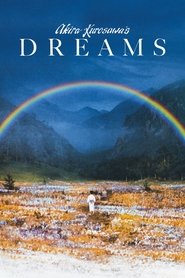
Actually, this first episode, Sunshine Through the Rain, is based not so much on a dream as on a tale that his mother used to tell him about fox weddings held in the rain. We see the familiar Kurosawa telephoto perspective here, which creates a foreshortened, flattened perspective. This rain is the sort that Kurosawa liked, heavy and steady.
2:19 · jump to transcript →
-
Stephen Prince
and when he gives them the right answer to their implicit quiz about his feelings regarding the orchard, they consent to let him see it in bloom one more time. To conjure a vision of the orchard for the boy, they perform gagaku, a style of music and dance associated with the imperial court at Kyoto. It's performed on traditional wind, string, and percussion instruments, and the songs and music were associated with court rituals and Shinto ceremonies.
22:30 · jump to transcript →
-
Stephen Prince
Now they are weary and tired and have lost their way in the storm. As they grow more fatigued, the choice they face becomes more urgent. Give up, surrender to the elements, sink down into the snow and die, or continue to struggle to battle against the storm with the hope and belief that they will find the shelter of their camp.
28:19 · jump to transcript →
-
-
-
Pretty soon I found that there was very little point in stopping for rain. It's probably raining right there, but you can't see it. Rain doesn't really register on screen unless it's teeming.
2:24 · jump to transcript →
-
And this guy, wow. And the endless rain, of course. I think we might have manufactured some here so you could see it.
28:16 · jump to transcript →
-
Oh, it's good Scottish weather, madam. The rain is falling straight down. Oh, slightly to the side, like.
29:13 · jump to transcript →
-
-
-
All the light used in this film is light that is warmed so that there is an amber and an ochre tone in every sequence in the movie. I thought to have a blue or a cold look to this film would give the opposite emotional effect of what I wanted.
4:15 · jump to transcript →
-
That's as difficult as it gets. I am terrified of heights, so I always wind up doing sequences, designing sequences that have to do with people hanging from high places. I guess, obviously, because it's my idea of something frightening.
18:41 · jump to transcript →
-
the week before, all through the city. It was as cold as anything I remember. I grew up in New York. I lived in Chicago. I lived in Boston. I don't remember anything as cold as this. That's a real devil's sign. I describe it as Marlowe Thomas's hair and that girl.
38:20 · jump to transcript →
-
-
-
So this, uh.... What's interesting about a lot of this movie is we would always put fake snow down. The foam and stuff. - The foam, and that's really... We had a Wisconsin ski... A bunch of guys who worked for this ski resort in Wisconsin put down snow. But... - That poor statue. Yeah, the statue was a running gag, and this guy... A lot of this movie was made on an extremely small budget. At the time, the picture was at one studio... ...and that studio didn't wanna make the movie, because of a $2-million difference... ...and it went over to Twentieth Century Fox. And we still were... We still made the film for a little above $18 million... ...which at the time was still a small budget. So we had to make things stretch, which we'll talk about through the picture. One of the great things about working with Pesci, I have to say... .IS his improvisational skills were terrific. And it was because of his training with Scorsese that... ...even on a picture like Home Alone, really comes in handy. He's a very funny guy, Joe. - Yeah. And his comedic instincts were really something I'd never seen before. Little snippets in pictures like Raging Bull and Goodfellas. But his ability to improvise was just phenomenal. And then John Heard. I cast John Heard because John Heard was someone I was always a big fan of. He was in this picture... It was called Cutter and Bone. Now it's called Cutter's Way. And his performance should've gotten an Academy Award. I've never seen it. It's Jeff Bridges and John Heard, and he is just amazing in that film. I was a huge fan, and it was always a dream to work with him. He also did this old film called Head Over Heels. And he was kind of a leading man back in his day. He's just a wonderful actor... ...and another guy who didn't really know why he was in this movie. At the time, he was sort of like, "Why am I doing this?" I remember feeling a certain amount of discomfort from him. He was like, "Why do I have to do this? Why am I in this kids' movie?" You know? "I'm a good a--" Understandable. No one really knew what this movie had the potential of becoming. We had always hoped it would be successful, but we never knew. Um.... Pfft. I always knew. You always had an idea. - I always knew. Now, this scene. Do you remember coming in on a Saturday to rehearse this scene? Yeah. - We had to rehearse this because it was so... Which was so chaotic with everybody. We ate so much pizza. I didn't wanna eat lunch. And this is something that was interesting. We... You'll notice that there's a rare shot in the film where... There's your brother. - Yeah, there he is. How are you guys--? He's working now, right? He's doing very well. Oh, yeah. He's doing very good, very well for himself. Un, this is typical of the style of this movie. Not the vomiting, obviously... ...but the separation of actors in certain scenes. Because Macaulay's time was so valuable... ...we needed to shoot Macaulay separately... ...and sometimes other kids as well. So you'll always see... I tried to block sequences where I could sort of keep Macaulay off by himself... ...and keep the other actors in another space... ...so I could shoot people separately. Child labor laws again. - Child labor laws. And we're-- And Kieran had to reshoot the chair in the face, I remember. Oh, yeah. - Like, he had to come back later. He was upset he had to get his hair cut like Fuller again. Oh, he was? - Ha-ha-ha. Well, he-- We made a special, very light rubber chair... ...so when it... - Yeah, that's... Yeah. That's-- I remember that. Catherine O'Hara was someone who I had, uh... ...Just loved her work on Second City TV. - Yeah. I mean, I was, uh... Aside from Saturday Night Live at the time in the '70Os... ...Second City Television was the-- Sort of the place where you learned about comedy. And for me it was... I was just such a huge fan... ...SO It was, again, a real honor... ...to be able to work with her on both of these films. Yeah, no, she's incredible. Even just the stuff she's doing now. She's still--? Oh, it's great. It's great stuff. Both of his kids are still going to school here. I guess he missed the family.... You got a pretty good cast. Yeah, it's kind of interesting for a film that... But we treated it... The weird thing about this film... ...and the reason I think the film has kind of stood the test of time for a lot of kids... ... IS because we always treated it with respect. We never felt that we were making a movie for kids. We were making a movie for the parents as well. It had a lot of appeal. And you never-- You wanted to... You wanted the photography to have a certain elegance about it... ...and the camera to be moving. And it was really never... So many times today, people try to make kids' movies... ...and they always cheapen them. And we never-- I mean, certainly we got cheap with our jokes. Let's not pretend that we didn't. - Ha-ha-ha. Oh, yeah. No, I mean, it's Three Stooges, you know? - Anything for a laugh. I
7:04 · jump to transcript →
-
Uh, the key here was-- You know, which you'll see a lot of in the film... ...Was to go against the traditional concept that comedies have... ...to be shot in a bright way. Kept things dark, kept things a little scary, a little sinister... ...which you don't see in a lot of comedies. You still don't. There's this in... You know, this feeling that everything has to be bright and cheery. And that's why I think this film appealed to kids... ...because kids actually... - Yeah. They're sold on the danger. And the interesting thing is the, uh.... When I was a kid, one of the things that scared me were burglars. In Cold Blood was the most frightening movie I'd ever seen... ...So this was a movie I wanted to do because of that as well.
29:13 · jump to transcript →
-
This is one of those nights... Again, I don't think we were able to shoot with you past 10:00, right? Something like that, yeah. Luckily, we were in the winter, so it was dark in Chicago around 4:30, but... I remember we had one of those days where it was... It got unseasonably warm. Like, it was like 80 degrees. And they were bringing in trucks of ice and foam and all that stuff. I just remember that day, where we just couldn't keep the snow on the ground. When the audience saw you scream like this, it was just-- It was a roar. They-- Because, for some reason, you just did... Your expression was just hilarious. And this, we just decided to do for the fun of it... ...and it actually worked. Why it worked, I have no idea. Again, there's-- There's-- We start... Stylistically, you looked into the camera a couple of times, and it seemed to work. It seemed like you could break the rules a few times. He was a good screamer, that Culkin kid, I swear. He could scream like nobody's business. Hold on. This was in the high school. Now, we had to b... In editing this scene... ...we had to build this entire scene... ... around where this guy's doughnut fell on the phone. I mean, it sounds like a ridiculous way to edit a sequence... ...but because he was this-- Larry Hankin was such an improvisational actor... ...Wwho appeared in a bunch of John Hughes' films... ...we were sort of stuck following his cue for this entire scene. You'll see this... The doughnut thing drops on his receiver... ...and we had to cut back to him as it fell off, so these are the... These are the things that drove us crazy as we were editing this film. just to check on him? Yes!
31:36 · jump to transcript →
-
-
-
It was very cold if you remember. This was getting towards October or November in Simi Valley and it was absolutely freezing and people had to jump in a van to warm up. I actually have some behind the scenes that my assistant shot in high eight because we didn't have behind the scenes video when we made this.
54:31 · jump to transcript →
-
of Tori and everybody in the van trying to warm up between takes. Yeah, I remember I had my hooded sweatshirt underneath my leather jacket, gloves. I think you're in one of the tapes, and I'm going to find that, and hopefully we can put it on those Blu-ray extras. That would be great. I think everyone, including us, tends to forget in Los Angeles it gets really cold at night. Yes, it can. Yes.
54:53 · jump to transcript →
-
Yeah, whenever you have problems in story or structure, just go to, like, a whip pan. That's something you learn. Here we go. This is the night. Actually, I have some behind-the-scenes video of this night where literally it was freezing. And Jennifer, after we cut, she'd wrap herself in a blanket. I mean, it was...
1:03:22 · jump to transcript →
-
-
-
Tony Scott
The weather was warm, actually. The day we arrived, we did our location scout. The weather was unusually mild for January. And anyhow, we did our location scout, selected locations, and the night before we started shooting, it started to snow. And as we went into dark, it started to snow heavy. I thought, oh, this is going to screw us up. But I woke up the next morning in the dark and looked out and could see the...
4:23 · jump to transcript →
-
Tony Scott
The city had a whole different feel, and I thought, wow, this can work for us, not against us. So I redesigned that morning, I did my storyboards, and I redesigned the boards based upon shooting that day with Snow, and I think we captured something which was unique and very much in character with the rest of the movie, which was this opening title sequence in Snow. I think what also is a big part of the opening title sequence is the music, and the music was inspired by...
4:52 · jump to transcript →
-
Tony Scott
outside Christian's apartment, and let's play the scene on the catwalk underneath the billboard, and I think it just again gave it just a fresh twist. This scene was a particularly tough scene because it was night shooting in, I think, in February in L.A., and it's not as cold as Detroit, but it's still pretty cold, and night shoots are miserable anyhow, and it was a tough emotional scene for Patricia to get into. You know, she... I wanted her to peek here. This is one of her...
14:54 · jump to transcript →
-
-
-
Darren Aronofsky
um this was shot at a construction site up on the 50s on the upper west side freezing cold night with no light no equipment and we were exhausted at this point and uh right in this shot coming up right here uh maddie took a really nasty spill while he was running with the camera and uh we were really really scared for a while and we were so intense that maddie thought i had lost my heart and soul so that when i went to maddie and i said to him is it broken
1:04:11 · jump to transcript →
-
Darren Aronofsky
See, listen closely. That's me. Yeah, that's me. That's my Howard Stern voice telling everyone to sit down. Now, this was actually the coldest night of last winter when we shot this sequence. It was actually only in November, but it turned out to be the coldest night of all winter. It was a really mild winter of 96. But we were freezing. And, I mean, Marcy, thank God it's not a color film because Marcy's lips right here are blue.
1:05:37 · jump to transcript →
-
Darren Aronofsky
Max thinks he breaks through to be with Devi, but in reality, the cold, harsh reality, he's alone. Me and Sean debated a lot of these scenes because Sean felt the film ended three, four times, and there are three or four endings for the film, but I think they all play into the different levels of reality that Max has going on in his head. I remember when we shot that scene, it was...
1:17:18 · jump to transcript →
-
-
-
bossing around middle-aged men, older veterans, and what to do. And if James Cameron can't pull that shit off, there's no way David Fincher's going to, let's be honest. Yeah, and they become resentful. And you're making this film at Pinewood Studios during the winter. It's freezing cold. Everyone's getting ill. And you've got all these problems where you haven't got a script finalised. Things are changing every day. I mean, I'm not surprised David Fincher just lashed out. And he does lash out. You see him in the making of. He's just like...
18:59 · jump to transcript →
-
the trailer shot isn't it where just you know the bitch is back and you see you know it was obviously recognizes that she's got an alien inside of her um but people it's so funny like when i've posted stuff on socials about alien 3 people say oh the cgi in the film is terrible like there isn't a cgi there's actually one cg shot yeah you see the the skull go like crack about to break because of the from hot to cold whatever
1:05:02 · jump to transcript →
-
is classic early 90s shit cg you know it's it's it has to be but then doing more and more research either either they've really buried the fact that it is is i know the shot you mean that that is cg with it when it cracks that you know the cranium gets the cold water on it and it
1:05:58 · jump to transcript →
-
-
multi · 2h 24m 4 mentions
Alex Thomson, Terry Rawlings, Alec Gillis, Tom Woodruff Jr. + 3
-
When we finished the body of Newt with that big incision we took the body outside and laid it in the snow and took pictures. And we worked it into a Christmas card for David Fincher. It said something like "Merry Christmas from the victim of a sledding accident." We were very clever! Not like today. Well, this is much more tasteful than what the original plan was. You heard the cracking of bones and that kind of thing. That's a great reaction. I think that eye looks great, that messed-up eye on Sigourney is very effective. Some people think that it takes longer to light because it's a wide screen. Because it's Cinemascope, the lenses are slower than they would be normally, but I don't find it that way at all. I think it's... I generally shoot at about f-4 anyway. A lot of people like to shoot wide open, but I don't. I like the depth of focus that one gets at 4 or 5.6. And I don't like to see two shots where one person is sharp and the other one is blunt. I've never found it a problem to light to the Cinemascope demands. I actually found a fitting which they use in operating theaters for surgery and so on, which I liked the shape of, but unfortunately we don't see it often. I think there's one shot where we do see it. It's a circular thing with, I think, four or five globes in it. I thought the shape was terrific, but, as I say, we only see it once I think. I never got it in the picture unfortunately cos they played it against the board. I think when we cut wider we see it, whenever that happens... There you go. There's the old lamp just for a brief moment. I wish we could have played it more cos it's a beautiful shape. Of course, it's the raison d'être of the light - that's where the light's coming from, so you'd like to see it a bit more. It's always the thing that we're fighting as cameramen, that we have a light source, and when you find the film's edited, you never see where the light is coming from. I did a whole sequence on a picture with firelight, and we never saw the fire. Was it 86, his name? - 85. His 1Q. He's a lot of fun to watch in this movie. - Yeah.
20:19 · jump to transcript →
-
Tom and I were very interested in using materials that were more translucent, and that led us to create a Bishop dummy here that was made out of gelatin. The only problem was that gelatin doesn't do well in steam and rain, and if you'll notice there's steam and rain in this shot, but there wasn't supposed to be. Not at first. We got the go-ahead that it'd be OK. It was gonna be cool and dry. See that little rag around his wrist? We had to wrap that around his wrist cos his wrist just split in half somewhere in this, so we had to kind of dress it around. The whole thing was melting! Take after take, he was losing a layer of skin with each successive take. We should have been warned because Yuri Everson, one of our main guys, was working on that model in the studio, doing some meticulous work with the gelatin, and he had a desk lamp posed right over the head. When he moved the desk lamp, it was a little too close to the face and it all sagged, like it was palsied from a stroke or something. So there was a little bit of a history to that choice of materials.
49:30 · jump to transcript →
-
This is a set that was built on the 007 stage, which is metal clad with concrete floors. It was very cold anyway, even in summer. The actors get a sense of how cold it is because it is cold.
51:21 · jump to transcript →
-
-
-
uh the film kind of chronologically and then we moved into stats so this was all on location and uh yeah i was there on on top of a building nearby watching waiting for the explosion wesley snipes was there his posse was there it was it was a long wait but it was worth it i can still remember have a sense memory of the heat the heat against my face it was a real explosion yeah i was too close i think i had 13
2:44 · jump to transcript →
-
improv into this. Yes. Not a lot of mine lines, a lot of Wesley's lines. Although, is it cold in here or is it just me? That's a piece of foreshadowing because he dies being headed. You can only appreciate it in multiple viewings. I tend to write too much for the third time viewer. Like, oh, now it's funny. And Wesley was...
3:36 · jump to transcript →
-
Stallone uses the water to finally stop Phoenix. That's the first use of computer graphics and one of the first uses of computer graphics in any film. Is it cold in here or is it just me? Good memory. I like that line that I wrote from the start of the movie. And then, of course, this is where multiple time viewers can know that
1:45:45 · jump to transcript →
-
-
-
Taylor Hackford
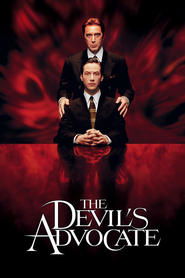
At this point, seeing a guy walk up to him in the bar, Keanu is completely convinced... ...that one of his friends has put this guy up to it. And this actor, who is Ruben Santiago Hudson... ...is a fabulous actor. He won the Tony for an August Wilson play, Seven Guitars. I saw him on stage and just felt, "I want to work with this guy." So when the role of Leamon Heath came up, you know, I had Tony Gilroy... ...kind of tailor the role to fit Ruben, and then convinced Ruben to do the film... ...because he has a very unique quality. He's not your totally assimilated black character. He may have gone to Harvard, he may have gone to Yale... ...but he's maintained a lot of his own roots and integrity, and at the same time... ...he's smart like a whip and he knows he's got Kevin hooked. The next scene that you're about to see hot cut to Kevin's roots: A Southern church, and this congregation is real. Judith Ivey, who is being introduced here as Kevin's mother. You know Kevin was raised in this church, he's coming... ...and taking a look back at his past, was totally fundamentalist... ...and deeply, deeply rooted in Jesus and God. Judith Ivey is part of this group. I had to spend a lot of effort convincing Pastor Lovell and his church... ...in Gainesville, Florida to participate in this film, because I feel that... ...you know, the things that they believe in, the things they're after... ...have everything to do with establishing good and evil in the world... ...and fighting the devil, and that's what this film is about. But they were fabulous, and they really got the spirit of God in them. And I thought it was important to see that Judith Ivey is a believer. She is one with her God, she loves Him. And, you know, she's a formidable presence for good in this film. At the same time, she's a tough mother, and you can see that... ...she has raised him in a certain way and she doesn't particularly approve... ...of what he's done with his life. He's a lawyer, and you establish his wife... ...over at the car, Mary Ann, who obviously is a party girl, a liver, and not... Neither one of them are in church this morning, and Mother is not that happy. This sequence is important to understand that Kevin Lomax understands scripture. He may have made a choice at this point to stay outside the church. If you notice, he's half in, half out of the light. Tony Gilroy wrote this in the script. Kevin Lomax stands outside the congregation. He's half in, half out of the light. He is part of it and at the same time... ...he can't bring himself to walk in. There's a dichotomy in him, which you'll discover later. But in this instance, when his mother calls up and says: "Quote the Bible to me and mention scripture," he can quote it back to her. He knows what he's talking about. He was in that church and a devout member at one point. Now you get a sense of Mary Ann. She is a good person. She's trying to help this character. She doesn't want to get the company to repossess her car. But she's tough, and she's a businesswoman. You also have a sense, right here, of the fun that these two people have. Keanu, you know, biting off her earring and handing it back to her... ...that was totally spontaneous. He came in, did that. It was quite wonderful. Now you have a sense of the married couple. They've got Mother-in-law... ...and Mary Ann's no dummy... ...she knows exactly that she's persona non grata in that household. It isn't that she doesn't like her mother-in-law, but she understands... ...what she needs to do, like have a child. And right now you establish another theme of the film: "Let's give her a grandchild and everything will be all right." Mary Ann is ready. She's working. She's professional. But she's ready to start to have a family. But you hot cut to Kevin Lomax who's taken the deal. He's in New York. At the beginning it's just a vacation. He's going to consult on the selection of a jury. You see Foley Square, the seat of judicial power in New York... ...all the Federal buildings, the State buildings, the local... Everything is right there in one space. It's a very, very sobering look at the power of the legal community in New York City. And at the same time, for a guy from Gainesville, Florida, it's very impressive. Kevin's here. He's excited. He is working as a consultant... ...to one of Manhattan's best and most famous criminal trial attorneys. His name is Meisel, played by George Wyner. And in this moment I wanted people to see that Kevin Lomax truly has a talent. When you talk to criminal attorneys, you realize that they say... ...that between So to 95 percent of winning a case is selecting a jury. This is a scene that I think talks about the inside of lawyering... ...and the reality of how you win. You win by psyching-out everyone that's gonna be on that jury. Those are the people that are gonna make the decision of whether you win or lose. This is where Kevin Lomax shines. He has an intuitive spirit. At the end of the scene, you realize he's got something else. He's got a sixth sense. Now, it's important, when we see this courtroom, to understand... ...that I wanted authenticity in this film. You're in New York. You have some of the best looking courtrooms in, I think, the United States. At the beginning, Warner Bros. wanted me to go to Canada and shoot in Toronto... ...which is an entirely different judicial system and the courtrooms... ...don't look the same at all. I fought to shoot this film in New York... ...not only for the fantastic exteriors, but also for these interiors. This is a film about big-time lawyering, and you want to feel, when you see the sets... ...and these aren't sets, they're locations. You want to feel that this guy is in the big time. He's gone from Gainesville, Florida to the top of the food chain. We shot in probably seven or eight of the best courtrooms... ...you could find anywhere in the world. Look at these paintings up on the wall here in New York. You feel that this is the justice system. Now Kevin is exhilarated. He comes out of his first day... ...in the New York courtroom and he knows he's done well. He didn't know how he would measure up, and how he measures up is... ...he's smarter than they are. I mean, he has to feel great. He's walking down the street. He's saying I'm a guy from the hicks, and someone's watching him. This is the introduction of John Milton, who's played by Al Pacino. It was important to me to establish a very nice introduction to him. One thing that Al did, and you'll start to see into this... ...he chews on licorice all the way through this film. You don't explain it. You know he's doing something. And instead of just walking away, getting in a limousine, he goes downstairs... ...into the subway. Why would he do that? He's well dressed. That's it. But immediately I go into a time lapse sequence... ...and I wanted to see day and night change. I wanted it to also say that this trial's been going on for a long time. When Kevin walks in, Mary Ann says, "You're home early for a change." Time has passed here. You've seen it pass. But more importantly, you see Al Pacino going down into the subway... ...and you see that the next images are not real. There is a certain kind of power that this person... ...we don't even know who he is yet, exudes. I thought that the time lapse would be both unique in terms of time passage... ...and, at the same time, extraordinary in terms of the potential power... ...that this man has. Now you've got Wife and Husband in... Mary Ann's got room service all over the room. Clearly, they've been there for a long time. She's watching TV. She's having a good time. She's been shopping. She's been to a lot of things, but her husband's been gone every day. And now you see the way they play. Kevin looks like he's defeated. It looks like he's lost the case. She feels badly for him. You can really see how she would, you know, how warm and wonderful... ...and sweet she is. But he's kidding her. You can really see the slyness, I think, in Keanu Reeves here. And, at the same time, he killed 'em. He actually chose the jury... ...and won the case, almost an impossible case. It was like a savings-and-loan fraud. This is white-collar crime. The guy sitting there in the trial, with his white hair... ...looks extremely legit. But the fact is that, you know, he's like Charles Keating. You know, he stole not millions, but tens of millions of dollars. And in this instance, the next shot is, they are in John Milton's domain. This is Milton, Chadwick and Waters, and I wanted a location that immediately... ...established the power of this law firm. This is a real building. It's the Continental Plaza in Wall Street, in the financial district, Downtown... ...and you see what New York power is all about. That view is a three-bridge view. You're gonna see all the way up the island of Manhattan. But the important thing here was, this location was used before in other films. I didn't want to use that same look. There's a unique design look here. Bruno Rubeo, who is my production designer and my collaborator... ...on the last three films I've done... ...we spent probably six to eight months before this film began... ...talking about what we wanted from this film and the look. Right now you're looking at Christabella, the first time we see her... ...and if you notice as she walks forward, I slowed down. It goes in real time. There's no cut there. We ramped so she starts in real time... ...she slows down... ...and comes back out in real time. And Kevin Lomax, he doesn't know why he's fascinated by her. We'll find out later. But look at the design in this. It's ultra modern. We used both an Italian architect and a Japanese architect. This is the Italian. He used prefab concrete in the walls. Milton's office. You know, the rest of the building is very impressive... ...but this office is something else again. It's cold, it's austere, and it's incredibly impressive. Look at that fireplace in the background. It's set up off the floor. Bruno had a design in mind. The furniture in this place is... You have a big, massive place. But look at the furniture. That little settee in front of the fire: it's delicate, it's small. This whole room exudes taste and a certain stylistic quotient. John Milton, you know, it's a huge room, devoid of furniture, very minimal... ...this is a man who has real taste and real choices that he's made. At the same time, this whole law firm is very, very modern. For the design quotient of this film, I want you to be able to see this sequence... ...and then later on, when you see where Milton lives, see the dichotomy... ...the difference. This is cutting-edge modern architecture to the nth degree. What Bruno wanted to do, and I wanted to do in this instance... ...is establish Milton's environment. Here it's cold, corporate, but, at the same time, undeniably impressive... ...austere, ultra-designed. Milton is very smooth. You know, Al Pacino always gets this rap: "Oh, gee, he's over the top." He's not. Al Pacino can play everything. And everything he did in this film was calculated. I mean, it was one of the great experiences in my life to work with an actor of... ...his deep, deep ability, his deep, deep talent... ...and his uncompromising attitude towards all his work. At the same time, Keanu, who had this... I'm saying this because here's these... ...two actors meeting for the first time. Keanu, who had done a lot of young-man roles, a lot of teenage slackers... ...in this film is anything but that. Kevin Lomax is precise. He is not a Harvard educated, a Yale educated guy. He came from a small school in Florida, went to a small law school. But all criminal attorneys that are really great usually did that. They come from the street. He's street smart. He thinks on his feet. And he's up against a guy, for the first time, that seems to have a little bit more... ...on the ball than even he does. He's never met anybody before that is his equal. And Milton keeps blowing his mind, like he does right now. You see this office. All of a sudden, he goes and taps on the door... ...opens up, and I wanted this sequence to truly be a moment... ...that would blow everybody's mind, not only Kevin Lomax's. He walks out on a roof terrace and, effectively, I'm using... Again, this is from a Japanese design. Bruno and I saw an architect... ...that had a pond on the roof in Japan, and I said that is a perfect idea... ...for what we want to do here. Here is a man who has such a sense of design and such a sense of grandeur... ...that he has created for himself a balcony, if you will, a terrace, a park on top. But does it have greenery on it? No. It has water. He calls it calming, placid. And at the same time, he's going to take Keanu out there... ...and he's going to talk about his past. He's going to find out a little bit more about him. He asks about his father. Keanu says, "I never had one." He asks about his mother. And in this instance he's, you know, if you look at Al's reactions here... ...this is a long, talky sequence. This is what you do sometimes. By the way, this is real. This is not blue screen. We didn't put the artists in a studio. I fought to get this scene. I fought everyone, including Warner Bros. Nobody wanted me to go up and get this shot. It's on the roof of the Continental Tower. They had re-roofed the place. The building didn't want us up there. I just knew that this sequence was going to define this initial relationship... ...between Kevin Lomax and John Milton. And the two actors are basically 50 stories in the air right now. They're standing on an eight-foot platform. No, it's not right on the edge. It's about eight feet from the edge. But the fact is that they're standing there. We had to get this whole thing in one day, and they have to do... ...a very personal scene while they're perched on the top of this building. You can see Al, at that moment, trying to let us know a little bit how precarious it is. But do you notice any kind of nervousness from Pacino? Not at all. He's easy. And the whole essence here is that Keanu's sitting out there. One, his mind is blown... ...at the beginning, and then somehow he finds himself getting into it. And at the same time, he looks right here and says: "My God, John Milton's standing like a foot from the edge of a 50-story precipice. "What kind of guy is this?" He also wears elevator shoes, which I think is interesting. But the fact is, right here is what the film also is about. It's about pressure. It's about professionalism. And what John Milton has done is taken Keanu Reeves... ...or Kevin Lomax, in this case, up to the precipice. He's showing him: "All this can be yours." And what is it? It's Wall Street. It's the seat of capitalistic power in the world. And he's basically saying, you know, I know you're a hotshot... ...but can you take the pressure? Can you sleep at night? That little speech that Tony Gilroy wrote, I think, fits all professionals in this instance. When you have to deliver on a deadline, you know what he's talking about. Basically, Kevin is there. He's ready. He said, "What about money?" Milton laughs. "Money? That's the easy part." Kevin doesn't have any problem. He can sleep at night. He's a lawyer. He knows how to do it. We cut from that to Carnegie Hill, which is Fifth Avenue in the Nineties in New York. It's probably the most exclusive address in New York. Central Park is on one side. You have these beautiful, beautiful buildings with fantastic apartments inside. And the Heaths. You're meeting Jackie Heath for the first time. I reveal her with that wipe from the elevator, you see her in close-up. Leamon Heath and Jackie Heath, they are absolutely New Yorkers. They've maintained their integrity as black people, but at the same time... ...they are not about to resist the temptations of the city. They want it. They know how to deal with it. They're very sophisticated. Look at the clothes that Jackie's wearing. Leamon makes the money and she knows how to spend it... ...and she doesn't have any qualms about it. This apartment, I wanted to basically establish the sense of awe. You know, John Milton owns this building. He has it for his employees. Although it's usually for partners, and for Kevin Lomax to get an apartment first up... ...shows that he's a little special, and you can feel, right here... ...that they're a little jealous. "Took us six years to get in here." Every New Yorker will understand that when they really want to get into... ...a big building. This is a film about New York. Tony Gilroy, who lives in New York and understands it incredibly well... ...is able to put these nuances in here that are maybe not aimed at everyone. But certainly, you know, you make a film in New York... ...it was important to me that you do something real. Now, you know, Kevin has basically been offered the job. He's got to now sell his wife on it. And this is a big test. If she, you know... He says, "I'll take you home if you want." Of course, if she did, God knows what he'd think. She knows him. She knows what he wants. And at the same time, how could you turn this down? It's very important right now, at this moment... ...to understand that Mary Ann wants this as badly as Kevin does. I mean, who would resist? Come on. They're too big for a small pond. They both want this and, my God, she's looking at this and saying: "Hey, I want to have a family." She says right now, you know, she mentioned kids again. She's mentioned it in the back of the apartment... ...and she mentions it again right now, and she's saying, "I'm in. Let's go for it." And that moment is one of the last moments of true happiness... ...you're going to ever see them have. Now you're at the law firm, and I want to be able to show... ...what big time lawyering is about. These are all partners. It's an international law firm. John Milton has called a meeting. From all over the world, these partners have come. There's Eddie Barzoon, played by Jeffrey Jones, who is Milton's chief lieutenant. He's the managing partner of the firm. There are affiliate offices in major capitals all over the world... ...and you get a sense of what law is all about. It's about copyrights. It's about real estate. It's about EEC and EUC and those kinds of relationships.
11:08 · jump to transcript →
-
Taylor Hackford
You know, it's wordplay. It's foreplay. And, as every woman knows, the best foreplay is good words to put somebody... ...in the mood, and in this instance... ...it works with Mary Ann, as you can see. Now we cut and we're on the balcony, outside. There is Manhattan, the reservoir which is right across from Carnegie Hill. You see Downtown Manhattan on one view. You see the George Washington Bridge on the other. And in this instance I must admit to the fact that this is a green-screen sequence... ...because it was freezing cold. Connie's wearing no underwear and a beautiful dress with a lot of skin showing. To be able to get the kind of comfort I needed in this scene, we shot plates of... ...meaning views of this actual location, and then did it on a stage. I think the blue-screen work is very good. But it was important to kind of show... ...the grandeur of New York with these two people out here. Meanwhile, inside the party, you have the motto of the law firm: "Let's ride 'em as long as we can and then eat 'em." You get a sense of the ruthlessness of the law firm... ...and in the background you see the ruthlessness represented by that tapestry. Connie Nielsen is a wonderful actress and, as I said before... ...she speaks five, six languages. She is Danish, but lived in Italy for a long time. She is very sophisticated, and I think what Kevin Lomax is coming up against... ...is Christabella, who calls a spade a spade. She asks him if he's alone. He doesn't, he demurs, he kind of comes up with it and she says: "You're married." She basically is not about to play along. And at the same time she flirts. "You like to be on top," an unquestionably sexual innuendo. And he likes it. He's ready to pop, except Milton interrupts. And Milton has a sense of pride here. He's the head of a law firm. He owns a law firm with two really bright, young lawyers in it, but it's more than that. There's something that you'll discover as the film goes on. There's a relationship between these people he's particularly proud of. And I think, in this instance, you know, Al Pacino's smooth, he's walked around. He's spent about an hour at the party. He's talked to Mary Ann. He's talked to the senator. He's talked to the women. He's in no hurry. But in reality, he's got something else on Kevin's agenda.
46:47 · jump to transcript →
-
Taylor Hackford
He's saying what any boss should say, any responsible boss: "Quit the case and deal with your wife." And Kevin can't do it. And he comes up with an amelioration here. He comes up with something that is a justification for him staying there... ...which is complete bullshit. Look at Milton's face. I love Milton's face and what Al did at the very end of this. He is ensnaring Kevin Lomax... ...but at the same time giving him every opportunity to duck out. Right here Milton looks at him and goes... He basically is getting exactly what he wants. Every scene in this film between the two of them is Milton testing Kevin. Is Kevin up to the task? Does he really have the goods? And Kevin graduates from every scene. He delivers in every scene. He is totally ruthless. He is totally professional. He's totally ambitious. These are the things that Milton... ...who is a Nietzschean devil, he's not a religious devil. Nietzsche who talked about humanism, about full potential... ...about Superman, about maximizing your desires, maximizing your potential. That's what Milton's selling. And Kevin absolutely fits. Now, we go to court. We have the opening statements. We realize that they've got all the guns on their side... ...all the evidence against Alex Cullen. I needed to establish right here... ...and Tony Gilroy needed to establish right here... ...that Kevin Lomax needs a bold strategy. He is capable of pulling the rabbit out of the hat. And what he does is absolutely anathema to what most trial lawyers would do. You know, he is not going to try to celebrate his client as a holier-than-thou... ...butter-wouldn't-melt-in-his-mouth good guy. In fact, he's doing the opposite. "He's a son of a bitch." And in this scene Kevin had to, meaning Keanu... ...had to be incredibly strong, articulate, and believable as a lawyer. If he fails in this film... Al can be as wonderful as he wants... ...but Keanu has to really establish that he's most comfortable in the courtroom. That's where he's alive. That's where he thinks on his feet. That's where he really gets turned on. And I think Keanu did more research for this film than he has for any film he's done. I put him through a huge amount, almost a boot camp, both in terms of his accent... He met with the top criminal attorneys in this country... ...I mean, the top guys in New York and L.A. He went down to Florida and met with D.A.s and defense attorneys. These are cynical guys. These are tough guys who are looking at him... ...and putting him through the microscope. You know, Keanu did his homework, and I think in these trial scenes... ...he's very good. And he had to be for this film to work. So this scene I particularly like because it's very interesting lawyering. It's strategy. You know, you can tell, and I do a lot of shots of the jury. I was particularly pleased with the extras in New York. They're really good. And in this, you realize that he does exactly what his client would not expect... ...him to do, which is, is basically indict the moral integrity of his own client. Craig T. Nelson is slapping him up against that wall and sees... ...forces out of him what the strategy is. And now you see who Alex Cullen really is. When he hears the reality, when he sees the kind of bold-faced... ...cold strategy, he loves it. It's just the greatest thing he's ever heard. And he starts to have more and more confidence in Kevin Lomax. So that kind of hard-boiled, cynical attitude, both from the client... ...and the attorney, I think, is... You start to realize you're getting into... You know, Kevin Lomax has got a lot more cards to play than you initially thought. He's not just a hick from Florida. And now he's confronted with Eddie Barzoon on the street... ...and Eddie Barzoon has finally come to. He's started to gather information, not only what Milton's doing... ...but he's also starting to check records and finds that Keanu's name... ...is on the charter of the law firm. How could his name be in the charter? The charter was formed a long time ago. So at this point Barzoon realizes he's being set up, and Barzoon is no dummy. He's an arrogant... You know, I loved Jeffrey Jones in this film because, you know... ...he's much heavier than he used to be. His face is red. He looks like a ripe... He looks like he has overindulged his entire... ...hedonistic existence and is ready to pop. And it worked particularly well for Eddie Barzoon... ...who is a hedonist, who obviously has been through a lot of wives... ...and a lot of coke habits and a lot of excesses. And in reality here, he's reached the end of his wick. He doesn't know it yet, but Milton knows it, and he's just about to find out.
1:25:12 · jump to transcript →
-
-
-
Paul M. Sammon
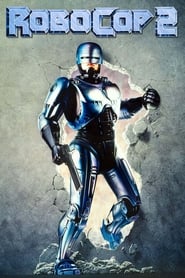
Kirsch was a wonderful guy and a wonderful director. Not only the director who directed Empire Strikes Back, of course, on which he worked with Phil Tippett on the Snow Walkers, the giant mechanical elephants. I love this where Robo pauses to shoot a kid. Bad decision. And finally, one of them thinks, oh, shoot him in the face. And that's what you're seeing here.
12:35 · jump to transcript →
-
Paul M. Sammon
And sort of like the Informer, four cane. And everything you see here with this decay, this is the way the school was. And interestingly enough, Robo 2 was shot mostly in the fall and early winter of 89 and 90, from say September to January. And we had a lot of weird weather. It got cold, it snowed once, it was raining. And it was raining during the shot, and you can't hear it on the roof. But they didn't take it out.
26:43 · jump to transcript →
-
Paul M. Sammon
and Frank Miller for all stepping up and John Davison to do an impossible task and make it possible. Here, of course, we get an idea of how cruel and cold Fax is. She is like the ultimate careerist. And Tommy Newton gets a chance to do something other than just, you know, be scary. Interesting man. Interesting man. There is more to him than meets the eye.
1:10:08 · jump to transcript →
-
-
-
I feel like the wind might have been blowing. I'm not sure. You had that hair. You were dressed like Todd Rundgren. But I honestly, I do remember that moment of playing the voice with one hand and then the piano with the other. Oh, look, another parrot. Another parrot. But I think this is the closest we get to the pirate theme, right? It's sort of...
30:48 · jump to transcript →
-
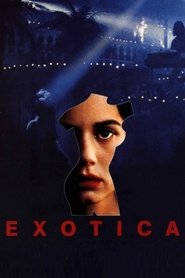
come to an end you know we're seeing the last sort of this very uh romantic moment between the two men uh against this storm uh and i think the design here visually in terms of how the uh storm is connecting you know this rainstorm between the exotica and and what we're seeing outside of thomas's apartment with this moment of uh uh uh sexual contact
55:57 · jump to transcript →
-
and recording at Grant Avenue in Hamilton and shoveling snow and getting completely trapped. In fact, I had to stay in a hotel right after getting off the plane from India. Story over. That's it, Mychael. You can't tell that story. It's actually finished now. No more stories. So anyway, how my life was incredibly changed was that...
1:43:09 · jump to transcript →
-
-
-
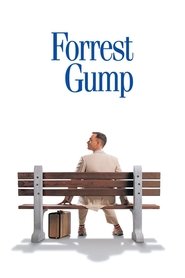
He was mad. Come on! You call this a storm? Oh, you son of a bitch! It's going to take a force of God to strike Lieutenant Dan down. That's right. This is all or nothing. This is all or nothing.
1:35:23 · jump to transcript →
-
Now here's a good example of saving a lot of money because that's stock footage. And now this is back into what we created. And in fact, there was a hurricane that blew through there and there were still minor remnants of that hurricane that we used as a backdrop to shoot that scene. That's right. Only one shrimping boat actually survived the storm. And this digital thing is going to happen once it becomes cheaper and once you can move faster because, you know, time is money. So it's all about the money.
1:35:52 · jump to transcript →
-
What, do you have a cough due to cold? I have some kind of virus. And the doctors don't, they don't know what it is.
2:03:59 · jump to transcript →
-
-
-
I guess right here maybe you should mention Peter Jason. Oh, yeah, before we go on, since he's only here for a second, this guy with the beard is Peter Jason. I bet this got cut down. Yeah, maybe. He was in Arachnophobia also. Yes, Peter Jason was a favorite. He was an old crony of Frank Marshall's. Frank Marshall had previously directed him in Arachnophobia, where he played the coach, and they went all the way back to the 70s. They both worked on Orson Welles' film The Other Side of the Wind. Peter Jason was in that. Frank Marshall was in it, and also kind of an all-around...
16:50 · jump to transcript →
-
tell you about Sam Mercer, the other producer. Because this is like a producer's movie. Right. And they're not just producers usually, but producer's executives, you know, studio heads. So Sam Mercer's best known as having produced M. Night Shyamalan's films and being UPM on those. And he's also done things like Snow White and the Huntsman. But this was his first produced credit, produced by credit.
41:42 · jump to transcript →
-
Before I go on and talk about Frank Marshall anymore, do you want to talk a little bit about... I should talk about these snakes. Yeah. Yeah. So once they... After they skydive, essentially, that stuff is mostly taking place in Costa Rica. And so they had shot... By the time they got to Costa Rica, it was almost like the last three weeks of the shoot. And so they were pretty comfy, you know, the whole rest of the time. I mean, they complained a little bit about it being cold when they were shooting outside. Yeah.
49:21 · jump to transcript →
-
-
-
that's my only really now here we're in the cold room and this is a scene that makes me really sad because uh here's where the studio just cut the scene to shreds and the first time we the first time we tested this scene it was one of the most liked scenes and they just came in and and they said you look too ugly because of course you're shot full of cholera and and you know that was the point they go oh she looks too terrible i can't look at her
31:56 · jump to transcript →
-
That they cut out. Which ended up with you burping at the very end. With it raining and you burping. I like that. I like the rain scene. Yeah, that finally it creates rain. Oh, and I had an umbrella hat. You had an umbrella hat, exactly. I love that. I love that, too. I love this animation, too, but we could easily have had both. Because it was a funny... They had that...
1:37:47 · jump to transcript →
-
You know that's on YouTube, the original ending's on YouTube. Well, good. I'm glad people have found stuff from the original cuts. I'm sure there's an hour of footage that's missing. Really? Wow. And I love the animation, but it was great to have that. It was great to have that umbrella hat and rain and the burp.
1:38:17 · jump to transcript →
-
-
-
Brendan actually knocked himself out cold in this scene. He kept asking that once we hang him, he kept asking the stuntman to, you know, as he was hanging there and we were going in on a close-up, he kept saying, tighter, tighter, I want to really look like I'm choking. And next thing you know, he collapsed on the ground out cold. We all looked at him, kind of laughed, thought it was Brendan just screwing around. And then he didn't get up. And suddenly there was a big panic and everybody's like... Brendan tells that story a lot. Yeah.
21:55 · jump to transcript →
-
This scene we did a lot of work on. You'll notice when you watch that there's a lot of lines on Oded's back. Stuff that was added in post-production because the audience didn't accept the fact that these guys would stop fighting just because Brendan pulled out dynamite. And so we did our best to move that along and to give them a reason to... Because the idea is that there's honor between these two warriors and they wouldn't just cold-bloodedly kill each other.
50:38 · jump to transcript →
-
A lot of people ask me if I hated shooting in the desert because of the heat and the bugs and the scorpions and the snakes and sandstorms. But actually, I loved it as a director. It's the perfect place to shoot a movie because cell phones don't work. No one's worried about getting back to their, you know, boyfriends or girlfriends or getting home for dinner, taking the kids to the ballgame. Everybody's focused on making the movie and working as hard as they can, as fast as they can to get the hell out of the desert. So as a director, it's...
57:47 · jump to transcript →
-
-
-
But, I mean, the length, the full length of this main cabin here was all built in one piece. So Harrison's actually coming out of a hole. Yeah, but we had it built up a little bit, so he came out of a little bit of a hole, yes. The colors almost seem to match. You know, the hold is dark and cold and blue, and the upstairs is more warm. Right, right. This is a different set here, though. Right, right, right. And this is different again. So...
40:30 · jump to transcript →
-
Yeah, this is good, though, because Dao, that shot, it gets the green screen again on stage. So in reality, on the stage, it's all green. And then later on, you know, boss film or Cinecide, in this case, put the background in the clouds. And we had wind machines going here. So you have to dub all the dialogue later on one more time because you couldn't understand a word because of all the wind machines making all that noise to create that wind. Do you direct your own ADR?
1:38:10 · jump to transcript →
-
-
director · 1h 31m 2 mentions
David Steinberg, Dave Foley, David Higgins, Jay Kogen
-
we want to do this gag, Martin gives it. Is it worth it? Yes. Is this gag really worth it? Yes. Is this joke worth it? Oh, yeah. Over and over again. Yes. The train had kind of a big wind to it. It was difficult. Yeah, yeah. If you watch the film, he's Dave Foley there. He's not Nelson Hibbert. It's Dave with this giant train driving by him. Trying not to fall off that box.
34:25 · jump to transcript →
-
because they didn't want it to be too cold for me. And then we found the worst miniature golf course of all time. Yes, we did. But the best one in Canada. Yeah, but we couldn't... All unique holes. They had no unique holes. It was just like... No, so we had to then make these unique holes. It was just greens and a hole. There was no, like, art direction. This was one of my... I love this gag. It was the idea, but it was supposed to be like...
1:18:14 · jump to transcript →
-
-
-
Alexander Payne
It's always nice to capture weather on film. I like it when I see it. And a nice thing about getting out of L.A. to shoot a film is you get things like wind and cold and overcast skies. And anyone from the Midwest or other places, too, but since I'm from the Midwest, I think of the Midwest, knows that day, exactly that day, and it just gives another texture. Of course, the...
17:00 · jump to transcript →
-
Alexander Payne
We just put Immaculate Heart on their sign. It was so cold that day and those girls were freezing.
43:40 · jump to transcript →
-
-
multi · 2h 19m 1 mention
Martin Scorsese, Nicholas Pileggi, Ray Liotta, Lorraine Bracco + 9
-
-
-


Related topics
Other topics that frequently come up in the same commentaries.