Topics / Production
Weather problems
136 commentaries in the archive discuss this, with 697 total mentions and 26 sampled passages on this page.
Filter commentaries
Filter this topic by the film's decade or the type of commentary.
Showing 12 of 136 commentaries
Clear filtersBy decade
Across the archive
ranked by mentions · click any passage for the moment in the transcript
-
-
Francis Ford Coppola
For the Italian people, that's a very religious, sacred... I had worked with Robert Duvall on a film called The Rain People. He helped us out. We had lost our actor in the role of the motorcycle cop, and Bobby Duvall helped us out and played that part, and I was so impressed with Bobby as an actor, how real he could be.
30:24 · jump to transcript →
-
Francis Ford Coppola
This is about the third week of The Godfather that all this happened and this scene was shot. Now this scene in front of the Best Company in the snow was the first shot of The Godfather. It's the first scene of the first day. And Al and Diane coming out of the shopping was shot in the morning, and then that afternoon we went over to Polk's Toy Store and we shot Bobby...
39:50 · jump to transcript →
-
Francis Ford Coppola
This scene was shot in an abandoned diner in New York. It was in Manhattan. It's actually the same interior from the exterior in the snow scene. I remember that the night we shot this, it was really starting to storm, and we were worried whether or not we could even get it because the power was going to get blown out and the wind was so high. And, of course, I love...
50:02 · jump to transcript →
-
-
-
Francis Ford Coppola
A playwright, I think he wrote A Hat Full of Rain, and a fabulous improvising actor and just a wonderful character. Well, you know, kind of right up there with the people from the cast of the first film. I believe he had a nomination for this picture. I'm not sure, but I think he did.
30:01 · jump to transcript →
-
Francis Ford Coppola
I take care of everything, he says. But this is cold Mario Puzo logic of how you reason with him, what that means, basically. There's a wonderful thing that Mario does in his movies where he has this speech where you give people instructions, like, tomorrow you go to the white building, the doorman will come up to you,
1:54:12 · jump to transcript →
-
Francis Ford Coppola
when thinking about it in cold reason, a sensible way to deal with the problem he had.
2:03:39 · jump to transcript →
-
-
director · 1h 28m 5 mentions
Don Coscarelli, A. Michael Baldwin, Angus Scrimm, Bill Thornbury
-
Or call a kid a retarded kid. Yeah, exactly. Another one. Yeah. Right. Yeah. That's only the wind. We shot this up in Topanga Canyon. We just went up there one night. You know, we're on such a limited budget. Actually, we shot for about 10 days. Tried to shoot like a regular movie, but we were so disorganized that we just shut down. And all the actors were really good about sticking with the project. And we shot it over almost a...
23:20 · jump to transcript →
-
We shot this sequence, I believe, in our warehouse in Chatsworth. Because the fog effect, there was just no way we could make a lot of fog that would stay anywhere outdoors. The wind would take it away. So we made our own little road in this little street and put that little telephone pole there and then flipped the ice cream truck on its side, which was a little problematic because we needed that ice cream truck for a lot more scenes and we were really concerned whether we were going to damage it.
57:30 · jump to transcript →
-
So try and beam poor Kathy in the head with a little pebble. Poor Reggie. There was a huge airplane propeller type fan that was creating this. Yeah, we shot this entire wind sequence. It put out, got a maybe 100 mile an hour wind stream. It was really exciting. This is a nice death scene here by Reggie, I think. It really was. Part of it may have been motivated by that. It was so freezing that night, plus with the wind.
1:16:30 · jump to transcript →
-
-
-
And I guess one of the songs was Fire and Rain on that album. And while we were on the road, it hit the charts. So he didn't become famous until after we were in the middle of making the movie. So he wasn't cast because he was a name or anything like that. That's amazing. And Dennis Wilson was very, I mean, at the time, if you lived in Los Angeles, you knew that he was part of a scene.
20:46 · jump to transcript →
-
I was convinced I was just going to use professional actors in all the roles, so I never thought that she would wind up in the picture. Well, she's got such an interesting, again, this kind of timeless look because she seems completely contemporary for, you know, the kind of hipster girl, you know, in any scene today. And she's stunningly beautiful, but it's hard to believe she was a model at the time when there was, like,
33:58 · jump to transcript →
-
with the reaction to... There were so many moments when he just did things that you couldn't imagine. No matter what it said on the script, like when he's in the rain, when she's out there dancing in front of the car, and he leans out and he says, hey, sweetheart. I mean, where does that come from? You can't direct that. You can't direct that. Yeah.
53:49 · jump to transcript →
-
-
multi · 1h 43m 4 mentions
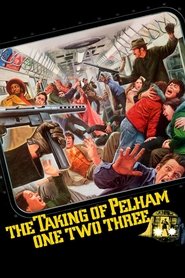
The Taking of Pelham One Two Three (1974)
Nathaniel Thompson, Steve Mitchell
-
The subway was mostly reliable and it depended on when and where you rode the subway and at what time. This movie takes place during the middle of the day and this is real everyday New York. Just because Martin Balsam just sneezed, Peter Stone, the screenwriter, came up with Harold Longman having a cold.
2:19 · jump to transcript →
-
There are bacteria down there that haven't been discovered yet and bugs, big, ugly bugs from the planet Uranus. They all settled in the New York City subway tunnels. I saw one bug mug a guy. I wasn't down there a long time, but long enough to develop the strangest cold I ever had. It stayed in my nose for five days, then went to my throat. Finally, I woke up one morning with no voice at all and they had to shut down production for a day or for the day.
37:02 · jump to transcript →
-
hijacking. And then he goes on, he goes, I got to admit the seriousness of Pelham never occurred to me until we got the initial transit authority reaction. They thought it potentially a stimulant, you know, and then Sergeant goes not to harden professional criminals like the ones in our movie, but to kooks. And that's the word you use kooks. You know, he goes on and says, cold professionals can see the absurdities of the plot right off, but kooks don't reason it out. That's why they're kooks.
54:28 · jump to transcript →
-
-
-
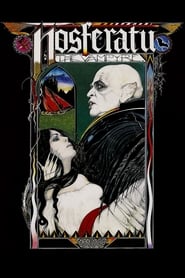
This was your first film in English, the first with big stars and a big budget, correct? Well, not really. "Aguirre" is also a big movie with a big star and great effort. But I have to say, we shot "Aguirre" for about 700,000 deutschmark... $360,000. What matters is what you manage to get on screen with the resources you have. To come back to paintings, I like this vase. Yes. Okay. This reminds me of a painting by Seurat. I think the still life-like and emotional atmosphere is phenomenal. But be careful, I always want to show inner landscapes. This was done very quickly, by the way. On that day we happened to have some time and drove to the beach. It was freezing cold, windy. There was foam. We set up the camera in three minutes and sent the two actors, Bruno Ganz and Isabelle Adjani, into the image. We only told them that the music would most likely be slow and solemn. We already had received ideas for the music from Florian Fricke from Popol Vuh. These two, three shots here we did in 15 minutes. We never thought about paintings. It was born out of the situation... - Spontaneously. ...that we found there. Bruno Ganz has tears on his cheek because it was freezing cold. Lotte Eisner came to visit for a few days. We had to wrap her in 20 blankets because it was so cold. I was so proud that she could be there. She was very important for me and maybe for the new German film in general because she bridged the gap to the expressionistic movies back then that she knew very well. She also knew all the representatives of that time. She was friends with Fritz Lang, Murnau, Pabst. She knew them all. For us she was like a bridge to the generation of our grandfathers. We were a generation of orphans who did not have the generation of our fathers. Here I see your wife. Yes, Martje. Martje Herzog on the left. Essentially everyone who was there is in the movie at some point. Later you see the executive producer, the costume designer, the sound technician, and the gaffer. It was also a matter of how quickly can you get something done with very little money. This is the farewell. Bruno Ganz was actually pretty good at riding horses, which was great for me. Now he travels to Transylvania. The choice of the production company... Was this a Century Fox production? No, I produced it myself. Many people believe that 20th Century Fox produced it. But 20th Century Fox only bought an advance guarantee to the U.S. rights for very cheap. They only bought the rights for the U.S. A distribution guarantee. I believe this was... - German Romanticism. Well, you have to be careful. There is a hint of that, but I always try not to be connected with Romanticism because I myself have no real connection with that cultural epoch. Usually I refer to eras before that. The Late Middle Ages speak to me much more. They inspire me. This was shot in Eastern Slovakia. I was not allowed to shoot in Romania where I had scouted locations for months in the Carpathian Mountains. But you also have to see the context. That was when Ceausescu had just been awarded the honorary title of the new Vlad Dracula by the parliament. So he was named the new Count Dracula. That was an honorary title because the historic Count Dracul had been an important figure in the defense against the Turks. This is in the High Tatras, just 1,000 feet to the left was the Polish border. Bohemia? No, Slovakia. - Slovakia? Eastern Slovakia. This is a real group of gypsies that I had brought in from the very East of Slovakia. Among them are a few Czech actors. The gypsies actually speak their own language. Unfortunately I don't remember what it was called. ...my food.
8:53 · jump to transcript →
-
This is also a recurring theme in your movies. The chorale, too. A raft on a river. "Aguirre" and a chorale like this one. I like things like that. I have no idea why it fascinates me so much. People on the road, on a raft... It has something archaic. You are at the mercy of the speed and the flow of the river. Philosophical in a very strange way. Could you...? I keep noticing that I often think that the movie is very close to a silent movie. Interesting is also that the dialogue sometimes sounds like intertitles. Not necessarily, but the observation is weird. I have never heard that before. By the way, on the left here Jacques Dufilho, a great French actor. To the right, Docteur Claude Chiarini, a very close friend of mine. He also took the still photographs. He fought in the Algerian War and switched sides, and he was in the Foreign Legion. Later he became a doctor and worked in an insane asylum. He was an extra for us. That is me, by the way, because none of the extras dared to climb into the box with the rats. In my movies you can often see my hand that holds a burning rocket as a sign of life, or a foot that is being bit. Stuff like that is always me. Here a ship off the Dutch coast. Later, there was a scene where the mate jumps overboard, which was cut. He didn't dare to jump in the water. I told him I would jump five seconds after him. It was so cold and suddenly a wind gust forced the ship away. For a while we were alone in the water and he started to panic. It was difficult. Yes, sometimes you do weird things. We also built that. Henning von Gierke. Again, an inner landscape. You can't overlook the death theme. You can't overlook it, but it is part of a genre film.
52:23 · jump to transcript →
-
Bruno Ganz is really great as well. All of that came together wonderfully. We had an excellent team. I always say that a director is barely needed if you have a good script and solid cast. That makes you largely redundant. But there were precise instructions for this, and it was stylized in detail as well. Naturally, everyone had to follow these instructions. I believe that strength plays a role, too. Someone has the strength and that person is the engine for all those wonderful energies. They would not have that without you. I think they have it, but it has to be channeled productively for the screen. Isabelle Adjani is a somewhat insecure person and Kinski a madman who is almost uncontrollable. You can see here that we made him taller. He is one or two inches taller. We gave him very high shoes so he would look more incorporeal. If you watch it on the big screen and you look closely, you can see that his shoes look weird. And here are the rats again. I always say about this topic that directing is like being a tour guide. Not for me, but I understand what you mean and what you want to say. It is the coordination of individual parts that have to come together at a specific point. And here the rats. Most of the time it was very cold. They just clung together to keep warm. I had to go over and separate them with my hands. On the day we shot this, I was bit 30 times or so. I was constantly being bit by rats. Everybody was kind of afraid of them. I remember we imported the rats to Holland and I had to go to the customs. They opened the trailer of the truck with 6,000 rats in it. The first customs officer passed out right way. For a whole hour we tried to bring him back to life.
1:25:54 · jump to transcript →
-
-
-
Nick Pinkerton
But movies are strange things dependent on the curious alchemy of the personnel who happen to be on hand. Not much chemistry here. Things taking a very bad turn for our heroes. Red is cold-cocked Thunderbolt and is now giving Lightfoot that long-threatened beating, which, if you were to watch sans context, would look mighty like a hate crime.
1:35:24 · jump to transcript →
-
Nick Pinkerton
And this is how you keep a career going for as long as Eastwood has, by rolling with the punches, adapting to exigencies, keeping to a schedule. This is also how you wind up occasionally accidentally dropping your cinematographer off of a cliff. There's a paradox in that Eastwood-Cimino comparison that I find troubling but fascinating, because on the evidence of Thunderbolt, on some levels I think Cimino may have...
1:41:28 · jump to transcript →
-
-
-
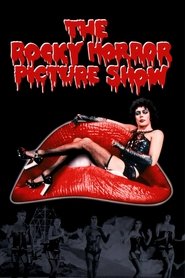
Do you know that we wanted to use this logo? This is against Richard Hartley's piano playing, I think. Of the 20th Century Fox theme. - Yes, maybe I will... We wanted to use that for the denouement. Ah. - Instead of the RKO sign. So that was interesting. Michael White and Lou Adler's names there, our producers. Yes, that's correct. - Erstwhile people. I'm rather... And now whose mouth do you think this might be? Ooh. M-m-m-mine. Yeah, it is. Now, interesting... - There we go. Course, when we did the stage play, it was you that sang this song. That's right. - And then they offered you the part of Magenta in the movie, and what did you say to them? I said-- well, they told me that I wasn't going to be able to sing the song 'cause they couldn't have an usherette open the film, so I'd lost my song "Science Fiction." And, um, I said, "Well, you can take your movie and shove it up your..." Where the sun don't shine. Yes. - Mm-hmm. And they were very amazed 'cause they'd taken me to a restaurant Yeah, yeah. - Jim Sharman. Always do it after lunch. Always tell them no after lunch. Yeah, after lunch. And I said I'm not interested. Don't want to do it. Then they took me round to John Goldstone, one of the other producers, round to his house to see the sets. They said, "No, please, Pat, come and see. Come and just have a look." And then they showed me the pink room, the laboratory. And then they showed me all the drawings of the costumes and whatever, whatever, whatever, and, um, I said, "I can't wait." "I'll begin tomorrow." I didn't mind about the song. Yeah, well, I didn't know anything about that until this moment in time and, uh... Well, I have blamed you for it ever since. Well, you see, I got along to the studio, and they'd done the backing tracks... Richard Hartley and the crew had done the backing tracks at Olympic Studios. I love my name dripping like that. Oh, yes. And... Sorry. It was a bit of a drip. And... - I said-- They said "We want you to sing the opening title song because you're the author of the show," and I said, "What do you mean, as a backing, guide vocal for Pat?" They went, "No, we want you to sing it." And, um, so I did, but until that moment in time, I had no idea that I was... Well, ladies and gentlemen, or whoever's listening, today is the first time this has been revealed in how many years? Oh, um, 25? So in all these years, I have begrudged you taking my song. And in all these years, I've begrudged you for being you and having that delightful mouth. Thank you. I mean, look, it's a wonderful mouth. One wonders, you know, oh, well, wonders, just wonders, really. Has your dentist seen this movie? Yes, I really wanted to give her a plug today. Veronica Morris. Because, really, she's been keeping my teeth in great order. This is marvelous. And Veronica'll be so pleased. This mouth, of course, is Brian Thomson's idea. It was the Man Ray photograph of the mouth and the sky is where he got that from. Yes, it... Is ita photograph or was it a painting? It's a photograph. - It's a photo. Lios Over Hollywood. Yeah. - Is that what it is? That's what it's called. It's over the Hollywood sign-- a mouth. Man Ray picture. - And this was the first mouth. I mean, I'd never seen a mouth this symbolic before. The Rolling Stones got a mouth after that, didn't they? Yeah, they got a mouth after. Not a mouth before. Bit mouthy. - A bit mouthy. No, no, and it was wonderful when they asked me to do this 'cause they asked me to do this mouth on the very last day of the film. Mm-hmm. Jim Sharman came up to me, it was a wrap, finished. We'd done it, and he came up and said, "We've got an idea about this mouth." Yeah. - "And will you do it?" And they painted all your skin black. Yes, they did, And I went out to Elstree Studios... - But your timing was perfect. I mean, your lip-sync is fantastic. Yes, well, I'm good at that. And I sort of know how you do things. So, uh, so we... We, uh... Ramon Gow. Look, the hairdresser, Ramon Gow. We'll talk about Ramon a little bit later on. Yes, he was wonderful. - Yeah. He kept us happy. Did he keep you happy? And Pierre. Pierre did the makeup, didn't he? Pierre La Roche. Oh, God. He did Bowie's makeup. You know, for what was that Bowie thing? You know, when he had the makeup. - When did Bowie never have makeup? All right, with Bowie. Ziggy Stardust. Yes, and it was fantastic. And I thought Guy La Roche will give me the most fantastic face in the world. And he looked at me, and he said, he gave me no bones... No, Pierre La Roche. - Pierre. Pierre La Roche. Guy de la Roche is... - I beg your pardon. Pierre La Roche. And I was so shocked that he just said, "We're going to totally whiten the face." And what-- here we are. And what-- here we are. And what-- here we are. The fade into the cross there. - Fade into the cross, yeah. And down the old... And now this is interesting 'cause this was just a facade, wasn't it? That little room-- There's a little room on stilts behind that door. Just tiny little room. There's darling Henry Woolf. He's just such a darling friend. A great, um, Pinter. Pierre Bedenes in the front here. Now, Perry was the boyfriend of Brian Thomson at the time. Uh, we should say... that little girl there, where is she? She's gone now, but that was... what's her name? She was the photographer that went out with Prince Andrew for a while. What was the name? - Koo Stark. Koo Stark there, yeah. She's in the back there. She's there. Uh, I was gonna point at the screen as if that made any difference. Yes, -Gaye Brown. There's Pierre. And Henry. - And Henry. Henry was in my house the other evening. He now teaches in Saskatchewan. Yeah. He's been over here doing the Harold Pinter plays, hasn't he? That's right. He was in the first play that Pinter wrote. He made him write it, actually. Well, there they are. - There's our Brad. The two lads-- so very butch. Ouch, that hurt. And there she is, Susan Sarandon. We didn't know either of these people when they arrived, did we? No, we didn't, but they... - Weren't familiar with their background. Although he'd been doing Grease on Broadway. Great dancer, great legs. But it was wonderful. - Wonderful. There's my wife there jumping up and down. My ex-wife. My first wife. Is it Kimi? - Yes, in that little plaid dress there. Yes, and that lovely handbag. - With the bangs. Yes. Gorgeous. And this is Rufus Thomas, I think, driving the car. Rufus was with the-- there he is. He was with The Living Theatre for some years. He choreographed Jesus Christ Superstar in its first British incarnation. Gosh. Such class we had in this. Oh, yeah, we were all, yes, very groovy. - I remember those two. Now there's us in the background being American Gothic. Yes, which was such a surprise to me, and it was freezing cold that day. And I swore I'd never talk about the cold again on this film... We were walking to that set the first day we ever walked to that set, and we'd smoked something rather exotic. And I'd never smoked before. - No, no. Richard really led me into really bad ways. It was a bit difficult clinging on to reality, wasn't it? It was wonderful. I loved it. Ah, there we go. - There's our signs. In the graveyard. - "Denton." "The Home of Happiness." "Dammit Janet." "Dammit Janet." "Dammit Janet." She looked very pretty. Sue Blane did some wonderful costumes, and they've really hung on, even though we do the stage show 20... well, it's longer than 25 years from the movie, the stage show. But we still use Sue's designs. She reinvents them, and it's still the same kind of look. Well, I must say, the thing... she's stunning-- is at the time... I demand that Sue Blane invented punk, and this film invented punk. And down the road was Vivienne Westwood with a shop called Sex, and she thought she'd started it, but no, sorry. She'd copied us from up the road. We were on the stage at the time. I think there's a certain amount of truth in what you say. I think we were a precursor of Malcolm McLaren and Vivienne. That's correct. - But then again, you say, as Coco Chanel said, "Anyone who thinks they're original has got no sense of history." 2 If there's one fool for you Then lamit > Janet 2 I've one thing to say And that's damn it, Janet > Now look at that heart there. I want you to see that heart there, 'cause when we go back and rub it out, I think this is... Maybe it's the same heart. I thought it was a different one. Maybe they got it... There's a boom microphone shadow we'll see, I think, soon. Somewhere out there. - Why do you point out the faults? Well, why not? You know... I mean, that's what the fans do. - Do they? Yes. Oh, look, she dropped it. What a shame. Wasn't she meant to? I have no idea. - Or was she not? Now, this is interesting. This room, we could only afford this end and the other end. The altar end, and we didn't have any sides to the room, so we could only shoot it looking this way or looking the other way. We couldn't pan around 'cause there were no sides to this room. 'Cause we didn't have enough money. So there we go, you see, walking towards camera without background. Good heavens. And walking away from camera to there, but there were no sides. > Oh, Janet 2 For you? 2 I love you too } They were very good, these two, weren't they? When you consider we'd been doing this for the show... We were like a family, and they came in, and they joined in, like, so easily, so quickly. I find them astonishing. This must be... I don't want to go into detail, but it's a very small coffin, isn't it? Oh. - One does wonder. About what? Could have been a rabbit in there probably. Well, every day was a great surprise to me on Rocky Horror. I never knew what was going to happen next. Yeah, me neither. I mean, I didn't know what even American Gothic was. Till I saw the painting in the hall a few days later. I thought, "Why am I dressed like this?" Were you not familiar with that picture? - No. There we are... three good-looking people. And those opticals were rather good I thought. And those opticals were rather good I thought. And those opticals were rather good I thought. They really were mechanically derived by... But, you know, today, of course, you'd have optical wipes and all sorts of things with video. There's dear Charles Gray who's departed from us recently. Yes, Charlie has parted from us. And I loved it when you said to me it'd be wonderful if you and I were Charles Gray and Ava Gardner. We could visit each other often. Yes. - 'Cause they were great friends. They lived next door to each other. And I thought they've both gone. So we've got to now move into the same street. I think they're probably on a similar street in the sky somewhere doing the same things.
0:05 · jump to transcript →
-
I love Nellie painting my toes. I never thought who thought that up. Maybe Jim Sharman directed that. I've forgotten. You and Nellie, probably. And Nellie and I... Because we Sat in a very cold caravan and sort of talked about what we were going to do in this room of ours. And this idea, I think this is very sexy and very naughty. I think it's lovely. It's very intimate, two kids playing together, isn't it? Do you think that's what it's like? - Yeah. Yeah. Her pj's are always so sweet. Her pajamas. She's blowing. Look, she's blowing my toes dry. It's not sexual. It's like, two little chums. Yes. You're the same person almost. In fact, you were the same person because you weren't supposed to be two different people when I first wrote this show. - Oh. You were the same person. - I see. And then Jim Sharman said, "I've got..." What was the name-- "Marianne Faithfull." I know. "And she's really interested in being in this show, and could we write a part for her?" And I said, "I don't think so because I'm not that clever. Writing another part into the show. What I might do is split the girl's part into two pieces." And so Magenta and Columbia were split into two different people. I don't understand. Who was Marianne going to play? Why couldn't she play... - She was gonna play Magenta. I don't know why. Don't ask me why. Because I think we'd already said yes to Little Nell. I see. - And then Marianne... I said, "So, I've done it. I've kind of worked it out that the two parts are split up into... the one part's split into two parts." And he wert... ..."Oh, yeah. Well, Marianne's gone to India." I know. Was I ever so pleased. And... - She went on her trip. And then it was you. > Ithad to be you > ? Wonderful you >
56:42 · jump to transcript →
-
-
multi · 1h 59m 1 mention
David Naylor, Guy Hamilton, Tom Mankiewicz, John Barry + 14
-
-
-

Related topics
Other topics that frequently come up in the same commentaries.