Topics / Production
Weather problems
136 commentaries in the archive discuss this, with 697 total mentions and 67 sampled passages on this page.
Filter commentaries
Filter this topic by the film's decade or the type of commentary.
Showing 33 of 136 commentaries
Clear filtersBy decade
Across the archive
ranked by mentions · click any passage for the moment in the transcript
-
-
Eleanor Bergstein
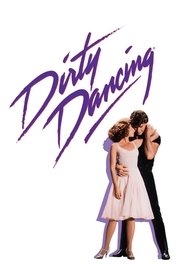
We didn't have enough rain, and the first days, we had a rain machine, I think something like one day, and so we took every shot we could find in Virginia so that we'd be able to use it. You see there we have what is presumably rain. This is, now again, as I said, we had the most brilliant production designer, David Chapman, who is one of the unsung geniuses of this, who made it look so wonderful.
39:37 · jump to transcript →
-
Eleanor Bergstein
and you can see life in every corner of the frame here. This will later be where Johnny comes to find Baby. Here we are in the rain. One day the camera crew came to me and said, Eleanor, we see that you have a camera instruction here which says the air is hung with silver. Do you mind telling us how you plan for us to do that? And I said,
40:02 · jump to transcript →
-
Eleanor Bergstein
Well, you know, the air is hung with silver. You know what I mean. And they laughed and laughed at me. And I said, OK, if you can get the air hung with silver, I will buy champagne for the camera crew. So we will be coming up to the scene in a little while. Let's see. Always be careful what you owe. This is in North Carolina. These are the staff quarters. And this is one of the few times we had a rain machine. And this is in Virginia.
40:30 · jump to transcript →
-
-
-
Jim Piddock
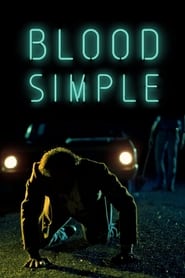
Now, here's a technical aside. Though it appears that we're driving, this shot was actually achieved with the car stationary. And the illusion of oncoming traffic, you saw the headlights back there, the illusion of oncoming traffic created by a pair of lights being run at us as if they were headlights. And the sense of motion, it's enhanced by technicians who gently rock our, in fact, stationary car. And the rain, too, is an illusion created by a hose. Simple little...
1:37 · jump to transcript →
-
Jim Piddock
garden hose piddling down on the windscreen, and so we think we're driving in the rain. Now, these pass-bys had to be precisely timed to the dialogue, so this shot had to be done in reverse. That is, if you were there observing on the set, you would have seen these passing lights being pushed, in fact, away from us into the background, not coming at us, so that their moment of entrance, that is, their apparent moment of exit, as it were, could be precisely timed.
2:06 · jump to transcript →
-
Jim Piddock
So much more compelling than any special effect. Isn't that what the cinema is all about? Oh, some gaiety here, and now it seems that these two somewhat tiresome people are about to wind up their interview once again. The human face here, I think, is marvelous, isn't it? Is there anything more marvelous
8:46 · jump to transcript →
-
-
-
Oliver Stone
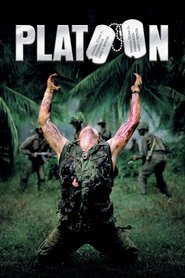
Beautiful Philippine foliage, colors, long lensing here in this valley. This is a shot done at the lip of night. One of my favorite shots. You see a storm coming up. Goddamn, man. What's O'Neal got, a nose up the lieutenant's ass already?
13:15 · jump to transcript →
-
Oliver Stone
Night ambush is something we all never liked. No matter how good you were, you'd come out there every night. You'd go out there from the perimeter. On the nights that you went out, and it was spooky. Because anything could happen out there at night. That's an optical we laid in. I wanted to get a sense of the rain that was coming on. Because I remember ambushes where we'd sit in the rain all damn night and be soaked to the bone.
15:04 · jump to transcript →
-
Oliver Stone
and not very nice. Looking through one of these stupid scopes, any Vietnam veteran will tell you early on from the 67 times and how it was difficult to see through these things at night. They always would get wet or smoggy or something. It never worked. So here we see a transition. He's tired and the rain is stopping. This is a dangerous time because the mosquitoes come out on full force. And they are serious mosquitoes over there. And you get bitten to death.
17:27 · jump to transcript →
-
-
-
Gary Goddard
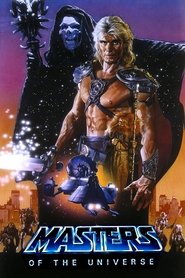
that will keep them believable. But it's very difficult to have people like Tila and He-Man, Beastman, whatever, walking down Sunset Boulevard at high noon. But at nighttime, with the streets wet, with a little bit of mist in the air, a little bit of wind, it can be believable. So the decision was made early on that when we bring He-Man and the characters to Earth, we're going to do it at night. We're going to use lighting to...
37:09 · jump to transcript →
-
Gary Goddard
theatrical lighting to this. Blue light on the house, warm lights inside. The calm before the storm. Let's go see. Not so fast, kid. Hello? Kevin, thank God it's you. Remember, the interiors now of this house
45:31 · jump to transcript →
-
Gary Goddard
Blossom, I think we've really got our act together here now. I think everything works well. The glint of the armor, the warm backlight on the vehicle, the cold blue light on the street. I think it sells the whole idea. I think I was saying earlier, we shot this in Whittier. We had to shut down the streets.
57:37 · jump to transcript →
-
-
-
John Mackenzie
But it was right through it, the bastards. It's always been plain manoeuvres. Used to have to hump this blinkin' great wireless about. One winter, snow, blizzards, freezing the bollocks off the ponies. I got lost. In them days you stayed lost till they nicked you for being AWOL.
29:52 · jump to transcript →
-
John Mackenzie
Put a frightless on me, wind me up. So he's emotionally distraught, and then the old guy comes in and says they're going to get rid of the body. Kept all incognito, they're going to collect the body in an ice cream van. There's a lot of dignity in that, isn't there? Going out like a raspberry ripple. They're going to store the body in the freezer down there. It's outrageous, some of the lines, you know.
31:23 · jump to transcript →
-
John Mackenzie
So, Charlie, how did you know about the bombs? It's our business to know these things. And Ricardo, a bottle of champagne. It's very cold. And this was actually a club called Régine's. Régine's started in Paris, but Régine's was all the rage in the late 70s, early 80s. Régine was a French woman who ran the smart clubs. I'm being frank.
57:58 · jump to transcript →
-
-
-
Paul Davis
Pleasant the weather is in Rome at the present time, thank you. So this sequence, this wasn't Wales. This was shot in Windsor Great Park. And it was actually quite late in the shoot. It was the 28th of February this scene was shot. It was all shot in one night. And by all accounts, if you ask anybody who worked on the movie, every single one of you would tell you that the night they shot the wolf attack,
12:41 · jump to transcript →
-
Paul Davis
was the coldest night that any of them had ever experienced. To the point that when they brought the rain trees in, the ice would just formulate around their jackets and you could just crack the ice off of it. You could break ice out of their hair. It was one of the bitterest... I think, if I remember correctly, when I was researching...
13:10 · jump to transcript →
-
Paul Davis
the book and the documentary, I found out that it was actually minus, it was recorded as minus 11 degrees on the 28th of February in London, where they filmed that night. So it was cold. And those poor guys, they were the only two that had to get wet under those, under the rain trees. And the scene was lit by the DP Bob Paynter,
13:38 · jump to transcript →
-
-
-
That's an 18- or 16-inch model that's chugging away from us there. On the set, of course, we had to keep blowing wind nonstop. We had smoke always. We had pigeons being thrown around. And it went on and on, the shoot on this thing, much longer than I expected. I was looking at it again here. I think there are probably as many shots in this short as there are in the entire rest of the film. And each one is complicated, folks.
8:05 · jump to transcript →
-
Oh, there's Venus. Oh, there's the wind blowing her. And then out of this, rises some sort of Eastern Buddhist nonsense going on. We're mixing religions, we're mixing philosophies. We've got television watchers, the true religion of our day. That's totally inspired. Why is he melting? What goes on here? The difficult thing with this animation is we actually were using not just cut-out animation, but we were using full-frame animation.
19:26 · jump to transcript →
-
and then it goes into Oliver. I don't know if you've ever done anything as long a sequence as this. It just goes on and on, building and getting better. I think this is one of my favorite bits of Eisen, I think. Those poor little kids in the bathtub, they start getting really cold by the end of the filming. Because every sperm is sacred
27:21 · jump to transcript →
-
-
-
John McTiernan
This joke, is Shane's joke. It's entirely Shane's joke. Shane didn't write in an official way but he wrote in an unofficial way like the joke, the pussy joke. He was just there, and he would come up with stuff. Now, the heat vision here, when we first did the heat vision, they had a real heat vision. From the folks in New York City that did the effects stuff. And it was this enormous thing with the umbilical that was six-inches thick and it would, could only get maybe four-feet from the truck. And it really would see someone based on temperature. But there was this little tiny problem, which was the ambient temperature in Mexico was in the 90s. Consequently... People were the same temperatures as the background and they were perfectly camouflaged. So in order to deal with that, the splendid folks in the special effects field said, "Well, it's no problem. "We will put ice water on the jungle. "And we will have the actors stand next to a fire just before their, "the shot," So, they literally were doing that, and they spent about, I don't know, a week getting one shot, maybe two shots. It was just a nightmare, it cost a... Every shot cost a fortune. So, finally, I went off to a video special effects house. They did commercials and things. And I sat down for about three hours, we had to do this in secret. One of the studio...
32:42 · jump to transcript →
-
John McTiernan
In any case, I went off to a video post-production house that did, normally did commercials. And I took the film and I had them, the regular film, and I had them turn it into a negative and then they made it all blue and then isolate certain areas and attach false color to it. And we created most of the special effects. Most of the heat-effect shots that way.
35:24 · jump to transcript →
-
John McTiernan
That was one of the back to the drawing board parts. The only image of an alien life form that had captured the imagination or looked halfway plausible, or functional was this stuff that came from H.R. Giger. Illustrations that became Alien. You know, one of those images of the ultimately terrifying other life, only shows up once in a generation or more. You're not just gonna, you know, hire some cartoonist and say, "Come up with a next H.R. Giger." 'Cause H.R. Giger only comes along as I said, once in a generation. And I didn't see how you could do anything associated with it without just being that derivative also-ran. And, frankly, having seen what they did in the sequel, that's exactly what I thought. I thought it was, it was best that they didn't shoot it. Here you see Jesse actually carrying Painless. He had no ammunition at this point, that's why he could carry it. And there's obviously no battery connection and it wasn't operable that way. We shot this in Palenque, where we could get a real snake. The worry was that Painless would buck and get away from him, and spin. Even if you had everybody clear out in front for 50 feet, that the man firing it might not be able to control it. And that he could wind up in the way of all this wading and bits of brass and stuff that was flying out of the front end of it. So the first time, they fired it, they did a Iot of... They anchored it. And yet tried to give him a chance to figure out if he can control it, so it was like bungee cords and things. So that if it started to get out of control, they could yank it in and protect him. But to let him see, you know, what other... You know, what other concussive forces... You know, what happens when the thing starts spinning. We learned that there was enough gyroscopic force in the spinning of the cylinder, that it kept it online. That actually was very difficult to move it around or aim it, and in an odd way, it was very safe. You couldn't have it wind up aiming where you didn't want it, 'cause it wouldn't move. Because of all the gyroscopic force and the spin, but it took us a while of experimenting with it, and I think he first tried it out over, with the second unit. And it was like half a day, you know, we kept hearing reports of, "They're gonna fire Painless, "in 45 minutes. "Well, no..." It's like a count down to the moon launch or something, "They're gonna fire Painless." And I think later that afternoon it fired, and we were about a mile up the valley. I could hear tt. It sounds like, it's the loudest buzz-saw in the world. Some people, I guess, were concerned about how impractical it was, but the notion was that, Painless was... Look, it's a movie prop. You know, we never would've used it, but it's a lot of fun to watch. Here we got Bill Duke to fire Painless. You notice he is not walking while he does this. Now, this particular sequence, I made when I first went to work on this project, I had the feeling that people had a sort of perverse fascination with pictures of guns firing, literally almost a pornographic desire.
44:06 · jump to transcript →
-
-
-
Barry Levinson
One of the things that always I thought that Tom did a very good job is he has to work between being emotional and being cold in a way, that in a sense he has just found out that his father has died, and yet he doesn't seem to indicate any kind of real feelings towards him.
7:54 · jump to transcript →
-
Barry Levinson
I mean, it leaves at midnight, Ray, you know, but Delta, how's Delta? Delta crashed August 2nd, 1985, Lockheed L-1011, Dallas-Fort Worth. Terrible wind. All airlines. 135.
45:37 · jump to transcript →
-
Barry Levinson
Same thing as the rain. You get a little wet.
53:25 · jump to transcript →
-
-
-
Tim Lucas
These scenes were filmed in the reception studio area at Toronto station CKEY at 1 Yonge Street, slightly redressed by Carol Spier's skilled art department. Debbie Harry enjoyed doing this scene, she told me. It gave her a chance to show something of her chops as a live performer. Born in 1945, Debbie had actually worked at BBC Radio as a secretary in the late 1960s while moonlighting as a background vocalist in a group called The Wind of the Willows.
13:41 · jump to transcript →
-
Tim Lucas
Bianca's office, which occupied the Mezzanine area I spoke of a moment before, was dressed by Carol Spier's team to suggest a similarly old-world sensibility to that of Masha. Bianca's manner toward Max is decidedly cold and harsh. Like that initial civic TV signal, she's a cool medium, to borrow a phrase from Cronenberg's fellow Torontonian Marshall McLuhan, and she speaks in McLuhanisms.
29:21 · jump to transcript →
-
Tim Lucas
and he gives them the most basic logline of the film and stops the show cold with the sheer brilliance of the idea. So it had that effect on people, and the idea had to be carefully protected. I was only permitted to be on set because Cinefantastique guaranteed the production that our coverage would not reveal anything sensitive until after the film had been released. The problem with Videodrome was that its Canadian producers Victor Solnicki and Pierre David evidently made their alliance with Universal with a release date attached,
55:26 · jump to transcript →
-
-
director · 1h 29m 5 mentions
Jeff Kanew, Robert Carradine, Timothy Busfield, Curtis Armstrong
-
president of Lambda Lambda Lambda, played by Bernie Casey, former pro football player, an excellent actor, and a brilliant painter, actually, in real life. And the first night on the set, we were shooting the bonfire scene. It was four in the morning. It was cold in Tucson. And I heard him whisper to somebody, I'm sick of this fucking movie already. But we actually had fun working together after that. But he did scare me.
33:28 · jump to transcript →
-
So the line in the script is, well, all a nerd thinks about from the time he's 10 is sex. It's better the way it is. Yeah, we made it more real. We're always going for real. But I don't think, in all honesty, that Poindexter would be a better lover than any human being on the planet. No. It wouldn't last more than three or four seconds. If that. If that. And it would be painful. I remember this being so cold. Yes.
1:11:46 · jump to transcript →
-
See, what I remember is it was absolutely freezing. It's whatever this is in February or whatever. Yeah, it's February. And it's 3 in the morning. 3 in the morning, and everybody is completely freaked. And they've got me. I've been working. I don't know if you remember this, but the reason I'm in the Elvis Presley outfit is because I was supposed to do this whole Presley routine. Right. You know, where I was lip syncing.
1:13:09 · jump to transcript →
-
-
-
predecessor to the House of the Blues, but it was a little shack behind a three-story apartment building on the near north side. It was a private club, so you could go there any time and drink. So it ended up a Saturday night in the cold and the rain. When we had a Saturday night. When we had a Saturday night. It ended. Michael had it figured, so the crew had about an hour and a half of freedom a week. We would head to the Blues Bar. It was just a labor of love. It was kind of...
8:26 · jump to transcript →
-
What kind of steel? Swedish cold rolled, 247. Here, here, here, and here. One inch plates. Copper to bind drills. Titanium alloy here. This is a well made, very expensive, very special vault. English. Richmond would like it. I need a very special piece of equipment. Again, with the knowledge that I had of Zeiss,
50:05 · jump to transcript →
-
Call Joseph, have him fix you one. You go back out there, and you bug off him for the word. Come on. It's getting cold. Oh, uh, this LA move, you know, uh, it's home free for me. After, it's done. You happy? Come on.
55:19 · jump to transcript →
-
-
-
So this was an extremely complicated scene to shoot. Here, we're on the stage doing the actors... ...against rear projection. And now these images here, there was-- It had to be done in a very low-tech way. All the actors were put in white suits and had white makeup on. So we shot them in this room, doing all of this action... ...in their normal wardrobe. And once we had finished shooting the scene, we sent them off... ...where they put on the white suits and the white makeup. They came back and we reshot it... ...on a black stage that duplicated the same office. And now you had these weird images... ...that were run through all kinds of video process... ...to make them look like the way they are... ...reflecting, supposedly, the heat of the bodies. This is in kind of a pre-digital era, too, when we're doing this. We had television effects, but we really didn't have digital technology for film. If I remember right, this was done at Warner Bros... ...in one of their little video studios that the man built... ...who kind of invented 24-frame video for movies.
1:02:38 · jump to transcript →
-
A couple of the shots, I would do down on the ground-- The close-ups in the helicopter-- --But most of them were done up in the air. We had so much work to do that we were spread out... ...sometimes as many as five or six different camera units working... ...you know, getting this footage. And things like this I would give to Jim Gavin and say: "Here, go and get this started." I remember there were very few action scenes that did not have six cameras. Right. Because doing things like this... ...as we go into the Los Angeles riverbed... ...which is actually a big flood-control channel... ...for the occasions when it does rain. This is the only thing that keeps Los Angeles from washing away. And we got permission to fly down inside the flood-control channel... ...for a length of about four miles... ...to go in and shoot this whole chase sequence.
1:22:33 · jump to transcript →
-
This sequence, I was told by the assistant director... ...would never wind up in the movie because it was too silly and too crazy. But it is definitely one of my favourite, favourite scenes in the movie. And, yes, it's silly, but, you know, it's just great fun. This is-- Hoyt, you were there shooting. - That's my first day of shooting. Kind of woke me up, because after the explosion... ...we looked at our matte box and it had melted the front element of it... ...so it got pretty hot.
1:31:49 · jump to transcript →
-
-
-
Roger Moore
And obviously when I was doing this, I wasn't out in the cold. We were shooting this on a soundstage. The close-ups, that is. Willy Bogner did the ski sequence. After finishing Bond, I did a Willy Bogner film. It's called Fire, Ice and Dynamite. Willy Bogner is the most extraordinary skier and director and photographer.
1:52 · jump to transcript →
-
Roger Moore
And Willie's saying, yeah. I mean, you know, he's jumping into death. And I literally had to fall in this helicopter. And we took off the doors wide open. I'm not strapped in or anything else. And the pilot, very smartly, to do a little thing and came down and settled out of the wind so that we could then strap ourselves in. And Willie is on the radio. Come back. I want to do it again.
3:15 · jump to transcript →
-
Roger Moore
Once he had a girl, a big wind machine going, so her hair was blowing. But unfortunately, it was also blowing other parts on the body that had hair on. I saw Maurice with a jar of Vaseline smoothing down. Tough job.
7:39 · jump to transcript →
-
-
multi · 2h 34m 4 mentions
James Cameron, Gale Anne Hurd, Stan Winston, Robert Skotak + 8
-
Pat McClung
The Sulaco. This was a Syd Mead design that was fiberglass body. Some of the detailing was based on that Syd Mead sketch and then Pat and Dennis and myself did a lot of the fine detailing for the front, the side, the top, all the microscopic detailing. This was not a particularly large model. It was about five or six feet long. The detailing we would do after hours because we had to be on the stage to shoot all this stuff, get everything organized, and once everybody went home, we'd go up to our little effects office and start another shift of microdetailing. It was so cold, we were wearing our winter coats. It was hard to move around and use these tiny little Exacto knives, and these pieces of plastic that were maybe half the size of acomma on a textbook, sticking them on meticulously, one after the other. So this was our biggest set, I guess. Or the biggest volume, I guess. The hanging chains, these little widgets and things, this was all inspired by the tone and feel of the opening scenes of Ridley's film. We were trying to create that same sense of the ship having its own life and being an eerie, interesting place.
25:57 · jump to transcript →
-
Bill Paxton
Here's a panning shot of the armored personnel carrier. This was done with the twelfth-scale armored personnel carrier. We had the camera flat on the ground and at the beginning of the shot, behind the APC, is the fiftieth-scale colony complex. Because we're flat on the ground, the audience doesn't see the scale differential that's going on there. Literally, the bumper of a twelfth-scale was next to a fiftieth-scale. The shots of the APC driving into the atmosphere processor were also done as miniatures. There was no full-size entryway that was built for the film. That's why we built one as a miniature. The sequence inside the atmosphere processor is a location that was a decommissioned power station at Acton, inside London or just outside of London. Rather than building a set from scratch, they used what was there and then added the alienesque bits to it. Look at that. - This was my first day. At Acton? - First day ever on a film. You won't see me there. - Ever on any film. I'd no idea what "back to one" meant or anything. What does it mean? 30 years later I'm still trying to figure it out. That's a real gun. That's a German Sten gun. It was cool until we started firing the weapons and then this fine snow started raining down on everybody. I think they checked it out. - It was just asbestos. We had to practice shooting flame-throwers. We did the close-quarter battle stuff. Approaching a building or going down a hallway, you leapfrog along. We did that. Al Matthews who plays Sergeant Apone had some kind of military background. I think he had served in the Vietnam War, and after the war he had come to England, where he'd become a radio disc jockey, I think. He was either really good at bullshitting us, but he seemed to know what he was doing. His orders were so authoritarian that we followed him.
1:04:49 · jump to transcript →
-
Bill Paxton
These shots of the aliens hanging from the ceiling are just shot upside down. It's just guys standing there in an alien suit. And we set up some alien puppets made out of foam and filled them with gak and guts and yellow goo, and blew the hell out of them, as I recall. Made a big mess. Miniscule things we had to do, like creating burn appliance make-up for when the acid would hit. Here's a case right here. Alien comes up, splats, and the blood is right here. Quick cut. Quick cut. But prosthetics used. John Richardson was the physical effects supervisor. I was at his shop on the lot, and they were testing one of these flame-throwers and it was a real flame-thrower that they had built. This thing would go about 20 or 30 feet. So every time you see flames coming out, it's the real thing. It was a little scary. When we did the fire in the APC, there was something used to age the set, some kind of wax-based substance that the art department had dabbed on to make the set look more like a used military vehicle. And the heat caused it to vaporize and the actors got this strong sense that they couldn't breathe. It caused their throats to close up. Bill tells the story Jenette is going "Ugh!" And Bill remembers thinking "She's coming up with some great stuff." And she really couldn't breathe. I don't remember what we did. Probably just kept shooting. I think we just kept the fire out of the inside, kept going. Because the full-size APC was incapable of spinning its wheels, all those shots of Ripley when she hits the gas and you see the wheels spin and smoke are all the miniature, because the full-size vehicle again weighed some 20 or 30 tons. We had put A-B smoke... A solution on the wheel and B on the ground. And as the tire turned, it would mix that A and B together and give the smoke. We had somebody holding back the front of the APC for a moment, so that the tire'd spin, then we'd let it go. That A-B smoke is really toxic. We don't like to breathe that stuff.
1:17:31 · jump to transcript →
-
-
-
One thing everyone should know is that this is related directly to Tabasco sauce because this was all shot in Louisiana, a little town called Abbeville, Louisiana, home of the company that makes Tabasco. So this was supposed to be a New England town on a hot summer night. It was January in Abbeville, Louisiana. We were freezing our asses. It was like 33 degrees everywhere, and everyone was freezing. So these cheerleaders were...
5:03 · jump to transcript →
-
Everyone was freezing, but I did my best to make it look like summer. You never know. Well, you have to because knowing that the payoff in this film is ultimately to have the snow become the hero of the film. You needed that contrast. You needed that kind of flat contrast. Speaking of contrast, this is California with real-life sunshine and in a place called Piru with planted pine trees.
5:31 · jump to transcript →
-
And the fact that he becomes the major threat in the cold clothes is just such a great way to bring it all in. I would say ironic threat. That's not a bad blob right there. That's a miniature. And that's a mat, right? It's a composite of something. Yeah, it's a composite that worked. So this is a miniature street with him? That's a foreground miniature. Did you have any challenges lighting the blob? You were saying before the fact that it's pink.
47:55 · jump to transcript →
-
-
director · 1h 24m 4 mentions
The Naked Gun: From the Files of Police Squad! (1988)
David Zucker, Robert K. Weiss, Peter Tilden
-
That's a snot. Now what did you use for the snot? It was actually snot. Bob had a cold at the time. So it was real snot. It happened to be convenient. They didn't have the technology. Leslie's kind of a method guy and insisted on it. Yeah, there's only three channels and no snot. Today, of course, there's digital mucosas. You don't have to. CGI. Exactly, whatever that means. But I think that's only common sense.
12:03 · jump to transcript →
-
How about a rain check? Well, let's... But we saw a clip of her and she was great. She looked great. Terrific. And then... Did you do a read-through with her to make sure she could play comedy or play it straight? Well, we did. We did a read-through and she... I think she started to read it putting a little comic spin on it and she asked me how I wanted her to play it and I said, just don't try to do the comedy at all. Just play it straight. And she got it? And she got it immediately and...
23:48 · jump to transcript →
-
Exactly. Well, again, people are still kind of laughing. Did you wet down the streets for this? I noticed everything's wet. We always wet down the night shots for the reflection of the lights. And, in fact, every movie you can see, for some curious reason... Everything's wet. It's always just rain. But it never rained. Okay, or it's just finished raining. It's always wet down so that it looks better. There was a hedge against it raining. We had an early MTV joke. Oh, this was, yeah. Willow Records. Willow Records. Willow was my nickname.
42:49 · jump to transcript →
-
-
-
Okay. You know what? I mean, the feeling was like... Are you really 19? We didn't want to make this romantic and glamorized sex. It was supposed to be like bare light bulb, harsh shadows. It's cold. It's, you know, muted colors. Sorry we put the triumphant reprise of somebody's baby over it. Well, we had to put that song in again.
19:01 · jump to transcript →
-
Right. Sweet. It's wrong. It's like it should be sexy and he should wind up awkwardly twisted up with her and so I was sick and Art did a reshoot and do you remember this? Yes. Where they like, I don't even remember what happened. They were making out and some sort of physical comedy but it just was really awkward and
42:06 · jump to transcript →
-
in the movie somewhere because the research is based on a year where Led Zeppelin were coming to town. And so much of the whole school year was getting ready for Led Zeppelin and then Bonham died. And it just took the wind out of the entire school. And I always thought how great to have that be the year that you're studying these guys. That they never got the holy grail of Led Zeppelin coming to town.
1:14:22 · jump to transcript →
-
-
-
And I know a call girl in England who dresses up as all sorts of things, including Blanche, no, not Blanche, in Scarlett O'Hara in Gone With The Wind. And her customers like to be beaten by Scarlett as they scrub her bathroom floor. I mean, it's a weird scenario, but...
38:59 · jump to transcript →
-
But the movie is basically an exploration of the psychology of sexuality. And I love how you just framed these two characters in terms of their beds, with her lying in this big bed, totally isolated. And it's cold. It's a blue light. It's lonely. Having just come from Grady, who has been spurned by his wife. Exactly. Why didn't you come to me, Phil? I would have loaned you the money.
40:25 · jump to transcript →
-
Hell, I would have given you the money. Goddamn pride. What about jail? No pride in there. Oh, thanks. Cooper offered me a fortune for the patterns. I lost control. Please, Lou, I'll work for nothing. Anything you want. This is very harsh, all this stuff, because it's a cold, light day.
40:55 · jump to transcript →
-
-
-
Peter Greenaway
But the weather was perhaps unusually continuously fine in England. And for about three weeks of amazing weather, I drew this particular country house, but was made very much aware if I was going to draw what I see and not what I knew, that as the sun moved around this house, then the shadows changed dramatically. So I set myself up a series of permanent vantage points by moving chairs out of the house and situating them in the garden.
26:04 · jump to transcript →
-
Peter Greenaway
for example, here, the weather. We were up early at 6 o'clock in the morning filming in this extraordinary idyllic place, but the mists were low. It was suggested we should all wait until the mists cleared, but I insisted we should use these characteristics of the English landscape with a view to some extraordinary, beautiful filmmaking, which, of course, was entirely out of our control, but just a question of the meteorological conditions
31:15 · jump to transcript →
-
-
technical · 1h 35m 2 mentions
Steven Lisberger, Donald Kushner, Harrison Ellenshaw, Richard Taylor
-
One little anecdote here is that the cameraman that was up on the platform shooting this, the viewfinder of his camera was broken, the pellicle mirror had shattered, and he couldn't see anything through the camera and he just aimed and shot. He didn't want to slow down the production by telling anyone that he couldn't see anything, and held his breath all the way till dailies, and the shot worked out. Oh, that's right. 'Cause there weren't very many 65-millimeter cameras available, and all this was shot in 65 millimeter. Yeah. When we opened these cameras, they still had the sand of Lawrence of Arabia in them. Well, Flynn's arcade was in Culver City. Yeah, it's across the street from the old MGM lot, which is now the Columbia lot, but now renamed as Sony Pictures. Now, there was actually a loft at the location. But then the re-shoot... The close-ups were the re-shoots on a stage. Yeah. That's the... The actual... The practical location. Space Paranoids. Space Paranoids. I take my son to the arcade in Westwood. We go once in a while. I have to bring my earplugs. But I've never seen an old couple like that in a video game arcade. That's right. We knew that Bally was going to release a video game simultaneous to the release of the picture, and therefore we wanted to have the design of the game in the arcade and the game in the real world that people would actually play be very similar. So, we go to Flynn's, and we see Flynn playing the electronic game and fighting off a Recognizer. That is the console which we created for the film that represented the game that Bally was going to create. Although, obviously, at that time, there was no way that a computer game could have real-time, interactive, full raster graphic imagery. So, it was a prediction of the future of the way games were going to evolve, and that is what we're now seeing in CD-ROM games and the games that are in home computers and arcades today. Jeff did get very good at video games. We had some on the set. Yeah, he was remarkable, and one day you suggested that we videotape him while he was actually doing it. And look at the neon in the back. I'd forgotten about that. OA, right. I don't think any of the actors actually went so far as to get themselves a computer and spend hours backstage... Programming. -... learning how to program and... That didn't happen, but they got as far as games. Battle Tank. We used to play a lot of Battle Tank. Battlezone. Yeah. Battlezone. There you go. Now, as! recall, you... We re-shot this sequence. Yeah, and I don't even remember... The lighting... To match, I think, the lighting of the game arcade. Well, I think, actually... - We changed dialogue. Did we? - Changed dialogue. And here's a little secret. We told the studio that we needed to redo it to match the lighting. Well, see, /... Still using the same excuse. That's right, you're still... You're still well-programmed... - /'// never tell. The lighting didn't match. The casting process was interesting. Originally, I'd pictured Jeff's character being younger and the Tron character being older. We were affected by some things that were definitely outside of our control. Tron predates Splash, and people forget that, really, Disney was having a hell of a time getting popular actors to work for the studio. And it had been a tough time for Disney. And it didn't help that we were saying, "Yeah, we want you to wear these funny costumes." And Jeff was always enthusiastic about being part of the picture. The Tron character... Bruce was... I don't think Bruce was quite as adventuresome at first, although he got into it after a while. I would have liked to have seen Bruce possibly be a little, I think... I had pictured him as sort of a younger Kirk Douglas. I think he would have been better if he had been a little older like he is now. I like the way he looks now. And I think Jeff... I was surprised at how physical Jeff was. I thought that... I pictured Flynn being a little more geekish or a pencil neck, and Jeff is very physically strong. So, in that sense, the two became somewhat similar, although their personalities and what they represent are completely different. One little anecdote is that... I can't point back at the character of Tron and say, "There were all these actors." Or, "It was between this one and that one." But I do remember one surprising actor who really wanted to play this part, and it was Peter O'Toole. - Yes. Oh, he wanted to play the part of Dillinger. No, it was Tron. Tron, that's right. I think we wanted him for Dillinger and he said, "No." And I had this amazing scene with him in the Beverly Wilshire Hotel where... In his hotel room where he said, "I can do this!" And he started leaping from one piece of furniture to the other and screaming that, "I want Tron on my tombstone right next to Lawrence of Arabia!" And who knows, maybe he would have been great, maybe I really missed it right there. All these interiors... Shooting them, these low-light interiors, in 65 millimeter is very difficult, because the depth of field, the focus plane is incredibly short, and it was a real struggle. And some of the close-ups, we actually had to run light stands up the backs of the actors through their jackets as braces, so that they would stay in the exact same spot, so that we could keep their eyes and faces in focus. You know, if your file was in there... - Hey, wait a minute. If we can get in there, I can forge us a Group 6 access. Well, shall we dance? And ENCOM was shot in downtown Los Angeles. I forget the building. Of, the Transam building? Oh, yeah, the Transamerica building. At the top of that was the helicopter pad. This sequence between these two heads of the company really expresses the philosophical problems that the other characters are going through. Again, the office is designed to mirror the other world in terms of its graphic look. Wasn't there something about the cold, corporate look as well, Steven? There's your door. - There's the door. The scene where they sneak into ENCOM and open the door that is 10 feet thick or 12 feet thick, that's a real door, that's not a prop movie door. That's an actual radiation door at Lawrence Livermore. ENCOM isn't the business you started in your garage anymore. In one scene, you see a number of things flip up into four corners. Images. That was a traditional optical that had to be done, and opticals in those days would take two, three, four, five weeks at least, and it was a big task. It was like making its own little movie. You know, you can remove men like Alan and me from the system, but we helped create it, and our spirit remains in every program we designed... That line is one of the key lines in the whole script, about the human element that the programmers put into the system. And it's this discussion between those two characters that really elevates the picture well beyond a video game movie. Now, the reverse was shot, actually, on the Iot, so there's a reverse... Getting into the Disney vaults? Yeah. Lawrence Livermore was quite proud of the fact that although this door weighed tens of tons, or whatever it was, it was so well hinged that you could open it by just pushing it. One person could. In fact, you found... I believe you saw that door as we were taking a tour of the facility and you Said, "This would be a great place for them to sneak in." So, you kind of re-wrote the scene to accommodate that huge door. And the irony is, as he punches the buttons, that the giant door opens, and no strength is exerted, but it's opened automatically. I kind of inherited the job of not only setting up the giant rear projector and the mirror and all that stuff, but I also had the job of putting together what would end up going onto the desk. That's an actual wireframe on there, for the carrier, as you See... Right. - ...in the film. I began searching around for footage to go onto the desk, and it was getting late, and we were about to shoot this thing in a couple of days, and I just ran out of stuff, so I put the flowchart from the film on there, and probably things out of my address book and anything I could... I was down to pulling things out of Life magazine and re-photographing those. I was just running out of stuff to put on the desk. What's interesting about this protagonist, Jeff Bridges' character, is that he's actually, um... He's a creative, technical type, and he's fighting for his creations, he's fighting for his work. I think that's pretty unique. He is somewhat of a paranoid character. But with some reason. With some... Yeah. - Some good reason. Dillinger will never know we've been in here. Good luck, hot shot.
16:15 · jump to transcript →
-
When we came to make a decision about what film format to use for Tron, we felt very strongly that we needed to shoot it on a larger negative than traditionally done. And it came down to a choice between 65 millimeter and VistaVision for the whole show. But the availability of 65-millimeter cameras was far better than the availability of VistaVision cameras, so we made the decision to shoot the entire show in 65 millimeter. And to keep a certain consistency, and as long as we had rented the cameras, we felt that we might as well go ahead and shoot the real world in 65 millimeter and not in 35 millimeter. It was kind of one of those nice to have things, and nobody objected strenuously to it, and also it would be the first time since Ryan's Daughter that a film had been shot entirely in 65 millimeter. And I think you can see the results. I mean, it looks wonderful. In the monitors in Lawrence Livermore, one of the things that Triple-/ had to do was create lots of imagery that appeared on monitors, and that imagery had to be shot and created long before we got to production. So, there was a lot of planning in creating all of the monitor imagery, and Triple-I did a great job on that. Spent a Iot of time on this shot. To accomplish the effect, what we did was get a 4-by-5 still camera and photograph Jeff Bridges in his position after he's been zapped, and then immediately moved him out and took another photograph, which was the background by itself. So, as you pull away chunks of Jeff, you see the background behind him, and then to put the laser and the grid and all that on top of him was basically the effects animation of John Van Vliet. When Flynn is de-rezzed and pulled into the computer, we go through one of the most interesting sequences in Tron, which is the real world to electronic world transition. This sequence was created by Robert Abel & Associates, primarily under the direction of Kenny Merman. It was a sequence which I had designed, knowing that the way that Robert Abel & Associates was making these computer graphic images with the Evans & Sutherland computers, and, really, using vector graphics to create this particular look, would give us a look that would be unique just for this transition. The three-space transition, the movement through all these binary bit patterns and this polygonal landscape, was done by making multiple passes through a traditional animation camera that was pointed at a high-resolution, vector graphic, Evans & Sutherland computer screen, and making multiple passes, frame by frame, using different colored filters, coming back, making multiple passes of rewinding other filters, until you finally end up with this, which seems to be solid objects. But it's really made out of lots of tiny, tiny lines put together to make solid blocks of color or objects. Oh, man, this isn't happening. It only thinks it's happening. When Flynn says, "This isn't happening, it just thinks it's happening," it's a key line, because it means that the reality that he finds himself in now, not even he can fully believe exists. And if anyone should appreciate and understand this alternate reality, it's him, and now he finds himself trapped in it. All right, now we see Sark standing on the bridge, and all of a sudden, he is enclosed with these shrouds of light as he begins to have his conversation with the MCP. The database for the MCP was a human figure that we had created at Triple-/ called Adam Powers and was originally on the Information International sample reel. And if you look at that sample reel, you'll see a juggler character who was juggling balls. Well, that face of that character is the face of the MCP. So, the first time that you see him, he is a polygonal drawing of a face. And that's basically the underlying database of the face. So, it's made of polygons. And those polygons, we play them out on the Triple-I computers as the line-drawing polygons, and made 12-and-a-half by 20-inch stills, high-con stills of those. But we created the mouth positions for the vowels and the syllables so that you could take these interchangeable transparencies and lay them down and make him Say, by whatever order you put them in, whatever you wanted him to say. 'Cause he was voicing a lot of different dialogue. Then those were backlit, and then we applied an effect to those line drawings of putting a steel mesh screen over the taking camera, and it made it have that much more, kind of, complex look. And then we also animated the exposure occasionally. Early on in the film when I started working with Steven, we did a lot of experiments to work out how these characters were created. The thing that we finally decided was that the characters needed to have this energy inside themselves. They are obviously in this electronic world. Now, these costumes were unlike any costumes anyone had ever created for a picture before, in that they were costumes designed to have effects treatments done to them. They were white with black drawing or black lines over them. All of the black elements on the costume were turned into circuitry which could be backlit and light could be pushed through there. We originally shot a 65-millimeter image of these people, live-action photography of them on these black sets. Then from that 65-millimeter film, we created some photo-rotoscope machines, which basically could project the 65-millimeter film down to large pieces of film, which were pre-punched with animation punches. This film was created by Kodak for us, and we would project down with these photo-rotoscope machines, which would hold this film into a vacuum frame and make a continuous tone positive print of each frame of the film. Then these continuous tone prints were taken to a light table, it was a vacuum light table, where they were contact printed to high-con film to make a number of high-con positive and negative images. So that you basically have for every character a large cel and you have high-con positives, negatives, and a continuous tone positive. Then these high-con elements were hand-inked and painted to isolate the circuits on the body, the whites of the eyes, the whites of the teeth and any other circuits that we wanted to treat as a separate exposure. The characters are more often than not... The live-action characters are shot on an all black stage. When there is a set, the set is also black, but is measured out to conform with what we're seeing in this artwork. So that if a character appears elevated in a shot, like this shot, there was an elevated platform for him to walk on, but it didn't look at all like the set. Then we would composite these actors over paintings, transparencies, and once that was done, we would add the light and the color separately. And to simplify it, you can describe it as a sort of perfect blend between live action and animation in that we took live-action film, photographed it in a way that we could break it down to individual frames, then blow up those frames into large slides or transparencies. And we had 75,000 of these, which seems like an appallingly large number, but it really isn't if you compare it to an animation film. And because we were at Disney, they were not overly swamped. That's an actual Frisbee, by the way, and those are actual Frisbees on their backs. We had a excellent Frisbee coach, Sam Schaiz. I like the fact that the deadliest weapon in Tron is a Frisbee. A Iot of effects animation in this sequence and in the film. And that is the animation that makes the glows, and as the Frisbee gets brighter, and you see the reflections of it on their costumes, all that has to be done frame by frame. This is hand-drawn animation that, although it is drawn, a negative is made of that, and it is placed over a light source and then re-photographed, and the ability of the effects animators was such that we were never waiting on the effects animation on the show. They always performed very well. It was never a problem. They did very few redos, and that's because they had had experience doing this beforehand, whereas everything else that we were doing, outside of the effects animation, was the first time through. So, that had a much tougher and steeper learning curve. In the holding cells for the game grid, those are backgrounds that are entirely hand-drawn by the background department, again using Rapidographs and line drawing and airbrushing and then turning those into high-cons. But those drawings are all drawn to match the actual physical sets, which were built so that when someone passes behind something, or leans on something, those are actual physical sets that were built. But again, the sets were just black on black. They're as if they were made of black velvet. Part of the interesting thing as a cinemagraphic problem that was presented to Bruce Logan was that he had to shoot, unlike anybody had ever shot before, sets that were entirely black with white line drawings and white characters running around on these sets. Bruce Logan's job in photographing these people was very difficult because, unlike most photography for most films, you try and get as much chiaroscuro in the picture as you can. You let there be a lot of dark and you create shadows and you create this moodiness, which a cinematographer takes great pride in. In this film, during the sequences in the electronic world, basically, he had to light them so that we could see as much of the costume as possible with as little shading as possible because all of the shading and all of that were done by hand by making different masks and airbrush elements that were used under these costumes in post. The ring game was an interesting technical exercise. The set itself, again, was black flock paper with the rings drawn on this paper with tape. The actors had to realize which rings were there and which ones were not as they acted out the sequence, imagining that they were hundreds of feet above the ground. One of the inspirations of Tron is the movie Spartacus. And there's quite a few similarities to the persecuted people who had to fight in the gladiatorial games. This game, of course, was inspired by Pong and jai alai. I think one of the interesting parts of Tron was the synthesis of new games that were created. The design, for example, of the glove that's being worn here, we took a traditional jai alai glove and then rebuilt it and made it out of foam, added other elements to it to give it a more technological quality, and then again, I put the designs over the outside of that to make it blend with the rest of the costumes. Shooting in 65 millimeter, from a director's standpoint, is a lot of trouble. The cameras are huge and bulky. The format requires an enormous amount of light to fill that negative, so if you are shooting Lawrence of Arabia or Doctor Zhivago and you've got lots of snow and big exteriors, it's fine, but in low-light-level situations, it's very troublesome. The depth of field is sometimes as little as a half an inch, and you find your cameraman is asking you, "Now, which part of the eye do you want in focus? "Do you want the front of the eye or the back of the eye in focus?" Or if the head of the actor is not square to the camera, they ask you the really insane question of, "Which eye do you want in focus? "I can give you the front eye in focus or the back, "but the other one's gonna be blurry." Now a lot of these shots where you see actors talking to each other and we're doing over-the-shoulders, the camera couldn't hold focus for the blow-ups to be made, and I had to shoot the actors on separate passes. So, in a shot like this, where you see all three actors talking to each other, it wasnt filmed that way. I filmed them separately and they were composited. And there's quite a few shots like this. Whenever you see them walking around and they're separated by more than a couple feet, those are all separate shots, and then the actors are composited. So, it's very difficult for the actors because not only do they not see the environment they're in when we're filming, all they see is an all black stage, but they don't even see the actor they're talking to. Forming of the Lightcycles, again, is almost entirely done by hand-done animation done by the effects animation department in creating the way that these cycles form around these characters. We built an object that the actor could sit upon, and it was literally a mechanical shape that was the seat and the handlebars, so he could sit down and it would thrust his arms forward and pull him down into that locked position. So that everything that he sits upon and touches, it was, again, drawn by the animation department, and not until you see the final completed cycle, which is actually a CG/ rendering of the cycle, is any of it done by computer. The Lightcycle sequence was done by MAGI. Their way of creating an object were to take basic geometric shapes, cones, cubes, spheres, cylinders, and make an object by collaging those particular pieces together and creating an object. And that's how the Lightcycle was created. All wide shots that you see are computer-simulated. All of the shots, other than the very tight shots of the figures inside the canopies, are computer-simulated. The shots inside the canopies are actually hand-drawn artwork of parts of the Lightcycles, and the animation that's happening over the Lightcycle windshields is hand-done animation to give them a sense of speed. But virtually every scene that you see of the Lightcycles is entirely computer-generated. And there's not even effects animation in those scenes. If there's an explosion when a Lightcycle hits the wall and a tire bounces across, I think those were basically all CGI. Syd Mead worked really hard on designing these motorcycles so that they would incorporate the characters. But if you look closely at them, you'll see that the second half of the bike is flattened and sort of two-dimensional, and that was done because the computers couldn't handle too many compound curved surfaces. So, we restricted those curves to the wheels and the windscreens, and then the rest of the bike was simplified. The ability to move the camera through 3D space with these computer-graphic-looking landscapes is just great. The Recognizers are a sort of King Kong. There's a little head on top of that gate structure... Suggestion of a face, but it, sort of, got lost. The Recognizers were created by MAGI-Synthavision. As I mentioned, there are graphic vector lines, red lines outlining all of these objects, the same way with the tank. The tank was another unique design of Syd Mead, who is a futurist, a fabulous designer. Once Ram, Tron and Flynn have escaped the Lightcycle grid and are off through the canyons being pursued by the tanks, we cut inside the tanks and see another example of a Syd Mead set that was built as a three-dimensional set, again with black background, and all of the elements on there graphically put on so they could later be treated. So the camera, you can see, is moving through scenes in ways that no physical camera or no model shot could possibly do. The animators that I worked with to create the choreography for all of the CG/ sequences were Bill Kroyer and Jerry Rees. But to communicate all this information to the computer technologists, the people that are sitting at monitors at that time, took a new language which we had to create. So, what we did was, first of all, we had to think of each sequence as a real physical reality. Not only would they draw the point of view that they saw as an animator that we would work out together, that was the story point that Steven wanted to make, and also the point of view that we wanted to take. But after we would draw the original storyboards in a traditional, kind of, storyboard manner, we would have to go back and draw a top view, side view and front view of the objects, where they were in time, where the camera was in time, and what the camera's point of view was. So, we really had to define everything to the CG/ technologist in a three-world, three-dimensional space. And that was the first time that that had ever been done. They must've gone right past us. We made it...this far. Now, all of this, this revolt, it's all being led by the user who's gone in the system, Flynn. The Tron character and Ram character, they would have toed the line and gone through the software the way they're supposed to. We'd better, Null Unit. Null Unit. Get the computer dictionary out. Look up "Null Unit." What does that mean? In this sequence, you can really see some of the flaws. I don't really mean the flaws, but the imperfections in the cels, little bits of dirt that pop on and off. Yeah, but they're few and far between considering. Yeah. Come on, you little bugger. Come on. Look at that. A lot of pops and a lot of glitches in there that we would always Say, "Well, that's what happens in an electronic world." When we started there were going to be no differentiations between the flesh tones and the rest of their uniform. But at a certain point they looked, well, not very good. So as a result, that added, approximately, 120,000 extra frames, extra elements to the shot, so it did grow in many aspects. The cave sequence where Flynn, Tron and Ram finally re-energize their selves with this liquid energy was a very interesting technical problem to solve here. In the sequence in the cave when the water is being handled by the actors, literally, frame per frame, rotoscope animation is isolating the water from the body so that it can be treated with a different filter and a different exposure. And again, this is an example of how light is used to portray motion or energy, as Tron drinks and you see his circuits light up and they become energized. The set itself was a complex geometric shape, which was designed by Peter Lloyd, and we built into this set, basically, water channels, and the water itself was reflecting light sources that we put in angle so they would reflect to the camera, and the water was in black tanks so that all we're really seeing are the highlights on the water. Yeah, but the biggest problem at that time was do we fill this with colored water or clear water? Had to do tests, you know. - Right. That was your problem. Do we put milk in there and make it purple? I think that what Flynn is surprised now, ironically, to see that there's parts of this mirror world that are more alive than he anticipated. So, it's not just the harsh computer reality, there's something living about it. It's a very complex shot, again, with all the elements. Probably about 30 different elements, 30 different separate exposures for each frame. Normally in a special effects movie, you get a very bad bottleneck effect in that all these things have to be composited through one or two optical printers. Now we have digital compositing machines. But by putting it into a manufacturing system like this, where it became like an animated film, we could use 14 or 15 animation stands, and we could use a slew of effects animators and ink and paint people to do all of this work simultaneously. As far as I know, we still have more shots with human beings composited into an artificial environment than any other movie. I believe there's 1,100 special effect shots in the film and 900 of which have human beings composited in them. And that number is just very, very large. Just the organizational task alone was monumental, not even considering the creative side of it. For every frame you would have an additional five to 15 cels that isolated the different colors and the different... We had body mattes, we had face masks, continuous tones. You made print backs on top of print backs. So, those 75,000 original cels grew to over half a million. I think we ended up with something like 600,000 cels, all of which had to be kept in order. We had to pull trailers, literally these large house trailers, kind of, industrial trailers onto the lot. We ran out of space and we ended up with 10 trailers that would house all these cels and had to be organized and sent over... 80% of them were sent overseas and had to be numbered and then painted and kept in order. At one point we thought if we had 1,000 scenes, and this was around Christmas time, the film was going to come out later that summer, and we had no idea of how we were going to get it all done in that short a period of time. And we thought, "Well, it's summer vacation. We have two weeks. "We'll get college students, 500 college students in a room." We really believed this might happen. We discussed this for about an hour and we Said, "You'd have 500 students in a room. "We'll teach them how to do inking and painting and rotoscoping, "and they only have to do two scenes each. "And so they do one scene a week. "At the end of that time, we'll be done, "and we'll just go and shoot them on the animation stands." It didn't work out. So, we brought on Arnie Wong, who was an animator. We put him in charge of supervising Cuckoo's Nest, which is a ink and paint service that was in Taiwan. Approximately 80-some employees in a single room. And what we did is we went through and we made a videotape of every situation and what to do in that situation. So that if an inker over there, who didn't even have to understand English to do this, could go to a TV monitor, roll to this particular problem and see exactly what you'd do in that situation. And then he was there to answer questions that were unusual. And the most interesting thing, and one of the things that I'm particularly proud of with this technique is that in spite of what a pyramid it was to build, we managed to get all of this post-production done in six to nine months. And that is using a technology that we had developed. It had never been done before and we developed it and used it on this picture and delivered on time. And that was only possible because of this manufacturing technique. It's interesting the computer animation iS the simpler part of the set. - Yes. Ironically, one of the things that was a creative philosophy that we enjoyed and were proud of was that we were taking computer animation and letting it stand on its own. We weren't trying to make computer animation mimic reality. And the job was then to make reality, the actors and the sets, look like the computer animation. We used to say, "Well, if you've got lemons, make lemonade." Everybody else, and certainly since this point, has been going nuts trying to make computer animation mimic reality perfectly. And I found that the limitations of computer graphics at the time were the most exciting thing. If computer graphics... If computer animation is no longer different from reality, maybe we've lost something in that. Certainly you gain special effects technology and you can do certain things, but it's the limitations, I find, to be the creative challenge. I think at the time we were using four computer animation companies... Yes. -... which were probably the only animation companies that existed in the country at the time. Yeah, I had been visiting some of these companies for two years before we started making the movie. Maybe even longer than that. And I used to show up at their doorstep and Say, "One day I'm gonna make this movie. "You know, we're gonna do this and this is gonna be great." And they'd say, "Yeah, yeah, yeah." I'd come by every six months and say this is really gonna happen, and I think they were more surprised than anybody else when we really did this movie. And they got to show their stuff. The way the de-rezzing effect was created, for example, when Ram passes away and he's in the cabin of the Recognizer, there's a combination of the original photography of the character, and then that is overdrawn with literally hand-done, line-drawing animation done by the animation department. And between that animation and light exposures, you can make it just, basically, run off, dissipate and fade away. Also, upon viewing this again, for so many years, you tend to kind of lump it all together visually in your memory and we forget, I forget, how much detail, how much layering of texture was put into this film. - Mmm-hmm. Ai! these shots are all completely storyboarded. Even the electronic world and all the simulated shots were all on storyboards. There must have been thousands of storyboards. Yeah, it was very detailed. Because rendering times in computer graphic imagery, the time it takes for the computer to draw each frame, are high. They're even high by today's standards. It takes sometimes as long as an hour or more for each frame of film. Probably the most complicated CGI images that were in Tron were done by Information International. The Solar Sailer hangar, the Solar Sailer, its formation, the walls of that environment, that's all CGI. As far as Cindy Morgan's involvement, she was very brave to get involved because a lot of actresses Said, "What am I going to wear? "You're going to put what on my head? "I've got to have a helmet and headgear "and wear all this spandex?" And that scared a lot of actresses away. Yeah, it was very hard to get anyone to take us seriously. You'd call people up, they'd come in for casting sessions, and Steven would do his best to present the film, and they'd look at you askance, think you were crazy. You'd run some video on them, and they just didn't believe it was going to happen. And as a result, it was very, very difficult. And I think that was one of the last major parts that was cast. Yes, it was two or three days before the first shot or something. Yes. - It was very close. And one of the people we tried was Deborah Harry. Right. We screen-tested Deborah Harry. The Bit was created by Digital Effects Incorporated, and we didn't have the time to choreograph a CGI Bit for every scene. So, what we did was created a series of stills that could be cell flopped, and these transparencies were created by Digital Effects so that the Bit could be rotating and have these different pulses in it, and then when it wanted to express itself, we flipped to the next sequence of stills, which would make it become more spiky or change its shape, and literally those were cell flopped and then flown around by moving the animation camera on the object to give it its motion from left to right or up or down or wherever it moved, we got it closer to you. That was all put in by moves on the animation camera, on these stills that were being cell flopped. These characters were very interesting. I especially liked the one that looked like a vacuum tube. Other programs... - Other programs and... ...in the system. The Recognizer sequence is another set that was built based on designs by Syd Mead. The interior of the Recognizer, as the interior of the tanks, was all a physically complex shape that the actors moved around on with white line-drawing vector material over the surface of it, and isolated animation coming back and colorizing and animating those elements. I think one of the most successful pieces of computer choreography in Tron is the whole Recognizer sequence, when the Recognizer hits a bridge and becomes multiple pieces and Flynn pulls them all back together with his energy and the choreography of the way those parts all fall back into place and tumble. The thing that people don't realize about computer simulation, especially at this time, is there were no programs that imitated the effects of nature on choreography. Every piece and every part of every computer-simulated object had to literally be choreographed frame per frame by an animator. When the Recognizer moves along and bounces off the ground floor and the pieces separate and then come closer together and have that real, elastic, rubber-banding kind of quality to them... Simple things in choreography... I mean, when an object goes around a corner, does it just swing around the corner or does it have back animation? Does it weave left and right? Does it back animate before it moves forward? Those are the things that the animators brought to this and that the computer-simulation people did a terrific job of interpreting.
28:30 · jump to transcript →
-
-
director · 1h 30m 2 mentions
A Nightmare on Elm Street (1984)
Wes Craven, Heather Langenkamp, John Saxon, Jacques Haitkin
-
How the hell am I? You think so, huh? It still works ten years later. This is leading up to a fire burn, which actually was at least three or four fire burns, if I'm not mistaken. The first one here was initially ignited, which was a very dangerous one because it wasn't moving much. And the heat builds up very, very strongly.
1:22:49 · jump to transcript →
-
And Tony is famous for his fire. Yeah. This is a very long burn. It's all the way to the top of the stairs and then gets hit by the door. And I think they put him out there and then did a second burn where he falls backwards on fire, which has never been done in the film. Falling backwards on fire? Mm-hmm. Well, anytime. Yeah, it was a very, very... And remember, just on the set, the heat was so incredible. You just don't...
1:23:19 · jump to transcript →
-
-
director · 1h 31m 2 mentions
Alex Cox, Michael Nesmith, Victoria Thomas, Sy Richardson + 2
-
This is Tracy Walter. The magic Tracy. Who Michael had used previously in Timerider along with Miguel Sandoval. Right. And what Tracy's telling Otto here is that these little Christmas trees show up in every car that gets repossessed, which according to repo men, they really do. And there's one on the windshield, the wind visor. There's one on Barnum's. Now, who was playing Plechner?
14:20 · jump to transcript →
-
And I remember he was even telling Peter, look at the shit I gotta go through. But what he didn't know was that Robby Müller had come to me after the first take and said, listen, Alex, on that last take, I felt the wind of a real baseball bat going past my face. And I'm not gonna shoot this scene anymore if they have real baseball bats. So I had to sort of get into it with Harry Dean just to get the bat kind of switched. Well, it was strange the way the whole thing happened. The way the whole thing happened, though, was that it was an impasse.
1:02:40 · jump to transcript →
-
-
cast · 1h 36m 2 mentions
Anthony Michael Hall, Judd Nelson, Jason Hillhouse
-
Judd Nelson
There's Judd. Right on. I told the story when we did the interview before with Jason, that you came to the audition just so ready, man. You were just there. You were already there. That's a long time in high school. - Yeah. All seven years of high school really paid off, and you got a great role. Judd, you were great. I remember from the day you came in for the audition, you just came in, like, "What movie? Can we start, or what?" Even these rehearsals, 'cause, John, if you remember, man, we did rehearsals in this space 'cause this art department had constructed this. And it was inside a gymnasium, so we had the benefit of working as if it were a stage, and it was already there, ready for us. It was cool, 'cause the studio took over the school, in a way. So, we could turn their gymnasium into this library. However, at the time, there was a USFL football team, the Chicago Blitz, they were practicing and using the school as their home base. So, they practiced in the big gymnasium. Not anymore, it became the library, and they went to the old, small gym, or had to go outside. And it was Chicago, and it was really cold, and they hated us. These hulking dudes would be like, "Get out of the way." I miss Paul, man. Paul was great. - Yeah, he was a cool guy.
4:49 · jump to transcript →
-
Judd Nelson
Great use of music and sound in this movie. Yeah. I love how the door just slams, hard. That right there, Judd, I told you this before, but that is, in my opinion, the greatest "Fuck you" in cinema history. That's a great "Fuck you." - I like that. Yeah. I know that they went back and did a little audio stuff with it. That's a great "Fuck you," if I may say. Judd was a master of Tourette's early. Definitely. - You just feel it all, though. That whole scene gets built up, and it all comes out right there in that. Throws his head back and just roars. - Yeah. How did you wind up setting your shoe on fire? Was that your thing? Was that you? - I think so. Yeah. It's like anything you could come up with, I think, was encouraged. This kind of stuff, too, we ad-libbed and then we'd shoot it. Yeah, any little behavioral stuff. 'Cause if I remember what I thought John wanted at this point was just how we would all entertain ourselves, which is what it became. - Yeah. What would we be doing in that first hour, where we're just driving ourselves nuts and yet, not engaging each other.
20:57 · jump to transcript →
-

Related topics
Other topics that frequently come up in the same commentaries.