Topics / Writing & development
True story / real events
131 commentaries in the archive discuss this, with 408 total mentions and 54 sampled passages on this page.
Filter commentaries
Filter this topic by the film's decade or the type of commentary.
Showing 24 of 131 commentaries
Clear filtersBy decade
Across the archive
ranked by mentions · click any passage for the moment in the transcript
-
-
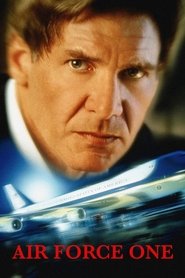
The real question is, does somebody else have a voice in the casting? No, it's all my voice. I mean, I cast the picture, period. And he was your first choice for that part? Yes. I mean, I would, of course, call Harrison Ford and say, Harrison, my idea for that is Gary Oldman. Is that okay with you? And he said right away, absolutely, yes. So, you know, if you have a movie star like Harrison for the main two, three parts, you double-check with him. You don't want to have somebody, when he feels totally uncomfortable, I wouldn't do it.
9:49 · jump to transcript →
-
This is a real plane, right here. This is a real plane, yes. This is the 747 that we rented and painted. And later on, when we come to more to the dramatic stuff, then I will tell you, always when this is the real plane, this is the model, because we had a huge model, but really big, like, I don't know, like 10, 12 meters long or so, really long, big model.
15:45 · jump to transcript →
-
enlarged a little bit because so many scenes laid on so many people there. But it is exactly the same room, just a tiny bit larger. This is a soundproof room also. When we were on the real Air Force One, we closed the door. It was really nice and comfortable there. Because when they have their conferences, they need a little bit quieter there.
19:42 · jump to transcript →
-
-
-
All of the sequences that were historic in context required a tremendous amount of research because we reenacted these perfectly, which required finding cast members that looked exactly like the people who were in the real live footage and recreating portions of the event so it looked like at one time you could be watching the real event and another one a recreation of it and not be able to tell the difference between the two.
23:32 · jump to transcript →
-
It always makes you feel great when you know that you haven't just created a setting that doesn't look like the real thing. And also in this area here, there were actual water moccasins that had to be cleared out before these guys went in there. Yeah, I think we put some charges in there to wake them up and scare them off, didn't we? The day we shot. That's right. And also some chain link down.
46:23 · jump to transcript →
-
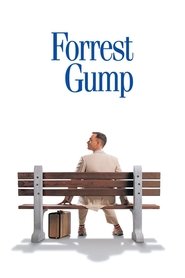
planes had to be shot in two parts. One where we actually had Forrest or Tom Hanks running carrying Michael T. And then we cleared everybody out of the set and set off these explosions here on this island in South Carolina. And then blended the two parts of the shot together to look like he was actually running through the scene with the real explosions. And isn't there a rig also helping him carry Bubba?
55:01 · jump to transcript →
-
-
-
Michael Mann
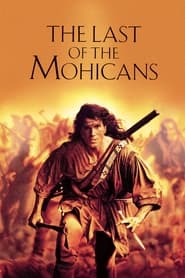
each one with seven or eight cannon. And these cannons, in real life, weighed about 20,000 to 30,000 pounds, and they were 32-pounders. And they had a range of about 500 to 600 yards. And there's a specific strategy. These are called gambions, the wicker devices that hold the earthworks.
35:46 · jump to transcript →
-
Michael Mann
and built the fort partially out of some of that lumber. So the fort was built as a real place on three sides, interior and exterior. All the work on built the set for something under a million dollars, they had the benefit of being real and practical. So when they enter through a sally port, as they're doing right here, into the interior, we really are walking into the interior of the real fort.
38:10 · jump to transcript →
-
Michael Mann
And if you look at the braid on General Montcalm's coat, they have woven in shadow as if the braid, in fact, three-dimensional and cast a shadow on it. This is also highly accurate and elaborate, but it's not the kind of thing you could just rent from a costume house. You have to do it yourself, which we did. And it was, again, one of those fortuitous circumstances, such as the fort, where either the real uniforms didn't exist
1:04:41 · jump to transcript →
-
-
-
Tony Scott
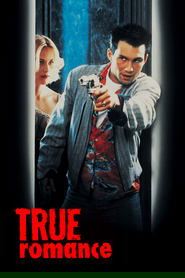
And, you know, people say to me, God, it's such a great movie, you know. But honest truth is I have to give the real applause to Quentin Tarantino because he's the guy who put it on the page. And this is the first movie where all I did was to support what was on the page in terms of my casting, in terms of my look, and in terms of my styling and how I shot the movie. But it's a much easier process when you have a blueprint which you're so confident about.
6:43 · jump to transcript →
-
Tony Scott
I was originally gonna shoot in the real hotel room, but it was too confined for what we had to do in there, especially with the scene that was about to come up with Patricia and Virgil. And so I photographed the shit out of this hotel room and then said, okay, it needs to be a little bigger here, a little bigger there. And I always try and find some sort of concept or theme. The hotel room that we photographed did not have a Hawaiian sunset on the walls, did not have a four-poster bed, but I kept thinking about elements that I could use
1:02:07 · jump to transcript →
-
Tony Scott
except it's more deluded, you know, it's better. Again, I constructed the set. The set was based on that set, the Sahara Motel, which was the real motel down off Van Nuys in the valley. But then I put the Hawaiian motif on the walls and put mirror on the ceiling because I knew that when I was storyboarding the sequence ahead of time, I knew that I wanted Patricia, who'd been badly beaten, to be able to see the elements in the room.
1:19:28 · jump to transcript →
-
-
-
came in television, most notably in the pilot episode of the TV series Lancer, which Quentin Tarantino fictionalized the making of in Once Upon a Time in Hollywood. The TV show within the movie that Leonardo DiCaprio is making is, in fact, the Lancer pilot, and DiCaprio is playing the role that Joe Don Baker played in the real pilot, albeit under a different character name. Baker was a staple of television westerns like Bonanza and Gunsmoke.
9:15 · jump to transcript →
-
Something I didn't know is he was married to Joanna Going and Melora Walters. I didn't know anything about his personal life. But also in that scene, well, here we have James Caron, who is, I know him best as the bad guy in Poltergeist. He's the real estate developer in Poltergeist. He's also in Return of the Living Dead. He's a great horror guy, but in a zillion things. I think he's in all the President's Men, all kinds of stuff. Yeah, I mean, he's been in more things than Stuart Penkin. He's in a lot of stuff. Mulholland Drive. Mulholland Drive. Yeah, and also every TV show, you know.
15:20 · jump to transcript →
-
ton of things. But also, so Dylan Walsh, he's playing a character named Peter Elliott, but the gorilla choreographer on this movie is Peter Elliott. And Crichton kind of cheekily says it was not based on the real guy. I think that's probably true date-wise. But anyway, he's like the guy you call when you need any consulting on apes.
15:48 · jump to transcript →
-
-
multi · 2h 19m 5 mentions
Martin Scorsese, Nicholas Pileggi, Ray Liotta, Lorraine Bracco + 9
-
shot purse and a beret and a writing crop. I am the von Stroheim of my book. That's my book. I put the music in if I want music. I cast the book. I describe people I want to do. The movie has nothing to do with the book except it is the basis of the movie. But the vision of it and the mood of it and the color and the real casting for the movie, all of that's the work of the director. What the author of the book has to do
15:05 · jump to transcript →
-
And I think it gets you as close to the real world of living the gangster life as just about anything. It really happened. And people can remember Lufthansa. And they can remember the suite where all these things took place. They actually took place. So, I mean, mob guys all use this to be mob guys. Because that's what a mob guy is. You know, he's Bob De Niro.
1:00:41 · jump to transcript →
-
You gotta see this show. What a performer. He does these impersonations. I swear, you would think it was the real people. Oh, it's unbelievable.
1:01:26 · jump to transcript →
-
-
-
Paul M. Sammon
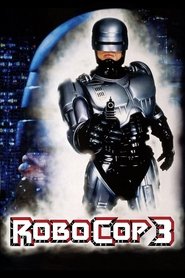
I spent a whole night with the ammunition crew just loading cartridges into clips. And it was hours. The most boring thing I ever did. Really something crazy. Now here we get an idea of kind of like a combination of the real and the unreal. The gun is real.
5:36 · jump to transcript →
-
Paul M. Sammon
And by the way, this is Houston City Hall, the real city hall that they're using for this press conference. And again, you're seeing a bit of the degradation that Peter Koran used by refilming stuff on videotape and slightly treating it to make it look like you're actually watching it during one of the media breaks. This is a complete map painting.
1:30:29 · jump to transcript →
-
Paul M. Sammon
but really it was pulled in real life on location by fishing line. Okay, now begins the giant, giant, incredibly impressive stop motion showdown between Robo 1 and Robo 2. The weapon that Robo was holding there is an actual 50 caliber sniper rifle. There were a number of amazing weapons, amazing being at least in the sense of
1:36:39 · jump to transcript →
-
-
-
It morphs into the real surveillance camera footage, and then you're able to geolocate the people, which is also, I think, a first in a film, being able to locate people this way and to find they're able to track down the perpetrator remotely. And obviously, they've never seen anything like this, so that's Rob Schneider throwing up, actually.
19:50 · jump to transcript →
-
making fun of the star spangled banner always always name your villain simon so they can do the simon says runner it's always gold now they've never seen anything like this before he's already figured out how to do this yes sandra bullock has seen this in movies but she's never seen it in real life an actual explosion
28:04 · jump to transcript →
-
sets everything in motion. Yeah, the original scripts, they just had it, but they didn't play up the real, I tried to play up the contrast really, really a lot. Oh, and I love this. This is the biggest laugh of the movie coming up. With the child. With her going, fuck you, lady. But I told the Warner Brothers wanted to change it to screw you, lady, and we had to fight for it. Is that true? Yeah, absolutely.
31:28 · jump to transcript →
-
-
-
That battle armor, all that Ripper material that was designed by Stan Winston, I mean, just brilliant. It was funny. I was always in makeup for 900 hours in the morning, and then the Rippers were in makeup in another room for 900 hours in the morning. I never saw Ice-T and all those guys without their costumes on. No, for months, never. But they saw me in real life, right?
39:09 · jump to transcript →
-
But I never saw them in real life, but they didn't know I couldn't see them. Do you know what I mean? Yeah, exactly. But they'd come up to me afterwards and say, like, hey, Lori, you want to go have a drink? And I would have no idea who that was. And, like, you know, he's, you know, Reggie. You know, it's Reggie Cathy. And I'm like, I think I know your voice. He's like, what are you talking about? We've been working all day.
39:38 · jump to transcript →
-
Well, still am, but really as a kid, I just loved musicals. And so I'm like, I'm going to do a Busby Berkeley, and I don't care. I don't need any justification. I'm just going to do it. I love this Cole Porter song. And we made up new lyrics to the Cole Porter song, and nobody ever said anything. Ouch, right there I cut my finger off in real life. Oh, that's right. You were really bleeding. No, really. And then you'll see me hiding my cast. But fortunately, of course...
52:51 · jump to transcript →
-
-
-
Alexander Payne
They're actually windowless in the Midwest, largely to save on heating and cooling costs in the winter and summer, respectively. But it also gives a sense to high school, gives a visual sense of high school being a factory or a prison, which then asks the question, who are the real prisoners? And maybe it's the teachers, not the students. Preparing them for the tough moral and ethical decisions that they'd face as adults.
5:24 · jump to transcript →
-
Alexander Payne
being a little kid still, and especially in this sexual situation, as being largely victimized. Since I grew up without a dad, you might assume psychologically I was looking for a father figure. And this really is the yearbook office in that school in Omaha. And he made me feel so safe and protected. Papillion La Vista High School. When was the first time somebody ever saw the real me?
10:32 · jump to transcript →
-
Alexander Payne
I want to point out that Reese actually fell and did that little stunt very well in one take. She didn't want to rely on a stunt person, and I didn't want to have to do that either. I like seeing the real thing, and we patted her a little bit, but she did it.
46:48 · jump to transcript →
-
-
-
Someone I got to work with, Maureen O'Hara... ...on a picture right after this... - Mm-hm? ...SO... - I did a day on that. Yeah. We cut your big scene with John Candy. You cut all my lines out. - Yeah. It was kind of like we were trying to duplicate Uncle Buck. Yeah, yeah. - I remember that, and it was just kind of... Felt like we had been there, in a sense. Um.... More people saw this picture, so you're Okay. Yeah, no, I'm.... Thanks, Chris. Now, this... - Ha-ha-ha. Thank you. We resorted to stock footage for any shots you'll see of airlines... ...coming up, shots of Paris. We had no money to go shoot those things. And this was a set that already existed... ... that we put back together so we could actually shoot. The, uh-- This is first-class when you could actually have real silverware on the plane. Yeah. - Yeah. Most of our sets, incidentally, were in a... A lot of them were in a high school outside of Chicago. We shot Uncle Buck there too. - New Trier High School. Yeah, yeah. - And, um.... Some of the sets-- I'm trying to remember where the house set was. We were in some warehouse, weren't we? Or was this New Trier as well? It was in the gymnasium. - Yeah. It was all in that school, the interiors. - Gymnasium. We also shot a lot at the house, at the real house. Oh, yeah. - The second one... ...[I think we spent half a day in the real house. Because they... The people who own the real house... ...wanted a little more money in the second one. Everybody wanted more in the second one, and rightly so. Me included.
18:20 · jump to transcript →
-
There's a Barry Bonds baseball card. - Yep. For those who wanted to see Barry in his younger, thinner days. Um.... Now, this was actually the real house here, which was in Winnetka, Illinois... ...and, um.... It was interesting because we were... We were able to shoot a great deal of the film at this house. None of the interiors that you see in the film were shot here... . UM... ...but this house worked out very well for us. Strangely enough, you know, with today's budgets... ...we would've built the back of that house completely... ...because the fact that we did all of those stunts later in the film... ...on the actual location was just ridiculous. And they were very friendly. - They were great. They had T-shirts made up. - They loved it. They used to have hot chocolate and stuff for us... ...and invite us in. They were great. They were a great family. It's incredible because I see... ...the things people do to people's apartments and houses... ...when they rent them out, like, you Know, for production. I'm like, "I'd never do that." - No, I know. Once you learn... Once you've seen it done, you know... Not to discourage any of you guys out there listening... ...to renting out your houses to future productions. But make sure you're paid very well. - Yes. That voice on the answering machine was Raja Gosnell... ...who was the editor of this picture... ...who's gone on to become a director in his own right. I
37:15 · jump to transcript →
-
What money? These would sort of be our split days. We'd shoot you in the morning, the first part of this... ...and then later that night, we'd go back to the house and shoot. Plus, am I--? I think this is the real house... ...and then this is the sound stage, isn't it? Yes, exactly. - Yeah, yeah, yeah. So the, um.... But it really... In terms of shooting the film... ... It was possible to shoot it with someone so young... ...because you were separate from.... And that was really helpful. And we used this gag twice too. I Know, and it worked. It seemed to work twice. Although that's because Danny Stern just brought it to another level... ...when he's at the door coming up, SO.... Yeah, we used... Because of budget again, we used a lot of Chicago actors. This guy was one Chicago actor that we found in the city... ...and then later moved to Los Angeles.
48:28 · jump to transcript →
-
-
multi · 2h 24m 3 mentions
Alex Thomson, Terry Rawlings, Alec Gillis, Tom Woodruff Jr. + 3
-
So, yes, this is the footage of Charles Dance's character approaching, finding the Ripley character on the beach. For this scene, we at Amalgamated, with our U.S. and British crew, had to build a replica of Sigourney Weaver. And it was based on a life cast of her, a head cast only. She had just had a baby when we had a chance to do it. That's actually-- I believe that that is an actress, although I can't tell if that's a stand-in or our dummy. But that, of course, is Sigourney Weaver. But she had told us that she would be losing weight, so we had to... She had just had the baby and we had to extrapolate what her body would look like, and so you can see how accurate it looks in these shots. There it is. There. That looks just like Sigourney. It's funny, because we really labor over a lot of these things and that's the real Sigourney. So I think that's about it for the dummy. But it was a beautiful sculpture. Gary Pollard, who is a very talented British sculptor, sculpted that and it was used to save Charles Dance's back. So that he could carry Sigourney. Those are all the little lice. They're actually crickets, I believe, that ended up in Tom's suit. Because the crickets were all over the place and when Tom was wearing the alien suit, he had them crawling down his neck and into his briefs and all that. And in fact, there's a fake ox here, coming up, that was covered with the crickets as well. And even when we shipped all of our stuff back to LA months later, we opened the crate and there were full-grown crickets in the ox's body. So they're very hardy and tenacious little-- Just like the alien, I guess.
5:04 · jump to transcript →
-
The light coming from the top was a 4K xenon lamp, which gives you very straight beams, which I thought would be quite a good idea. I shot it up through a mirror because you can't tilt them down or the condenser burns. But we had a mirror above the set and I shined it from the floor onto the mirror. This autopsy scene was a favorite of Fincher's, too, because we had created a body of Newt that had multiple layers of tissue, skin and musculature that could be cut through, and the bones opened up. It's a lot of graphic coverage that's not in the final movie. The body of Newt was actually based on... Alec and I had done a life cast of Carrie Henn during Aliens, and while we were in London Bob Keen's shop actually had a casting of the head. We were able to get that and remold it, so we were able to duplicate what the actress had looked like some five or six years previously. There is intercutting here with the real girl as well. She has a lot of fuzz on her face. - Yeah. Backlit fuzz.
17:31 · jump to transcript →
-
And then we had Sigourney on the stage to shoot her in bluescreen, and she signed a picture for me "Help, get me the hell out of this movie!" "Love, Sigourney." - We see bald-cap shots soon, that were shot months later in LA. And Greg Cannom did a beautiful bald cap on her. More than a bald cap - it had to have that stubble. It was much more difficult than a bald cap. You'd think he'd done samurai movies with the quality of the bald cap. This was fun, having Lance back in the role too. And it's so brief, when Lance gets hit with this lead pipe. But we showed his ear had become dislodged, as Fincher wanted to show that this is the real guy, and not a synthetic person. The script had Bishop I and II. And to play the creator of Bishop, who would be this guy, I literally didn't have to do anything, as an actor, because to play the creator of a guy you make Bishop in your own image. You'd build an android in your own image. It's like when you read the Bible - it's God made man in his own image. And I thought the outrageous part was Fincher being... He was a young guy, 27 or something, and when he talked to me about this scene he was so articulate and so supportive, I was shocked, because he was such a young guy. He sort of saw inside you. It was a really amazing thing. For Lance's human character, when it's revealed that he is actually a scientist who the Bishop model was patterned after, Fincher wanted a wound. So we created a torn ear where the whole ear was lifted forward. And Nick Dudman applied that beautiful application on it and some blood tubes and that sort of thing. Obviously I've got flicker boxes working on these lamps, to give the effect of firelight and the hot furnace. You can just see it in the background. You can see the light fluctuating. Just giving the effect. Once again, it's nice to flicker on several sources at the same time, because if you do it just on one lamp, it never looks quite right. It's either too regular or too irregular. But if you use one more than one lamp at a time, it comes across much better.
2:12:22 · jump to transcript →
-
-
director · 1h 31m 3 mentions
David Steinberg, Dave Foley, David Higgins, Jay Kogen
-
Now, you came up with the premise of a guy on the run from no one. Yes. Right? Yes. On the run from no one. Yeah. And that where they know who the real killer is. Know who the killer is and he just runs. Yes. And we did have scenes that had the girlfriend in it. But coming up as, yeah, this is. And we have Mark. Yeah, but I remember giving you a note to.
9:04 · jump to transcript →
-
And we have the killer actually doing open heart surgery. Making an attempt. Yeah. To save the cops. Yeah. And it doesn't work. He's not good at it. He's not really good. He's not a doctor. No, he's a killer. He's an actual killer. He's the opposite. And they're consoling him so he can't escape yet. What's going to happen in this next frame is something that I do in real life.
42:50 · jump to transcript →
-
This is my wife's least favorite line is coming up. Uh-huh. Not from around here, are you? What makes you say that? Is that it? No. I've lived here all my life, and I've never seen you before. Oh, then no, I'm not from around here. Where are you from? Oh, that doesn't matter. The real question is, where am I going? Oh, where are you going? Can't say. Oh. Is that the one she hates? When she says, do you think I'm pretty? Yeah.
47:37 · jump to transcript →
-
-
-
We also had a mechanical baby that is in some shots that Stan Winston's people made, which was really quite wonderful. Obviously, all the close-ups on the face of the real baby. I've been accused many times of making things too dark. I personally don't think
6:16 · jump to transcript →
-
It took months and months to do. And hopefully it's considered worth it. Again, we had no shortage of actresses who wanted to do this role. And I kept on saying, you understand you're naked. You understand this is, you know, the real stuff. And they all said, it's with Gabriel Byrne. I said, yep. They said, we want to do it. If I had been in high school with Gabriel, I would have been a very, very good friend of his.
40:05 · jump to transcript →
-
This is the real thing. This was New Year's Eve. As cold as anything I ever remember. And this was shot in what was the old Herald Examiner building, the Los Angeles Herald Examiner building, which is a now defunct newspaper. Gorgeous, gorgeous old building. This scene obviously scared me.
1:29:38 · jump to transcript →
-
-
-
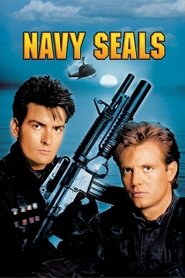
And they did this movie had it was a 16 week production and they did half of it there in Virginia, including their two weeks of training and like, you know, Navy SEALs type training. And then they did the other eight weeks in Spain. So we're about to go to, you know. I don't know if I'm guessing this is exactly where, you know, the real courses. I don't know what they were allowed to show, but it's supposed to approximate it, I guess.
41:53 · jump to transcript →
-
legit you had to kind of put your actors through that but i don't think i don't think anybody put him through as hard of a situation as stone did like stone really yeah i mean in that case he had been through it yeah in real life so i don't imagine he had a lot of sympathy but um paul sanchez was also in oliver stone's born on the fourth of july and he was also in zemeckis's castaway and a lot of tv uh one of the other guys on the team is cyril o'reilly um who was he he
1:13:11 · jump to transcript →
-
-
-
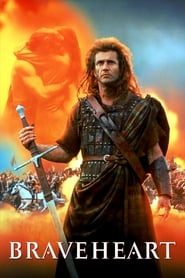
when they kill his girlfriend and he gets revenge is actually something that really happened. The sheriff, Lanark, actually did do away with his spouse. And when he went back in, he didn't just ride in slow and whack people on the head. He just burnt the place at night while they were asleep. He just did it right, you know? And he was very funny. The stories of him was that he always smelled of smoke.
2:20:46 · jump to transcript →
-
These are all the real clan guys, the real Wallace clan guys. They look real, except Brendan there. He's one of our guys.
2:47:10 · jump to transcript →
-
-
-
-
-
-
multi · 1h 54m 1 mention
Jean-Pierre Jeunet, Hervé Schneid, Alec Gillis, Tom Woodruff Jr. + 5
-
multi · 2h 12m 1 mention
Andrew Sarris, James Ellroy, Brian Helgeland, Michael Nathanson + 10
-
-


Related topics
Other topics that frequently come up in the same commentaries.