Topics / Writing & development
True story / real events
131 commentaries in the archive discuss this, with 408 total mentions and 26 sampled passages on this page.
Filter commentaries
Filter this topic by the film's decade or the type of commentary.
Showing 13 of 131 commentaries
Clear filtersBy decade
Across the archive
ranked by mentions · click any passage for the moment in the transcript
-
-
So now we're coming upon one of my favorite day players in the movie. Tell me where you found this guy. Well, he actually wasn't one of the real people who worked in the same role that he's playing in the movie. But he was from the area, and I don't know exactly how we discovered him or auditioned him, but he actually gets mentioned as one of the stars of the movie because he comes so early in the credits. So when you see the...
6:25 · jump to transcript →
-
Nowadays, in so many movies, you see boys at the age of 45. I mean, the world has changed. The world of movies has changed anyway. Maybe the real world has changed too. Well, I think about all that these guys have probably been through at this point. Certainly Dennis had been through in his life and his career. I think it's just a different type of character that...
8:47 · jump to transcript →
-
And I don't think I let the actors look at dailies. I didn't think that was a good idea. I'll relieve you in six hours. I feel good. I can take it all the way. That line has become, you know, one of those lines that you kind of like take over and use in real life as a kind of motto. I probably, at least once a week,
39:36 · jump to transcript →
-
-
multi · 1h 43m 7 mentions
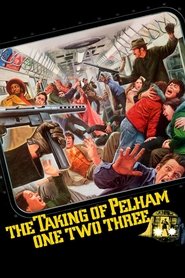
The Taking of Pelham One Two Three (1974)
Nathaniel Thompson, Steve Mitchell
-
even though it has the feel of a governmental kind of office, not deluxe in any way, it's a workspace. This was a set along with the set they are probably just about to enter, if my memory serves. Now we're going back to the train, but when they come into the TA Command Center, which again, until I saw that it was filmed at a studio at the end, I kind of thought it was the real thing.
13:22 · jump to transcript →
-
But, I mean, it's not so far off. You know, it's okay. Well, sort of caricature. Yeah, a little bit. That's not too far. It doesn't throw anything out of whack, I don't think. And this whole thing about, Al, you've heard the three wise men, and then he's going, what are they going to say, Warren? You know, wondering what the political ramifications are. And what's great is that Doris Roberts, with her ultra-dry, sarcastic delivery, gets the real payoff line.
42:37 · jump to transcript →
-
What happens with the long lens is it compresses reality. And sometimes if you have to cheat, the long lens is a great way to sort of pull that off and maybe fool the audience. But with Pelham, the value of this picture and the value of all movies that are shot on location, but also movies that were shot on location in the 70s where they never cheated the real estate. The real estate was, you know, one of the stars of the movie. And in a sense...
58:53 · jump to transcript →
-
-
-
Francis Ford Coppola
frightened of not getting the scene in time that I focused just on getting the real hardcore scenes, the meat, so to speak, of Al in the corridors. And I didn't shoot any shots of just the empty corridors. And so my friend George Lucas went through the footage and he said, well, you gotta have, to build suspense, you gotta have some empty corridors.
1:02:10 · jump to transcript →
-
Francis Ford Coppola
That actor along who has the lines in the background there is Sonny Grasso, who is one of the real fellows from the French Connection that that story is written about.
1:08:51 · jump to transcript →
-
Francis Ford Coppola
But really, although it has a dramatic purpose, you now know the real reason was Al couldn't speak Italian and I didn't want to have a lot of subtitles on the screen. It works good having the scene be translated. This is a very formal transaction going on here because if the word gets out that there's this young man who speaks English, there are obviously people who are searching for him.
1:42:14 · jump to transcript →
-
-
-
Nick Pinkerton
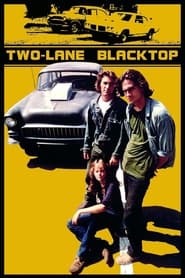
though that fake limp will connect to the real bum leg that Eastwood's character has and a very real limp that pops up later for Bridges's character. The car he's making a beeline for is a 1973 Pontiac Firebird Trans Am, identifiable by the big hood bird and the egg crate grill. As the used car salesman, here we have Gregory Walcott.
4:26 · jump to transcript →
-
Nick Pinkerton
and Schickel quotes from Wood. It is the essentially gentle Lightfoot with his indeterminate sexuality, his freedom from the constraints of normal gender roles, and his air of a pre-socialized child who constitutes the real threat to the culture. Finally, Biskind again. The lament, he says of the film, for an impossible and fugitive homosexual love
1:24:22 · jump to transcript →
-
Nick Pinkerton
got through. It is revealed that Thunderbolt, in fact, won the Silver Star in Korea, was all along the real hero, though he tried to deflect the attention. And the false hero, Red, meanwhile, speeds toward his final stand, which, as described, is a particularly gruesome one.
1:38:37 · jump to transcript →
-
-
-
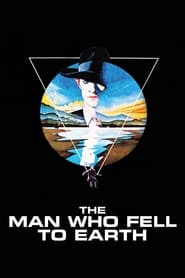
But I guess in reality, the reality is on the screen. The shadow was in the real life. If that makes any sense to you, I don't know. Yeah, it sounds rather like Verlaine, who said, I write stories and then let them happen to me. Yes, absolutely. The planned accidents of life. I couldn't agree more. Sure. Candy Clark is an amazing actress. I saw American Graffiti, and she was wonderful in Graffiti.
33:06 · jump to transcript →
-
It's a tremendous film in its sense of reality. All those young people were not like actors. They all seemed the real thing. And from a class structure that wasn't unusual, it was not rich, it wasn't desperately put, it was just like a wonderful... I enjoyed it tremendously. As a foreigner, when I was watching it in England, it had a...
33:36 · jump to transcript →
-
This was after publishing a novel or two that were highly thought of, and he was considered to be an up-and-coming major literary figure. And as his schizophrenia took hold of him, he became more and more part of the world he'd constructed, the crazy world, and less and less a part of the real world so that he finally wasn't able to write at all. And when...
1:12:29 · jump to transcript →
-
-
-
Roger Moore
Now, you might look at this and say, "Well, it's a.... Yeah, it's just a set." But it works. And it is the real thing.
22:01 · jump to transcript →
-
Roger Moore
Here's a beautiful set Ken Adam has constructed here. Matching in comple-- Tying in completely with the real exterior.
48:38 · jump to transcript →
-
Roger Moore
Before this film was made... ... nobody had actually ever made a space-shuttle launch. And if you see the real one today... ... you see this was extraordinarily accurate. I don't think by chance it was accurate.
1:45:16 · jump to transcript →
-
-
-
Francis Ford Coppola
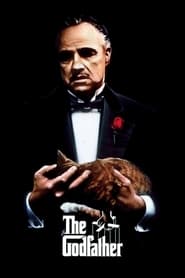
This is Dominic Chianese playing Johnny Ola, and much of this comes out of research as to what really happened with the various factions who were involved in the mob at that time, and not the least being the man that Johnny Ola refers to as our friend in Miami, who is none other than a kind of version of Meyer Lansky, fictionalized in the form of Hyman Roth.
22:17 · jump to transcript →
-
Francis Ford Coppola
Of course, Andolini is the real name of Don Corleone. And this action sequence, as they try to beat their escape, indicates how Don Tommasino was first crippled and why you see him in the wheelchair.
2:49:02 · jump to transcript →
-
-
multi · 1h 59m 1 mention
David Naylor, Guy Hamilton, Tom Mankiewicz, John Barry + 14
-
-
-
-
-
director · 1h 28m 1 mention
Don Coscarelli, A. Michael Baldwin, Angus Scrimm, Bill Thornbury


Related topics
Other topics that frequently come up in the same commentaries.