Topics / Writing & development
True story / real events
131 commentaries in the archive discuss this, with 408 total mentions and 69 sampled passages on this page.
Filter commentaries
Filter this topic by the film's decade or the type of commentary.
Showing 35 of 131 commentaries
Clear filtersBy decade
Across the archive
ranked by mentions · click any passage for the moment in the transcript
-
-
Under the circumstances, I think we'd recommend resetting the sensors to respond to a lighter load. How do you feel about 40 kilos, Miss Hall? Perfect. We want the movie to have the sexy feeling, but it's not necessary to see the real sex. Not because of the rating, because we all want this movie to look a little more elegant in every way. No matter the action, the sex, the love, or the good and evil, the thing.
16:31 · jump to transcript →
-
Is she going to betray Tom or suffering something or whatever, you know, just leave the question mark. And then leading the audience, follow the story, and then when they get into the biopsy scene, and then you will see her art, her change. And then they will give the audience a totally surprise, and then you will know who is the real love for Thandie and who she really loves, you know.
41:11 · jump to transcript →
-
the proper camera angle to bring out the great quality on the screen. And by the meantime, I like them to put the real experience from life, put it into the scene, into the character, and that makes the performance look more real, more touching. I love actors. I love performance. I like to see the great performance on the screen.
58:43 · jump to transcript →
-
-
-
E. Elias Merhige
And a lot of people were maimed and wounded severely on the battlefields of Europe. And after World War I, a lot of those advancements in opiates and drugs made their way onto the streets of Berlin. And the real Murnau was a fighter pilot in World War I. And he had crashed his plane twice and damaged one of his kidneys severely so that he from time to time took painkillers to
10:30 · jump to transcript →
-
E. Elias Merhige
that they're actually going and there's that frustration, that sort of friction between producer and director. Whereas in real life I had absolutely no friction between my producers and myself and I feel that Nicolas Cage and Jeff Levine were absolutely wonderful to work with and I look forward to it taking place again. I look forward to working with them again.
13:48 · jump to transcript →
-
E. Elias Merhige
Han Budala is a Slavic word meaning the inn of the fool, and that corresponds to the tarot card of the fool that Albin Grau, being the esotericist that he was in real life, was very fond of the tarot and carried a tarot deck with him. Even on the set he had it with him. How long have you been here? Not long.
16:29 · jump to transcript →
-
-
director · 4h 13m 7 mentions
The Lord of the Rings The Return of the King (2003)
Peter Jackson, Fran Walsh, Philippa Boyens
-
mercenaries from the coast oh who's that handsome fellow in the middle with the rather authoritarian looking corsair it's captain backwards oh that's terrible oh dear oh dear there's no respect however you wait till you see the real scene that's coming up later in this extended edition it's like back to its full glory but we have the white wizard that's got to count for something
54:16 · jump to transcript →
-
Faramir's duty, obviously, is to hold Osgiliath, which is really on the outskirts of Minas Tirith, the real target of the orcs. But to get there, they have to take over this ruined city. And Faramir is fighting as desperately as he possibly can. And it was important that there was nothing about what Faramir did that was a failure, that he was ultimately overwhelmed by the numbers of orcs. He just could do nothing about it. The size of his force was dwarfed by the enemy that they were against.
1:11:01 · jump to transcript →
-
This was later. A couple of these shots were later, yeah. And that's a transfer from a digital double to Sean Astin, where it's a digital double rolling off the back, and then when he lands, we do a little morph into the real actor.
2:25:05 · jump to transcript →
-
-
-
It was really great. They were all getting on the floor saying, you know, is this what we do? Are we supposed to? This is what they do on television. They were completely frozen. Well, it's sort of become reversed because I think in the beginning, people were, you know, in the 70s, TV shows were sort of writing what was happening in real life. And now people, these things happen in real life and they react to it like it's a TV show. Exactly. They've all seen too many movies. I wanted to say one thing, too. I love how with the face mask and the pantyhose on his head. Yeah. It's...
15:35 · jump to transcript →
-
for any sort of comparison. Or thank you for the compliment. Oh, please. This is an insult. But Jeffrey was so funny in this scene, putting the hand against his head. Did a great job. And it's a good thing that most people don't know straight off the bat that he's really Juliette's father in real life. Yes. No, nobody knows that. Every time I tell people that, they're surprised to hear it. Actually, Juliette was surprised to hear it. We had to do a blood test on the set.
34:27 · jump to transcript →
-
And all these names are mixed up first and last names of guys that I used to work with at a detective agency run by Joe Sarno, the real Joe Sarno. Yeah, I was gonna ask you about Sarno. I guess it's come out that Sarno is also the name of some Joe Sarno, like a pornographer. That was completely coincidental, right? Well, believe me, Joe Sarno was certainly surprised to hear that, and he was reading press on the film. Right. And here I am. I thought you named him after me. Oh, sorry.
34:57 · jump to transcript →
-
-
-
Part of the reason we didn't shoot this stuff in Egypt at the real locations is because this is in the 30s when this was supposed to take place. Everything looked different than it does now. Not everything, but now there are skyscrapers and Abu Simbel has been moved completely. They had to brick by brick take it apart and move it across the river. So we wanted it to look authentic. That and the fact that we were banned from Egypt for...
8:55 · jump to transcript →
-
paid Allan Cameron, my production designer, to leave everything because it's actually, doesn't look, they don't have any of these lamps or rugs or it doesn't look anything really like this. It's really beautiful here. And the real thing's a little cold. No offense, guys, but. I think this house was used in The Omen. I think that was about the last time it was used, yeah. Right on the lot, very convenient. Nice try.
22:52 · jump to transcript →
-
a roller in the background that creates that feeling that they're passing lights and such on the city street. We actually shot this outside of London City College because the real British Museum is having a makeover. They look very similar, actually, the exteriors, but the real one was having a makeover and there's all this really bad mobile homes and dumpsters and stuff like that and scaffolding outside the real one, so we used this.
34:09 · jump to transcript →
-
-
-
Noah Baumbach
These are the Team Zissou interns, who are all typecast. One of them is an actual intern of yours, or was. Yes, Matthew. Matthew Gubler. Cousteau was always an interesting figure to us because as kids, we idolized him and watched his shows. But he was one of those characters that seemed just like a... You know, a star incarnate in some way. You know, it was like Jacques Cousteau, Evel Knievel, and, you know, Bill Murray or something. And I think the... Zissou, what was fun for us writing this was, sort of, Zissou in some ways is like a kid's idea of what an adult is. It's sort of like-- Or what a celebrity is. And then at the same time, we're dealing with a character, Zissou, who is in some ways, you know, has to get in touch with his own humanity, his own past, in some way strip away this identity that he's created for himself. Right, yeah, right. We always liked the idea of starting-- The idea of one of these movies, which I guess you generally associate with a kind of like ABC special, you know, that's where we saw them on television. And you generally associate them with TV or sort of educational films. But we always liked the idea of this playing a world where this kind of movie would play at a major film festival. Yes, yes. It could be-- It's a world where there's such things as hit documentaries. Right. - Although there actually are now. Fahrenheit 9/1 1. - Documentaries-- Remember we called them-- We like the idea that they might be called swimming films, but I don't know that they ever made it into... We never quite got swimming films in there, a genre. The festival director is played by Antonio Monda, a friend of ours in New York, who's a teacher at NYU, a film professor, and who also hosts a kind of a salon where he has people over, all sorts of interesting people over to his house, and a good friend of ours. And we wrote this part for him. Yeah, we always... Somehow it just seemed like Antonio would be this guy, I think, who, you know... He's done it a million times. At the MoMA and the Guggenheim. And he's Roman. Right, so you knew he could speak Italian. And at the premiere of the movie in New York, he introduced the film before the film. In very much the same way. - Yeah. This is the opera house in Naples, the Teatro di San Carlo. It's a great setting for something, and we always liked the idea of the film festival being set in a place that's like an opera house, and in this case it is an opera house. Isabella Blow plays Antonia Cook, the new head of the film commission. I had, I guess, first come in contact with Isabella when I was at Brasserie Lipp in Paris with my girlfriend, and she walked by and looked at us and said, "Très sexy." Beaucoup de sexe. - Beaucoup de sexe. And I came back and told you I'd seen this very interesting woman, and you said, "Would this woman be out of place in a matador's outfit?" Yes, because I had seen her previously in a hotel lobby in Paris where she was dressed as a matador. It was amazing my story was so specific that you knew exactly who it was. And it was her. We're here at a film festival, which can be the most awkward thing. You're in the midst of all these people watching, and in the case of this character, it's exposing all these different problems that he has in his life that are kind of just laid out in front of him over the course of one miserable evening. We'd talked about 8 1/2 as in some ways an inspiration for this, the Guido character that Marcello Mastroianni plays, because he sort of-- That movie opens with a dream, it's different, but at the spa, he's sort of faced with all these people from his life who keep kind of appearing. Here it's less surreal, but it's, you know, Steve is sort of dealing with, in some ways, every aspect of his life. Yeah. It is surreal to go through the experience of presenting a movie in this kind of context. - Right. The one thing I think that-- We often talk about all the-- We're both big movie buffs. We often talk about the movies that have influenced us and the different inspirations, but for this movie, for me, in the end, a lot of it has to do with my own feeling about making films, and just the luck of being able to do it and being in a situation to have been able to make some movies, and how, for me, that's just the central event of my life was, you know, getting to do this. Right. - I feel like that's part of what the movie is about, is somebody who is-- That is, the thing that kind of clicked with him, getting together a group of people to go make these things. Mm-hm. You know, there's something kind of magical about movies to me. And Steve is dealing with, in some ways, the toll that... I mean, he's sort of at a point, you know, unlike you, I guess, where he is not sure what he wants to be doing next. You know, these... You know, at a real sort of crisis in his career and his life, and also dealing with the fact of the toll his career has taken on his life. ...my little nephew, Werner, he wanted to meet you. How you doing, Werner? He brought you a present. A crayon pony fish. Steve Zissou is obviously and clearly partly inspired by Jacques Cousteau, but just as much of an inspiration for him is Bill Murray, who I had gotten to know for a long time and who Noah also knows. And... I remember when we were writing, we were sort of in the middle of this scene. You had actually seen a movie with Bill, I think, at the Sunshine Theater. And you had a... You could tell that story. The guy came up to Bill... Yes, this is interesting. Bill and I had an episode where we went in to see a movie at a theater on Houston Street. And while we were-- You know, we went in, some kid said hello, and then when we came out, there was a gang of kids who were waiting there with things to sign. Rushmore DVDs and Bill Murray paraphernalia. And Bill was signing all the things and we talked to the kids. And then-- Should I tell this? And then at the end of it... It was funny because one of them then came up after we finished and came up and asked Bill for $10. And Bill said... "Get lost. Get out of here." And the guy turned and walked away. And it was funny because there's something about the way Bill handles that situation that is in Zissou, and I remember when we were filming it, I said, "Well, the way you really said it in real life was like this." And then Bill went into some crazy hysterics over the idea that it was something that had happened. He had no memory. - He had no recollection. But I'm not sure if this story should go on there or not. An abridged version of it maybe, or maybe not. Yeah. Don't put this in until Wes has maybe called Bill and asked if it's okay if he puts it in. Well, Bill badmouthed me in Esquire saying he'd kill me if the movie wasn't one of the best films of all time. Oh, really? - Yeah. He didn't run that by me.
2:21 · jump to transcript →
-
Noah Baumbach
This is his ship, the Belafonte. We bought this ship in South Africa and sailed it up to the Mediterranean and renovated it and made it into this research vessel. It never ran that well, but we really did fall in love with this ship. The crew of the film was always very sort of loyal to it. Now, we have Michael Gambon, who plays Oseary Drakoulias, the producer, a sort of Carlo Ponti, Dino De Laurentiis-style mogul, although he does produce these documentaries. He has the longest fingers that I think I've ever seen in real life. He understands. Amin needs to make a projection of the world grosses to see if he can get a tax break and run it through his output deal. I think that Zissou sees himself and wants to be the kind of person who gives kids secret messages in the cereal boxes. Right. That's an inspiration for him. And the movie is about this, theoretically, a real person, but he's inspired by a sort of fantasy version of himself. And there's things sort of peppered throughout the movie, but this whole red caps and the uniforms and the whole thing. And Owen, in some ways, is our stand-in, I mean, of the child who looks up to this person. And I think another layer of that that we were always dealing with was how our cinematic idols in some ways were like surrogate fathers for us. Movies we loved that sort of took the role of things we looked up to, things we sort of wanted to live vicariously through. And I think Owen and Ned's character sort of stands in for that. This is a kind of an unusual role for Owen Wilson, I think. Right. He has a sort of recognizable comic persona that he's developed. And this is, I think, very different from that. I think when we were writing it, we often talked about that even though Ned was, as written, very naïve and kind of an innocent, I think there's always a kind of somewhat devilish nature to Owen. You can see the light is on behind his eyes all the time. There's some Zissou in him. Yeah, that's interesting. And I think also it made us feel more comfortable writing such a naïve character because I think if it was played too much that way, it would kind of wash out. Yes, and I think Owen's concern was, he was like, "What am I gonna do?" Because he felt like the character is so innocent and so sincere that he's not used to playing someone who's that sincere. He usually plays somebody who's a little bit wily on some level, or something like that anyway. And I think for him, when he really became comfortable with it was because we were sitting on the roof of this hotel in Rome, and he told me this funny story about Will Patton on the set of Armageddon, and he did Will Patton's voice, this southern accent. And I asked him, "Do you think you could do this whole movie in that voice?" And what he ended up doing-- He liked it. We read through the whole script reading all his lines with that, and it was funny and it gave him a sort of genteel feeling and something a little bit not quite real. And the accent's certainly not real. The accent hasn't existed certainly since the Civil War. Right. - Even if then.
9:42 · jump to transcript →
-
Noah Baumbach
This to me, this scene where Owen is shining his shoes, was sort of one of the key scenes of the movie of their relationship. He asks him very directly about... why he never sought him out. And there's something in the dynamic between Bill and Owen in real life that's reflected in this. When we were shooting this scene, Owen, who went to military school, he said they had some stuff for him to shine his shoes with, and Owen said, "We always just used a cotton ball." So we said, "Well, get him a cotton ball." And then he sat there, and while we shot this scene for a couple of hours, he shined those shoes the entire time. In between the takes, he was shining the shoes the whole time. He was very carefully shining the shoes, and he was, I feel like, connecting with something from his past. And I love both of them in this scene. This is one scene where I feel like they've really brought more than what was written or anything. And then, of course, we have this correspondence doc which has now arrived. Which, again, I guess it sort of plays into Zissou's need to sort of name things, and classify things, identify things. It's also a correspondence doc, a sort of, you know-- I get fear of intellectualizing too much, but it is sort of almost like a uniform. It's a way to identify yourself in a formal way. Yeah, and in this case, he's renaming him in a way he prefers. Right, it's a way for Zissou to kind of, yeah, exactly, create his idea of Ned. Now, you know, sometimes I feel like maybe we needed to give more time to Jane. There's a backstory for Jane about an editor that she's had an affair with, who's the father of the baby. It's really just barely hinted at. But hopefully it's enough to say, well, here's this mystery of what's going on in her mind.
31:02 · jump to transcript →
-
-
director · 3h 29m 5 mentions
The Lord of the Rings The Fellowship of the Ring (2001)
Peter Jackson, Fran Walsh, Philippa Boyens
-
guiding the ring on there because obviously this concept that the wraiths know where the ring is once you put it on your finger they can sense it and they can go after you and we thought well the ring is going to want to get on his finger as fast as it possibly can this stuff was pretty tough to visualize wraith world you know the twilight world of the ring the first thought was the real world is that a positive image then wraith world was the negative of it
1:02:09 · jump to transcript →
-
Every single ringwraith cry is actually her. Peter? Yes, it was five years of Lord of the Rings. It was all... Peter just told her that he'd bought the rights to the Silmarillion and she just didn't stop screaming for two hours. What really happened was that we didn't really have a cry which had a huge amount of energy behind it. So I knew what was required, but I had a throat infection at the time. So I said, look, I'll just...
1:05:19 · jump to transcript →
-
We had a forge and we sort of used to heat the swords up, hand them to the orcs who couldn't see very well. They were sort of waving these red hot bits of metal around and whacking them with hammers. But it's funny because things like that, you ultimately can't really figure out a good way to fake it. And you've got to use the real thing. And they, the foundry guys, were dressed up in orc makeup. That's right, yeah. The orcs themselves were the foundry workers that we dressed up as orcs. That's right. Lurtz is a character that we developed for the movie. He's not in the book. And, you know, the reason...
1:17:02 · jump to transcript →
-
-
-
And it was very fun and it all, sort of, interconnected, which was... Matt knowing the guys from the band made, sort of, I think, his performance more fun for him. The fact that the band that wrote the song was actually playing... Playing the song. It makes the scene look real. I hate these movies where you see four extras who were put there on the day, who can't play their instruments, pretending to play along. These guys were actually playing the real notes. There's Alec's least favorite thing in the movie. That purple toilet paper. The purple toilet paper which only exists in Europe kills me every time I see it. Also, watch this European toilet with the top flush. No toilet in America... - Like they have in Ohio. No toilet in Ohio flushes on top. But on the wall, by the way, were some comic books by some friends of mine, I'll shout out to them. One of the weirdest things about making a movie is everything has to be legally cleared. So if you see a book or a poster ina movie, everything has to be legally cleared, and we spent... Including this commentary, which no doubt will be censored. But everything you're seeing on the walls, toys, things on the table, whatnot, had to be cleared, and we spent more time clearing things and trying to call in favors from people we knew who had posters of things. There are actually... - Is this how real movies work? There were actually pieces of this scene that we had to cut because I remember there was a toy that didn't clear... and I'm probably not legally allowed to say what toy it was... sitting on Scotty's desk and we couldn't use... It was a toy from the movie Out Cold. But, yeah, I mean, we spent a tremendous amount of time trying to clear this, trying to clear college names. Also a special thank-you to my parents who went to the Cleveland Indians store when we had nothing to put on the wall. - And spent like drunks. Yeah, spent like drunks and shipped it all to Prague.
11:53 · jump to transcript →
-
The shot just before this, the one outside, we actually shot at the Prague airport, which is another advantage to shooting in Prague. I don't think there's any way you could get a camera crew right on the departure gate of an American airport anymore because of security. Of course, one of the downsides of shooting at the real airport in Prague is that we had our day curtailed by a bomb threat. Bomb threat, which I still maintain... - Potato, potato. I maintain may have been because of us, and there was no bomb. There was no bomb. - I'm sure some... A grip left a bag of clamps somewhere and... But that was another scene, too, where, when we look at it, there was sort of a way of shooting it, two different ways of... We started shooting them sort of looking out where we were shooting into those boring offices, and obviously the prettier shot... I know I'm talking backwards... In hindsight, we should've shot the other direction. We should've shot in the other direction, because when they do turn around, you see that background. And again, these are lessons that were sort of both imparted to us as we were going along by our wonderful DP, who we should mention, David Eggby. - David Eggby, who saved us from ourselves every day. And there's a certain amount he can tell us, which he certainly did, and there's a certain number of times where we have to be wrong before you learn and certainly that was an example again, something we did where... The other thing in the deleted... - He warned us and we didn't. In between the courier counter and this scene, there's some fun stuff in the deleted scenes, which is they realize that they're gonna have to take all these courier packages, so they don't know what to do with all their clothes. They have to wear all of them onto the plane and through the airport. There was about 15 minutes of stuff which... Decide for yourself whether it works or not. It didn't work in the movie, but it's fun to look at. And by the way, Jacob's T-shirt says, "I'm rocking on your dime." Travis owned that T-shirt and we thought it was funny, so we put it on Jacob in the movie. These transitions-- That's my dog. These transitions were... That's my queen of England. - That's your beaded London flag. Yeah, it goes on the back of my cab seat. These transitions were also done by Kyle Cooper at Prologue. There's a few more of them coming up. You'll see. And this is our first big visual effects shot. Yeah, this was an amazing debate. That's not the real Jacob Pitts. That's a robot. This was shot in Prague by... There's a big river in Prague and that's all real. That's real. And we put a little British flag there, and basically the background was replaced. Not in these shots. In that shot. - In that shot, the background is replaced because on that side, I think, was... Is that where our hotel was? I don't remember. No, we were further down. - Further down, okay. And I guess we should mention Kevin Blank, who was our visual effects guru supervisor, who we found from the TV show Alias, where each week they do a lot of really amazing things like this. Right. If you look in the background, you see the buses on the bridge. The bridge is real and the buses are real, but the stuff behind that is not real. But the flag, for example, I don't think that's real. They added that. If you look at the clouds move... - There's cars moving on the side. The clouds are moving. They put those clouds in. And what Kevin allowed us to do, besides being a really good guy, as everyone on this movie was, he let us do a lot of big effects like that on sort of a TV budget which allowed... This was a "smaller budgeted movie," and it let us do some special effects without bringing in these, like, big effects companies where it would cost a lot of money. By the way, this is about the time that we should mention the Feisty Goat. This is the Feisty Goat pub. And we saw the sign out in front, which we misspelled. I think this is the right time to say that Alec, David and I went to Harvard and we didn't know how to spell "feisty." We spelled it wrong in the stage directions. Spelled it "fiesty." - The guys who made the sign just took our spelling. We showed up on the day and the crew was laughing and we couldn't figure out what they were laughing at. We shot an entire day without anyone noticing and on day two, people realized. - No, they knew. Did they know? Okay. - Oh, yeah. They were laughing their asses off at us. And then finally, it was like, "Did you guys know?" And they're like, "Yeah." - And this is the incomparable Vinnie Jones who, when we wrote the part of Mad Maynard, the chief hooligan, we hoped that maybe we could get Vinnie Jones. We wrote it with Vinnie Jones or a Vinnie Jones-type in mind, never thinking that we would get the real Vinnie Jones. The dream being Vinnie Jones or someone that would rip Vinnie off. And the pleasure of getting him was just so great. It was amazing. He scared the living daylights out of these two. They're not... This is, again, method acting. We told Vinnie that they were really... that the kids were really scared of him, and he did nothing to make them feel at home for this scene.
18:35 · jump to transcript →
-
And this we shot the same day that we shot Jeffrey... We had Jeffrey Tambor for one day. So we did the high school and then we ran down the street to this... It was about as close as we could find. Looks a little European, but it's okay. We thought that scene was gonna go when Scotty appears at the Vatican. But we ended up moving it... - We moved it up there. And something that makes me laugh for no reason. The mom there is reading this Jackie Collins book, which we cleared. And as the only book we cleared, that book appears a bunch more times. Scott's reading it a little later. It's the one book that's seen in this movie. A couple of these guys are English and a couple of them are Czech. The closer guys are actually English, which helps. And these guys were really good. I mean, the guy on the right there. John Comer. - Wow. That guy, who really makes me laugh. And these guys are really good. They found the camera. This was on this highway... We shot this on a moving bus. We're trailing the bus behind a big camera truck. And when we wrote the movie, we didn't realize how insanely difficult shooting on a moving bus was, so... Don't shoot on a moving bus. - There was a lot more stuff. Originally, the whole hooligan pub scene, when we sold it, was on the bus. They get on the wrong bus and they're trapped on this bus. We realized that that whole hooligan pub scene being shot on this bus would be impossible. It would be 16 days to shoot it. So we moved that to a pub. And shooting on a bus, just dealing with something that's moving, with the lights constantly changing... You'll see there's a lot of hot spots on Jacob there that we... I mean, that's the best that we ever got it. He is pretty overexposed. - Looks like a real bus. That's what makes it kind of look good. That's what is sort of neat about it. But in shooting this... This was one of the real downsides of having three of us doing this job, that one of us fit inside the bus and the other two were clinging to this tow rig. And it had just rained, so there was water all over everything. It was about 18 degrees. - It was like being on a motorboat. Like on a motorboat in the Baltic Sea. - We were under a tarp. In the bus, I was lying on my back on some camera batteries. It wasn't very comfortable. - But you were warm. I was warm. - They were warm batteries. This, again, was the same deserted highway. And Vinnie is just... - We just let Vinnie go. We just said, "Go bananas," and, boy, did he deliver.
25:15 · jump to transcript →
-
-
director · 1h 37m 5 mentions
John Cameron Mitchell, Justin Vivian Bond, Sook-Yin Lee, Paul Dawson + 1
-
So he was the creator of the Real Life Salon. The Real Salon that this was based on, he would show 60mm films. There's Jonathan Couette. Jonathan Couette, who directed Tarnation. He auditioned for Shortbus, and that's how we met him. And he had elements of his film Tarnation in his audition tape for Shortbus, which is how I became aware of it and tried to help him out.
21:27 · jump to transcript →
-
And we have a deleted scene that's going to be on the DVD with the two of them. You wonder what happened to them when they go off after this. Jay's not here right now, but he would tell you how much he hates looking at his hair. I love his hair in the film. Now he has very, very short hair. And that little joke he just did with the camera is something that he used to do in real life, and I said that is going in the movie. It's a great moment.
22:40 · jump to transcript →
-
just when Alan confesses to his sins. Can you imagine? If a real mayor might have done something like this? Yes, or if the real mayor saw this and thought, wow. I hope he does. They let me off the hook big time with this one. Well, we don't really say it's based on anyone, but we leave that up to the knowledge of many. See, this is an amazing scene in that when she's looking at me,
32:16 · jump to transcript →
-
-
-
Rob Cohen
The book that's coming up... ...is actually a scroll called The Oracle Bones in the movie. And if you look to the left... ...those bones with the writing on it are the true Oracle Bones. I had to give a form of concentrated knowledge... ...but the real Oracle Bones were discovered... ...in the early to mid 20th century...
6:07 · jump to transcript →
-
Rob Cohen
And, of course, what's a mummy movie without a few mummies? Here's number one. Anyway, all of these ideas in this tomb are based on the real tomb in Xi'an in terms of its layout and the hypothesis of where the army was and where the emperor was actually buried.
18:15 · jump to transcript →
-
Rob Cohen
and hope that the mystery would be even greater by not explaining it at this point. Here we have the Beijing Opera doing the Monkey King. We've really staged the opera with the real Chinese opera stars, and it was a fitting.
47:23 · jump to transcript →
-
-
-
Barry Sonnenfeld
And here comes the toilet-bowl scene. Ever been to a water park? - I don't know. This was a real annoying day to shoot. Tommy doesn't mind getting wet, but Will hates it. I'm sure he bathes or showers, but Will doesn't like this kind of stuff. He's not comfortable around water. This was a big matte painting. And this really happened. This is two tanks with water in Times Square. The only thing we did Is, it looked too bright... ...SO Illusion Arts darkened the sky and added headlights on the cars. But that was not a blue-screen element. We were there at Times Square on that day, shooting that.
34:59 · jump to transcript →
-
Barry Sonnenfeld
Jay! This is a great set designed by Bo Welch. The ceilings are about 5 feet tall... ... forcing any normal human to have to crouch. Some of these shots, the worms are puppets. The puppeteers are underneath the floor. We built the whole stage up about 6 feet. Their close-ups... That really happened. That's a real puppet. That's a real puppet. And they have little worms, or rods, that get removed in postproduction. But when you cut to a close-up of one of the worms... ... that's an oversized 6-foot head. I think we got one of those coming up. That is a puppet shot against blue screen... ...and we added the green bar in the background. But all of these are regular puppets... ...and all the puppeteers are underneath the stage. Watch out, Will. You're gonna get kissed. I think these worms are Jewish. There's a lot of, "Oy." Listen. You're gonna-- In a minute.... You'll hear, "Oy, Neeble" after the guy says, "Your mama." Which one of y'all is Neeble? - Yo, mama! Him, right there. It's fine. At least some of the worm guys are Jewish. Twister!
50:40 · jump to transcript →
-
Barry Sonnenfeld
This is outside the real headquarters in lower Manhattan.
1:03:50 · jump to transcript →
-
-
director · 3h 43m 4 mentions
The Lord of the Rings The Two Towers (2002)
Peter Jackson, Fran Walsh, Philippa Boyens
-
Two minutes, two and a half minutes by 737 is taking off about 50 feet away. It was like roaring. The actors just had to keep on going. And if you listen to the real sound, because obviously this soundtrack has been enhanced and changed and there's additional, you know, there's other dialogue been put over the top and so it's all been cleaned up, but the original location sound is just interrupted by the roar of aeroplanes all the time. They could have been Nazgul. Well, they could have been loud Felbys, couldn't they? Yeah.
51:06 · jump to transcript →
-
Now this is an interesting shot because this is basically the set that we built in a quarry filmed with a big crane and half the people again are CG and half are real. The set is being extended with a digital extension blended into the real set. It's a difficult shot but it does really sell the idea of what's happening. You know, again, it was a very important story point to end the battle at that stage with the feeling that everybody was retreating, that the battle was hopelessly...
3:05:27 · jump to transcript →
-
Chromedicates the box 101. The shots of them galloping down the shell slide are entirely CG. It's a miniature of Helms Deep that we're using, but it's CG horses, CG Uruk-hai. It's all very artificial, I guess is the word I'm after. Fake is the real word. No, it's all real, and it did happen. But these ants are real.
3:17:07 · jump to transcript →
-
-
director · 2h 10m 4 mentions
Richard Curtis, Hugh Grant, Bill Nighy, Thomas Sangster
-
We never decided... Here we go. Stop, Hugh's turned up. Okay, this is the first time they've seen the film. Don't be ridiculous. - No, it's true. I'm just recovering from the sight of myself in that dodgy shirt. Yes, you do, you look terrible. - Yeah, I know. See what I mean. When Hugh first got the film, you were quite cross about Bill's part, weren't you? I'm still quite cross about it. I still think it could be trimmed, to be absolutely honest. You felt that you would take some of the attention. This was a controversial piece of casting. What do you think about this guy, Hugh? Very bad. - Oh, yeah. No, no, no. No, he has been good. - Who is he? He just looks a little long in the fang. I love you. - I Know. SO... - Who's that girl? That's not part of... No, that's Sienna Guillory, who's... -/ think we're watching the wrong film. She's so beautiful it hurts. We in fact shot this scene later. We thought we wanted to know a little bit more about Colin. Oh, good God. Bloody hell. - That was a tough shock. I've never seen this scene. Let's see that... Can we wind back? Right, so... - So what's the idea, that she dumps him? Yeah. That's the girl who, with the brother, dumps... So here we have Liam. It's very odd, just looking at that phone, it was very odd, talking on the phone to Liam Neeson, trying to ask him if he'd do the part. It's such a legendary voice, it strikes you that you're probably talking to an impressionist, not to the real person. Understood. Emma"s very good with vegetables. - Yeah. You used to always have food in your films. Yes, I used to get letters about it from my Japanese fans.
3:45 · jump to transcript →
-
This next one is the one I like most. Look at that. - Yeah. Thomas, there you are! What do you think? Pretty good, huh? - Good sad look. Yeah, I know. It's good, isn't it? - Well done. Did you do that trick of staring at a light for a very long time and not blinking? -/t makes your eyes water. - No, I haven't tried that. You see, Hugh's acting is all tricks. That's the tragedy. That's actually none of the real stuff. I do that sometimes to make me smile or sneeze. - Sneeze? Looking at the sun is... Yeah, that's got a million uses. But it also makes you blind. - ls that why you wear such thick glasses? Yes, quite.
16:25 · jump to transcript →
-
Come on and let it snow." All the people in the world I most admire are people who are honest, like this. I could never be. But it's the sort of John McEnroe type of John Lennon person who alarmingly manages to tell the truth in public situations. in public situations. I've never been able to pull it off. Yes, yes. I fear this is going to be a difficult one to play. Alex. This is when people start to be chilled by the authority of your performance, Hugh. It's when I'm chilled by the fact that you cut out the first half of the scene. Yeah. There used to be a bit where they discuss which record was gonna be number one at Christmas. Hugh said, "I've got a very, very important thing to discuss." But we cut it because it looked like the prime minister was just a joke. But we wanted to make you more serious. - A joke? This is an exact replica of the cabinet, I think. Yes, with some of the real cabinet members in there. See if you can spot them. See if you can spot the actual minister for transport.
22:16 · jump to transcript →
-
-
director · 1h 45m 4 mentions
Eternal Sunshine of the Spotless Mind (2004)
Michel Gondry, Charlie Kaufman
-
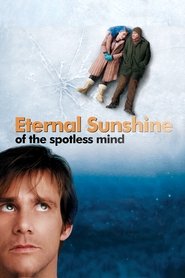
to me was very important because, I don't know, those scenes were very delicate and it's not like much happening. And to shoot in the real place, the place that you had mentioned, meant a lot to me because there's a way I had nothing to grab on. Right. And for a while there, we didn't know if we were going to even shoot in this country. They were talking about sending it to Canada, which was...
3:54 · jump to transcript →
-
about it but that was really perfect for her character because the way they like making fun of her it's exactly the same way she would react in the story and in real life. I like here how she gets pissed off with the delay she carry on being cuddly and kissing him.
45:04 · jump to transcript →
-
This idea that you can drown into your dream and suffocate in real life is really scary. Because that shows that most people would think anything can happen in your dream and you'll be fine, or your memory in this case. But if you find a limit where there is actually some real danger, it makes you feel really the dangerous situation.
1:09:15 · jump to transcript →
-
-
-
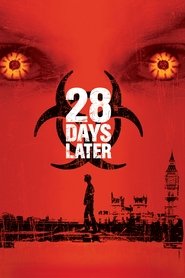
The performance with the contact lenses is, for all the people who worked with this, was very difficult, especially for Robert because he, in this moment, he is showing us, you know, that he's infected, but at the same time he's connected with something from the past, which is this woman, and attacking this woman who has given him a lot of suffering. The connection between the rage and the suffering, it's one of the... one of the big concepts in this moment. I think that the eyes, the idea of the eyes, is not only because of the gore. It's not gratuitous. It's the idea of the guilt, no? He doesn't want to see her eyes because he feels guilty. That was the real... the real reason. We know that's really extreme and... Yeah, and how the guilt is putting you in a difficult situation. And, you know, this guilt becomes a kind of rage and you destroy everything around.
44:52 · jump to transcript →
-
It's driving them crazy, because, you know, it's so difficult to see who is infected and who is not infected. And, again, a character taking a difficult decision, which is one of the leitmotifs in the movies... in the movie. A right decision or a wrong decision? But always it's a decision that implies destruction. Yeah, and all these decisions have been taken from the fear. The fear is... Everything is around the fear here. Everybody takes a decision in this... in the presence of the fear, which is moving everything forward. When you're watching the movie you understand why people take these decisions, because I think when we feel this fear in the real life, you're in trouble. It's not a cold decision, it's not a decision taken from a quiet moment. It's... when you're surrounded by something really powerful as the infection. This tune, this theme, was taken - musically - was taken from the first movie. This is a tune we always loved from the first movie, from John Murphy's soundtrack. And we had no time for John's... He had only two weeks to compose the music of the film. This is absolutely amazing to say that, but it's the truth. And we decided to bring this theme again back here in this sequel, and to work it in different ways. For me, it's hypnotical. I... I like the way we use it here. I like the way that John orchestrated and arranged absolutely in a different... It's different from the first one. We are going to hear this tune four times in the movie, in key moments. This is one of them. And that... this sound, this music, reminds that the infection is a building process. The infection is spreading. That's why the music is building up and, you know, getting this kind of big, intense moment with the guitars, which is the best combination with the infection around. On the other hand, the music has a kind of heart, emotional heart, which is telling that this movie is about character, it's about people... who try to survive. Now there's the moment of Doyle's dilemma. Another decision to take, another difficult decision to take, which is to put out of his misery his colleague.
54:07 · jump to transcript →
-
In the script, this sequence was meant to be during night, night-time. It was so complicated to do it, we decided to choose, on the run, to make it in daytime. It was a critical choice, because, you know, some of this stuff at night-time brings another... another flavour. But we had to make a lot of work with the helicopter and we hadn't had permission to do it at night-time. We had to spend a lot of money in trying to light this place - absolutely impossible. And... We decided to do it at sunrise. I think it brings something absolutely different. It's really dreamy. And again, Chediak's photography is absolutely gorgeous. This sequence is important. In terms of storytelling, we are assisting in the beginning, in a way, of a new family. You know, these kids with these soldiers. They are connected and they are trying to escape and... Now we know the real task of these soldiers, which is to take these kids out because they represent a kind of faith in the new vaccine, or in a new way to... The blood of the kids is the key now to save the world, in a way. So there's a mission now.
1:12:01 · jump to transcript →
-
-
-
James Mangold
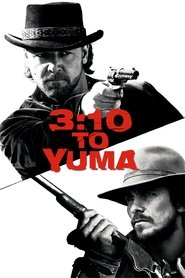
is a villain or a bad guy. But the real truth is he's not the antagonist of that film. He's, in a sense, the associate of the protagonist, trying to help them solve the murders. And that if you frame the movie and you look at the film as simply as seeing as Russell as a bad guy, then I think it's really tough to swallow the journey of the film from that moment on. And I think if you view the film
19:08 · jump to transcript →
-
James Mangold
One of the real challenges for Christian Bale in this movie is to find a kind of tone for his performance of Dan Evans, which is neither pitiable nor heroic, but a man riding the fence between those two places. He could go either way and his life could go either way. But what I admire so much about what Christian did is at the same time, he's a guy who hasn't lost his own pride or his own belief
26:25 · jump to transcript →
-
James Mangold
but actually because it's so imaginatively fruitful a place to drop stories into because it's such a moment of transition. And that when you're making a film like this, this landscape has as much in common with science fiction or fantasy epics like The Hobbit or The Lord of the Rings as it does more than it does with aspects of historical filmmaking in which you're telling the true story of, you know, the Battle of the Alamo.
45:42 · jump to transcript →
-
-
-
Yeah. Stevie Coogan. Little Stevie Coogan. Little Stevie Coogan. Yeah, fucking pussy. That's what he is. I still think he's a pussy. That really is your makeup person there. Yeah, this is all the real crew. I mean, we didn't go out and hire a fake crew to play the crew. We just literally filmed our own crew. We got Jimmy Rich over there holding the boom. Yeah, now Jimmy Rich's scene is included in the director's cut. I'm glad to hear that. Because he had a very funny scene where he's the boom guy and Coogan gets upset with him. There's our boy now. There's little Cody.
10:21 · jump to transcript →
-
fuck note he's convincing us all get out the thing that's tricky about steve coogan's character is that his part was so funny on the page he had the challenge of making it as funny in real life well he's actually a fairly masculine dude and i see him every day we shot this movie i'm gonna beat him down like a sissy crazy little curly hair some burnt like a motherfucker but he really
20:00 · jump to transcript →
-
This was sort of a change we made late in the script, too. The idea of him discovering that he had real hands early on. It used to be a lot later when they were already captured. I'm getting naughty in 48 hours. That's a man who knows how to be an action scene right there. See that? Definitely. He really does. He's done some crazy-ass classes. He's the real deal. K3 and whatnot, everything. This is Jack's improvs here. Watch Jack handle it. Where did that come from, Jack?
38:34 · jump to transcript →
-
-
-
This is based on... When we first started this, Alex wrote all these images for the beginning, a lot of which were based on Soria Samora's footage from Sierra Leone, and we debated at one point about using the real footage of terrible civil unrest and death and violence, and we decided rightly, I think, that we wouldn't use anything that involved any real deaths, and the footage that is in there...
0:39 · jump to transcript →
-
That's the one we should have kept, but of course they were south of the river. This was filmed actually in Croydon, and then this is back to the Blackwall Tunnel, which is one of the main routes under the river in London. And we were very lucky to get... The actual tunnel itself is not one of the real tunnels, it's a disused tunnel.
43:30 · jump to transcript →
-
the lieutenant of the, the left tenant of the, the left tenant was, he's the representative at this point of. Well, he's the real evil sod, isn't he? Yeah, I guess he is, yeah. So he gets reserved for him as the best death, I suppose. This was all shot in all these houses in Salisbury, although we, there's a number of pickups in it where we went back later to pick them up. I love the way this, this,
1:40:52 · jump to transcript →
-
-
-
Initially, when we started looking at locations in Moscow, I had a lot of reservation about what we'd find there and what the equipment would be like and what situations we'd find ourselves shooting in. And one of the first places we scouted, and it was actually the first shot of the film, the first shot that we shot of the film, was in the real Moscow, an operating subway.
2:30 · jump to transcript →
-
these actors come out of the reactor and they were obviously already in makeup and performing and yet I found myself imagining the real individuals and the real submariners who had volunteered to go into that reactor and try to do what they could to prevent a thermonuclear event and yet to their
36:06 · jump to transcript →
-
you know, quite proficiently. But it wasn't CG. It's real. Exactly. By the time that the Vostokov, the Harrison Ford character, was being interrogated by the tribunal, he had the real man, Nikolai Zateyev,
2:02:32 · jump to transcript →
-
-
director · 1h 42m 3 mentions
Len Wiseman, Patrick Tatopoulos, Brad Martin, Nicolas de Toth
-
lends itself well to then the CG being applied on top of it, so every frame that you go through and every step of the way, you have a lighting reference, so the CG guys will know exactly what that texture should look like, rather than, say, the whole creature being CG throughout. It's hard to match the lighting of the environment. I think more and more people are aware of that. You always try to bring lighting dummies, if anything. I mean, in this case, it was the actor in the suit, but I think it's a good thing to have the real reference for CG to play with.
30:14 · jump to transcript →
-
That's rich citrone right there that first bit was that I was on See you got a luma CG and the clothes of the real actually is that hurt Carly or is that rich that who is that? That's rich. That's rich to the town. There's another CG guy right here Then we go into practical right there CG knife practical here. Yeah a little wire drag Practical that's an air am right there. This is all practical as well this chain and him swinging him around we actually put a
46:38 · jump to transcript →
-
It's all practical and then CG right there. This move I love in CG. The jump across. The jump, I think that was the best move of the movie. He looks better coming over than he does going, when he goes away. Completely. CG and then the real practical, we just moved the bridge. There's a combination CG and then practical when he lands. All of our miniature there. Miniature and CG.
1:27:38 · jump to transcript →
-
-
director · 1h 36m 3 mentions
Aliens vs. Predator - Requiem (2007)
Colin Strause, Greg Strause, John Davis
-
He hit the line delivery we want. Well, you know, you've got to have the real down-to-earth quality of this guy. I mean, we were up against the fact that he is a pizza delivery boy. And if you're not careful with who you cast in that role, that could come off a little cheesy. And Johnny did a great job. He really pulled it off. You don't think anything against him because of his job, and that can be a tricky line to walk sometimes. Yeah, and the other thing with him, too, was his—
12:19 · jump to transcript →
-
And that's the real address. That's the real address, yeah. We were shooting it. It was the one thing we didn't look at when we were prepping the house. And that door opened, and we're like, oh, that's really long. And then we're thinking about, should we digitally paint that out so it doesn't look so crazy? And we're like, yeah, we'll just better put the money somewhere else. Exactly. Now, this is the part where Brian Tyler called originally. I don't think he made it on the CD with this name, but he called the score in this section...
17:32 · jump to transcript →
-
To have to have the, we had to dress the real one. Well, first of all, it wasn't even a real one. We couldn't get one from the U.S. military. We couldn't get one from the Canadian military, which had a similar type of model. Because they were all busy. They were being sent to Afghanistan, so there weren't any extra ones available. So we found this thing was like some piece of crap. Prototype. Prototype. It barely ran.
1:15:26 · jump to transcript →
-
-
-
The thing you're afraid of the most is when you talk to actors about crying scenes and they start to cry. In the real shoot, there's no tears. Right, yeah, exactly. Because they're drained out already. Right, sure. So I was very careful and timing the timing, the shooting timing. And I saved the whole crying sequence after lunch. I did a speaking in the morning. Right. Make sure her energy is well preserved.
1:49:21 · jump to transcript →
-
In some ways, she is the real hero character in the movie. Yeah, absolutely, really. And of course, the other important thing about this final shot was that it kept it open for a sequel. That's what everybody asked. It's like, yeah, I can see that. And you went for the old end credits. Yes.
1:54:30 · jump to transcript →
-
-
-
Jonathan Lynn
As well as keeping obscene language out of the film, we also, although there's some violence in the film, we kept blood out of the film. Most films nowadays, when people are shot, gallons of blood burst out of their chests or out of their backs in a way that doesn't usually happen in real life.
1:11:55 · jump to transcript →
-
Jonathan Lynn
Forensic people and police and... All of those people you saw walking around in that scene... Where is he, Mrs. Azaransky? ...were the real thing. They weren't extras. I think they don't have a terribly high crime rate in Montreal. You can ask me questions until you're blue in the face, but until I speak to my attorney. You spoke to your attorney. He doesn't want to have anything to do with you. Special Agent Hanson, Mrs. Azaransky, what did you do to him? Was it me? We have your voice on tape.
1:22:08 · jump to transcript →
-
-
-
Wes Anderson
But eventually, the Margot character, I decided to have her be adopted because of other things that it would do for her character. And because of, you know, it was sort of inspired-- That detail was inspired by someone in real life. And it seemed like it just filled out the character in a better way. And then maybe it makes this relationship a little more plausible somehow.
1:21:03 · jump to transcript →
-
Wes Anderson
This is sort of the real backyard of the house. The house is... Like, when you look at the people-- When we have a shot of all the people standing there, the house is on the right, the real Tenenbaum house is on the right. The house behind them, which is the house that really lets on to this backyard, is next door to the Tenenbaum house, and that's where we film the kitchen and Etheline's study and the stairs that the priest gets knocked down. So you can knock a hole in the wall and connect the two houses together, so I consider it all one thing. And then they go over the fence and next door seems to be some kind of Zen garden. Which is a part of this-- I think of it as being behind this embassy, or the residence of the ambassador from something or another.
1:33:54 · jump to transcript →
-



Related topics
Other topics that frequently come up in the same commentaries.