Topics / Studio & business
Release & marketing
66 commentaries in the archive discuss this, with 120 total mentions and 60 sampled passages on this page.
Filter commentaries
Filter this topic by the film's decade or the type of commentary.
By decade
Across the archive
ranked by mentions · click any passage for the moment in the transcript
-
-
Tony Scott
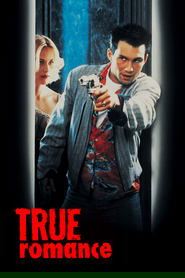
This is a scene in the tattoo parlor. And to be honest, this was the one sheet or the poster that I wanted for the movie.
17:45 · jump to transcript →
-
Tony Scott
but there's a real darkness to Dennis and a real strangeness, you know? And you look at the three characters in this scene together here, you've got Patricia and Christian and Dennis, and they all have their own very sweet side and very dark side. This particular scene in the trailer was actually done on a soundstage. You know, 90% of the movie was actually done on location, but this particular scene...
35:54 · jump to transcript →
-
Tony Scott
It was done in a trailer, and a trailer is too tight and too tough to shoot in a real trailer because it's too confined a space. So this is one of the rare scenes that we did in the soundstage. And obviously, well, not obviously, but this scene and the next scene in the trailer, which was Dennis Hopper and Christopher Walken, they were two major scenes in the movie, so...
36:21 · jump to transcript →
-
-
-
treated like an independent film. And honestly, the release was also treated like an independent film, which is unfortunate. TriStar was changing hands, and I was very disappointed with the kind of non-opening. But the fans have supported it, and the audience has grown for this picture over the years. Well, that's the thing, too. Speaking of which, if you look back, now when you talk to any horror fan, if you go to any horror convention or go on any horror blog or on Twitter or whatever,
7:47 · jump to transcript →
-
And that's stuff being shoved up his nose while it's being pulled back. He was such a good sport. We had an air tank in there for him, and he was game for all of it. There were safeties, but it's still a little bit probably like being waterboarded. It's a waterboarding visual effect. But it did elicit the shot that's in the movie, in the trailer, of Shawnee seeing him for the first time and being affected by that, right? And I also kept her off the set until that moment. So that's...
23:24 · jump to transcript →
-
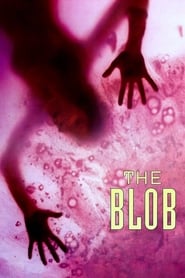
Oh, dude. I'm coming over to your studio. I got to see those. We've got a lot of old video, too, that maybe we could pull out and share. These are all storyboards. Oh, we have to. I got to say, these are all storyboards. Now, I firmly believe that if anyone saw the poster for It Follows, there was the poster of It Follows where it's the side shot of the car, right? That's the shot from the blob. It's right there. You're right. Erika Eleniak, who, Playboy Playmate, great, great role, great moment here. And I think
29:50 · jump to transcript →
-
-
-
Tim Lucas
Lardani's trademark style was, like all popular things, widely imitated. A company called Diamante e Grisanti, for example, used his techniques to create the trailer and main title sequence for Mario Bava's Hatchet for the Honeymoon in 1969. And you can also see his influence in pop artist Guy Peellaert's main titles for Alain Jessua's The Killing Game. Eugenio Lardani died in Rome on May 15, 1986, at the age of only 61.
2:01 · jump to transcript →
-
Tim Lucas
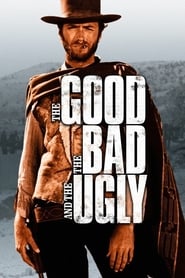
When For a Few Dollars More was released a few months later, the poster read, The man with no name is back. The man in black is waiting. It's the second motion picture of its kind. It won't be the last. Another kept promise. Curiously, the advertising for The Good, the Bad, and the Ugly played down the relationship between the three pictures with this tagline, For three men, the Civil War wasn't hell. It was practice.
2:25:59 · jump to transcript →
-
Tim Lucas
When The Good, the Bad, and the Ugly was first released to U.S. theaters in December 1967, it opened in many theaters on Christmas Day and became a smash success, considerably more profitable than the first two dollars films had been. It ultimately earned $25.1 million in its first release, which is close to $184 million in today's currency.
2:34:14 · jump to transcript →
-
-
cast · 1h 36m 4 mentions
The Garbage Pail Kids Movie (1987)
Mackenzie Astin, Katie Barberi, William Morris
-
with everything that had happened to them throughout the film. But in the editing, they decided to put these little pranks in the middle because they felt like the kids might get bored. And to this day, kids, I mean, child viewing audience. To this day, it concerns me when studios come in and the editing department or the marketing department says, no, the original story isn't going to fly. Well, we don't know that. You know, it's narrative. And when we sign on to a project...
30:25 · jump to transcript →
-
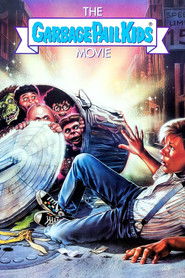
like posters that we were given when the movie came out. So from 1987, full-size, you know, whatever that standard one-sheet poster size is. I have three of them. You have three? Yeah, but don't talk to me about the poster. I'm still angry about the poster. I was supposed to be in it. All right, I'm sorry. I brought it up. You know, they're getting... Mac is just trying to get a word in edgewise in the first time. See, some things never change.
1:17:56 · jump to transcript →
-
What is he taking? He's on Oak, I think he's on Oakwood or something south of Santa Monica. And he's like blowing stop signs, which is not my dad's behavior. By which I mean, he was doing the California stop, like almost stopping and then going through. But I think I still ended up being late to that. No, we had, well, we, I didn't, I know we didn't stop before you got there. I don't remember whether or not we were late. This is like the small, the screening before the release of the film. Correct. It was just, it was inside the Atlantic building.
1:21:07 · jump to transcript →
-
-
-
It's really misleading because it's going to say it's all set on Earth. You're like, wait a minute. That was obviously clearly done when they had no director or maybe a story set in stone because it became this. I think the problem was the main topic of discussion was that they set a release date. That was it. It was all down to marketing. We had to have this movie out in December of 92 or something. And the heads at Fox...
13:32 · jump to transcript →
-
The warden, the one with authority, is profoundly working class. You might not pick up the accents, you'll be familiar if you're not British, but this is as working class as you can get, Brian Glover. He is the poster boy for working class. Whereas Charles Dance has this incredibly debonair, civilised, classically upper-class characteristics and speaks in this beautiful received English.
46:34 · jump to transcript →
-
the trailer line, you have no weapons of any kind, which is in every TV spot. But his attitude is just like what someone would probably say. It's got acid for blood and it's quite nasty and all this stuff. Why should I believe you? If I was Brian Glover, I wouldn't do anything Ripley says at any point in this movie. This facility is enormous. There's all kinds of places you can...
1:01:30 · jump to transcript →
-
-
-
He's still good in this. I think the contrast, his attitude is just fantastic. I like his throwaway meat eater. Lethal weapon poser always gets a laugh from me. That's the trailer line, an old-fashioned cop to get an old-fashioned criminal.
32:21 · jump to transcript →
-
It's so serious. It's so believable. His lines are great, too. Oh, my God. Desire to raid the Fed, yeah. Again, the audience seen the trailer and didn't expect scenes like this. I was like, yes, sir.
1:11:32 · jump to transcript →
-
character of hers, and he plays the disc here. The seashells. Now, if we do a sequel to the movie, the trailer's got to be him walking in a bathroom, going to seashells, and then turning to the audience and saying, wouldn't you like to know? That could be like the trailer from The Shining, just one shot. Yes, exactly. Just a teaser. I'd tell you we would make a billion dollars.
1:13:06 · jump to transcript →
-
-
-
Is that the hole down to the wolves? That's another jump. Cool. That wasn't easy, was it? - That was you. That was me. That was me. - There you go. Oh, I remember that day so well. He falls better than anybody. Look. So impressive. - That does look painful. Yeah. He never has any padding, either. It's fantastic. He didn't do it with back-padding. I used a walk up to him, do that thing, shoot him, then caper off like a girl. Yeah. He would just do that at lunch, in the lunch line. That's my least favourite shot of me. Why? - My nose looks like a big snout. I think it looks cool. - We both were not really... Don't like that. - Why? Because of the snout. - The snout looks great. Thanks. - Nice bullets. Thanks. They're all natural. Of course, that made the trailer, I think, too. I know. I was upset. - The shots you don't care for... ...always show up in every press junket, in magazines, and in trailers. Was that in a sequence where you said I look like I was humping a donkey? I believe that's the one. That was a cool one. That isn't me. That isn't me. - That isn't you. That was that disgusting champagne cellar. We got sick from the mould. What? - Were you in there? Where? - The champagne cellar. It was five inches thick with mould. My God, I got so sick. I got off scot-free. You did. - Pardon the pun, but I did. That really bothered me, that place. The toughest thing for me was the transformation stuff. But besides that, it was... I had a pretty easy schedule. Yeah. We made up for it in the water. - You did. Yeah, yeah. That's true. But you were like, "Hit me. Hit me. Harder," by that point. I Know. I did kind of go insane in this movie. I may be a chick in this movie, but I'm going to take... Yeah. - I'm going to prove it. I remember when we were doing the apartment scene... ...and she was throwing you up against the wall. And you kept going on about how you're not going to get hurt. I know, that last take, there was pain. - Which one? When she throws me? When she pins you against the wall in your apartment. Oh, yeah, yeah. No, I don't remember any pain. Yeah. - No pain on that.
8:35 · jump to transcript →
-
All right, here we go. - That's it, jump out the window. This is my favourite thing, I think. No, it isn't. - This isn't it. It can't be. You are nowhere near it, Soeedman. - There we go. Dogs! Dogs and everything. You're really good with the "Oh, shit" look. Here we go. I was legitimately scared with these dogs. Oh, come on. They were being whipped into a frenzy by these Hungarian people. I love how you fall down. I loved it in the trailer. You gave me a hug after that, because I worked hard. Remember? I did. - You did. I was... You were good. - I was big on the hugs. Weren't you sick that night, Speedman? No, I was... - He wasn't sick. He was a baby. He was sick. - I was the opposite of a baby. No, you were. - He was sick. Sorry, guys. He was totally sick. - Were you sick? I don't remember. - Well, I do. I was keeping a detailed notebook and diary. That's right. Maybe I was sick. But, hey. What you don't see after this shot is you put the gun down... ... flapping your hands around. - Why? Because the impact of the guns. You don't remember that? - No. That didn't happen.
38:02 · jump to transcript →
-
There was discussion about adding a scene where... ...Kate's in front of a mirror with just a razor blade... -... just shaving her head. - Wow. The hair was becoming a problem. - That'd be cool. I think it'd be good, do the Sigourney Weaver... SO people can say you're ripping off Alien as well Matrix. That'd be great. - Brilliant. Do people say that? - Yeah. Oh, far too many, because it's a black suit. You know, what are we gonna put a vampire in, like, fuchsia? You know what? - Number two.... It'll all be pastels. Look, I warned her. I warned her, but she didn't listen. I should've told you sooner. - Told me what? Her human, Michael... ...he's not a human at all. He's Canadian. - I'm Canadian. What? Canadian? - No, not another Canadian! Jesus! - Get them out of the industry. Stunned. They'll kill you. That was the one I was terrified was gonna be in the preview. Was it ever in the preview? - The, "Who are you people?" Yeah. And it was. We knew it was. There's certain lines, when you're shooting, you know... ... they're gonna be used in the trailer. I Knew that when Kate was saying, "The war between Vampires and Lycans." That's right. And that was. - Yep. This looks complicated. This was a nightmare. - Walking with those things. Walking, there's guys on top that are.... The prop guys are trying to move that thing around on top to mimic him. He was so great. - He was so cool, man. Yeah, he was. - He was such a cool guy. Is. I guess he had the toughest makeup, right? He had six hours every morning. Leave us. But he was great. He was like the visiting rock star. He's so cool, man. We love you, Bill. - Bill, we love you. I wanted him to come to the premiere, but he didn't come. We wanted him to sleep over, and he wasn't interested. I was interested either. Werewolves. There we go, right in the trailer. I'm glad we did those flashes. It's always really difficult to have that scene where it's... "These are aliens," or "These are"-- - It's a tough scene. It's tough for the normal person. So you just kept that bewildered look... ...and I threw in some inserts there and really helped you out. Thanks, man. - You're welcome.
53:17 · jump to transcript →
-
-
director · 1h 28m 3 mentions
Don Coscarelli, A. Michael Baldwin, Angus Scrimm, Bill Thornbury
-
in a film. But now, you know, in Approaching Phantasm, I really had this, it was like a quest, which was to offer some payoff, because I tell you, as a child, I loved horror films, and was frequently frustrated by, you'd see the ad or the trailer on TV, and they would be so, appear to be so suspenseful and terrifying, then you watch the film, and there was really nothing there.
6:56 · jump to transcript →
-
Don had approached me. We hadn't really talked about the tune. We talked about it this day, just before we shot it. And while they were setting the shot, I was sitting in the trailer with my guitar and Shirl Quinlan was in there, who was a lovely friend and a lovely lady. Did my makeup, her makeup every day. And I remember just playing the tune. I only had eight bars.
16:39 · jump to transcript →
-
Trying to sort of distort reality and having this kid having these nightmares, you know, waking up in the middle of a graveyard and really deluding the audience and thinking they're still in his bedroom. And you pull back and you find out Rory has great pains to try to match everything. There's a couple of crew members of them. And there's Rory's posture from the poster. That's right. Yeah, they used that for the original key art in the domestic release.
25:12 · jump to transcript →
-
-
director · 1h 30m 3 mentions
A Nightmare on Elm Street (1984)
Wes Craven, Heather Langenkamp, John Saxon, Jacques Haitkin
-
You have a lot of hair. It made it sort of into the poster even. I know. There's something about your hair that's very powerful. In fact, I didn't want to tell you this, but it attacked me several times. Like Medusa. That's why we were there, Mom. Maybe at this point I should mention that this entire idea for this film came out of a series of newspaper articles in the LA Times about teenagers from Southeast Asia that had emigrated with their families to the United States.
20:09 · jump to transcript →
-
They had rented Wim Wenders' apartment for me. This miserable little German cell. Ronnie's husband. Yeah. And I would watch the Olympics at night. I got tickets to the Olympic field hockey, I remember. That's all I could get. I'll have to do a separate laser disc. I'm just on the Olympics. Here comes the poster shot. I was off. And now I lay me down to sleep.
1:14:31 · jump to transcript →
-
And it's always interesting how the newest technology always finds its way into movies. You know, how the first cell phone used in a film was kind of... Now it's almost in everything you see. This is a great shot. I love it. Is that a freeze frame? Oh, no. That was used in the poster. Yeah, that was the poster shot. Grim determination.
1:15:24 · jump to transcript →
-
-
-
Paul M. Sammon
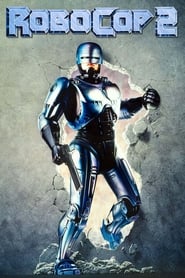
The whole problem with RoboCop 2 in terms of quality is the fact that it had a locked-in release date. When John Davison finally agreed to Orion to say, okay, I'll do RoboCop 2 because they were in trouble and he didn't want to be the person that killed Orion, he was given a release date. And essentially he had nine months from the moment he said yes to when the film had to come out. That's without a script, without a director, without a crew. And really an amazing job by everyone.
47:58 · jump to transcript →
-
Paul M. Sammon
One of the things that was the constant pressure as we go on to this long dialogue about you don't get permission, our boss is gone, I need my drugs, etc. One of the pressures of this film was, of course, the release date being locked in. Now, the way that...
1:08:08 · jump to transcript →
-
Paul M. Sammon
The fact that they were real. And what you're seeing here again are, I love the cannon that comes up. That behave yourselves line was used in the trailer over and over and over. This is a combination of Peter Weller in the suit and Russell Towery in the suit. And this is rather nice where he zeroes in and like he shot the fellow who had the telescopic rifle, he now takes the cannon off.
1:37:09 · jump to transcript →
-
-
-
But it's obviously a play on words and on the poster you can see brackets and it kind of hints to the presence of another word within it, tradire, to cheat. So there we go. Yes, it's one of many brass titles that is impossible to do an accurate translation of into English because he does a lot of this sort of cheeky wordplay, you might say.
0:55 · jump to transcript →
-
It did have a theatrical release, national release. But what was quite noticeable at the time was that it really didn't stir scandal. There was some issues that arose from the poster itself.
12:27 · jump to transcript →
-
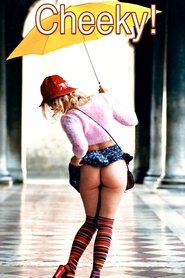
was his first anthology film but um in a way that almost feels like a spoof of say penthouse letters in a way when he made it and the fact that he's the one who's presenting all of these stories i think is what kind of that's what that's why the film still coheres in a way um whereas Fallo! doesn't quite so much it's just a bunch of random episodes kind of stuck together um as you mentioned that's the uh the shot that he's on the poster there with her skirt flying up with the hat and the umbrella um very famous shot um but nowhere near as scandalous i think as the poster for something like all ladies do it you know which had claudia's you know
30:53 · jump to transcript →
-
-
director · 3h 43m 3 mentions
The Lord of the Rings The Two Towers (2002)
Peter Jackson, Fran Walsh, Philippa Boyens
-
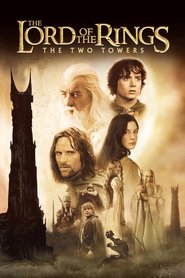
off his horse later on this day and cracked a rib and couldn't get on a horse so we couldn't shoot anything of orlando actually jumping into the saddle which was our original plan then much later on in post-production i realized that we had forgotten to actually shoot anything of orlando jumping up on his horse and so the only way i could figure to get him on his horse was to turn him into a cg guy and actually spring him up on there with this one shot that i had which was you know the only thing i could think of and this was about six months before the release of the film
1:57:21 · jump to transcript →
-
So what was the point of sort of talking about something that people weren't going to see for a year? But this DVD is coming out, what, about a month or six weeks before the release of The Return of the King. So it's a great opportunity just to set up where they're going and what that actually means. They're going to a very, very bad place. A very bad place for Frodo and Sam. Stay tuned.
3:29:06 · jump to transcript →
-
that we were able just to jump in. And it was only a year ago. That's what I kept saying to the journalists. Well, it's only a year ago. Surely you haven't forgotten what happened in the movie. Plus you'd just had the extended cut DVD released of Fellowship, which was very clever. The DVD, the video release helped a lot because it was able to put everybody back into a Fellowship of the Ring frame of mind two or three months before the release of Two Towers.
3:36:05 · jump to transcript →
-
-
-
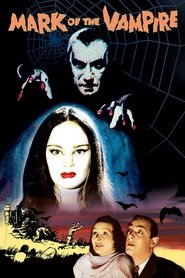
Yeah, I think that's because Atwill was perceived as a supporting actor, whereas Lugosi, when he wasn't a star, which he was on Poverty Row, was a guest star actor. Right, he was the 'and' credit nowadays. An 'and with', yeah. Or little box round the name on the poster, if he'd had a better agent who could get that kind of stuff. If Lugosi had had a better agent, it would have been Lionel Barrymore and Bela Lugosi in Mark of the Vampire. But he didn't.
9:48 · jump to transcript →
-
Svengali. Even Dracula is a kind of hypnotist. Yes, he certainly uses his hand gestures. We don't in this film actually get many close-ups of Bela Lugosi's glowing eyes, which is a key image of the genre at the time. And I think one of the great things about this is anybody who sees the trailer, which will be on this set, is actually a trailer shot especially for this movie, where Lugosi actually has probably more dialogue in the trailer than he has in the movie. And he addresses the audience directly, which is a very innovative...
54:02 · jump to transcript →
-
-
-
David Kalat
The Japanese press noted that as the first human being killed by the H-bomb, he was Japanese, just like the only humans killed by A-bombs. Slightly over a month after the radio operator finally died, a movie opened in Japanese theaters that begins like this. A fishing boat at sea is afflicted by a mysterious and unexpected flash of light. The ship goes down. Its radio operator is the first to die.
3:21 · jump to transcript →
-
David Kalat
What science and mankind could learn from examining this prehistoric thing is incalculable. This is the way the elderly scientific advisor in Beast from 20,000 Fathoms was depicted. But a better point of comparison would be The Thing from Another World, which opened in Japan in the spring of 1952. In that film, there's a deadly monster threatening the human race, a military expedition trying to kill the thing, and a dissenting scientist who wants to spare the monster for study.
31:04 · jump to transcript →
-
-
-
Nick Pinkerton
Grilling him is Rhode Island-raised soul singer Claudia Lennear, a former Ikette who was on the road with Ike and Tina Turner. She was apparently the inspiration for both the Rolling Stones' 1971 Brown Sugar and David Bowie's 1973 The Lady Grinning Soul. And in the year after the release of Thunderbolt and Lightfoot appeared in a Playboy pictorial titled Brown Sugar, her lone solo album, Phew!,
55:26 · jump to transcript →
-
Nick Pinkerton
Apparently, Kennedy had a lot of difficulty getting through his go-fuck-a-duck line reading, breaking up repeatedly. Now Lightfoot gets ready to swagger back into the trailer where he and the boys are playing house, and he's going to tell the tale of the woman in the window. And when he does, the air will be thick with resentment and envy and sexual jealousy, particularly the jealousy of Redd,
58:45 · jump to transcript →
-
-
multi · 2h 34m 2 mentions
James Cameron, Gale Anne Hurd, Stan Winston, Robert Skotak + 8
-
Pat McClung
This scene was shot really quickly. It was pretty much all handheld, 48 or 60 frames a second. I think 48. Then Sigourney had to loop all her lines at slow speed, which is always odd. Our first effect in the movie. It's great, because it's what you expected to happen and then it's not what you expect. She was actually under the bed for that sequence. We built an artificial body from her neck down. Someone is under the bed with her. I can't remember who the lucky guy was that created the illusion of the chestburster. Pushing its way through her. It sets up the character. This is her nightmare. You know that she never wants to have to face it in real life again because she's haunted by it in her dreams and her nightmares. This effect is as if you're outdoors. When the camera dollies over, you see it's just a video projection. The idea was that in outer space there would be places you could go to get a feeling you were in a natural environment. So that plate behind her was shot out in the garden at Pinewood Studios. It was a VistaVision plate. Originally, there was supposed to be a birdhouse in the background in that garden, and she would have Jones on her lap and a bird would fly in and Jones would jump up and hit the screen and that's how the audience would find out that she wasn't actually on the earth. This scene was cut from the release version of the film, which became the source of some controversy with Sigourney. She later said in print that she had based her entire character on this scene, and she was devastated when it was removed. At the time she first screened the film, she told me she didn't like the scene, and then we wound up reading interviews where she had a big problem with that. We didn't have a chance to talk about it because of the postproduction schedule. We were working in England, kind of in isolation.
7:47 · jump to transcript →
-
Pat McClung
Even though I liked the symmetry of the fact that she had had a daughter and lost her - that's Sigourney's mother, so there's an interesting inversion here. She's looking at the face of her mother but playing it as her daughter. As an actor, it allowed her to work the connection. All my movies are love stories. This one is about parental love, protectiveness and a sense of duty, and the ultimate sacrifice that a person would make, given that sense of duty. That was a nice touch. That was Sigourney's idea. This was one of the seminal scenes in the movie and was one of the ones that had to be deleted and omitted from the theatrical version because of length. We didn't have multiplexes, and there were only so many showings a day that you could have of a film, and we had to get it no more than two hours ten minutes in order to get the maximum number of screenings per day. Peter Lamont came up with a simple and austere look for our future sets. I watched this film recently and I was amazed at how little we see of the conventional future world, as opposed to the spacecraft interiors. She's actually on Gateway Station here. She hasn't returned all the way to earth. She never sets foot on earth in the whole series of films, which is interesting. This is as close as she gets until the end of the fourth movie, where she's re-entering the atmosphere. But this is earth for all intents and purposes. This is everyday life circa a couple of hundred years from now. And Peter came up with a very spartan look. It's not overworked at all, which I think was quite clever. We wanted to do it minimalist. We didn't have her walking around corridors. We didn't create a world because we weren't interested. We were interested in the through-line of her story and her character's dilemma and problems, the fact that she's not believed, that she understands there's this great threat. The same applied to the costumes. We didn't wanna suggest a wildly separated future from our present one. This might be one of the first science fiction movies where men still wear coats and ties. The thinking was people will still wear coats and ties. They may not look exactly the same. We turned up the collar on the jackets. It's no big deal but it's a subtle change. We wanted to have a place to go. We wanted the space environment once they get to the colony planet to be exotic and so we didn't wanna overwork earth. We also wanted to understand who these people were, and a Suit Is a suit. These characters are suits and we wanted to reinforce that. If everybody's in Star Wars type costumes, it's harder to relate to them as characters. I was thinking more of a writer than a designer when I was making my picks of what things should look like from amongst the suggestions made by the costume designer. Denny, did they shoot at 25 frames per second for all the video playback stuff? Do you remember? They did. The 24-frame issue was messy. It can be done, but it's such a big procedure. Shooting 25 frames per second on the camera puts the video in sync with the film camera very easily. There's a slight speed differential but it's almost impossible to perceive. In Britain they have a different television system, a 25-frame-per-second system. 625 resolution instead of 525. Later in the film there's some video footage that was used, appearing on video monitors. But the PAL system is better than NTSC, which is our system here in the United States. It almost looked like a slightly too fuzzy version of film, sort of in between. It's not as good as it should be for film, but it wasn't obvious it was video. Jim realized and made the video images noisier or break up more often so it was more obvious. The tag of this scene is gonna be a throw to this big sequence that takes place on the colony which is before the aliens attack. That's cut out of the release version, so coming up Is the biggest single change from the release version of the film. It's an entire reel. I'll never forget Gale Hurd, who was my wife and producer at the time, trying to shorten the film by 20 minutes. I just could not see how it was possible to do a cut here, a cut there, a few seconds, a bit of a scene, the tag of a scene maybe. She said "I've been thinking about this for days." I said "Go ahead." She said "Reel three." Which starts here. "You can take out reel three." I immediately rejected that as completely absurd. Then I thought about it. Reel three ends with Newt's scream when her father has the facehugger on his face. It works flawlessly. It's a brilliant cut and I have to credit Gale with that. I had poured a lot of energy into the design of these scenes and the alien derelict ship. The problem for me was that I couldn't imagine this film without the cognitive tether to the first film of the alien derelict, but it turns out that it works perfectly. A little dialogue bridge and it works fine. I like this tractor a lot, this tractor with this articulated leg design. This is one of my favorite effects. You see the big tractor driving by and in the background you see these people struggling to put a tarp over that tractor. That was done in perspective. There were full-size people back there, and a miniature in the foreground with distance between. It put everything in camera all at one time without any opticals or anything beyond that. The trick was that the actors had to act at double their normal speed of acting, because the camera was running at 48 frames per second. We had a Ritter fan on them to really kick those tarps around in excess of what it would be in real time, but because we were overcranking, that motion would then look normal. The multi-wheeled vehicle at the beginning is a fifth-scale miniature, radio-controlled, that Jim designed. On the airplane coming over from Los Angeles to London he just doodled it. Ron Cobb, I believe, fleshed it out.
10:08 · jump to transcript →
-
-
director · 1h 24m 2 mentions
The Naked Gun: From the Files of Police Squad! (1988)
David Zucker, Robert K. Weiss, Peter Tilden
-
Again, in the tradition of film noir detective movies. Every script we put in a lonely walk and it gets cut because they don't mean anything. Except it stayed. Well, actually, we have a tradition of using stuff that was cut out of the movie and subsequent versions of the film or things that were for the trailer that then turned into scenes. Yeah.
35:10 · jump to transcript →
-
There's the big guy with no lines again. Exactly. That's the way we like him. Now this would be Reggie Jackson? Oh, you ruined the reveal. I'm sorry. I hope they can slip better. Oh, jeez. Slip better. Moving back. You can back that one up. How hard to get Reggie? Was he expensive? Actually, you know, in our movies we make the poster and all the stars are in little boxes at the bottom. And we put a little thing under each box, like, you know, the mayor, she ruled the city, the way she made love with an iron fist.
1:14:23 · jump to transcript →
-
-
-
this film's depiction of transness or Buffalo Bill as an evil trans character, it was the fact that he was being read as being a self-hating gay. You know, this is a story about a gay man who hates himself, so he begins killing women. The same thing actually happened about a decade earlier in 1980 with the release of Brian De Palma's Dressed to Kill, which is another movie about a killer transsexual, but was protested at the time for its depictions of
34:34 · jump to transcript →
-
There's the release of the adaptation of Fried Green Tomatoes, which was also very controversial for downplaying or even just like essentially removing the lesbian aspect of that story. There's also the release of Paris is Burning. And then right after Sounds of the Lambs, there's The Crying Game. Yeah, and I would have to say The Crying Game almost immediately because of the sort of sideshow.
41:07 · jump to transcript →
-
-
-
So when the movie came out, did you feel that, I mean, because obviously Orion at that point was, you know, on its last legs, it was pretty much on life support. How did you feel about the release? Because my perception of it as a moviegoer at that time was they just kind of threw it out there. Movie marketing is really hard. Yeah. You know, we've talked a lot about the Monster Squad, which has gotten kind of short shrift due to its...
1:02:02 · jump to transcript →
-
But going back to the release of the film, did you feel that, I mean, at the end of the day, that they did the best they could in marketing it at that time? I suspect that they were hampered a little bit by the amount of money they had to market it. Yeah. But, I mean, I saw TV spots.
1:04:06 · jump to transcript →
-
-
-
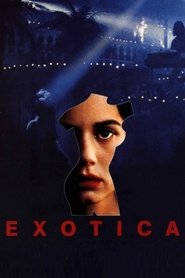
And, you know, already, as we're reading scripts or, you know, as I'm writing scripts, I'm much more aware of the fact that other people have to be looking at the film at various stages because the levels of investment are that much higher. And people want to know what the marketing of the film is before it's even finished. And that wasn't the case with a film like this. It seems crazy looking at Exotica now because it's still probably...
51:27 · jump to transcript →
-
where Thomas and Eric had that moment in the washroom. So now we're hearing that same music. So mentally or emotionally, we're being triggered for a similar moment of reconciliation, which is about to happen. And it's not a moment of violence, which is so crazy. I remember when I saw the Miramax trailer, because they kept repeating the image of the gun, and they actually put a gunshot in the trailer, which was the whole point of the film, was that the gun didn't go off.
1:33:54 · jump to transcript →
-
-
-
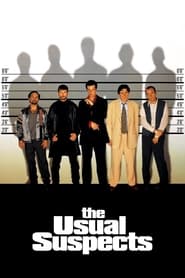
From that, we built the poster, and the poster was much like the one that you see that came with the film, with the tagline, all of you can go to hell. And this is something that I presented to Bryan, and Bryan liked it very much, and to make a long story very short, he told me to proceed writing The Usual Suspects, which we started writing in or around February of 1993.
1:21 · jump to transcript →
-
I was sitting in the break room and I looked up at the bulletin board, which was made by Quartet in Skokie, Illinois. And that was essentially the birth of this movie. Well, the second birth, the first birth being the poster. Yes. And again, another location, sort of a...
1:10:49 · jump to transcript →
-
-
multi · 1h 54m 2 mentions
Jean-Pierre Jeunet, Hervé Schneid, Alec Gillis, Tom Woodruff Jr. + 5
-
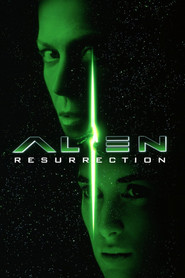
This was actually a tunnel. You can see the floor on one end where the light is glowing. And this was actually just a vertical tunnel which was stood straight to make it into a tube. I love this scene. It's very different with the other Aliens. Sigourney loved to do that. She was almost naked when we shot. She is very courageous. She tries everything. She is ready to do everything, all the time. This is a set that was reused. In this instance, this is the birthing room for Ripley. This is a very symbolic and beautiful, almost religious, image of her coming to life. This was designed by Darius and Jean-Pierre - dreamt it up and shot it, quite late in the day, actually. It's actually very stunning. It's quite beautiful. What we're looking at - the light glowing from the floor and fanning in the back - is exactly where Darius and Nigel gave each other opportunities to generate so much excitement out of these openings, where, basically, light actually comes alive in the metal everywhere you look. I love Brad Dourif. I was a fan. All my life I will remember the test with Brad Dourif. He was perfect. I saw a lot of actors for Wren, the bad guy, and I saw a lot of actors. It was a pleasure because I made some tests with them. It was only because the studio didn't want to pay a lot for the main bad character. I remember, I proposed to the studio it was a good idea to have a woman for the bad guy. It was a good idea, but at the end the marketing service said "No. Definitely no." "Because you have two women in this film, two heroes, and not a third one. Definitely." Too many women. - Yeah.
6:30 · jump to transcript →
-
Almost everything was designed to be four, five times bigger than what it ends up being in the film. As budgetary bad news came in everything shrank. Pretty much every set invented in the script is in, with the exception of one or two. But everything is a lot smaller than was intended. What's in-fucking-side me?! A parasite! I love this sentence. It was in the trailer. I worked with Darius on City Of Lost Children. Then he went and did Se7en, which was just spectacular from a cinematographic... How would you say that? - I'd say, uh... "A good picture". Yeah, it was nice to look at. Beautiful film. And then he came and did this with Jean-Pierre again. You were in Alien because you did City of the Lost Children with Jean-Pierre. Correct? - Yeah, probably. I worked with Darius on Se7en. - You worked on Se/7en. You were spectacular in that film. - Thank you.
1:05:40 · jump to transcript →
-
-
-
was shot at three separate times of day. Juliette's, all of Juliette's coverage in this scene is shot at 10 o'clock at night on a process trailer in a parking lot, and I am standing to her right, just outside the door. Wow. And I'm watching the monitor and jostling up and down with my fat ass on the trailer to create the motion of the car. That's good. Dick Pope's great. Dick's phenomenal. And who was the lighting guy?
23:26 · jump to transcript →
-
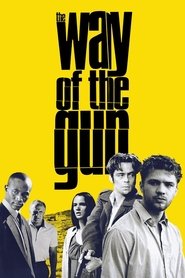
Dick just did a phenomenal job. Dick the Pope. Well, here, walking into the POV. And look at the sky there. Okay, that I stole from Peckinpah. That is the poster to The Wild Bunch employed in a shot. That was the only time, I think, in the entire movie I ever consciously did anything. In fact, you consciously didn't. You stayed away from slow-mo. Well, a lot of people say, when people talk about this movie and talk about the Peckinpah influence, it's not the style, it's the situation. It's a bunch of guys in a whorehouse in the desert. Yeah.
1:45:50 · jump to transcript →
-
-
director · 2h 10m 2 mentions
Richard Curtis, Hugh Grant, Bill Nighy, Thomas Sangster
-
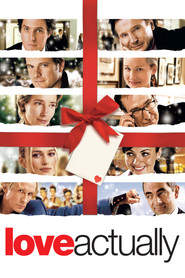
Right, okay, let's go. Who do you think the costume is tougher on? Which one, mine or... Yours or Gregor's? -/ see. Yours makes you look as though you don't exist and Gregor's looks as though he's a wrestler. Yeah. Love is all... Fuck, wank, bugger, shitting ass head and hole. I'm sorry about that. You're a Shakespearean actor, basically. Yeah, I know. I never... I know. Shakespeare would have written those words if they'd existed in his day. So this is singing... Love Is All Around was... Everyone in England knows, but it was number one here for 15 weeks after the release of Four Weddings and a Funeral. Bloody hell. And I couldn't think of a funnier way to start the film than actually making them listen to the same song again. Very good. Now, that's kind of good. Take a look, Tom. This must be excruciating for you, isn't it, watching middle-aged men doing hip-grinding.
2:30 · jump to transcript →
-
So here we go, this was Sandown. - That's Sandown just outside London? Yeah. Yeah, sprayed. - For Milwaukee? Sandown? - Yeah, I think so. Have they got an airport? No, they haven't got... That's dress design, that's Jim Clay. I thought we did the races. I think there's always too much snow in your films anyway, Richard. -/ like a bit of snow. - Snow on the poster this time. Now, this was one of the best days of the shoot, 'cause these American girls came in and they just tore the script apart. Really? - Yeah, all the English actors are so respectful, but they just said, "There's not enough funny stuff in here. "Can we try and pep it up a bit with some good lines?"
1:23:47 · jump to transcript →
-



Related topics
Other topics that frequently come up in the same commentaries.