Topics / Performance
Casting
128 commentaries in the archive discuss this, with 465 total mentions and 59 sampled passages on this page.
Filter commentaries
Filter this topic by the film's decade or the type of commentary.
Showing 24 of 128 commentaries
Clear filtersBy decade
Across the archive
ranked by mentions · click any passage for the moment in the transcript
-
multi · 2h 12m 11 mentions
Andrew Sarris, James Ellroy, Brian Helgeland, Michael Nathanson + 10
-
The audition process in the States is very different than it is in Australia because obviously in the States there are a far greater amount of actors and there's a lot more to wade through. In Australia you go in and you do your audition and you get the job or you don't get the job. In America you have a meeting and then you go and do a reading on tape where they don't even expect you to know your lines, which is kind of weird to me. And then you might go and do a bit of a test on tape
6:49 · jump to transcript →
-
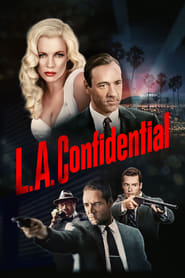
in that none of the main players were, at this time, particularly big stars, although Spacey has a great many theatrical credits and is considered a very accomplished actor. And this is what makes this film less of a studio picture and more of an independent picture than would normally be the case, simply because of the casting. Certainly the filmmaking is as classical and yet as...
10:10 · jump to transcript →
-
Stensland? My partner stopped it. I said to him, all right, if it was really the 1950s and you were really directing this movie, who would you cast as Jack Vincennes? And I kind of expected he would have said, like, William Holden, you know, that. But he didn't. He said, Dean Martin. I thought, Dean Martin? And he said, well, watch Some Came Running. Watch Rio Bravo again.
12:58 · jump to transcript →
-
-
-
Tony Scott
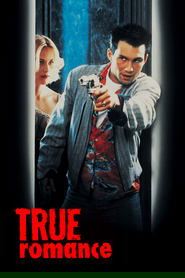
And, you know, people say to me, God, it's such a great movie, you know. But honest truth is I have to give the real applause to Quentin Tarantino because he's the guy who put it on the page. And this is the first movie where all I did was to support what was on the page in terms of my casting, in terms of my look, and in terms of my styling and how I shot the movie. But it's a much easier process when you have a blueprint which you're so confident about.
6:43 · jump to transcript →
-
Tony Scott
Elvis coming to Clarence. To be honest, the other actor that desperately wanted to do Clarence was Val Kilmer. And I talked to Val, and he actually sent me a tape where he recorded this tape on his own back from his house in New Mexico playing Clarence. And he was brilliant. But the true strength of casting is a gut reaction.
22:21 · jump to transcript →
-
Tony Scott
Only Quentin could come up with names for characters like he comes up with. Dennis again, I thought, was really great casting. It's not me, you know. Patting my own back, it's... You know, I've always wanted to work with Dennis Hopper. He's always been one of my gods, one of my stars, because, again, he's got such a sweetness and such a charm.
35:26 · jump to transcript →
-
-
-
Alexander Payne
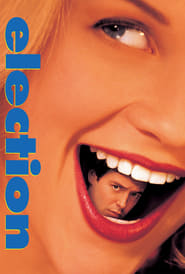
Dave was one of those guys who taught because they never wanted to leave high school in the first place. But basically, he was a good guy. I'd always liked Matthew Broderick a lot. I was so happy to be able to cast him in a movie, and I'm sure by the time you hear this on your DVD at home, I will have seen the film, but today when I'm recording this commentary, I still have never seen Ferris Bueller's Day Off.
8:41 · jump to transcript →
-
Alexander Payne
I was actually given the tape recently, so I have to see it soon. His casting has, for a lot of people, played with his image, almost his iconography as Ferris Bueller. But not for me, because as I said, I haven't seen the film. I just had always admired his acting, and I was happy to have actually something, an actor kind of approaching
9:05 · jump to transcript →
-
Alexander Payne
This guy... He wasn't... I didn't audition him or anything. Just on that day, I said, just go up to Mr. McAllister, up to Matthew Broderick, and tell him that...
14:51 · jump to transcript →
-
-
-
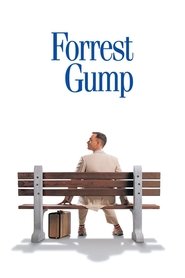
But that's not what it really is. She ages with makeup. And so she read the script, and she was signed on in a second. She just completely got it. Now, it's interesting that the character of young Forrest came to us very serendipitously in that this young boy saw an open casting call.
6:35 · jump to transcript →
-
that was taking place i believe in memphis tennessee and he lived in northern mississippi and uh... his mom encouraged him to go ahead up and and try out for the film ellen lewis our casting director brought this tape out to us in los angeles and we were all i mean you had a big smile on your face because you had just seen this unique character that so far you hadn't seen anywhere and so we invited a number of boys out for uh... uh...
7:02 · jump to transcript →
-
They're goddamn snipers. Michael T. Williamson was the actor. He came in at an audition, and he read with Tom. And both Michael T., when they came in and when Gary came in, they both auditioned for the part. As soon as I saw them, I knew they were the guys. And Michael T. came up with the lip.
42:04 · jump to transcript →
-
-
-
That's Cole, our stunt supervisor, right? That was. That was Cole McKay, who was our stunt coordinator. Sneaking a cameo in as the limo driver. Yes, yes. He made him buy me a drink for this. Yeah, Shea Duffin. What's going on here is we're rich. Did you have fun during the casting process for all these characters? Yeah, I tell you, I...
2:49 · jump to transcript →
-
Lisa London and Catherine Stroud were my casting ladies and they brought me great people and I sort of wanted to cast this thing and sort of get different looks and especially when the kids who are painting and Jennifer, I think they all sort of have a unique look. I like everybody to be ID'd immediately when you see them. I don't like three people with dark hair or three people with blonde.
3:15 · jump to transcript →
-
And that was dry ice. And it really, it kind of works. Everybody has to forgive me. It's been a while since I've seen this. There was our casting, Lisa London. These are fun shots how the characters introduced. You're getting glimpses and silhouettes and wise ass. Yes.
6:31 · jump to transcript →
-
-
-
an episode of Law and Order. Mostly a lot of theater, though. And she came to the project because that pilot that I mentioned, Class of 61, was an Amblin project. Which was the company that Spielberg formed with Kathleen Kennedy and Frank Marshall back in the early 80s. So they were all kind of aware of her, fans of her. So she was always in the casting pool for their movies and had been for a while. And this was the first one where it got this far.
7:54 · jump to transcript →
-
And he got small film roles in movies like Cool Hand Luke and Blake Edwards' western The Wild Rovers. But he didn't really get noticed until Sam Peckinpah cast him as Steve McQueen's brother in Junior Bonner. That came out in 1972. And the following year, Baker had his sort of star-making role in the revenge picture Walking Tall. That same year, 1973, he appeared in two other great movies, Charlie Varick and The Outfit. And then after that, he was in a pretty eclectic role.
9:40 · jump to transcript →
-
Trainor studied broadcast journalism at San Diego State University, where Kathleen Kennedy was majoring in film. And she worked in radio and TV news for a while, as did Kathleen Kennedy, before landing a job as a producer's assistant on 1941, which is the Steven Spielberg movie written by Robert Zemeckis and Bob Gale that came out in 1979. Trainor married Zemeckis in 1980, and she appeared in her first movie when he cast her in Romancing the Stone in 1984.
13:11 · jump to transcript →
-
-
-
has a little Tank Girl debt to pay. Oh, absolutely, absolutely. Which is fine. No, I'm not mad about it. You know what I mean? I'm not mad about it at all. No, it's cool. It's totally cool. But people call me and they think it's like I'm in a video. I'm like, no, that's Madonna being Tank Girl. No, that's Gwen Stefani being Tank Girl. Exactly. No, that's... And, you know, we're responsible for creating the Spice Girls as well. Because when we did these open casting calls... I remember that. ...which...
11:45 · jump to transcript →
-
three of the Spice Girls got tired of waiting in line to be part of the open casting call and said, screw this, we're going to start a band. And they always talk about it. They always credit it as how they got together because three of them met just waiting in line for the open casting call. Oh, there's our homage to Clockwork Orange right there. Yep. You mean the bowler hat? Yeah, the bowler.
12:14 · jump to transcript →
-
Richard Schiff. So, Lori, did you ever audition? Oh, yeah. Oh, I have a really good, I have a really great audition story. Because I read the script and I, you've probably heard this story before. I read the script and I said, oh no, I'm Tank Girl, that's it.
15:47 · jump to transcript →
-
-
-
My favorite of the arrests, Benicio del Toro. Yeah, with the little steel drum in there. I was actually adamantly against the casting of Benicio in this film. And if you ever read the script and see the changes that we made because of the character that he created completely from thin air, you'll see that I was totally wrong in my instincts. No, but, uh...
5:53 · jump to transcript →
-
This was... The shot, almost exactly the way I envisioned it when I wrote it. Now, to the left is... To the left is you, and to the right is David Duncan, who's a dear friend of ours from New Jersey. Who was cast five minutes before the scene. Before the scene, and he's the one speaking. He's actually doing the talking. Yeah. And it was interesting, because I said, are you nervous? Because he knew all the actors from their work, and all of a sudden they parade in front of him, and I said, are you nervous? And he said...
8:01 · jump to transcript →
-
Finally finished and away on vacation, Bryan called me and said, we've got to cut out 12 more pages. And this was the scene that basically amalgamated two characters into one. That's right. There was a Captain Leo character as well as the Rabin character. And we ended up fusing those characters into the one Rabin character. Dan was originally cast as Captain Leo, and we hadn't cast Rabin yet.
18:37 · jump to transcript →
-
-
-
You know, I always like to add as much reality as I can to the film, so casting is a key already to try to get real faces, real, you know, Russians in this case. And there she is, and Glenn Close. Story has it that this movie originally was written for somebody else besides Harrison Ford. I believe it was Kevin Costner? Correct, yes. Beacon Communications, the company who developed the project,
1:51 · jump to transcript →
-
So this is back on LAX airport, but it's meant to be, of course, Russia, where Gary and his bad boys are coming. And this was, I think, Gary Oldman's first day. Yeah, it was. We shot that pretty early on. And boy, from the first day on, when I saw him doing this part, I just fell in love with this guy. Great choice. He was very good, very good. Yeah, I thought he's great. He's wonderful. Did you have a voice in the casting? That's always people ask me, do I have a voice?
9:19 · jump to transcript →
-
The real question is, does somebody else have a voice in the casting? No, it's all my voice. I mean, I cast the picture, period. And he was your first choice for that part? Yes. I mean, I would, of course, call Harrison Ford and say, Harrison, my idea for that is Gary Oldman. Is that okay with you? And he said right away, absolutely, yes. So, you know, if you have a movie star like Harrison for the main two, three parts, you double-check with him. You don't want to have somebody, when he feels totally uncomfortable, I wouldn't do it.
9:49 · jump to transcript →
-
-
multi · 2h 19m 5 mentions
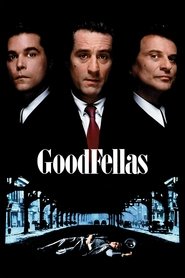
Martin Scorsese, Nicholas Pileggi, Ray Liotta, Lorraine Bracco + 9
-
shot purse and a beret and a writing crop. I am the von Stroheim of my book. That's my book. I put the music in if I want music. I cast the book. I describe people I want to do. The movie has nothing to do with the book except it is the basis of the movie. But the vision of it and the mood of it and the color and the real casting for the movie, all of that's the work of the director. What the author of the book has to do
15:05 · jump to transcript →
-
of a world filled with gods. You know, this guy who had been up there with the gods up in Olympus and then was cast down. But he'd look back and he'd say, ah, there was Jimmy two times, you know. And he'd go, I mean, disreputable characters all, but in his mind as a young person, they were gods. And yeah, great warmth and affection between them all, even though within maybe a year or two they'd be shooting each other. Beautiful.
18:57 · jump to transcript →
-
I had auditioned for After Hours. And Marty has been the only director that has ever called me to say, Lorraine, I'm really sorry that I'm not going to give you this part, but I want you to know that I think you're extremely talented and I know we'll work together one day. So it was a big blow.
40:23 · jump to transcript →
-
-
-
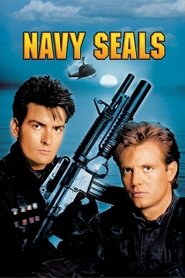
The way he first came up as a candidate to direct this movie is kind of interesting because it actually... Teague's name came up while Marquand was still technically assigned to the movie. What happened was Brenda Feigen was visiting her brother on the set of Oliver Stone's Wall Street. Now, this was obviously a couple years before Charlie Sheen, one of the stars of that film, was cast in Navy Seals. But Brenda Feigen's brother...
16:02 · jump to transcript →
-
Go back to school. I'll do the college route. I'll stick to the plan. And he booked his first audition, which was Grizzly 2, which wasn't released for many years. Right, think about until like 2020 or something. Even though it had George Clooney in it and Laura Dern, Deborah Foreman, Louise Fletcher, John Rhys-Davies. I don't know why it wasn't released exactly. But anyway, the fact that it wasn't released, it kind of spooked him. Like he felt encouraged that he booked the job, but he was kind of spooked and...
50:17 · jump to transcript →
-
And then he moved to Hollywood. And his first week here, he auditioned for a non-union karate film that paid $90 a week. So it wasn't like he wasn't getting a SAG card. He wasn't getting a lot of money. But it led him to work with drama coach Vincent Chase, which kind of makes me wonder if that Entourage character is named after him. But Vincent Chase's other students were Michael Biehn and Bill Paxton. So again, we're back in the same circles.
1:10:49 · jump to transcript →
-
-
-
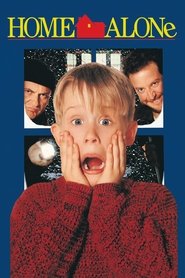
Hey, that's you. - That's me. So this was, uh-- I guess we... We could start about... Talking about the beginning of how this whole movie came about, really. I was in dire straits at the time, in terms of my career. I had just come off of a complete disaster, a big bomb. I didn't know if I was gonna direct again. I thought I'd have to go back to writing. So I was in Chicago staying at my in-laws' house... ...and my first daughter was just born... ...and John Hughes sent me, out of the kindness of his heart, two scripts. One was called Reach the Rock and the other was called Home Alone. One of them, it was rumored... I think it was this one. was written over a weekend... ...which some critics would probably jump on the bandwagon... ...and say, "Well, we always knew that." - Exactly. Ha, ha. So I read Home Alone and immediately responded to it. I thought it was just a great, great piece of material. And it talked about some of the things that I was interested in making a film about. Now, we had a meeting, I remember, in New York. I just-- It was-- You and my father were talking most of the time... ...and I was just imitating everything you were doing. Everything I was doing. - Yeah. You'd drink your water, I drank my water. Like that. I think I did that... I think I way overdid it. I think I just kept doing it the whole, like, hour. Well, you know, the interesting thing is we... Again, it was the kind of situation where we looked at hundreds of kids, again. And I was like-- Even though I didn't know if I'd ever direct a film again... ...I was like, "Well, you know, Macaulay was in Uncle Buck... ...and I don't wanna just cast him based on John Hughes producing the movie... ...because then it looks like I'm gonna give in to John Hughes and be a wimp." And I met all these... I met hundreds of kids. And when I met Macaulay, there was just no one else who came close... ...to what we needed for this film. I mean, really, in terms of an actor... ...a Child actor, at the time, you were the most unique, original kid I'd ever seen. So that was pretty... - Oh, thank you. I mean, I totally agree with you, but thank you anyway. But it really is-- It's sort of, uh... Because it was the fact that you, um... The camera loved you, obviously. You see the shots from the film. The camera loves you, but at the same time, uh... ... you were relatable to every kid in America... ...because you weren't an idealized version of a kid. Kids are used to-- Accustomed to seeing this ridiculously... Shirley Temple, and the curls and the whole thing, you know. And there was just something enormously real about you. That, and I could remember my lines and I had a lot of energy. That is true. You did have a lot of energy. Almost a sad amount of energy. It was, I mean.... Still do too. Uh, now, do you remem--? Like, this particular scene. We're starting from the beginning of the film. And I'm curious, because there were so many scenes in the film... We were talking before we started. where we would shoot your coverage first and then send you home... ...or I'd still be in jail. - Child labor laws. Yes, I'm still well-versed in the child labor laws. So there are obviously certain elements of the film-- Like this. Do you remember this being shot? - No. Because you weren't here. - I remember we did the whole... There was a whole sequence with, you know... ...people coming up the stairs, down. - Right. He's there, and the pizza guy's there. I remember that, and just like, you know, trying to coordinate that whole thing. But, no, in general, there's a lot of stuff... There's a lot of holes in it... In my memory. And this guy went on to do something on Nickelodeon. My kids know him. Yeah, Pete & Pete. - Yeah, Pete & Pete. Is it still on the air? - No, no. It lasted a couple years. It was actually a really kind of neat show. Yeah, my kids loved that show. But what was interesting about the whole look of this film... I guess we could talk about it a little bit. You'll even notice... Some people will think, "Well, this wasn't intentional." But we intended the film to feel like Christmas sort of. I wanted the house to feel very warm. You look at... - Greens, reds. Macaulay's wearing greens, a green and red shirt. There's a green and red jumper sweater on this guy back here. The wallpaper is all... - That's very clever. All conveying a warmth of Christmas and something that, uh... It just was interesting to us. So it wouldn't be over-the-top, but it'd feel warm. I wanted the house to feel like a warm place. Joe Pesci. What do you remember about Joe Pesci? What is, like, your first--? My first-- Gosh, I don't even... I have-- I still show this. I have a scar on my finger. - Uh-huh. We'll get to that part near the end... - Ha-ha-ha. ...when, you Know, he says, you know: - Okay. "I'm gonna bite each one of your fingers off, one at a time." During rehearsal, he actually bit my finger a little harder than I think he thought. I still have a little scar on my finger. It's my little Joe Pesci tooth mark. I'm telling you something, I believe... And I know Joe would probably get a little upset with me about this... ...but there was a little professional jealousy from a lot of the actors on set... ...because you were the star. There's this little kid who was the star, who we were all paying attention to... ...who was carrying the film. And there was a lot of passive-aggressive stuff going on. And I don't think Joe meant to bite through your finger... But, heck, you know, you never know. He was not particularly happy during the course of making this film. And I don't-- I think he would probably say the same thing. He had just come off of Goodfellas and Raging Bull, and he was... I don't know, did he win the Academy Award? He won for Goodfellas. His acceptance speech was, "Thanks," and that was it. Okay. Well, there you go, so, um.... And when he... I remember I was such a fan of his. Asking him to do the Goodfellas... The clown speech, you know. "Make me laugh," you know? "What do--? Am I funny to you like a clown?" And he would do that every day, and it was great. But at the same time, I could feel it from the actors. Because there's always a sense of rivalry between actors. There was this feeling of, you were the star of this movie, and that was un... That was not really common at the time. - Yeah, yeah. It created an interesting tension on the set, I have to say. Yeah, see, I never really felt that, but I was 9. Everyone around here knows he did it. It'll just be a matter of time... ...before he does it again. What's he doing? He walks up and down the streets every night... ... Salting the sidewalks. Maybe he's just trying to be nice. No way. See that garbage can full of salt? That's where he keeps his victims. The salt turns the bodies... ... Into mummies. Wow. - Mummies!
0:21 · jump to transcript →
-
Branch was never one of my favorite shots. Always looked fake breaking off there. We could never get it right. We never had money. Shh! Movie magic. Shh! Don't say anything. Movie magic from 17 years ago. - Mm-hm. It's hard to believe. - It really is. Now, this guy was my driver. I have a nasty habit of casting my drivers in my films. A lot of these guys are Transpo. - Both of those two guys are Transpo. And that guy was Pete, who drove me every day to both Home Alone films.
13:28 · jump to transcript →
-
This is a... You know, this is an interesting scene... ... because, again, the comedy... These two really worked well together. You believe them as a couple... ...and the comic timing is really pretty sweet, I have to say. I remember when I watched a lot of the dailies... ... they would always fool around whenever you... You wouldn't yell, "Cut," and they kind of just... They'd keep going a little bit and do some silly stuff. I think they really-- You know, again, it was a kind of... At times, it was tense being on the set... ...because these actors, who are so good, didn't know why they were there. And on the second one, that eased up completely. Because everyone felt that they had a responsibility... ...because they knew a lot of people would see this movie. Now, here's something I always felt pretty horrible about because... ...particularly once you have your own kids, this is the last thing you want them to do. This was a big worry, I remember. - Oh, yeah. Whether or not this was gonna stay or not. See, no one really ever understood when I'm lining up the sled... . that it doesn't exactly line up with the door. There's people who watch it who actually giggle, I remember... ...saying, "That doesn't line up. How is he gonna do that?" Yeah. You would've smashed into the wall. Yeah. But that was Larry. I remember watching the dailies. That was hilarious. Larry, our stuntman. - Yeah. Stuntman, literally. - He was probably 20... No, maybe he was about 30 back then. - Yeah. And he was your size. - Yeah. He was built like me too. Now, he was amazing. He would do anything. There's one moment coming later when we'll talk about Larry. Where he falls? - Where he falls, and he froze that day. He didn't wanna do it, but Larry had... As most of the stuntmen did in this movie... I don't know if these types of stuntmen exist anymore. Yeah, I know. - Willing to kill themselves for... It's amazing. I have a lot of that, yeah.... ...a lot of memories of these guys doing all kinds of crazy stuff. Oh, yeah. - They were my favorite, the stunt guys. The stunt guys were great. - When you're 9... ...they can do all kinds of neat stuff. - That's true. Ha, ha. Oh, yeah. They were always my best friends. We'll talk about-- A little later, we'll talk about Troy Brown and Leon Delaney... ...the two stuntmen for Joe Pesci and Daniel Stern, who were truly... Truly went above and beyond the call of duty. I haven't spoken to them in years... ...but they probably are still in a great deal of pain... ...because of some of this stuff. Daniel Stern is interesting... ...because Dan Stern was my first choice for this role... ...and the studio didn't wanna pay him at the time. We cast another actor, unfortunately-- This is the only time in my career this happened. and we did a screen test with the other actor and Joe Pesci. And the screen test was flat... ...and the other actor just couldn't really improvise with Joe... ...and you didn't believe him in the role. And I had the-- I had the horrible situation of actually telling the actor... ...I couldn't use him. Basically firing him. Oh, boy. And then the studio then understood. They saw the screen test, and they were willing to hire Danny... ...which was really an amazing working situation for me. He's one of the funniest guys I've met. And he truly was up for anything, as we'll see later in this commentary. I still have that sled in my office.... In my office here in San Francisco. I just saw it before I came over here. Signed by everyone. Signed by everyone. That's really cool. - Yeah. And when I get a little older, and things start not working out in the career... ...1 can sell it. - EBay. Yeah, eBay.
25:39 · jump to transcript →
-
-
-
Now, in terms of the people that you've worked with throughout your career, I mean, you've had very interesting and very eclectic casts for all of your movies. And this one's no exception. In fact, re-watching the movie again, I was reminded of the fact that even the small parts, like you've got C.J. H. Pounder and Stephen Root and Daniel Von Barg and a lot of really great character actors in these roles. How much input did you have into casting?
11:00 · jump to transcript →
-
real New York voice. It was very funny. I said, oh, he's pissed now because he's doing his New York voice. Well, we have James Lawrence from Street Trash there. Exactly. Wonderful actor. I cast him just based on that. And Frankenhooker, I said, this guy's got to be in the movie. Great choice. So, yeah, if we want to talk a little bit about Remy Ryan there and her character, because I have to admit, when I first saw the movie,
16:26 · jump to transcript →
-
Yeah. I mean, it's become quite a powerhouse for film and television production in the last 10 years. And at that time, there wasn't that much. But it was ramping up. It was starting. And you have Jill Hennessey here playing Dr. Lazarus. I was curious about how you cast her. Has she done Law & Order at that point? Oh, no, no, no. This is way before that. Yeah, I thought so. She had done a picture called The Paper for Ron Howard with Michael Keaton. Right, right, right. But I think this was her...
31:01 · jump to transcript →
-
-
multi · 2h 24m 3 mentions
Alex Thomson, Terry Rawlings, Alec Gillis, Tom Woodruff Jr. + 3
-
The light coming from the top was a 4K xenon lamp, which gives you very straight beams, which I thought would be quite a good idea. I shot it up through a mirror because you can't tilt them down or the condenser burns. But we had a mirror above the set and I shined it from the floor onto the mirror. This autopsy scene was a favorite of Fincher's, too, because we had created a body of Newt that had multiple layers of tissue, skin and musculature that could be cut through, and the bones opened up. It's a lot of graphic coverage that's not in the final movie. The body of Newt was actually based on... Alec and I had done a life cast of Carrie Henn during Aliens, and while we were in London Bob Keen's shop actually had a casting of the head. We were able to get that and remold it, so we were able to duplicate what the actress had looked like some five or six years previously. There is intercutting here with the real girl as well. She has a lot of fuzz on her face. - Yeah. Backlit fuzz.
17:31 · jump to transcript →
-
Yeah, there's that... There's all those cuts now. So now we're back into footage that was shot with the creature in LA. And this was actually... We built what we called a teenage alien and retrofitted it to use in this scene. Originally we built what we call a "Bambi-burster." That's the teenage alien which spits acid at one of the guys in the vent shaft and served us double duty here. And we built a little rod-puppeted version. This is a CGI version, which we had the benefit of the CGI in the 21st century here, which we didn't really. We built a rod-puppeted version, and we also tried a little dog in a costume. We tried a whippet in a costume. And he did pretty good at the audition. Then once you got him in front of the camera with all the rubber on, he kind of froze up a little bit. It was pretty funny. He was a nervous little doggy. And once we got him in situ, with all those frightening chickens around him in their cages, he kind of seized up and couldn't perform. But we built a Bambi-burster rod puppet, which was a one-to-one scale rod puppet, which had some mechanical stuff in it. I think we may have shot some elements with it. But it was never comped, it was never completed. The decision came down that they were going to go... Use the Rottweiler instead. And then when we got back to LA, we started building Rottweilers and mechanical dog parts and stuff like that for the scene.
29:33 · jump to transcript →
-
It was a marvelous cast, actually. I'd never worked with Sigourney before, but she's quite intense about what she does. She cares a great deal. It would be very easy, having established Ripley, to just walk through it and say "Well, Ripley does this and Ripley does that." But she really searched for the meaning of what she was doing. A consummate actress, I must say. And Charles, of course, was most beautifully cast as the doctor. He's very accommodating. He knows filming, he always hits his marks and he's very kind and considerate. He knows everybody's name on the film, right down to the girl that gets the tea. He's very, very nice. Absolute gentleman. Actually, the color of the sets helped what I was trying to do, because they were gray. White walls are terrible because they sing back at you, but this gray helped. I could get light onto it, and yet it wouldn't blow back on me.
40:05 · jump to transcript →
-
-
-
while we were on a lunch break and we had to evacuate stage 16, which is the largest soundstage on the Warner's lot. And we had to stop shooting for a day. But all of this was really, really interesting because all the... Wait a second. Andre Gregory and Jesse Ventura. That's a great combination. That's a credit you don't see every day. That pretty much encapsulates the casting of this movie. Like we got my dinner with Andre and Jesse Ventura. The governor.
8:27 · jump to transcript →
-
Nigel Hawthorne, who was nominated for an Oscar for Madness of King George. I got the sense he thought he was slumming here, but he really does a great job. Absolutely. And just when you think things are getting serious, Glenn Shaddix, who I work with on Heathers and from Beetlejuice, comes in. I cast him because of Beetlejuice, actually. That was the reference. And then the hairdo and the kimonos and all that. And he's a great character because he actually has an arc. He actually, like, he just goes from...
29:38 · jump to transcript →
-
Edgar Friendly. Dennis Leary, another man who took my script as a starting launching pad. Well, the biggest launching pad is coming up right now, Dan, because this is the first ever screen appearance of Jack Black. Oh, yes. Who I cast as, basically, it was a non-speaking role. And...
1:22:03 · jump to transcript →
-
-
-
We asked another kid who came into audition. He said, you know, a kid that sort of vaguely resembles me or looks like he could be offspring. And he took me straight to this kid. So he was a real find because he had a lot of natural ability. Most of the other actors here we found in Ireland. This guy was from Dublin.
2:52 · jump to transcript →
-
I'd done virtually nothing before. I think she just finished a drama education at Oxford. And, you know, whenever I do the audition process for, you know, casting, it's... I don't make anyone read because I think you don't find much else out than whether they can read or not. It has very little bearing on...
30:22 · jump to transcript →
-
So of course I cast her.
31:23 · jump to transcript →
-
-
multi · 1h 54m 2 mentions
Jean-Pierre Jeunet, Hervé Schneid, Alec Gillis, Tom Woodruff Jr. + 5
-
Pitof, was that making fun of Americans, the way those soldiers are chewing gum? Yes, sort of. It's very Jeunet. And they're chewing in sync. And it's... Yes, it's... - Making fun of Americans. Tom Woodruff and Alec Gillis made this fake Sigourney. It was a real pleasure to work with this guy. Here's our first shot. The body of this little girl was based on photographs of Sigourney as a child. Then we worked them into a sculpture based on a life cast of an actress that the casting agent got for us. Look at this beautiful morph. Oh, yes, indeed. We morphed to Sigourney as an adult. That face looks an awful lot like the way she looked in Alien 3, when we took a life cast of her. That's right. And we used a body double to cast the body, didn't we? That's right. And we used a body double to cast the body, didn't we? This is the surgery scene. That was a nice little mechanical chest I made with some digital help there. The laser beam is digital. So it's part of my stuff as a second unit director. That's right. This was a fun little surgery scene, with some of the interactive tissue. Silicone chest that was laid on top of Sigourney. I love the look of this. Darius Khondji did a great job. The way the slime looks is almost metallic-looking. It's got such a beautiful reflectivity. Isn't that great? I love this. It's really disgusting. How it's... Then pop! The head pops.
3:31 · jump to transcript →
-
I remember these signs - this is the psychological tests - and Jean-Pierre had something specific in mind, in terms of the primitive drawings of apples and pears and cows and cherries and things. He went through an amazing amount of artists trying to get primitive-looking drawings of fruits and little tidbits. It turned into such an assignment. He couldn't find anybody who could nail that style. Which had something to do with what he had seen as a Child - basic, primitive illustrations, which actually come back in his film Amélie. We get a sense of that naive, childlike graphic thing, which comes from a children's book, which, I think, is a really big deal in Jean-Pierre's imagery. I love Dan Hedaya. I love the Coen brothers' movies. You remember, he played in Blood Simple, the first movie of the Coen brothers. Interesting casting. I wondered if Jean-Pierre would have picked Dan Hedaya had Jean-Pierre grown up in America and seen Cheers. I love the lighting. You had a lot of lights coming up from the floor. Exactly. We used an optical process, and the folks were very nice with me because they made all the prints in the world with the process. And it was very expensive. And they made maybe 3000 prints with the process. The name of the process is ENR. It was invented by Storaro, the Italian DP.
8:49 · jump to transcript →
-
-
-
Darren Aronofsky
Mark Margolis was actually cast by our casting director, Denise Fitzgerald. She ran into him in a supermarket and told him she had a perfect role for him. And he was like, there are no perfect roles for me. But he came in, read, and once again we cast him on the spot. He was perfect for the role. I thought he actually was too young when I first met him, which is amazing because...
24:05 · jump to transcript →
-
Darren Aronofsky
And that's King Neptune, who's a character that I've dealt with in several different projects that I've written. King Neptune is actually the living King Neptune who's somehow lost his trident in this world of evil and is searching for it with a metal detector on the beach of Coney Island. And right there, he finds something else. It's not his trident, but it's almost as good. And it intrigues Max and brings him over. The original King Neptune that we cast was a...
38:41 · jump to transcript →
-
-
-
silly girl in distress, and she gave it something. She gave it, you know, actors bring what they are. 90% of directing actors, no matter what anybody will tell you, 90% of directing actors is casting. This guy is no ordinary hitman. No, this one's extraordinary. Let's get the hell out of here. This place is making me itch. Don't move! Don't move!
27:49 · jump to transcript →
-
Again, I really do believe that directing actors is mostly casting them. I think you can sometimes be of help. I think it's quite often very important to stay out of their way. You cast an actor because you've seen their work, you've cast an actor because you think they're good, and you cast an actor because they bear a resemblance to your preconception of a part.
36:26 · jump to transcript →
-
-
-
-
-
-


Related topics
Other topics that frequently come up in the same commentaries.