Topics / Performance
Casting
128 commentaries in the archive discuss this, with 465 total mentions and 10 sampled passages on this page.
Filter commentaries
Filter this topic by the film's decade or the type of commentary.
Showing 4 of 128 commentaries
Clear filtersBy decade
Across the archive
ranked by mentions · click any passage for the moment in the transcript
-
-
Alan K. Rode
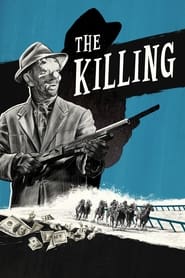
There were no film schools back when Kubrick began. He was a movie savant. He watched literally every movie made in Hollywood and also internationally. He went through the Metropolitan Museum of Art's entire film collection twice. Kubrick knew every actor and knew exactly whom he wanted to cast in every role in The Killing.
2:24 · jump to transcript →
-
Alan K. Rode
In the book, the guy that Sherry's involved with is also manipulating her and won't have much to do with her until she leaves her husband George, at least initially. Vincenzo Eduardo Zoino, i.e. Vince Edwards, was cast by James Harris, who knew him from New York. Edwards came out of the tough neighborhood of Brownsville, Brooklyn, and had that dark ambience so suited for playing gangsters as he does here.
15:21 · jump to transcript →
-
Alan K. Rode
In 1961, Edwards hit a home run with an improbable bit of casting as a surgeon in the title role of Ben Casey, a hit TV show that ran for five years during the 1960s. For a time, seemingly everyone in America watched Ben Casey, and Vince Edwards became a household name across the country, similar to what Sea Hunt did for Lloyd Bridges. I'm sorry, baby, but don't bug me. I can live my life a certain way. I can't stand it when the walls start closing in.
15:57 · jump to transcript →
-
-
-
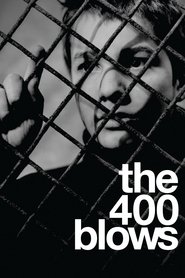
They improvised and fashioned a bed for Antoine. We asked co-screenwriter Marcel Moussy how Truffaut had cast his first feature, and Moussy told us this. For the main role, Truffaut placed an ad in France World that said something like, seeking young boy of 13 to act in leading role in a new film. He didn't even spell out any physical characteristics. So lots and lots of boys came to audition, and they came from just about everywhere.
36:35 · jump to transcript →
-
Francois was able to eliminate most of them on the basis of interviews. And then he had a few do some screen tests, including Jean-Pierre Léo. Jean-Pierre had run away from his boarding school in the southern provinces of France to take a train up to Paris to audition for the role because he had seen the ad in the paper. So quite apart from his actual screen tests, which were immensely successful because he showed a vivacity and a liveliness that were decidedly uncommon.
37:05 · jump to transcript →
-
working in cabarets in Paris, whom he could cast in minor roles. For instance, in the scene of the English teacher with stammers, that was a guy who did a nightclub act where his gimmick was stammering. Now, I'd written the script for the English lesson, and Truffaut had him do it with the stammering added. Truffaut's basic objective, since he wanted to go against the grain of what was usual in the movies, was to have fresh faces. In the case of his 13-year-old hero, that took care of itself.
42:31 · jump to transcript →
-
-
-
David Kalat
This scene represents another of the transformative changes wrought by Honda on the material, casting such an admired actor as Takashi Shimura turned Yamane from an alienating kind of mad scientist into a heroic central figure. Yamane's upset that the government's response to the problem is to try to kill Godzilla. He wants to study it.
30:35 · jump to transcript →
-
David Kalat
There's this ambiguity as to whether Serizawa or Ogata really constitute the male lead, because Serizawa is clearly the more complicated and interesting figure, and the more narratively important. Akihiko Hirata had been cast as Ogata.
39:21 · jump to transcript →
-
David Kalat
and Akira Takarada was cast as Serizawa. Honda swapped them at the last minute. Although it is now hard to imagine them in the reversed roles because they're so iconic in the performances they actually gave, if you watch Ishura Honda's earlier film, Farewell Rabaul, you can understand what motivated him. In that picture, Akihiko Hirata played a romantic young man opposite Ryo Ikebi as a brooding, deeply conflicted Serizawa-like character.
39:36 · jump to transcript →
-
-
scholar · 1h 32m 1 mention
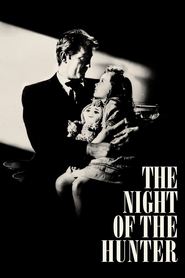
The Night of the Hunter (1955)
Terry Sanders, Robert Gitt, F. X. Feeney, Preston Neal Jones

Related topics
Other topics that frequently come up in the same commentaries.