Topics / Editing & post
The editor
96 commentaries in the archive discuss this, with 231 total mentions and 34 sampled passages on this page.
Filter commentaries
Filter this topic by the film's decade or the type of commentary.
Showing 19 of 96 commentaries
Clear filtersBy decade
Across the archive
ranked by mentions · click any passage for the moment in the transcript
-
-
I think here's where the score by Alan starts to bring us into a level that just becomes more and more throughout the movie from here on out. The first time I ever watched the movie from beginning to end, I had Alan there. I had Alan there, I had my editor there, I had my assistants there, and I had...
51:17 · jump to transcript →
-
And the big controversy that we had at the beginning of the movie is when I announced that I thought the movie should be made in widescreen. And everyone said, everyone, meaning my producers, my cameraman, and my editor, said, widescreen? This isn't Spartacus. This is a story about this guy with a low IQ. And this is when I started talking about it with Don.
56:24 · jump to transcript →
-
me not fun the fun part for me is in the editing room because that's where i have the most fun because it's just me and my film and my editor and you know all the you know the actual shooting of a movie is always just surviving just getting getting through the day and getting enough in the can so you can make it work somehow
1:09:30 · jump to transcript →
-
-
-
was the personal life stuff. Because he was really interested in that wedding scene, which I guess was there before him. But he liked that stuff and showing how grueling the job is and the toll it takes on the personal lives. But I think ultimately, probably in the edit at some point, they were like, it's about action. It's not about the serious drama of this job. It's kind of a little more Top Gun. Well, as you've pointed out, the...
21:05 · jump to transcript →
-
But it did begin that same year in 1974 when he hooked up with Roger Corman to work as an editor. I'm sure, you know, as probably a lot of people listening to this commentary know, I mean, Roger Corman in the 70s, you know, had this company, New World, that was just a, you know, I was saying that the Alfred Hitchcock show was a hotbed of talent. Corman...
37:19 · jump to transcript →
-
possibly through Woodstock, because Marty was an editor on Woodstock, one of many editors on that movie. So he may have known him from that, or he may have even known him from NYU, because they were both at NYU at around the same time in the early 60s. In any case, Marty recommended Louis Teague to Corman, and Teague's main gig there for a while was he edited a bunch of movies for Roger Corman, including Monty Hellman's Cockfighter and Jonathan Demme's Crazy Mama, which is a great movie.
38:59 · jump to transcript →
-
-
multi · 2h 19m 5 mentions
Martin Scorsese, Nicholas Pileggi, Ray Liotta, Lorraine Bracco + 9
-
And it was exciting what developed in this scene. All of a sudden, the tension that developed, it was scary, really. And that was shot very quickly. About five, maybe eight takes, but hard to cut because we had to keep hitting those levels. And every now and then it'd go off to another level and it didn't quite hit right. It's just not natural in different takes, things would happen. And so we had to keep constructing back to the way it was written. Editor, Thelma Schoonmaker.
23:15 · jump to transcript →
-
There's a tremendous amount of improvisation because he knows the parameters of what he wants to say and do. So that allows him to change things as people come up with ideas. Whether it's a cameraman or a prop man, a set designer, he'll take all this and very often put it on film and then decide later on what he wants to do. Don't forget, Marty was originally an editor. So that's the process he likes to go through.
27:24 · jump to transcript →
-
Editor, Thelma Schoonmaker. When Ray Liotta's on his way to pick up his brother at the hospital, and he almost has an accident, and there's some very quick cutting of his feet flying around, and the car stops just before hitting the car in front of him, Marty had designed that all to be edited to The Who's Live at Leeds. And so we wove a little texture of all those pieces together, just exactly the way he had conceived of it, and it worked like crazy.
1:54:53 · jump to transcript →
-
-
-
Like Frank Marshall, she's a California native. She was born in Berkeley. And she began her career in San Diego working at a local TV station as a camera operator and editor and whatever else needed doing. She ended up producing a local talk show for four years in San Diego before moving to Los Angeles in the late 70s to work in film production.
45:23 · jump to transcript →
-
Anyway, I guess once it was done or in the edit, at some point he decided, you know, let's make it taller or deeper. They also, you'll see a geode room at some point here too that was like an intricate set that in the publicity materials they talk about a lot, but in the movie you only see about one shot of it. And I can see why they wouldn't want to cut it because it looks pretty cool and it sounds like a lot went into making it, but it wasn't really necessary because it's happening...
1:21:39 · jump to transcript →
-
Yes, we definitely should talk about it. I mean, you know, again, as we've touched on throughout this commentary... Because this is probably the hardest part for her, I imagine, the climax with all of these different locations. Yeah, well, as we've talked throughout this commentary about, you know, just the sort of top level of talent involved across the board. I mean, the actors, the production designer, obviously Kennedy Marshall. You know, you get... This is a movie that represents, like, Hollywood craftsmanship at its peak, and the editor...
1:29:55 · jump to transcript →
-
-
-
So I just kind of recut it. I remember when Susan Shipton, my editor, came in in the morning. This is the last film I edited on film, actually. So she came in the morning, and there was this mess of film on the floor. Because I was just madly trying to kind of put all these scenes together and overlap and kind of create this feeling, knowing that I could then hand it to you, Mychael, and that it would all...
44:52 · jump to transcript →
-
How did the composing community allow that appropriation of their own responsibility as artists? I don't quite get... Well, I think it goes even earlier in the process than that. It's very... In the typical process, the picture editor, as soon as assembly, you know, while the footage is being shot and assembled, the picture editor nowadays absolutely...
1:28:06 · jump to transcript →
-
universally will start putting in temporary score music from other films and therefore making huge decisions without really very much thought and and not from a knowledge of being a composer from being a picture editor and they cut to this music so that if you take this temporary music out the film isn't even cut to its true self it's being cut to music that is not even
1:28:34 · jump to transcript →
-
-
-
Steve Kemper is an editor I've worked with in the past four films. He is a truly gifted editor. A lot of this is editing. I thought what would be interesting when I designed the sequence was to have three different vantage points, three different series of
48:10 · jump to transcript →
-
A good film editor can make a director look a lot better than he or she really is. I got complaints when I was shooting the film, specifically in this scene, that things were too dark. I must say, when people saw it together, they didn't feel that way. So quite often, when you're taking chances photographically, people will complain when they see dailies.
1:24:30 · jump to transcript →
-
This is about, you want to scare people, don't show everything. So to me, not to know where the hand was going to come from and not to telegraph where the hand was going to come from. And then I was trying to make you look down. That shot there I thought was a very clever touch by the editor, to make you look down before the hand comes to the roof.
1:41:17 · jump to transcript →
-
-
-
Lachlan Craig. Now, I've often thought since making it, and in the edit, I thought, how am I going to get time out of this? And I figured I didn't need this scene. As all this talk goes on about, you know, doing this and doing that and, you know, how he picks the fight and all this kind of stuff, when it would have been really simple to just walk or ride up to the guy and just nail him over the head with a mace and say, okay, the fight's picked, and then ride off.
1:19:58 · jump to transcript →
-
I mean, I was lucky, yes, but, and fortunate, but to have an editor as good as Steve Rosenblum was to really bring his own thing to it. I mean, he took what I gave him and he managed to sort of make it better, you know, which is, when it comes right down to it, the edit's just the final rewrite. And he's a master of it.
2:03:35 · jump to transcript →
-
-
-
It is, and the whole idea about that is make it seamless. That's the goal, so that later on an audience forgets about all kinds of techniques you use to just follow the story and that you get the feeling of reality. That's what I always like, that you have a feeling of reality to it, that it feels real and not, oh, we watch a movie here, look at that, great shot, great effect here, great effect there. You should forget that. You should just go with the story and the drama. Who was your editor?
1:25:37 · jump to transcript →
-
Yeah, I mean, at least I try, because sometimes it's so time-pressed situation in post-production that you have, especially if it's sort of not so important dialogue with smaller parts, you give it to your editor, you know, who does the dialogue. But no, normally I would try to be always there, especially with the big parts and the important stuff, yes. Because it's, you know, it's acting. It's important to be there. That's a big part of post-production. Yes.
1:38:39 · jump to transcript →
-
-
-
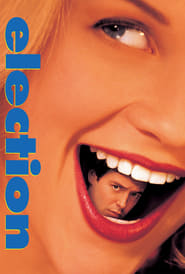
Alexander Payne
I used many, many, many of the same people between Citizen Ruth and Election. The production designer, Jane Stewart, and the DP, Jim Glennon, and the editor, Kevin Tent, and the composer, Rolf Kent, and even the same assistant cameraman, and the same prop master, and a lot of the same grips and electricians, and Omaha crew people, a lot of the same actors. In a way, Citizen Ruth was something of a dry run for Election.
13:48 · jump to transcript →
-
Alexander Payne
Her dad's a golfer. Not that it's that important, but something. What happened at the speeches was an unconscienceable travesty. That little bitch Tammy Metzler wanted to make a fool out of me. Well, it wasn't going to work. If all those students who cheered for Tammy Metzler only knew how hard I worked for Carver. Like all the late nights I spent at the yearbook office just to give them their stinking memories. I actually was editor-in-chief of my high school yearbook when I was a senior, so...
45:16 · jump to transcript →
-
-
-
-
-
-
multi · 2h 24m 1 mention
Alex Thomson, Terry Rawlings, Alec Gillis, Tom Woodruff Jr. + 3
-
-
-
multi · 1h 54m 1 mention
Jean-Pierre Jeunet, Hervé Schneid, Alec Gillis, Tom Woodruff Jr. + 5
-
-

Related topics
Other topics that frequently come up in the same commentaries.