Topics / Editing & post
The editor
96 commentaries in the archive discuss this, with 231 total mentions and 42 sampled passages on this page.
Filter commentaries
Filter this topic by the film's decade or the type of commentary.
Showing 26 of 96 commentaries
Clear filtersBy decade
Across the archive
ranked by mentions · click any passage for the moment in the transcript
-
-
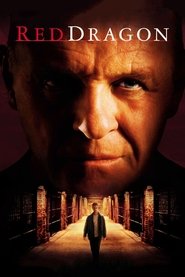
I went to New York with Dino, and I was very nervous. This was Tony, Anthony Hopkins. The thing I did know and what I was confident about was the type of movie I wanted to make. Like I said, I went in there knowing the tone of the movie, my approach to the movie, how I wanted to not show any of the gore. I didn't want to make a horror film. I wanted to make a film that was psychological, emotional, and smart. That was what was on the page. And the only scene that Tony had a concern with when I sat with him was this scene right here. Tony was concerned that as originally written, his attack on Graham here was too graphic. By the way, it's an interpretation because 10 directors would direct a scene in 10 different ways and show various degrees of violence. It's about showing the details of the guts falling out of his stomach, or the blood, how much blood to show. And I chose to play it mostly on their faces. Once the attack happens... Here's my little homage to Silence. You see the... - I see the bug. You like that. So I chose to play the violence part of this scene on their faces. I love this book. This is an original. My prop guy, Brad, found this original book from France, Larousse... When I read it, I had no idea what the hell it was. It's the bible of cookbooks. - Yes, I learned that quickly. He found this real old French cookbook. There was a lot of dialogue about how do we sell his moment? It's really just a subliminal thing. It wasn't really supposed to be so pointed where it was like, "Oh, sweetbreads." I thought sweetbreads was brains but it's not. It's actually... Thyroid. -... thymus. I learned so much about anatomy on this film. If you work on a Lecter movie, you learn a lot about cooking. I thought Edward was fantastic. There is a tremendous intensity of performances in this movie. And really a dream cast as Brett already said. If you could have anybody in the world for these parts and be lucky enough to get them. It's pretty much what happened to us. Great actors want to play good characters. They want to play great characters and all of these characters, down to Freddy Lounds, and other smaller roles, were just written so well. They were interesting and dynamic. And these actors were interested in playing this. To convince these actors to do a third in the series, all that went out the window when they read the script. Certainly once they started working. There's our cold opening. I'm very proud of this title sequence because it was actually done two days before we had to lock picture. My editor, Mark Helfrich actually was the brainchild behind this because... You re-shot the journal here in a very interesting way. Initially, this was done in a much more straightforward way with the images very flat against the screen. Yes, a lot of times. Mark is kind of... Everybody on my team, from my AD to my production designer, are filmmakers. Mark is a filmmaker in his own right and he just understands the visuals and storytelling. I love how, you know... But this was written. - Yes, it was. But the way that the camera roams over these pages and when we go in very close and it gets grainy, the camera movement left to right, up and down, is all not scripted, of course. This is something I don't really have the patience for. Mark kind of took this book that he was fascinated by. I think he has a copy of it in his closet at home. He just knew every page, every frame and went with Dante and literally just shot. This is a wonderful opportunity. This kind of title sequence is sort of old-fashioned in a way. But it's a wonderful opportunity for a screenwriter to get information in quickly to cover a lot of ground between the arrest of Lecter and where we are when the movie is going to start. Covering a period of several years, you are doing that without any dialogue just by these images. It's a very useful shorthand. Danny did the same thing that Ted did with the script in this sequence that Mark did with the visuals in this sequence. Danny did the same thing with the music. I think the music here is so fantastic. It's very much like a Bernard Hermann score, which I knew was a big inspiration for Danny. Danny is a big fan of Bernard, and this was his chance. He's done darker scores, but they've had a kind of lightness, or comedic darkness to it. Danny did something here that kind of made people's skin crawl in the theater, like, "You're in for it. "If you're gonna sit through this movie, you'll experience some stuff. "Shit's gonna go down."
6:02 · jump to transcript →
-
So that sequence, those two minutes of the movie, which could have been a very boring, dull sequence. I had a long conversation with Kristi Zea. It was wonderful. She called me up and said, "This book of Dolarhyde's. "What does it look like? What's in it? "How is the handwriting? What kind of photograph?" We had a long conversation which for a screenwriter... You don't often get a call from the production designer to talk about a prop. It was a wonderful opportunity to be part of the design of the movie in that little section. You've got a beautiful setup here, Will. This was actually in the Florida Keys. You know why I'm here? Was it Marathon? Yeah, I can guess. The location is meant to be Marathon, Florida. Dino wanted us to shoot in North Carolina because he had studios there and a house on the beach or Malibu because it's close to his house in Beverly Hills. But the truth is, I wanted to stay true. When I said I chose the tone, I'd really chosen the tone of the book, going back to the book. Everybody here was honoring the book. We really gave a lot of respect to Thomas' book. Tom Harris is a wonderful writer. When you're doing an adaptation like this, it's a great resource to everybody to be able to pick up the book, as you can go into more details than the screenplay. It's a help to both the production design and the actors, who can go back and find out details of motivation. It's helpful to everybody to have that bible to refer to. So when it said Marathon, Florida, I tried to stay true to that and actually go to the location in Marathon, Florida. It just felt like it was the tone and even the location, like Grandma's house in the same description of the rural area where it was, and the type of house it was. It was an old-age home once, which is really back-story, but Kristi incorporated that into the design. I was so happy that she and Ted really stayed true to the tone of the book visually as well when it described the locations. This was so much fun being down here, by the way. It was the end of the shoot, and we were just down there on the beach. This was probably the hardest scene I shot with these two guys. In what way? Because it's exposition? Anything with exposition... -/s tough. It's tough to make it sound like real conversation. But honestly, there's not a line in this movie that I'm not proud of. I mean I can't say there's a line... It was a tight script. We did cut a few lines and a few parts from scenes but Brett and I actually worked quite a bit on the script before the production started, and we had it pretty tight. And the shooting stayed quite faithful to the script. I have to say that every scene was hard for me because I'm used to scenes with not much dialogue. I, unfortunately, am a very talky screenwriter. So it was a clash of cultures. Coming from being a playwright, I guess. There is a lot of dialogue in this movie, I tell you. And it was not a single-spaced script. It's a long script, and I kept saying, "Make them talk faster. "Don't cut the thing, just make them talk faster." Ted's advice to me was, "Brett, when you're happy, "ask the actors for a take where they talk double speed." And I did that. Probably that's all the takes that Mark ended up using in the editor's room. He kept calling me, saying, "This movie will be four hours long "If you do not get them to speak faster." The thing you run into as a screenwriter, even with the best actors, is that you try to pace a scene to fit within an act structure and fit within the entire screenplay. But then actors wanna take very long, dramatic pauses. Actors want to look down and up, across the room, at each other, and finally say the line. - A lot of pausing. And that's what you're up against when trying to time out the length of the scene or act. I wanna say something about these actors. Once I got Edward Norton, I used Edward to get another actor. Once I got Ralph Fiennes, I used him, I got Emily Watson. - You parlayed them into each other. I said, "Philip Seymour Hoffman, I'm getting Mary-Louise Parker." I knew each one, who they were a fan of. I used them against each other to get them in the movie. I literally thought I'd be able to walk onto the set, and it would be the easiest movie I'd ever made because I had these brilliant actors. I could just say, "Action." I read one article or something about this movie that said this was the most distinguished cast that's been assembled in any movie in the last 20 years. But the truth is, it was probably the hardest movie I'd ever made because the smarter the actor, the more experience they have. It's a myth that these great actors don't need direction. They want direction more than any other actor. They want direction, but they have ideas of their own because in the end, it's up to them. They are the ones whose face is filling that whole screen. And they have to absolutely believe what they are doing, or they can't convince an audience of it. What I'm trying to say is, there was a lot of dialogue going on. A lot of intellectual discussions. And each of these actors are not only smart actors, but they're highly intelligent, all smarter than myself and... A lot of them have also directed or even written as well. They all had an opinion. And my job, I felt like it was my job to save the script. This was a script that worked to me. We had a table reading of it. It was fantastic. And Ted was
11:13 · jump to transcript →
-
It's hard to pull off this stunt with rising excitement, meanwhile. I'm amazed by him in this scene. It is a very hard thing to pull off. This is an example of a scene that my editor, Mark, was particular about, collaborating with me and telling me, "Brett, how are you gonna pull this off?" I said, "I don't know, I'll just shoot it." He had me bring Edward to the edit room and took a video camera and shot the scene for me, before showing the way it might intercut since there are devices in here which are the flashes, and you've seen it in hundreds of films and I didn't want it to be false. He said, "I have an idea of how to do this." He shot the scene for me before I shot it. It was a great reference. We adjusted and tweaked things, but this is all protecting the cliché. You can see the power that editing brings to a sequence like this. It startles you and moves the story forward in a way that the story is always a leap or two ahead of the audience. And pulling them along behind it. That's a function of great editing. It is important here because once the audience is ahead of you, you're in trouble, they are sleeping. It's the same thing on The Silence of the Lambs, I used to worry that we were cutting so many tiny beats that the audience would be confused. And Jonathan Demme said, "Better if they're confused "for five minutes than bored for five seconds." And this film is very tightly edited. Gentlemen. Ladies. This is what the subject's teeth look like. The impressions came from bite marks on Mrs. Leeds. This degree of crookedness... Here we... Where was this? - This was shot in LA. This is shot in LA in a government building that the city gave us. Here's Bill Duke. - He's one of my favorite actors. Again, an example of the meticulousness that Brett brings to casting. These wonderful actors who could be the stars of their own movies, who are playing supporting parts in this. I literally called them and begged them to be in the movie. I love actors. I love great actors. I spend as much time on the smaller roles as I do on the bigger roles. It's important because an actor who has one line can take you out of the movie and hurt it in my opinion. It goes back to the whole question of tone. A single wrong note will make an audience self-conscious, and pull them out of the movie. This film is the opposite of any of the films I've ever done. Family Man, that had dramatic moments, was still a comedy. So you can go farther with realism, but this especially, when it's dealing with the FBI, forensics, and scientific... -[t has to be grounded in reality. - Very grounded. In order for the audience to accept the extravagant parts of the movie, the more baroque characters in the movie like Dolarhyde and Lecter, scenes like this have to be very credibly rooted in police reality, in procedural reality. Would you give that up? The other thing also is, when we're talking about the tone, the choice... I was thinking about It, why I really chose not to show, not only because of Silence, because even Silence might've shown more violence than this film. Really, because the only scene we have is the biting of the lips. We certainly tried to hold it down. But I think the reason was because when I went to the FBI at Quantico and started looking at all these visuals of serial killers' work, it was so disturbing to me. It really bothered me. I said, "Why do I want to do this to audiences? "It'll completely turn them off." As with Silence, what you really want to do with this movie is a detective story. You really want to do a psychological thriller, a detective story. You're not trying to make a horror movie at all. Sometimes they're referred to as horror movies. I've never understood that. To me, these are thrillers, detective movies. In this scene, Harvey's Jewishness really comes out. "You're the light of my life." He sounds like my grandmother. I love that line. I can't answer more questions. Here's Philip Seymour Hoffman, a great actor. Who we should not have been lucky enough to get for this small part. Yeah. He actually wanted to play Dolarhyde, and I wanted Ralph to do it. I had dinner with him, and then called them back a week later. He wanted to play Dolarhyde, and his schedule wouldn't let him do a bigger part anyway. And then I called him and said, "I think you should do Freddy Lounds." He said, "Let me read it again." Then he called and said, "I'll do it." He would've been good as Dolarhyde, in a different way. He would've been amazing. - I mean, a great actor is a chameleon. Remember? With the tubes hanging out of me? Forget that prick. This was a very difficult scene, too. This was difficult because... And this was a scene where Edward had a Iot of input as we were revising the script before we shot. Edward said, "This is a difficult transition for this character to make." Here he's out of the loop, he doesn't want to be involved in the investigation. He's sort of done a favor for his friend and mentor, Jack Crawford, but he doesn't want to get deeper into this 'cause of psychological and physical scars. Because of his commitment to his family, he doesn't want to do this. Now he has to do the most difficult thing he could possibly do, which is to confront Lecter again. There was a lot of back-and-forth and a lot of revision, and a lot of talk about how we might credibly motivate this transition in the story. Edward was actually very helpful here with his thoughts. I think it works. Because it's not the cliché of the guy jumping back... Getting back on the horse and showing off. I'm proud of how it turned out. Again, it was really Mark's editing of the scene. It's also Harvey's matter-of-fact performance here. It could, potentially, have been a real glitch in the story. Where the audience says, "He wouldn't go back to see Lecter again. "He's scared to death of Lecter."
21:36 · jump to transcript →
-
-
-
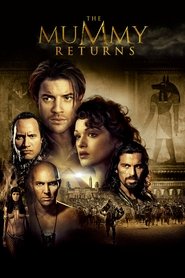
Hi, I'm Steve Sommers, the writer-director of this thing. And to my left is Bob Ducsay, the executive producer and editor. Hello, everybody. Here we go. Didn't we just finish this movie? So, as we sit here in ADR 6 on the Universal lot a couple months after this movie is open, the picture is closing in on about $200 million at the domestic box office, and
0:01 · jump to transcript →
-
I don't think he agreed. But, you know, it's fun. I mean, if I was designing London, I'd have put them all so you could see them all at the same time instead of spreading them all over, because with London traffic, which is miserable. It's a much better design. So some of our... In post-production, we had a... The visual effects editor was a British guy, and he was always appalled by that shot. This sequence here was shot in...
21:55 · jump to transcript →
-
And, of course, the cast is from everywhere, so... My co-editor, Kelly Matsumoto, cut all of this fight sequence here and did a fantastic job. There's a ton of footage and fight cutting is always very complicated. I think she really kept things moving here very well. You go back there, there's a good bent...
30:00 · jump to transcript →
-
-
-
They're not going to say, oh, it's a British film, we won't mind if the explosions aren't very good. They want it to be as good as a Mel Gibson film, as whatever's out there, really, that you're competing with in the multiplex. So I think it's money well spent and it's the end of our first reel. So you have this extraordinary sequence which starts with London empty and builds eventually to this incredible explosion across it. We used many, many cameras. It's brilliantly cut, I think, by our editor, Chris Gill, who did some wonderful...
16:46 · jump to transcript →
-
watching this editing process and seeing just exactly how much one can change the thread of the story in the edit suite. And they weren't in the same room. They weren't, in fact. When we put them in the same room together, we kind of... As you often do, concertina things that you keep separate. It's often better to, especially once the film...
1:09:11 · jump to transcript →
-
These scenes are always a nightmare for when you film them. Dinner party scenes, because it's all about left to right, right to left. Who's he looking at when he's looking that way? And you end up, basically, the truth is, no matter who you are, you end up going round the table, shooting everybody, and you double up sometimes because you want to make sure the editor's got enough in editing where the editor can control the pace of the scene and shape it a bit, you know? But it's basically...
1:14:58 · jump to transcript →
-
-
director · 1h 42m 3 mentions
Len Wiseman, Patrick Tatopoulos, Brad Martin, Nicolas de Toth
-
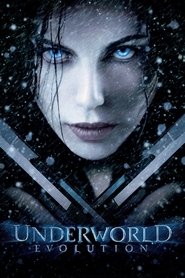
This is Len Wiseman, director of Underworld Evolution. And sitting in here with me today, far too close for my liking, I've got to say, if I can scoot over a bit, is Patrick Tatopoulos, our production designer. Say hello. Hey, how's it going, man? Remember that voice. And Brad Martin, our second unit director and stunt coordinator. Hello. And Nick Tatoth, our editor. Hello. Are you going to do that the whole time? Is that going to be your... Hello.
0:04 · jump to transcript →
-
He affected all the flashbacks. It actually takes a very long time to do all that. It does. It goes by really fast, but it's a lot of tweaking in the edit. Right, yeah. Actually, that chopping off of the head right there, and then also the chopping off of the head at the village right there, I know that you and Gary, the visual effects on-set supervisor, were at odds for a while saying that, well, he was thinking that it's not going to look good in 2D, and you're saying, well, no, it's going to look fine. And it ends up looking great in both shots where it takes his head right off.
15:29 · jump to transcript →
-
I was like, can I take off my shirt in this scene? I'm like, Scott, you're not even in this scene. He's like, no, no, I know. The thing is, because he has a thing about it, he's actually tortured over any time he has to do a torso shot. He kind of begs me if there's a way to get around not doing it. You know, it's really weird because he'd always show up in the cutting room with his shirt off.
49:44 · jump to transcript →
-
-
-
When I'm making the action sequence, I would like to use a different speed and a different camera movement to get a shot. Like if I have three or four cameras, okay, one camera maybe use 120 frames, and the second camera maybe 60 frames. The third camera maybe 30 frames, and the main camera stay on 24 frames. After I get all the shots at all the different speeds, and then I work it out in the cutting room.
46:30 · jump to transcript →
-
how I'm going to work. Until I see the real thing, then I could tell you, you know, okay, oh, this is right, this is wrong, and oh, maybe this is a little too much, you know, or this is not enough, you know. I usually will let the actors do it first, and then I will, okay, I think that is fine, you know, I think it's okay. Usually, I'm not going to say much. I just love whatever they do, you know. Even though the shot wasn't that perfect, even the performance wasn't that enough, but I could work it out in the cutting room.
1:03:33 · jump to transcript →
-
-
-
Jonathan Lynn
Or when we zoomed in or zoomed out, that's the camera moving, and there's a newspaper just spinning on a piece of black velvet. So we were able to do that sequence for about $1,000 instead of vastly more if we'd done it computer-generated or optically. And it was beautifully cut by my editor, Tom Lewis. That was an ad lib by Bruce, which is pretty funny, I thought. He just improvised that on that take, and only that take.
8:20 · jump to transcript →
-
Jonathan Lynn
I lent it to my neighbor. He went fishing. This neighbor. And they are very much in the style of the rest of the film, which is important. Jimmy Jones. We did a number of takes of Matthew nearly falling out of that chair and several when he fell out of it, which were hilarious. But somehow at this point we felt he was less of a klutz and we opted in the cutting room for the shot where Matthew nearly fell out of the chair. At last we thought he's learning something. He doesn't.
1:19:31 · jump to transcript →
-
-
-
One of the greatest compliments that I received after this picture was finished was from the editor, Walter Murch, and legendary Walter Murch, who just being in the same room with him is good enough, but let alone have him cut our movie for her, cut footage that I shot. But anyways, he was taken back by the depth of...
59:33 · jump to transcript →
-
There was a kind of calm that settled over us, and it was a great... Those were great, great, great days. Once we had all the footage, I would say that we were fortunate enough to work with the legendary Walter Murch, and this is an editor whose reputation certainly precedes him, and he...
1:08:20 · jump to transcript →
-
-
-
Noah Baumbach
This to me, this scene where Owen is shining his shoes, was sort of one of the key scenes of the movie of their relationship. He asks him very directly about... why he never sought him out. And there's something in the dynamic between Bill and Owen in real life that's reflected in this. When we were shooting this scene, Owen, who went to military school, he said they had some stuff for him to shine his shoes with, and Owen said, "We always just used a cotton ball." So we said, "Well, get him a cotton ball." And then he sat there, and while we shot this scene for a couple of hours, he shined those shoes the entire time. In between the takes, he was shining the shoes the whole time. He was very carefully shining the shoes, and he was, I feel like, connecting with something from his past. And I love both of them in this scene. This is one scene where I feel like they've really brought more than what was written or anything. And then, of course, we have this correspondence doc which has now arrived. Which, again, I guess it sort of plays into Zissou's need to sort of name things, and classify things, identify things. It's also a correspondence doc, a sort of, you know-- I get fear of intellectualizing too much, but it is sort of almost like a uniform. It's a way to identify yourself in a formal way. Yeah, and in this case, he's renaming him in a way he prefers. Right, it's a way for Zissou to kind of, yeah, exactly, create his idea of Ned. Now, you know, sometimes I feel like maybe we needed to give more time to Jane. There's a backstory for Jane about an editor that she's had an affair with, who's the father of the baby. It's really just barely hinted at. But hopefully it's enough to say, well, here's this mystery of what's going on in her mind.
31:02 · jump to transcript →
-
Noah Baumbach
See, Renzo, this is what I'm talking about... The character of Renzo, the editor, is played by Pawel Wdowczak, who is our sound man. And so he's the sound man on camera during the documentary stuff whenever we see him, and he's also the sound man of the film, which sometimes is very difficult because he's gotta do the sound, but he's also gotta look right. But he's a great-- He's from Poland, and he's worked on all of my films. And he has a wonderful spirit about him. And we wrote Renzo for Pawel to play. Yeah, we always had that idea. I don't know if you wanna talk a little bit about sort of like using... You know, what is it that it does for you as a director to, like, have-- You know, to have people who sort of mean something to you in your life or in your work actually then on-screen in some way. Yes. Well-- Yeah, because sometimes I feel like on a commentary like this, I'm saying, "This guy is Tony Shafrazi." - Right. "This is Isabella Blow." - And it can sound kind of superficial, "These are people I know I put in the movie." But I think that, you know, there's something-- For me, I-- For me, you know, I've worked with virtually the same crew on all my films, many of the same actors, and the parts that we've written are generally, you know, a lot of personal experience that goes into these characters, you know, that's-- Because these movies aren't adapted from something else, they're just made-up, and they come from, you know, our lives, and then other inspirations. But for me, they're also movies about people who are struggling with their relationships and their affection for each other, and they're always all kind of a group of people who are sort of locked together in one way. I feel like they're movies that are also made by a group of friends. As much as they're about a group of friends and their struggles, it's made by a group of friends. And that's why I often like to have people who are familiar, and when they show up on the set, it's like a reunion, you know? And it always means something to me to see those people in the film and to feel them interacting, and often there's a lot of non-actors in the midst with people who have a lot of experience acting. That's sort of what it's about for me. - Yeah, and I think-- I mean, from my experience directing too and doing that, it can-- You know, I think in any way, as a director, that you can kind of emotionally connect yourself to the material, you know, in both very deliberate, literal ways, and also in ways of, you know, just sort of having people you care for in front of the camera or, you know-- Or wearing clothes with colors that mean something to you or whatever. I think any of that can help if you're making films that are kind of personal in any way. - Yeah. One thing we didn't mention 'cause we were talking through the balloon scene, but that is sort of Steve facing very-- When she says that he-- She had a picture of him in the pose that he's in in the balloon, and him dealing directly with the image of himself and the sort of self-made, you know, version-- Self-invented. - Self-invention. Well, that line that he says, "I never saw myself that way," something like that, "I don't see myself that way, I never did." In fact, he meant to, you know. He tried to see himself that way. He made himself that way. He just never bought it. - Right. And-- Yeah, I mean, I think it's... You know, something-- You know, that we were sort of both putting ourselves in the shoes of Jane, who, you know, like us, would have had a picture of one of these guys tacked up over a bed or over a desk, and, you know, but also been thinking, "But these guys exist. These are real people who've got their real lives." And I think we've both had the experience of what it's like to get to know one of your heroes. - Right. And it's always nothing like what you would have imagined. But the one thing I will say is, sometimes, you know-- Something happens, you're disappointed. But generally what happens is, your hero was interesting in one way or another. And you learn about them and, you know... I feel like I wouldn't be disappointed with what Steve Zissou is. I would just feel sympathetic for somebody like that because, you know, he's a character, and he's filled with conflict and contradiction and capable of all kinds of terrible behavior. But there's something unique about him and, you know, I don't know. Right. Well-- And, you know, once you're dealing with this person as an actual person, you know... - Everybody has his reasons. They're gonna be bringing all this other stuff you're not gonna get from watching the specials. Yeah, more or less standard boilerplate, I guess. Here they go to Alistair Hennessey's sea lab, a high-tech facility. All Hennessey's stuff is chrome and black and white as opposed to Zissou's colors. Everything Zissou has is faded and dated and old and doesn't work properly. And Hennessey's stuff is computerized, flat screen, everything. But we built this on the tank in the back lot of Cinecittà. And... And... It was quite an experience working at Cinecittà. The place is sort of steeped in Fellini. Even today, people talk about Fellini every day on this... At this studio. And the stage where we filmed, the boat chopped in half, was Fellini's stage, Stage 5. And somehow, we always felt this movie owed some great debt to Fellini. Yeah. Well, and again, we talked about Fellini and Antonioni, which, you know, in a kind of-- In one way is also the difference between kind of highly artificial, you know, shooting on sets, Cinecittà, and then the Antonioni way, which at least I associate more with, like, shooting on the open water and, you know, the real-world landscape is sort of a character. And Zissou sort of deals and operates in both worlds. Here, again, we use the cross section as when they go up the... Which is a kind of a fun way to play out the scene. Have it be one continuous take. This whole thing is one continuous take, and then there could be-- They have a lot of places to run around, and I feel like the actors always bring something into it when they have this kind of room to play the scene. What I like about this too-- It's sort of like in movies now, cameras go through walls anyway, but they're not sort of acknowledging... You kind of accept it and it doesn't take you out of the reality. And I feel like, you know-- I think it's the same effect, but at the same time, it's really acknowledging that they're on a set. Right.
42:13 · jump to transcript →
-
-
-
Andrew Niccol
Jerry Bruckheimer production values. There's a moment coming up soon where you see this painter on the back of the ship in a wide shot and the paint is digitally added later. There it is. This is where it's a good idea and a bad idea to have Zack Steinberg, editor of the Matrix films, editing your movie because
21:00 · jump to transcript →
-
Andrew Niccol
Jeff Buckley's version of Hallelujah was suggested by our music editor, Julie Pearce. And the scenes were emotional without it, but even more so with it. I've
1:32:43 · jump to transcript →
-
-
multi · 1h 3m 2 mentions
Star Wars: Clone Wars, Volume Two (2005)
Genndy Tartakovsky, Bryan Andrews, Paul Rudish, Darrick Bachman
-
His antics seemed so goofy, so gleeful that his plan seemed so working that it gave us a lot more confidence to play him the way we were playing him in this, based on what George seemed to be doing in the next one. You must control yourselves. You must stop. I will defend myself. Paul Douglas, who's our editor, did all these flashes on the computer and all these light effects.
52:10 · jump to transcript →
-
But if only he would have talked about his feelings to the band. It all stems from his own mistrust in himself. So all this lighting and color was all done with me and the editor. Just to give this more drama. Because it's a big climax sequence and we're literally out of time. Maybe we have two weeks to deliver and we want to do all these different lighting things.
59:24 · jump to transcript →
-
-
director · 1h 37m 2 mentions
John Cameron Mitchell, Justin Vivian Bond, Sook-Yin Lee, Paul Dawson + 1
-
Again, that was stuff that you told us to scream at each other. We thought that it was going to be before the beginning of the scene. This is trying to get us into the mood, and then you used it in the final cut. You never know. You sneaky little thing. You know, Brian Cates, master editor, he used every ounce of common sweat in the editing of this film. So the screams that we used to give you guys energy...
42:33 · jump to transcript →
-
When we were shooting this, PJ watching this for the first time... It was extremely emotional. It was very intense. Marin, our assistant editor, edited it secretly. He was with me that day, and after the tape, I would break down because it was like watching your lover's suicide tape again and again and again, and yet so beautiful. Cyril's classically rendered cacophony
1:23:52 · jump to transcript →
-
-
-
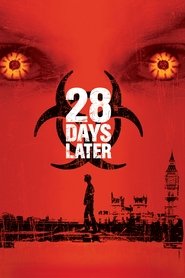
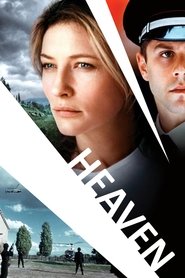
Again, the work of Chris Gill, the editor, is really, really amazing. We found together all these great ideas, because that wasn't exactly in the structure of the original script. Yeah. The parallel editing is improving a lot the tension of this sequence. And... This sequence was really difficult to shoot. It was made in one day. That was the first day of the premiere of Catherine's play.
42:06 · jump to transcript →
-
Aerials are really, really nice. It's the way to see how they escape. And in this moment I think, clearly, we see how these people are attacked by not only the infected - militaries are another menace in this movie. So now they are in the middle between two menaces. Now, the running away, it's so difficult. Two weeks after the final shooting, the editor, Chris Gill, showed us this sequence, basically by him. And it was very close to this thing, and we were, "Wow". "We probably can have a movie here." He was also the editor in the first one, Danny Boyle's film. We mainly worked with most of the crew of the first movie.
1:17:49 · jump to transcript →
-
-
-
this was a very good proposal from dino who has the editor of the film he said that why don't we postpone the moment where we read the message on this little cardboard thing and it's a little secret that he carries for yet another 15 minutes or something what what the text is there and he's so
58:35 · jump to transcript →
-
days and weeks to put that together again. But I think you had something like that, but it didn't show clearly enough what it was. Dino Jonsäter, the editor was teasing me every time we came to this scene that Eli is coming with one...
1:21:19 · jump to transcript →
-
-
-
Rob Cohen
of this editor, emperor, not the editor. The editor was ruthless in other ways. Anyway, the fact is that his drive across China led to untold millions of deaths and enslavements, executions, torture, and suppression of books and Confucian
2:50 · jump to transcript →
-
Rob Cohen
All that stuff you hear in the soundtrack was stuff that I did with sound designer and sound effects editor Bruce Stambler, who's done xXx, The Fast and the Furious, Stealth for me, the wonderfully vivid sound environments that are created around those films. The soundtrack is literally half of your impact in the viewing.
1:20:21 · jump to transcript →
-
-
-
-
-
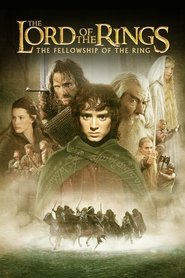
director · 3h 29m 1 mention
The Lord of the Rings The Fellowship of the Ring (2001)
Peter Jackson, Fran Walsh, Philippa Boyens
-
-
-
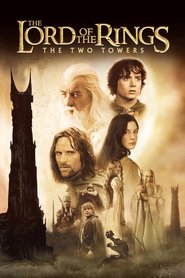
director · 3h 43m 1 mention
The Lord of the Rings The Two Towers (2002)
Peter Jackson, Fran Walsh, Philippa Boyens
-
director · 2h 10m 1 mention
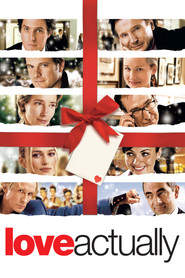
Richard Curtis, Hugh Grant, Bill Nighy, Thomas Sangster
-
director · 1h 45m 1 mention
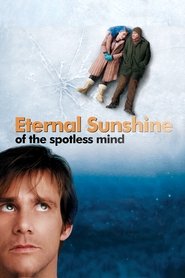
Eternal Sunshine of the Spotless Mind (2004)
Michel Gondry, Charlie Kaufman
-





Related topics
Other topics that frequently come up in the same commentaries.