Topics / Editing & post
The editor
96 commentaries in the archive discuss this, with 231 total mentions and 41 sampled passages on this page.
Filter commentaries
Filter this topic by the film's decade or the type of commentary.
Showing 20 of 96 commentaries
Clear filtersBy decade
Across the archive
ranked by mentions · click any passage for the moment in the transcript
-
-
William Friedkin
that I didn't have the first part. I never bothered to shoot the detail that was protecting the President of the United States. I sort of took that for granted in my own mind and then realized in the cutting room that we didn't have it, so we went out and shot it as a kind of aftermath, but a prologue to the film. I also remember saying to Jack Hues and Nick Feldman, who are the group Wang Chung,
2:48 · jump to transcript →
-
William Friedkin
when the cut is going to come and often where it's going to be. You often know what the next shot is because the editor and the director have established a cutting pattern that becomes boring and predictable. And I perceived a long time ago that a director whose work I really admired, the Italian neorealist, I guess you'd call him, Michelangelo Antonioni, his films used to
1:31:28 · jump to transcript →
-
William Friedkin
a scene and then move on. Now, it's impossible not to repeat a shot occasionally, often not by design, often because something didn't work. You get in the cutting room and you find, well, I've got to repeat a shot. But in the films of like Antonioni and in films that I've made, there might be 60 or 70 shots without a repeat.
1:32:57 · jump to transcript →
-
-
-
Tim Lucas
Hello, I'm Tim Lucas, film critic and editor of Video Watchdog magazine. In December 1981 and March 1982, it was my privilege to be the only journalist allowed to visit the set of Videodrome, whose production I covered for Cinefantastique magazine. My research ultimately took the form of a book on the making of David Cronenberg's film, which initiated Centipede Press's studies in the horror film series in 2008. I'm here to share my insights about the film, as well as some memories of the time I spent on set.
0:02 · jump to transcript →
-
Tim Lucas
But let's take a moment to admire the production design of Carol Spier, who is working here like DP Mark Irwin and editor Ron Sanders on her third Cronenberg picture. The glass blocks suggest television screens and the open slats of the Venetian blinds emitting blue light evoke the resolution lines that were present on all analog TV picture tubes. You may note in this scene that Max's preferred format is Betamax, which video insiders of the day considered a far superior format to VHS.
15:07 · jump to transcript →
-
Tim Lucas
To abbreviate the shot to a length the MPAA considered acceptable, Cronenberg and editor Ron Sanders inserted a dissolve that allowed the shot to get to the point prematurely.
17:55 · jump to transcript →
-
-
-
We had filmed a scene in the jacuzzi of the record plant, and we came back. We didn't use the jacuzzi, but we used this office because it had a lot of gold records. Tony Hendra went back to the lampoon, and he's written a number of books, and then briefly was the editor of Spy magazine. I had a one-man show at Lincoln Center for which he took out an ad in the New York Times that said he was the creator of Spinal Tap. It was an oversight. It was strictly an oversight. No, it wasn't a one-man show. It was a Ronald Reagan operetta. A one-man lawsuit.
27:10 · jump to transcript →
-
Robert Leighton was the editor who's obviously gone on to do a lot of pictures. The final version, the film veered back and forth before it got to this point. And following this scene, there was another scene that took place just between David and Nigel after the smoke had cleared. And it's the two of them kind of like talking about old times and talking about what's the problem in here and everything. It was just, it was too much. But I think out of that...
1:03:45 · jump to transcript →
-
We wanted to avoid that Bob Hope movie thing where Reynolds... These aren't outtakes. These are all interviews, as you notice. It was a thing in the 70s that was happening in the mid-70s with Burt Reynolds movies where it was just him and Dom DeLuise making each other laugh. We tried to avoid that. Yeah, the end of Hardly Working had that, too. Kent Beyda, the assistant film editor, is a big film editor now as well. Kent Beyda. Cary Gleiberman, the Gleib. That's right. That's the man you shot in Roma 79. Don Newman and Erwin Mucas, as you called him.
1:19:38 · jump to transcript →
-
-
-
Paul Davis
who conceived and created a lot of the sounds that you hear in this film. And then Jerry Humphries, who was a legendary sound recording editor. They took an elephant trump and played it backwards and added reverb. That sound that you hear right there is pigs from a distance. But the main howl was an elephant.
15:08 · jump to transcript →
-
Paul Davis
A little trivia for you. The young lady in the background with the two kids, that's George Folsey's wife and kids. And George Folsey was the producer on the movie. Who John met as an editor. He met him when he was making Schlock. He was introduced to him by a publicist called Sol Kahn, who worked on Kelly's Heroes. And John came back to the U.S.,
1:17:02 · jump to transcript →
-
Paul Davis
who went on to become the editor of UK Penthouse magazine. And has a very successful actor in her own family, her son, Tyger Drew-Honey, from Outnumbered. The genius of this sequence is the fact that
1:23:28 · jump to transcript →
-
-
-
I'm Frank Morriss. I'm the editor. Lucky enough to be the editor of this movie. It's a very interesting picture because though a lot of people... ...thought it was science fiction... ...we always looked at it as science fact. And so the message here is mostly true. And many of the things that are not quite true... ...were not quite true at the time... ...such things that we'll run into as "whisper mode" and so on. And yet, a lot of these innovative things... ...weren't actually happening at the time. Reiss. Maloney. The Los Angeles helicopter squad... ...is one of the best in the country... ...and it's the only way that they're able to cover this huge area of Los Angeles. They're up in the air almost 20 hours a day. Where we're shooting right here is a brand-new facility... ...that they had not moved into, and they let us use it.
0:11 · jump to transcript →
-
And actually, when we did mix the sound... ...I was working on another film called WarGames at the time... ...and had to be shooting on that film. So I would come by late at night to the mixing stage... ...and Frank was working there. Frank had his own opinions about this music. Do you remember? - Oh, yeah. It wasn't something that I think you were crazy about. It was not your favourite-- Well, Frank has been a music editor for a lot of his life... ...before he became a film editor. So he has very strong... ...powerful opinions on music. Well, I think Arthur did a terrific job on this... ...but we lost a lot of it due to the fact that it didn't quite work... ...with the action, or whatever and... Or it just didn't fit the character of the movie. Two or three cues is all it was. - Yeah.
27:31 · jump to transcript →
-
Let's see what's on HBO tonight. Now, this movie is filmed in widescreen. Sometimes that's called Cinemascope, or anamorphic. And 35 mm film is not wide enough to contain this frame. It wouldn't fit. So Panavision and some other people... ...invented lenses that actually take this image that you're looking at... ...and squeeze it to the width of a 35 mm frame... ...which is almost half as wide as what you're looking at. If you hold up a piece of anamorphic film to the light and look at it... ...all of these guys would be tall... ...and skinny and mushed together. The whole image would suddenly get all squinched. When you project the image, then you have to have a similar lens... ...that unsqueezes the image. But this was an effort to make big, widescreen movies that-- Not necessarily in Cinerama or techniques like that... ...but that you could make on ordinary film, and have an experience that was... ...different from what you're seeing on television. It had a different aspect ratio, real wide screen. And the challenges of shooting it are quite interesting... ...because those lenses require a lot more light... ...and give you a lot less depth of focus. So you're always kind of struggling with it. It's a very special kind of look that I actually prefer. And it gives you some real challenges in composition and so on. But you don't see too many pictures shot in anamorphic nowadays. They have another process called Super 35... ...that isn't quite so difficult to shoot. I think, Frank, we did Bird on a Wire in Super 35. Right. Well, from the standpoint of coverage in this movie... ...it was an editor's tour de force almost. It was covered so well. You mean, in terms of you having the footage that you needed. Yeah. We had very, very, very few problems. Well, thank goodness we had enough time to shoot this movie... ...so that we could get the coverage that we needed... ...because it was so tricky to tell this story along the way.
51:44 · jump to transcript →
-
-
-
Jim Piddock
You may feel that, to your taste, the mood has already been sufficiently set, but, of course, it is a matter of taste, and the editor of the picture apparently thought that we could use a little more mood-setting, and, well, he's the professional, so let us defer. Let's appreciate his art. Every cut, I think, well judged, a frame earlier or later, here or there, and quite a different mood, but this is the mood, so let's revel in his art.
20:29 · jump to transcript →
-
Jim Piddock
Nope, no, we've got some warm light, which I think for a nighttime scene is rather the better choice. Oh, and we're back to cold again, back to cold light. So mixing again, mixing and matching. Oh, yes, I'm not sure I like that jump in, but that's the editor's art, isn't it? And we are not he. No, nor he.
21:28 · jump to transcript →
-
Jim Piddock
This doorway here is not actually at the same location as the bar with the cash register. Through the magic of the editor's art, we think the two are in the same place, one just by the other. But in fact, this door was in an econo lodge right across town, but it has a nice dusty rug in front of it that the filmmakers simply fell in love with. So they shot that bit at the econo lodge, and then through the magic of editing, they implied that the doorway was part of our bar, and they got that lovely dust effect. And who would know?
44:23 · jump to transcript →
-
-
director · 1h 24m 3 mentions
The Naked Gun: From the Files of Police Squad! (1988)
David Zucker, Robert K. Weiss, Peter Tilden
-
You should have somebody write it down, you know. We found out about halfway into this picture that that was somebody's job. Because somebody can't tell you. I think three was good. You know what they do? They put like a circle around the number. Amazing. And then you go back. You know, because we found out in the cutting room that the ones with the circles were pretty good. I heard Coppola did that on Ghostbusters. It worked great. And he did a good job. Was that the second one? Two and a half went much faster after we knew what those damn circles were. I know. There's something I ought to tell you. No. No need to tell me anything. What's in the past...
39:50 · jump to transcript →
-
Remember they tried to build some baseball launcher thing? The ex-German rocket scientists we had in the effects department. That thing never worked. Probably just threw them up in the air. Is that the one we labeled the pigeon shooter? The pigeon shooter, yeah. That scared some people. They thought we were actually going to shoot pigeons with it. Those were the days, huh? Oh, you remember this? We rehearsed this. Well, do you remember we came in with all the dailies for this and the editor said, what's a rundown? Oh, yeah. It's like, uh-oh.
1:12:55 · jump to transcript →
-
I like that editor. Yeah. I know this is hard to believe, but apparently the umpires have got Crescione in a rundown. Who's Crescione? Is that another one of your high school people? No, I think that was... I don't know who that was. Your name's all friends? One of the wardrobe people's friends. Or was it the accountant or somebody? Yeah, Tony Crescione. No, this is...
1:13:26 · jump to transcript →
-
-
-
Peter Greenaway
and the other extreme, which is to do with what Picasso would say, painting what you imagine rather than what you see. I would have found, as I suspect many other people would be, this is a rather insular, elitist academic persuasion, but I found it of sufficient interest to wish to somehow want to debate it in the wider circle, and since I had no intention of continuing to be a documentary filmmaker, film editor,
3:24 · jump to transcript →
-
Peter Greenaway
and I'm determined to confront that eventuality well protected. And who will accuse you? As a filmmaker and as a film editor, in the years before this film was manufactured, I had developed for myself, I suppose, a personal style which often consisted of massive over-editing. So often the shots were extremely short and the whole scenic appearance of the manufacturer of the film would be very quick and frenetic. But I was learning to
1:06:11 · jump to transcript →
-
-
director · 1h 30m 2 mentions
A Nightmare on Elm Street (1984)
Wes Craven, Heather Langenkamp, John Saxon, Jacques Haitkin
-
And the other person that should be mentioned here is Rick Shaine, the editor, who did a magnificent job cutting this film. Has there been any background in the text about Freddy Krueger at this point? Uh, no. No. What do you mean, in the text? I mean, who he was and...
27:21 · jump to transcript →
-
to harass us, not to be in touch with it. What was their response after they saw the first cut that you did? The first cut, the editor's cut, when I first arrived, they showed it to me and Bob turned around and looked at me and says, well, do you think we have a film here at all? I'll never forget that. That's a nice vote of confidence. And then he told me that he wanted a complete cut in two weeks. I think we ultimately did it in five weeks.
1:18:56 · jump to transcript →
-
-
director · 1h 31m 2 mentions
Alex Cox, Michael Nesmith, Victoria Thomas, Sy Richardson + 2
-
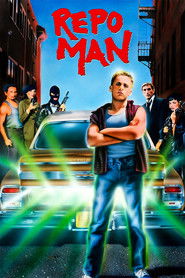
and funnier looking Rodriguez brother. The one with the hairnet. Right. Fox Harris, who is the first character that we see in the film. Is no longer with us. Is no longer with us. But I met Fox Harris when I and Nancy Richardson, the editor, were guards or caretakers at the actor's studio in Los Angeles.
0:46 · jump to transcript →
-
And Dennis Dolan, who was the editor, said, I really think you've got to pay off the death of Archie because otherwise there's something missing here. And it was really Dennis that came up with the idea that we would do this whole new ending to this scene where they open the trunk the whole way and Archie gets it. Yeah, well, at this point you were searching for this ending and you kind of didn't know what you were shooting, so it was all starting to get magic. You can almost see the stars. Oh, shut up.
58:36 · jump to transcript →
-
-
-
In fact, even the editing I had no control over. I wasn't allowed near the editing rooms. And I didn't know what I got until I got it. Right, that's very surprising. Why was that? Why were you not invited to the edit? Why were you not part of the edit? Well, the editor said, you know, you don't need to be here, George. On Rawhead, I insisted on being in the editing room.
1:23:03 · jump to transcript →
-
But yeah, so there was lots of things I had no control over. I presume the editor himself would not have been the person making the decision that you should be there. No, he was. I think it was him. Oh, was it? It wasn't the producers, I don't think. He said, I just want to get on with it, George, and deliver to you when it's finished. Right. I mean, did you have notes at the end?
1:23:26 · jump to transcript →
-
-
-
Eleanor Bergstein
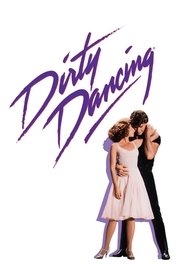
That absolutely happened, the crashing of the head. That was totally accidental, and we left it in. Now this, we had a wonderful editor, Peter Frank, but we were in such a short schedule, but we also had Girish Bhargava doing digital editing of our dance things, and it was Girish Bhargava who did this montage and did the finale. Girish Bhargava had worked with Emile on other dance things and did a brilliant, wonderful job on it, and I'll show you in a minute.
37:26 · jump to transcript →
-
Eleanor Bergstein
did this fabulous job for us and we changed it because he was a video editor and Peter was editing on film we had to change it back into film and it was a mathematical conversion and Emile and I kept saying it's wrong and people kept saying to us no no the numbers work it's right and we knew in our hearts that it was wrong and finally we got to this scene where Patrick jumped down and jumped up again without his feet hitting the floor
1:32:36 · jump to transcript →
-
-
-
Gary Goddard
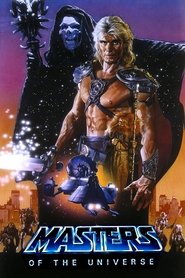
Ann Coates, editor of many films, Lawrence of Arabia among them. Richard Edlund had recently left the Lucas organization. We were able to bring him on to handle the effects. Bill Stout came on board as a production designer and did a fantastic job.
2:12 · jump to transcript →
-
Gary Goddard
You didn't have to do that. It isn't even in the box. She had a great quality about her, and she did a great job. Shooting this whole movie, by the way, it was great. This whole company, Courtney and Chelsea and Ann Coates, the editor, it was more like a family, and it was almost like a wonderful kind of magical summer that we spent together making this movie. I think we all had a great time. It was a lot of work, and it was a lot of long nights. Half this movie was night shoots, which we'll get into later.
20:47 · jump to transcript →
-
-
-
This montage, remember, was one of the first things Seth Flaum, who became an editor that I worked with for the rest of my movies, cut. Bud Smith was the lead editor, a famous editor, who did The Exorcist and a lot of big movies with Billy Friedkin, was the lead editor on this movie, and, you know, just an absolute genius, as far as I'm concerned. Seth was an apprentice or an assistant, and he and I would squirrel away working on things like this montage, and I thought he did such a good job, that I ended up doing the next five, six movies with him after this.
1:00:30 · jump to transcript →
-
Montages are funny, 'cause when you get them cut together, lots of times, they save your butt. They look like they're designed, but... At least, Seth, my editor, in this case, saved my butt, because it wasn't designed as well as it looks.
1:01:20 · jump to transcript →
-
-
-
multi · 2h 34m 1 mention
James Cameron, Gale Anne Hurd, Stan Winston, Robert Skotak + 8
-
-
-
-

Related topics
Other topics that frequently come up in the same commentaries.