Topics / Studio & business
Studio notes
95 commentaries in the archive discuss this, with 285 total mentions and 38 sampled passages on this page.
Filter commentaries
Filter this topic by the film's decade or the type of commentary.
Showing 17 of 95 commentaries
Clear filtersBy decade
Across the archive
ranked by mentions · click any passage for the moment in the transcript
-
multi · 1h 54m 11 mentions
Jean-Pierre Jeunet, Hervé Schneid, Alec Gillis, Tom Woodruff Jr. + 5
-
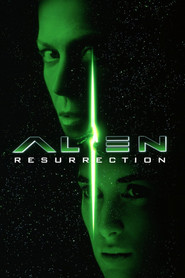
Hello. My name is Jean-Pierre Jeunet. I'm the director of Alien Resurrection. Hi. I'm Dominique Pinon. I played Vriess, the guy on the wheelchair. And I'm Hervé Schneid, the editor. My name is Sylvain. I was a storyboard artist and a concept artist on Alien Resurrection. This was designed, composed, shot almost entirely and never used, because we couldn't complete it for budgetary reasons. But initially, in the first opening of the film, we looked at the mouth. The mouth of an insect. Except we didn't know it was an insect. We mistake it for an alien creature. And the camera backs out and actually reveals a little bug. And in one camera move, as it keeps on backing up, we see a finger crushing that insect and sticking the insect into a straw. And splattering that insect against the glass as we recede... And we go all the way back into outer space and actually reveal a giant spaceship, which is where the story begins. I remember especially about the main credit. When I arrived in LA, I was waiting for an offer from the studio. You can imagine - a poor French guy like me, I was very scared. I was in a hotel, waiting for the answer, and I didn't sleep because of jet lag and because I was scared. I thought "OK. To prove to myself I am able to make this film, I have to find a good idea for the main credit, for the first shot." Immediately, I found the story of the guy alone in a big spaceship, with the milk shake and the pipe. He scratches insects, he puts them in the pipe, he blows the insect on the camera. I was very happy about this idea. I told this idea to the studio and they were happy, too. We began to work on it, but it was very very very expensive. One day, my line producer told me, if you could find another idea, because we have not enough money to finish this idea. This is a secret - I was pretty relieved. In fact, I think it was a little bit too funny for the beginning of Alien. I didn't say anything to the people. I said "You want to cut my idea?!" But, in fact, I was very happy, and I prefer the credit we have now. This is a model, and at this time, we hesitated about to use CGI or models for the spaceships. And Pitof preferred to use models. Maybe it was one of the last films with spaceship in model. That was very impressive. I came once on the set while you shot the models, and it was really big. - Yeah. Not really big. It's never enough big. And Pitof made a lot of parts, and he mixed the different parts.
0:03 · jump to transcript →
-
This was actually a tunnel. You can see the floor on one end where the light is glowing. And this was actually just a vertical tunnel which was stood straight to make it into a tube. I love this scene. It's very different with the other Aliens. Sigourney loved to do that. She was almost naked when we shot. She is very courageous. She tries everything. She is ready to do everything, all the time. This is a set that was reused. In this instance, this is the birthing room for Ripley. This is a very symbolic and beautiful, almost religious, image of her coming to life. This was designed by Darius and Jean-Pierre - dreamt it up and shot it, quite late in the day, actually. It's actually very stunning. It's quite beautiful. What we're looking at - the light glowing from the floor and fanning in the back - is exactly where Darius and Nigel gave each other opportunities to generate so much excitement out of these openings, where, basically, light actually comes alive in the metal everywhere you look. I love Brad Dourif. I was a fan. All my life I will remember the test with Brad Dourif. He was perfect. I saw a lot of actors for Wren, the bad guy, and I saw a lot of actors. It was a pleasure because I made some tests with them. It was only because the studio didn't want to pay a lot for the main bad character. I remember, I proposed to the studio it was a good idea to have a woman for the bad guy. It was a good idea, but at the end the marketing service said "No. Definitely no." "Because you have two women in this film, two heroes, and not a third one. Definitely." Too many women. - Yeah.
6:30 · jump to transcript →
-
Dominique Pinon plays in all my films, and for me he is the perfect actor. He's so inventive, so nice, so perfect. It was amazing for me to bring this actor to the States, because Sigourney Weaver and the studio asked me to have Dominique Pinon. I told this story a lot of times, Dominique, but it's true: I didn't hire you, the studio wanted to work with you. I was very happy, obviously, but, I remember, when Sigourney wanted to call you by phone, and we called you in Paris and you didn't believe me. You said... "No. It's a joke." I remember very well that call, actually. The studio were a little bit worried about Ron Perlman. They appreciated the guy, but they weren't sure it was the right guy for the character. By luck, it was the first day of shooting and they saw the dailies. They came to see me on the stage and they told me "You're right. He is perfect." The set is basically what we call the Betty cargo bay, which is just a lovely, beautiful industrial piece of design. All the rust in the back of it. It's hard to convey just how incredible it was in real life, when you walk through it. It was just absolutely staggeringly detailed and gorgeous. Pitof, none of the ships were digital. That's all models? Pitof, none of the ships were digital. That's all models? I would like to make more digital stuff, but Nigel really wanted to have the real texture. I guess he was right because... They're beautiful. They are gorgeous. Is that background digital? Or was that a model also? The background is a mix with the digital and models. We had a model, but the size had been enhanced in postproduction. Also, it's a lot of layers of small things to make the texture real. So it's not just shooting the miniature as it is. There's a lot of work after that - to have the texture, to get the smoke, to give the depth, and all these things. Is shooting miniatures more time-consuming than doing it digitally? It was more efficient to shoot miniatures because the technology of digi was not as flexible as today. The idea about this film is that these guys are a bunch of hoodilums that are smuggling weapons on board a military ship. The thought was: they'll get strip-searched, and they have to have weapons at some point, so Jean-Pierre's take was that the only way you could bring weapons is by hiding them in plain sight. The two places where he thought you could hide them was a Thermos - which somebody is carrying, which turns out to be a gun - and the wheelchair. The thing about the wheelchair was designing it as a breakaway piece of technology, where every piece could reassemble itself into a weapon. Although the idea's really good, at some point the focus on that was a bit lost - you see all the characters breaking out weapons. I'm not sure how clear it is that they're recombining the wheelchair. But that's the way it was designed, as you could actually take pieces of it apart and snap them into weapons when the scene demanded it at some point. That little wheelchair was built on a structure which we called a mule, which is a six-wheeled radio-controlled robot which is a six-wheeled radio-controlled robot that's designed to lift enormous pieces of equipment in industrial settings. That mule was available to us, so Fox said: "If you can design the wheelchair around this, it'll save us money." So that's what we did.
17:58 · jump to transcript →
-
-
-
on his prison were going to be chased by this alien and killed. And yeah, I didn't have that much of an issue with it. It was only kind of later on you kind of see the sort of the failings of the studio manipulating the film and changing it and not knowing what they wanted. David Fincher making a movie without a finished script.
1:20 · jump to transcript →
-
Not very communicative, but Alex Thompson could photograph these large-scale sets with ease. He'd photographed Excalibur and Ridley Scott's Legend. I mean, Legend's one of the most visually interesting films ever made. But it's interesting that the executive producers, well, head of production was John Landau, who's unfortunately passed away recently at the age of 63. And he looked... I saw recently, like...
15:53 · jump to transcript →
-
which I remember reading about years ago and obviously doing the research, gone back into that and the feud he had with the studio over that. And I just can't, I can't see Richard E. Grant in that role. Can you? I love Richard E. Grant, but... Well, if we had him and Paul McGann, it would be with Dale and I too. And Ralph Brown. Yeah, yeah, exactly, yeah. This is it. I mean, this is... When Ollie and I record these commentaries, we generally put a little poster behind us on Zoom
29:07 · jump to transcript →
-
-
-
There was a big battle over that, and ultimately the studio came across and loved this choice of song. And you were victorious. I was victorious here. And there'll be many battles discussed over the next hour and a half. But that was one. And every time I hear the song, I just am reminded how much I like the choice of both the music and having the female singer and the gravelly, slightly off-tone voice.
0:29 · jump to transcript →
-
pre-digital, so the majority of the effects were all optical, not digital, which was a huge deal. So all the models, we had to build models and do it the old-fashioned way. Shot on film, cut on film. Things that people don't even know what they are now. I'm sad that the studio didn't give us more than 10 days in the theaters.
13:11 · jump to transcript →
-
And that's how people, I mean, women respond to that. They just cannot look at that image and not go, I want, I am this person. I mean, that's how I felt when I first saw the comic too. I have to do this. This is the most important thing I could possibly do. And you had the same response. And then I went and pitched it to Jim Cameron's company. And I didn't have Jim, James wasn't there, but I, you know, I pitched it to the executive and they said,
17:35 · jump to transcript →
-
-
-
dense smoke to get the feeling of being inside the park. And it was shot... Wait, pause for my credit. Just want to know that this guy writes a great arbitration letter to get first credit, but that's another story. So the smoke in here was so dense that you could barely see the monitor. So we had to build tents within the studio just to contain all the smoke. Yay, Marco. There I am.
11:01 · jump to transcript →
-
to set up and rehearse, and the frequency of visits from Joel and then the studio executives, and then even Lisa Hansen, who was the head of the studio at the time, dropped by to casually say, are we going to have a shot today? So that was a very tricky shot to set up. Oh boy, the things I don't have experience. And this is Sandra Bullock, who plays Lenina Huxley, which is
11:53 · jump to transcript →
-
kind of nailed at the time and this was all the subtext that uh we had the hardest time selling to the studio and to stallone okay now we have to take a pause because this is where the he says he doesn't understand the three seashells which is the bathroom which which i was joking with marco has become the legacy of the movie i'm sure we've both been plagued by people on the street asking us how to use the three seashells can i i'll just say like i was asking all my friends
38:07 · jump to transcript →
-
-
-
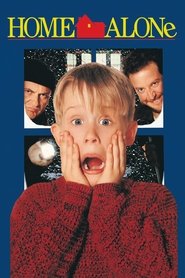
This is a... You know, this is an interesting scene... ... because, again, the comedy... These two really worked well together. You believe them as a couple... ...and the comic timing is really pretty sweet, I have to say. I remember when I watched a lot of the dailies... ... they would always fool around whenever you... You wouldn't yell, "Cut," and they kind of just... They'd keep going a little bit and do some silly stuff. I think they really-- You know, again, it was a kind of... At times, it was tense being on the set... ...because these actors, who are so good, didn't know why they were there. And on the second one, that eased up completely. Because everyone felt that they had a responsibility... ...because they knew a lot of people would see this movie. Now, here's something I always felt pretty horrible about because... ...particularly once you have your own kids, this is the last thing you want them to do. This was a big worry, I remember. - Oh, yeah. Whether or not this was gonna stay or not. See, no one really ever understood when I'm lining up the sled... . that it doesn't exactly line up with the door. There's people who watch it who actually giggle, I remember... ...saying, "That doesn't line up. How is he gonna do that?" Yeah. You would've smashed into the wall. Yeah. But that was Larry. I remember watching the dailies. That was hilarious. Larry, our stuntman. - Yeah. Stuntman, literally. - He was probably 20... No, maybe he was about 30 back then. - Yeah. And he was your size. - Yeah. He was built like me too. Now, he was amazing. He would do anything. There's one moment coming later when we'll talk about Larry. Where he falls? - Where he falls, and he froze that day. He didn't wanna do it, but Larry had... As most of the stuntmen did in this movie... I don't know if these types of stuntmen exist anymore. Yeah, I know. - Willing to kill themselves for... It's amazing. I have a lot of that, yeah.... ...a lot of memories of these guys doing all kinds of crazy stuff. Oh, yeah. - They were my favorite, the stunt guys. The stunt guys were great. - When you're 9... ...they can do all kinds of neat stuff. - That's true. Ha, ha. Oh, yeah. They were always my best friends. We'll talk about-- A little later, we'll talk about Troy Brown and Leon Delaney... ...the two stuntmen for Joe Pesci and Daniel Stern, who were truly... Truly went above and beyond the call of duty. I haven't spoken to them in years... ...but they probably are still in a great deal of pain... ...because of some of this stuff. Daniel Stern is interesting... ...because Dan Stern was my first choice for this role... ...and the studio didn't wanna pay him at the time. We cast another actor, unfortunately-- This is the only time in my career this happened. and we did a screen test with the other actor and Joe Pesci. And the screen test was flat... ...and the other actor just couldn't really improvise with Joe... ...and you didn't believe him in the role. And I had the-- I had the horrible situation of actually telling the actor... ...I couldn't use him. Basically firing him. Oh, boy. And then the studio then understood. They saw the screen test, and they were willing to hire Danny... ...which was really an amazing working situation for me. He's one of the funniest guys I've met. And he truly was up for anything, as we'll see later in this commentary. I still have that sled in my office.... In my office here in San Francisco. I just saw it before I came over here. Signed by everyone. Signed by everyone. That's really cool. - Yeah. And when I get a little older, and things start not working out in the career... ...1 can sell it. - EBay. Yeah, eBay.
25:39 · jump to transcript →
-
Hyper on 2." Any luck? No. You know, I... The studio rejected my idea of a sequel, which was years... You know, now, you actually... You being in jail... ...coming back to take revenge on Joe and Danny... ...who live in the suburbs next to each other, and they've got their families. Gone straight. - Gone straight. And you've got your... - That's great. I see something there, but they... For some reason, the studio just won't go for it. Crazies.
33:30 · jump to transcript →
-
Now, this was... Now, that was something that really bugs me about the movie... ...IS that was a note from someone, somewhere in the studio... ...that we had to dub that line: "
44:45 · jump to transcript →
-
-
multi · 2h 24m 5 mentions
Alex Thomson, Terry Rawlings, Alec Gillis, Tom Woodruff Jr. + 3
-
Tom and I were very interested in using materials that were more translucent, and that led us to create a Bishop dummy here that was made out of gelatin. The only problem was that gelatin doesn't do well in steam and rain, and if you'll notice there's steam and rain in this shot, but there wasn't supposed to be. Not at first. We got the go-ahead that it'd be OK. It was gonna be cool and dry. See that little rag around his wrist? We had to wrap that around his wrist cos his wrist just split in half somewhere in this, so we had to kind of dress it around. The whole thing was melting! Take after take, he was losing a layer of skin with each successive take. We should have been warned because Yuri Everson, one of our main guys, was working on that model in the studio, doing some meticulous work with the gelatin, and he had a desk lamp posed right over the head. When he moved the desk lamp, it was a little too close to the face and it all sagged, like it was palsied from a stroke or something. So there was a little bit of a history to that choice of materials.
49:30 · jump to transcript →
-
There's a miniature shot of the alien running up, then it cuts to a close-up of Tom. We did do a fake head of Charles Dance - it's coming up here in a minute - where the creature punches a hole in his head. And we had to do a head cast of Charles in an extreme expression. And as I recall, he was great about it. He's actually, for as serious as this character is, he was a very jovial guy. Yeah, I guess it was like an animatronic head, dripping. In order to do this movie, we built a complete silent motion-control dolly that could go at running speed, which we wound up never needing to use. You could actually run with it at high speed and it would repeat, and it was quiet enough to shoot sound. Of course, when we got to England to set it up for the first shot, nothing worked. We were tearing our hair out and found out the system wasn't grounded because they had run an extension cord into the hallway. But then, once we found that, we didn't have any problems. But that was in order to enable us to shoot scenes with pans and tilts, and then scale those moves to shoot the scenes back at the studio with a rod-puppet alien one-third scale... with a moving camera, so it wouldn't skate around in the scene. I think this rod-puppet technique is very interesting. I think it still has some validity now, even in the digital era. Yeah. - And probably now, I don't know... Well, I guess you'd still have to do the motion-control stuff to match moves. Or track it now. If you're gonna do a CG character, you can track it. But you wouldn't be able to track like that with a miniature puppet, would you? You'd have to use motion control. It's a real mechanical lollapalooza. But there is a nice presence to it that really looks like a physical thing. It gets around some of the difficult issues of CGI, in that the lighting is playing on it. And the director can direct it. Fincher could come by and direct the puppet. Five guys, you know, operating this character against bluescreen, there were some pretty bizarre mountains of equipment to get these shots working. And flags, and stands, and wires everywhere. And flags, and stands, and wires everywhere.
1:04:35 · jump to transcript →
-
This movie seems to have... My take on it was it was more popular in England and Europe than perhaps the second one was, or that at least they admire it more. And it is the movie that seems to grow on people. It's not what people expected, but they can't deny the quality of it, and that it is really a pretty uncompromising vision. It's just relentlessly grim, which is exactly what Fincher wanted. And it was gonna be the last. - Yeah. Yeah. Which was why the whole suicide thing at the end. Right. Which I thought was a very bold idea from the studio - to give them credit - to say yes to that, Fincher and Sigourney, you know. I thought it was very brave of everybody.
1:15:01 · jump to transcript →
-
-
-
which means that the dialogue was replaced in post-production. And not because the performances were bad, they were actually quite good, but the actors didn't quite project well enough to get over the crowd when the scene was being photographed, so we went back in the studio and revoiced those lines with them and had them projected more so that it could get up over the crowd sound effects that were put in later in post-production. Now, right after this shot, there used to be a whole other scene
22:49 · jump to transcript →
-
This shot coming up here, this effect shot of the eclipse, was a real pain in the ass because we'd actually finaled this shot, meaning that we'd approved it from, approved all the work from ILM, and we showed it, the picture to the studio, and people, you know, studio executives who had read the script and knew exactly what was supposed to be going on in the shot had no idea what the shot was supposed to mean. Of course, it's an eclipse, and it was in no way clear in our original shot.
1:15:46 · jump to transcript →
-
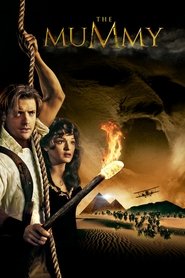
Every time the studio executives would see that scene, they'd go, can't you just cut that scene? Do we need that scene? Because all they saw was a guy being lifted up on wires, and then nothing happened. And then eventually Arnold Vosloo would walk in with LED lights on his cheek, and he would start chewing for no reason. Everybody would go, why does he start chewing? What's he eating there? I mean, we don't see him put anything into his mouth. Did he cut the thing where the candy bar he's eating or something? And we said, no, no, no. A scarab's going to come out of a hole in his chest, go up into his mouth. He eats a scarab.
1:21:09 · jump to transcript →
-
-
-
But then at some point they started bringing on other writers, because it was the 80s when they did that all the time as just a matter of course. Right. And that came about sort of, the next writer came about sort of through the first director that they had. I mean, initially, actually, the first director who the studio approached was Roger Donaldson, who was coming off of a couple of big hits. He had done No Way Out, which was another Orion movie.
11:38 · jump to transcript →
-
So I'll give it to him. I've never heard another story of how it came about. Well, I guess as we get towards the end of the movie here, I wanted to make sure I talked just a few minutes about Orion, the studio that released this movie. You know, this movie came toward the end of Orion's initial reign as one of the truly great production and distribution companies in Hollywood history. You know, it was formed in 1978 by five executives who left United Artists to start their own company.
1:47:56 · jump to transcript →
-
Works of art. Eventually, MGM bought the studio and there have kind of been some attempts to resurrect the label in recent years. And in fact, as we record this in 2024, we're recording this a couple of weeks before the Oscars. And one of the best picture nominees, American Fiction, is an Orion movie. The new incarnation of Orion released American Fiction. So maybe they're going to come back. I did not realize that. That's interesting. Maybe they're going to come back. But they were really...
1:50:30 · jump to transcript →
-
-
-
I tried to convince people that I was the mark and try mark, but it didn't work. There you go. Look, they kept my name on it. Actually, there's a story to this limousine. It originally was white, and they wanted to, the studio did say, let's change it to black and reshoot this part because they thought black was scarier.
1:01 · jump to transcript →
-
And we actually painted the zigzag of tire tread on his face, buried him. Buried him and had him come up. And it was an elaborate gag and it took us like four hours. And it was very funny, like the truck ran over him. And for some reason, the executives at Trimark said, no, that's too cartoony. Oh, really? Let's cut it out. And of course, now I think these are the things that we should go do the director's cut and put back in. But it was in one of my first cuts. But yeah.
33:39 · jump to transcript →
-
Now, that's not Jennifer. That's the stunt double. Got a little Dutch angle tip there. Yes, yes. They're L.A. gear, and I don't know why they don't send me some money. Now, that's David Trippett, who's one of the executives who I still am in contact with. That's his little cameo. I won't mention the fact that I think it was one of his memos to take out Fuck You, Lucky Charms, but he may have just been sending it.
1:14:42 · jump to transcript →
-
-
-
Yeah, yeah. It's a very mean movie. It is. It is. And if you know my work, you know, that's one thing I don't think I bring to the table. Coming into this, you know, that's not something I wanted to do. That's not something that the studio wanted to do. So we kind of were screwed from the get-go in a way. And I think we were screwed in another way in the sense that I've come to realize that the character of Murphy...
7:22 · jump to transcript →
-
I think probably the amount you would expect. But it all came from me. I mean, never once did Patrick Crowley, who was my wonderful producer, who's gone on to Jurassic World and the Bourne films, and he's a wonderful guy and a great producer, never once did Pat ever say to me, I don't know if this is the right tone, or I don't know if that works. And no one at the studio level did either.
1:18:43 · jump to transcript →
-
-
-
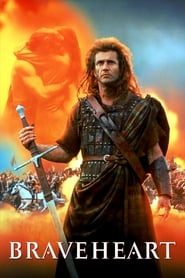
except I wouldn't be in it, you know? And indeed, I didn't want to be in it when I was taking it to Paramount, because Wallace would have been younger. I did this in my late 30s, and it was like, William Wallace was like 25, you know? And I think he was dead by the age of 30. I think I did get away with it, but it's like, because no one knew how old the guy really was. I was totally going to get someone else to do it, but the studio wouldn't have it, because they were actually looking at getting their money back, which is...
1:54:36 · jump to transcript →
-
We moved that further up the back and made it like his comeback and were able to lose a substantial amount of film time, like about 18 minutes or so. No more, 22 minutes. That was from a note by Sherry Lansing, the studio head at Paramount at the time, that said...
2:18:45 · jump to transcript →
-
-
multi · 2h 12m 2 mentions
Andrew Sarris, James Ellroy, Brian Helgeland, Michael Nathanson + 10
-
It was actually a pretty heady time, because I had just gotten the nomination for Babe, and I was flabbergasted. And I just got a call from my agent to go down to the studio on Santa Monica and meet with this director, Curtis Hanson, who I didn't know, to do this. And they sent me the script, which had never happened before.
22:41 · jump to transcript →
-
to a point that I think is unhealthy. It's hard to have any sense of how people see Hollywood, but it's been going on forever. And I also think that there's so much about the studio system then that controlled press in a way that I don't think press is controlled in quite the same ways anymore, and particularly now with the internet. You know, the truth is now anyone can go online and say anything about anybody, and in five minutes it'll be a story in a real newspaper.
1:12:11 · jump to transcript →
-
-
multi · 2h 19m 1 mention
Martin Scorsese, Nicholas Pileggi, Ray Liotta, Lorraine Bracco + 9
-
-
-
-


Related topics
Other topics that frequently come up in the same commentaries.