Topics / Studio & business
Studio notes
95 commentaries in the archive discuss this, with 285 total mentions and 41 sampled passages on this page.
Filter commentaries
Filter this topic by the film's decade or the type of commentary.
Showing 23 of 95 commentaries
Clear filtersBy decade
Across the archive
ranked by mentions · click any passage for the moment in the transcript
-
director · 3h 29m 12 mentions
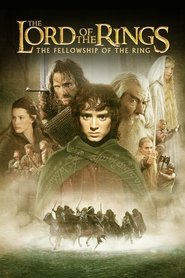
The Lord of the Rings The Fellowship of the Ring (2001)
Peter Jackson, Fran Walsh, Philippa Boyens
-
Now, New Line started to impose rules on us, which they'd never done before. They started to say, well, you can have a prologue, but it's got to be no longer than two minutes. And our prologue's actually seven and a half minutes. And it was really, in a way, it was one of the biggest fights we ever had with the studio. And it was strange because it was the very last thing that happened before the film was finished. We'd been making this movie for three or four years with a very good relationship. And needless to say, we won the battle because we just felt...
5:40 · jump to transcript →
-
There's only so much time you can take establishing Hobbiton before you really move your plot ahead and we felt we were lingering there too long and it wasn't furthering the story for us so it didn't stay. Bag End was obviously an exterior set on the location on the farm and then this was the studio when Frodo comes in the door. This is actually a case where we changed the timeline in the book.
36:01 · jump to transcript →
-
And we only shot a couple of takes. Scenes like that don't hit the schedule, do they? They don't hit the schedule. Or the call sheet. No, and the studio don't even know. Nobody knows they're there. You've just got to bang them out the day before and then go try and squeeze them in somewhere. Pages are distributed after lunch. Yeah. This was a sequence that we deleted from the theatrical version of the film. And it's actually a sequence in which a couple of stills, a couple of photographic images have appeared in lots of books and magazines. And I'm sure...
44:53 · jump to transcript →
-
-
director · 3h 43m 11 mentions
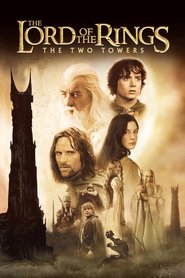
The Lord of the Rings The Two Towers (2002)
Peter Jackson, Fran Walsh, Philippa Boyens
-
So I don't know whether they even knew about it. Did we bill them? We should bill them now. It was interesting to figure out how to start this film because the studio were quite insistent for a long time that we have a prologue, the same as the first film. They wanted Cate Blanchett, in actual fact, to give us a sort of a backstory of what's happened so far in this movie, you know, the Fellowship of the Ring, and to set us up. And we resisted doing that, didn't we? Yes, yes.
0:33 · jump to transcript →
-
were again part of the pickups that we did. And this sort of shows you what pickups can be like, where you're inserting a couple of new lines of dialogue into a scene you've already shot before. We just did these in the studio. That's a studio shot. That's a studio shot. And now we're back on location again, just... Two years earlier. Yeah, two years ago. Just coming up about...
6:46 · jump to transcript →
-
I think with the help of a bit of lightning and flashing lights and stuff, and we sort of soldered, and the big plummeting down and the deathfall and the landing, it really sells his death better than anything that Gandalf can do with a sword, really. Was that a mini? It was a big miniature, yeah, the tower and the snow. Everything's fake in that shot. This sequence was debated a lot amongst ourselves in the studio. You know, you could have done without it, but on the other hand, I thought that just having Gandalf showing up as Gandalf the White needed some form of additional explanation.
54:17 · jump to transcript →
-
-
director · 1h 36m 5 mentions
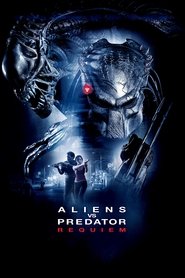
Aliens vs. Predator - Requiem (2007)
Colin Strause, Greg Strause, John Davis
-
where all the action took place. But in this version of the film, we thought it was very important to be tied correctly to the continuity of the previous film. So we basically added these new shots of the mothership instead of a little scout ship flying away from Earth with Scar's body on it, and then added new scenes of that scene, the little scout ship kind of taken off from the mothership. Yeah, what happens, obviously, when the studio sees a movie, sometimes they like
0:32 · jump to transcript →
-
Now, by the way, it was exciting for me to be involved with this process because as a producer, the very first movie I worked on, the very first movie I produced was Predator. I got to do Predator 2 also. And I came up with this notion of convincing the studio to do Alien versus Predator that had been done in a comic book form and all that stuff. But it took a while to convince the studio that there was a fan base to combine these two and that it would support the
3:13 · jump to transcript →
-
And then we had to kind of scramble quickly to get it all completed in time for release. That's right. This wasn't scripted originally. And we all felt that it would be a lot better to open this movie up and to connect with, you know, where the Predator's home planet is and how that relates to the movie if we could shoot it. So it took us a while to convince the studio to let us do it. Thankfully, they did. Yep. Yeah, it was just we thought it was important to add something, you know, show something that no one had seen before.
6:34 · jump to transcript →
-
-
director · 4h 13m 4 mentions
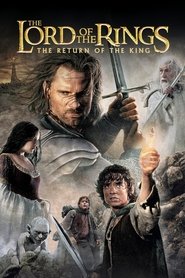
The Lord of the Rings The Return of the King (2003)
Peter Jackson, Fran Walsh, Philippa Boyens
-
I always thought this was a dodgy scene because we shot it in our Fangorn set in the studio, which was a tiny studio and you can basically look at a painted cyclorama in the background. And it's one of the reasons why we shot it so much out of focus is to try to disguise the fact that it was just a painted backdrop. And that shot there in particular.
9:23 · jump to transcript →
-
We did those pickups three years after the original shoot in a studio this time. We weren't out in the parking lot. So we had enormous trouble getting all these wind machines in and we had to blow his hair to the same degree because it had to match perfectly. And so Christopher was now in the studio delivering lines, battling against this enormous wind machine that we had blowing into his face.
13:54 · jump to transcript →
-
So this is a really tricky little intercut between new footage and old footage. We had no water when I was shooting, we just had David and the rocks. So that's an old shot. And then this shot here is an old. These splashes are all old. There's stuff that John Mahaffey shot. But whenever you see David fighting with a sword, it's the new stuff that we did in the studio. Because we never really had Faramir as part of this battle, and obviously he's there, he's commanding.
1:03:44 · jump to transcript →
-
-
-
I have a screenwriter friend who said, "What has become of this prop?" I think the editor has it. I'm sure Dino has one. This book? - Yeah, there are two of them. Universal maybe has one. I should have one. - Yeah, and I should have one. You and I should have one. Why don't we have one? We could auction it in 20 years. Anyway, talk a little bit about how you got Ralph Fiennes into this cast. Like I said, I went after the actors that everyone told me I couldn't get. "Ralph's never going to do a movie like this, he's a Shakespearean actor." Basically, I sent him the script. And he loved it so much he agreed to fly in and meet with me. I gave him my vision of it. I told him he was not going to live in a haunted house. He told me he was very attracted to the idea of playing a monster who had a soul. That he had some kind of inner life and was not just a bogeyman. He loved the relationship between him and Reba, Emily Watson's character. He loved that there was humanity in this horrible person doing horrible things, but there was humanity in him. Here's a great sequence. We should talk about the way you staged it. This was originally written, if you remember, as an outdoor exercise scene. I said to Ted, "I can't see Hannibal Lecter "even if there were guards all around and they cleared the whole yard, "I can't see him in an exterior location, out of prison." The scene was originally through a fence. A sort of dog run or something, or a big mesh fence. And the dialogue between Will Graham and Hannibal was through a fence. It was an electrified fence. But I said, "Then there's no threat." There's no real threat. And I said, "Why don't we put him on a dog leash?" And I found this location, which is in an actual location for the mentally disturbed. There are mental patients all over this building. This was another case where Kristi would talk to Brett, and then she would send me drawings for the design for this knowing that it might help me as I thought about the scene and wrote it. Kristi had a lot of fun with the look of this scene and so did Dante. Dante did an amazing job because his interpretation put a lot of smoke in here so that the white lights would... Dante liked the way Lecter goes in and out of the brightness so that he almost seems to be a ghost. Which is like evil light as well. He said, "Evil light doesn't only have to be dark. It can be white as well." This leash thing, I love. He meant to use the bolt cutter to enter the house, but he didn't. That shot I did earlier, where you see the line saying, "Do not cross." It was the last shot of the night, and I almost forgot it, but I said, "In this whole scene, when I shot it, I don't remember seeing the floor. "I have to establish it so that the audience knows there's a do-not-cross line." Why is he standing there? The original idea for the scene was that you'd think it was a dream sequence. If you look, it's shot very close. The way you shot Edward's entrance into the room, we don't know at first where he is or whether it's a dream. And here comes Lecter walking towards him with no bars between them. Then we pop out and reveal that he's on a leash. It's a great moment in the film. When I was working on the first draft, I just thought, "This is a scene that's not in the book." Most of these Lecter scenes are not. I thought, "If I were directing this movie, I'd like to get away from that cell for once. "And give the actor a chance to use his whole body. "And have nothing between the two actors." To me, it was really the parallel of the scene with Jodie and Tony at the museum in Memphis, in that big cell that Kristi designed, which was amazing. I needed a set piece as magnificent as that, 'cause that really opened up the movie. I thought you'd be very grateful not to have the Plexiglass between them for once. And to have them be able to move together, walk together. Sometimes just the technical challenges you face force more creativity. It was only his first time. Already in Atlanta he did much better. Rest assured, my dear Will, this one will give you plenty of exercise. I love Will's reaction to that line. Edward's great when he's not saying lines, actually. You know, the mark of great acting is: How interesting is an actor when he's only listening? He's a very good listener. - Jodie Foster is a great listener. She listens with such intelligence and such engagement, and Edward can do the same thing, and so can Tony. It really is a hallmark of great acting. You see that a lot with Ralph Fiennes here. He doesnt have a lot of dialogue. He's listening, thinking and reacting. It's a very poignant performance by Ralph. It's easy to play the monster. It's hard to be the guy who's a horrible monster... It's hard to make the audience care about the character instead of just dismissing them. This is Azura Skye who is one of my favorite young actresses, who was in 28 Days. She had a small part in Bandits and she was awesome. Again, the importance that Brett gives to casting every part, even if it's an actor who only has a one-page scene. You want somebody who looks like they could star in their own movie. If this movie suddenly became about this bookstore, it would be interesting for the next 90 minutes. Even the voice of the girl on the phone, I cast the voice very specifically. Did you drive the studio crazy by waiting to cast some of these parts for so long? Till the last minute, yeah. ...darn it, she never did. I'm just a temp. Linda will be in on Monday. I have to catch FedEx in about five minutes. I hate to bother Dr. Bloom about it because he told Linda to send it and I don't want to get her into trouble. This was hard for timing because it's one shot and it's a lot of dialogue, and I wanted the camera to land at the right place. The camera and the lens that you pick help with the emotion, intensity, and realness of the scene. Is it hard to move in like this without changing lenses and keep the focus? Yeah. Especially anamorphic. The focus on this move is impossible. Mike Weldon was the AC on this movie. He's a genius. Anamorphic is the wide screen? Anamorphic is wide screen, but there's not a lot of depth of field at all. So it's impossible to focus when you're moving into a subject. It's just the hardest thing ever.
43:19 · jump to transcript →
-
I've always tried to hang on to what that cougar looked like. But by now, to tell the truth... This was made-up stuff that was not in the book. But I knew that they were going to have that scene later with the tiger, the sedated tiger, and I wanted to set up some deeper meaning to that scene for her. So I added this little section. You don't say much, do you? There was actually a scene that was left out. That was his arrival, but Mark thought it was unnecessary and Nis... - When they first arrived and walked into the apartment for the first time here. One of the things that amazes me about Ralph is that he... The script so often gives him so little to work with. The character is painfully shy, he speaks in monosyllables. This was a scene that I used to test the actors. - I remember seeing the test at the auditions. This is the scene that helped me decide that the actors that we tested werent right for the role because they can get the Dolarhyde torturing Freddy Lounds scene, but to have a vulnerability here... But you still have to fear this guy. It's a tremendous feat of acting to accomplish as much as he does with so little to say. My biggest worry going into production was that we would not be able to find an actor who could do everything that this part needed. This is a part where the actor has to bring so much, and the script doesn't help him as much as it does other actors. This is really where you see his imperfection, which is his cleft lip, which Matthew Mungle, who is a brilliant make-up artist and effects make-up artist did such a realistic job of. I tend to do a Iot of tests for hair and make-up and the tattoo. We spend a Iot of time. When you work with Dino and Martha, do they want input into those kind of choices or is that left mostly to you? I love working with Dino. Not only is the guy a legendary producer, but it's great working with Dino and Martha together because... It's a whole other energy. - Each one has their own opinion of things. Right. They are a great producing team. -/ never work with a producing team. - They are very shrewd about script. You did a lot of work with Dino and Martha before I even came on board and you delivered a first draft, basically, that was shootable. - The first draft was green-lit by the studio and it had a lot to do with Dino and Martha's notes because they are very shrewd about what the audience needs to know, and when they need to know it. The sense of the rhythms of the story, and the rhythms of the acts, they have a really good grasp. This is my favorite section of the film. This is where the pace really... It seems like it really takes off here. This is Run from Run-D.W.C. who unfortunately, I cut out of the film, not completely, but... That was him. - That was the top of his head? That was a wonderful appearance. The story really takes off here. The pacing of this section, to me, is very exciting. The music and the editing. This is where I was telling Harvey, "Can you do it twice as fast?" Harvey tends to pause in the strangest places. But it always comes out very natural. He's a brilliant actor. You had always wanted to work with him? - Always, yeah. You had always wanted to work with Harvey. Ever since I was a kid, I was just... I grew up on him. ... possibly from the Tooth Fairy. This was a Dante shot. - It's a spin. "Let's go around him." I said, "I don't want to get dizzy." He said, "No, it's an urgent scene." It does create the urgency of what's going on here, that events were spinning out of control as suggested by that. Because of 9/11 we couldn't fly a helicopter through the Washington skyline. So that was one of our few CGI shots. It's really called a composite, because we shot a plate and then we took a shot of a real helicopter. This was done on the set. Ralph read this on the set. - Standing next to them? Not when we were doing the scene, but he just read it once and this was the take we ended up using. This is a one-take performance. He was just so in the mode. He reads this letter very well. I love all this sort of hi-tech, FBI forensic stuff, and it's something that we couldn't get a whole lot of into the script because of just sheer space considerations. So where we could do these kinds of things, it was really fun. I love that shot, and that shot... All the shots of Lecter in this... Brett, you love all your shots. - I know, not all of them, but those specific ones. I like all the lighting changes through this. This is Tony Hopkins' stand-in. This is the only... I wondered why he had a British accent. I wondered why the superintendent of a hospital in Baltimore had a British accent. He migrated. This is Ken Leung who's been in three of my other movies. On the right? He's a great stage actor from Broadway, and he was the villain in the first Rush Hour, and he was in Family Man. He's just a... He's very good with this part. - He's excellent. He's really very real. ...are transparent to infrared. These could be the tips of "T's" here... This whole sequence is quite close to the book. Tom Harris is very well-grounded in all of these procedures. It's just a real gift to the screenwriter to have an author have done so much research, and be so on top of these things. ...they made that up. Three "T's" and an "R" in "Tattler." How do you communicate through a tabloid? You got what? News stories. This scene was much longer really, but we realized in the playing of this scene that the audience... This is an example where the audience was ahead of everybody. We shortened it because the characters just seemed like they were... The audience already knows who Dolarhyde is at this point. We held him back for as long as we could, but once we've shown him, the audience is just getting ahead of you. - That's my favorite shot!
55:10 · jump to transcript →
-
I'm leery of letting Lecter's message run without Knowing what it says. The movie's really cooking now for me, at this point. You hope it has a continuous build. You introduce all the characters, you introduce, you know, the potential danger to Reba, you've got the FBI hot on the scent. I sent Kristi down here. I was unavailable to shoot this shot and she just did a fantastic job. - Kristi was the second unit director on this? Yeah, she did a great job on that. Very simple one shot, telling the whole story, cut into the insert, and then we're off to the races. You can feel the whole story shift gears here. This was another digital shot. He actually had a phone at his ear and we erased it. Amazing! That is amazing. This is another thing that Mark pointed out about the story. I didn't shoot this correctly, so you didn't know it was a cookbook. But you can tell it's a cookbook. - Now you do, but when I shot it, you didn't know it was a cookbook because the shot was on his face. So we did an insert. Okay, Lloyd. This is an example of Dino's and Martha's kind of shrewdness about storytelling. I wanted Mark and Mark wanted to lose... And myself and Andy Davis, kind of my creative producer, as well, and part producing partner came up with the idea of just cutting to the chase, and not hearing the message. Not hearing Lecter's message about "Marathon, Florida, kill them all." I am sure I asked you. - We talked about it again and again. Dino says, "Yeah, but the audience needs to know. "It's more frightening." It's more frightening for them if they've heard Lecter's entire message. This is another example of a scene that wasn't in the script, but after I saw the movie with an audience, forget about what they write... This was actually the last scene shot. This was added later. It was added later because I thought... Originally, it just cut to this next shot, where the helicopter arrives. He gets the phone call, cut, and they're safe. They were too safe, too quickly. -/ called Ted, I said, "Maybe we can put some suspense in here. "This is a psychological thriller that has suspense in it." The studio loved the cut of the movie so much that they gave me the money to go back to do it. Sometimes you don't know until it's assembled. You say, "Something's missing here." We had an opportunity that we didn't take advantage of to have a little more tension. I had food poisoning on this shot, I remember. On this shot? - I was So Sick. -/ did not feel good. - This is a great location. This was originally written to be at the... - This is where I am gonna shoot Superman. It's Smallville. I'm gonna just... - That's Smallville? I'm sorry. Mary-Louise is very, very good in this movie. Mary-Louise Parker, and again, is not really given that much to work with by the script. So she's got to make the most of every moment. Actually, in the first draft, the draft I read... Once I got Mary-Louise, I said to Ted, "Let's give something for women to really..." Let's give her a really dramatic moment that began the evolution of the ending of the movie as we revised it where she ends up shooting Dolarhyde herself. There's Barney, we had to get him in there. - That's Frankie again. ... your latest rejection slip from the archives. It was brought... I love this scene. It goes over a lot of people's heads. I don't know why. Sorry.
1:04:16 · jump to transcript →
-
-
-
Ron Howard
The executive producer on the film, Todd Hallowell, was also the second unit director, as he is on so many of the films that I've directed over the last 10 or 12 years. And Todd also used to be a production designer.
12:06 · jump to transcript →
-
Ron Howard
Again, I can't say enough about the design team, led by Michael Corenblith, but also really assisted strongly by Todd Hallowell, and then every department. People were so delighted to be making a Dr. Seuss movie, and thanks to Universal, Ron Meyer and Stacey Snyder and Mary Parent, the executives gave us the tools that we needed to really fulfill the potential and create this world.
1:07:49 · jump to transcript →
-
-
-
Hi, I'm Steve Sommers, the writer-director of this thing. And to my left is Bob Ducsay, the executive producer and editor. Hello, everybody. Here we go. Didn't we just finish this movie? So, as we sit here in ADR 6 on the Universal lot a couple months after this movie is open, the picture is closing in on about $200 million at the domestic box office, and
0:01 · jump to transcript →
-
Some of the difficulties of a film like this are all of the logistics involved and getting things like this to match. All the wide coverage is photographed in a real outside exterior location and the closer coverage in the studio. Again, if it was a daylight scene, you couldn't shoot it on a soundstage because interior day just doesn't work. You can't recreate the sun. It always looks fake. They do it all the time in television. You can always smell it a mile away, but you can never get away with it on a feature film. So this, again, is...
1:25:46 · jump to transcript →
-
-
-
And the idea of this, although we built this in the studio, well, we partly built some of it in the studio, was that it was a shop underneath in one of the tube stations where they hide, where they're kind of living for a bit, these two other survivors that he's meeting. It was a weirdly difficult scene, this one. I never felt that from my end I cracked it really at all. It was a tricky one because, like the opening scene, it required exposition and...
17:45 · jump to transcript →
-
it never felt quite right to me. And in fact, we shot this scene twice, didn't we? Yeah, we reshot a whole section of it. We rebuilt half the shot in the studio later and reshot a section of it, really, to take a slightly different exposition, yeah. I think there's a couple of lines that work. One of them is when Jim starts asking about where are people's parents, and they just say, well, they're dead. And it seems like
18:43 · jump to transcript →
-
-
-
That was the first day I'd actually seen the guys in the suits... ...and the guys operating the twiddle-y ears and whiskers. Yeah, you kind of jumped back a little bit. I couldn't believe it. I never... I loved it, when they got the control box, and they're making ears twitch... ... their ears twitch. They make a snarly face for the werewolf... ...and the guy who's doing it makes a snarly face. Oh, it's hilarious. - That was really funny.
1:50:06 · jump to transcript →
-
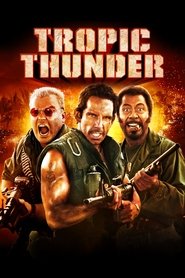
I don't think I'm gonna have an experience like this again. I mean, it did feel like, you know, a family... ...and that it was a bit like making a student film... ...where everybody was really passionate. Everybody was. It was like everybody's first... It was my first time playing a part like that... ...and Speedman's, and Brad's first time stunt coordinating. Wasn't it? Yeah, and first time, I think, doing second-unit directing as well. lt was a first time for a lot of people. I think Bruton Jones, my production designer... ...who I had worked with on videos and commercials and things... ...fight there, had not done a feature. And, you know, it was Danny's first... Danny McBride's first screenplay. And it was the first time for a lot of people. It was really special, and it was really, really great. Thank you for being so nice then... ...and such an asshole now that you've gone all Hollywood on me. No, I had, really... Just the support and everything that I had from everybody.... And like I've told you, it's because when you have... ...from the actors and everybody... ...when they're trying to make the best project... ...and they're really as passionate as you... ... you can kind of just put yourself in this bubble with the actors... ...and it helps take away the stress and nightmares you're dealing with... ...with the studio and the schedule and all that stuff. And it was such a great help. Forrest. So everybody, thanks again... ...to all of the 12 of you who are listening to this track... ...and we will see you again. We'll probably see you on Easter... ...because that's probably Mom Wiseman, right? Yes. Thanks, guys. We'll see you again. - Bye.
2:05:41 · jump to transcript →
-
-
-
Andrew Niccol
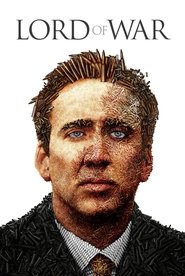
This Beirut set was brilliantly constructed by my production designer, Jean-Vincent Puzos. He made it out of a demolished fertilizer plant at the back of the studio lot in Cape Town. And the way he put together these piles of M16s was also a stroke of genius. There's no back to the piles, so you could halve the number of guns you needed.
14:36 · jump to transcript →
-
Andrew Niccol
is one of those lines you know the studio's gonna put in the trailer. And they did. In the original script, I was going to cut to Ethan Hawke's character up in this helicopter. But we had to scale back the shoot in New York. The helicopter's actually digital.
1:05:33 · jump to transcript →
-
-
-
And this is the House of Culture in Berlin. Combined with the studio set, we had like a little set, right? Yes. That part. It's the rooftop. So much of it just runs so seamlessly onto each other. This was a freezing, freezing, freezing night. I felt so bad for everybody.
7:31 · jump to transcript →
-
sometimes six days a week. Learning skill wasn't just about transforming a body. It was really about learning gymnastics and learning capoeira and getting as supple as I possibly could. And all of those guys just, I couldn't have done it without them. I mean, there were days where I could barely get out of bed. And somehow when I got to the studio to train with them, they just got me through it. And so I have to thank them. And the funny thing is, I knew
19:45 · jump to transcript →
-
-
-
It was very difficult to find the manor, the place, to do that around London because it has to be really, really close to the city. And we realised during the shooting that this manor was also used in Children of Men, the film from Alfonso Cuarón, a great film. An anticipation fantasy, as well, with London in as a character. Here, London is a real character in this introduction, no? Yes, because we clearly see how this city was devastated from infection. And we... we bring this kind of documentary style with the credits, you know, giving information about what happened and how the city is trying to start over again. This information was an idea of Alex. Alex Garland is the executive producer on this film and was also the producer and writer of the previous movie. I think that was a great idea. Thank you, Alex, from here. It was a big help for us.
11:15 · jump to transcript →
-
This sequence was difficult to shoot, because that was made in the studio with a tent and some kind of white gas. The gas they use in the discos. So it was very difficult to shoot that, because sometimes we shot one take and we needed to get out of this place because it was very, very... The fog was very heavy and intense. And to match with the exteriors that we shot before, we needed a level of fog, so these kind of technical problems always are complicating the situation... especially because you are dealing with fire as well in this moment. That was also a critical choice because that wasn't planned in the script. In the script, that was the moment when Rose Byrne, the character of Rose Byrne is being killed instead of Doyle. But we thought it will be weaker and a bigger problem from the kids to be led by this woman instead of this very strong soldier. And in terms of the sacrifice, which is an idea attached to the... to Doyle's sniper, it's interesting that he died in this moment, because now, you know, his sacrifice is clear, and the kids and the doctor are more fragile. Yeah. - And it was quite surprising, I think. In terms of the genre, we loved the idea about the hero's death. And now it seems like it's so difficult to stay alive in this city, so now the tension is stronger.
1:19:39 · jump to transcript →
-
-
-
Now, you must have felt like you were really right in your groove. Did you feel like you were in your groove right here with this moment? Like not on the same flight. This was all on the studio. Yeah, all on the stage. Dude, that's a man. Yeah. This is, to me, like how the Sarah thing gets ratcheted up, and now we're like into the mechanics. This is a fashion action movie now.
1:05:56 · jump to transcript →
-
I think Teddy Shapiro did a great job with the music here, too, where he really gets things ramped up. Boom. So they were going from location to the studio. And then we had to get all your stuff off and start the sort of deconstruction of your character. Yeah, yeah. Nice and easy. I go high, you go low. Yeah, go up that straight-ass wooden ladder, which is impossible. This was like the big...
1:22:33 · jump to transcript →
-
-
-
-
-
director · 2h 10m 1 mention
Richard Curtis, Hugh Grant, Bill Nighy, Thomas Sangster
-
director · 1h 45m 1 mention
Eternal Sunshine of the Spotless Mind (2004)
Michel Gondry, Charlie Kaufman
-
director · 1h 37m 1 mention
John Cameron Mitchell, Justin Vivian Bond, Sook-Yin Lee, Paul Dawson + 1
-
-
-
-
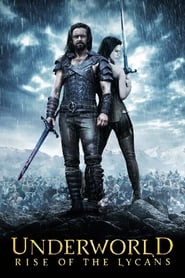
director · 1h 26m 1 mention
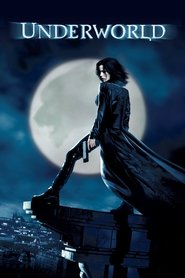
Underworld Rise of the Lycans (2009)
Patrick Tatopoulos, Len Wiseman, James McQuaide, Richard Wright + 1


Related topics
Other topics that frequently come up in the same commentaries.