Topics / Studio & business
Studio notes
95 commentaries in the archive discuss this, with 285 total mentions and 8 sampled passages on this page.
Filter commentaries
Filter this topic by the film's decade or the type of commentary.
Showing 3 of 95 commentaries
Clear filtersBy decade
Across the archive
ranked by mentions · click any passage for the moment in the transcript
-
-
David Kalat
He acquired a print of King Kong for his own personal use and spent his nights examining it frame by frame to reverse engineer its secrets. He approached his employers at the studio and implored them to authorize a full-scale attempt to develop similar techniques. In the rigid hierarchy of the Japanese film industry, Tsuburaya was but a lowly cameraman, and the executives could not imagine that he had any business advice worth their attention. Conventional wisdom in the Japanese industry held that trick effects were just that, tricks, cheating.
20:35 · jump to transcript →
-
David Kalat
Honda was assistant director at the time. The two worked together variously in the late 1940s and early 1950s on war films, gradually cementing a partnership and a friendship. Honda was born in 1911, and he'd studied art at Nihon University. In 1933, he joined Photochemical Laboratory, the studio that later morphed into Toho. Honda was called away to war in China in 1938, the first of three times that he was drafted to the Imperial Army.
23:38 · jump to transcript →
-
David Kalat
Then it was Godzilla. Now the mantle had returned to Kurosawa once again for Kagemusha, which would find Tomoyuki Tanaka overseeing things, Ishira Honda credited as creative consultant. Honda co-wrote all five of Kurosawa's last films, that's Kagemusha through Matadeo, directed most or all of the location footage, and co-directed in the studio. Another commingling of monster movies and Kurosawa art films.
24:56 · jump to transcript →
-
-
scholar · 1h 32m 3 mentions
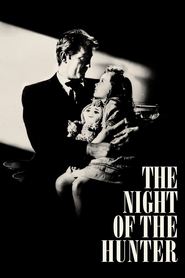
The Night of the Hunter (1955)
Terry Sanders, Robert Gitt, F. X. Feeney, Preston Neal Jones
-
This is in the studio here. Exactly. This is a very suspenseful and poetic touch, I thought, because we open with Lillian Gish. And for people who don't know the movie, it might occur to them, oh, is that Lillian Gish's body that's been found? Because she looks like she's in heaven. So it creates an extra element of suspense. And now here's Robert Mitchum. But again, this is Terry's work with Mitchum's double there. Yes.
2:30 · jump to transcript →
-
Now, was this all shot on Back Lot, Terry, or did they have locations near L.A. that served? I think it was the Columbia Ranch, was it? It was the Rollin' V. Lee Ranch in Chatsworth. Okay, in Chatsworth. It was all... But then they... But the studio was... Yeah, I think it was in Culver City. Oh, Culver City, yeah. This is a stock shot, actually from an old Fox picture made during World War II, interestingly enough, that Stanley Cortez had remembered and mentioned it to Lawton, and Lawton found it and used it.
13:29 · jump to transcript →
-
I arrived at the studio just after the piddling, as Bob says. And Gregory was saying, did you see that? Did you see what he did? Did you see that? Yeah, apparently that was when he showed up too drunk to work and Gregory wanted him to go home and Mitchum didn't want to go home. He wanted to act. That feels right. Yeah.
1:20:28 · jump to transcript →
-
-
-
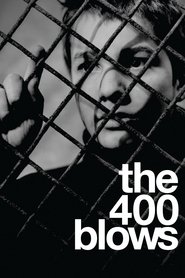
Hello, this is Brian Stonehill, and I will assume as you listen to this audio essay that you've already watched François Truffaut's wonderful film The 400 Blows. I don't want to spoil any of its surprises for you. The title sequence is shot out of doors in the actual Paris streets, announcing that the film is going to be shot out of the studio in the new tradition.
0:36 · jump to transcript →
-
Once again and somewhat paradoxically, the limited means of the New Wave directors helped to create a new dimension of realism in the movies by leaving the artifices of the studio behind. These scenes of the family coming back home from the movies are the first scenes of family joy and mirth that we've seen. It's hard not to be aware that it's a film, a movie, that has put them in this good mood. If Marcel Carnet's 1945 classic Children of Paradise had been cinema's homage to the theater, with the New Wave we begin to get cinema's homage to the cinema,
52:34 · jump to transcript →
-

Related topics
Other topics that frequently come up in the same commentaries.