Topics / Production
Production design
138 commentaries in the archive discuss this, with 776 total mentions and 72 sampled passages on this page.
Filter commentaries
Filter this topic by the film's decade or the type of commentary.
Showing 36 of 138 commentaries
Clear filtersBy decade
Across the archive
ranked by mentions · click any passage for the moment in the transcript
-
-
dealt with on a daily basis and it was virtually unimaginable the kind of environment in which they lived in and worked in and fought in and so that really helped me shape the work in the script and then finally the work on the set and so when we were leaving the naval base again back in the
11:49 · jump to transcript →
-
an obvious intention to get, you know, to cross over to the outside of the submarine. So the sets were all built to scale. I think it's good for efficiency. No more passes. All leaves are canceled. We need everyone here to do their jobs. Yes, Captain. Comrade Captain, Lieutenant Vadim Rechenkov reporting for duty. I'm your new reactor officer. Kelly
15:35 · jump to transcript →
-
on multiple occasions, arriving at the set at call time or before call and meeting Jeff there. And we would look at each other and say, how are we going to not repeat ourselves? And I mean, because in some cases, certainly in the command center, there's probably almost three quarters of the script takes place there.
22:08 · jump to transcript →
-
-
-
playing himself. They did a great job with the sets and the lighting.
7:25 · jump to transcript →
-
He just walks into the room and they cling to it like mad. If you notice little insert shots like that where people are, a hand comes in and brushes stuff away, you'll notice that Evie's got about four different types of hands. It's like second unit will shoot those inserts and they'll use whatever girl happens to be on the set that day, whatever actress or extras around. So her fingers grow and shorten. This shot right here where the rock comes in on Spivey's butt,
12:52 · jump to transcript →
-
coming back to the set shooting it every morning trying to get this shot until finally they all went and the great thing was steve didn't mind at all he was happy to go back there day after day after day you know his his whole attitude about it was great i actually did freddy's hair myself there i the last second quickly mustered up
15:48 · jump to transcript →
-
-
director · 1h 42m 14 mentions
Len Wiseman, Patrick Tatopoulos, Brad Martin, Nicolas de Toth
-
This is Len Wiseman, director of Underworld Evolution. And sitting in here with me today, far too close for my liking, I've got to say, if I can scoot over a bit, is Patrick Tatopoulos, our production designer. Say hello. Hey, how's it going, man? Remember that voice. And Brad Martin, our second unit director and stunt coordinator. Hello. And Nick Tatoth, our editor. Hello. Are you going to do that the whole time? Is that going to be your... Hello.
0:04 · jump to transcript →
-
It had to be built, and we stroked the set just a day before the station opened, and people were starting to ski again. So it's hard to believe it's a ski station, but that's what it is. But when we went there for prep, which was on a Friday, just to go look at the whole set and everything, there was no snow. And we were shooting on Monday, and we had to have snow there. Well, the thing is, we didn't seem to be able to get enough cash to get fake snow. No, we didn't. It's funny, because we didn't have the money to bring in fake snow. But then the thing is, once you're actually shooting in snow,
2:02 · jump to transcript →
-
I mean, at the end of the day, we could have probably built this set. It wasn't that big of a set, right? I mean, that's a hard thing to decide. Once you're in production, you say, okay, let's save money by going to a location instead of building the set. And then once you dress it and build it out on location, sometimes it could have just been a full build. It's more trouble, but very often you throw the number of the set ahead, and there's reactions saying, you know, you need to save some money there, and then you sort of shove it into a location, and the set...
11:49 · jump to transcript →
-
-
-
Simon West
To move the robot around the set, we had a couple of old rusty G-clamps that we just used to attach to its head and then drag it round. Ironically, the toy makers came to visit us one day to take the design of the robot to make the toys for mass production. And unbeknown to me, they'd taken photographs with these rusty old G-clamps on its head. And when I went...
2:33 · jump to transcript →
-
Simon West
Now, the company wouldn't actually lend us one of their cars for the film, so I had to go to a private owner. But unfortunately, the insurance was so steep and expensive to have that car on the set that I could only afford it for one day. So we had to make a polystyrene double for the car. And so all the wide shots in the action sequence in the background, the McLaren is actually just a very crude styrofoam version of the sports car.
31:13 · jump to transcript →
-
Simon West
I'd always been a big fan of Jon Voight, and so it was great fun for me working with him. Every day I could come in and ask him about films that he'd worked on as I was growing up. And so one day I would get an anecdote about Deliverance, and the next day I'd get an anecdote about Midnight Cowboy. So as a film buff, it was a great piece of casting for me because it kept me entertained every day that he was there on the set.
39:37 · jump to transcript →
-
-
-
And I'm Ted Tally, the screenwriter of this motion picture. Thanks for watching our DVD. I got a call from my agent who said Stacey Snider wanted to send me a script. Stacey called me directly. Stacey is the chairman of Universal for those of you who don't know. It said Red Dragon, and I said, "Red Dragon. Is this "the prequel to Silence of the Lambs?" I was familiar with the book but hadn't read it. At first, I was very insecure and said, "Am I like the 'Go-to' guy on sequels? "Why is she sending this to me? 'Cause no one can mess this one up?" And then, I saw Ted's name on it and said, "This is the guy who wrote Silence of the Lambs, "but didn't write Hannibal. "So, this must be special. "Why are they sending this to me? I'm not a dark guy. "I don't make dark movies. I do comedy." -/ think they sent it because you're cheap. - Exactly. So I read it, and I was completely blown away. Not to blow any smoke up anybody's butt in my presence, but the truth is the script was amazing. I called up Stacey and I said, "I want to do this." She said, "Now you get to meet Dino De Laurentiis." And I said, "Dino De Laurentiis "of Fellini fame?" - Scary thought! So I went to his house and first thing he says to me is, "Why do they like you? Who are you? "I never heard of you. What is Family Man, Rush Hour? I don't know these movies." I said, "Dino, I'm a talented guy. Trust me." And thank God, Ted had seen Family Man and Rush Hour, and his kids or someone in his family was a fan. Brett might not have been an obvious choice but Brett is an incredibly talented director and clearly ready to try something new that he'd never done before. He is a great fan of Hitchcock and of thrillers, and brings a tremendous energy and confidence to his work. I was such a big fan of Silence of the Lambs. You know what I was excited about? Most people asked, "Weren't you scared "of following in those footsteps?" First of all, I had three brilliant directors Michael Mann, Jonathan Demme, and Ridley Scott, who made three movies in the exact genre, but completely different. I was excited about it because, by watching those films, I knew what not to do or what I didn't want to do. I was able to decide on the type of movie that I wanted to make. And it helped me choose the tone of the movie. I realized I wanted to make a movie more like Silence of the Lambs. More Hitchcock-inspired. A movie that scared you by what you didn't see more than what you did see. I've read that the most important single decision you make in directing a movie is tone. - Absolutely. Because it's the direction of the film. It helps you with every choice that you make as far as the wardrobe, the production design, the music. The tone, to me, is really everything. Dante calls it, "The language of the film." We have to integrate what we're seeing now, Kristi Zea's set design with its dark, rich color in Dante's cinematography. The choice is even of the props. The integration of all of that, the wardrobe. It's sort of overlooked by people and it should be something that doesn't call attention to itself. But when all of those elements are integrated... Look at this moment here. You get a much more powerful movie if nothing sticks out. If everything is consistent in tone. Special Agent Graham. What an unexpected pleasure. I'm sorry to bother you again... If you see on the left-hand side over there, a little detail, I found this book of Sigmund Freud's office in, was it Vienna? That's where I kind of modeled Hannibal's office. I modeled the tchotchkes, the details.
0:08 · jump to transcript →
-
I went to New York with Dino, and I was very nervous. This was Tony, Anthony Hopkins. The thing I did know and what I was confident about was the type of movie I wanted to make. Like I said, I went in there knowing the tone of the movie, my approach to the movie, how I wanted to not show any of the gore. I didn't want to make a horror film. I wanted to make a film that was psychological, emotional, and smart. That was what was on the page. And the only scene that Tony had a concern with when I sat with him was this scene right here. Tony was concerned that as originally written, his attack on Graham here was too graphic. By the way, it's an interpretation because 10 directors would direct a scene in 10 different ways and show various degrees of violence. It's about showing the details of the guts falling out of his stomach, or the blood, how much blood to show. And I chose to play it mostly on their faces. Once the attack happens... Here's my little homage to Silence. You see the... - I see the bug. You like that. So I chose to play the violence part of this scene on their faces. I love this book. This is an original. My prop guy, Brad, found this original book from France, Larousse... When I read it, I had no idea what the hell it was. It's the bible of cookbooks. - Yes, I learned that quickly. He found this real old French cookbook. There was a lot of dialogue about how do we sell his moment? It's really just a subliminal thing. It wasn't really supposed to be so pointed where it was like, "Oh, sweetbreads." I thought sweetbreads was brains but it's not. It's actually... Thyroid. -... thymus. I learned so much about anatomy on this film. If you work on a Lecter movie, you learn a lot about cooking. I thought Edward was fantastic. There is a tremendous intensity of performances in this movie. And really a dream cast as Brett already said. If you could have anybody in the world for these parts and be lucky enough to get them. It's pretty much what happened to us. Great actors want to play good characters. They want to play great characters and all of these characters, down to Freddy Lounds, and other smaller roles, were just written so well. They were interesting and dynamic. And these actors were interested in playing this. To convince these actors to do a third in the series, all that went out the window when they read the script. Certainly once they started working. There's our cold opening. I'm very proud of this title sequence because it was actually done two days before we had to lock picture. My editor, Mark Helfrich actually was the brainchild behind this because... You re-shot the journal here in a very interesting way. Initially, this was done in a much more straightforward way with the images very flat against the screen. Yes, a lot of times. Mark is kind of... Everybody on my team, from my AD to my production designer, are filmmakers. Mark is a filmmaker in his own right and he just understands the visuals and storytelling. I love how, you know... But this was written. - Yes, it was. But the way that the camera roams over these pages and when we go in very close and it gets grainy, the camera movement left to right, up and down, is all not scripted, of course. This is something I don't really have the patience for. Mark kind of took this book that he was fascinated by. I think he has a copy of it in his closet at home. He just knew every page, every frame and went with Dante and literally just shot. This is a wonderful opportunity. This kind of title sequence is sort of old-fashioned in a way. But it's a wonderful opportunity for a screenwriter to get information in quickly to cover a lot of ground between the arrest of Lecter and where we are when the movie is going to start. Covering a period of several years, you are doing that without any dialogue just by these images. It's a very useful shorthand. Danny did the same thing that Ted did with the script in this sequence that Mark did with the visuals in this sequence. Danny did the same thing with the music. I think the music here is so fantastic. It's very much like a Bernard Hermann score, which I knew was a big inspiration for Danny. Danny is a big fan of Bernard, and this was his chance. He's done darker scores, but they've had a kind of lightness, or comedic darkness to it. Danny did something here that kind of made people's skin crawl in the theater, like, "You're in for it. "If you're gonna sit through this movie, you'll experience some stuff. "Shit's gonna go down."
6:02 · jump to transcript →
-
So that sequence, those two minutes of the movie, which could have been a very boring, dull sequence. I had a long conversation with Kristi Zea. It was wonderful. She called me up and said, "This book of Dolarhyde's. "What does it look like? What's in it? "How is the handwriting? What kind of photograph?" We had a long conversation which for a screenwriter... You don't often get a call from the production designer to talk about a prop. It was a wonderful opportunity to be part of the design of the movie in that little section. You've got a beautiful setup here, Will. This was actually in the Florida Keys. You know why I'm here? Was it Marathon? Yeah, I can guess. The location is meant to be Marathon, Florida. Dino wanted us to shoot in North Carolina because he had studios there and a house on the beach or Malibu because it's close to his house in Beverly Hills. But the truth is, I wanted to stay true. When I said I chose the tone, I'd really chosen the tone of the book, going back to the book. Everybody here was honoring the book. We really gave a lot of respect to Thomas' book. Tom Harris is a wonderful writer. When you're doing an adaptation like this, it's a great resource to everybody to be able to pick up the book, as you can go into more details than the screenplay. It's a help to both the production design and the actors, who can go back and find out details of motivation. It's helpful to everybody to have that bible to refer to. So when it said Marathon, Florida, I tried to stay true to that and actually go to the location in Marathon, Florida. It just felt like it was the tone and even the location, like Grandma's house in the same description of the rural area where it was, and the type of house it was. It was an old-age home once, which is really back-story, but Kristi incorporated that into the design. I was so happy that she and Ted really stayed true to the tone of the book visually as well when it described the locations. This was so much fun being down here, by the way. It was the end of the shoot, and we were just down there on the beach. This was probably the hardest scene I shot with these two guys. In what way? Because it's exposition? Anything with exposition... -/s tough. It's tough to make it sound like real conversation. But honestly, there's not a line in this movie that I'm not proud of. I mean I can't say there's a line... It was a tight script. We did cut a few lines and a few parts from scenes but Brett and I actually worked quite a bit on the script before the production started, and we had it pretty tight. And the shooting stayed quite faithful to the script. I have to say that every scene was hard for me because I'm used to scenes with not much dialogue. I, unfortunately, am a very talky screenwriter. So it was a clash of cultures. Coming from being a playwright, I guess. There is a lot of dialogue in this movie, I tell you. And it was not a single-spaced script. It's a long script, and I kept saying, "Make them talk faster. "Don't cut the thing, just make them talk faster." Ted's advice to me was, "Brett, when you're happy, "ask the actors for a take where they talk double speed." And I did that. Probably that's all the takes that Mark ended up using in the editor's room. He kept calling me, saying, "This movie will be four hours long "If you do not get them to speak faster." The thing you run into as a screenwriter, even with the best actors, is that you try to pace a scene to fit within an act structure and fit within the entire screenplay. But then actors wanna take very long, dramatic pauses. Actors want to look down and up, across the room, at each other, and finally say the line. - A lot of pausing. And that's what you're up against when trying to time out the length of the scene or act. I wanna say something about these actors. Once I got Edward Norton, I used Edward to get another actor. Once I got Ralph Fiennes, I used him, I got Emily Watson. - You parlayed them into each other. I said, "Philip Seymour Hoffman, I'm getting Mary-Louise Parker." I knew each one, who they were a fan of. I used them against each other to get them in the movie. I literally thought I'd be able to walk onto the set, and it would be the easiest movie I'd ever made because I had these brilliant actors. I could just say, "Action." I read one article or something about this movie that said this was the most distinguished cast that's been assembled in any movie in the last 20 years. But the truth is, it was probably the hardest movie I'd ever made because the smarter the actor, the more experience they have. It's a myth that these great actors don't need direction. They want direction more than any other actor. They want direction, but they have ideas of their own because in the end, it's up to them. They are the ones whose face is filling that whole screen. And they have to absolutely believe what they are doing, or they can't convince an audience of it. What I'm trying to say is, there was a lot of dialogue going on. A lot of intellectual discussions. And each of these actors are not only smart actors, but they're highly intelligent, all smarter than myself and... A lot of them have also directed or even written as well. They all had an opinion. And my job, I felt like it was my job to save the script. This was a script that worked to me. We had a table reading of it. It was fantastic. And Ted was
11:13 · jump to transcript →
-
-
director · 3h 43m 12 mentions
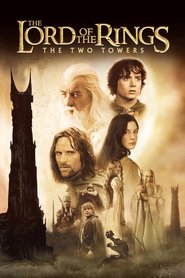
The Lord of the Rings The Two Towers (2002)
Peter Jackson, Fran Walsh, Philippa Boyens
-
That's one of my favourite. Yeah, that's my favourite shot too. It's incredible. When I saw that shot, that was like one of the first times you really felt this guy's going to work. I love the blanket spinning around. Yeah, well that was because Andy spun it around with his feet. We didn't plan on that, we used it. The image of Frodo with the sword at Gollum's throat while Gollum's got Sam is straight out of an Alan Lee painting. We actually had Alan's painting on the set.
10:16 · jump to transcript →
-
I always felt guilty when we would walk into a Fangorn set because I'd think about the trees that died for the set and how it was so much in conflict with what the story was about. Yeah, most of it was made up of old dead trees, bits and pieces lying on the ground, and the bark was usually rubber. I mean, a lot of the bark on the trees was actually just big sheets of rubber that had been moulded off a real tree. The first time we see Treebeard, Treebeard was a real difficult character.
39:08 · jump to transcript →
-
building materials off the top of the hill. It's actually quite dangerous. We had to anchor the buildings down deep into concrete, drill into the rock and put huge big concrete piles into the rock. We even just build the set there.
1:13:11 · jump to transcript →
-
-
director · 4h 13m 12 mentions
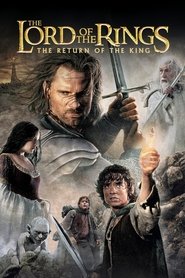
The Lord of the Rings The Return of the King (2003)
Peter Jackson, Fran Walsh, Philippa Boyens
-
that we wanted to use the blinking one, so we had Weta, the CG guys at Weta freeze his eyes, so we removed the blink from his eyes. This was a sequence that Freya directed. We built the set very quickly, because it was an idea that you had that wasn't really part of the script to show this deterioration.
4:36 · jump to transcript →
-
We put a guerrilla crew together so that you could film it with Andy. We were trying to figure out all the different ways we could use the set, which was really a little gully, a rock gully. So we drowned it in rain, we dried it out and drowned it in light, threw some greenery in. We just tried to give it variation and also to show, obviously, passage of time. That was a huge make-up, wasn't it? It was enormous. He was in there for how long? I couldn't tell you. Hours and hours and hours.
5:06 · jump to transcript →
-
Yeah, a long time ago. For some reason I thought we shot it in Queenstown. I thought you shot it in Medfin. I think we built the set for it down south but we never used it because it was a wet weather set so we only went inside if it was raining and it didn't rain. So we ended up shooting it up in Stone Street Studios I remember the day we shot it actually. Kind of an awkward little scene to shoot because the set's kind of small.
30:14 · jump to transcript →
-
-
director · 1h 26m 11 mentions
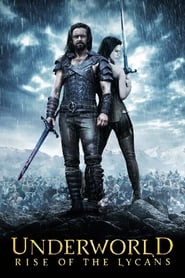
Underworld Rise of the Lycans (2009)
Patrick Tatopoulos, Len Wiseman, James McQuaide, Richard Wright + 1
-
The fights are really nice in this picture, Patrick. They're really on par with the other two, certainly. Allan Poppleton was our New Zealand stunt coordinator. He did a fantastic job. - He did a great job, yeah. So, what you're seeing here is actually the set... ... you're gonna see later in the movie, an early stage of the castle. We tried to minimalise the dressing so it felt a little different. But it's basically the same space that you'll see later. And this was the first day of shooting. - Yeah, the balcony part. Yup. The big reveal. Wanna tell you a story about the castle. The castle is such a gigantic structure. Of course, there was no way to build this. We ended up building the, what you would call, the courtyard of the castle. How many feet tall, Richard? - About 20 feet. Twenty-five, 30 feet, yeah. Which was a little challenging for the lighting... ...because we were there on top of the set. When we started, it was difficult for CGI guys to kind of extend that. Yeah, it was terrible for Sound too. Every time it rained, we'd stop shooting. The train outside, the train station? - Yeah, the train... Note to self: Do not build set next to railroad tracks next time. We have a few transformation... ...but this one actually is not a transformation. It looks like one, but everything is practical. There's nothing mechanical or anything. I love it. It's a little more American Werewolf in London approach. There is no CG help whatsoever, though. Unlike the others.... This took a while to get right, just this whole prelude... ...and Kate's voiceover, and getting people caught up. There is a lot of history, and to decide, you know, where exactly to start... ...and how much to prep it with. Hopefully, we covered everything we needed to. It looks like we moved really quickly through. I wish we had a little bit more space, a little bit more in the... Yeah. - There's so much story to....
1:59 · jump to transcript →
-
So Dan was the art director on Lord of the Rings... ...and I met through a friend of mine, Gino Acevedo, the makeup artist. And we met and.... Since we already had a sense of what I wanted to see as a castle... ...came with some drawings at the beginning. Dan was perfect for that. Just took the drawing. As an art director, just became clearly someone that expanded the vision. But he's textured the style, you cannot recognise, I mean... Yeah, we were really lucky to get him. He was actually working on a different show when we got to New Zealand. And we thought maybe we wouldn't get him. But that other show had money problems... ...and shut down the production. And we were very lucky that he was able to step right into Underworld. Now, this was a scene that, at least, my recollection... ...when we originally sort of storyboarded it... ...wWe had a lot of werewolves in it, and then we couldn't afford them. So we went back and we begged Clint Culpepper... ...to give us about a hundred more werewolves. And he did. - Which he did. We also had to build this canyon right here. And I do think it makes a difference of just... Before, we were talking about doing a version... ... Which is just all within the trees. And, you know, Patrick, you and I talked a lot about... I liked the idea of you going from... There's a separation. You got the forest, and then this canyon, that then leads into... Leads into the meadow, yeah. Into the castle. Yup, and this castle, obviously, is a location that doesn't exist. So basically... - Neither do the rocks. What we had, it's basically like a golf course-looking... There was no rocks, nothing. It's very flat, very boring. And there was a lot of work to be done later on post and, you know.... The trees and the grass are basically all that were there. Yeah. The big crossbows. We only had one working crossbow, correct? Yes. - We still have it in storage too. We should take it out and play with it. We had a lot of, like, one thing working out of everything. We had one werewolf head mechanical. And we had to make it, you know, out of that stuff. So this wall behind. This is again basically the outside of the set. That set already, basically. - Yup. The whole courtyard and the little bit of the outside was built. We tried that shot right there, where the werewolf comes in. We tried that practically. And it just looked like.... Just dragging in a muppet. - A piece of rubber. Now, this is Rhona. - She is.
4:04 · jump to transcript →
-
It was interesting with Rhona because she had to create... ...a new character, you know, somebody... It's a different time. It's a much more rougher time. I mean, I think the warrior that she created... ...IS, In a sense, quite different from the Kate character. I think she did a fantastic job there. And I think she fits the tone of the movie very well. I was very happy. I mean, she looks great. And she has a very special quality of.... What I like best about Rhona is also the looks, how she looks... ...and tell a love story just by the looks on them. You'll see that through the movie, little moments like this, she really.... Beyond being a great... She works great with swords and things. Look at the shape Michael's in. It's incredible. This was-- He started.... He came off of Frost/Nixon I think in the end of October... ...and started shooting this in January... ...and had three months to go through incredibly intense physical training... ...to get into the shape that he's in in this movie. It was a Startling transformation that he was able to do to himself. It's good to be a Lycan. I'd like to be one. Yeah. That helps. Now, this is one of the great Dan Hennah sets. I remember Len and I came from California... ...in, what was it, for the first day of shooting... ...and we walked through the sets. And not only were they beautiful to look at... ...but the flooring was all corrugated. It looked like natural cement. And apparently, Dan had some sort of formula... ...where he could lay down these floors. And they made them look absolutely... They brought in a cement mixer and dumped it on the floor. And then there's this team of guys with forms and moulds... ... sort of going along with the cement mixer. So the entire floor is actually made... ...of two or three inches of actual concrete. It makes a huge difference. On the first film, we would've liked to, in the crypt, do that. Just didn't have the money for it. It was, you know, any way that you can possibly do it... . like a faux paint job. It just doesn't pick up the light. It doesn't work. The texture, yeah. - Here's a transformation. This was late in the game. This is Michael's suggestion or no? Am I wrong about that? - This was a scene, he was really... We actually tried to cut it. And he was so adamant that we had to shoot it. This one here. This turned out really well. Who did this? A company called Intelligent Creatures. From Toronto. - This one came out really good, yeah.
6:38 · jump to transcript →
-
-
-
Barry Sonnenfeld
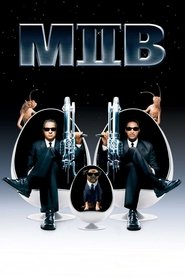
So we're back in Men in Black headquarters. Although Bo Welch, the production designer, and I made some changes... ...we always felt that this side of the room... ... should feel like it was like an airport. That's a real Rick Baker-designed creature. There's no visual effects in this shot at all. And we felt since we were creating an airport... ...we should have a Sprint store, a duty-free shop... ...a Burger King and really make it feel like an airport. There's an "I love New York" store. That's Nick Cannon, a big star of Nickelodeon. Good work in the subway. I remember Jeff when he was yea high. - What you got for me? We didn't change this set from the first movie... ...although I was wondering if we should have removed... ...one of those spaceships behind Zed since at the end of the first movie... ...Edgar flies off in one of those things... ...but we felt they wouldn't change the mural. Here comes Frank the Pug. There was a killing earlier. 177 Spring. Alien-on-alien. If you listen closely, Frank, when he walks into the room... . 1S humming "Hava Nagila." What happened with Tee...
17:23 · jump to transcript →
-
Barry Sonnenfeld
Almost all of Frank's mouth animation was done by Rhythm & Hues... ...who did the animation for Babe. A little bit of it was done by Industrial Light & Magic. But I would say, what you're seeing in the movie... ...IS about 80% Rhythm & Hues and 20% ILM. Jay, wait up. I appreciate the shot, man. The name of this dog is Mushu. Mushu plays Frank the Pug. Mushu loved being in that suit. He just had the best time. He would prance around. I think he really felt, when he was in the suit, that he was a Men in Black. I felt it was really important that Will have a different car... ...that it didn't feel like exactly the same movie over again. Bo Welch and I wanted to upgrade some of the stuff and make it sexier. We love also the fact that a black Mercedes probably fits in better... ...1N New York than a 40-year-old Ford LTD. before I roll it up in there. Got it. This was a last-minute decision to have him sing that song. It actually was a long monologue... ...and on the set on the day, we thought it would be funny. Frank just said, "For
18:51 · jump to transcript →
-
Barry Sonnenfeld
I love these guys. Either he has very strong jaws, or this guy looks like Frank the Pug. Zero percent body fat. Funny. - Witness? Girl. Again, we're back on-stage in Los Angeles shooting this scene. There was no pizza shop that looked like this. That's Bo Welch, by the way, who's playing the astronaut right there. We'll show you in a minute. That's Bo Welch, production designer... ...of Men in Black, Men in Black II, Wild Wild West. Everything is all right. What is she supposed to feel all right about? Another guy with a really strong jaw. I'm Agent Jay.
20:38 · jump to transcript →
-
-
-
Noah Baumbach
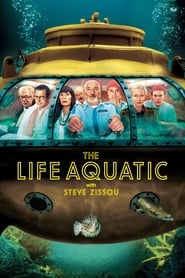
This is his ship, the Belafonte. We bought this ship in South Africa and sailed it up to the Mediterranean and renovated it and made it into this research vessel. It never ran that well, but we really did fall in love with this ship. The crew of the film was always very sort of loyal to it. Now, we have Michael Gambon, who plays Oseary Drakoulias, the producer, a sort of Carlo Ponti, Dino De Laurentiis-style mogul, although he does produce these documentaries. He has the longest fingers that I think I've ever seen in real life. He understands. Amin needs to make a projection of the world grosses to see if he can get a tax break and run it through his output deal. I think that Zissou sees himself and wants to be the kind of person who gives kids secret messages in the cereal boxes. Right. That's an inspiration for him. And the movie is about this, theoretically, a real person, but he's inspired by a sort of fantasy version of himself. And there's things sort of peppered throughout the movie, but this whole red caps and the uniforms and the whole thing. And Owen, in some ways, is our stand-in, I mean, of the child who looks up to this person. And I think another layer of that that we were always dealing with was how our cinematic idols in some ways were like surrogate fathers for us. Movies we loved that sort of took the role of things we looked up to, things we sort of wanted to live vicariously through. And I think Owen and Ned's character sort of stands in for that. This is a kind of an unusual role for Owen Wilson, I think. Right. He has a sort of recognizable comic persona that he's developed. And this is, I think, very different from that. I think when we were writing it, we often talked about that even though Ned was, as written, very naïve and kind of an innocent, I think there's always a kind of somewhat devilish nature to Owen. You can see the light is on behind his eyes all the time. There's some Zissou in him. Yeah, that's interesting. And I think also it made us feel more comfortable writing such a naïve character because I think if it was played too much that way, it would kind of wash out. Yes, and I think Owen's concern was, he was like, "What am I gonna do?" Because he felt like the character is so innocent and so sincere that he's not used to playing someone who's that sincere. He usually plays somebody who's a little bit wily on some level, or something like that anyway. And I think for him, when he really became comfortable with it was because we were sitting on the roof of this hotel in Rome, and he told me this funny story about Will Patton on the set of Armageddon, and he did Will Patton's voice, this southern accent. And I asked him, "Do you think you could do this whole movie in that voice?" And what he ended up doing-- He liked it. We read through the whole script reading all his lines with that, and it was funny and it gave him a sort of genteel feeling and something a little bit not quite real. And the accent's certainly not real. The accent hasn't existed certainly since the Civil War. Right. - Even if then.
9:42 · jump to transcript →
-
Noah Baumbach
Let me tell you about my boat. This is something when you first brought the idea of the character and the story to me, this was something you always wanted to include. I remember you said, you know, idea of this character, originally named Steve Cousteau. We later made him Steve Zissou. Oceanographer. He has this show. And then you said, "I want to do this--" Visual. - This visual. So this set, this is sort of inspired by, you know, World Book Encyclopedia, and Time-Life books, and, you know... elementary school books with fold-outs. And so that's kind of where it comes from, but making it in three dimensions. And for me, it was just something that I was inspired by. And it was years and years ago that I was planning to do this. And it was very kind of thrilling to be able to build this set because it was such an unusual one. And so many people-- For us, the movie is about all these characters who we made up, but they relate to people we know and they're characters we really love. We don't really have a lot of bad guys or anything. We just have these people we connect with. And the idea of having them all in there at once in this environment, that sort of encapsulates something about the movie. I think it goes back to what you were saying about your-- That this is also about what you love about making movies, and how you feel, you know, sort of lucky and privileged to be able to do it. And here, you know, in a way, this is like your dream of, "If I could make a movie, I want to do this." I mean, you've had this for so long. - Yes. And we shot it... It was like shooting a play. Explorers Club? - Right. You were on the set. - Yeah. This is-- Yeah, I spilled an entire espresso on my shirt. During the filming of this scene? Yeah. I was so jet-lagged. I was listening with a headset and it somehow disconnected from the headphones, the little mic part, and it knocked the espresso out of my hand and all over my shirt. Yes. You know, I always like paintings. - You do have a lot of paintings in your movies. - Yeah. And those tell about the character of his mentor, Lord Mandrake, and then we have Zissou, and then we have... And this story was actually based on something a friend of ours had been talking loudly in L.A... Chris Eigeman. Chris Eigeman had been talking loudly at an Indian restaurant in L.A. He thought that there was somebody who looked like a famous action hero, and he was talking very loudly about what happened to this guy, and it turned out to actually be the guy, and Chris was humiliated. And we lifted it wholesale and dropped it right into the film. And at one point you were going to have Chris play the guy until then you decided to make him Italian. It seemed nice to be able to put it all in subtitles. The Explorers Club is also-- This place is inspired by a club in New York who actually let us use their flag, which you can see in the background. And it's the Explorers Club on 70th Street, a block away from where I used to live.
14:59 · jump to transcript →
-
Noah Baumbach
This actually was filmed in Rome. You know, the whole film was shot in Italy. The Explorers Club was at a palazzo in Rome, and Zissou has taken to wearing an earring at the beginning of the film. Here's where he decides he's humiliated out of-- He loses his confidence. Did you place a second earring there that Owen knew where it was? I don't quite remember. - Probably. I think it was more Owen just went over and acted like he was picking something up because he could never quite find it. This is revealing some of the secrets of the trade. The deliberately low-tech effects. Yes, yes. Something I was thinking about this ship, which we didn't say in the cross-section area, but I do think is definitely another thing about the film, is the sort of deliberately artificial and sort of the things that are invented, certainly the fish and the cross section of the boat, sort of living in the same world with stuff that's very real. You know what? Okay, so this is one of the big concerns for me. How-- We want to make, you know... Most of our time is spent in how do we bring our characters to life. That's what we're inspired by, that's what we spend all our time with as writers. And then as a director, I'm working with actors, and those are my actors, and then the cinematographer, the production designer... And how can we have them come to life and have a feel for them in an environment that is so strange and unreal? Well, and I think what's sort of interesting about that too is that Zissou is somebody who, you know, makes his living sort of, you know, in some ways... - Making fake documentaries. Making fake documentaries or documentaries that are highly indulged or embellished upon. And, you know, so, you know... Yeah, so the artifice of it, for me, it doesn't actually-- This is like intellectualizing something, but for me, part of the inspiration of the movie is to create this world that's going to be set, and they're gonna wear these crazy outfits, which comes out of his character, and he's going to fly for Air Kentucky, and, you know, we're going to make these animals. But the hope is that through the fact that we've made so much, and invented so much, and through the artificial feeling, that it would make it interesting enough or have enough excitement in just the fact we're trying to create so many things. That's basically what I feel like. We're just trying to try as hard as we can to put as much life into it as we can and as many ideas into it as we can. And there's even something that you were saying, which was that the fact that the animals being this sort of handmade, stop-motion, old-fashioned style, and how it's not very real, is related to the whole concept of a movie being about people who make things and create their own world. That's what the movie's kind of about, some sort of self-invention, and making their own art and all those things. Which in this instance, there's a bunch of plastic domes with light bulbs blinking inside them on a beach in the south of Italy.
18:16 · jump to transcript →
-
-
-
Ron Howard
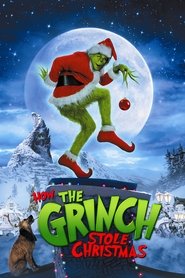
but also the production designer Michael Corenblith made a really interesting observation early in his research. And that is that the Spanish architect Antoni Gaudí actually created works around the late 1800s, early 1900s that looked very Seussian. In fact, they predate Theodor Geisel and Seuss and his work as Dr. Seuss. And doing a little bit more research, we realized that Geisel was a fan of Gaudí's whimsical designs.
2:57 · jump to transcript →
-
Ron Howard
we decided to not only tweak the sets, there are no right angles on any of these sets designed by Michael Corenblith, but also to constantly dutch the camera and have it slowly moving. I didn't want it to be disturbing to watch, but if you notice it, none of the angles ever really stay put. There's always motion, and they're always shifting, and again...
9:13 · jump to transcript →
-
Ron Howard
countering the angles of the set, so there's never anything that looks flush or that's a right angle. Here's Bill Irwin. He worked this bit out with the ladder himself. I sent him off with some of our stunt guys, and he sorted out this routine. Very creative guy.
9:39 · jump to transcript →
-
-
-
E. Elias Merhige
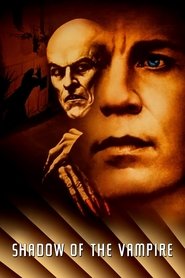
create anxiety and intrigue on many different levels. When I see Charon on the side of the train it reminds me of, I have to speak about my production designer Assheton Gorton, what a magnificent man to work with, what an extraordinary person. We had many discussions on esoterics and metaphysics and
12:58 · jump to transcript →
-
E. Elias Merhige
Han Budala is a Slavic word meaning the inn of the fool, and that corresponds to the tarot card of the fool that Albin Grau, being the esotericist that he was in real life, was very fond of the tarot and carried a tarot deck with him. Even on the set he had it with him. How long have you been here? Not long.
16:29 · jump to transcript →
-
E. Elias Merhige
And when I realized that we were all standing on this steaming horseshit, I was just, at first I was very upset, but then I just had to laugh because this farmer completely misunderstood and the assistant completely misunderstood. There were like six or seven different languages being spoken on the set. And I think it just added to the scene somehow. I just think it,
23:13 · jump to transcript →
-
-
-
The funny thing about the set, by the way, is that I kept talking to Scott Chambliss, our production designer, about what the set should look like, the home. And I kept talking about my house, where Katie, my family, and I live. And so finally he just went to my house, started taking pictures, and the set he built was essentially... I remember walking to the set, and I looked at you. Here's Greg. And I thought, this is... It was so weird being on the set with Greg, because...
4:57 · jump to transcript →
-
I like the ice thing. When you told me about the ice thing, I don't know what it is. That shot, it's so funny. There's things in movies sometimes that people just don't realize, but that you just, you love it. That ice thing for me. Me too, though. What is it about that? It's so funny you say that. There's the shot going in, and how much conversation you have, ridiculous conversation. People go, these people are nuts about putting ice in there. Yes, Sherry. Sherry's there that day. She was so lovely. She came to the set. We were hanging out, and we were shooting that one shot. I remember saying, this is one of my favorite shots, the ice shot.
7:51 · jump to transcript →
-
We could not control any of the crowds there. So what we did is, about a block and a half away from this location, we set up a phony shoot. And we had three girls in bikinis and three old women dressed as nuns. And we had a camera, and we had a tent, and we had a whole thing. We pretended to be shooting something. The interesting thing about shooting on this set was my tendency was to want to shoot the set and make a lot of the set, but I felt
43:18 · jump to transcript →
-
-
-
So we were so lucky to have Thomas E. Sanders as a production designer. He's a great guy. He did Dracula, Braveheart, Saving Private Ryan. He's just incredible. So in this movie, all I want is a
21:33 · jump to transcript →
-
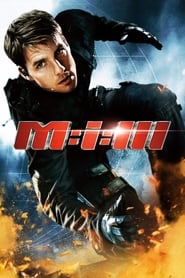
to make it look more warm and passionate. So he came up with the idea of a color. He was suggesting using more of a red, orange, and green as a key color. That will make it totally different from the first one. The first one was a little cold and have a blue lighting, and even though the set is pretty dark, but I want this one a little more charm, more open.
22:03 · jump to transcript →
-
and greeting everyone, and I called him, sir. He said, please call me Tony. It kind of made me so relaxed. And he was so happy to be on the set. He said he's a big fan of It's Impossible. He loved It's Impossible. He loved Tom Cruise, and he liked my movie. And all he wanted, just wanted to be a part of the movie. And he was very happy. And then we talked about the scene, and then
25:27 · jump to transcript →
-
-
-
My name is Len Wiseman. I'm the director of the film. I'm sitting here with Kate Beckinsale and Scott Speedman. And Kate plays Selene, obviously. And Speedman, I think you were one of the set PAs. Yeah, set PA. I got promoted. That's Speedman right there. - That's me. That's me. Or Michael. Michael. - Yeah, it's Michael. You've got a lovely young back. - I do, really nice little back. So we're watching... This is an extended cut. This is not a director's cut. What it is, It's a version that's put together... ...to show you what's missing from the original film... ...and what had been cut out and what's been changed. And I'll go into some detail, not too boring... ... about why that happened. I like that type of thing. Do you? - That was Nate, right? That was Nate. That was Nate Robinson.
0:06 · jump to transcript →
-
You got off lightly with the costumes. - Me? Yeah, you. - I had one. Well, then I got screwed. Why? - With my second costume. I remember some producer trying to get him into a beige cardigan. What was it? - Yeah. Yeah. That was the first time I ever met you. That's right. Horrifying. - Yeah, I think Richard had brought in.... We were talking about how much rain there was going to be... ...and all of that. And so he comes in with a... I think it was a beige sweater from... I think it was, like, a Gap sweater. I wasn't liking it. No offence to Richard. That was quite funny. We used to have meetings about whether we should shave you or not. We still do. - Oh, we did. What, shaving my face, my head? Do you know we had conversations about that? We did the test. We did a test, you still had the scruff... But it looked stupid. With the lighting, it didn't look right. I agree. No, actually, I remember, because we... - You couldn't decide. You were so damned attractive. Because we went up to my room, and we checked oult.... We checked out that tape. And there was some younger pictures of you. Oh, yeah, those horrifying... - No, you looked nice. I think I didn't decide to actually shave your beard until the day... ...of the first-- The first day. - Pretty much. Who's that? What's going... - That's your best friend. Have you seen this movie, Scott? - Who is that guy? What was his name? - Oh, him. Erwin. Erwin. - Erwin Leder. Loved him. - Erwin, the set poet. How do you pronounce his name? - Leder. Yeah, it is, right? - Yeah, I guess. He wrote, like, three poems a day. He did? - Yeah, he did. Did you read them, ever? Well, a lot of them were in German, so I had a good try.
17:50 · jump to transcript →
-
Yeah. Do I confess or not? Go ahead, because it was quite a bit of a problem for me. This actor here. Well, first... - This actor is such a nice actor. This is one of our deleted scenes... ...where Scott goes in to check on the gunshot girl. What's the story? - The story is, this lovely actor... He was such a nice guy. He was there for a short time. - Couple of days. Wentworth Miller. - Wentworth Miller. I happened to have gone to school with a boy called Forrest Wentworth. So I constantly called him Forrest Wentworth when I was referring to him. And it just messed everybody up. She would refer to.... She would talk to me about Forrest... .all the time, to where I would go up to Wentworth, and I swear to God... I may have just, like: "Forrest, can you take two steps?" "What are you talking about?" I don't think he knew that pretty much everyone on the set... ...Was constantly trying not to call him Forrest. Yeah, all your fault. Kevin with his G-string. Where? - He has a G-string... ... Just to hide the package.
20:39 · jump to transcript →
-
-
-
Not that cursing. - Still makes me laugh. This kid... I swear, if Nial lived in Los Angeles... - Comedy gold. ...he would be on every sitcom in the world. He's a Star. - Every week, you'd just see him on different sitcoms, playing this exact part. I think he worked, like, six days for us, and I think we probably paid him about $130. It was $166. His character Bert, because we paid him $166, we began to discuss all expenses in terms of Berts as a method of payment. A very expensive dinner might be a Bert. Yeah, or like, "Oh, God, that's going to cost us two Berts." And it was-- One of the great things about shooting in Prague was cheap labor, cheap construction. Later in the movie, we get to the Vatican. Good labor and good construction. Fantastic. - The artisans are unbelievable. Great infrastructure, just great people that make movies. I mean, we put a crew together out of, you know, just really very few people from out of Prague and they were just fantastic. Especially because we'd never done this before. Our background was originally sitcoms. We all worked together on Seinfeld. Also Conan, Saturday Night Live, and so... I'll never forget it. I'm sorry. Bruce, the drummer of the band, has to sit next to Kristin and Matt and they all have to have their shirts off and Bruce says, "I don't know if I want to, because I have a rash." No, he said, "I'm just getting over the shingles." Shingles. That's what he said. He said it in front of Kristin. Kristin was like, "Oh, God, what have I gotten myself into?" I'm like, "He's joking, he's joking. He's a very funny musician." Without shingles, I promise. Actually, I remember we shot Mieke talking in English and in German, and we decided to use the German with the subtitles. We didn't think German would sound sexy or attractive, but she's Jessie. Somehow, when it comes out of Jessica Boehrs's mouth, she sounds sexy. Yeah, she's so warm and charming that even German sounds great. This is Jeff's favorite thing in the entire movie, that stupid jackalope T-shirt, which is not funny, but he swears is a joke. I don't think it's a joke. I just think it brings pleasure to those who see it. To you. - It's really a terrible T-shirt, especially compared to the many good T-shirts. This is actually-- I would almost... This is my favorite scene in the movie. This is the scene where the movie, to me, works the best, where these two guys were just sort of dialed in and their relationship... It helped very much that we shot this scene way toward the back of the shooting schedule. Yeah, if you look at the first bedroom scene where we already were, which is one of my least favorite scenes in the movie... Day three, we did not know where to put the camera. We did not get... We didn't take a wall out that we should have. It would've saved us time. We should've taken a wall out to get a master shot, a shot that allowed everything to happen and the camera to get it. We did not get that shot and got everything in little pieces and just then edited together the little pieces, and it just created... It took the entire day, which it just shouldn't have taken, and in this scene, which is basically a month and a half later, probably, we shot it... - Yeah. ...we knew which wall... We took the front wall out from when Jacob first walks into the room. Got our master shot, a really nice master. I think they were there performance-wise, in terms of their friendship. And, if I may, the jackalope T-shirt... - And the jackalope T-shirt... Also, it's sort of what we learned doing this movie that... The longest we ever shot in one location on this movie was three days, and this was probably the third day we were shooting on this set and we learned how to shoot this set. We definitely learned how to shoot the set. What wall to move and how to shoot it. The larger issue, I think, would be that I think any other... any person who had ever directed would've known, get a master. And so, an excellent lesson learned. - Yeah. I also think the actors were more comfortable with each other, we were a little bit more comfortable, and also we knew the set and we knew how to shoot it a little bit more. And that was one of the hardest things about this movie is, every day, we were shooting one, sometimes two, sometimes three locations, and you didn't have any time to learn each set and learn how to shoot it and what the easiest way to shoot it was, and as soon as you learned, you were done shooting there. - We had a location fall out, a Vatican location sort of fall out, which is how that other bedroom scene got moved up. And the initial schedule was sort of built to accommodate a little bit easier scenes with guest casts, things that maybe weren't as important and then that bedroom scene kind of got moved up and I do think it suffers.
14:17 · jump to transcript →
-
The hooligan next to Vinnie... - With the "Kill Something" T-shirt. "Kill Something," which you'll see a little bit better later. His name is Paul... - Paul Oldham. Oldham, yeah. Just another good guy who really enjoyed his role as sort of Vinnie's... Vinnie's right hand. - ...assistant hooligan. Exactly. And they fell into that off camera. - Off the set. He's also a real beer-swilling soccer... football-loving man from Manchester. Yeah. I don't think... Was he a Manchester fan? Yeah. I think he was from Manchester. - I didn't remember that. We shot a lot of fun Manchester United songs, which aren't in the movie, but it was fun teaching these hooligans these songs. Many of them did not speak English. Yeah. Try teaching "Morning Train" to 40 Czech people phonetically. And this is Petr Jákl. Who's a local Prague resident who you may recognize from XXX and a few other movies that were shot in Prague. He is about 6'8". - Yeah. We never got the right nerdy glasses on him. No. That was an issue. We thought we had the glasses and then we showed up on the day... They lost them. - ...we said, "Where are the glasses?" They said, "Aren't these them?" We said, "No, we had different ones." We had more of a Clark Kent glass in mind, just the idea that... He'd be a little nerdier. A little nerdier, but clearly not. Clearly a big guy. This is our helicopter shot. This is our big-money-production shot. And this we shot on a highway that was under construction, about an hour outside of Prague. There's a couple of other scenes we shot on the same highway.
23:32 · jump to transcript →
-
The driver is... Now that-- I'm sorry to interrupt. That Eiffel Tower is not actually there. That's Kevin Blank's work again. We're back in Prague. We're still in Prague. But we're on an incredible actual street that looks so much of Prague. That's the Paris... the Hotel Parizska that they're going by. An amazing thing happened when we were putting the movie together, which was we had to interview production designers. And Prague was not bombed during the war, something that they're very proud about. It's a beautiful city and it very much looks like Paris, as do many European cities. We spoke with a French production designer, who when we were talking to him about these scenes was Just like, "There is no way you can shoot Paris in Prague. It's impossible." "You must shoot Paris in Paris. It's the only city that will look like Paris." "The rest of the cities are fine, but not Paris." And, needless to say, I'm not a production designer, but you could've shot Paris on 40 different blocks in Prague. This is all Prague and it looks pretty Parisian. Although, some of... Besides it looking great... This is I guess where we should mention Oscar-winner Allan Starski, who is just... Our production designer. - Our production designer. Just such a great guy. - Who did Schindler's List, The Pianist, and also built the hot tub where we see naked Candy. The career trifecta. So we're hoping-- We have high hopes for another Oscar for him. This, I believe, is where the run of luck with Michelle and the weather started. Every time we tried to do a single on Michelle, it would rain. If I owned a farm, I would get Michelle out there and I would start shooting her close-ups because it would rain all the time. The stuff no one will ever care about, though, is all the little signage in the back and stuff is real Parisian stuff that Allan did up. Attention to detail is amazing. We are not... We never went to the Louvre either. This is... - This is all Kevin Blank. Kevin Blank created this out of nothing. And created the line. Shooting just different sections... This is all cobbled together from 50 different pieces of footage that he shot in different places.
27:34 · jump to transcript →
-
-
-
for any sort of comparison. Or thank you for the compliment. Oh, please. This is an insult. But Jeffrey was so funny in this scene, putting the hand against his head. Did a great job. And it's a good thing that most people don't know straight off the bat that he's really Juliette's father in real life. Yes. No, nobody knows that. Every time I tell people that, they're surprised to hear it. Actually, Juliette was surprised to hear it. We had to do a blood test on the set.
34:27 · jump to transcript →
-
I offer my humblest apologies to you guys. And Francesca eating the shrimp. Oh, Kristin Lehman is a vegetarian. Oh really? How much did you pay her? Kristin Lehman's a vegetarian and she read the script and never said anything. And we got to the set that day and I could see her having some kind of problem. I said, are you okay? And she said,
53:47 · jump to transcript →
-
But as for costumes and cinematography and production design, it was always about minimizing, just being as real as humanly possible. I think I was the only one in the film allowed to break that rule. Yes, and in the beginning you were not. It was only when we realized that something had to break in order to save the film
1:16:10 · jump to transcript →
-
-
-
And this is actually a set. Part of it we did film on an actual location in Berlin. And I think it's seamless, the way that it moves from the actual location to the set. Mm-hmm.
5:40 · jump to transcript →
-
Great production designer, Andrew McAlpine. Yes. Did a really incredible job.
11:32 · jump to transcript →
-
He's a New Zealand production designer who did such amazing films as The Piano. And we did have a limited budget, and I don't think that you would guess that, given what he was able to do. And also, I think it's interesting that Stuart Dryburgh, who was our director of photography, and Andrew had worked together before. They're both from New Zealand.
11:53 · jump to transcript →
-
-
-
They're always brass films, and brass's films are set in his own time and place. But the production design here is very different, despite being, as we've said, this is kind of the leitmotif of this commentary. It is brass, but different. And in that sense, even the production design, it is brass, but also different. The person responsible for the...
38:49 · jump to transcript →
-
Set design is Carlo De Marino. For anybody wondering, nothing to do with director Alberto De Martino. De Martino is a very popular, very common surname in Italy. He had already worked as a production designer on the previous Frivolous Lola. Will continue working with Brass on Fallo and Mon Amour. So he's kind of
39:18 · jump to transcript →
-
the scenes are staged and the way the sets are designed. What do you think? Yeah, I would agree with that. And interestingly enough, for a film that involves London as part of its plot, it's curious it doesn't go for an English look at all. I mean, normally when you have something like that, you'd go for sort of like a colder kind of grayer look, which doesn't do at all. But yeah, again, this is just Tinto Brass Land where he's shooting it. This shot right here, by the way, looks much more classical brass as well, with that sort of rose-colored light pouring through the window. That's...
40:16 · jump to transcript →
-
-
director · 3h 29m 5 mentions
The Lord of the Rings The Fellowship of the Ring (2001)
Peter Jackson, Fran Walsh, Philippa Boyens
-
That shot of Mary looking backwards was actually, I remember that night, that was Dominic on his knees in the mud with the scale doubles in front of him, wasn't it? Yeah. And then we're tilting up to see a matte painting of Bree. And the set that we built for Bree, these streets, is actually an old army base, Fort Dorset. It was a military barracks from World War II. And we just nailed all these facades right onto the side of the army barracks.
58:01 · jump to transcript →
-
which is basically like a big swimming pool that was outside in Wingate, which was right next to a railway line. If you hear the real sound that we recorded on the day, it's just full of trains rumbling past the set. In fact, I think people could look out of the window of the train and actually see what we were shooting. This little moment here was studio request from Mark Ordesky. Because he was worried about what the audience might think.
2:00:43 · jump to transcript →
-
Real fans of the book have loved that scene and not objected to it at all, which is great. It's hard to tell from the pictures, but this was actually shot on a massively hot summer's day. I mean, there were probably 40-degree temperatures, like over 100 degrees Fahrenheit. And we were literally carrying Urukais off the set who had fainted and all that, because you can imagine these poor guys wearing all that rubber and those leather costumes and stuff in the...
3:04:41 · jump to transcript →
-
-
-
Andrew Niccol
This opening shot looks like a production designer's fantasy, but it's inspired by an actual photograph by a photojournalist after a gun battle in Monrovia. There really was a carpet of bullets like this. I suppose it's obvious, but a military consultant pointed out to me that for every bullet that kills or wounds the enemy, thousands of rounds of ammunition are expended.
0:40 · jump to transcript →
-
Andrew Niccol
Again, I didn't dress the rooftop. That old chair Yuri is sitting in was actually there. I gave the production designer the day off. This is the Berlin Arms Show, shot naturally in Cape Town. It's actually an air museum at Cape Town Airport.
12:07 · jump to transcript →
-
Andrew Niccol
This Beirut set was brilliantly constructed by my production designer, Jean-Vincent Puzos. He made it out of a demolished fertilizer plant at the back of the studio lot in Cape Town. And the way he put together these piles of M16s was also a stroke of genius. There's no back to the piles, so you could halve the number of guns you needed.
14:36 · jump to transcript →
-
-
-
James Mangold
Them beeves of yours, they wouldn't even fed a hungry dog. I tell you what, that should cover it. Watching TV this fall, I realized that the entire town of Bisbee that we shot on in New Mexico has become the set for the reality show Kid Nation, which is slightly alarming to watch all these feuding children.
33:15 · jump to transcript →
-
James Mangold
and the room that they're going to be staying in. And Andrew Menzies, the production designer, and I had many, many discussions about what this room was going to be like and how the view out the windows was going to work in relation to the layout of the town. One of my only regrets in this town was because we got hit with so much snow, it was impossible for me to shoot any kind of geographical shots of the landscape.
1:19:05 · jump to transcript →
-
James Mangold
The day I was shooting this sequence where the marshal walks out, I literally went downstairs and we were shooting their surrender, where they put down their guns, which is going to happen in a moment. And I watched them putting down their guns and stepping outside, and Faden Papamichael turned to me, he's the director of photography, and he said, don't you think this looks stupid? And I said, yeah, it does. They should kill him. And we decided there and then, on the set that day we shot it,
1:31:44 · jump to transcript →
-
-
-
as a father figure talking to her about her romance, which 300 years ago, people just don't say that. Yeah, or even two years ago. Yeah, two years ago. This is kind of for the worldwide audience, also to some degree to Chinese audience, the modern audience. In the past, people don't really have conversations like that. Right. This is the big pain shot here, just to show off the set.
7:30 · jump to transcript →
-
It's this cameraman's nightmare. He's probably the only cameraman who also works as almost like an AD, assistant director. He's the guy who runs the set. He's so bossy, you know, whatever. He's not going to put up with any gut from anybody. Not Peter. Yeah, but usually they're enemies. It's like contractor and house designer and interior designer. They should be enemies. One wants more time, the other wants to make it on time, but he's doing this...
48:16 · jump to transcript →
-
scary and our camera equipment just arrived 10 o'clock the previous night so camera crew was checking equipment until like like two o'clock in the morning and leave the set at four leaving the hotel and that was our first day shooting i thought i was gonna die how was the rest of five months and you know the rest of five months it was pretty much the same thing it didn't really change that much
1:11:14 · jump to transcript →
-
-
-
Jonathan Lynn
Initially, the idea came to move to Montreal purely financially. But David Snyder, my production designer, had worked in Montreal before. And he said, it's a really beautiful city. Let's make the movie set in Montreal and show Montreal on screen for the first time in a mainstream American movie. I'm really glad we did that. This film has a different, cool look about it. And it's in a city that...
4:32 · jump to transcript →
-
Jonathan Lynn
Hey, it's been good. I'm glad we got to know each other. This joke was improvised by Matthew and Bruce on the set. Me too. You can go now. Right. I love it. Oz! Yes, dear? Thank God you're home. Thank God I'm home? I had an idea. I figured out a way we can pay off Daddy's debt. Rosanna's Montreal accent is...
14:44 · jump to transcript →
-
Jonathan Lynn
That joke was contributed on the set by David Willis. We had a fairly kind of easygoing, relaxed, improvisational atmosphere. Anyone who came up with a good idea was welcomed. Oz, how you doing? I don't know what to do. I've done something terrible. Oh, come on. Oz, what could be so terrible? You've got to get out of town. Get out of Canada. Just get the hell out. Bruce liked to be seen with a martini in nearly every shot. Yeah, I heard about that. Which I thought made him chic and elegant.
29:19 · jump to transcript →
-



Related topics
Other topics that frequently come up in the same commentaries.