Topics / Production
Production design
138 commentaries in the archive discuss this, with 776 total mentions and 31 sampled passages on this page.
Filter commentaries
Filter this topic by the film's decade or the type of commentary.
Showing 12 of 138 commentaries
Clear filtersBy decade
Across the archive
ranked by mentions · click any passage for the moment in the transcript
-
multi · 1h 59m 13 mentions
David Naylor, Guy Hamilton, Tom Mankiewicz, John Barry + 14
-
And we caught the plane back the following morning, had Sunday afternoon off, and were back at the set of Pinewood on Monday morning. In this scene, we are introduced to Jill St. John as Tiffany Case. Four years old when she began her career in show business, St. John appeared in more than 1,000 radio broadcasts. When she was 10, she was featured in the first TV movie ever made, an adaptation of A Christmas Carol.
17:34 · jump to transcript →
-
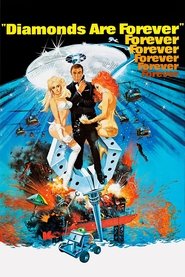
Diamonds of Forever's production designer was Ken Adam. His first film for co-producer Cubby Broccoli was 1960s The Trials of Oscar Wilde. Now back to Tom Mankiewicz. I think Ken was the first production designer on Dr. No, and he had been on most of the pictures. He was a tremendously artistic, finicky fellow. Very charming, or still is. A German who had flown for the RAF during the war in England. And he's a brilliant, brilliant production designer.
19:58 · jump to transcript →
-
Then we can start by saving the cute remarks until after you. Between You Only Live Twice and Diamonds Are Forever, Ken Adam served as production designer on Chitty Chitty Bang Bang, Goodbye Mr. Chips, and The Owl and the Pussycat. Here's Ken Adam. But what I always try to do is to do other films differently.
20:40 · jump to transcript →
-
-
-
Francis Ford Coppola
well-known singer of sicilian descent morgana king a well-known jazz singer but when i met her in some audition situation she just made me think of you know the kind of handsome authentically sicilian woman that would be his wife also some of the judges they've all sent gifts there was a lot of tension on the set uh during the sequence this
17:12 · jump to transcript →
-
Francis Ford Coppola
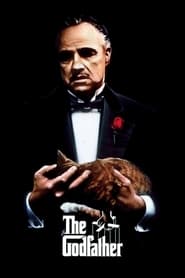
Take the cannoli. Of course, the cars have that A coupon as the gas rationing from World War II. One of the reasons why I loved so much that it was a period setting in a period is that we could do all of the detail to really try to bring back that period. We did a lot of research, and the film was very authentic from that standpoint. The production designer, Dean Tavoularis, and his team worked very hard.
57:37 · jump to transcript →
-
Francis Ford Coppola
So I continued talking and arguing, and finally they agreed to let me discuss the idea of Marlon Brando being in the movie if I honored three stipulations. A, he would do a screen test. B, he would do the film for free. And C, he would put up a bond so that if any of his shenanigans or any trouble came from him being on the set, that it would guarantee the losses. So I said, okay. I said, okay, I accept, you know. What could I do?
1:34:23 · jump to transcript →
-
-
director · 1h 28m 8 mentions
Don Coscarelli, A. Michael Baldwin, Angus Scrimm, Bill Thornbury
-
built into the story with the production designer. So this is where you learned how to drive, huh, Mike? I learned how to drive in that car right there. That Cuda. Which reminds me, had you always been in love with the Cuda? Was that a car that you particularly dug and so you thought you'd use it? I mean, everyone always loves this car. It was that stick shift right there. And you don't see them around very often. No, it's true. There was a kid in high school that had one. It was really beautiful, and I always aspired to own one.
11:01 · jump to transcript →
-
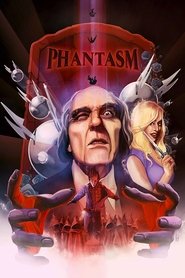
Oh, man. Can we fast forward through this section? Derby. What inspired the derby in this scene? Yeah, I don't know. Where did that come up? Not me. Well, that was our Jack of All Trades costume designer, who also happens to be my mother and was also the production designer and makeup. She came up with that, I guess. Very An Souchant. Now, Bill, you wrote this song, didn't you? Yes, Michael, I did. Uh, we, uh...
16:12 · jump to transcript →
-
Actually, Coscarelli kicked me off the set that night because I wouldn't do it. But he got over it and we went to the Dodger game the next week. Yeah, we're still buddies. It wasn't in my job description. I just want to point out, you have those PAs in your mouth, Bill. That was in my job description. If we got this film rated today, you would not be able to get that past the rating board, which I thought is ridiculous.
22:22 · jump to transcript →
-
-
-
Nick Pinkerton
On the set, there'd been chatter about tensions running high between Eastwood and his director, Ted Post, who, as mentioned, had directed Eastwood only five years before on Hang 'Em High. But those five years, as we've seen, have done a lot for Eastwood's reputation and for his view of himself as the most qualified man on almost any given set.
1:08:49 · jump to transcript →
-
Nick Pinkerton
On the set, to a reporter visiting, Post said, he hasn't changed since I first knew him, he being Eastwood. He was just the same in Rawhide days, always supplying imaginative ideas. I'm no auteur director. I'm interested and happy working with someone who collaborates and contributes. But, privately, Post would tell another story.
1:09:41 · jump to transcript →
-
Nick Pinkerton
He figures he can go right in and sail through these things. Cimino, who remained ever after extremely grateful to Eastwood for the opportunity to direct his first picture, remembers a very amiable relationship on the set. He remembers asking Eastwood for feedback
1:13:15 · jump to transcript →
-
-
-
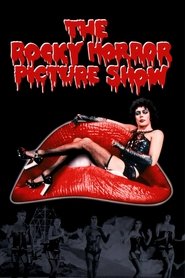
Do you know that we wanted to use this logo? This is against Richard Hartley's piano playing, I think. Of the 20th Century Fox theme. - Yes, maybe I will... We wanted to use that for the denouement. Ah. - Instead of the RKO sign. So that was interesting. Michael White and Lou Adler's names there, our producers. Yes, that's correct. - Erstwhile people. I'm rather... And now whose mouth do you think this might be? Ooh. M-m-m-mine. Yeah, it is. Now, interesting... - There we go. Course, when we did the stage play, it was you that sang this song. That's right. - And then they offered you the part of Magenta in the movie, and what did you say to them? I said-- well, they told me that I wasn't going to be able to sing the song 'cause they couldn't have an usherette open the film, so I'd lost my song "Science Fiction." And, um, I said, "Well, you can take your movie and shove it up your..." Where the sun don't shine. Yes. - Mm-hmm. And they were very amazed 'cause they'd taken me to a restaurant Yeah, yeah. - Jim Sharman. Always do it after lunch. Always tell them no after lunch. Yeah, after lunch. And I said I'm not interested. Don't want to do it. Then they took me round to John Goldstone, one of the other producers, round to his house to see the sets. They said, "No, please, Pat, come and see. Come and just have a look." And then they showed me the pink room, the laboratory. And then they showed me all the drawings of the costumes and whatever, whatever, whatever, and, um, I said, "I can't wait." "I'll begin tomorrow." I didn't mind about the song. Yeah, well, I didn't know anything about that until this moment in time and, uh... Well, I have blamed you for it ever since. Well, you see, I got along to the studio, and they'd done the backing tracks... Richard Hartley and the crew had done the backing tracks at Olympic Studios. I love my name dripping like that. Oh, yes. And... Sorry. It was a bit of a drip. And... - I said-- They said "We want you to sing the opening title song because you're the author of the show," and I said, "What do you mean, as a backing, guide vocal for Pat?" They went, "No, we want you to sing it." And, um, so I did, but until that moment in time, I had no idea that I was... Well, ladies and gentlemen, or whoever's listening, today is the first time this has been revealed in how many years? Oh, um, 25? So in all these years, I have begrudged you taking my song. And in all these years, I've begrudged you for being you and having that delightful mouth. Thank you. I mean, look, it's a wonderful mouth. One wonders, you know, oh, well, wonders, just wonders, really. Has your dentist seen this movie? Yes, I really wanted to give her a plug today. Veronica Morris. Because, really, she's been keeping my teeth in great order. This is marvelous. And Veronica'll be so pleased. This mouth, of course, is Brian Thomson's idea. It was the Man Ray photograph of the mouth and the sky is where he got that from. Yes, it... Is ita photograph or was it a painting? It's a photograph. - It's a photo. Lios Over Hollywood. Yeah. - Is that what it is? That's what it's called. It's over the Hollywood sign-- a mouth. Man Ray picture. - And this was the first mouth. I mean, I'd never seen a mouth this symbolic before. The Rolling Stones got a mouth after that, didn't they? Yeah, they got a mouth after. Not a mouth before. Bit mouthy. - A bit mouthy. No, no, and it was wonderful when they asked me to do this 'cause they asked me to do this mouth on the very last day of the film. Mm-hmm. Jim Sharman came up to me, it was a wrap, finished. We'd done it, and he came up and said, "We've got an idea about this mouth." Yeah. - "And will you do it?" And they painted all your skin black. Yes, they did, And I went out to Elstree Studios... - But your timing was perfect. I mean, your lip-sync is fantastic. Yes, well, I'm good at that. And I sort of know how you do things. So, uh, so we... We, uh... Ramon Gow. Look, the hairdresser, Ramon Gow. We'll talk about Ramon a little bit later on. Yes, he was wonderful. - Yeah. He kept us happy. Did he keep you happy? And Pierre. Pierre did the makeup, didn't he? Pierre La Roche. Oh, God. He did Bowie's makeup. You know, for what was that Bowie thing? You know, when he had the makeup. - When did Bowie never have makeup? All right, with Bowie. Ziggy Stardust. Yes, and it was fantastic. And I thought Guy La Roche will give me the most fantastic face in the world. And he looked at me, and he said, he gave me no bones... No, Pierre La Roche. - Pierre. Pierre La Roche. Guy de la Roche is... - I beg your pardon. Pierre La Roche. And I was so shocked that he just said, "We're going to totally whiten the face." And what-- here we are. And what-- here we are. And what-- here we are. The fade into the cross there. - Fade into the cross, yeah. And down the old... And now this is interesting 'cause this was just a facade, wasn't it? That little room-- There's a little room on stilts behind that door. Just tiny little room. There's darling Henry Woolf. He's just such a darling friend. A great, um, Pinter. Pierre Bedenes in the front here. Now, Perry was the boyfriend of Brian Thomson at the time. Uh, we should say... that little girl there, where is she? She's gone now, but that was... what's her name? She was the photographer that went out with Prince Andrew for a while. What was the name? - Koo Stark. Koo Stark there, yeah. She's in the back there. She's there. Uh, I was gonna point at the screen as if that made any difference. Yes, -Gaye Brown. There's Pierre. And Henry. - And Henry. Henry was in my house the other evening. He now teaches in Saskatchewan. Yeah. He's been over here doing the Harold Pinter plays, hasn't he? That's right. He was in the first play that Pinter wrote. He made him write it, actually. Well, there they are. - There's our Brad. The two lads-- so very butch. Ouch, that hurt. And there she is, Susan Sarandon. We didn't know either of these people when they arrived, did we? No, we didn't, but they... - Weren't familiar with their background. Although he'd been doing Grease on Broadway. Great dancer, great legs. But it was wonderful. - Wonderful. There's my wife there jumping up and down. My ex-wife. My first wife. Is it Kimi? - Yes, in that little plaid dress there. Yes, and that lovely handbag. - With the bangs. Yes. Gorgeous. And this is Rufus Thomas, I think, driving the car. Rufus was with the-- there he is. He was with The Living Theatre for some years. He choreographed Jesus Christ Superstar in its first British incarnation. Gosh. Such class we had in this. Oh, yeah, we were all, yes, very groovy. - I remember those two. Now there's us in the background being American Gothic. Yes, which was such a surprise to me, and it was freezing cold that day. And I swore I'd never talk about the cold again on this film... We were walking to that set the first day we ever walked to that set, and we'd smoked something rather exotic. And I'd never smoked before. - No, no. Richard really led me into really bad ways. It was a bit difficult clinging on to reality, wasn't it? It was wonderful. I loved it. Ah, there we go. - There's our signs. In the graveyard. - "Denton." "The Home of Happiness." "Dammit Janet." "Dammit Janet." "Dammit Janet." She looked very pretty. Sue Blane did some wonderful costumes, and they've really hung on, even though we do the stage show 20... well, it's longer than 25 years from the movie, the stage show. But we still use Sue's designs. She reinvents them, and it's still the same kind of look. Well, I must say, the thing... she's stunning-- is at the time... I demand that Sue Blane invented punk, and this film invented punk. And down the road was Vivienne Westwood with a shop called Sex, and she thought she'd started it, but no, sorry. She'd copied us from up the road. We were on the stage at the time. I think there's a certain amount of truth in what you say. I think we were a precursor of Malcolm McLaren and Vivienne. That's correct. - But then again, you say, as Coco Chanel said, "Anyone who thinks they're original has got no sense of history." 2 If there's one fool for you Then lamit > Janet 2 I've one thing to say And that's damn it, Janet > Now look at that heart there. I want you to see that heart there, 'cause when we go back and rub it out, I think this is... Maybe it's the same heart. I thought it was a different one. Maybe they got it... There's a boom microphone shadow we'll see, I think, soon. Somewhere out there. - Why do you point out the faults? Well, why not? You know... I mean, that's what the fans do. - Do they? Yes. Oh, look, she dropped it. What a shame. Wasn't she meant to? I have no idea. - Or was she not? Now, this is interesting. This room, we could only afford this end and the other end. The altar end, and we didn't have any sides to the room, so we could only shoot it looking this way or looking the other way. We couldn't pan around 'cause there were no sides to this room. 'Cause we didn't have enough money. So there we go, you see, walking towards camera without background. Good heavens. And walking away from camera to there, but there were no sides. > Oh, Janet 2 For you? 2 I love you too } They were very good, these two, weren't they? When you consider we'd been doing this for the show... We were like a family, and they came in, and they joined in, like, so easily, so quickly. I find them astonishing. This must be... I don't want to go into detail, but it's a very small coffin, isn't it? Oh. - One does wonder. About what? Could have been a rabbit in there probably. Well, every day was a great surprise to me on Rocky Horror. I never knew what was going to happen next. Yeah, me neither. I mean, I didn't know what even American Gothic was. Till I saw the painting in the hall a few days later. I thought, "Why am I dressed like this?" Were you not familiar with that picture? - No. There we are... three good-looking people. And those opticals were rather good I thought. And those opticals were rather good I thought. And those opticals were rather good I thought. They really were mechanically derived by... But, you know, today, of course, you'd have optical wipes and all sorts of things with video. There's dear Charles Gray who's departed from us recently. Yes, Charlie has parted from us. And I loved it when you said to me it'd be wonderful if you and I were Charles Gray and Ava Gardner. We could visit each other often. Yes. - 'Cause they were great friends. They lived next door to each other. And I thought they've both gone. So we've got to now move into the same street. I think they're probably on a similar street in the sky somewhere doing the same things.
0:05 · jump to transcript →
-
And Sinatra phoning every day. Yeah, did Sinatra... - Phone Ava every day? Did he? - Yeah. Heavens to Murgatroyd. There's the lovely Jonathan Adams who was our original narrator. Brilliant. Yes. - Plays Dr. Scott in this movie. And Brian Thomson used to put in hidden detail in those things, so there would be stuff inside that file. There might have even been stuff in those files behind him there. In that it was relative, but nobody was ever going to see. No. Well, to me, Brian Thomson's set was astonishing. It was unbelievable, and I've just been to see he King and /... Mm-hmm. - ...and the set he's just done for that. I adored it. - Yes, good, is it? Mm-hmm. Pity about the... - Sumptuous. Nah, nah, nah. - What? I didn't say anything. Nothing. You didn't say a thing. - Never heard a dicky bird there. Yeah. What a charming person. He'll be remembered in my will, actually.
11:02 · jump to transcript →
-
Weird Fantasy, I think, is the title of that particular magazine. Ah. Of course, all his stuff was shot in a day. Because the marvelous thing about the dining room scene, that I read about in a magazine... I didn't realize why, which we will see when we come to it. I'll talk about the set of the dining room scene. Okay, I'll bear that in mind. - All right, thank you. I'll just write that down. - Write that down. No, I'll remember. Is that what I think it is, is you just rolled up over there, skinned up over there? Sorry? I never really liked the way you took so much pleasure in looking at that. What? - Your voyeuristic sense. Oh. You see that... Making those noises and things, I got rather embarrassed. Oh, really? - Yes. Do you see that thing around the television screen? I still have that. - Where? It's in my shed. I've got it in my shed. In your shed? It's in my wee shed. And what do you do with it? Well, it's at the back of the house. The kids have actually shown interest in it. - I see! Linus wants it. My son would like it. You know, and actually Joshua... - What, with all the thingies? With all the pulls and handles? Just-just the square that goes around the television screen and the handle on it, yeah. - All right. It's lost a couple of its rivets... Hmm. - ...aS one does over the years.
48:30 · jump to transcript →
-
-
multi · 1h 43m 4 mentions
The Taking of Pelham One Two Three (1974)
Nathaniel Thompson, Steve Mitchell
-
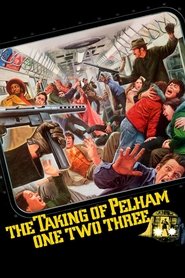
even though it has the feel of a governmental kind of office, not deluxe in any way, it's a workspace. This was a set along with the set they are probably just about to enter, if my memory serves. Now we're going back to the train, but when they come into the TA Command Center, which again, until I saw that it was filmed at a studio at the end, I kind of thought it was the real thing.
13:22 · jump to transcript →
-
You know, he did. But generally, no, not with most of his films. He didn't really shoot scope all that much. Yeah, I know Pollock loves scope because he he I remember reading at some point he said, I want to see what's to the left and to the right of the close up. He always wants to get a sense of the set and the people. Again, all of this stuff of Garber in the command center. This is what's happening here.
30:04 · jump to transcript →
-
They tend to get worn down from repeat wearing. Everything that Garber is wearing, that raincoat that he's got on, does not look new. It does not look like it's fresh from the rack. One of the things that American television used to do, again, in the 70s, is they used to have their characters wear new clothes every week. And then these new clothes look like they were literally just brought to the set for the first time. Mm-hmm.
1:26:42 · jump to transcript →
-
-
-
It's not meant to have a mind. That's what makes it perfect for this place, right? I remember one day Rip came onto the set in a particularly stompy mood. I loved Rip, I must point out. I thought he was a wonderful guy. Really sort of Hemingway or Mailer or something about him. So thoroughly American, East Coast. And he said, he headed in for Nick that day for some reason. He said,
23:32 · jump to transcript →
-
You're going to treat me like a dog. I'm going to react like a dog. Nick looked at him and said, we won't be shooting Mr. Torn today. Took the camera off and just left him there on the set, fuming. We were all agape every morning, waiting to hear his last night's exploits. Come through barbed wire fences and be found in ditches. I'll tell you what happened last night. Every day and night was a huge adventure for Rip.
23:59 · jump to transcript →
-
I remember that I came to the set the first time with between three and four hundred books because I didn't have a permanent place because I was on the road such a lot. I used to take my entire, at that time, entire library with me and I remember sitting in a very stone state in the living room in the hotel and Nick and Candy came in to talk with me and I was rushing from one book to another from the complete works of Francis Bacon.
40:25 · jump to transcript →
-
-
-
Roger Moore
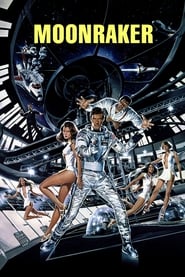
Now, this sequence... ...I was called for 8:30 in the morning and this was the back... This was before the La Fenice theater burnt down... ...and this was shooting just across from the back of the theater. In fact, that's the stage door over behind us. And... ...I was ready at 8:30, and came on the set, and we were all standing there... ...ready to go, and there were adjustments being made... ...and, you know, I have a cup of coffee and this went on. And I finally said, "Lewis, why can't we get on with this? You know, we must do this shot." And he said, "Well, it's a little embarrassing." You see, it was the time of the high tide of the equinox... ...and the boat that had all the props on it... ... had been tied up with the tide very high... ...and then when the tide started to drop, one of those numerous poles... ... that are in the water in Venice was underneath the boat. And as the tide went down... ...the pole came up through the bottom of the boat. Then the boat went up again and the water rushed in... ...and the prop boat sank. And on the prop boat, apart from all my wonderful Ferragamo luggage... ... that I was looking forward to stealing... ...Was a prop that was essential in this scene. ...Was a prop that was essential in this scene. And they had to get somebody to dive down and find it. Now, this shot of the Concorde landing... ... has a bit of a story for me. We had been ready to leave Paris to come to Rio... ...to shoot our sequences there. And Lewis Gilbert and Ken Adam and Letizia... ...and my then wife, Luisa, we were... ...at Charles de Gaulle Airport in Paris, all ready to leave. We got on to the Concorde, and then they said there was a slight problem... ...and we would have to disembark and wait in the lounge. They then said, well, there'd be a little time... ...so we could go into any one of the five restaurants in the terminal... ...and have lunch. So off we went. We had something. I wasn't feeling that good, and I sort of just picked at something. And then before we finished, I said, "Lewis, I really don't feel good at all. Would you come with me to the pharmacy? I think I'm beginning to have a Renal colic." Meaning that-- Something that had happened to me... ...before with kidney stones. And they're extremely painful when they start on the move. And really pethidine or morphine... ... is necessary to stop you falling on the floor... ...with your knees underneath your chin and start screaming. So I went to the pharmacy in the airport, and they said: "No, I'm afraid we can't." And I said... They could tell that I was very ill and in great pain. But they did suggest that there was a doctor in the airport. You know, a surgery. So I went to see him. He took one look at me... ...and pulled a syringe out and started drawing off painkiller. Lewis never liked needles... ...and started shuffling sideways... ...With the "Lewis Gilbert shuffle," I call it. And he said, "Well, I think I'd better tell the others what is going on." And that was the last I saw of Lewis.
54:35 · jump to transcript →
-
Roger Moore
But lunch went on for a long time. And the brothers have wine... ...from the different areas that they come from. And the first assistant was trying to get me back on the set. I was having a very good time.
1:14:50 · jump to transcript →
-
Roger Moore
This, again, is the genius of Ken Adam... ...and all the team that worked with him... ...to get all these things that worked in the set... ...working at the same time. All those television screens.
1:25:28 · jump to transcript →
-
-
-
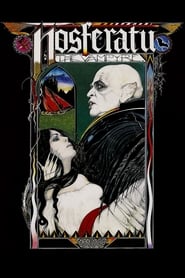
I wanted to integrate certain general rules of the genre into the movie. From there you can go farther and expand. But this right here is a very typical and traditional scene for this genre. The space has this wonderful of depth in the back. And the bed in the background. The set design was by Henning von Gierke who has a spectacular sense for these things. Yes. Spectacular. Parts of this we also built ourselves. The oven and things like that. It was a former hunting lodge of party functionaries. At that point there were only lumberjacks living there. During the day you only found lumberjacks there. ...were already on the other side. Here you have this sense of foreboding and doom. I liked the gypsies so much. They were very good. Watching this reminds me of Degas' "The Execution of Emperor Maximilian" in Mexico. Yes. Careful. Not too many paintings, otherwise... That's just a sign for how interesting and good this is. This is a wonderful face. I also enjoy the way they speak. Yes, definitely. He says you should... They said the dialogue I wanted but in their language, which I believe was not Romani. They translated it themselves and did it very well. You can see this was outdoors and at night which was always a problem for me because I'm not a night person. I had to stay awake until very late, and I've always hated night shoots. I had to force myself to stay up with gallons of coffee. This is also a recurring theme in your films... Native Americans, Mexicans, and Gypsies. Something completely foreign. But also the dignity of these people.
14:47 · jump to transcript →
-
It is unusual that he has fangs like a viper. You only see that in Murnau's vampire movie, and he developed that. All the others have canine teeth. Here, Bruno Ganz. Isabelle Adjani. The way she does this is also very beautiful. Wonderful. Yes, an exceptional woman. This was a huge animal. It weighed almost four pounds. A really big and unpleasant animal. A so-called megabat because normal bats are much smaller. Feeding it and having it on the set was always a problem. Again, a first rate still life. Henning von Gierke, yes. Some of these foods he even cooked himself. He always liked to cook for the crew. It also represents the wealth. Things like the monkey or the fireplace. Or the chicken. They were done relatively quickly and with very little money.
33:15 · jump to transcript →
-
Here the ship lands with the dead captain. How was this movie interpreted back then? Or what did the press write? The press reacted well overall. For movies like "Aguirre" and "Kaspar Hauser", they beat me up badly. But those always had elements... Or "Even Dwarfs Started Small". That had to do with the trend at the time. "This is not a movie that postulates world revolution, so he has to be a fascist." That was the perception back then. Meanwhile this has been completely forgotten. The guy on the left who unties him is Uli Bergfelder. He often worked with Henning von Gierke, and he was the set designer in my last movies. Everybody who was part of the crew can be seen in the movie at some point. It was a relatively small crew, too. Don't forget that "Aguirre" was shot with eight people. That was the entire crew. And films like this one we shot with 16 people behind the camera or so. ...
1:04:09 · jump to transcript →
-
-
-
Francis Ford Coppola
Because I think Michael now had really... Al had really found the character and, you know, had been partly inspired from, of course, the latter scenes of the first Godfather and somehow also in a way about seeing how Marlon dealt with situations. I remember on the first Godfather when it was Marlon's last day and he was off the set and...
30:38 · jump to transcript →
-
Francis Ford Coppola
I'll sort of take on some of the attributes in terms of, you know, now I'm the main guy and playing it and kind of coming to the set in a way that heralded the importance. But I knew what he was doing was sort of borrowing what he could as Marlon's successor.
31:04 · jump to transcript →
-
-
-

Related topics
Other topics that frequently come up in the same commentaries.