Topics / Production
Production design
138 commentaries in the archive discuss this, with 776 total mentions and 72 sampled passages on this page.
Filter commentaries
Filter this topic by the film's decade or the type of commentary.
Showing 32 of 138 commentaries
Clear filtersBy decade
Across the archive
ranked by mentions · click any passage for the moment in the transcript
-
-
Tim Lucas
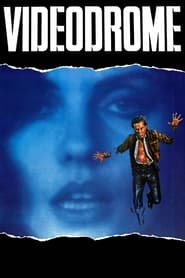
Hello, I'm Tim Lucas, film critic and editor of Video Watchdog magazine. In December 1981 and March 1982, it was my privilege to be the only journalist allowed to visit the set of Videodrome, whose production I covered for Cinefantastique magazine. My research ultimately took the form of a book on the making of David Cronenberg's film, which initiated Centipede Press's studies in the horror film series in 2008. I'm here to share my insights about the film, as well as some memories of the time I spent on set.
0:02 · jump to transcript →
-
Tim Lucas
Universal probably weren't too happy about getting an un-blonde Blondie, and I believe some test marketing screening cards complained about her hair. Universal ended up soft-peddling Debbie's billing in America, while in the UK, she was pushed as the film's star. Max's apartment was built on an elevated stage in a schoolhouse-type building that stood on the corner of Bathurst and Adelaide streets in Toronto. The elevation of the set was necessary to accommodate the special effects scenes that came later in the production.
14:36 · jump to transcript →
-
Tim Lucas
But let's take a moment to admire the production design of Carol Spier, who is working here like DP Mark Irwin and editor Ron Sanders on her third Cronenberg picture. The glass blocks suggest television screens and the open slats of the Venetian blinds emitting blue light evoke the resolution lines that were present on all analog TV picture tubes. You may note in this scene that Max's preferred format is Betamax, which video insiders of the day considered a far superior format to VHS.
15:07 · jump to transcript →
-
-
multi · 2h 34m 15 mentions
James Cameron, Gale Anne Hurd, Stan Winston, Robert Skotak + 8
-
Pat McClung
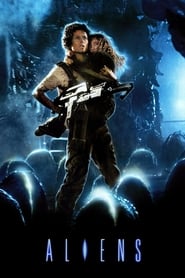
We had a big budget cut, or we had to save money, and the budget for this set got cut. Peter Lamont came up with a great idea. There's a mirror at the end of the set and another mirror behind the camera. I think we only had three of those hypersleep capsules. I think we might have had four. We mirrored them out to make them into 12. If you're clever you can see where the mirror is but I can't see it right now.
27:26 · jump to transcript →
-
Bill Paxton
and the grips shook the set and the set collapsed on us and split open my scalp. So I'll always remember that line. It caught fire and the roof came in all on the same day. And it hit Jim in the head. I saw blood spurting out of his head. It was where Sigourney was supposed to be sitting, so it was good it hit Jim and not her. We'd have gotten a day off. Think they did that on purpose? No. - I'm just asking. At that point, maybe they would've. In the pipe. Five by five." My favorite line. These shots, it's just me shaking the back of the magazine of the camera. The poor camera operator had a bruise around his eye, cos sometimes I'd whack the magazine too, just to give it a sharp jolt. This is all my shake of the camera. The operator can't do it himself. It just gets into this bouncy rhythm if the operator tries to do it. It has to be imposed from the outside and then they fight it, which is the natural reflex. Such a wonderful sound design in this movie. Much of which was generated in our living room in England. At the time, people really weren't using synthesizers in England to create sound effects for films, and we had a Fairlight synthesizer in our living room. A lot of the sound effects were generated by Bob Garret, Randy Frakes and Jim in our living room near Pinewood, including the sound of the alien queen. It really was a home movie.
41:08 · jump to transcript →
-
Bill Paxton
Bill, isn't there dialogue that you have on this that people have used in video games? Yeah, I think so. "Game over, man" and things like that. You get anything for that? - I don't think so. I'm not even getting anything to sit here and do this commentary. They expect us to do it for no money. You got a beer out of it, though. No, it's just fun. I got a beer out of it, so that's cool. This was an amazing set, this concourse A. And it was long. And later on when all hell's breaking loose, Jim had that little video camera. He had everybody on the crew having coffee while we would run at him and do different things. It was SO amazing to see this gigantic set, one of the biggest sets I'd ever seen, and there's Jim by himself with this little camera. When did the bust-out almost happen? He was gonna move the movie. When did that happen? I remember there were some problems. There were some union problems. The crew weren't used to working the same way. With Jim. They weren't used to working. That's unfair. They were craftsmen, but they had an indentured way of doing everything. Jim needs something, he just grabs it. If he needs a light moved, he'll grab it himself. We punched a hole through somewhere cos he needed to run a line. He didn't wanna wait around. He just said "Give me a hammer." But this was an ambitious schedule. Jim was running from stage to stage. I think we had about three big sound stages with giant sets. And then there were two sound stages with miniatures. And then there was a stage with all those tunnels. I remember them putting you in that damn tunnel. That pipe. We had gone to the power station to shoot the atmosphere-processor scenes and come back to the set after it had been wrecked. So we're into Adrian Biddle's photography here. He was the second DP. I encouraged Adrian, to save time, to use as much built-in lighting as possible. This is lit by the fluorescents in the set, with just a little additional lighting. Adrian liked to work on a raw and edgy look and work with the practical lights a lot more. This is another thing that is important. With a lot of science fiction movies that are all interior, you often lose track geographically of where you are and it becomes incredibly confusing and it's hard to build the tension and the suspense. Jim was aware of this from the script stage and made sure that we established through the helmet cams, through the motion trackers, where they are, and then ultimately, later on, where the aliens are. Even in this version, you're left to fill in what happened. We don't see the baittle. We'll see plenty of battles later and this is promising you that. We have a shot coming up here where there were acid holes - acid... holes... eaten into the floor by these so far unseen aliens. And, of course, these sets were not double-deck sets. Jim wanted a scene where a character looks down through one of these holes. I think Bill spits down into it to give some perspective. So this down-view we shot on our miniature stage. We layered the set and photographed that. This is where you spit and they did it in miniature. They even did a miniature spit. - Is that what that is? To get that spitting effect, it was actually not spit. It didn't work very well, so it was a combination of milk... Milk and water in an eyedropper right underneath the lens. The complaint from the studio was that the film went on too long without anything really happening. I was winding the suspense tighter before you actually saw anything. The studio said we were just jerking around. Too many movies that I see now, it's all upfront. You start seeing stuff right away and there's no sense of a build. So this is the miniature APC that was built by Bob and Denny Skotak. Pretty good size. I remember it being five or six feet long. Most people don't twig that as a miniature. That's the real APC pulling in. They matched the lighting pretty nicely. I think Jim did some of his live-action stuff undercranked. He ran the camera slightly slower on the APC so that it felt slightly more as if it were a miniature but you knew it was real because you could see people interacting with it. So if any of the miniature stuff didn't quite work for whatever reason, it took the curse off that cos it felt that the two were blended together. I think he wound up undercranking because the APC, the full-size one, didn't move as fast as he wanted it. I think it could only go eight or ten miles an hour. One difficult thing about making this movie was 7erminator wasn't out in England and the perception of Jim Cameron, who looked about 20 when he directed this movie, and myself as the directing-producing team was met with a great deal of resistance because back then the system in England was that you had to put in years and years to rise up to the level of being a producer or a director. And we were simply not treated with a great deal of respect and it was very hard every day of the shoot. We were being second-guessed and every decision we made was questioned and the tremendous thing, of course, having Stan on the film was that... I was old. - No. ...was that you were a cheerleader for both of us. By demonstrating the respect and enthusiasm that you did, I think other people gradually relented. I knew it was the best thing for me and for everybody on that set. There are people that you know, no matter how they do it, what they're doing is special. This particular directing-producing team had been a win for me in my career and stayed that way. I never thought our facehuggers looked as good as the one in A/en. We had to make lots of 'em and they had to run around and do things, but, texturally, the one in the first film looked great. It really held up. The bits of oysters and stuff inside it looked great. But I did wanna see the disgusting thing that had been down the inside of Kane's throat in the first film. You never see it in the movie, in A/en, so I figured we'd gross everybody out. All of Giger's designs have a real sexual undercurrent to them. And that's what horrified people about the alien as much as anything, is it worked on a kind of Freudian subconscious level. And Ridley and Giger knew that and they went for that. This film was never intended to be as much of a horror film as the first one. It was working on a different thematic level but I still wanted to be true to some of those ideas, some of those design concepts. It would be natural to assume I'd wanna work with Giger, but it just didn't occur to me at the time. Maybe it was because we really only needed to design one new creature and I had already designed her by the time I wrote the script. The alien queen. I guess maybe it was my own ego as an artist. I just felt like he'd made his stamp and I knew from what I'd read that he had to do everything his way and I had a very specific idea for the alien queen to extrapolate beyond what had been done before. I got the impression from what I read that I wasn't gonna get the dynamic character that I wanted. In a funny way, part of what attracted me to doing this film was the opportunity to do cool design stuff. So maybe I was just a little bit too in love with the idea of designing the creatures and the weapons and doing all that stuff.
47:57 · jump to transcript →
-
-
-
It was unbelievably hot in that basement is all I remember. Just incredible. Yeah, it was a heat wave that summer. Everybody was sweating and naked. But now here we are on the top of a building in Dallas. This was an empty space we found and built the set in the empty space in the office building. And these trans lights you guys hung out the window are really great.
7:10 · jump to transcript →
-
We shot VistaVision plates for the rear projection. And now you're back to the giant prop, isn't it, here? I always loved that piece of art direction that William Sandell, the production designer, I guess, put in there with that kind of crow sculpture behind him. I always thought that was a really neat thing. So, Paul, how did you get involved with this picture?
10:36 · jump to transcript →
-
Well, there's no track. I don't think there's track. The idea that the sound would stop and the theater would really... This was all basically... The scenes were written more or less like you see them. But there was a lot of improvisation on the set for the staging. Jost built his camera in a chair so that we would always have this looking up look. What do you think, Jon?
27:09 · jump to transcript →
-
-
director · 1h 30m 10 mentions
A Nightmare on Elm Street (1984)
Wes Craven, Heather Langenkamp, John Saxon, Jacques Haitkin
-
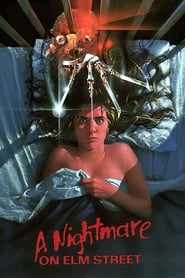
player and Johnny had such a hard time queuing up the spot and we did a lot of takes of this one. How old was he? About 18? No, he was 21. He was actually a little bit older than the rest, I think. But he had a very young look. But he was at this time, I don't think he had acted at all. He was in a rock band or something. Right. He was a musician. He had an actor friend on the set all the time going over his lines with him continuously because he was terrified he would not be able to say them right.
6:07 · jump to transcript →
-
She was never quite satisfied with her makeup, so she would usually go and fiddle with it after the makeup and hair were done with her, so we never knew quite what she would look like when she got to the set. Did she do anything after this? I know she was in The Driver, which I enjoyed immensely. Yes. It's hard to actually imagine that John and...
19:18 · jump to transcript →
-
I remember in the last days, we were shooting in about five different places in the set at once. We had cameras everywhere shooting inserts and jail scenes. That became the way all those films were done. The last week and a half. I've done a lot of effects films. In the last two weeks, you start pulling out the units. You kind of realize what you need, too. Here's a shot that I find very interesting. I like to think that there was a tip of a hat to it in Terminator 2 where the killer comes through the jail cell.
39:21 · jump to transcript →
-
-
-
Jim Piddock
garden hose piddling down on the windscreen, and so we think we're driving in the rain. Now, these pass-bys had to be precisely timed to the dialogue, so this shot had to be done in reverse. That is, if you were there observing on the set, you would have seen these passing lights being pushed, in fact, away from us into the background, not coming at us, so that their moment of entrance, that is, their apparent moment of exit, as it were, could be precisely timed.
2:06 · jump to transcript →
-
Jim Piddock
altogether, though, of course, for the sense of the frame, has been composed to exclude the nether regions. Always a sensitive time on the set, of course, the nudity, sometimes an occasion for embarrassment, although this actor, very manly. In fact, I understand that on the set as he stood up, the makeup girl fainted. And now we're in another place, an envelope. We'll get a look at the characters here in a moment. More people, a new place, the plot thickens.
6:00 · jump to transcript →
-
Jim Piddock
Now, that's expensive, of course, making the artificial dog, but as compared to the cost of the set time it would have taken to get a real dog to perform all these various tasks precisely where needed, you know, hitting the marks and full crew standing about waiting, well, the cost of fabricating the dog is actually altogether lower. You just create the dog and have done with it. And he's radio-controlled, you see, guided by a technician just out of camera range, so there's no untoward flea scratching or licking the genitals or, well, you know,
12:42 · jump to transcript →
-
-
-
Gary Goddard
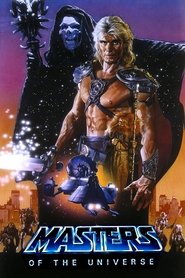
Ann Coates, editor of many films, Lawrence of Arabia among them. Richard Edlund had recently left the Lucas organization. We were able to bring him on to handle the effects. Bill Stout came on board as a production designer and did a fantastic job.
2:12 · jump to transcript →
-
Gary Goddard
Two sound stages combined with the doors open from one to another with the set being built from the edge of one sound stage all the way through outside into the other one to the other end. That's how we got that depth. There's Meg. Her eyes make her a perfect sorceress. He's ours.
3:33 · jump to transcript →
-
Gary Goddard
At that time, there were no digital effects like there are now, so it was a whole different set of rules used. Those days will come back. Oh, yes. This is one of my favorite little bits. You know, after he opens the door with the keys, he's going to bring them inside, and he's going to, you know, this super powerful door you'll see here, and when you watch him, this is a little thing we added that I added on the set that day. He'll put all of his locks in place, and then you'll see the last lock that he uses was...
7:56 · jump to transcript →
-
-
-
Eleanor Bergstein
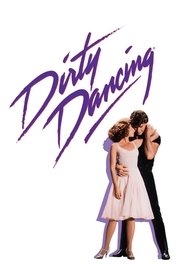
brand new track of other music or new music or I think one suggestion might have been the Fine Young Cannibals and so I walked around the set with an apron that had all the cassettes of the original songs and we played all the original songs behind the scenes and as I said to the sound men, play them on another track just to inspire the actors and what we thought this would do finally was just make the dailies sound better but
28:45 · jump to transcript →
-
Eleanor Bergstein
We didn't have enough rain, and the first days, we had a rain machine, I think something like one day, and so we took every shot we could find in Virginia so that we'd be able to use it. You see there we have what is presumably rain. This is, now again, as I said, we had the most brilliant production designer, David Chapman, who is one of the unsung geniuses of this, who made it look so wonderful.
39:37 · jump to transcript →
-
Eleanor Bergstein
to come or has come when they have to examine what they've done. We call this the tense family breakfast. And I should say a little word now about the fact that I was down on the set all the time, obviously, and very...
59:17 · jump to transcript →
-
-
-
Paul Davis
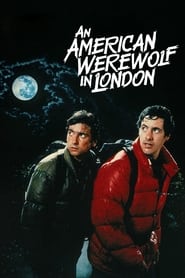
is an actual place that is nearby but then the third one on there is Les Shire which John Landis put on there as a little joke in reference to the production designer or the art director as he was credited on this Les Dilley who was John Barry's protege John Barry was the production designer on Kelly's Heroes who John met when he worked on that and John was talking about it with John Barry saying I'm going to make this movie I'm going to come get you to do it
3:27 · jump to transcript →
-
Paul Davis
And then John Barry would kind of brush John off because he was a kid and say, well, if I'm not available, you should get Les. And that's what happened. And Les was still an art director at that point and was very uncomfortable about working his way up to a production designer because this was going to be his first movie as a production designer. And he didn't want to do it. He felt he'd make mistakes. And Landis said, I'm not going to let you make any mistakes, OK? Just do it. And he did. But he kept the credit of art director.
3:57 · jump to transcript →
-
Paul Davis
And they let them use that clip because it specifically spoke about Punch and Judy and violence. This was one of the last things shot on the movie because they had to destroy the set. And this was all the stunt guys like Vic Armstrong and getting to wear these pullover masks that Rick and his crew made pretty early on. Because there was a Screen Actors Guild strike while they were
32:00 · jump to transcript →
-
-
-
There was the set, the interior, which was on the stage. We spent a lot of time just picking up gags with old Victorian accounting gear. How can you transform that into swords and weapons of, well, not mass destruction, but certainly ugly, nasty little things? And so we had rubber stamps. We had the blades of old fans.
2:20 · jump to transcript →
-
He took all this stuff and turned it into weapons of war. Roger Pratt lit this. Roger had done Brazil with Maine, so this was a second chance to work together. And John Beard, who had been the art director on Brazil, came on as the production designer of this.
2:47 · jump to transcript →
-
That's an 18- or 16-inch model that's chugging away from us there. On the set, of course, we had to keep blowing wind nonstop. We had smoke always. We had pigeons being thrown around. And it went on and on, the shoot on this thing, much longer than I expected. I was looking at it again here. I think there are probably as many shots in this short as there are in the entire rest of the film. And each one is complicated, folks.
8:05 · jump to transcript →
-
-
director · 1h 29m 7 mentions
Jeff Kanew, Robert Carradine, Timothy Busfield, Curtis Armstrong
-
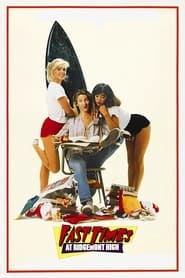
because it was so fake. Yeah. We got Lewis. Besides, we're college men now, right? Right. Good ad lib by Anthony, taking the punch in the arm and reacting with pain. And now the boys are going to take a walk. And I guess we set up most of this. I love that brownie camera. That was our production designer's idea. Bye, Dad.
6:03 · jump to transcript →
-
president of Lambda Lambda Lambda, played by Bernie Casey, former pro football player, an excellent actor, and a brilliant painter, actually, in real life. And the first night on the set, we were shooting the bonfire scene. It was four in the morning. It was cold in Tucson. And I heard him whisper to somebody, I'm sick of this fucking movie already. But we actually had fun working together after that. But he did scare me.
33:28 · jump to transcript →
-
Not gay and not happy. Because they asked him if he would be an extra, and he agreed to it. And then by the time he got out of wardrobe and makeup, they'd made him Larry's. And the crew would not leave him alone. Thanks. Where are all those good-looking sorority girls you're supposed to have dates with? You know women. This was something we came up with right on the set, this song. We did? Yep.
38:01 · jump to transcript →
-
-
cast · 1h 36m 7 mentions
The Garbage Pail Kids Movie (1987)
Mackenzie Astin, Katie Barberi, William Morris
-
The exteriors and then the interiors were the sets. It was really, it was not what our imagination probably took us to in the script, but it was extraordinary what the art department managed to do. It was very impressive. Oh, yeah. Art department is the MVP of this motion picture. Absolutely. For as much guff as people give for how things appeared, there's some sleeper, sneaky, beautiful art department stuff. Yeah.
3:14 · jump to transcript →
-
uh antique shop which is again the gorgeous set decoration of this film and anthony here it goes yeah real trouble yep when we found out anthony newly was playing captain manson that was it
9:45 · jump to transcript →
-
Mac and I thought we were making a film for young adults and for children. You know what I mean? And it kind of wasn't that. From the minute I crossed my heart to, which we'll see in a little bit, I crossed my heart, which was actually much more my breast, in order to seduce this young man. It's not a children's movie anymore. You know what I mean? Well, I mean, that's where kids get their food to start off with. Well, and I believe that's what that was said on the set. But be that as it may.
37:48 · jump to transcript →
-
-
-
Hi, this is Jim Brooks. And this is Richard Marks. We're sort of dedicating this to Polly Platt, who was, is, you know, just one of the trailblazing women in film, associated, just Google her, with more great films than you can imagine. And she was a producer and also had a role to play because she was, in her past, she was a preeminent production designer.
0:20 · jump to transcript →
-
I mean, that is what everybody hopes for. It's always this thing you say that, you know, I think the big thing is, you know, two actors are going to the set that day, each with an idea of how the scene should work. The director is going there with an idea of how the scene should work. The great day for all of them is when something happens that nobody anticipated. I mean, that's what movies are. I love that there's a little mistake he makes here, which is...
33:05 · jump to transcript →
-
when he expresses opinion like that. And now, of course, it's commonplace. The latest message seems to indicate that the Libyan pilot was acting on his own without authority from anyone else. In other words, I think we're all okay. Okay, Tom, wrap it up. Who the hell cares what you think? Coming up, you'll see Holly Hunter, whose nose... Because of the set, she wasn't able to look towards anybody. Her nose ends up two inches...
51:58 · jump to transcript →
-
-
director · 1h 24m 6 mentions
The Naked Gun: From the Files of Police Squad! (1988)
David Zucker, Robert K. Weiss, Peter Tilden
-
And that's important to future writers? It is. Fluker dialogue? Know your Fluker. How many pages of Fluker dialogue is in a good script? Most of it. That's right, we have the whole glossary of terms. I know. Well, we might talk about some of those. Terms, rules, well, nothing worked. And here comes the joke from the set-up. This actually happened to our rabbi. Was it based on that story or did it happen after the fact? He was with the mayor guarding the queen. Life imitating art.
14:33 · jump to transcript →
-
And hopefully we'll remember some of that and talk about it. We always shoot an elaborate ending to each movie that never makes it. No, that's always rejected. And you never know that it's not going to make it? You never get a sense of it? We always hope for the best and we hope no one will notice, but... It was almost midnight when I got to my door. I just wanted a glass of vodka... Pretty good structure. You talking about the set or...? Do you still see stuff you want to change?
35:28 · jump to transcript →
-
Correct. Was there any kind of sexual tension on the set between any of the actors? No, but between David and myself, there were sparks. I understand. Good thing we're married now. This shirt looks familiar. It's yours. I didn't want to get stained or wrinkled. At least, not yet. Ooh. Do you mind if I slip into something? Was this all at Raleigh? You mean where we shot this? I believe it was.
36:55 · jump to transcript →
-
-
technical · 1h 35m 5 mentions
Steven Lisberger, Donald Kushner, Harrison Ellenshaw, Richard Taylor
-
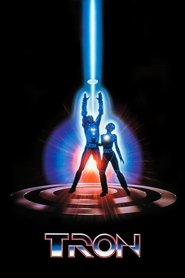
One little thing I noticed... I mean, I didn't catch it when I was directing Jeff with this, is that when he plays Clu, he plays it with this strange computer accent, this mechanical accent. And now, when he's being tortured, he loses that, and I wonder whether he noticed it. We got so caught up in being in the scene that nobody realized that at the time. Clu's torture sequence is a great example of how light is used to create emotion. Lots of different filters were used on him as a part of that torture sequence. There are, basically, ripple glass effects, there's silk screen steel mesh, exposure changes, hand-done animation. When he's energized by the MCP, there are other filters that were used on the camera to give him that multiple-effect look. In this particular case, it was silk screen mesh, steel silk screen mesh that was on the taking camera and was spun around on the lens as a part of that effect. Dillinger's arrival to ENCOM in his personalized chopper was an interesting sequence. I took drawings of the chopper, schematic drawings, and created the design motif that you see on the chopper. And then over a two-day period, I applied these designs to the chopper myself with these varying sized, 3M reflective tapes. So, when we are shooting this sequence, what we are basically doing is flying air-to-air in another chopper parallel to this chopper. And we have a very low-intensity light source right near the lens of the camera, which is shooting across and reflecting directly back at the camera off of this 3M material. And it was a red light source, so it gives you the appearance that the chopper is either backlit or has some kind of neon lighting system on it. Again, there was the attempt to, for the outside, the window, to have the grid type of atmosphere and, kind of, cross-pollinize the electronic world with reality. Oh, I remember this stuff. Nice desktop computer built right into the glass. Touch screen. - Touch screen. I still want this desk. This was done with rear projection under the desk. The whole set had to be built up on the stage so that we could put a giant mirror under the set and project it in the old-fashioned way. There were technicians who were basically controlling light switches to different light boxes underneath this desk to light up different areas. The type itself, when it writes itself on, is actually matted into the scene from a computer graphics created type. And again, the view behind Dillinger is indistinguishable from the electronic world. And whose voice is the MCP? It's David Warner's voice. - Yeah. Yeah. It was just electronicized a little bit. End of line. Someone pointed out that they finally figured out that the reason that Bruce Boxleitner's character was wearing glasses is because he was supposed to be a little bit of a nerd. I think that was the intent. Just the readouts on the computers in the real world had to be pre-programmed ahead of time so that they wouldn't have rolling bars on them when we photographed them. Here you see another attempt to link the electronic world with the real world. The cubicles that the office workers are in are not dissimilar to the cubicles that the game players are in. And the intent was to have them go on forever or almost for infinity. Now, what thematically is happening is that at the time, computer people... Programmers were very concerned that the IBMs were going to take over the world of computers and exclude people. That they were going to be... That the system was going to be tyrannical. And what we're trying to show here is that the... Corporately, they've put a stranglehold on the system, and that the programmers are not being allowed the access that they want. And access for them is vital for their work. This character, Alan/Tron, is still inside the world of ENCOM and is more in balance. He seems... He's one of the people that's going to deal with the system from the inside. He's got a very methodical program in Tron, whereas Flynn is no... He's a renegade now. He just doesn't fit in and he's at war with the Dillinger character. The name Tron is derived from electron. Some programmers think it refers to "trace on, trace off." But that... We learned about that afterwards. There's a program in Japan called TRON, which is an educational school program, which has been running since 1985. And ENCOM was the only name we could find that wasn't already registered as a corporate name. Whereas Alan and Flynn are aligned with their counterpart programs, Dillinger has aligned himself with the tyrannical Master Control Program. So, the MCP is the ultimate controller, the big mainframe, the antithesis of the personal computer. The sequences that take place at the Lawrence Livermore Laboratory were interesting in their concept and in production. It was a very complex place to work. It was a very tight area, and we worked on this film with 65-millimeter equipment. And Bruce Logan, the DP, had his hands full. Sixty-five-millimeter film technology is quite cumbersome compared to Panaflexes and Panavision cameras. The size of the camera body itself, the limitations of the lenses, blimping the cameras... They're huge, so to get them in these cramped quarters was difficult. We were the only ones... Only film company ever allowed access to shoot in there. And nobody's been back since. A lot of this was lit, practically, by the fluorescents that are in there. It almost looks like a set. Yeah. We were very lucky that Lawrence Livermore let us use this facility. Because the cost of building a set this elaborate would have been astronomical. The Lawrence Livermore Lab is where they had the largest laser in the world. I don't know if it still does today. And they did a lot of research for NASA. Lawrence Livermore Lab was very cooperative with us, and allowed us to, really, kind of, run free through this particular area of the laboratory, which was their linear accelerator. So, we went into the one particular area, which we found most interesting for the area where Flynn gets de-rezzed, and where you first see the matter transportation effect, where the orange is digitized and deteriorated and then reassembled. In this particular case, we are seeing an orange, which was created by CGI by Triple-l. Animation that was done by the effects animation department, which was headed up by Lee Dyer and the effects animators, John Van Vliet, and John Norton, Barry Cook and Michael Wolf, Chris Casady. The name of that laser, by the way, Is Shiva, the Hindu goddess of creation and destruction. The 16 billion-year life cycle, she's got the drum of creation in one hand and the fire of destruction in the other. ...femain suspended in the laser beam. Then, when the computer plays out the model, the molecules fall back into place and voila! So simple. Why didn't I think of that? - That's right. Use that on Star Trek all the time. It's funny how they just kind of, just blow it off. Another afternoon's work down in the lab. Exactly. - Teletransportation, okay. Just digitized matter, no problem. Tomorrow we'll do watermelons. In a week, a human being. No, that comes sooner than that. A-ha! Oh, you're giving it away now.
7:08 · jump to transcript →
-
One little anecdote here is that the cameraman that was up on the platform shooting this, the viewfinder of his camera was broken, the pellicle mirror had shattered, and he couldn't see anything through the camera and he just aimed and shot. He didn't want to slow down the production by telling anyone that he couldn't see anything, and held his breath all the way till dailies, and the shot worked out. Oh, that's right. 'Cause there weren't very many 65-millimeter cameras available, and all this was shot in 65 millimeter. Yeah. When we opened these cameras, they still had the sand of Lawrence of Arabia in them. Well, Flynn's arcade was in Culver City. Yeah, it's across the street from the old MGM lot, which is now the Columbia lot, but now renamed as Sony Pictures. Now, there was actually a loft at the location. But then the re-shoot... The close-ups were the re-shoots on a stage. Yeah. That's the... The actual... The practical location. Space Paranoids. Space Paranoids. I take my son to the arcade in Westwood. We go once in a while. I have to bring my earplugs. But I've never seen an old couple like that in a video game arcade. That's right. We knew that Bally was going to release a video game simultaneous to the release of the picture, and therefore we wanted to have the design of the game in the arcade and the game in the real world that people would actually play be very similar. So, we go to Flynn's, and we see Flynn playing the electronic game and fighting off a Recognizer. That is the console which we created for the film that represented the game that Bally was going to create. Although, obviously, at that time, there was no way that a computer game could have real-time, interactive, full raster graphic imagery. So, it was a prediction of the future of the way games were going to evolve, and that is what we're now seeing in CD-ROM games and the games that are in home computers and arcades today. Jeff did get very good at video games. We had some on the set. Yeah, he was remarkable, and one day you suggested that we videotape him while he was actually doing it. And look at the neon in the back. I'd forgotten about that. OA, right. I don't think any of the actors actually went so far as to get themselves a computer and spend hours backstage... Programming. -... learning how to program and... That didn't happen, but they got as far as games. Battle Tank. We used to play a lot of Battle Tank. Battlezone. Yeah. Battlezone. There you go. Now, as! recall, you... We re-shot this sequence. Yeah, and I don't even remember... The lighting... To match, I think, the lighting of the game arcade. Well, I think, actually... - We changed dialogue. Did we? - Changed dialogue. And here's a little secret. We told the studio that we needed to redo it to match the lighting. Well, see, /... Still using the same excuse. That's right, you're still... You're still well-programmed... - /'// never tell. The lighting didn't match. The casting process was interesting. Originally, I'd pictured Jeff's character being younger and the Tron character being older. We were affected by some things that were definitely outside of our control. Tron predates Splash, and people forget that, really, Disney was having a hell of a time getting popular actors to work for the studio. And it had been a tough time for Disney. And it didn't help that we were saying, "Yeah, we want you to wear these funny costumes." And Jeff was always enthusiastic about being part of the picture. The Tron character... Bruce was... I don't think Bruce was quite as adventuresome at first, although he got into it after a while. I would have liked to have seen Bruce possibly be a little, I think... I had pictured him as sort of a younger Kirk Douglas. I think he would have been better if he had been a little older like he is now. I like the way he looks now. And I think Jeff... I was surprised at how physical Jeff was. I thought that... I pictured Flynn being a little more geekish or a pencil neck, and Jeff is very physically strong. So, in that sense, the two became somewhat similar, although their personalities and what they represent are completely different. One little anecdote is that... I can't point back at the character of Tron and say, "There were all these actors." Or, "It was between this one and that one." But I do remember one surprising actor who really wanted to play this part, and it was Peter O'Toole. - Yes. Oh, he wanted to play the part of Dillinger. No, it was Tron. Tron, that's right. I think we wanted him for Dillinger and he said, "No." And I had this amazing scene with him in the Beverly Wilshire Hotel where... In his hotel room where he said, "I can do this!" And he started leaping from one piece of furniture to the other and screaming that, "I want Tron on my tombstone right next to Lawrence of Arabia!" And who knows, maybe he would have been great, maybe I really missed it right there. All these interiors... Shooting them, these low-light interiors, in 65 millimeter is very difficult, because the depth of field, the focus plane is incredibly short, and it was a real struggle. And some of the close-ups, we actually had to run light stands up the backs of the actors through their jackets as braces, so that they would stay in the exact same spot, so that we could keep their eyes and faces in focus. You know, if your file was in there... - Hey, wait a minute. If we can get in there, I can forge us a Group 6 access. Well, shall we dance? And ENCOM was shot in downtown Los Angeles. I forget the building. Of, the Transam building? Oh, yeah, the Transamerica building. At the top of that was the helicopter pad. This sequence between these two heads of the company really expresses the philosophical problems that the other characters are going through. Again, the office is designed to mirror the other world in terms of its graphic look. Wasn't there something about the cold, corporate look as well, Steven? There's your door. - There's the door. The scene where they sneak into ENCOM and open the door that is 10 feet thick or 12 feet thick, that's a real door, that's not a prop movie door. That's an actual radiation door at Lawrence Livermore. ENCOM isn't the business you started in your garage anymore. In one scene, you see a number of things flip up into four corners. Images. That was a traditional optical that had to be done, and opticals in those days would take two, three, four, five weeks at least, and it was a big task. It was like making its own little movie. You know, you can remove men like Alan and me from the system, but we helped create it, and our spirit remains in every program we designed... That line is one of the key lines in the whole script, about the human element that the programmers put into the system. And it's this discussion between those two characters that really elevates the picture well beyond a video game movie. Now, the reverse was shot, actually, on the Iot, so there's a reverse... Getting into the Disney vaults? Yeah. Lawrence Livermore was quite proud of the fact that although this door weighed tens of tons, or whatever it was, it was so well hinged that you could open it by just pushing it. One person could. In fact, you found... I believe you saw that door as we were taking a tour of the facility and you Said, "This would be a great place for them to sneak in." So, you kind of re-wrote the scene to accommodate that huge door. And the irony is, as he punches the buttons, that the giant door opens, and no strength is exerted, but it's opened automatically. I kind of inherited the job of not only setting up the giant rear projector and the mirror and all that stuff, but I also had the job of putting together what would end up going onto the desk. That's an actual wireframe on there, for the carrier, as you See... Right. - ...in the film. I began searching around for footage to go onto the desk, and it was getting late, and we were about to shoot this thing in a couple of days, and I just ran out of stuff, so I put the flowchart from the film on there, and probably things out of my address book and anything I could... I was down to pulling things out of Life magazine and re-photographing those. I was just running out of stuff to put on the desk. What's interesting about this protagonist, Jeff Bridges' character, is that he's actually, um... He's a creative, technical type, and he's fighting for his creations, he's fighting for his work. I think that's pretty unique. He is somewhat of a paranoid character. But with some reason. With some... Yeah. - Some good reason. Dillinger will never know we've been in here. Good luck, hot shot.
16:15 · jump to transcript →
-
We just passed a Cray computer, that large, refrigerator-like computer. That was, at the time, the most powerful computer in the world. This Is... - Was this set at Triple-/? Where is this? No, this was picked up at... Wasn't this picked up at Lawrence Livermore? Yes, I think this is right, this is Lawrence Livermore. And again this is another kind of discovery. As we were getting the tour, you said, "Well, we could use this for their transition." This is a Set. So, af this point we've got two hackers, one, in essence, illegal, and the other one legal, both trying to correct the system, get on the network, what we now call the Internet. Bruce Logan, the cinematographer on the film, and Peter Anderson, the cinematographer on the second unit, did a miraculous job of lighting up the set with a lot of light, but taking all the light off of the desk so that you could see the rear projection come up through it. It's pretty clever.
26:45 · jump to transcript →
-
-
director · 1h 31m 5 mentions
Alex Cox, Michael Nesmith, Victoria Thomas, Sy Richardson + 2
-
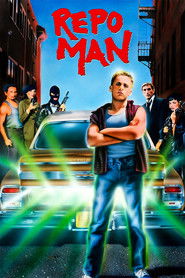
Except for this one thing. Fox didn't know how to drive. No, that's right. He couldn't drive a car, and he showed up on the set and took off and drove it right into a bridge. He almost showed up at the gas station. He hit a gas pump. Well, subsequently, me and...
1:38 · jump to transcript →
-
It wasn't near as traumatic as when the Malibu got stolen. That was bad. We'll get to that, won't we? Well, this is that car. It is. Because when we started shooting, we only had one of these Chevy Malibus. Yes, and I kept saying, don't rent the picture car. Buy them. Let's buy three. Yeah, but we only ended up getting one. And the Teamsters suggested to me that I should, since I didn't have a car, I should drive that car to the set every day. And this went on for about a day and a half, and then the car vanished.
3:49 · jump to transcript →
-
who, by the way, when I met them on the set, they were totally disinterested in me. I said, hi, I'm Xander. I play Kevin the Nerd. And they said, so? But I later on ended up joining the band and playing with them for about 12 years. There's Jennifer Balgobin. You're still in the Circle Jerks, aren't you? Well, yeah, you could say so. You know, we keep breaking up and having reunions, and now we're all kind of getting on in years, so...
6:35 · jump to transcript →
-
-
-
Roger Moore
of horses that they owned. Cubby was a great gambler. He loved it, he loved Shemmy. But we played, every day we played backgammon on the sets. Cubby Broccoli was married to Dana, and their daughter, Barbara, is now producing the Bond films.
38:25 · jump to transcript →
-
Roger Moore
in Udaipur. And Maud would speak to him every day on the phone, and then he finally arrived. And he said my first words to him were, you don't by any chance happen to have a Hershey bar with you? Desperately missing Hershey bars in India. But they were visiting the set, so...
59:53 · jump to transcript →
-
Roger Moore
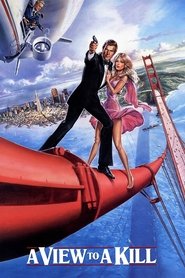
When we were shooting the Sicilian cross, we had a little problem with controlling traffic until we had a little chat with the chief of police who happened to be Italian. And then all of a sudden we had a lot of motorcycle policemen who were all in Italian. They said, come on the set. And the great thing for us shooting in San Francisco
1:03:32 · jump to transcript →
-
-
-
Was this on Hollywood Boulevard? Yeah, it was down east of Hollywood Boulevard. And then we dressed the set, I remember, too. A good pop. That's what she's about to get. Nicely put.
12:29 · jump to transcript →
-
She's totally unaware. A lot of the shots I notice are almost metaphorical in a way. Yes, they are. The way you've placed these actors in this frame. It's very good dialogue. Forgive me, Lord. I speak not in vain, but this little bitch provokes me so. Oh, Jesus. At least I can stay in character. That's all on the set, isn't it? Yeah. Tell me, what did you...
32:54 · jump to transcript →
-
Ken was very conscious of the color coordination of her apartment. We had to change the set a couple times because he didn't feel the color coordination really reflected the psychology of that character. He was very specific. Well, in most of his films, he's very conscious of the texture and the color schemes and how they reflect the people in the scenes.
1:14:00 · jump to transcript →
-
-
-
William Friedkin
And that's finished, and it dries, and then, you know, in a sheet of bills. And then you do the other side, the so-called gray side and the so-called green side. And a lot of bills that we made, we only needed one side for. Somebody on the set had taken some of this money, it was lying all over the floor on the set, one side or even two sides, and took it home.
14:11 · jump to transcript →
-
William Friedkin
Every day on the set, he was always ready, always there with good, fresh ideas. He called himself the Funky Man. And I introduced my young son to Steve as the Funky Man. And my son, who was at the time about six years old, he only knew Steve as the Funky Man. Whenever he'd see him, he'd say, hi, Funky Man, how are you? And Steve had a great, great sense of humor and
51:55 · jump to transcript →
-
William Friedkin
write down some notes for myself so I don't forget the coverage the next day after I've worked it out the night before or even weeks before. And then I'll come to the set and tell the whole crew what I want to shoot. I'll say we're going to cover the scene this way, this is what's going to happen. I'd like to pick up the following setups and I will encourage the crew and the cast to make suggestions and I'll very often alter my plan
1:28:35 · jump to transcript →
-
-
-
Richard Donner
Look at these sets, folks. Look at these sets. First of all, starting with Santa's workshop and... The office is okay, that's common. But this had great, great, great production designer. I forget his name. No, Michael Riva. This is all a great cast. So, Michael Riva... he was the first son of Bill Riva. Who was married to Maria Riva. Who is the daughter of Marlene Dietrich. And... I don't Know why I'm telling you about this. Except I knew Michael since he was an infant, having worked with his father, Bill. What a great actress too. And then, I was fortunate enough to find out Bill was back designing. He was in designing and... I mean, Mike was. And I grabbed him for this, and we've got a good relationship ever since. He turns me down on everything. But he did a great job on this one.
26:08 · jump to transcript →
-
Richard Donner
Oh, my golly, I forgot. That little commercial with... one of the great clowns of all time, with Emmett Kelly in it, was filmed by me. And production design by Bill Riva, Mike's father. As I said earlier, Mike is doing this. That was-- Oh, well...
39:38 · jump to transcript →
-
Richard Donner
Now, an interesting story... And Mike Riva, my production designer, my little buddy who I knew since he was a little boy.
48:41 · jump to transcript →
-
-
-
We had to shoot it during the daytime, but we had to shoot the mall overnight, so we had, like, about ten minutes where the mall was still closed, but the kids were allowed to work. You remember this? I do. And the reason I do is because you said, I want the writer on the set, and he should be able to be on the set as much as he wants, so I took you up on that. I was around all the time. You were. We didn't know that writers could sometimes disappear, but...
3:04 · jump to transcript →
-
now my parents were dying to come to the set and amy you had invited them and all that which was really cool the one day that they could make it was this day oh we were just in a little piece of wood on the stage and sean was not he was not a fan of having people on the stage that weren't part of our world and i snuck him in
1:15:48 · jump to transcript →
-
Doug, you're the one being childish. She pulled that off really well. She did. Now, on this day, John Landis came down to the set because the studio was feeling like I had screwed up. And they said, she's supposed to be making a comedy. Find out what's going on. And John came and was watching. And I thought, I met him once and I was a big fan, but I didn't know why he was hanging around. I thought, oh, all right.
1:19:40 · jump to transcript →
-
-
cast · 1h 36m 3 mentions
Anthony Michael Hall, Judd Nelson, Jason Hillhouse
-
Judd Nelson
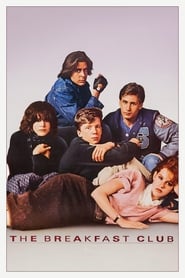
I have a lot of gray now. Giving me everything inside and out and Love's strange So real in the dark Think of the tender things that we were working on Slow change may pull us apart When the light gets into your heart... Now there's a person... This is a woman I have to tip my hat to, Dede Allen. Incredible. - Before I knew what editing was about, this woman was really an interesting presence. And it was cool, too, how she would come to the set. Remember? She would really work closely with John, which was really cool to see. And also, that's the first time I'd ever been looping where she made me feel that the worst I could do would be the production draft. That it's possible, in looping, to improve a performance. Right. - So, from that moment on, it's like, now I don't get all like, "Why didn't we get that on the set?" And also, at the time, I think the studio, as well as John, I mean, I was too young to appreciate it, but I think everybody was thrilled that this woman who had cut all these classic movies, like Reds and Dog Day Afternoon... - Bonnie and Clyde. Yeah, it was a great choice to arm John with. She was a real ally for him. And also, there were a lot of overlaps which they, as a rule, don't like, which is when one character in the close-up is talking... And then somebody talks over like this. Yeah. - And somebody talks over... Sorry. Sorry. Judd and I both need a shave, and here we are. You wanna explain for the people at home that don't know what looping is? Looping is a slang term for post-sync dubbing, which is when, on a movie set, you've shot something, but a plane went overhead. Then, you have to redo that in the studio, and you have to get the picture synched up with the sound. The technical term is ADR, which stands for "Automated Dialogue Replacement," but in the industry we call it "looping." As Judd was telling that story before, it is a cool thing to learn. It's part of our craft that you can often make a performance better, and you can come back in and add some element or dimension to it, which helps. If you can help. And it's hard to take stuff that's off camera that overlaps on camera and keep it in the movie. If you're not on camera, and you talk over the guy on camera, they can't use either piece. She was able to save a lot of it, and that was very important to a lot of those high-octane scenes. Definitely.
1:11 · jump to transcript →
-
Judd Nelson
See, this is where it was cool where we had John. He was definitely a collaborative director and sought to get the best out of us all, and was looking for behavior, you know. So, I think, the wisdom of he and Dede Allen and their choices in making this all work, 'cause we had so much footage, it was great to see. All these years later, we take it for granted, what we see the final cut to be. But the truth is that, like we were talking about, Dede would come to the set and she would closely work with John. And also, he gave us the freedom to play and just have fun. And certain things, like the stuff you're seeing with Judd spinning around. I'm sticking a pen in my mouth, stupid stuff. We had no idea whether it would arrive in the film or be a part of it. I didn't. We were just having fun. But once we knew what the space was, we had the parameters. Rehearsal was key. - Yeah, it was like shooting a play. That's how I recollect and look back at it. We shot this play for 35 days and we were... Mostly in sequence. - Yeah. Yeah, we were fortunate to be extracted from Hollywood, and all of a sudden in this suburban gym of Illinois, not far from where John had grown up. So, it was a fortunate thing that we felt like we were shooting a play, 'cause we also had a week of rehearsal, which was... No, we had more than a week. - Was it more? We had more than a week. In fact, we weren't done with our rehearsal time when Hughes went, "We're ready. Let's go." All the work we've done keeping our faces in the industry since and maintaining our careers, it's still... To this day, I don't think I've ever had that since. So, it was a real... A real rehearsal. - Yeah, it was a real luxury. It was also a lot of fun, 'cause it really bonded us and gave us a chance to get a sense of where we were all at, and also made the work better, yeah. And we built real history, as opposed to that you believe you've made up a history. We actually had real experiences. Even if it's something as simple as dinner four nights in a row, you at least have some real past and things will reveal themselves to you further along in the work. And Hughes really wanted it to sound authentic. So, he never limited us. If you came up with something, you never felt like, "Oh, wow, "we took it beyond the text." Big deal. And he was always looking for it to get to that point, anyway. The freedom that he gave us, the idea that he would trust us like that, which is the point of the film. Just because they are 17 years old doesn't mean they are 17 years dumb. There's a weird thing, though, about rehearsals and stuff like that, where you think... You even said, "I've never done that before or since." It always seems to work out when actors and stuff get those chances. You hear those stories over and over. But, for the most part, people, they just don't do it. Yeah, in terms of genre, too, this is something that broke a mold, in a way, 'cause it was, in the industry talk, a talking heads film. It's really about a bunch of people sitting around, talking. So again, the play analogy comes into play. We really felt like... I remember rehearsing, and we were in these positions. I remember walking into that space, and John going, "Okay, you sit over here." We would rehearse these scenes. So, by the time we shot them, we all had a good sense of each other. We were a solid group, and we also knew where we were going with it. Now it looks like a luxury, but to this day, I've often looked back and thought about that, that it was great intelligence in just doing that, putting us in together. We sat in a room... - I thought they were all gonna be like that. I really did. I look back on that and that is a high-water mark in terms of the importance of having everyone being on the same page. Right. If you get rehearsal time and if you shoot in sequence, it's not like you are trusting the other actor to know that in the scene before this they actually threatened to kill me. So, it's a little bit heavier. You don't have to do that because before we shot this scene, we shot the scene where he threatened to kill me, so we know that. It's a great collaboration. You don't realize it till you're blessed enough to work in the business. When you're on the set, you see that there's... You know, sometimes the best idea will come from the script supervisor, or sometimes it's the guy at the crafts service table. It's a great collaboration, even though it's a director's medium. I think that sense of support was instilled in us with John, 'cause he gave us these roles and we all knew what we were doing, but he always was collaborative that way. I think that was his intelligence, too, that he allowed his scripts to transcend even the beauty that they had, because he hired people that he believed in. But there's a great collaboration, always. When you're talking about rehearsal, you're talking about the five of you guys. Were Paul and Kapelos kept away a little bit, to let you guys have your thing, a little "us vs. them" a little bit for that? Well, that was happening right away. Also, 'cause Paul wanted to hang with us, so that was perfect, 'cause it gave us the power to say, "No." So, we could. But you guys rehearsed those scenes, right, with you and Paul? But he wouldn't necessarily be sitting there on a day when... Just the five of us. - ...it was the five of us in that rehearsal, if we were gonna get to that stuff. We wouldn't do necessarily whole read-through of it. We would be taking it from the first scene and rehearsing it till it made some sense to us, and John knew, basically, how he wanted to see it and how he wanted to shoot it. It's a business, at the end of the day, like anything else, so there's always such a sense of the clock and rushing, so, as Judd said, a high water mark in our careers to start with this great project, and we had these great roles and a well-developed script. But he was smart enough to sit us all down and get our input and let us work through it. So, once we got on our feet with this and we were shooting the scenes, we had a closeness and a vibe already flowing between us. But it's funny you said that, 'cause I thought the same, too. I thought it would be like this after, and usually the director is the most stressed-out, doesn't know what the next shot is. It's like the world changed after this. But part of it was the good fortune we had to be in Chicago and do this. It was at the beginning of his career, after Sixteen Candles did pretty well, even though it was a small film. I think I remember him telling us that his intent was to do this first. I think the studio was gonna make this film first and they flipped them. So, we were fortunate to be away from everything and... Flipped it and Sixteen Candles, you mean? Yeah, exactly, in terms of the making of the films. So then we did this project second, and then we were, again, just in Chicago, and that sort of remote quality helps it, too. It's a lot of the fun of it. 'Cause then you came back here to do Weird Science, right? Yeah, that was fun. There is something about that, pulling it out of Hollywood. That's clichéd, "Hollywood's bad and you can't get anything done." But there is something to be said about that. Well, the story takes place there, and that's where he lives. Why not put it there? It's easier, it makes the most sense, and for the actors, it's one less thing you have to imagine, and hope everyone else is imagining the same thing. In fact, it is the same room where we're gonna go every day. It's a school. - Right. I remember, I went to some local schools, too, in that area at the time. It was fun just to get a sense of what... 'Cause I hadn't had that kind of upbringing. I grew up in New York City at a liberal arts high school. It was a different experience. It was a boys' reformatory, wasn't it? I was away a lot and... Very religious, wasn't it? - That's part of the fun, actually, just to get out of the mix, to be somewhere else. As an actor, the gift is getting the job, and then the sense of exploration is enhanced, I think, by being somewhere on location. It's fun. Makes it part of joining the circus, I guess. So, what, you guys went to an actual school, went in, mixed with the kids, did that whole... Yeah. Yeah. - I did some of that, yeah. Yeah, Hughes arranged it for us to go. I know that Ally, Emilio and I went to this high school, and the principal knew, but most of the teachers didn't, and it worked out perfectly. It was a school that had two halls, one called Jock Hall and one called Freak Hall. And I was like, "Are you kidding me? That's perfect." I just waved to Emilio, "See you at the end of the day," and then went over to the other side. It's great 'cause I was over 18, so I met some guys and I could buy them beer. I was like, "Yeah, I got an ID that'll work. Come on, let's go get some beer." Just treating it so poorly, it was perfect. You didn't get put in detention at that school, did you? No, but I did get sent to the principal's office, the one guy who knew that it was okay for me to be there, so it was perfect. I hadn't found my classroom yet, out of Freak Hall, and I didn't have a classroom, so I was always going to be found out there. Bender, that's school property there, and it doesn't belong to us. It's something not to be toyed with. That's very funny. Fix it. You should really fix that. - Am I a genius? No, you're an asshole. - What a funny guy. Fix the door, Bender. Everyone, just... I've been here before. I know what I'm doing. No. Fix the door! - Shut up! God damn it!
8:42 · jump to transcript →
-
Judd Nelson
Hughes was so ahead of the curve on music. Yeah. He would work with it, he would bring in tapes, he would be doing compilation CDs and tapes on the weekend. Yeah, and he would bring them to us on the set. When there were tapes. Those of you younger... Cassette tapes, yeah. - Don't remember tapes. He had cool-looking ones, even, those metal-looking ones and clear. Very cool. - We're old now. We're past CDs, it's MP3s and stuff now, right? Remember when they invented the wheel? That was incredible. People banged rocks together, and we sang. We made this sometime after World War II, I think. The Great War. - Yeah. But he used to take you guys to concerts and stuff, right, Mike? Yeah, he was cool. Like Judd said, he was really ahead of the curve on music. He was into it. He was aware of Art of Noise, which was this Trevor Horn project. People know their stuff now. So, even with that piece of music, I'm sure he was probably trying to go for that kind of thing. How about the fact that in Sixteen Candles, Molly's got a notebook that says "Psychedelic Furs" on it, and I don't think they had an album out yet. Hughes knew. Well, and Pretty in Pink comes out however long after that. But, yeah. And he wrote to music a lot, too, so a lot of times these sequences, I'm sure he knew that there would be a certain piece of music playing through it. Nowadays, it's funny, you watch shows that are network shows, like Grey's Anatomy, it's so much a part of the formula, where they have these musical interludes that tie things up or bring the audience into the third act. It's interesting, there's a psychology to that, just like editing. It's interesting to see it work. It was cool. I like that. I like that the music stops right on that, too. And now we're done. Here's the bit where you're nice to Carl. Group therapy is done. Right, there's that moment, yeah. Tie it all up. It's great. And that pose right there is now a classic janitor pose. There's the guy on Scrubs. That's Hughes right there. That's great. - There is Mr. Hitchcock. There he is, baby! "Mr. Hitchcock." Mr. Hughes. I like that Ally shows inhuman strength pulling this off.
1:30:47 · jump to transcript →
-
-
-
come what may, and he was frantically rewriting on the set whilst they were shooting it. And that was for tax reasons as well, that the film had to be shot within a certain window of opportunity, otherwise the money wasn't going to be there. Yeah, and even James Caplin, you know, he didn't have time to develop the screenplay as it should be either. And, you know, it's a very complex storyline, you know. It's film noir. It's investigative, you know, plot.
41:20 · jump to transcript →
-
but we didn't show Red Dog himself. We just ran out of time. And we were running out of time constantly. So I think we're extraordinarily lucky with the crew that I had to get the set-ups that we managed to get. Yeah, well, the interesting thing about this film, I think, is that it's narratively ambitious, conceptually ambitious, visually ambitious. So, you know, and all on a...
53:19 · jump to transcript →
-
So we're down here in the sets that were built by Len Huntingford and designed by Len Huntingford. Can you tell me a little about him? Yeah, Len, he was an art director on other movies. I think he did Chariots of Fire, was one of them. This was his first job as a production designer. It's extraordinary what he managed to achieve on the budget we had. I don't...
1:01:11 · jump to transcript →
-
-
-
I love that. It's funny how a line like that captures the whole character. You know, I remember, Carl, that you spent a lot of time rehearsing. You gave us an opportunity to take the set and rehearse. Well, there's no... Funny how that makes sense, doesn't it? Yeah, it does. I think in life. It was really a little bit like doing a play. Yeah, well, you can only get better by trying to discover what's in each scene.
15:07 · jump to transcript →
-
For people who didn't see the movie, what would you guess is making that guy sleepy? You're going to find out. You know, these kids, they weren't kids when they did the movie. They were all in their mid-20s and stuff, and they all worked so well together. They were there every day, this entire group, every day was on the set. The only one that didn't look like he belonged in high school was the man who went to the toilet.
21:08 · jump to transcript →
-
Good luck, gang. Ready? Begin. How many shirts did you wear? You know, I don't recall, Carl. I know that at the very last day of production, I was sitting there on the set next to you, and you had the wardrobe mistress roll up all the shirts on a rack, and she was closely followed behind by the UPM who was screaming at her, and...
1:23:17 · jump to transcript →
-
-
-
And that's stuff being shoved up his nose while it's being pulled back. He was such a good sport. We had an air tank in there for him, and he was game for all of it. There were safeties, but it's still a little bit probably like being waterboarded. It's a waterboarding visual effect. But it did elicit the shot that's in the movie, in the trailer, of Shawnee seeing him for the first time and being affected by that, right? And I also kept her off the set until that moment. So that's...
23:24 · jump to transcript →
-
When I was a kid, I was running coffee for Stunts Unlimited and learned that craft. So, water, late nights. The elements. Yeah. People can get hurt. So, from my point of view, it was Blob and the scale of some of these things. Like, the sets you're looking at now were pretty large-scale sets to light. Yeah. Come on. Let's hurry out of here.
1:10:23 · jump to transcript →
-
clearly not testing, or when we're on the set and it's just not going to happen, that's when you get to have the fun of some quick inspiration that works out well, too. Was there any gag in particular that just didn't work out? Some of the large-scale blobs I'm still uncomfortable with, when I say they didn't work out, they got the story told. But there's 25% of these big men, they're supposed to be full-scale blob.
1:16:04 · jump to transcript →
-

Related topics
Other topics that frequently come up in the same commentaries.