Topics / Studio & business
Budget
118 commentaries in the archive discuss this, with 429 total mentions and 54 sampled passages on this page.
Filter commentaries
Filter this topic by the film's decade or the type of commentary.
Showing 22 of 118 commentaries
Clear filtersBy decade
Across the archive
ranked by mentions · click any passage for the moment in the transcript
-
director · 1h 31m 11 mentions
David Steinberg, Dave Foley, David Higgins, Jay Kogen
-
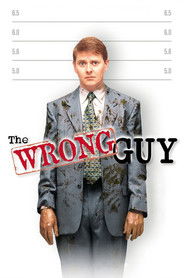
But the idea was we were already behind budget before we started. Correct. We wrote too big a movie. But they bought it already. Now, this scene, we shot everything that we shot. We shot in Toronto. Yep. Right. And is your nephew in the elevator on this one or your assistant at the time, David? My nephew. Right, right? Very good, David. In this elevator? Yes. This is the one where he's in the... Yeah. If you look closely, I was also on that elevator. Oh, right. Yeah. Right. Right.
1:46 · jump to transcript →
-
Really? You said we couldn't be here? Yeah. Don't go up there. Oh, the production. They didn't want to pay for it. Yeah, yeah, yeah. The city of Toronto didn't say don't come here. Our budget was already blown before we started production. But then we were also in profit partway through the shoot. That's true, yeah. Because we assumed foreign sales. Foreign sales to Germany. But they were all contingent on a U.S. release. Right. Which didn't happen. So at this point we were going, ah, we're...
13:28 · jump to transcript →
-
What's he going to do? Charlie, my son, brought up, how did he pay for the hotel room? I said, I had no money. No, I had money. No, no, we figured what happened is we lost that scene where he earned the money doing the fence. I mean, the painting the house. We lost that. The hotel room, I think, was before the fence. No, you'll see. No, no, no, before the fence, but after what would have been the painting the house and fed the rats.
14:59 · jump to transcript →
-
-
-
One of the reasons we added the comic book panels was entirely just to add some extra action in that we couldn't afford to do. Because I think one of the biggest limitations was what we could actually afford in terms of now digitally you would do so much, it would be so much easier to do it. But because the combination of the fact that the tank...
19:59 · jump to transcript →
-
And again, you never know whether you're gonna be able to afford these things. You never know what's gonna be acceptable. And so every time, everything is a little victory when you get to, when things like that end up actually in the film. What was your budget on this? It was about 25 million. Wow.
26:51 · jump to transcript →
-
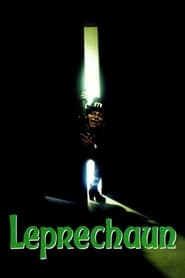
16 guys running their faces and their ears. And it's brilliant because every ear expression and every eyebrow expression is what makes it work. And every piece of the nose, just incredible work from Stan's point of view. And we couldn't afford Stan Winston. He did it because he wanted to do it. He invested a lot.
1:00:20 · jump to transcript →
-
-
-
Yeah, we had, I mean, I'll give Trimark credit because they did give us, you know, they gave us enough to make a pretty good movie with a 24-day schedule, which is a good schedule for these low-budget direct-to-video movies. And, you know, I think as we went along, they started to get somewhat happy with the picture. I don't think...
20:25 · jump to transcript →
-
when it first came out, because I think, you know, people were expecting, you know, went theatrical, and they're saying, well, this is just kind of a low-budget horror movie. But I think later on, people kind of get it. And I did hear that Ron Howard's daughter and her boyfriend, it was one of their favorite movies. They loved Leprechaun.
51:30 · jump to transcript →
-
But I think that's when the crew started to have fun, you know, that kind of stuff. They got it. I mean, I think the crew really, you know, they worked on a lot of low budget movies, a lot of horror movies, and this sort of was a hybrid. Yeah, very much so. It's a great word for it. And it's funny, even when the character is doing these slightly lighthearted things, I think it adds to the dementia of it. It's crazy. Yeah. Now there they think he's gone.
1:09:50 · jump to transcript →
-
-
multi · 2h 19m 6 mentions
Martin Scorsese, Nicholas Pileggi, Ray Liotta, Lorraine Bracco + 9
-
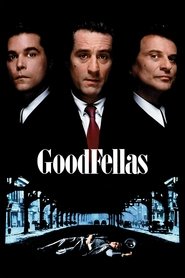
And he said, unfortunately, he said, because the damn book is a bestseller. And lots of people wanted to do it. And my agent, Sterling Lord, and all of these people were just sort of trying to divide the money.
3:17 · jump to transcript →
-
Actor Paul Sorvino. In the scene where we're looking at the spoils of the robbery when the money is there, and we have to all be laughing, we did about eight takes. And before each take, I told a joke. I just told a joke.
35:23 · jump to transcript →
-
Hey, Maury, relax. Relax, OK? Jimmy, I need the money. Relax.
1:36:23 · jump to transcript →
-
-
-
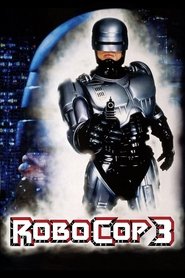
There was a church there that was real important that he spent some time in. So at that point, was this, I mean, obviously this would have been the largest budget you would have had to work with. And yet, was it a situation where Orion really felt that this was going to be a big step up from the second one? Or were they trying...
4:11 · jump to transcript →
-
just because, you know, more bang for your buck in a movie like this is really important. But we really weren't wanting as far as the budget that we had from the get-go. I could have told them, you know, this isn't enough. And directors do that all the time, by the way. No, I need 10 more million. I was just happy to be doing it. And I have to say, in the movie's defense, I think it looks really good. I think it's got a flow to it. And I think...
23:44 · jump to transcript →
-
Lots of Panaglide in this movie, or Steadicam, as it's also known. Well, it must have been fun for you. I mean, like I say, it was the biggest budget film that you had, so you must have had a lot of fun tools to play with to pull off some of these shots. Yeah. I mean, it was a real movie. Yeah. Let's do a crane shot here. Okay. Yeah. Okay. Let's do Panaglide here. Now, we're coming up here on A Missed Opportunity. This is Dick Hancock, who was one of our stuntmen. And...
46:30 · jump to transcript →
-
-
-
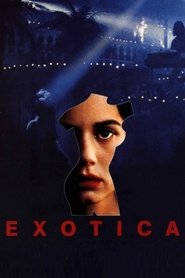
trading a lot of stories as we're watching this film that we both love so much. Yes, it's... considering that the entire music budget back then, I spent pretty much all of it on my plane fare to India to record this instrument. But I felt it was really important, the concept of Exotica,
1:17 · jump to transcript →
-
I had in mind from the very beginning, Leonard Cohen's Everybody Knows, it was really difficult to get access to this piece of music with the very limited budget we had. This whole film was shot for less than $2 million. Actually, it's like 1.5 or something like that. It was insane. So how do you get a big song like this? And so how you get it is you approach the company, they say no.
8:22 · jump to transcript →
-
because it's the best thing for the film, is something that's very difficult to do now. But also, I look at this scene, I look at the performances, I look at the actors, how committed they are, but they're also framed in this... This was a set. This was not a location. So here's the amazing thing, is that you could theoretically have that freedom in a digital world, like ultra-low budget, but then you don't get to make sets like this. You don't get to kind of create this...
53:22 · jump to transcript →
-
-
-
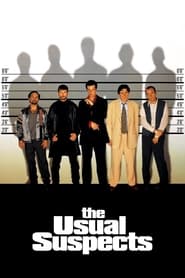
Die Hard with a Vengeance, Crimson Tide, Species, Tommy Boy Clueless, Friday, While You Were Sleeping, some indies like Living in Oblivion, Party Girl, The Underneath, The Usual Suspects. And this movie was a $50 million budget. It made about $152 million, and its opening weekend was $26 million.
1:11 · jump to transcript →
-
bunch of stuff ranging from glossy studio fare like The Natural and the low-budget teen sex comedy Joysticks to the James Bond movie The Living Daylights and Michael Ritchie's Chevy Chase vehicle Fletch. He was on a roll here in the 1990s. He started the decade with a juicy part in Martin Scorsese's Cape Fear, a movie we both love, and he also appeared in Reality Bites, Steven Soderbergh's The Underneath, Panther.
10:04 · jump to transcript →
-
So Marshall went and worked for Bogdanovich as an unpaid production assistant and kind of all-around gopher on Targets, Bogdanovich's first feature film as a director. And he got a real crash course in low-budget filmmaking as Bogdanovich called on him to fill a variety of different roles throughout production. But he actually didn't work on a film again until a couple years later. He was sort of kicking around working as a waiter and a musician. Wow.
43:14 · jump to transcript →
-
-
-
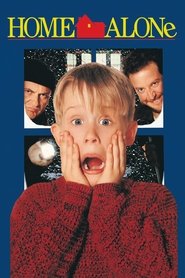
So this, uh.... What's interesting about a lot of this movie is we would always put fake snow down. The foam and stuff. - The foam, and that's really... We had a Wisconsin ski... A bunch of guys who worked for this ski resort in Wisconsin put down snow. But... - That poor statue. Yeah, the statue was a running gag, and this guy... A lot of this movie was made on an extremely small budget. At the time, the picture was at one studio... ...and that studio didn't wanna make the movie, because of a $2-million difference... ...and it went over to Twentieth Century Fox. And we still were... We still made the film for a little above $18 million... ...which at the time was still a small budget. So we had to make things stretch, which we'll talk about through the picture. One of the great things about working with Pesci, I have to say... .IS his improvisational skills were terrific. And it was because of his training with Scorsese that... ...even on a picture like Home Alone, really comes in handy. He's a very funny guy, Joe. - Yeah. And his comedic instincts were really something I'd never seen before. Little snippets in pictures like Raging Bull and Goodfellas. But his ability to improvise was just phenomenal. And then John Heard. I cast John Heard because John Heard was someone I was always a big fan of. He was in this picture... It was called Cutter and Bone. Now it's called Cutter's Way. And his performance should've gotten an Academy Award. I've never seen it. It's Jeff Bridges and John Heard, and he is just amazing in that film. I was a huge fan, and it was always a dream to work with him. He also did this old film called Head Over Heels. And he was kind of a leading man back in his day. He's just a wonderful actor... ...and another guy who didn't really know why he was in this movie. At the time, he was sort of like, "Why am I doing this?" I remember feeling a certain amount of discomfort from him. He was like, "Why do I have to do this? Why am I in this kids' movie?" You know? "I'm a good a--" Understandable. No one really knew what this movie had the potential of becoming. We had always hoped it would be successful, but we never knew. Um.... Pfft. I always knew. You always had an idea. - I always knew. Now, this scene. Do you remember coming in on a Saturday to rehearse this scene? Yeah. - We had to rehearse this because it was so... Which was so chaotic with everybody. We ate so much pizza. I didn't wanna eat lunch. And this is something that was interesting. We... You'll notice that there's a rare shot in the film where... There's your brother. - Yeah, there he is. How are you guys--? He's working now, right? He's doing very well. Oh, yeah. He's doing very good, very well for himself. Un, this is typical of the style of this movie. Not the vomiting, obviously... ...but the separation of actors in certain scenes. Because Macaulay's time was so valuable... ...we needed to shoot Macaulay separately... ...and sometimes other kids as well. So you'll always see... I tried to block sequences where I could sort of keep Macaulay off by himself... ...and keep the other actors in another space... ...so I could shoot people separately. Child labor laws again. - Child labor laws. And we're-- And Kieran had to reshoot the chair in the face, I remember. Oh, yeah. - Like, he had to come back later. He was upset he had to get his hair cut like Fuller again. Oh, he was? - Ha-ha-ha. Well, he-- We made a special, very light rubber chair... ...so when it... - Yeah, that's... Yeah. That's-- I remember that. Catherine O'Hara was someone who I had, uh... ...Just loved her work on Second City TV. - Yeah. I mean, I was, uh... Aside from Saturday Night Live at the time in the '70Os... ...Second City Television was the-- Sort of the place where you learned about comedy. And for me it was... I was just such a huge fan... ...SO It was, again, a real honor... ...to be able to work with her on both of these films. Yeah, no, she's incredible. Even just the stuff she's doing now. She's still--? Oh, it's great. It's great stuff. Both of his kids are still going to school here. I guess he missed the family.... You got a pretty good cast. Yeah, it's kind of interesting for a film that... But we treated it... The weird thing about this film... ...and the reason I think the film has kind of stood the test of time for a lot of kids... ... IS because we always treated it with respect. We never felt that we were making a movie for kids. We were making a movie for the parents as well. It had a lot of appeal. And you never-- You wanted to... You wanted the photography to have a certain elegance about it... ...and the camera to be moving. And it was really never... So many times today, people try to make kids' movies... ...and they always cheapen them. And we never-- I mean, certainly we got cheap with our jokes. Let's not pretend that we didn't. - Ha-ha-ha. Oh, yeah. No, I mean, it's Three Stooges, you know? - Anything for a laugh. I
7:04 · jump to transcript →
-
We shot a lot of this film on location in Chicago. This was shot at O'Hare Airport, actually. That was just chaos because it was still a functioning airport... ...while we were running through it. And the key is, here, is we were shooting... When we were shooting this first picture... ...N0 one knew who Macaulay was. In contrast with shooting Home Alone 2... ...where there were busloads of people following you around. That was crazy. - You suddenly became... ...one of the Beatles, um... ...which was a whole different vibe in terms of... We wouldn't have been able to shoot the way, you know... The way-- On this budget, the way we did. Duck into any airport and, you know.... I
16:25 · jump to transcript →
-
Again, l've-- Because of this film, I... - There was a whole speech there. Yeah, I think that's in the... We've got outtakes on this DVD... ...SO I think that'll probably be there, but the... I've not let my children ever buy a BB gun because of this movie. I had one. It got taken away. Did you? - Oh, yeah. Was it an airsoft gun or a...? It was a-- You know, you pumped it... But, you know, you could shoot pellets out of that thing. Yeah, I don't have that anymore. - No. Well, that's good. There's a reason why. When we shot-- John had written this movie within a movie... ...called Angels With Filthy Souls. And we actually had to shoot a film that resembled a film from the '30s... ...which unfortunately, you don't see on TV anymore. And there's not a kid in America... ...who would pop in an old black-and-white movie in 2007. Yeah. Just-- You know, Macaulay was a pretty sophisticated guy. He's watching old movies back then. - I was very worldly. But kids would do it back then. And the interesting thing is we got two Chicago actors to do this film... ...and we just studied our old '30s and '40s film-noir gangster pictures... ...and re-created them. And, you know, on this budget, it actually worked... ...because they were basically cardboard sets... ...and a few lights creating that old film-noir style. This is great. This stuff is classic. - Yeah.
23:25 · jump to transcript →
-
-
-
that's just not how studios work is and there's an extra problem here because it's obviously it's alien so it's a cash cow there's a lot of people and a lot of money involved but there's also a three-way dynamic because you've got brandy wine which is the production company which is david guyler and walter hill two men who do not take at all and then you've got fox who's putting up all the money and obviously it's their baby too they want and then you've got david fincher and
17:40 · jump to transcript →
-
Fox are idiots and things like that. It's amazing. It's great. He doesn't give a shit. But David Fincher was already a wealthy guy before he made the film. He had a production company making music videos. He was like loaded. So he didn't, I don't know. He didn't need the money to make this, you know, to be, you know, he didn't need it as a payday. He was just like, he loved alien. I'm sure he had his sort of misgivings of aliens and how it kind of changed things perhaps, or maybe set up these, you know, this family setting.
19:29 · jump to transcript →
-
sort of modern considering it was only i mean what was it six years after aliens came out yes you're correct yeah it does feel like a lot longer somehow when you look at it the aesthetic the i don't know that the finish the the look of every everything feels maybe because aliens is kind of a secret low budget movie it's i'm only slowly getting my head around because in my memory in my mind aliens is this huge extravaganza
40:31 · jump to transcript →
-
-
-
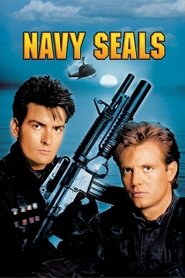
to situations that Chuck Farr would often find himself in in his early days as a screenwriter. Because for a while, his day job was still being a Navy SEAL. He was a Navy SEAL and remained so until he had gotten, you know, sold a couple scripts because he couldn't afford to quit his job. So as a Navy SEAL, he was constantly missing meetings with agents and producers because he would get called away on a mission. To save the country or something. Exactly. No excuse. So he would get called away on these missions.
7:29 · jump to transcript →
-
make all of these exploitation movies where he would give his director, he'd give his filmmakers like a fair amount of freedom. Basically, as long as they stayed on budget and delivered whatever the necessary genre elements were, they could kind of do what they wanted. And like the best directors to come out of that, like Demi and Scorsese, like really knew how to sort of kind of harness those genres to their own ends. But anyway, Corman saw in Teague, you know,
38:09 · jump to transcript →
-
And by the end of the year, Teague had another film in theaters, Jewel of the Nile, the movie I mentioned before, which was the Romancing Stone sequel. That movie gave Teague a massive hit on his biggest budget to that point, somewhere around $25 million. And so that really was kind of a big, big, big movie. Technically, on his resume, this is his next movie, Navy Seals. But he actually made a movie in between them.
1:04:11 · jump to transcript →
-
-
-
on the budget so we were able to work with General Motors who donated a lot of concept cars straight from car shows and also we designed a car with General Motors as the police car so we built about 12 of these cars which ran on a go-kart engine so they were very noisy but they looked very futuristic and this is also the first introduction here that there's
13:16 · jump to transcript →
-
Again, looking for locations anywhere I could find them because the budget on the film was approved originally at about $48 million. And then it, you know, it went up to $70 million. So we had to cut back on a lot of location shooting. I had locations scouted in different parts of the country where I would shoot plate shots, et cetera, et cetera. But we were...
55:46 · jump to transcript →
-
We had to shoot everything in California, basically. So we were able to find some very futuristic locations. That's something people don't understand is when the budget balloons and we think we have all the money in the world, you never have all the money in the world. I wrote Batman Returns. It was basically a $100 million budget. And we're still acting like we're shooting a Roger Corman movie because we're scraping. Well, Batman Returns was, if I'm not mistaken, that was all built.
56:10 · jump to transcript →
-
-
-
Tony Scott
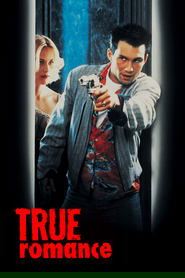
and Patricia escapes with the money. But after spending my time, I shot the end of the movie. Chronologically, I actually shot the last scene in the movie at the end of production. And I fell in love with these kids. And I'm a romantic, as I was saying. I wanted to see these kids actually
37:43 · jump to transcript →
-
Tony Scott
In terms of me and the movies that I'd done over the last few years, that's a relatively small budget. My first film cost $11 million, which is The Hunger. And this many years later, it cost $13.5 million. So that's a relatively small budget, but I managed to do it at that price because I shot it in a relatively... I shot it in 65 days.
1:11:11 · jump to transcript →
-
Tony Scott
Yeah, well, let me just tell you, if we get lost, that's your end. Hey, Floyd, why don't you get out of my beer, all right, and get a fucking job? This is a real live location, which is Dick Ritchie's apartment, which is a tiny location up in Hollywood Hills. Everybody thought I was mad. You know, I said, why can't you? You know, we couldn't afford to build it, is the honest truth. And they thought the location was too tiny and too small.
1:29:41 · jump to transcript →
-
-
-
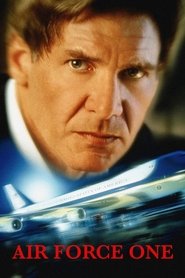
You know, we did not have to pay for this just for the pilots, you know, sleeping in core hotels and so on. And per diems, that's all. So that's really enormous help. Otherwise, the budget would go crazy with all these planes. And the next shot, again, is an effect shot. And this would be the model again. And then there's the capsule going out. And these clouds you see there, we shot these clouds, or I'd say boss films, shot these clouds.
24:14 · jump to transcript →
-
One of the dangers would have been, for me, dangerous to drop the dogfight. I was fighting hard to keep the dogfight in. And finally, they went back to the partners also, to Columbia and to Disney, because Disney, you know, is the film for international. And they all decided to spend the money for the dogfight. So I could do it. And this is a result now. And I think it's a pretty spectacular sequence. It's very, you know, it's not very long. It's, I don't know, like maybe two minutes or something like that, two, three minutes.
1:44:44 · jump to transcript →
-
where a guy honestly tells him why he was doing what he was doing. There's no time to say all that. So finally, we said, let's go just with the drama, with the incredible speed here and the pacing and the tempo and the time clock that the plane would crash any second that people can think about. He did it for the money or he did it for politics, whatever. Whatever the reason was, he just did it. And I think most of the people accepted that. Isn't this spectacular?
1:55:29 · jump to transcript →
-
-
-
Darren Aronofsky
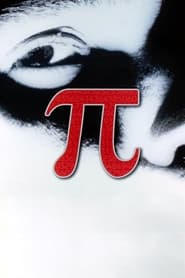
hallucination part of the sequence. The whole score changes, as well as the sound design, as well as the camera work. This was all shot MOS. We couldn't afford to bring a sound rig down into the depths of New York City, and so we shot a lot of this with a Bolex, which is a very, very simple 16mm camera.
34:38 · jump to transcript →
-
Darren Aronofsky
um, spirals that he, um, sort of talks about, but we didn't have the budget to research and get any sort of spirals, and I tried going to the library and finding stuff. But even the internet didn't give me any help. So if you notice now, his POV has gone from like 18 frames per second to 12 frames per second. We just sped up, um, the speed of...
45:28 · jump to transcript →
-
Darren Aronofsky
And I was hoping that audiences, because they were sort of used to seeing the sort of continued hit montage, would have a larger sort of emotional reaction to the fact that it was broken. When you're shooting on a low-budget film, you get one chance to do this. The great destruction of Euclid. You've got to nail it. You've got to pray, especially when you're shooting such a tricky stock as Reversal, that the image is going to come out. And, you know, it's really, you know, faith and...
1:15:21 · jump to transcript →
-
-
-
Paul M. Sammon
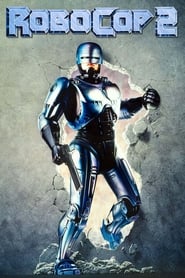
Peter was a very great choice to play Robocop in the first two films, as was, you know, Mr. Burke in Robo 3, who's also a fine actor. And talk about sentimental. I mean, oy. Oh, well, I would have taken the money, but that's just me. Robo Thief.
1:29:44 · jump to transcript →
-
Paul M. Sammon
Well, there was. The computers we gave the local company that I got the computer material from a credit as part of the deal. So in any event, here we go. Tobor picture, by the way. Tobor is robot spelled backwards. And, of course, Tobor the Great was a very low-budget film in the 1950s that John Davison loved and has upgraded with Robo and RoboCop 2. This is Paul Salmon signing out.
1:56:02 · jump to transcript →
-
-
-
because their earlier collaborations were so low budget, they just did not have the time or the money to really explore the use of closeups in dialogue scenes. Oh yeah, it's never more sort of present than in this film. And obviously I would say, I would say that
13:21 · jump to transcript →
-
you could basically jump to the front of the line anyway. Any way you can. It didn't take much to basically have someone sign off if you had the money, if you had the funds and the means. So there was this kind of false, falseness to it that could easily be exploited. It's just that, again,
1:13:19 · jump to transcript →
-
-
-
And probably somebody with the money somewhere is going to do it, and it's going to be a big scandal. And then everyone will say, oh, just because I saw that on the TV news doesn't mean he really said that. I had a couple of guys come up to me while we were filming this scene here at the Lincoln Memorial.
1:04:43 · jump to transcript →
-
Now here's a good example of saving a lot of money because that's stock footage. And now this is back into what we created. And in fact, there was a hurricane that blew through there and there were still minor remnants of that hurricane that we used as a backdrop to shoot that scene. That's right. Only one shrimping boat actually survived the storm. And this digital thing is going to happen once it becomes cheaper and once you can move faster because, you know, time is money. So it's all about the money.
1:35:52 · jump to transcript →
-
-
multi · 1h 54m 2 mentions
Jean-Pierre Jeunet, Hervé Schneid, Alec Gillis, Tom Woodruff Jr. + 5
-
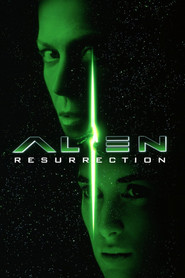
I remember, I had to fight against the studio to get the smoke on the knife, because it wasn't on the budget. Here, same thing, it's for real. Sigourney gets it through the hand. No. Of course it's a cheat. On one side it's a retractable blade and on the other side it's a real one. A CG blade. So we CG-ed the second part of the blade. And the smoke is CGI? - The smoke is CGI, too. Lot of times, those little effects - like that - are the ones that have the most effect. Yeah, because it seems to be normal. It would be possible to have a fake hand... They talked to us about that, and it was impractical and too costly, because to give the hand enough life so it didn't look artificial was a lot of work. And to make it move, then stop... Too limiting in your shot. That was a great approach. On the shooting, it didn't take a longer time than just to play it. So it was very cost-effective. Tom, didn't you get together with Sigourney about the style of her movements? Yeah, right, because of her alien heritage now as a clone. We talked a little bit about movements that she saw me doing in the alien suit. We tried to find a way to integrate some of those into her performance. There's some later where she's swimming, there were some movements we worked out. Also when she escapes from her cell, there's an element where we were figuring out: "What is it about the alien when it's retreating that's the most noticeable feature?" The tail. And without a tail, we ended up doing something where she kicks her leg out as she's moving into the chamber and escaping from her cell. In the preproduction, I did some research for Jean-Pierre on animals, to find out the way for the alien to move, to find a halfway between feline and insects. So we did a lot of research on footage, to have an idea of this hybrid between feline and insect. It was cool. I met Ron Perlman in The City of Lost Children - he played One. I love him. I can't wait to work with him again. This isn't a modest thing to say, but I like the way the guns look in the film. Jean-Pierre's idea was: he'd seen the guns get bigger - especially in the second film - and he thought it can get quite absurd if we go too far, so it'd be a nice idea to shrink the sizes again and have guns that are more about efficiency. He wanted guns that snapped when they fired. He wanted to feel and hear every bullet as it ricocheted and hit the floor. He wanted something that was a bit more credible than the giant "Rambo" guns. So we designed with that in mind. It was something that felt very basic.
35:17 · jump to transcript →
-
We built a miniature version of the newborn as well that we never photographed. We didn't have the time or the money, I think. There was a lot of hard choices being made. Jean-Pierre's idea for the newborn was that he wanted it to be like a toddler that was curious and prone to tantrums and completely unaware of its own strength. And, like toddlers, eat people's heads. I remember at the beginning we thought about Sigourney inside a cocoon, but when we arrived on set in the morning, she told me "No, it's a mistake. I can't stay in a cocoon. It's a mistake." We had to improvise something. We had to improvise something. It's not easy for a director to change their mind when you have a lot of special effects and these kind of sets. It's pretty difficult. But she was right. We had all these technical words to say in English, which is very difficult for a French actor.
1:38:13 · jump to transcript →
-
-
-
multi · 2h 12m 1 mention
Andrew Sarris, James Ellroy, Brian Helgeland, Michael Nathanson + 10
-
-


Related topics
Other topics that frequently come up in the same commentaries.