Topics / Studio & business
Budget
118 commentaries in the archive discuss this, with 429 total mentions and 67 sampled passages on this page.
Filter commentaries
Filter this topic by the film's decade or the type of commentary.
Showing 33 of 118 commentaries
Clear filtersBy decade
Across the archive
ranked by mentions · click any passage for the moment in the transcript
-
-
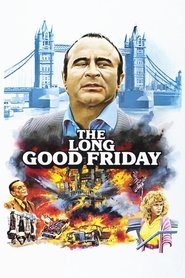
come what may, and he was frantically rewriting on the set whilst they were shooting it. And that was for tax reasons as well, that the film had to be shot within a certain window of opportunity, otherwise the money wasn't going to be there. Yeah, and even James Caplin, you know, he didn't have time to develop the screenplay as it should be either. And, you know, it's a very complex storyline, you know. It's film noir. It's investigative, you know, plot.
41:20 · jump to transcript →
-
on a small budget and a fast shooting schedule. So you've really sort of set the bar high for what you're trying to achieve in such a short space of time. Well, it was budgeted by Graham Ford, who had just come off Brazil, as the line producer on Brazil. And Graham did a budget, and it was way, way over a million. And the producer said, well, we can't go ahead.
53:47 · jump to transcript →
-
it wasn't going to happen right so uh i went over to don hawkins uh apartment and i said don you know let's look at the budget and see what we can do um but but don didn't really know anything about budgeting i had some experience because i did some production managing on some other stuff so i sat down and i went through the budget and i started making cuts um all over the place basically until i got it down to somewhere between five and six hundred thousand
54:10 · jump to transcript →
-
-
-
Gary Goddard
I'm the director of the movie, Gary Goddard, and I've been asked to give some commentary about the making of Masters of the Universe, which I will be doing here as we watch the movie. Over the credits here, I'll just say that Masters of the Universe came my way because it was a very popular toy at the time, an animated cartoon show. Ed Pressman was looking for someone to be able to adapt this into a story that could be done for a budget that the studio would accept, that would also be able to bring the story to life as a live-action picture.
0:17 · jump to transcript →
-
Gary Goddard
and to meet the budget and schedule and get it out for summer, but we did do that. I like this shot also, this shot where you have Skeletor overpowering on an epic scale, dominating the screen, and you introduce your hero here against him as he turns in camera. It was very deliberate, pitting him, hero, who is watching the devastation of his world, Eternia, and the overpowering presence of Skeletor.
5:16 · jump to transcript →
-
Gary Goddard
at the last two days of shooting. Last two days of shooting, everything you see here in Vasquez Rocks were shot in two days at the very tail end of the shoot when I was being pressured for budget and pressured for schedule. You've got to get this done. But there's a certain energy that comes from all that, I suppose, that you have to move things along and keep things rolling. So here we introduce our principal characters. And in this initial encounter, again, we meet...
6:36 · jump to transcript →
-
-
-
producer who also acted in his movies and he did sort of low budget production he created a studio there and did a whole series of films and I did I did a few there and then it was great fun it was sort of go out and do the best you can with what you got do you remember any films you worked on with him
12:06 · jump to transcript →
-
budget reasons or whatever. So there are always changes. But I don't remember his reaction in particular. Yeah, the way the sort of the gay subplot comes up is interesting because especially in the 80s films, it was usually handled...
34:17 · jump to transcript →
-
the chases don't compare to what they can do today in terms of scale and budget and special effects, where these are all practical things that we actually did there in the city. But we were told that they had complained all the way to the chief of police, and he got right in his car and came down right to where we were so he could watch.
37:34 · jump to transcript →
-
-
multi · 2h 34m 7 mentions
James Cameron, Gale Anne Hurd, Stan Winston, Robert Skotak + 8
-
Stan Winston
I'm Stan Winston. I created the creature effects and the alien effects for A/ens. I remember Jim trying to figure out how he could make the beginning of this movie impressive. He said he wanted to use a robotic laser. It was an afterthought and it wasn't in the budget and I remember having the gall to say to him "If you wanna use it, you have to pay for it." And he did. - Is that right? This robotic arm and the laser came out of his pocket. I wanted a seamless blend from the end of the first film into the beginning of the second film. I certainly wanted to honor all the things that were good about the first film. So I went to school on Ridley's style of photography, which was quite different from mine, cos he used a lot of long lenses, much more so than I was used to working with. But the smoke, the backlight, the textures, the way he forces the frame by putting a lot of equipment, machinery and foreground pieces, I really studied all that. I wanted there to be a stylistic continuity. I also wanted to have my own style grafted onto that so that I felt enough of a sense of authorship to make it worth doing.
2:51 · jump to transcript →
-
Pat McClung
We had a big budget cut, or we had to save money, and the budget for this set got cut. Peter Lamont came up with a great idea. There's a mirror at the end of the set and another mirror behind the camera. I think we only had three of those hypersleep capsules. I think we might have had four. We mirrored them out to make them into 12. If you're clever you can see where the mirror is but I can't see it right now.
27:26 · jump to transcript →
-
Bill Paxton
I heard that some of the studio execs were screening footage back in the States, and they were a little perturbed and asking "Where's the effects shot?" Gale Hurd said "You just saw an effects shot." She was referring to that perspective shot. They were completely fooled by it. They thought nothing had been shot. They thought they were spending huge amounts of money on these sets. They said "You spent so much and there's no miniature." She said "No, that is the miniature." It was a smart move on Cameron's part, to do it that way very quickly in the film, so the studio wasn't worried quite as much about what was going on 5,000 miles away in London. It does make it a bit tricky to shoot, though. If anything goes wrong, you're stuck with it or you have to fix it later but with a reshoot. You can't really fix it later. So that worked out quite well, but with actors and everything there's a lot on the line. Something we've lost sight of over the years is that with this era of filmmaking, not only for live-action but for miniatures, there wasn't much ability to go back and fix something. Now, digitally, you can change an actor's face, you can get rid of wires, do all kinds of tricks, split-screen, take elements and change shots. But at that time you had to plan these things and make it work within a narrow tolerance, otherwise that was it, that's what wound up in the film. IIt reminds me of a stage play. You're doing it live, in a sense. What was on film was it. There was no going back. You could only do it so many times. There was a limited budget to work with and it had to work on film, no matter what.
1:08:47 · jump to transcript →
-
-
-
John Mackenzie
The opening of the film, which is this cottage emerging from the dark, was not how it was originally intended. I did shoot a very much more elaborate opening, which went on and on and on, and it showed the origin of a suitcase which is about to be delivered to these men full of money. Well, before that, there were scenes where the money was hijacked.
1:27 · jump to transcript →
-
John Mackenzie
from a van in the hills of some distant country, and you see the money being transported across Europe and eventually arriving here in England. But it seemed to me, as it was pointed out, that this was rather an elaborate opening, and really it was complicated enough without introducing all this other stuff, and it would leave the audience a bit mystified. So I eventually cut all that and started with the cottage, and then took up the suitcase theme from here on.
1:56 · jump to transcript →
-
John Mackenzie
find down and bring out. And I concentrated on this at the beginning of the opening of the film with the money and the scene with the guy in the pub who turns out to be Harold Shan's right-hand man. We don't realise that the setting is in Ireland. That is revealed much later. And when we keep going to this cottage, which is also an island, I may say, we're not sure whether they're...
3:51 · jump to transcript →
-
-
-
Paul Davis
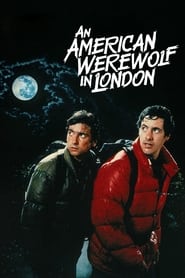
American wealth in London to Jenny Agutter saying that he wanted her to play Nurse Alex Price. But he didn't actually give her the script until he had the money to make it. So I think it was probably around November 1980 that she finally got the script. And she is admittedly not a huge horror fan. And had the script come from somebody else, she would have thought twice about it. Can I be of service, Nurse Price? Dr. Hush? Go about your duties.
18:08 · jump to transcript →
-
Paul Davis
guaranteeing you the the money for the movie once it's delivered with specific requirements so for this it was that it had to be an r rating um and PolyGram pictures it was Jon Peters and Peter Guber who who were big fans of john after the the blues brothers and an animal house uh
25:22 · jump to transcript →
-
Paul Davis
they understood it and had faith in john and they gave him the contract which he then takes to the bank to get the money to make the movie and then once the movie is delivered PolyGram then pay back the money to to pay off the to pay off the bank and that's how this movie was made and it's a really smart way to do it because it leaves the filmmaker completely financially responsible for the film you know you're signing the checks and
25:44 · jump to transcript →
-
-
-
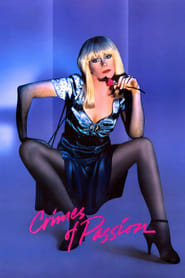
Did you find that we had any problems working on a limited budget? Well, I remember on the first day, this was the first day, I think, we fired the continuity girl because the clock was at different times. I can't even see a blinking clock there now. So that didn't get off to a very good start. But it was a very low-budget film. We couldn't afford the best, could we? No. So working under sort of pressure and...
16:59 · jump to transcript →
-
A warm mellow sort of, instead of the harsh reality of whoredom. Is the offer still good? No problem. I could use the money. You do? Terrific. No, no, that's great. You didn't think I had the nerve, did you? Neither did I. I guess it just comes with poverty.
21:23 · jump to transcript →
-
But the movie is basically an exploration of the psychology of sexuality. And I love how you just framed these two characters in terms of their beds, with her lying in this big bed, totally isolated. And it's cold. It's a blue light. It's lonely. Having just come from Grady, who has been spurned by his wife. Exactly. Why didn't you come to me, Phil? I would have loaned you the money.
40:25 · jump to transcript →
-
-
-
Oliver Stone
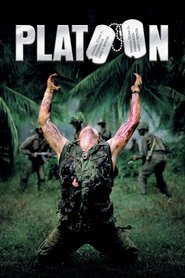
Arnold Copelson, John Daly, England, put up the money. That was quite something. Couldn't get the money for ten years, and a British company finally put it up and took a chance. Grandiose opening, opening invocation, sort of something from the Iliad or the Odyssey, but it's the Bible, I felt, would be, Rejoice, O young man, rejoice in thy life and the days of thy youth.
0:38 · jump to transcript →
-
Oliver Stone
He did everything almost first with his hands himself. But nobody got hurt in the special effects crew. Now here's our village. This one was a tough one because we had to build it. We stocked it with as many Vietnamese as we could get with a limited budget. And we found some of these people.
46:21 · jump to transcript →
-
Oliver Stone
But I missed it. Here, Barnes is giving the lieutenant a little grin. I love that focus pull. But Barnes is digging the oncoming tension. Now, obviously, the ambush is gone. They're not responding. This should have been really later in the day. I just, given the budget we had and the conditions, we just had to grab what we could when we could. We were running out of...
1:36:47 · jump to transcript →
-
-
-
Barry Levinson
He doesn't get the money by 5.30. He's going to come and seize all the cars. I'm going to have to call you back.
4:07 · jump to transcript →
-
Barry Levinson
Who controls the money? You control the money?
13:49 · jump to transcript →
-
Barry Levinson
He'll go back to Walbrook or a better place. No, with the money, I will put him in a better place.
36:37 · jump to transcript →
-
-
director · 1h 30m 4 mentions
A Nightmare on Elm Street (1984)
Wes Craven, Heather Langenkamp, John Saxon, Jacques Haitkin
-
But, Heather, I don't think you fit in tonight. Well, I think the wardrobe kept mixing up Johnny's jeans and my jeans, so some days when my jeans look particularly tight, I think I'm wearing Johnny's leg right here. The day we did jean splitting, I think. I think it was one size fits all. I think the wardrobe budget was probably about 10 cents. Everything was from Kmart. Nike.
9:57 · jump to transcript →
-
We had a time when, I mean, the budget was, gosh, so small compared to these days. Right. We did it on the sushi budget of a real feature. But didn't Gregg Fonseca really make fine sense? Gregg Fonseca did incredible artwork. I thought he did, yeah. He just died last year, unfortunately. Went on to do Honey, I Shrunk the Kids and huge features after this.
12:54 · jump to transcript →
-
Was our steadicam operator a woman? Yeah, Liz Ziegler. Right. She's done a lot of big shows. And the whole budget for the whole film was a million... Seven? A million eight, I think. That's what I thought. And look at these beautiful outdoor shots you got, Jacques. I just think it's remarkable what you pulled off in the budget that we had or didn't have. Totally agree. I'm still doing it. That's the problem. If you do it once, they make you do it again. Good, Jacques Haitkin.
37:24 · jump to transcript →
-
-
-
Roger Moore
You certainly don't feel as if you're making a television series when you're making a big feature film. The big difference with television, because you film for television and you film for the cinema. The difference is budget and time. So with an episode of The Saint, we'd have eight or nine days shooting, and the same with The Persuaders.
1:01:18 · jump to transcript →
-
Roger Moore
Bonds have gone on for so many years, and I think the answer is that the producers never cheat the audience. They spend the money and they put it up on the screen. You see it. Great sets, great locations. I'll send the large bag. OK. Bring out those pigeons!
1:44:45 · jump to transcript →
-
Roger Moore
and their million dollar budget. Amazing. You too, that way. As part of my career, the 14 years I spent doing Bond, making seven movies, of course it's very, very important.
1:48:23 · jump to transcript →
-
-
-
William Friedkin
which you and I might take no notice of. The main title sequence tries to give a flavor of the world that the audience is about to experience. It shows several of the characters without any explanation of who they are or what they're doing. And it also shows the act of counterfeiting and the act of passing the money. The money is counterfeited
5:35 · jump to transcript →
-
William Friedkin
somewhere in an area where you'd need a police escort to get to most of the time today. And we met this counterfeiter and he took us through the process. And he had the paper, you know, which we paid for. It's a certain kind of, it's called rag. The paper's a certain number of rag, it's called. And certain kinds of inks and the money that he was making, these $20 bills,
13:13 · jump to transcript →
-
William Friedkin
you know, to accuse me of a crime or to question me about a crime. They just tried to browbeat me a little bit. There was no crimes committed. We made this money for a movie and then basically destroyed it all. We weren't counterfeiters. But the guy who made the money had been convicted of counterfeiting and did serve time. So the money in that film and the process is totally authentic.
17:59 · jump to transcript →
-
-
-
Eleanor Bergstein
So at the end of that night, I said to Emile, we don't have it. It's not shocking and specific enough. It's just like a bunch of kids bopping around. And we had no time or money to go back. We were on such a low budget. And he said, are you sure? And I was sure. And as I said, it was nobody's fault. Sometimes these things just happen. And I remember calling my husband and telling him, he remembers this very vividly because I thought it was all lost. And I stayed up all night crying. And Lisa, my assistant, bathed my eyes with
15:22 · jump to transcript →
-
Eleanor Bergstein
someone who is really a decent, rather touching guy. He's just not Johnny for baby, but he's not a fool, and he's not a buffoon, and he's going to Freedom March, and he's afraid that people like him only for the fact that he owns two hotels. He plays him as a full character, and I have always loved his performance. I think it's just wonderful. Now, originally, we had to cut down on things because of the budget,
24:21 · jump to transcript →
-
Eleanor Bergstein
And we had had a long search in the woods for Penny. Oh, it had been a long thing, and Baby used her Girl Scout training. We couldn't do it, so we cut it down to Penny hiding in the kitchen because I've always loved hotel kitchens. I have a real softness for them. And I must confess, we didn't need the search in the woods. Now I'm embarrassed to think of how long it took me to cut it out. It's just fine to find her in the kitchen. It's, if anything, better. And I think sometimes when you have those budget constraints, sometimes it's really just hard.
24:50 · jump to transcript →
-
-
-
John McTiernan
Carl Weathers got involved. I went looking for somebody to work with Arnold, to have an actor for him to work with because he... Particularly for an actor who's starting, the way Arnold was at that time. What... The best thing you can get him, is a good actor to work against. It will improve their performance enormously. So right from the beginning, I was campaigning to get, to get a real pro, in this, in Carl Weathers part. I finally, talked him into Carl, it was a budget consideration, they didn't really wanna do it, but I pushed.
4:41 · jump to transcript →
-
John McTiernan
I suppose it was also budget consideration, I think, they were quite happy when I said, "Well, all right, let's do away with that dozen opticals." I mean, it was a consideration all the way through this movie about how we do the optical effects.
7:42 · jump to transcript →
-
John McTiernan
It was a budget issue but it was also just, it was nearly impossible to get that, the real, heat vision shots.
35:53 · jump to transcript →
-
-
cast · 1h 36m 4 mentions
The Garbage Pail Kids Movie (1987)
Mackenzie Astin, Katie Barberi, William Morris
-
There it is. That's the money right there. Back left pocket, which is where I still keep all my folded signals. I remember this. It's so sad, but you love doing this. You love doing this. Are you kidding? I thought I was Harrison Ford. You did. You were all over this. I thought I was one of the Duke boys. He was doing stunts. Mac was doing stunts. He was very into this. That's the thing that's funny.
6:06 · jump to transcript →
-
This was done on quite a shoestring budget. I mean, we really, and we were tight at 90 days. Yeah, and it's all on the screen, ladies and gentlemen. There it is. That real dearth of capital behind the film is right there in the picture. We can see it all. No, but so with the thing that I was saying in mind about this being kind of a reverse mirror image of the anti-consumer message inherent to the cards themselves to begin with,
41:26 · jump to transcript →
-
That's him. This scene, honestly, though, Mackenzie, I won't lie, I watched this three more times again ahead of this just to, you know, reacquaint. And I got very emotional during this scene. Are you going to tell us about that? I just need to know because I'm already dealing with a budget on this. Just let us know. And if you're going to split the bill, absolutely 100%. You know...
1:30:06 · jump to transcript →
-
-
-
Ghost Town USA to having a huge football event, like, that was designed in the script? Oh yeah, that's from the script. The whole town is at the game. It didn't, it helped the extras budget though. I didn't have to populate the town at that point. This is a lot, this is really inspired by my life in Park Ridge, Illinois and some of my crazy friends. Honestly, some of these stories are true. Some of the interactions with the kids and all this.
3:43 · jump to transcript →
-
was ruined in Fango, but it didn't matter because it's the smoke that makes it. It's that steam that rises up. What was ruined about it in Fango? That was the shot, and you're sitting there going, like, I want to, it gave it away. But in Fango, that was the money shot. That ruined me from eating macaroni and cheese for two years. I'm not lying. It looks like mac and cheese with a little ketchup on it. Nope, no thanks. Oh, God, this moment is so great. So this is the same office that the doctor was in, and I was trying to make it moodier, even though it's a hospital.
25:32 · jump to transcript →
-
technical challenge or was there a thematic challenge possibly with the characters like balancing heroes? There were traditional challenges getting performances at 3 a.m. when everyone's freezing. What was unique about the film was the blob itself. I at least knew there was a risk every day of not getting the day, which you can't have on this. This was not a big budget film. And safety, just safety, water work, people slipping. I'm very, very safety conscious.
1:09:55 · jump to transcript →
-
-
-
Oh, who was the karate kid but we couldn't afford him because we didn't have enough money? Ralph Macchio. Ralph Macchio. Matthew Broderick. Matthew... Did we see Matthew Broderick? I seem to remember that. There he is. There's that guy from the stereo store. Don't you think he looks like Richard Gere? Did you see his cute little butt? Okay, you guys. Let's talk about that fox that just walked in. We already were.
2:18 · jump to transcript →
-
That means one team has to win by more than 14 points to win the money. This dude was interesting. That was, yeah, an actual punk named Walter. I just liked his look, so we put him all over the place. Yeah. Here's where I really screwed up. Why? Well, okay, we went to the high school during a game and we shot all this game footage.
46:55 · jump to transcript →
-
That's good. I remember doing the research for the book. I was really struck at how everybody had jobs in the three years that I had been out of high school, or I think it was longer, four years or something. I noticed that everybody had jobs now, and there was this quest to get the money for records, clothes, and all that stuff, and it changed all their lives. Thank you.
1:06:04 · jump to transcript →
-
-
director · 1h 31m 3 mentions
Alex Cox, Michael Nesmith, Victoria Thomas, Sy Richardson + 2
-
the little dangly pine tree, which was the only sponsor that you got for the film, besides Ralph's Markets. Ralph's Supermarkets donated some generic goods, including beer, and the Car Freshener Corporation donated about a hundred of these little Christmas trees without scent, so that we wouldn't have to smell them. That was our special effects, right? That was our entire special effects budget.
11:08 · jump to transcript →
-
I love this. They love this. They get run over and they, oh! My nephew got in a fight in Chicago in the movies about that. Why? Because they said I was stupid for throwing the money out the car. Oh, that's too much.
32:52 · jump to transcript →
-
See, it's a generic fetal nitrate. A metal hand. Can we feel it? You see, she's supposed to have a robot hand, you know, and that's not quite a robot hand. The budget didn't quite allow for that.
57:10 · jump to transcript →
-
-
-
This is so great, the way this woman plays the scene with John Mahoney. What hurts most is not that she declines the card or even that their flirtation ends. What hurts most is the pity. The pity! The pity is so brutal. It's like, take everything, take all the money, just please no pity. And she... Oh, this is a guy...
1:14:09 · jump to transcript →
-
Sweetheart, no. Don't be ridiculous. I need to know the truth. Honey. I swear to God. I swear to God. Oh, my God. I found the money. Oh, baby. It just drains out of him. Look at that. Ooh, I was a lucky guy that day. What am I supposed to think?
1:22:21 · jump to transcript →
-
In the kind of terror that happens in a studio before they put a movie out and spend all the money to promote it, there was a real feeling at the studio at the time, like, who's gonna go see this movie? Is it for the family or is it for kids? There was a screening, and someone invited a writer who brought his daughter, and they just kind of quizzed them after the screening, and some people decided that it was gonna only appeal to kids. So the movie was never really... Kids? Kids? What do you mean, kids?
1:35:58 · jump to transcript →
-
-
-
What is it? This is Joe Gags. $185,000 of my money. We have this problem. What problem? What are you talking about? He was moving my merchandise. So the money in his pocket when he went out the window is my money. This is a plating company. What are you telling me to shit? Shit? I want my money. Hey, I don't know what you're talking about, Mr. Frank Lala. Whatever.
19:58 · jump to transcript →
-
remodeled most of the character, but she was really upset that he had gone out, and they had all the money they needed, apparently, and this and that. And I told her to take it easy, and I spoke to John. I said, why, John? And he said to me, some guys like broads. And God, that was really, I mean, what an insight. I mean, he just had to do it. He had to do it, yeah.
2:02:28 · jump to transcript →
-
-
-
Peter Greenaway
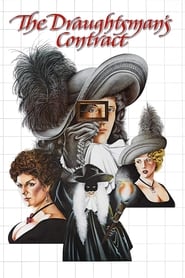
So we could see here all the foreign influences on the English aristocracy. The import of Indian tea, but served in Delftware, produced in Holland. It has to be said, the budget for this film, way back in the early 80s,
1:28:58 · jump to transcript →
-
Peter Greenaway
For a film of this complexity and this density and these production values, extremely small, and these objects on the table were the real items belonging to the house we used, and it was estimated that Christie's had insured those four items of ceramic on that table as ten times the total budget of our film. So we were very much indebted to the owners of the house to be allowed to use these real antique artifacts.
1:29:20 · jump to transcript →
-
-
-
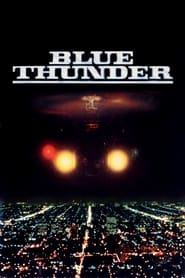
So this is a terrific set. This is the one I pointed out to you earlier that we built-- Philip built right on the site of Piper Tech, up on the roof. And it looks-- It's totally believable, and yet, very flexible for filming. They actually didn't have anything like this that we could use... ...and we needed more space than what they had... ...so they let us use it. And then when the filming was done-- There's the building, right there, that we made. --We had to take the building away... ...because it really wasn't built up to code. Yet, we could give them all the aeronautics equipment-- The helicopter police-- --Give them all the aeronautics equipment that we had had to buy... ...for the movie. And they were delighted to have that... ...because the city budget wasn't so great. And a lot of their equipment was kind of out-of-date... ...and they couldn't afford it.
37:30 · jump to transcript →
-
Here's another almost-- Antiquity. You have to really go a long ways to find drive-in movie theatres. And I think Frank and I laughed a lot... ...about the idea of burying a tape inside a dumpster. You know, this-- - This is stretching it a bit. We're really, really stretching it... ...that Lymangood would put this stupid thing inside the dumpster. I mean, it was a lot of fun because, here, look what-- Candy Clark getting to flip upside down and so on. But it was not the smartest place in the world to do this. When Columbia later decided to make a Blue Thunder television series... ...this truck is the very one that they decided to use... ...because they couldn't afford to fly the helicopter... ...so they had to do it all on the ground, which was another brilliant decision.
1:18:45 · jump to transcript →
-
-
-
Jim Piddock
are actors and filmmakers who do like their hand properties. And why not? You pay the rental, you want to see the money on the screen, as they say. Zhivkov pockets the lucre. We'll maybe see that lighter again as he dons his hat, yes. He's forgetting the lighter and one wants to cry out, Zhivkov, the lighter! Perhaps one imagines Fred Astaire and weeps for what might have been. And yet, this actor leaves us not
41:53 · jump to transcript →
-
Jim Piddock
We serve a rather different audience. I like to think it's a connoisseur audience, interested in the more artfully done sort of thing. And, of course, we couldn't compete in acquiring the Rambos anyway. We just don't have the budget. So we ferret out those movies that have fallen into the public domain, the older movies, sometimes movies from countries not on board with the International Copyright Convention. It doesn't mean they make bad films.
1:06:16 · jump to transcript →
-
-
director · 1h 29m 2 mentions
Jeff Kanew, Robert Carradine, Timothy Busfield, Curtis Armstrong
-
This little camera slide, though, that's a directing thing, which hopefully is good. And here come the flying basketballs to interrupt the dean's speech. And that's what would happen if you lived in a gym. Not a lot of guys left because a lot of people have found homes. And also because we couldn't afford to have that many extras every day.
16:37 · jump to transcript →
-
Here's a local guy that, we shot this in a Masonic hall, and this was the caretaker. So we put a jacket on him. Or maybe it was his own jacket. I don't think we had budget for extra jackets. Neil, gentlemen. We're trying everything. I think you can tell right there, but I've...
31:37 · jump to transcript →
-

Related topics
Other topics that frequently come up in the same commentaries.