Topics / Studio & business
Budget
118 commentaries in the archive discuss this, with 429 total mentions and 11 sampled passages on this page.
Filter commentaries
Filter this topic by the film's decade or the type of commentary.
Showing 4 of 118 commentaries
Clear filtersBy decade
Across the archive
ranked by mentions · click any passage for the moment in the transcript
-
scholar · 1h 32m 10 mentions
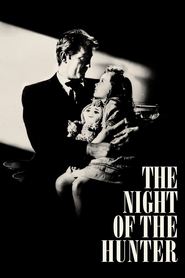
The Night of the Hunter (1955)
Terry Sanders, Robert Gitt, F. X. Feeney, Preston Neal Jones
-
Well, they had a very low budget, really, I think. They had a low budget, and the low budget and Lawton's intentions sort of coincided because he wanted a not quite real dreamlike fairy tale atmosphere to a lot of this. He told the people that he was working with that he wanted the whole thing to be, from the boy's point of view, almost as if it was a nightmare that he was having. What was the budget, Terry, do you recall?
4:22 · jump to transcript →
-
Fortunately found, unfortunately, after I'd already published my book. But, you know, it's fun. Now that Agee, 2009, next year it'll be his centenary, and they'll be able to republish it. And basically what it is is it's an extended version of the film, beat for beat, including something that was not in Grubb's novel, which is to hint strongly that he's hiding the money. That's him.
5:55 · jump to transcript →
-
There is one funny outtake in this scene of Mitchum looking a little bit alarmed by one of the torches getting a little close to his head. And, of course, there's this wonderful moment of revelation coming up where she's talking about the money, and we're finally going to find out what she doesn't know and what Mitchum doesn't know, but the kids know. And you throw it in the river! In the river!
32:40 · jump to transcript →
-
-
-
Alan K. Rode
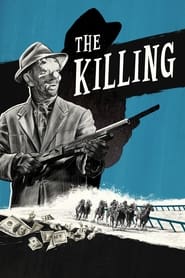
My good friend, the late actor Richard Erdman, who worked with Jay in Cry Danger and Saddle the Wind, told me Adler confided to him that he ran away from the school after setting it on fire. Jay's screen career is filled with these great little character vignettes, of which the killing is certainly one. Maybe even less than that. You know I wouldn't pull a thing like this. I knew I couldn't afford to. I'm glad you said that, Randy. I was going to point out as much myself.
5:49 · jump to transcript →
-
Alan K. Rode
Sawyer's character was another Kubrick modification from Clean Break. Lionel White characterized the bartender as a childhood friend of Johnny Clay who was stuck in a poor neighborhood with a trampy daughter. Instead, we get Joe Sawyer as an otherwise honest Irish-American bartender who lacks the money to take care of his sick wife. And we see right here, we feel his impotent frustration of being unable to provide for his wife. That angst by Sawyer is one of the more touching moments in the film.
9:42 · jump to transcript →
-
Alan K. Rode
Today, isn't it? Huh? What makes you think that? Again, Kubrick's composition, the two-shot with both of them at the table, the light coming through the kitchen window that gives you the indication that it's early morning. Even with a limited budget, it's just masterful. I'm in it, Sherry, and I'm getting fed up.
38:21 · jump to transcript →
-
-
-
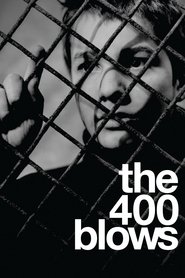
And the more you know the facts of Truffaut's life, the closer to reality the film may be understood to come. Truffaut's own best friend in boyhood was named Robert Lacheney, and it would be Lacheney who would one day provide Truffaut with the money to make Les Mistons, one of Truffaut's first short 16mm films. Lacheney worked as production supervisor on The 400 Blows as well, and he would remain Truffaut's closest friend throughout the director's life.
11:26 · jump to transcript →
-
The money being used in 1959 in France, by the way, is the old franc, that is to say, two decimal places more inflated than the current French currency. In giving Antoine 100 francs, Monsieur Douanel is giving him approximately 20 cents. So the 500 francs Antoine finally gets would be worth about a dollar. Robert Lacheney had this to say.
16:05 · jump to transcript →
-
I did my best even if it was already 1958. I'd never thought of keeping a diary of the time, which is a pity now. He also asked me for whatever snapshot I had, but since we were so poor then for a time, cameras were a luxury we couldn't afford either. We didn't have many documents really, but fortunately I always kept all of his letters. I kept every one of them, thinking that someday when we were 70, he'd come to my house and one evening by the fire,
43:52 · jump to transcript →
-
-
-
David Kalat
He complained that he had to make do with a smaller orchestra than he was used to in his classical works. And to show how chintzy the whole thing was, he directed the musicians while the Foley artists recorded the film's sound effects simultaneously on the same track. The movie studios pinched pennies like nobody's business, even on a project as unprecedentedly expensive as this. The final budget is said to have been 62 million yen.
1:22:13 · jump to transcript →
-
David Kalat
Let's say for argument's sake that Iwayo Mori had never returned to Toho and that some other studio executive greenlit this with the giant monster Tsuburaya's octopus and with little overt Atomic Age subtext. What if Tsuburaya had been given the money to animate his octopus Harryhausen style? Would that version of Godzilla have been half as meaningful? You wouldn't have had to change much in the past to significantly alter the way this came out, but little changes could have had an enormous impact.
1:33:26 · jump to transcript →
-

Related topics
Other topics that frequently come up in the same commentaries.