Topics / Studio & business
Budget
118 commentaries in the archive discuss this, with 429 total mentions and 27 sampled passages on this page.
Filter commentaries
Filter this topic by the film's decade or the type of commentary.
Showing 13 of 118 commentaries
Clear filtersBy decade
Across the archive
ranked by mentions · click any passage for the moment in the transcript
-
director · 1h 28m 10 mentions
Don Coscarelli, A. Michael Baldwin, Angus Scrimm, Bill Thornbury
-
built our mausoleum set in this small warehouse. And this warehouse had just gorgeous cement floors. They were brand new. And for a low budget picture like ours, it was really great because we were able to use our dolly. And you can see the floor there was so flat without laying any track. We were able to get a lot of movement in the picture moving around, something that's difficult for independent films on a budget.
3:13 · jump to transcript →
-
There's a crew guy, and there's my dad in the background, and Reggie's mother. We made this film on a very tight budget, to say the least. And it was very ambitious in a lot of ways. And so there are a few corners that we had to scrimp along the way. Now, right there, that was the first shot of the cuda, wasn't it? Yeah, well, we'll get to that in a second. But I wanted to talk here for a moment about this...
8:17 · jump to transcript →
-
You know, the one thing that we really attempted in the photography of this film is we really tried to get motivated natural sources as much as possible. And even on a low-budget picture, we were always trying to work the lighting into how the film was made from the design point of view, even though the design was primitive in a lot of ways. And so fire came into a lot. You know, we tried to light a lot of the sequences, either with candles in that particular scene. We have a couple of scenes by firelight.
10:31 · jump to transcript →
-
-
multi · 1h 43m 7 mentions
The Taking of Pelham One Two Three (1974)
Nathaniel Thompson, Steve Mitchell
-
And there was this sort of cynicism and this concern about what people think, you know, how it's going to play politically. And then, of course, there's the bottom line is where are we going to get the money? Because New York City was broke for the most part. New York City didn't have any money. It's hard to believe, but it's true. And it's interesting to sort of go back and see that.
33:37 · jump to transcript →
-
You know, it's the craft service budget on a Tom Cruise movie or something like that or a major studio picture. But, again, Warren LaSalle basically is the deputy mayor. You never see the deputy mayor, you know, at press conferences. You never hear about the deputy mayor in New York City. But clearly he's the guy who's running the city. Mm-hmm.
43:36 · jump to transcript →
-
It's interesting that that was validated, not with this movie, but the movie The Money Train, which was in 1995, which had Woody Harrelson in it. And who am I forgetting, Nathaniel? Well, Robert Blake was in it. And Wesley Snipes, of course. And wasn't Jennifer Lopez in that too, I think? Yes. Apparently, somebody did try and rob a subway train or the money train. And by the way,
50:38 · jump to transcript →
-
-
-
Francis Ford Coppola
The Hollywood scene with Jack Waltz was pretty much shot as second unit. As I said, this was very low-budget production. That fellow walking is not... I hate to say this and ruin the illusion, but that was not Bobby Duvall. It was just some fellow we had walking in a couple of L.A. sets, and it wasn't really Gordy Willis or Dean Tavoularis working on it. It was just some cheap second unit. Now, the scene inside the stage is, in fact...
27:11 · jump to transcript →
-
Francis Ford Coppola
I'm looking at the shot laughing to myself because I'm sure Gordy Willis was annoyed that I had that camera so high and I'm sure that I had the camera so high to see the floor because we had stripped the floor. Dean Tavoularis wanted to show that original floor and there was some linoleum over it so we spent the money to take the linoleum off of it and show that.
1:25:44 · jump to transcript →
-
Francis Ford Coppola
of the 40s. The 40s represented for me a kind of growth of America and our system, our business system, and to a post-war position of importance that sort of paralleled the Corleone family. So I was very anxious to shoot it in period. Now this meant, of course, that the film was going to be more expensive in this little $2.5 million budget that they had allocated.
2:07:19 · jump to transcript →
-
-
multi · 1h 59m 3 mentions
David Naylor, Guy Hamilton, Tom Mankiewicz, John Barry + 14
-
I didn't ask you how much it costs. He's the writer of the movie, Get Him a Suite. A company who just never stopped doing favors for everybody on the picture. And he always had a little bit in his budget for what he used to call morale. A native of New Brunswick, Canada, Harry Saltzman, the co-producer of Diamonds Are Forever, traveled to Paris at a young age and became manager of a circus. During World War II, by some accounts, he was an interpreter for Allied commanders.
46:37 · jump to transcript →
-
james bond sean connery would drive that red mustang they would give us all the cars as many cars as we wanted to for the demolition derby so ford supplied all the police cars all the smashed cars all the villains cars every car and there must be 80 cars that get it in this movie between all the chases they're all ford it was just a huge budget item
53:22 · jump to transcript →
-
I remember Cubby intentionally making sure that Bruce got a shot in every location that we were at so that they could extend his deal by six weeks so that he'd get paid for six more weeks. And he would say, for what we're paying him, what's the difference on this budget? And it means a lot to him. And unless you scheduled him an old pro like Bruce would know you were giving him charity and would have resented it.
1:30:06 · jump to transcript →
-
-
-
Roger Moore
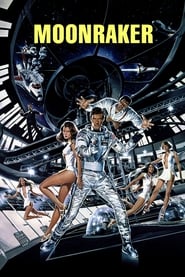
I believe that after The Spy Who Loved Me... ... which had been a big success at the box office... ...the budget was increased for this film. Which it had to be because it was... It really was larger. We moved from Pinewood to make Moonraker... ...and set up our headquarters in Paris.
2:03 · jump to transcript →
-
Roger Moore
Which I suppose was why he did this. It's sort of confessions of an English secret agent. Where we're shooting is Chateau Vaux de Vicomte... ...which is one of the most beautiful chateaus in France. And the man who built it... ...Was actually... ...I think, minister of finance in France. And he was so pleased with this magnificent chateau... ...he'd built for himself... ...he invited the king amongst all the other dignitaries... ...for the opening party. And the king said, "Where did he get the money for this?" And he slapped him and his wife in jail for the rest of their lives.
13:17 · jump to transcript →
-
Roger Moore
When I think-- Looking at this, and think back to the years before... ...when I did a television series... ...we'd had technical things like this... ... how amateur were the ones we had as compared to what Bond had. But, of course, there again, a lot of money was spent on Bond. And the one thing that I always say about the success of Bond is that... ... they never cheated the audience. When it came to spending the money... ... they put it up on the screen.
43:38 · jump to transcript →
-
-
-
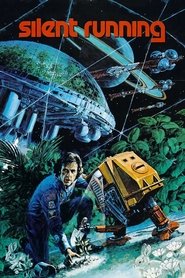
became very unfashionable for a long time, wasn't it? It was like most science... And obviously it's cheaper to make a Mad Max-type movie than it is to make a 2001-type movie. So if you're envisioning the future... Well, you mentioned budgets. Now, one has to say, and I agree entirely, the special effects in this are still terrific. They're not as good as 2001 because he didn't have Kubrick's level of control, he didn't have Kubrick's budget...
34:02 · jump to transcript →
-
Considering that this whole thing is all to do with the fact that the company would rather return their spaceships to commercial use, presumably Neil is spending a huge budget just to save this one guy who, A, doesn't want to be saved, and B, is a murderer. And I like the fact that this film has a sense that there is a larger story going on out there
53:05 · jump to transcript →
-
-
-
Nick Pinkerton
We have also that massive success in the form of Dirty Harry, which made $36 million on a $4 million budget. Two years later, a sequel in which he would reprise the role of San Francisco cop Harry Callahan makes even more. And this puts him well on his way to being one of the most bankable actors going. So there we are. Another one of these deep-focus, short-lens shots.
32:41 · jump to transcript →
-
Nick Pinkerton
He did what he was allowed to do. I suppose if they'd said make it for $80 million, he'd have done it for $80 instead of $40. What I wonder is what would have happened in a case like that in the old days. What would Jack L. Warner or Harry Cohn have done? They would have been down there when the guy was $100,000 over budget saying, take a hike, kid. When I read that they wanted to go back and re-edit Heaven's Gate with the same care it took to make the movie...
1:33:08 · jump to transcript →
-
-
-
mystical sense to it which i wasn't aware of i must say at the time it was inevitable because the the space launch program was there also wasn't aware of the times when it came out it was probably for pragmatic reasons and then it was the film commissioner was one of the main reasons probably in the budget but but i guess it was really always going to be made there
1:13:24 · jump to transcript →
-
A director like Nick, I think, tries to open as much space as possible between the planned and the unplanned. Most directors don't do that. They don't like to for very good reasons. They have complicated time and budget scimitars hanging over their heads and a very specific story to be told in a specific amount of time.
1:40:26 · jump to transcript →
-
-
-
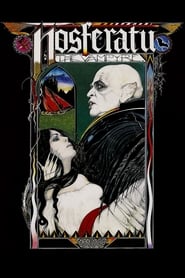
My name is Laurens Straub. I'm sitting here with Werner Herzog, writer, director and producer of the movie "Nosferatu" that you are currently watching. And we now want to talk about that movie. Werner Herzog and I have known each other for about 20 years and have worked together on many different projects. What do we see here? These are actual mummies in the Mexican city of Guanajuato. You have to realize that Guanajuato is located in a gorge. Because of that the cemetery was very narrow and there was no space. So they dug up the bodies every eight years or so, and because of different climatic conditions and the soil, they mummified without human preparation. They leaned them against the walls on both sides in a long underground hall and a hallway. I saw them there many, many years ago in the early 1960s. The story behind this is that I was in the U.S. on a scholarship but I resigned from it a few days in and gave up my legal status in the US because I had to earn some money. Out of desperation I went to Mexico because otherwise they would have returned me to Germany. I went to Central Mexico and Guanajuato and lived there for a while. I did all kinds of crazy things. For example, at rodeos, the so-called charreadas, I rode on wild bulls. Like a complete idiot because I don't even know how to ride a horse, but with the money I could live one week at a time. And there I saw these mummies. Are they similar to the ones at the volcano Vesuvius and formed from lava? No, those are real dried human beings. They barely weigh anything. They were in display cases so we had to take them out and carry them somewhere else. They weigh very little... 10, 12 pounds maybe. Is this something like a culture of death? No, it's completely normal. Isabelle Adjani. She is great at acting scared. That was a real and very large bat we brought in for this. The bat you saw earlier I could not shoot myself. The footage came out of a science documentary because bat's flapping motions are extremely fast, and this was shot with 500 or 800 frames per second. The bats had to be trained with food for that because it took very strong lighting, and normally they would not move under those conditions and not leave their hideout. Here we see Delft. In the Netherlands. That's my city. And I know when Jörg Schmidt-Reitwein teaches students cinematography he first introduces them to Flemish and Dutch painters. Why was Delft chosen as an alternative to Wismar where Murnau shot? Yes, but Wismar was not Murnau's location. I believe that was Lübeck. There is one single shot later in the movie where you see a few buildings that Murnau actually used and that are still standing. I used those as well. We chose Delft because the continuity of the architecture was uninterrupted and we only had to make very few changes in order to shoot there. We took down some antennas and moved a few cars. Other than that it was very easy to shoot there. The concept of "Nosferatu" was definitely to do a variation on Murnau's movie, not a remake in the classical sense. A Biedermeier image like this, for example, is unthinkable in a Murnau film. Moreover, this is in color and the movie's character is completely different. We had to show a very secure bourgeois world. We deliberately planned this, especially the furniture. That was done very thoughtfully by Henning von Gierke who is a painter by trade. With the furniture and the lighting, you can tell that a painter was involved. It reminds me of "Kaspar Hauser" which was done by Henning as well. What era are we in here? That is the Biedermeier era as you can see clearly by the costumes. We researched how to best do the building arrangement and the urban landscapes. Schmidt-Reitwein and I wracked our brains over that. I didn't simply want to recreate paintings. That was never planned. With one exception because we knew we had to work a lot in darkness with nothing but candlelight. Therefore, we studied the painter de La Tour and thought about how to do it if we only had one or a few candles. How do we light that? And Schmidt-Reitwein is exceptionally good at working with light and darkness. This is Roland Topor. - Yes. The famous illustrator, poet, and crazy man. Unfortunately he is already dead, I believe. Yes. - How did you find Roland? I coincidentally saw him in debate on French television. And he laughs in such a mad way. He laughs after every sentence he says. But in such a desperate and strange way that it impressed me deeply. Afterwards I contacted him I told him I was going to shoot a vampire movie and asked if he would play Renfield. Roland Topor immediately agreed. Unfortunately his voice is dubbed in some versions. And it is impossible to fully recreate his laughter. It was his strangest characteristic. What I love about this... I recently saw an exhibition with English surrealistic works from the 19th century. It reminds me of an old office, the cloth, and this blue. It was very carefully lit, and the costumes had to match. Bruno Ganz. And also the faces we chose. Those are not faces that fit into the 20th century. You have to carefully select actors who match. So Bruno Ganz is a great fit for this. The beautiful paper. - Yes. That was so much work, and it was prepared very, very thoughtfully. A beautiful country. Here I see a recurring theme of yours... maps. I already know that from "Aguirre" and other movies. In "Fitzcarraldo" geography is a crucial dramaturgic element. I'm a map fanatic. Oddly, I'm pretty good at determining locations ahead of time, too, because I understand maps. I know which formations you should find in a certain area. I was rarely wrong. It is always about uncharted territory, the Dorado, or doom. Yes, at home I don't have pictures on the wall. A few photographs every now and then, but generally, I can't stand my walls being covered in pictures. If there is anything on my walls of my home it's maps.
0:04 · jump to transcript →
-
This was your first film in English, the first with big stars and a big budget, correct? Well, not really. "Aguirre" is also a big movie with a big star and great effort. But I have to say, we shot "Aguirre" for about 700,000 deutschmark... $360,000. What matters is what you manage to get on screen with the resources you have. To come back to paintings, I like this vase. Yes. Okay. This reminds me of a painting by Seurat. I think the still life-like and emotional atmosphere is phenomenal. But be careful, I always want to show inner landscapes. This was done very quickly, by the way. On that day we happened to have some time and drove to the beach. It was freezing cold, windy. There was foam. We set up the camera in three minutes and sent the two actors, Bruno Ganz and Isabelle Adjani, into the image. We only told them that the music would most likely be slow and solemn. We already had received ideas for the music from Florian Fricke from Popol Vuh. These two, three shots here we did in 15 minutes. We never thought about paintings. It was born out of the situation... - Spontaneously. ...that we found there. Bruno Ganz has tears on his cheek because it was freezing cold. Lotte Eisner came to visit for a few days. We had to wrap her in 20 blankets because it was so cold. I was so proud that she could be there. She was very important for me and maybe for the new German film in general because she bridged the gap to the expressionistic movies back then that she knew very well. She also knew all the representatives of that time. She was friends with Fritz Lang, Murnau, Pabst. She knew them all. For us she was like a bridge to the generation of our grandfathers. We were a generation of orphans who did not have the generation of our fathers. Here I see your wife. Yes, Martje. Martje Herzog on the left. Essentially everyone who was there is in the movie at some point. Later you see the executive producer, the costume designer, the sound technician, and the gaffer. It was also a matter of how quickly can you get something done with very little money. This is the farewell. Bruno Ganz was actually pretty good at riding horses, which was great for me. Now he travels to Transylvania. The choice of the production company... Was this a Century Fox production? No, I produced it myself. Many people believe that 20th Century Fox produced it. But 20th Century Fox only bought an advance guarantee to the U.S. rights for very cheap. They only bought the rights for the U.S. A distribution guarantee. I believe this was... - German Romanticism. Well, you have to be careful. There is a hint of that, but I always try not to be connected with Romanticism because I myself have no real connection with that cultural epoch. Usually I refer to eras before that. The Late Middle Ages speak to me much more. They inspire me. This was shot in Eastern Slovakia. I was not allowed to shoot in Romania where I had scouted locations for months in the Carpathian Mountains. But you also have to see the context. That was when Ceausescu had just been awarded the honorary title of the new Vlad Dracula by the parliament. So he was named the new Count Dracula. That was an honorary title because the historic Count Dracul had been an important figure in the defense against the Turks. This is in the High Tatras, just 1,000 feet to the left was the Polish border. Bohemia? No, Slovakia. - Slovakia? Eastern Slovakia. This is a real group of gypsies that I had brought in from the very East of Slovakia. Among them are a few Czech actors. The gypsies actually speak their own language. Unfortunately I don't remember what it was called. ...my food.
8:53 · jump to transcript →
-
-
-
-
-

Related topics
Other topics that frequently come up in the same commentaries.