Topics / Editing & post
Sound design
73 commentaries in the archive discuss this, with 171 total mentions and 40 sampled passages on this page.
Filter commentaries
Filter this topic by the film's decade or the type of commentary.
Showing 20 of 73 commentaries
Clear filtersBy decade
Across the archive
ranked by mentions · click any passage for the moment in the transcript
-
-
This piece just seemed to kind of get the mood of this strange encounter. I don't know what... Flustered. We should also talk about the wonderful sound design of Steve Munro, which a lot of times kind of crosses into music score. There's certain sounds that you'll hear in this pet shop, and certainly in the club,
22:05 · jump to transcript →
-
In the office, in the club, you'll hear these long bell tones, and a lot of people said that was their favorite part of the score, but in fact, it was just sound design. Actually, that's a really good point. We'll talk about that in terms of the scenes between Francis and Sarah Polley's character in the car. There are these wonderful sounds that Steve...
22:33 · jump to transcript →
-
But here, look at the sound design here. Like, you know, the sound of these, again, parrots or birds. I mean, like, it's sort of an abstract sound. Like, it's almost as though there's this garden outside. Like, there's this weird, you know, um...
47:53 · jump to transcript →
-
-
-
which means that the dialogue was replaced in post-production. And not because the performances were bad, they were actually quite good, but the actors didn't quite project well enough to get over the crowd when the scene was being photographed, so we went back in the studio and revoiced those lines with them and had them projected more so that it could get up over the crowd sound effects that were put in later in post-production. Now, right after this shot, there used to be a whole other scene
22:49 · jump to transcript →
-
The part where the mummy comes back to life, that's based on a true story, right? That happened to me when I was younger, yes. I love the photography in this scene. You really, well, you feel like you're there. Torch lit. Creepy. Although, before we added sound effects, it sounded like they were walking on...
41:51 · jump to transcript →
-
which they were. Our sound designer, Leslie Schatz, did a great job in this sequence, because basically what he had to do was he had to make the sounds of humans seem like it's some scary sound, so you have to...
42:21 · jump to transcript →
-
-
-
Darren Aronofsky
It's emphasized by Brian Emrich, our sound designer, who creates different, you know, sound design for different elements of the attacks. All the medical stuff is completely real except for that, our vaccination gun. It was built by a sculptor friend of mine in Brooklyn named Sasha Noe, who put it together from some old parts from his drilling machines.
7:59 · jump to transcript →
-
Darren Aronofsky
It looks pretty cool though. And that's just a sound effect to bring it alive. And of course, Sean's performance to make it real. So he's still waiting for the pain to come.
8:30 · jump to transcript →
-
Darren Aronofsky
He knows it's going to come. It hasn't hit him yet, and his nausea is growing in the back of his throat, and it doesn't kick in until there. We call that the vibrator cam, which was just basically shooting with a long lens and shaking the camera viciously. And now the paint is here, and we sort of accompanied it with not only the sound design, but the score as well. All the different elements working together, all the different departments.
8:54 · jump to transcript →
-
-
-
Stephen Prince
The sequence took 13 days to shoot, one of the longest in the film. Two of its most striking features are the use of slow motion and the sound design. Kurosawa used three high-speed cameras running at 72 frames per second, three times the normal speed at which film is shot. To get slow motion on film, you have to shoot at a high frame rate. This sequence then consumed a lot of film, which would have run through the cameras very quickly.
30:59 · jump to transcript →
-
Stephen Prince
He used slow motion in a more extended fashion in Ran during an epic battle scene that the slow motion, in conjunction with Taro Takamitsu's music, makes into a tragic lament for the foolishness and self-destructive nature of human beings. The sound design in the sequence is very striking. And indeed, the sound throughout the film is superlatively designed. We hear only a few sound effects,
32:27 · jump to transcript →
-
Stephen Prince
In other stories, she draws the breath from their body and along with it their life energy. In Kurosawa's variation, there's a physical struggle against which the I character must prevail. And the sound design again marks this shift. The beguiling soprano is gone, replaced by the harshness of the wind heard at high volume. As he struggles, she drops all pretense and begins holding him down. And she undergoes several changes in appearance.
39:31 · jump to transcript →
-
-
-
Paul M. Sammon
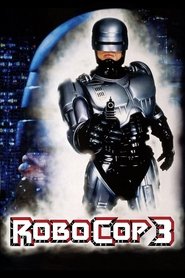
It wasn't bought by anyone. I bought it, and it turned into a film 20 years later that's quite a good movie. Anyway, I invited Joe Lansdale. There's some more of our graphics on the back. Now, if you'll notice during this brain surgery, this is mostly done with sound effects. And what you've got here is a cap. It was a fake cap on top of Tommy that they pulled off, right? And nice and gory. Again, there's a lot of gore in this film.
1:11:22 · jump to transcript →
-
Paul M. Sammon
And then what you're seeing is close-ups of prosthetics and that kind of thing. You never really see anything. It's mostly sound effects. I did want to say once again that this was a genuine operating theater and an abandoned hospital.
1:11:49 · jump to transcript →
-
Paul M. Sammon
true testimonies to Hollywood craft. Sound effects by Stephen Hunter Flick. Steve Flick did the sound effects for the first RoboCop for Paul Verhoeven and in Starship Troopers 2, little known fact, Steve Flick and Paul Verhoeven came up with a language for every alien insect in the film and they worked on it for months and it
1:54:39 · jump to transcript →
-
-
-
uses a lot of weird sort of percussive instruments to create sound effects, and that's where they had a major sort of argument about the sound levels of the sound effects of the music, because the music's also creating sound effects, and what would you then level out and balance with the sound effects? But yeah, I think this is probably the most lush score out of the three, because even at the end when she...
54:43 · jump to transcript →
-
save the movie like you say it kind of blends into the sound effects and it at times becomes I'm going to get this the wrong way around aren't I at times it becomes diegetic I think that's the right way around it sounds like it's crossing the line between whether or not this is meant to be
55:37 · jump to transcript →
-
them trying to salvage the film, you know. This moment here where she's running down the corridor, you've got the sound of the score, which is making all these banging metal, also her running footsteps and touching stuff. You've got this kind of cacophony of noise, you know. I love it. I absolutely love that. Yeah, I love it. But it also shows you the nightmare of balancing what is sound effects and what is music, you know. It's another Tom Waits reference, really, because it does, at times, it really does sound like
1:08:09 · jump to transcript →
-
-
director · 1h 31m 3 mentions
David Steinberg, Dave Foley, David Higgins, Jay Kogen
-
The director. Dave Foley, one of the stars and one of the writers, and Jay Kogen, one of the writers. And a big player. And he does play a very important role in the film. And so does David, by the way. I do. No spoilers. Oh, that's Dave's name. That's your name, Dave. Can we get any of the sound in the headsets? Softly. Do you want it brought up a little bit? This is our Lawrence Shragge. Right, Lawrence Shragge's soundtrack and the great sort of...
0:21 · jump to transcript →
-
we want to do this gag, Martin gives it. Is it worth it? Yes. Is this gag really worth it? Yes. Is this joke worth it? Oh, yeah. Over and over again. Yes. The train had kind of a big wind to it. It was difficult. Yeah, yeah. If you watch the film, he's Dave Foley there. He's not Nelson Hibbert. It's Dave with this giant train driving by him. Trying not to fall off that box.
34:25 · jump to transcript →
-
Oh, and this was the one where we tried to get him to drive a little faster. We wanted because... The stunt. He throws Foley out of the car. He throws Dave out of the car. And this idea, we kept trying to get him to go a little faster. A little faster. And I think we did get him finally on this take that we used to go as fast as they possibly would.
44:15 · jump to transcript →
-
-
-
Other directors who've worked with him multiple times include Francis Coppola, Walter Hill, Oliver Stone, Paul Verhoeven, Ridley Scott, and Joe Dante. He's particularly good as an action sound designer. He worked on Cliffhanger and James Cameron's True Lies. He did multiple movies for John McTiernan in the 1990s. Interestingly, Michael Mikler was also the re-recording mixer on The Freshman, the other big movie that was released on the same day as Maybe Seals. Wow.
1:41:23 · jump to transcript →
-
they have a lot of the same guys working on them. It's insane how many great people they work with and how many classic films. Yeah, I mean, speaking of like award kind of movies, as we record this, some of Maycore's most recent credits include Baz Luhrmann's Elvis, which was a big Oscar contender, you know, a year or two ago. He also did a non-Oscar contender, Rob Zombie's Three from Hell, but I have mentioned that because being such a Rob Zombie fan. But you know, too, when you're a sound mixer,
1:42:06 · jump to transcript →
-
-
-
like descent into hell that Clarice has to undergo in order to, you know, meet Hannibal Lecter for the first time where Jonathan Demme and his cinematographer, Tak Fujimoto and, um, the rest of the crew are just using every trick in the book to kind of create this atmosphere and this mood and this ominous feeling, uh, including like the submarine sound effects and the red gel lighting. And, um, what is really the defining, um,
12:27 · jump to transcript →
-
And I think the stylistic difference between Manhunter and Silence of the Lambs is never so apparent in these scenes right here. In Manhunter, Hannibal Lecter's jail cell is this austere white room with bars, whereas Jonathan Demme presents this as almost like some gothic sub-dungeon with the submarine sound effects, and it's like this descent into hell. Yeah, subterranean descent.
19:27 · jump to transcript →
-
-
-
It's such a nice shot of the forest. It's great. Sorry. Now just a little trivia. I've noticed, I watch this on Sci-Fi Channel because they play Leprechaun all the time and they took out the head turn. They took out the head break or the neck break. They actually edited it out or just the sound design? No, they edited it out because I guess this is in our picture.
44:29 · jump to transcript →
-
But here, you know, how can you not take this serious when he's got a stethoscope? Boom. There you go. See, sound effects always work. I still get excited when nobody hits anybody, but you put the sound effect in and it works. Now this is interesting when Ozzy runs back.
52:17 · jump to transcript →
-
-
-
Tony Scott
and give it an ominous sense, just that sound effect of a train running that close to you. And you see how you use that sound effect of that train in different places to create a more dangerous and dramatic effect. Well, now, you stay out of trouble. Remember, you got a wife to think about now. Quit fucking around. Son.
43:11 · jump to transcript →
-
Tony Scott
And it ends up with that obligatory train blasting through and giving you that dangerous sort of sound effect which sort of ended their little moment. But you go, uh-uh, it sets you up. I think the sound effect of that train, I felt, was a good way of setting up the ominous quality of what was about to take place in this location. And we're about to come to that.
44:11 · jump to transcript →
-
-
-
The sound effects, just the noises of all this stuff. It was hours of copious just finding the right kind of noises. Metallic clunks and the sounds of people being impaled on things.
1:29:42 · jump to transcript →
-
Great sound effects in this scene. 1,000 millimeter lens. I'm flying at the camera. It must be about 65, I don't know, 60, 75 frames, 96 frames a second. They kept it in focus all the way. Good focus pull.
2:14:51 · jump to transcript →
-
-
-
Taylor Hackford
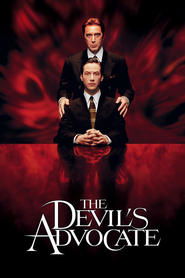
At this point, seeing a guy walk up to him in the bar, Keanu is completely convinced... ...that one of his friends has put this guy up to it. And this actor, who is Ruben Santiago Hudson... ...is a fabulous actor. He won the Tony for an August Wilson play, Seven Guitars. I saw him on stage and just felt, "I want to work with this guy." So when the role of Leamon Heath came up, you know, I had Tony Gilroy... ...kind of tailor the role to fit Ruben, and then convinced Ruben to do the film... ...because he has a very unique quality. He's not your totally assimilated black character. He may have gone to Harvard, he may have gone to Yale... ...but he's maintained a lot of his own roots and integrity, and at the same time... ...he's smart like a whip and he knows he's got Kevin hooked. The next scene that you're about to see hot cut to Kevin's roots: A Southern church, and this congregation is real. Judith Ivey, who is being introduced here as Kevin's mother. You know Kevin was raised in this church, he's coming... ...and taking a look back at his past, was totally fundamentalist... ...and deeply, deeply rooted in Jesus and God. Judith Ivey is part of this group. I had to spend a lot of effort convincing Pastor Lovell and his church... ...in Gainesville, Florida to participate in this film, because I feel that... ...you know, the things that they believe in, the things they're after... ...have everything to do with establishing good and evil in the world... ...and fighting the devil, and that's what this film is about. But they were fabulous, and they really got the spirit of God in them. And I thought it was important to see that Judith Ivey is a believer. She is one with her God, she loves Him. And, you know, she's a formidable presence for good in this film. At the same time, she's a tough mother, and you can see that... ...she has raised him in a certain way and she doesn't particularly approve... ...of what he's done with his life. He's a lawyer, and you establish his wife... ...over at the car, Mary Ann, who obviously is a party girl, a liver, and not... Neither one of them are in church this morning, and Mother is not that happy. This sequence is important to understand that Kevin Lomax understands scripture. He may have made a choice at this point to stay outside the church. If you notice, he's half in, half out of the light. Tony Gilroy wrote this in the script. Kevin Lomax stands outside the congregation. He's half in, half out of the light. He is part of it and at the same time... ...he can't bring himself to walk in. There's a dichotomy in him, which you'll discover later. But in this instance, when his mother calls up and says: "Quote the Bible to me and mention scripture," he can quote it back to her. He knows what he's talking about. He was in that church and a devout member at one point. Now you get a sense of Mary Ann. She is a good person. She's trying to help this character. She doesn't want to get the company to repossess her car. But she's tough, and she's a businesswoman. You also have a sense, right here, of the fun that these two people have. Keanu, you know, biting off her earring and handing it back to her... ...that was totally spontaneous. He came in, did that. It was quite wonderful. Now you have a sense of the married couple. They've got Mother-in-law... ...and Mary Ann's no dummy... ...she knows exactly that she's persona non grata in that household. It isn't that she doesn't like her mother-in-law, but she understands... ...what she needs to do, like have a child. And right now you establish another theme of the film: "Let's give her a grandchild and everything will be all right." Mary Ann is ready. She's working. She's professional. But she's ready to start to have a family. But you hot cut to Kevin Lomax who's taken the deal. He's in New York. At the beginning it's just a vacation. He's going to consult on the selection of a jury. You see Foley Square, the seat of judicial power in New York... ...all the Federal buildings, the State buildings, the local... Everything is right there in one space. It's a very, very sobering look at the power of the legal community in New York City. And at the same time, for a guy from Gainesville, Florida, it's very impressive. Kevin's here. He's excited. He is working as a consultant... ...to one of Manhattan's best and most famous criminal trial attorneys. His name is Meisel, played by George Wyner. And in this moment I wanted people to see that Kevin Lomax truly has a talent. When you talk to criminal attorneys, you realize that they say... ...that between So to 95 percent of winning a case is selecting a jury. This is a scene that I think talks about the inside of lawyering... ...and the reality of how you win. You win by psyching-out everyone that's gonna be on that jury. Those are the people that are gonna make the decision of whether you win or lose. This is where Kevin Lomax shines. He has an intuitive spirit. At the end of the scene, you realize he's got something else. He's got a sixth sense. Now, it's important, when we see this courtroom, to understand... ...that I wanted authenticity in this film. You're in New York. You have some of the best looking courtrooms in, I think, the United States. At the beginning, Warner Bros. wanted me to go to Canada and shoot in Toronto... ...which is an entirely different judicial system and the courtrooms... ...don't look the same at all. I fought to shoot this film in New York... ...not only for the fantastic exteriors, but also for these interiors. This is a film about big-time lawyering, and you want to feel, when you see the sets... ...and these aren't sets, they're locations. You want to feel that this guy is in the big time. He's gone from Gainesville, Florida to the top of the food chain. We shot in probably seven or eight of the best courtrooms... ...you could find anywhere in the world. Look at these paintings up on the wall here in New York. You feel that this is the justice system. Now Kevin is exhilarated. He comes out of his first day... ...in the New York courtroom and he knows he's done well. He didn't know how he would measure up, and how he measures up is... ...he's smarter than they are. I mean, he has to feel great. He's walking down the street. He's saying I'm a guy from the hicks, and someone's watching him. This is the introduction of John Milton, who's played by Al Pacino. It was important to me to establish a very nice introduction to him. One thing that Al did, and you'll start to see into this... ...he chews on licorice all the way through this film. You don't explain it. You know he's doing something. And instead of just walking away, getting in a limousine, he goes downstairs... ...into the subway. Why would he do that? He's well dressed. That's it. But immediately I go into a time lapse sequence... ...and I wanted to see day and night change. I wanted it to also say that this trial's been going on for a long time. When Kevin walks in, Mary Ann says, "You're home early for a change." Time has passed here. You've seen it pass. But more importantly, you see Al Pacino going down into the subway... ...and you see that the next images are not real. There is a certain kind of power that this person... ...we don't even know who he is yet, exudes. I thought that the time lapse would be both unique in terms of time passage... ...and, at the same time, extraordinary in terms of the potential power... ...that this man has. Now you've got Wife and Husband in... Mary Ann's got room service all over the room. Clearly, they've been there for a long time. She's watching TV. She's having a good time. She's been shopping. She's been to a lot of things, but her husband's been gone every day. And now you see the way they play. Kevin looks like he's defeated. It looks like he's lost the case. She feels badly for him. You can really see how she would, you know, how warm and wonderful... ...and sweet she is. But he's kidding her. You can really see the slyness, I think, in Keanu Reeves here. And, at the same time, he killed 'em. He actually chose the jury... ...and won the case, almost an impossible case. It was like a savings-and-loan fraud. This is white-collar crime. The guy sitting there in the trial, with his white hair... ...looks extremely legit. But the fact is that, you know, he's like Charles Keating. You know, he stole not millions, but tens of millions of dollars. And in this instance, the next shot is, they are in John Milton's domain. This is Milton, Chadwick and Waters, and I wanted a location that immediately... ...established the power of this law firm. This is a real building. It's the Continental Plaza in Wall Street, in the financial district, Downtown... ...and you see what New York power is all about. That view is a three-bridge view. You're gonna see all the way up the island of Manhattan. But the important thing here was, this location was used before in other films. I didn't want to use that same look. There's a unique design look here. Bruno Rubeo, who is my production designer and my collaborator... ...on the last three films I've done... ...we spent probably six to eight months before this film began... ...talking about what we wanted from this film and the look. Right now you're looking at Christabella, the first time we see her... ...and if you notice as she walks forward, I slowed down. It goes in real time. There's no cut there. We ramped so she starts in real time... ...she slows down... ...and comes back out in real time. And Kevin Lomax, he doesn't know why he's fascinated by her. We'll find out later. But look at the design in this. It's ultra modern. We used both an Italian architect and a Japanese architect. This is the Italian. He used prefab concrete in the walls. Milton's office. You know, the rest of the building is very impressive... ...but this office is something else again. It's cold, it's austere, and it's incredibly impressive. Look at that fireplace in the background. It's set up off the floor. Bruno had a design in mind. The furniture in this place is... You have a big, massive place. But look at the furniture. That little settee in front of the fire: it's delicate, it's small. This whole room exudes taste and a certain stylistic quotient. John Milton, you know, it's a huge room, devoid of furniture, very minimal... ...this is a man who has real taste and real choices that he's made. At the same time, this whole law firm is very, very modern. For the design quotient of this film, I want you to be able to see this sequence... ...and then later on, when you see where Milton lives, see the dichotomy... ...the difference. This is cutting-edge modern architecture to the nth degree. What Bruno wanted to do, and I wanted to do in this instance... ...is establish Milton's environment. Here it's cold, corporate, but, at the same time, undeniably impressive... ...austere, ultra-designed. Milton is very smooth. You know, Al Pacino always gets this rap: "Oh, gee, he's over the top." He's not. Al Pacino can play everything. And everything he did in this film was calculated. I mean, it was one of the great experiences in my life to work with an actor of... ...his deep, deep ability, his deep, deep talent... ...and his uncompromising attitude towards all his work. At the same time, Keanu, who had this... I'm saying this because here's these... ...two actors meeting for the first time. Keanu, who had done a lot of young-man roles, a lot of teenage slackers... ...in this film is anything but that. Kevin Lomax is precise. He is not a Harvard educated, a Yale educated guy. He came from a small school in Florida, went to a small law school. But all criminal attorneys that are really great usually did that. They come from the street. He's street smart. He thinks on his feet. And he's up against a guy, for the first time, that seems to have a little bit more... ...on the ball than even he does. He's never met anybody before that is his equal. And Milton keeps blowing his mind, like he does right now. You see this office. All of a sudden, he goes and taps on the door... ...opens up, and I wanted this sequence to truly be a moment... ...that would blow everybody's mind, not only Kevin Lomax's. He walks out on a roof terrace and, effectively, I'm using... Again, this is from a Japanese design. Bruno and I saw an architect... ...that had a pond on the roof in Japan, and I said that is a perfect idea... ...for what we want to do here. Here is a man who has such a sense of design and such a sense of grandeur... ...that he has created for himself a balcony, if you will, a terrace, a park on top. But does it have greenery on it? No. It has water. He calls it calming, placid. And at the same time, he's going to take Keanu out there... ...and he's going to talk about his past. He's going to find out a little bit more about him. He asks about his father. Keanu says, "I never had one." He asks about his mother. And in this instance he's, you know, if you look at Al's reactions here... ...this is a long, talky sequence. This is what you do sometimes. By the way, this is real. This is not blue screen. We didn't put the artists in a studio. I fought to get this scene. I fought everyone, including Warner Bros. Nobody wanted me to go up and get this shot. It's on the roof of the Continental Tower. They had re-roofed the place. The building didn't want us up there. I just knew that this sequence was going to define this initial relationship... ...between Kevin Lomax and John Milton. And the two actors are basically 50 stories in the air right now. They're standing on an eight-foot platform. No, it's not right on the edge. It's about eight feet from the edge. But the fact is that they're standing there. We had to get this whole thing in one day, and they have to do... ...a very personal scene while they're perched on the top of this building. You can see Al, at that moment, trying to let us know a little bit how precarious it is. But do you notice any kind of nervousness from Pacino? Not at all. He's easy. And the whole essence here is that Keanu's sitting out there. One, his mind is blown... ...at the beginning, and then somehow he finds himself getting into it. And at the same time, he looks right here and says: "My God, John Milton's standing like a foot from the edge of a 50-story precipice. "What kind of guy is this?" He also wears elevator shoes, which I think is interesting. But the fact is, right here is what the film also is about. It's about pressure. It's about professionalism. And what John Milton has done is taken Keanu Reeves... ...or Kevin Lomax, in this case, up to the precipice. He's showing him: "All this can be yours." And what is it? It's Wall Street. It's the seat of capitalistic power in the world. And he's basically saying, you know, I know you're a hotshot... ...but can you take the pressure? Can you sleep at night? That little speech that Tony Gilroy wrote, I think, fits all professionals in this instance. When you have to deliver on a deadline, you know what he's talking about. Basically, Kevin is there. He's ready. He said, "What about money?" Milton laughs. "Money? That's the easy part." Kevin doesn't have any problem. He can sleep at night. He's a lawyer. He knows how to do it. We cut from that to Carnegie Hill, which is Fifth Avenue in the Nineties in New York. It's probably the most exclusive address in New York. Central Park is on one side. You have these beautiful, beautiful buildings with fantastic apartments inside. And the Heaths. You're meeting Jackie Heath for the first time. I reveal her with that wipe from the elevator, you see her in close-up. Leamon Heath and Jackie Heath, they are absolutely New Yorkers. They've maintained their integrity as black people, but at the same time... ...they are not about to resist the temptations of the city. They want it. They know how to deal with it. They're very sophisticated. Look at the clothes that Jackie's wearing. Leamon makes the money and she knows how to spend it... ...and she doesn't have any qualms about it. This apartment, I wanted to basically establish the sense of awe. You know, John Milton owns this building. He has it for his employees. Although it's usually for partners, and for Kevin Lomax to get an apartment first up... ...shows that he's a little special, and you can feel, right here... ...that they're a little jealous. "Took us six years to get in here." Every New Yorker will understand that when they really want to get into... ...a big building. This is a film about New York. Tony Gilroy, who lives in New York and understands it incredibly well... ...is able to put these nuances in here that are maybe not aimed at everyone. But certainly, you know, you make a film in New York... ...it was important to me that you do something real. Now, you know, Kevin has basically been offered the job. He's got to now sell his wife on it. And this is a big test. If she, you know... He says, "I'll take you home if you want." Of course, if she did, God knows what he'd think. She knows him. She knows what he wants. And at the same time, how could you turn this down? It's very important right now, at this moment... ...to understand that Mary Ann wants this as badly as Kevin does. I mean, who would resist? Come on. They're too big for a small pond. They both want this and, my God, she's looking at this and saying: "Hey, I want to have a family." She says right now, you know, she mentioned kids again. She's mentioned it in the back of the apartment... ...and she mentions it again right now, and she's saying, "I'm in. Let's go for it." And that moment is one of the last moments of true happiness... ...you're going to ever see them have. Now you're at the law firm, and I want to be able to show... ...what big time lawyering is about. These are all partners. It's an international law firm. John Milton has called a meeting. From all over the world, these partners have come. There's Eddie Barzoon, played by Jeffrey Jones, who is Milton's chief lieutenant. He's the managing partner of the firm. There are affiliate offices in major capitals all over the world... ...and you get a sense of what law is all about. It's about copyrights. It's about real estate. It's about EEC and EUC and those kinds of relationships.
11:08 · jump to transcript →
-
Taylor Hackford
And Mary Ann, who's innocent, just like she was in the beginning... ...she's right alongside. What I wanted to do at the end of this film, and that's why at this point... ...you see Neal Jones morph into Al Pacino... ...you realize you can't beat the devil every time. You might win one battle, but he's back there the next morning. I would not leave this film with you having a happy ending. I did that with Officer and a Gentleman. I want to basically say: Every single day of your life you can't get smug... ...and you have to confront morality. I think we all do. And that's why this is a moral tale. I'm not deeply religious and I don't think of this as a religious film... ...but I do think that it is a film of somebody who still feels... ...a certain idealism, and a realization that we have responsibilities in our life. And I think that all the people that worked on the film worked on it... ...in a fairly righteous way. You know, Andrew Neiderman wrote a novel at the beginning. Four writers contributed to the screenplay. And I want to mention the people I haven't mentioned. There's Mark Warner... ...who is my collaborator, my editor, fabulous collaborator through... ...this process. You can feel the pace of this film. Everybody put themselves into something here. I also want to give credit to Per Hallberg, who was the sound designer. All the way through this I think there are subtle effects in addition to the score... ...that really give you the feeling that there is something else going on. There are a lot of artists that worked on this film, and when you go through... ...the process of collaboration, you have a vision as a film maker... ...and you want to get that vision on the screen. But you can't do it alone. I know it's trite to say this, but you utilize... ...and when someone has a great idea, you grab it. I encourage that, and I worked with a wonderful group of collaborators... ...on this film, and I'm very proud of it. After having gone and talked for two hours here, almost nonstop... ...this must be a lot of dribble. I apologize if, in fact, it's gone on... ...ad nauseam, but, again, we had an opportunity to make a film. I appreciate Warner Bros. was very tough to work for. We had a lot of disagreements, but they did allow me to make a film... ...and, they did, ultimately, give me final cut of the film... ...so that I was able to make the film I wanted. No excuses. I'm very proud of it. I hope you enjoyed it. Subtitles conformed by SOFTITLER
2:17:38 · jump to transcript →
-
-
multi · 2h 24m 1 mention
Alex Thomson, Terry Rawlings, Alec Gillis, Tom Woodruff Jr. + 3
-
-
-
-
-
-
multi · 1h 54m 1 mention
Jean-Pierre Jeunet, Hervé Schneid, Alec Gillis, Tom Woodruff Jr. + 5





Related topics
Other topics that frequently come up in the same commentaries.