Topics / Editing & post
Sound design
73 commentaries in the archive discuss this, with 171 total mentions and 41 sampled passages on this page.
Filter commentaries
Filter this topic by the film's decade or the type of commentary.
Showing 21 of 73 commentaries
Clear filtersBy decade
Across the archive
ranked by mentions · click any passage for the moment in the transcript
-
director · 1h 36m 7 mentions
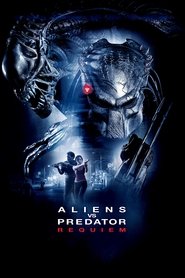
Aliens vs. Predator - Requiem (2007)
Colin Strause, Greg Strause, John Davis
-
but then decides that he's hungry now. Yeah, nothing like mouth raping a bunch of pregnant women. That's going to hell for that one. Yeah, I kind of regret how quick this shot is now. I wish we held that one a little bit longer. It's just such a quick flash. By getting the sound effect right here when we were on the dubbing stage. Oh, yeah. Yeah, we're talking to an ADR, talking to the actress there.
1:06:28 · jump to transcript →
-
And she's like, so what are you looking for? We're like, yeah, just imagine a really large thing jammed down your throat, squirting eggs into your mouth. And she's just like, oh, okay. And we played for her, and she's just like, oh, my God. She was a little appalled at the footage that her voice was going to be applied to. Yeah, she did a very authentic choking sound there. It was good. In a movie like this and in this genre, sound design is very important, especially a lot of our—
1:06:54 · jump to transcript →
-
sound had to be otherworldly at points, and so it was designing and pulling that off so it would work. Oh, yeah, I mean, between the guys designing the sound... Yeah, Jay did a great job. Jay kicked ass. Our mixers were just fantastic, you know, trying to balance the music with the sound design, with the dialogue. I mean, because it's a challenge, because part of you just wants everything at a volume 11. You know, I love really, really loud movies, and...
1:07:24 · jump to transcript →
-
-
-
rubber sword there. Always amusing to... Try to cut around. Yeah. Also, when Freddie gets thrown across the room there, he suddenly becomes giant for a shot. That was his double. If you go back, you look at that sword under the... the old sword under the armpit stab. It's funny, though, with the sound effect, it's really effective. The actors here rehearsed and rehearsed, but on the day Ade nailed...
30:29 · jump to transcript →
-
Again, I love Patricia's eye. Watch her eyes, her focus. I mean, there's nothing there, and she has to really keep her eyeline straight. This is a really neat painting from ILM. Very evocative and impressive. And Leslie Schatz, who's been our sound designer since, again, film school. We work with the same people over and over again.
49:02 · jump to transcript →
-
Because we find good people and stick with them. And I just love the sound effect he put in when her thumb goes into his ear. I thought that was very effective in the theaters. Here, if you notice in the background, we're running out of time. The sky is lighting up. It's 5.15. I've got five more minutes to get that shot, that side of this scene done. Because see how black the sky is there? See at the top of the frame how blue it is there? We're running out of time, folks. It's Monday morning and the traffic's about to pour in. The sun's going to come up and I'm done.
49:32 · jump to transcript →
-
-
-
Also, slow motion also will give me a lot of a strong impact, you know, like the horse racing. I want to see the energy. I want to see the beauty of the horse running. I want to see the muscle. I want to see the hair floating in the air, you know. So I shot the whole horse race shot with 120 frames. But in the meantime, when we cut into the scene, I need a very strong sound effect.
47:29 · jump to transcript →
-
So I would like to start with the slow motion, all the horse running out in slow motion. And then I emphasize the great sound effect. And they will draw a lot more of our attention. They will make the audience sit on the chair. Oh, what happened? What's going on? That kind of feeling. Bids from possible Chimera buyers.
47:56 · jump to transcript →
-
The sound effect guy, Mark, you know, he's brilliant. You know, he worked with me in Face/Off, and he knows my style. I pretty much care about the sound effect. The sound effect is very important in the whole movie. Sometimes you make some boring scenes not that boring. Sometimes you create some kind of special sound. You make the simple scenes look different. It's better than being broke. I have terrorists and... And then I like to do some kind of experiment. For example, for the gunshot.
1:33:11 · jump to transcript →
-
-
multi · 1h 3m 4 mentions
Star Wars: Clone Wars, Volume Two (2005)
Genndy Tartakovsky, Bryan Andrews, Paul Rudish, Darrick Bachman
-
For you are about to leave this world. I don't think so. They're great. There's a couple of sounds that are really subtle that are great. When Foul Moudama talks, Moudama talks. Yeah, yeah, yeah. It's hilarious. It was great. And this little... And it's great to have somebody, because we're all into it, of course, making it, but Erik Foreman, who does the sound, was one of our new additions to the team. I mean, he did the sound effects last year.
47:28 · jump to transcript →
-
It was very intense. I didn't even think we were going to make it there. Because we didn't even get a traditional work print for the fifth show. It was delivered to us in scenes. It was just the random scenes, yeah. So we never put it together until later, and there was still scenes missing. You had to cut together the original layouts into that work print in order to even have sound effects done. To sound as music. So Eric was doing sound effects, and Jim Venable was doing music to not moving pictures. It would just be boards. And you kind of hear about that sometimes in feature world because they do a temp track.
49:00 · jump to transcript →
-
It is quite a feat, and it's everybody who really puts the extra effort in. Nobody works 9 to 5 on this production. It's 9 to 5, and then 8 to 12. This is all done with sound, and I'm a huge fan of sound effects, and just to really break down the sequence so it's not sound effects and music and dialogue all going through. I really like to select, like, okay, this action sequence is going to be all sound effects.
55:35 · jump to transcript →
-
-
-
E. Elias Merhige
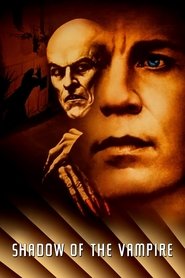
And a lot of the sound design in this film is just absolutely meticulous. And there are many times when I asked my sound designer, when we go to the black and white scenes, for example, I wanted everything taken off surround sound, Dolby stereo, and moved to the front speaker, where we then transferred all of the sound to wax cylinders. And those wax cylinders then
1:00:39 · jump to transcript →
-
E. Elias Merhige
In here you have this beautiful blend where music and sound design really you can't notice the difference between the two and this is something that Dan Jones and Nigel Heath you know my sound designer worked very much very closely together to create this this seamlessness so that you don't know the difference between where a sound design
1:09:31 · jump to transcript →
-
E. Elias Merhige
my sound designer to do is to take the sound of a Gatling gun from World War I which is like a primitive machine gun and to use that sound in creating the sound for the motion picture camera that we were using and see now you see Cary going off leaving the camera but someone must man the camera the camera must never be left alone and it's here that Murnau then begins filming this kind of awful
1:20:44 · jump to transcript →
-
-
-
Simon West
is in Iceland, and just the sound effect of the helicopters carries over the cut, and so you feel that the helicopters have taken off over their heads, but actually they're in two completely different countries. So this shot is in England on Salisbury Plain. And this shot is in Iceland by the Iceberg Lake.
1:11:02 · jump to transcript →
-
Simon West
and it's just a sound effect that carries you across the cut.
1:11:31 · jump to transcript →
-
Simon West
This was a very emotional scene for Angelina and Jon, and they modified the dialogue to be even more personal and relevant to their real relationship. I briefly tried some unusual camera angles and moves, but in the end realized it had to be kept very simple. In the editing stage, I also experimented with strange atmosphere and sound effects to make it sound like we were in the fourth dimension or inside time. But again, I stripped it back to the basics just to let the scene play itself.
1:24:00 · jump to transcript →
-
-
director · 3h 43m 3 mentions
The Lord of the Rings The Two Towers (2002)
Peter Jackson, Fran Walsh, Philippa Boyens
-
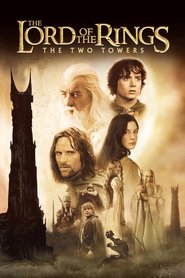
difficult to show visually. Sound design is very important here because all that Bernard's doing is obviously just throwing himself back in his chair, and Ian's just pushing his staff forward. There's no contact between the two of them, but the sound design really gives a feeling of power coming out of the staff. The shot here was done as a very simple morphing. Needed Bernard to go through three different makeups, each of which took half a day, so we basically shot him over the course of two days.
1:20:43 · jump to transcript →
-
but to bring it to life conceptually is really, really hard. John has a great resonance to his voice, and we felt that John would make a good tree beard, get that slight Welsh kind of lilt to his voice, and the sound effects guys did a really nice sort of echo chamber thing to make it sound like his voice was coming out of a woody kind of voice box somewhere deep down. The shot of Viggo floating down the river was one in which he nearly drowned.
2:06:28 · jump to transcript →
-
That's when he says, we will die here. Yeah, we will die. So it's just a slight departure. It qualifies as a slight departure again, which is good. We only ever do slight departures. Some lovely sound design here from Plan 9, isn't there? Yeah, the ring sound. Great animation. I love the animation on the Nazgul. It's really nice. This is how far gone Frodo has... That was deliberately similar to him holding the sword over...
3:20:43 · jump to transcript →
-
-
-
Because it was edited when you were doing it. It's like here in the academy you always give the business cutting. To me that's easy. To save a performance is harder. The academy award for sound design always goes to any movie that has a ping sound from the submarine. You automatically get an academy award for sound. Oh, did you hear that? This sound is actually hard.
19:39 · jump to transcript →
-
I have fond memories of walking into the sound mix room, which looked like a, I'd say a... Numerous, numerous amount of work. It looked like an inoculation lab experiment for, you know, West Nile virus. Like, people just, like, in various stages. Wow, I'm glad I wasn't that person. What was it like at the Cannes Film Festival screening at the end of the scene? A big applause. It was wonderful.
20:35 · jump to transcript →
-
-
-
Jonathan Lynn
Jimmy Tedeschi. Jimmy the Tulip? Jimmy the Tulip lives next to you and you know him? Oz, can you introduce me to him? Jill. The man's a professional killer. The insane sound effect there was not thought of at the time he was shooting. And the first time that Matthew did that, he genuinely forgot he had the
47:47 · jump to transcript →
-
Jonathan Lynn
We didn't have any real backup. The camera was not on another boat We had with us apart from the actors we had the camera Handheld because there wasn't room for all the equipment to support the camera and dollies and things he had a light we had a piece of polystyrene to bounce light off and we had the sound mixer and the boom man and that for me and the ad that was it and
1:27:58 · jump to transcript →
-
-
-
Tom Tykwer
point out the importance of sound in this film. I mean, I'm very, very obsessed with sound generally in filmmaking. And I truly believe it is at least 50% of the experience. But in this specific case of Heaven, I've never had a movie that was more demanding in terms of sound design, sound structures. And that might be surprising to some people, but of course,
1:20:02 · jump to transcript →
-
Tom Tykwer
If you think about it more in detail, creating silence is a really complex issue. And I know that we had really successful responses with Run Lola Run on the sound design and even lots of awards that went for it. And still, I have to say, to do Run Lola Run on the sound level was big fun and also a great challenge. But this film was like...
1:20:31 · jump to transcript →
-
-
-
This whole thing was in the script. The first shot was exactly the way it was in the book, which was, it took place on an open beach. Right. I said, "Ted, I just feel like... "I don't know how to shoot suspense on an open beach. I just don't know." We changed the ending of the book, and everybody had a contribution. Dino and Martha said, "The boy has to be in more jeopardy. "The son has to be in more jeopardy, that's what will make this work." Brett said, "It has to be more claustrophobic. "Interiors are scarier than exteriors. "We have to have hallways with doors where he could appear from anywhere." And then this great, great moment with the mirror which is pure Brett Ratner. It was not in the screenplay originally. It was Brett's idea that the reveal to this character should be the broken mirror. It was wonderful. This sequence is an excellent example of how a screenplay evolves from the producers, from the director, and from the writer. And what I wanted, which was not in the original ending of the book, was for Will Graham to be more heroic. And then we added... In the ending of the book, he's injured by Dolarhyde on the beach. The kid hooks Dolarhyde with a fishing rod. Graham Is injured on the beach and runs away and hides, leaving his family to deal with the bad guy. And I wanted Graham to be more heroic at the end here. So we each had a shopping list for this sequence and got what we wanted. I also wanted Graham to show cleverness here. He can't overwhelm Dolarhyde physically. But he can outthink him. That's what he's good at. And taking all this, because Ted even said to me, "Brett, I don't write action. I don't really do that." And so I said, "Okay." I sat down with my stunt coordinator, Conny Palmisano. We went through beat by beat of what could possibly happen physically. We called Ted and went through it, and he came up with this whole thing... Where he stabs his leg with a... He's got a second knife hidden. But the whole thing about him using what he saw in the book, which is much more heroic than anything else he could do physically. This was where we took quite a leap. And tried to use things that the book suggested but didn't actually dramatize. And it really worked. And Tyler Patrick Jones who's... Wonderful little boy. Who did an amazing job and went through hours and hours of being thrown to the ground and being yelled at, berated. And very smart and... He's the sweetest little boy. We should have put at the end, "No children were harmed during the making of this." It's not his first movie. - Yeah. He actually worked with Spielberg on Minority Report. He had a small part. He said he actually liked me more than he did Spielberg. So I was happy about that. Don't cry at me, you little faggot! He said my beard wasn't as big as Spielberg's. Nor your bank account. "I'm a freak." Say it! No. - Say it! Dad! - Say it, or I will cut it off! "I'm a dirty little beast." Ralph did a great job here, and he was nervous about this. "Is this gonna work, Brett?" That was his question. And I said, "Let's shoot it and find out." - We won't know until we finish. Sound Dogs did a great job on the sound design here. They did Family Man with me, and they work... I love how you drove this whole sequence. This just goes like a freight train, this sequence. It's a classic. It's like the end of Psycho or something. It's just a great, great suspense sequence. Every shot selection and the pauses. Josh? - Mom? Will? Where are you guys? I thought I heard some kind of... Will? Great set. It was great. It was modeled after a real house that we saw in the Keys. It had very narrow hallways. These types of doors. Rattan louvered doors. We needed the doors to be louvered, because Molly has to be able to reach through the door here in order to unlock it.
1:53:32 · jump to transcript →
-
My dear Will: You must be healed by now. The movie could've ended here, which would've been bold. You didn't know if he was dead or alive. It could've ended here, but then... The movie could've ended in two or three places. In the end, we decided it would end three times. The audience loves this stuff, and they love Chilton. That ending you came up with was amazing. You couldn't go out of this movie without letting Hannibal Lecter have the last word. He always gets the last word in these movies. The problem we faced was, we couldn't have him get away as he did at the end of Silence of the Lambs. We couldn't have him running all over the world like in Hannibal. By the way, what Danny did was, he gave it a Silence of the Lambs ending, where this music here Is saying, Hannibal won. It's not like they'll live happily ever after. This is the natural ending of the movie. This is the sort of poetic or clichéd final shot of the movie, The boat sailing into the sunset. But the music is saying Hannibal's won. But I always wanted there to be one more little beat, so it wasn't quite such a tidy ending, so that it linked up with Silence. A young woman. Says she's from the FBI. This, for me, is such an audience pleaser. It makes me smile every time it comes on, because it's such a great call-back. The only mistake is the wardrobe isn't the same for him. that it is in Silence. I wish I would've got that same wardrobe. It's the only mistake I made. And this music is just like... This family is going to need a lot of therapy. What you don't see after this movie, is the years and years of therapy that the whole family goes through. Danny Elfman is just an amazing composer. I love how the music really becomes more and more assertive. And by two-thirds of the way through the movie, it feels like it's driving the movie to its conclusion. I just want to give some special thanks to Andy Davis... Who was there from the beginning and through every moment through all the shooting, through all the editing. And James Freitag, my associate producer and assistant director. Without these two guys, I don't think I would have been able to make this film, because Andy is not only a great producer but is a creative thinker when it comes to line producing a movie and shooting things, and organizing and hiring the best people that money can buy as far as crews. My special thanks to Dino and Martha who set the tone for the entire production and took a little bit of a gamble on Brett, which paid off brilliantly. And also Mark Helfrich, the editor, because the last draft of any screenplay is written in the editing room. I've not very often been as lucky as I was this time to have an editor who is so sensitive to the script as well as to the performances. And Landaker and Maslow, my sound mixers, who I thought did an amazing job. Hearing this movie and seeing the movie in New York City for the premiere at the Ziegfeld Theater with that sound mix was just a great experience. That's why I dreamed about making movies. Seeing it in a theater like that, in a wide-screen format, anamorphic, it's like a dream come true for me. That, for me, is a defining moment. Seeing my work. That's the best I'll ever see my work. Yeah, with a giant screen. - A giant, giant screen. With a big audience. - 1,500, 1,600 people. I don't know how many seats, but a huge theater with the score and the mix, and the quality and the energy, especially with a New York crowd, you know. - Right. When they're laughing in the right places, they're scared in the right places, screaming in the right places. It was a very exciting project. It was a good experience. Somehow the darkest subjects sometimes turn out to be the most fun to work on. If you have the right kind of atmosphere on the set. I know you, Ted. You and I worked together for about a year. You are not a dark person. You do some decadent stuff occasionally. I don't think either one of us are, but somehow, maybe that's the only way you can get through making a movie like this. A dark director or a dark writer would've gone too far with this movie and made something that was maybe hard for an audience to bear. 'Cause the scary thing about this is that, there really are people out there like this, and there's a lot of... I wanted to tell a story. I wanted to make a film about a guy who... The films I want to make really are about that I enjoy making... Because my favorite director is Hal Ashby... His movies had great relationships. Harold and Maude, Being There, and those movies... This movie has fantastic relationships. And a tremendous amount of heart and emotion. Even though it is a psychological thriller, the relationships in this film are why I'm so attracted to it, why I felt like I had to make it. I think it is unexpectedly moving for a thriller. It's really not just a scare machine. It actually is a movie about characters and relationships and it's moving in a surprising way to me.
1:58:44 · jump to transcript →
-
-
director · 4h 13m 2 mentions
The Lord of the Rings The Return of the King (2003)
Peter Jackson, Fran Walsh, Philippa Boyens
-
I didn't shoot any of this scene. I was busy on another set and we had no other directors. And so we said to Andy, listen, do you mind if you direct yourself today? Because there's no one else that we can find to do it. Yeah, I love the sound design in this scene. We opted to drop out the music and just let the kind of intensity of the moment really take over. And at one point we cut the effects back and it wasn't half as scary.
3:43 · jump to transcript →
-
A great piece of sound design where the sound sort of sucks the silence just before that lightning bolt goes up. I thought the guys did a great job. And I never thought that was going to work, but it just looks incredible. It's just such a connection too. I mean, I love Gandalf and Pippin looking at this event taking place in the mountains and Frodo and Sam are right underneath it. And it's just so valuable. I just, you know, you just love it.
57:24 · jump to transcript →
-
-
-
Well, I just love that Ethan constantly opens logic with anything. It's like my favorite thing. I love it. That's that magician in you. I love it. I love it. I know. And this, again, this set, this was one of those pieces that, you know, there was a green screen out there. That whole thing is green screen. Look, they put the city out there, and it just, the sound effects, the whole thing just makes you feel like you're really there. What was so strange was having been to Shanghai for the location scout,
1:19:47 · jump to transcript →
-
It was early. Now, do you remember we came with this shot? This one, like, how are we going to end this? We were losing the light, remember? We were losing the darkness. Yeah, that's right. Ethan! Get in, they're coming! Who? Ben and security and they're pissed! Go, go, go! Right there is a sound effect that the sound guys...
1:30:18 · jump to transcript →
-
-
director · 3h 29m 1 mention
The Lord of the Rings The Fellowship of the Ring (2001)
Peter Jackson, Fran Walsh, Philippa Boyens
-
-
-
-
-
-
-
director · 1h 26m 1 mention
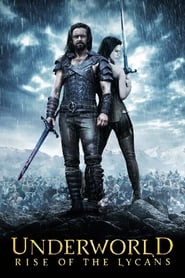
Underworld Rise of the Lycans (2009)
Patrick Tatopoulos, Len Wiseman, James McQuaide, Richard Wright + 1




Related topics
Other topics that frequently come up in the same commentaries.