Topics / Writing & development
The screenplay
147 commentaries in the archive discuss this, with 1,188 total mentions and 27 sampled passages on this page.
Filter commentaries
Filter this topic by the film's decade or the type of commentary.
Showing 36 of 147 commentaries
Clear filtersBy decade
Across the archive
ranked by mentions · click any passage for the moment in the transcript
-
-
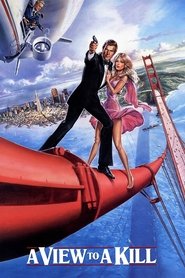
Roger Moore
technical jargon. And I would go with the script lady and rewrite the whole paragraphs and get her to type it up and then get the director to give it to him just before the take and say, oh, we have these changes. And watch Desmond. So the panic would come into his face. And then we'd have to say quickly, no, no, it's a joke.
14:47 · jump to transcript →
-
Roger Moore
For continuity, which we had a wonderful lady, June Randall, who was continuity lady on this, or this script lady, I think they call them now. Used to be continuity girl. And she was wonderful. And, of course, they have to know where everybody, where everything is, so that you can match when you're cross-cutting. Enjoying our little party, Monsieur...
29:50 · jump to transcript →
-
Roger Moore
I think that you have to have an attitude, you have to set an attitude towards people that sort of amused superiority. And as I've read the script, and I know that I'm going to win, I have to be very amused by it all. I worry sometimes that explosions are going to be a little too close.
37:25 · jump to transcript →
-
-
director · 1h 31m 4 mentions
Alex Cox, Michael Nesmith, Victoria Thomas, Sy Richardson + 2
-
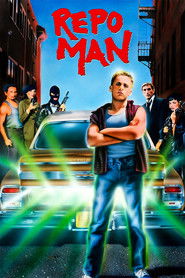
This is going to be terrible for the people listening to this DVD because all they're going to hear is us cackling and watching the John Wayne sequence. That doesn't mean he was a homo, Miller. Oh, I thought that was Ferrangi that said that line, but it wasn't. It was... Oh, yeah, Ferrangi says greatest American that ever lived. Yeah. Yeah, it's Oli that says he likes to watch this. Yeah. Remember, you were supposed to, in the script, you were supposed to get a cigar behind the ear.
54:02 · jump to transcript →
-
He does actually have a cigar, but he doesn't actually stamp it on his head. Yeah, he's supposed to stamp out lit cigar on his ear. Is that like a Repo thing? Well, that's actually in the Repo Man song. Using my head for a trash can. That's right. It's interesting that Iggy Pop actually had read the script before he wrote the song and had actually incorporated bits of it into the lyrics.
54:32 · jump to transcript →
-
And I remember in the audition with Fox also, Dick Root, he had a broken wrist, if you remember in the audition. He told us, be careful with him because he has a broken wrist. And the first thing Dick Root does is go over there and just body slam him. And you could see him go, like he really hurt, but then he just kept going. I just thought, wow, this guy's great. That's amazing. I particularly like any script that has the word pernicious in it. Pernicious is a good...
1:08:25 · jump to transcript →
-
-
-
Gary Goddard
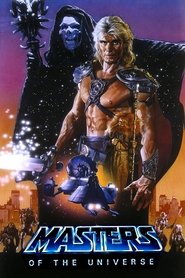
the tail end of the schedule, we didn't get everything we wanted, but we did get a lot of use out of it, not as much as I'd wanted, but that's why you see so many levels there. They were designed for what the final battle would be. The eye in the back also, that was a last add in the original script that David O'Dell wrote. There really wasn't a ticking clock. I felt a need to put a ticking clock on this, and we came up with this kind of eye, this door on the universe. The eye opens on the universe. They're coming. Get back there. Keep working.
12:27 · jump to transcript →
-
Gary Goddard
It's a funny way. This was David O'Dell. This wasn't David's script. Of all the complicated things you can do in a movie... Believe it or not, this next shot is one of the toughest. Something's coming. What is it? Big reveal. They don't know what it is. We do. Now, that cow did nothing for about...
18:52 · jump to transcript →
-
Gary Goddard
Behind the scenes, we had Canon Films. And Canon had never done a movie this expensive before, $17 million. We had Mattel. Mattel had to sign off on the script and on the casting, on just about everything we did. And Mattel, I think they were actually fairly workable. But we did have a lot of issues, because they had the ultimate right to approve things. And then we had all the normal involvement of the producer and studio.
1:20:51 · jump to transcript →
-
-
-
Barry Levinson
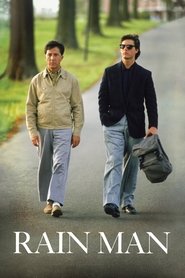
Originally, in the script, Tom Cruise, I think, had a little boiler room where people made a lot of phone calls and tried to sell things. And I had done a movie called Tin Men, which kind of touched on very the same thing about, you know, canvassing for calls. So I thought we needed to move it into something slightly different. And I thought about, you know, cars and the kind of the gray market of selling them and then try to put Cruise into a situation where he is now...
2:59 · jump to transcript →
-
Barry Levinson
The crossing the desert here to go to Palm Springs, actually we passed these windmills, which will come up in a second. I was actually having a conversation with my wife in the car. I had read the script, not to direct, but actually to offer some suggestions.
5:52 · jump to transcript →
-
Barry Levinson
It had a number of problems that had to be resolved, and the whole autistic issue was very important because Dustin had done a lot of research and really understood what that was all about and the problems of that, and I think we needed to integrate it into the script as much as possible. This scene now, we had to shoot just as the sun was going to hit a certain point on the horizon. Every time I watch it now, I think about the kind of racing across the desert trying to get the cameras in position while you still got the light.
6:45 · jump to transcript →
-
-
-
Now, sex. I remember when John Graham read this script out, this scene out, I just thought it was the funniest thing. Well, had I got as far as the penis entering the vagina? No, sir. Well, had I done foreplay?
38:46 · jump to transcript →
-
which for some reason we didn't use. But again, you can see that clip on the DVD. This scene just started. I wrote on a piece of paper, a scene in the worst possible taste. I didn't know where it was going to go. And then it sort of went to a better, how are you feeling better, better get a bucket. And then it went on from there. And in fact, when Mike read the scene out to the script reading, nobody laughed. Nobody thought it was funny. And it got put on the rejects pile. No, we weren't going to do it.
1:19:17 · jump to transcript →
-
which wasn't in the script it's one of the few bits of improvisation a strange looking house i'm not sure what it was meant to be it's on the yorkshire moors idea of the death party getting into their cars
1:39:16 · jump to transcript →
-
-
-
Michael's script to that dance form and its simplicity in that this story is a story of a guy who has lost his time, who, like in this scene, he says he doesn't work with partners. He's a burnt-out freak, you know, meaning that, you know, if you're prepared, if you're going to go with him, you're better prepared to go all the way. He doesn't care about anything. Doesn't care about anything.
29:55 · jump to transcript →
-
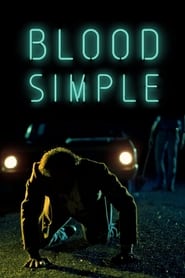
There's been six movies I've never even watched that I did, but that's true. So what was it like? And the writing of this is brilliant. You know, a lot of money, Tucson, Mexico City, Bogota, drifting, you know? Okay? Okay. It got twisted and ugly and empty. It was over already, but we kept moving through the moves. It ended very badly.
35:45 · jump to transcript →
-
-
technical · 1h 35m 2 mentions
Steven Lisberger, Donald Kushner, Harrison Ellenshaw, Richard Taylor
-
This is Richard Taylor, I was one of the special effects directors on Tron, and I was the director of the computer simulation division on Tron. And we're here to provide you with some audio commentary on Tron. The origin of Tron dates back to early work we did in animation experimenting with characters, animated characters who would be made out of light, who would be not rendered in ink and paint and put on cels, but actually only exist as light imagery. And we were looking for a place where characters like that could be part of a Story. And I saw a Pong game, and it reminded me of gladiatorial games. And at the time, I had been trying to keep up to date on what was happening with early computer graphics, 'cause it was part of animation. And so, all of those things came together very nicely, the Pong game, the characters made of light, and the computer animation was the environment. And through computer animation, we got to know computer people and programmers and computer technicians. And the more I got to know them, the more the story accommodated their personas in the electronic world. I think one of the original guys was one of the guys who created... Or one of the creators of the PowerBook, that was... Yeah. - Yeah, Alan Kay. And Alan, the alter ego for the Tron character was called Alan, named after Alan Kay. And what impressed me about these guys was that they were pioneering this new reality. And that with pioneering that world, certain frustrations had taken them over. They felt that they were fighting a losing battle in certain areas. Alan Kay was trying to convince the world that people were going to have small, portable computers that they were going to carry around, and no one would believe him. Other computer programmers I worked with were doing computer graphics, and they thought that their stuff was going to be in movies one day and hold up, and nobody would believe them either. So, I looked upon them as a group of warriors and believers in their own abilities, and fighting and... Characters who were fighting a good fight, and... It's a little difficult for the audience because I think the audience doesn't necessarily relate, didn't relate then, it relates a little more now, to a group of people who speak computer talk, who are interested in computers, and who are fighting to make cyberspace, or the electronic world as we called it, a good place. Basically, Steve and I had worked in developing it for over a year. We had developed the script, and we had done a promo reel for the film of certain computer effects and certain kinds of digitized effects of what the electronic world would look like. And we put together a little booklet, I think, of storyboards, and also photographs, and then went to see Tom Wilhite, who was head of the studio at the time. And in our first pitch meeting, he really got it. You know, say that... When we first pitched it to him, he got the idea right away. We developed this movie before he went to Disney. I think in the back of our minds, we always Said to ourselves, "This would be the perfect Disney movie, "so, therefore, they won't buy it." But I think they got it right away. Yeah, originally it was our dream to try to make this film as our independent film. But it got too big for us and... I think at that time we invested every nickel we had developing the script, the effects techniques... And a couple nickels we borrowed, too. Don't remind me of that. You have in... If I may, a commentary about Donald's influence on the film was that as producer, he and Steven came to the studio. I was brought onto the show because I had been at the studio at Disney before and was, kind of, to be the connection between... To help be the connection between the studio and this new type of filmmaking that was going to take place. And so, a great deal of Donald's input was bridging the gap, and the gap was quite large between a traditional studio used to making either pure animation or live-action films, and doing this film that was... You couldn't describe. It was not a typical film by any means. And everything from the hiring of the people and moving them through a traditional studio system became something that Donald had to deal with on a daily basis. And the producer is as much an enabler as anything. I can remember... I can remember Tom Wilhite calling me into his office and describing this project, this was before I met Steven and Donald, and said that he was going ahead with a film about a video game, about players in the video game, and I thought, "Well, that's going to be great, but how are you going to do it?" And he said, "/ don't know, "I thought you were going to tell me how we were going to do it." And it went from there. And I... You know, we had an idea, and Steven brought the concept of how it would be done, how it would be inked and painted. But we really never sat down and faced the reality of it. And I think if we had, we never would have started it. Now, here we're really getting into the mind of a hacker, of a computer type in the early '80s. He's communicating with the computer, which in this case is anthropomorphisized as an alter ego. What's happened here is that he has an agent program, and agent programs are a technology that's only now really being discussed about, in terms of whether it's going to be used in a mainstream way. And he sent his program in to get information to prove that Dillinger has been stealing things from him through the computer system. So, as a hacker, he's breaking in and trying to prove this in the computer world. And he got caught. The Recognizers are the cops.
0:16 · jump to transcript →
-
One little anecdote here is that the cameraman that was up on the platform shooting this, the viewfinder of his camera was broken, the pellicle mirror had shattered, and he couldn't see anything through the camera and he just aimed and shot. He didn't want to slow down the production by telling anyone that he couldn't see anything, and held his breath all the way till dailies, and the shot worked out. Oh, that's right. 'Cause there weren't very many 65-millimeter cameras available, and all this was shot in 65 millimeter. Yeah. When we opened these cameras, they still had the sand of Lawrence of Arabia in them. Well, Flynn's arcade was in Culver City. Yeah, it's across the street from the old MGM lot, which is now the Columbia lot, but now renamed as Sony Pictures. Now, there was actually a loft at the location. But then the re-shoot... The close-ups were the re-shoots on a stage. Yeah. That's the... The actual... The practical location. Space Paranoids. Space Paranoids. I take my son to the arcade in Westwood. We go once in a while. I have to bring my earplugs. But I've never seen an old couple like that in a video game arcade. That's right. We knew that Bally was going to release a video game simultaneous to the release of the picture, and therefore we wanted to have the design of the game in the arcade and the game in the real world that people would actually play be very similar. So, we go to Flynn's, and we see Flynn playing the electronic game and fighting off a Recognizer. That is the console which we created for the film that represented the game that Bally was going to create. Although, obviously, at that time, there was no way that a computer game could have real-time, interactive, full raster graphic imagery. So, it was a prediction of the future of the way games were going to evolve, and that is what we're now seeing in CD-ROM games and the games that are in home computers and arcades today. Jeff did get very good at video games. We had some on the set. Yeah, he was remarkable, and one day you suggested that we videotape him while he was actually doing it. And look at the neon in the back. I'd forgotten about that. OA, right. I don't think any of the actors actually went so far as to get themselves a computer and spend hours backstage... Programming. -... learning how to program and... That didn't happen, but they got as far as games. Battle Tank. We used to play a lot of Battle Tank. Battlezone. Yeah. Battlezone. There you go. Now, as! recall, you... We re-shot this sequence. Yeah, and I don't even remember... The lighting... To match, I think, the lighting of the game arcade. Well, I think, actually... - We changed dialogue. Did we? - Changed dialogue. And here's a little secret. We told the studio that we needed to redo it to match the lighting. Well, see, /... Still using the same excuse. That's right, you're still... You're still well-programmed... - /'// never tell. The lighting didn't match. The casting process was interesting. Originally, I'd pictured Jeff's character being younger and the Tron character being older. We were affected by some things that were definitely outside of our control. Tron predates Splash, and people forget that, really, Disney was having a hell of a time getting popular actors to work for the studio. And it had been a tough time for Disney. And it didn't help that we were saying, "Yeah, we want you to wear these funny costumes." And Jeff was always enthusiastic about being part of the picture. The Tron character... Bruce was... I don't think Bruce was quite as adventuresome at first, although he got into it after a while. I would have liked to have seen Bruce possibly be a little, I think... I had pictured him as sort of a younger Kirk Douglas. I think he would have been better if he had been a little older like he is now. I like the way he looks now. And I think Jeff... I was surprised at how physical Jeff was. I thought that... I pictured Flynn being a little more geekish or a pencil neck, and Jeff is very physically strong. So, in that sense, the two became somewhat similar, although their personalities and what they represent are completely different. One little anecdote is that... I can't point back at the character of Tron and say, "There were all these actors." Or, "It was between this one and that one." But I do remember one surprising actor who really wanted to play this part, and it was Peter O'Toole. - Yes. Oh, he wanted to play the part of Dillinger. No, it was Tron. Tron, that's right. I think we wanted him for Dillinger and he said, "No." And I had this amazing scene with him in the Beverly Wilshire Hotel where... In his hotel room where he said, "I can do this!" And he started leaping from one piece of furniture to the other and screaming that, "I want Tron on my tombstone right next to Lawrence of Arabia!" And who knows, maybe he would have been great, maybe I really missed it right there. All these interiors... Shooting them, these low-light interiors, in 65 millimeter is very difficult, because the depth of field, the focus plane is incredibly short, and it was a real struggle. And some of the close-ups, we actually had to run light stands up the backs of the actors through their jackets as braces, so that they would stay in the exact same spot, so that we could keep their eyes and faces in focus. You know, if your file was in there... - Hey, wait a minute. If we can get in there, I can forge us a Group 6 access. Well, shall we dance? And ENCOM was shot in downtown Los Angeles. I forget the building. Of, the Transam building? Oh, yeah, the Transamerica building. At the top of that was the helicopter pad. This sequence between these two heads of the company really expresses the philosophical problems that the other characters are going through. Again, the office is designed to mirror the other world in terms of its graphic look. Wasn't there something about the cold, corporate look as well, Steven? There's your door. - There's the door. The scene where they sneak into ENCOM and open the door that is 10 feet thick or 12 feet thick, that's a real door, that's not a prop movie door. That's an actual radiation door at Lawrence Livermore. ENCOM isn't the business you started in your garage anymore. In one scene, you see a number of things flip up into four corners. Images. That was a traditional optical that had to be done, and opticals in those days would take two, three, four, five weeks at least, and it was a big task. It was like making its own little movie. You know, you can remove men like Alan and me from the system, but we helped create it, and our spirit remains in every program we designed... That line is one of the key lines in the whole script, about the human element that the programmers put into the system. And it's this discussion between those two characters that really elevates the picture well beyond a video game movie. Now, the reverse was shot, actually, on the Iot, so there's a reverse... Getting into the Disney vaults? Yeah. Lawrence Livermore was quite proud of the fact that although this door weighed tens of tons, or whatever it was, it was so well hinged that you could open it by just pushing it. One person could. In fact, you found... I believe you saw that door as we were taking a tour of the facility and you Said, "This would be a great place for them to sneak in." So, you kind of re-wrote the scene to accommodate that huge door. And the irony is, as he punches the buttons, that the giant door opens, and no strength is exerted, but it's opened automatically. I kind of inherited the job of not only setting up the giant rear projector and the mirror and all that stuff, but I also had the job of putting together what would end up going onto the desk. That's an actual wireframe on there, for the carrier, as you See... Right. - ...in the film. I began searching around for footage to go onto the desk, and it was getting late, and we were about to shoot this thing in a couple of days, and I just ran out of stuff, so I put the flowchart from the film on there, and probably things out of my address book and anything I could... I was down to pulling things out of Life magazine and re-photographing those. I was just running out of stuff to put on the desk. What's interesting about this protagonist, Jeff Bridges' character, is that he's actually, um... He's a creative, technical type, and he's fighting for his creations, he's fighting for his work. I think that's pretty unique. He is somewhat of a paranoid character. But with some reason. With some... Yeah. - Some good reason. Dillinger will never know we've been in here. Good luck, hot shot.
16:15 · jump to transcript →
-
-
-
The script development process on this particular movie... ...was quite complicated and protracted. I guess they always are. Because Dan O'Bannon and Don Jakoby... ...had written a very exciting adventure... ...and it was quite thrilling. But there were all kinds of possibilities. And people at Columbia Pictures, at the time... ...kept saying, "Well, we need more of this kind of an adventure." Or, "Maybe this doesn't work as well. Try something different." So right as that happened, there was a big writers strike... ...that went on for several months, as I remember. And so we were stymied because Dan O'Bannon and Don Jakoby... ...weren't allowed to write. I don't know whether a postcard from Laguna means we're speaking again... ...
18:35 · jump to transcript →
-
Lots of extras and our actors... ...none of whom were real happy to have this helicopter... ...flying over their head with all of those explosions going off. And I've always been so grateful to Jim Gavin... ...for being so tough on us and making sure that we were safe... ...and that we did not have any problems, as other people have had. I just saw the script supervisor in there. As many times as I've looked at this movie... ...I didn't realise that there was the script supervisor, standing-- Writing her notes, right in the shot. - Oh, yeah, right behind. Yeah, right behind him.
33:02 · jump to transcript →
-
-
cast · 1h 36m 2 mentions
Anthony Michael Hall, Judd Nelson, Jason Hillhouse
-
Judd Nelson
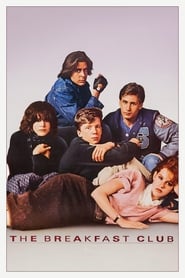
See, this is where it was cool where we had John. He was definitely a collaborative director and sought to get the best out of us all, and was looking for behavior, you know. So, I think, the wisdom of he and Dede Allen and their choices in making this all work, 'cause we had so much footage, it was great to see. All these years later, we take it for granted, what we see the final cut to be. But the truth is that, like we were talking about, Dede would come to the set and she would closely work with John. And also, he gave us the freedom to play and just have fun. And certain things, like the stuff you're seeing with Judd spinning around. I'm sticking a pen in my mouth, stupid stuff. We had no idea whether it would arrive in the film or be a part of it. I didn't. We were just having fun. But once we knew what the space was, we had the parameters. Rehearsal was key. - Yeah, it was like shooting a play. That's how I recollect and look back at it. We shot this play for 35 days and we were... Mostly in sequence. - Yeah. Yeah, we were fortunate to be extracted from Hollywood, and all of a sudden in this suburban gym of Illinois, not far from where John had grown up. So, it was a fortunate thing that we felt like we were shooting a play, 'cause we also had a week of rehearsal, which was... No, we had more than a week. - Was it more? We had more than a week. In fact, we weren't done with our rehearsal time when Hughes went, "We're ready. Let's go." All the work we've done keeping our faces in the industry since and maintaining our careers, it's still... To this day, I don't think I've ever had that since. So, it was a real... A real rehearsal. - Yeah, it was a real luxury. It was also a lot of fun, 'cause it really bonded us and gave us a chance to get a sense of where we were all at, and also made the work better, yeah. And we built real history, as opposed to that you believe you've made up a history. We actually had real experiences. Even if it's something as simple as dinner four nights in a row, you at least have some real past and things will reveal themselves to you further along in the work. And Hughes really wanted it to sound authentic. So, he never limited us. If you came up with something, you never felt like, "Oh, wow, "we took it beyond the text." Big deal. And he was always looking for it to get to that point, anyway. The freedom that he gave us, the idea that he would trust us like that, which is the point of the film. Just because they are 17 years old doesn't mean they are 17 years dumb. There's a weird thing, though, about rehearsals and stuff like that, where you think... You even said, "I've never done that before or since." It always seems to work out when actors and stuff get those chances. You hear those stories over and over. But, for the most part, people, they just don't do it. Yeah, in terms of genre, too, this is something that broke a mold, in a way, 'cause it was, in the industry talk, a talking heads film. It's really about a bunch of people sitting around, talking. So again, the play analogy comes into play. We really felt like... I remember rehearsing, and we were in these positions. I remember walking into that space, and John going, "Okay, you sit over here." We would rehearse these scenes. So, by the time we shot them, we all had a good sense of each other. We were a solid group, and we also knew where we were going with it. Now it looks like a luxury, but to this day, I've often looked back and thought about that, that it was great intelligence in just doing that, putting us in together. We sat in a room... - I thought they were all gonna be like that. I really did. I look back on that and that is a high-water mark in terms of the importance of having everyone being on the same page. Right. If you get rehearsal time and if you shoot in sequence, it's not like you are trusting the other actor to know that in the scene before this they actually threatened to kill me. So, it's a little bit heavier. You don't have to do that because before we shot this scene, we shot the scene where he threatened to kill me, so we know that. It's a great collaboration. You don't realize it till you're blessed enough to work in the business. When you're on the set, you see that there's... You know, sometimes the best idea will come from the script supervisor, or sometimes it's the guy at the crafts service table. It's a great collaboration, even though it's a director's medium. I think that sense of support was instilled in us with John, 'cause he gave us these roles and we all knew what we were doing, but he always was collaborative that way. I think that was his intelligence, too, that he allowed his scripts to transcend even the beauty that they had, because he hired people that he believed in. But there's a great collaboration, always. When you're talking about rehearsal, you're talking about the five of you guys. Were Paul and Kapelos kept away a little bit, to let you guys have your thing, a little "us vs. them" a little bit for that? Well, that was happening right away. Also, 'cause Paul wanted to hang with us, so that was perfect, 'cause it gave us the power to say, "No." So, we could. But you guys rehearsed those scenes, right, with you and Paul? But he wouldn't necessarily be sitting there on a day when... Just the five of us. - ...it was the five of us in that rehearsal, if we were gonna get to that stuff. We wouldn't do necessarily whole read-through of it. We would be taking it from the first scene and rehearsing it till it made some sense to us, and John knew, basically, how he wanted to see it and how he wanted to shoot it. It's a business, at the end of the day, like anything else, so there's always such a sense of the clock and rushing, so, as Judd said, a high water mark in our careers to start with this great project, and we had these great roles and a well-developed script. But he was smart enough to sit us all down and get our input and let us work through it. So, once we got on our feet with this and we were shooting the scenes, we had a closeness and a vibe already flowing between us. But it's funny you said that, 'cause I thought the same, too. I thought it would be like this after, and usually the director is the most stressed-out, doesn't know what the next shot is. It's like the world changed after this. But part of it was the good fortune we had to be in Chicago and do this. It was at the beginning of his career, after Sixteen Candles did pretty well, even though it was a small film. I think I remember him telling us that his intent was to do this first. I think the studio was gonna make this film first and they flipped them. So, we were fortunate to be away from everything and... Flipped it and Sixteen Candles, you mean? Yeah, exactly, in terms of the making of the films. So then we did this project second, and then we were, again, just in Chicago, and that sort of remote quality helps it, too. It's a lot of the fun of it. 'Cause then you came back here to do Weird Science, right? Yeah, that was fun. There is something about that, pulling it out of Hollywood. That's clichéd, "Hollywood's bad and you can't get anything done." But there is something to be said about that. Well, the story takes place there, and that's where he lives. Why not put it there? It's easier, it makes the most sense, and for the actors, it's one less thing you have to imagine, and hope everyone else is imagining the same thing. In fact, it is the same room where we're gonna go every day. It's a school. - Right. I remember, I went to some local schools, too, in that area at the time. It was fun just to get a sense of what... 'Cause I hadn't had that kind of upbringing. I grew up in New York City at a liberal arts high school. It was a different experience. It was a boys' reformatory, wasn't it? I was away a lot and... Very religious, wasn't it? - That's part of the fun, actually, just to get out of the mix, to be somewhere else. As an actor, the gift is getting the job, and then the sense of exploration is enhanced, I think, by being somewhere on location. It's fun. Makes it part of joining the circus, I guess. So, what, you guys went to an actual school, went in, mixed with the kids, did that whole... Yeah. Yeah. - I did some of that, yeah. Yeah, Hughes arranged it for us to go. I know that Ally, Emilio and I went to this high school, and the principal knew, but most of the teachers didn't, and it worked out perfectly. It was a school that had two halls, one called Jock Hall and one called Freak Hall. And I was like, "Are you kidding me? That's perfect." I just waved to Emilio, "See you at the end of the day," and then went over to the other side. It's great 'cause I was over 18, so I met some guys and I could buy them beer. I was like, "Yeah, I got an ID that'll work. Come on, let's go get some beer." Just treating it so poorly, it was perfect. You didn't get put in detention at that school, did you? No, but I did get sent to the principal's office, the one guy who knew that it was okay for me to be there, so it was perfect. I hadn't found my classroom yet, out of Freak Hall, and I didn't have a classroom, so I was always going to be found out there. Bender, that's school property there, and it doesn't belong to us. It's something not to be toyed with. That's very funny. Fix it. You should really fix that. - Am I a genius? No, you're an asshole. - What a funny guy. Fix the door, Bender. Everyone, just... I've been here before. I know what I'm doing. No. Fix the door! - Shut up! God damn it!
8:42 · jump to transcript →
-
Judd Nelson
I never did it, either. At this point, too, just where the industry was, there was no video village, so one of my best memories is of John being there. He would just sit behind the camera. He would be sitting on the floor with us, just like the camera operator would be on the floor to get these low angles. He was really there, part of it all. It was great. Was he a good audience? - He definitely was. Yeah. And he was a real audience. He wanted to be moved. In fact, that was a great lesson, to see a director lens his project like that, to be that invested in it. It was cool. It's a tricky thing where you have a director and sometimes it can be, everything you do is great. Like they want you to feel comfortable and they want you to feel like, "Everything you do is great!" But there's a bullshit meter that I think you get as an actor, where you go, "No, it wasn't." And you gotta get that level of trust, where if John says it's good, it's good. Yeah. - That kind of thing. Was he pretty good about that, too? Without telling you, you suck or something. No, that's the thing, you have to be very pragmatic as a director, always aware of the clock, so in lieu of all that, I never felt like he was rushing us. It was just the opposite. I think he would work on your performance with you. It was cool. And he would give us the freedom to try things. He would allow us to know that we maybe tried something that was no good, too. If you did something that was no good, he wouldn't say, "That's not very good." He would look at us and be like, "Yeah, I guess that one wasn't so good." You know what I mean? He would let us find it for ourselves. There's a paternal instinct, I think, that directors need to have. But with him, he felt more like a big brother. He wanted us to shine. He wanted to see us get the best out of it. So, he was never really precious about his words or anything, which I found to be really cool. - It was cool that even after all that rehearsal, even once you get on set, the crew's around, the pressure is on a little bit, like you said, time is a factor, trying to get the day. And he still gave you time, even after all that. You know that classic image of... It was a saying of, I guess, Jack Lemmon's, where he talked about "magic time." John was a director that appreciated that. When the camera's rolling, he was the first audience. He was the guy right there with you, watching as if it was one of your parents in the bleachers or something. So, that was a really cool thing because he was the writer, and, of course, in that sort of paternal spirit, we wanted to impress him, him to be happy with what we were doing. At the same time, it was never any finger pointing. He just guided you through the performance. And he had a great way of, I think, empowering all of us to put our best foot forward. It was cool. His scripts have a lot of heart, and Hughes has a lot of heart. He can hear the truth, I think, and if we did something that had strayed that sounded like that color of truth that he wanted, then it would stay. He also was... I just found him very encouraging. Yeah. - As a person and as a director. And that's like a captain. If the director is the captain of the ship, I would like the captain to be encouraging if we're gonna come upon some high seas or dangerous times. Crunch time, you want the captain to not be treating you like you're something he wants rubbed off the bottom of your shoe. Because I think we would have done anything for him. I think we probably still would. It's interesting, too, because in the structure of the film, it all leads back to these scenes. I guess for everybody it becomes therapy at the end here, where we're all sitting around literally like a group therapy, as is the image of the wide shot. - Yeah, that trust is important. You want your other actors to be alive in the scene. And because this, in real time, came later for us, as it does in the movie, shooting in sequence, you don't have to earn the respect from the people around you. Right. - It's already done. Suddenly, the only redemption that we can find is with each other, and that's the surprise, I think, at this point. Where everyone is peeling away, becoming naked to each other. I think that's part of the reason why it's so important, too, the way they cut this. Emilio is doing the thing, and the camera pans around him, right? And then we go and we get everybody's reaction shot while he's still talking because you guys are going through it, too. - Yeah. He's like this... He's like this mindless machine that I can't even relate to anymore. "Andrew! You've got to be number one! "I won't tolerate any losers in this family. "Your intensity is for shit! Win! Win! Win!" You son of a bitch.
1:10:08 · jump to transcript →
-
-
-
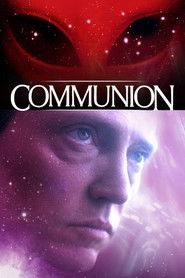
I mean, it was dedicated and conventions, but here's a market of people who actually claim to share the experience that the writer was writing about. So it's a community that's been created around a book, and yet the very fact that you were ostensibly telling the truth in a phantasmagorical story would make the studios very nervous. Well, that's what baffled them, really, because...
1:36:50 · jump to transcript →
-
just plain spooky stuff. At the end of the film, the resolution is a little happier than at the end of the book. In the end of the film, he overcomes his writer's block and decides to write the book, Communion. Right. So we kind of resolved it happily. Well, here it is. The book is about the writing of the... The movie is about the writing of the novel. So in addition to being a book about a marriage in trouble, it's also a book about an artist...
1:45:09 · jump to transcript →
-
-
-
Related topics
Other topics that frequently come up in the same commentaries.