Topics / Editing & post
The score
117 commentaries in the archive discuss this, with 416 total mentions and 65 sampled passages on this page.
Filter commentaries
Filter this topic by the film's decade or the type of commentary.
Showing 30 of 117 commentaries
Clear filtersBy decade
Across the archive
ranked by mentions · click any passage for the moment in the transcript
-
-
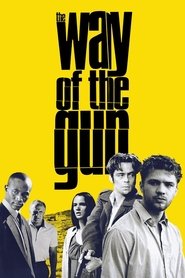
Lots of camera movement, lots of cranes and fast dollies and whip pans and filters and people dressed in black leather and a lot of... Yes, exactly. All soundtrack-y. 65 songs in three minutes and, you know, whatever was dangerous last year and has now been completely homogenized because it's been used in a Kentucky Fried Chicken ad. Right. And in that three minutes, Parker and Longbaugh were going to violate every single...
3:13 · jump to transcript →
-
that he's being a lech and you realize you've misunderstood him and the intention of that was to introduce a character to make you immediately dislike him and then realize you've misjudged him right and that's that's kind of a trick to help you sympathize with a character that's traditionally unsympathetic right working on the movie with you i mean we kept going back and forth about that about you know how to as a composer i had to like figure out how to treat the characters musically
10:53 · jump to transcript →
-
And remember, it was at night, so the power went out, so she's holding a flashlight, pointing a gun at the doctor, while he's cutting her open to take out their child. And he's telling Jeffress not to let her look at her own open stomach, or she'll convulse. Exactly, and that's filmmaking. That, to me, is the distributor saying, don't look at the way we're advertising this film, you'll vomit. Score, what score? Do you mean music or test? Well, I meant music, but test, too. Yeah, Joe.
40:42 · jump to transcript →
-
-
-
Which is too bad, but again, it's quite a legacy that he left us here. But yeah, just thought of going to see this in a theater, a movie like Cheeky. It's sort of mind-boggling today, but you know, that's what it is. I should also mention, since we've been hearing a bit of it here, this was actually the third and final score that was done for Tinto Brass by Pino Donaggio. Obviously he had done All Ladies Do It before this, as well as Monella from Frivolous Lola. And I think this is the most traditional of the three scores. It still has a bit of a pop sensibility, but it sounds very...
16:03 · jump to transcript →
-
which got a very wide soundtrack release. Strangely enough, this film has never had a soundtrack release of any kind, except there was one track, the main title, there was one track that was released on a very, very rare CAM compilation CD. It's called Da film erotici: il piacere della musica, volume 2. It's a two-volume set that they did of sexy scores.
17:01 · jump to transcript →
-
But apart from that, I don't know why there was never an album released. I mean, there isn't a ton of score in this. I mean, there's also a lot of songs, but there's still about maybe 25 minutes of score. So my hope is someday we'll get a CD release of this or something, because otherwise it's been sitting in a vault. But Pino Donaggio, of course, was no stranger to doing sexy films before he met Tinto Brass. It goes all the way back. I think the earliest one was in 1979. He did kind of a really fun sort of nudist sex comedy. It's called Skin Deep or Senza buccia.
17:22 · jump to transcript →
-
-
-
Barry Sonnenfeld
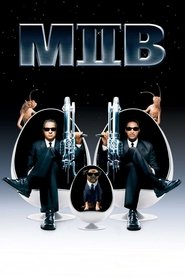
Obviously, this is all computer graphics element... ...done by Industrial Light & Magic. Mary Vogt is a wonderful, sweet costume designer... ...who worked with me on Big Trouble and Men in Black I. Elfman did a fantastic score for this movie. VICTORIA'S SECRET This is probably the longest shot in production. This took over eight months of work in the computer. We kept trying to make the heads better and the eels wetter... ...and figuring out the speed that both the foreground guys should move... ...and how quickly the deep background stuff... ... should look like flesh and underwear... ...as this creature is creating... ...What will become Lara Flynn Boyle. Graham Place, the co-producer, has done about 20 things with me. He's my best friend. Just last night, I bought him dinner at Chinois on Main... ...With his wife and daughters. Hey, pretty lady. We're back in Pasadena. This was done with a series of shots which were seamlessly connected. For instance, that thing where his legs went up. Now, this is a separate shot. We've made a perfect dissolve. Rick Baker designed Lara's stomach here. She realises there's a problem between the picture she wants to look like... ...and what she turned herself into. It's all about Lara's stomach. I love the way Lara walks across there, just kind of trampy. Again, this was another dissolve. She walked across... And this is about an hour later... ...because we had to take her stomach off and add makeup to her. Robert Gordon was the first writer hired. Then Robert and Barry Fanaro, who worked on several movies with me... ...and went to film school with me... ...did a lot of work on the movie as we progressed. Now we're at New York City... ...on Sixth Avenue in the upper 40s, lower 50s. Patrick Warburton, who is Agent Tee, was also The Tick... ... which I directed the pilot for and produced... ...and also had a role in Big Trouble, a movie I really am quite proud of.
4:50 · jump to transcript →
-
Barry Sonnenfeld
What time? - Lunch. That section was ad-libbed at the last minute. I wanted a comedic rapid-fire discussion... ...between them to really help us understand... ... there was an immediate connection between them. I love Danny Elfman's score on this part of the movie. He's starting the romance in a lovely way. Elfman did an amazing job on this movie... in terms of comedy, action, romance. Before we're taught how to think... ...
21:40 · jump to transcript →
-
Barry Sonnenfeld
He calls it a human beatbox. And his buddy Biz Markie is one of the best at it. We did not treat his voice... ...nor did we change the sync of Biz Markie's sound. I love the push-in off of Will onto Tommy's reaction. Watch his mouth and listen to the sound. That's totally done by Biz Markie. Danny's score here is just beautiful. That guy looks like Howard Stern or Joey Ramone. I don't know which.
28:32 · jump to transcript →
-
-
-
Jonathan Lynn
is totally in character for a dentist. This is not Matthew Perry's tongue. He didn't fancy standing there all afternoon while we shot shots of teeth and tongues and things. And the first shot of Matthew is the one when we pull out and see him. This music, which, as you can hear, has suddenly taken a kind of French turn with that accordion, is part of Randy Edelman's wonderful score.
1:00 · jump to transcript →
-
Jonathan Lynn
And I also had talked to Randy Edelman a lot about Charlie Mingus's band Blues and Roots. We use a bit of their music later. Mitchell Capner, the writer, had suggested this in an early draft of the script. And we talked a lot about Gerry Mulligan and the baritone saxophone and all of those things come up in the score later. Thousand? For what? You know what your father would be proud?
1:59 · jump to transcript →
-
Jonathan Lynn
Who's that? I don't know. You smell great. So we decided to have an old film running on the TV. It's Key Lager with Humphrey Bogart and Oren Bacall. And when Randy's score comes in, is adjusted then,
1:05:47 · jump to transcript →
-
-
-
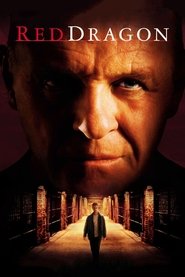
I went to New York with Dino, and I was very nervous. This was Tony, Anthony Hopkins. The thing I did know and what I was confident about was the type of movie I wanted to make. Like I said, I went in there knowing the tone of the movie, my approach to the movie, how I wanted to not show any of the gore. I didn't want to make a horror film. I wanted to make a film that was psychological, emotional, and smart. That was what was on the page. And the only scene that Tony had a concern with when I sat with him was this scene right here. Tony was concerned that as originally written, his attack on Graham here was too graphic. By the way, it's an interpretation because 10 directors would direct a scene in 10 different ways and show various degrees of violence. It's about showing the details of the guts falling out of his stomach, or the blood, how much blood to show. And I chose to play it mostly on their faces. Once the attack happens... Here's my little homage to Silence. You see the... - I see the bug. You like that. So I chose to play the violence part of this scene on their faces. I love this book. This is an original. My prop guy, Brad, found this original book from France, Larousse... When I read it, I had no idea what the hell it was. It's the bible of cookbooks. - Yes, I learned that quickly. He found this real old French cookbook. There was a lot of dialogue about how do we sell his moment? It's really just a subliminal thing. It wasn't really supposed to be so pointed where it was like, "Oh, sweetbreads." I thought sweetbreads was brains but it's not. It's actually... Thyroid. -... thymus. I learned so much about anatomy on this film. If you work on a Lecter movie, you learn a lot about cooking. I thought Edward was fantastic. There is a tremendous intensity of performances in this movie. And really a dream cast as Brett already said. If you could have anybody in the world for these parts and be lucky enough to get them. It's pretty much what happened to us. Great actors want to play good characters. They want to play great characters and all of these characters, down to Freddy Lounds, and other smaller roles, were just written so well. They were interesting and dynamic. And these actors were interested in playing this. To convince these actors to do a third in the series, all that went out the window when they read the script. Certainly once they started working. There's our cold opening. I'm very proud of this title sequence because it was actually done two days before we had to lock picture. My editor, Mark Helfrich actually was the brainchild behind this because... You re-shot the journal here in a very interesting way. Initially, this was done in a much more straightforward way with the images very flat against the screen. Yes, a lot of times. Mark is kind of... Everybody on my team, from my AD to my production designer, are filmmakers. Mark is a filmmaker in his own right and he just understands the visuals and storytelling. I love how, you know... But this was written. - Yes, it was. But the way that the camera roams over these pages and when we go in very close and it gets grainy, the camera movement left to right, up and down, is all not scripted, of course. This is something I don't really have the patience for. Mark kind of took this book that he was fascinated by. I think he has a copy of it in his closet at home. He just knew every page, every frame and went with Dante and literally just shot. This is a wonderful opportunity. This kind of title sequence is sort of old-fashioned in a way. But it's a wonderful opportunity for a screenwriter to get information in quickly to cover a lot of ground between the arrest of Lecter and where we are when the movie is going to start. Covering a period of several years, you are doing that without any dialogue just by these images. It's a very useful shorthand. Danny did the same thing that Ted did with the script in this sequence that Mark did with the visuals in this sequence. Danny did the same thing with the music. I think the music here is so fantastic. It's very much like a Bernard Hermann score, which I knew was a big inspiration for Danny. Danny is a big fan of Bernard, and this was his chance. He's done darker scores, but they've had a kind of lightness, or comedic darkness to it. Danny did something here that kind of made people's skin crawl in the theater, like, "You're in for it. "If you're gonna sit through this movie, you'll experience some stuff. "Shit's gonna go down."
6:02 · jump to transcript →
-
He's breathing heavy. It's probably the first time he's ever kissed a woman, or a living woman. Now, would you show me where the bathroom is? Then we went back and re-shot this. Why? For this insert. And that's digital blood in the water, believe it or not. It's done by the computer. It's just a wonderful little moment, because she can't see the teeth in the jar, or the shattered mirror. She doesn't realize the increasing danger she is in. Again, you're telling a story with visuals and not with dialogue, that really means very much. I have to do a little work. If I'm keeping you from work... - No. ...I'll go. - I want you to be here. I do. It's just a tape I need to watch. It won't take long. This is similar to my scene in Family Man, where he's watching the videotape. Another family movie, right! - Another family movie. I did the same thing with Danny, where he transitioned the recorded music on the tape into score. So now, this music in the background... - Right. Which is Duke Ellington. - Duke Ellington transitioning into the score. Right. No, it's great.
1:29:23 · jump to transcript →
-
I love this. Breast shots in movies are just... This is just the most bizarre seduction scene. That's what we liked about it. - This is the editor's daughter, by the way. Really? That's Mark's daughter? - She's so cute. Here we are with another family movie. You shot hundreds of feet of family videos. And this is the girl from Family Man, who played the neighbor. Oh, I didn't remember. - Yeah. Very talented and sexy woman, who I knew would help in arousing Ralph Fiennes. Lisa Thornhill. She's a great actress. I just love how many different things are going on here. He's aroused by seeing his next set of victims, as well as by the proximity of Reba. What's it about? She assumes he's watching some kind of business promotional video or something. She has no idea what he's watching. She's excited because she's rarely dated in recent years. And they're both so unsure of themselves. Emily is really a sexy woman. - Yeah, she is. Tremendous amount of sex appeal. It's homework. Yeah. There's nothing like this in any of Thomas Harris' other books. There's nothing quite so strange and wonderful as this kind of scene. It's so bold. - Yes, it's very bold. It was always one of the most powerful scenes in the book, to me. Francis Dolarhyde is so scared that he will hurt this woman, that he is falling in love with. And she is still unaware of how dangerous he is. See how the music transitions with the score. I'm good at shooting monitors, TV sets. Yes, I think you should only shoot TV sets and family videos. Will there be family videos in your next film? Absolutely. I love this shot. I like a lot of my shots, huh? This is... - A lot of great camera work. It lasts for about one second. It's already over. That's Francis Dolarhyde"s happiest moment of his life. Then immediately... - Paranoia sets in. Paranoia sets in, the fear, the anger... But notice the camera hasn't cut and it's going to go with him. This is Jimmy Muro, our Steadicam operator. He's unbelievably talented. It's very hard to operate because of the sheer weight and bulkiness of it, right? Also the distance showing, and then going in... The camera movement is also to hide his private parts. Well, of course. But it's very hard to hold this huge camera and move behind the actor. I love this with the blown-out windows.
1:30:49 · jump to transcript →
-
-
-
And this would be a good opportunity to mention the phenomenal score that Alan Silvestri did. The music here is particularly beautiful. Yeah, it's great. And what happens at a certain point there is the actors turn and the blimp become digital because the camera actually can't get that far off the soundstage. This shot here, that wide shot, was photographed by Greg Michael, the second unit director in Jordan.
1:02:08 · jump to transcript →
-
This next shot coming up is pretty neat because it has in-camera speed changes, which you'll see come up here, and kind of puts us in their minds. It's very subjective. And if you listen to the soundtrack, you'll see that the sound design does the same thing. Very effective. I really pushed Leslie on that because if I did a shot like this again, I would have more movement in the background so you could really feel the slowdown and speed up.
1:09:42 · jump to transcript →
-
Again, Alan Silvestri's score kicks in. Really terrific stuff. This is a classic Steve Sommers shot. The number of horsemen there is so outrageous. Ludicrous, some would say. In fact, there are exactly 10,000 horsemen there. The way that that was done, there were 200 men in a group, and it was photographed 50 times. There's a thing up at ILM called the Stephen Sommers scale.
1:16:46 · jump to transcript →
-
-
-
you know, finds him or herself in the apex of some kind of historical moment. And it's the innocence that is both challenged and sacrificed so that others may live. It's biblical. I mean, that combined with the haunting score, you almost don't need words to...
1:17:01 · jump to transcript →
-
to get the message of this movie and to feel the pain and suffering that these guys and the heroism that these guys are and went through. I was so fortunate to, we were so fortunate to be able to find a young composer named Klaus Bedelt who really had, was just, is just beginning and
1:17:28 · jump to transcript →
-
uh... a normal lens and uh... and uh... the film uh... the super part comes from uh... using part of the film negative that normally would be reserved for the soundtrack and so in the end you're forced to squeeze the film back down to allow for that soundtrack and that's where we ran into a little bit of a problem with the AC process but uh... we resolved it one way or another and uh... i think the movie looks pretty good i think the movie looks magnificent i was
1:22:47 · jump to transcript →
-
-
-
Andrew Niccol
You can just tell that this isn't California. I also like that Yuri and Valentine have this philosophical debate in the middle of nowhere. Antonio Pinto, the composer, composed a score for this scene. Very beautiful.
1:14:47 · jump to transcript →
-
Andrew Niccol
score, but in the end I didn't use it because I wanted just to hear the emptiness. Just the natural sounds of Africa. I love the righteousness of Valentine. All the facts that he spews in this rant are true.
1:15:16 · jump to transcript →
-
Andrew Niccol
Often the score can be used as a crutch, and the scene didn't need it. It could stand on its own merits.
1:26:43 · jump to transcript →
-
-
director · 1h 37m 4 mentions
John Cameron Mitchell, Justin Vivian Bond, Sook-Yin Lee, Paul Dawson + 1
-
three hours in West End Avenue. Who's this artist? Ezra Ray. Ezra Ray, who are in Saddle Creek. A friend of mine used to produce some of their songs, which is how I met them. I didn't meet them, but I met one of them, but I didn't. I was listening to the soundtrack, the Shortbust soundtrack last night. It was really...
16:54 · jump to transcript →
-
that he's there. This is Reg Vermieu. Gentleman Reg. Gentleman Reg is his band, who he has a song on the soundtrack that's actually playing right now. And he's not an albino. He's not an albino, but he's representing. If you look, there is pigment in his eyes. Yeah, he's sort of related to an albino, but not quite. He's like half albino. He's albinesque. He's albinesque. I hope albinos aren't offended by that, but I don't know. I played straight in my day.
23:25 · jump to transcript →
-
bed of the craft service was Jasper James, who has a song on the soundtrack, brilliant performer, whose pussy I ate, and we were very shy with each other, but then felt closer after. I just noticed everything matches. The remote, your shirt. Yeah, we all wear sort of coordinated to a color. It's a palette. Right? Mine was...
1:09:19 · jump to transcript →
-
-
-
because it gives him some kind of pleasure just pondering these things. The body of Himmler. Is that what we see up there? Yeah, you see Himmler committed suicide when he was caught. And here in the background we also hear an original song by Per Gessle. You know, this is the singer and composer in the famous Swedish group
16:47 · jump to transcript →
-
He gives us a little smile again. One of those. But it is in fact a quote from Romeo and Juliet. Well, it's just this one in the movie. Romeo and Juliet by August Strindberg, the Swedish author, you know. Yeah. The music is so beautiful here. Johan Söderqvist, the composer, has one of his highlights here.
59:03 · jump to transcript →
-
And this is Agnetha Fältskog, former singer of ABBA, singing for us. Yeah, an own composition. She's a very good composer, Agnetha Fältskog. And this is recorded somewhere in 68 or 69, I think. It's a beautiful song. It's very typical Swedish Channel 3 radio sound.
1:05:57 · jump to transcript →
-
-
-
Kat Ellinger
I come here today not just as a film historian, not just as somebody who generally specialises in exploitation film, especially that from the rape revenge genre. I also come here today as a survivor of rape. Baise-moi on that score is a film that is highly personal to me. It says so much, not just about rape, but
0:21 · jump to transcript →
-
Kat Ellinger
think in the case of Virginie Despentes she came out of punk she came out of this movement and music if you look at the soundtrack to this for example i think she again some of the aspects of that that are in the book so nadine for example was really obsessed with music and there's even a scene in it where she goes and she kills a shop assistant she goes in to get a walkman
53:57 · jump to transcript →
-
Kat Ellinger
and ends up killing him and taking, like, five Walkmans. No, she goes in to buy batteries, sorry. Ends up with all these Walkmans. But soundtrack is, like, really important to Nadine, as it is to Despentes. If you look at her later works, so the film that she directed after this, in her last film, Bye Bye Blondie, from 2012, that is also a very punk film.
54:22 · jump to transcript →
-
-
-
I told him this is a very sensitive movie, although it's a martial art film, that he could do it once, then end up doing it twice. Everything else is out of his character. It's very mellow, very movie music. It's interesting because Tan Dun being such a great composer in the world of classical music, both Western and Eastern, and he was kind of a scary prospect for some of the people in the production because, well, you could do an imitation of some of his music. It's a lot of...
0:49 · jump to transcript →
-
Now you're kind of full throttle in terms of the floating and stuff. How'd you come up with the score? Well, I always fantasize about using the drums, the percussion in the fighting sequence. I tried in the last movie, Ride with the Devil, but it sort of collided with the gunshots. Didn't work out as well as here. Right, because they're not shooting at you. Yeah, they're not shooting, they're not...
18:20 · jump to transcript →
-
I remember the other thing that was a little nerve-wracking about this was we were recording score in Shanghai, and we got to this last piece with all those glissandos and the percussion that you'll start to hear, it will start to kick in. And it sounded very, by itself it sounded very funky, but I think once you see it against picture, it really works emotionally. Well, I also altered the glissando a little bit. That's right, yeah, in the mix. I think it really helps, so it doesn't sound like...
1:53:31 · jump to transcript →
-
-
-
Ridley Scott
bad guys. Criminals have family and brothers that they love. So now we have something with a true, something really to settle, a score to settle. I always liked this shot where he comes out of the dark on the close shot. It looks like
1:20:30 · jump to transcript →
-
Ridley Scott
- Hans' score, which I think is beautiful. And this is the fourth film that I've done with Hans.
1:34:19 · jump to transcript →
-
Ridley Scott
are viewed as being romantic with the soundtrack. I like the shot of the bridge and the score with it. Here he is tidying up because he's a very neat man. Of course, he's taking something else for the journey. Right.
2:01:44 · jump to transcript →
-
-
director · 3h 29m 3 mentions
The Lord of the Rings The Fellowship of the Ring (2001)
Peter Jackson, Fran Walsh, Philippa Boyens
-
And one of their key and mandatory notes was, you must have a prologue, which was for us sort of like, oh, God, we're back there again. It had become a sort of hell for us. And so we found ourselves in England recording the score with an Avid machine jammed into one of the rooms in the house. Our editor, John Gilbert, came over with a bunch of footage.
1:59 · jump to transcript →
-
And it was up to us at that point to construct the prologue. And this had to happen sort of during the time we were also doing the score. It was a big strain. It was quite a hard thing. And basically the exact cut that's in the movie now is what got done in London during that period of time.
2:25 · jump to transcript →
-
In a way the inspiration for the soundtrack here was really a Heavenly Creatures inspiration that the scene at the end of Heavenly Creatures when the mother is being led down the track by the two girls we used the humming chorus and we sort of took all of the sounds away and in a sense I kept playing that in my mind over and over again when we were filming this and so you know in some respects I
3:09:31 · jump to transcript →
-
-
director · 3h 43m 3 mentions
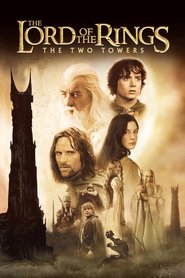
The Lord of the Rings The Two Towers (2002)
Peter Jackson, Fran Walsh, Philippa Boyens
-
Two minutes, two and a half minutes by 737 is taking off about 50 feet away. It was like roaring. The actors just had to keep on going. And if you listen to the real sound, because obviously this soundtrack has been enhanced and changed and there's additional, you know, there's other dialogue been put over the top and so it's all been cleaned up, but the original location sound is just interrupted by the roar of aeroplanes all the time. They could have been Nazgul. Well, they could have been loud Felbys, couldn't they? Yeah.
51:06 · jump to transcript →
-
And during Christopher Lee's speech here, I wanted him to have reactions because those Eureks are cheering at what he's saying. And so we got all the crew together, all the grips and gaffers and everyone we could find in the studio, about 30 people. And I got them to cheer Christopher every time. He said, if you hear this with the original soundtrack, because this is obviously ADR, you get to hear all those guys clapping and cheering. That's Nuremberg, really. That was the obvious influence for this stuff. That sort of imagery is so potent in it.
2:05:10 · jump to transcript →
-
was what voted the sexiest man in australia yes which is why i suspect he was possibly chosen for the role yes definitely now he's also one of the funniest guys you'll ever meet he's very funny it's always very difficult to have waterfalls in films because from a sound point of view the noise that a waterfall makes is a horrible roaring kind of white noise and when you're mixing the soundtrack you never kind of quite know how much waterfall to have because even though it's right behind them
2:16:35 · jump to transcript →
-
-
director · 4h 13m 3 mentions
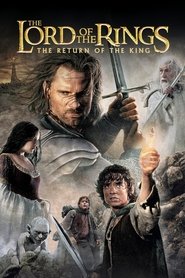
The Lord of the Rings The Return of the King (2003)
Peter Jackson, Fran Walsh, Philippa Boyens
-
and Gollum goes into this slight reverie, this moment, and that was the cue for the flashback. And for length reasons, we didn't put it in the theatrical The Two Towers, and then we thought, by the time we were cutting the extended edition of The Two Towers, we had got the idea at that stage to maybe save it for this movie. We'd done the big James Bond kind of pre-credit sequence thing on The Two Towers with a big fight, and I didn't want to have to sit and dream up another big slam-bang action scene for this film, because it felt like we'd been falling into a pattern.
2:47 · jump to transcript →
-
down on the docks, and all of the original soundtrack, because what you're listening to here is not original, it's all added, the dialogue's added later, but the original soundtrack, you can actually hear the sound of trains, because right outside there was a big container wharf, and there were these trains that were running backwards and forwards with containers, loading them on and off, and shunting engines, and it was as noisy as all hell, but it was actually, it was the biggest...
44:26 · jump to transcript →
-
I just love the majestic size of the sequence and how it does a beautiful musical track through here. Ah, stunning score. And finally, Aragorn is back in the story. That was one of our...
1:06:45 · jump to transcript →
-
-
-
James Mangold
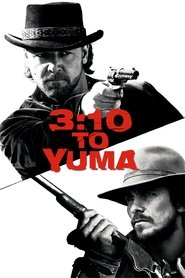
It's also a good place to talk about that, which again, we very much wanted to reach into the references to the Spaghetti Western and the Great Italian Westerns as much as the American ones for the kind of score we were doing on the film. I didn't want the film musically to feel overblown. In a way, every Western made for the last 20 years always feels like it's very, quote, important.
32:15 · jump to transcript →
-
James Mangold
And sometimes the Westerns we really love, when you think of them, they are important cinematically, looking back in history, but they didn't act important. They told their story and the music didn't announce their importance. It really followed the lines of the character story and the flow and the jazz between the characters. Marco's score really captures that, I think, and is a real tip of the hat to the great scores by Ennio Morricone, as well as others, without mimicking them.
32:45 · jump to transcript →
-
James Mangold
One of the things you try and do with sound in a movie is decide when you wanna do, I think, make a really good sounding film, is you have to decide whose turn it is to sing, if you will. And this is one of the moments where we decided that sound effects were gonna become less important, and we were gonna let Marco Beltrami's score really come front and center. In the previous parts of the gunfight, we had had hardly any music, and he had played a secondary role to the sound effects. But here it's his turn.
1:46:55 · jump to transcript →
-
-
director · 1h 36m 3 mentions
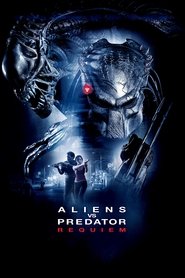
Aliens vs. Predator - Requiem (2007)
Colin Strause, Greg Strause, John Davis
-
And that's the real address. That's the real address, yeah. We were shooting it. It was the one thing we didn't look at when we were prepping the house. And that door opened, and we're like, oh, that's really long. And then we're thinking about, should we digitally paint that out so it doesn't look so crazy? And we're like, yeah, we'll just better put the money somewhere else. Exactly. Now, this is the part where Brian Tyler called originally. I don't think he made it on the CD with this name, but he called the score in this section...
17:32 · jump to transcript →
-
Bum Feast, right? Bum Feast, yes. I think he had to change. I think they made him change it for the CD. Yes, Brian was our composer. Did a fantastic job on this movie. And it was a really fun process for us to work with Brian because he's got his own recording studio, and it's in the back of his house. And it's a really fantastic studio. He's got all the instruments there. And as he composed, we went to the house probably about 10 or 15 times.
18:00 · jump to transcript →
-
the music and also we didn't want any contemporary music in the film so we actually you know already needle drop stuff from you know and this is the only place there is contemporary but it's not used as score and it's actually Brian and it's Brian Tyler actually playing the guitar it's like his actual original music and it was just kind of a cool thing to actually say like there's everything in here is done by our composer and there's not a single note from anyone else in this again I loved going into our composer's house he had
44:57 · jump to transcript →
-
-
-
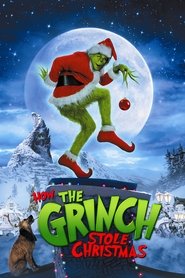
Ron Howard
James Horner's score for this film was really a delight. He had a great time working on it. Lots of odd instruments sprinkled into fairly traditional orchestrations.
16:29 · jump to transcript →
-
Ron Howard
But he just seemed to thoroughly enjoy the whole experience. He has such range as a composer. This is the same guy who did Braveheart and Glory and Apollo 13. And yet here, he's completely capturing the spirit of Christmas. Also wrote all the Christmas songs that the Who's sing.
16:51 · jump to transcript →
-
-
director · 2h 10m 2 mentions
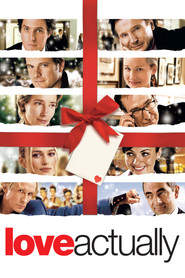
Richard Curtis, Hugh Grant, Bill Nighy, Thomas Sangster
-
The music, by the way, is by Craig Armstrong, fantastic Scottish composer, used to be in Massive Attack, used to be in Texas. Moved on. And we had lots of discussions about... We chose him 'cause he does this beautiful, melancholy music, but then of course I kept on wanting perky little tunes like this. And it was a struggle for Craig to be optimistic, but I think I have maybe changed his life by showing him a happy way. I've done that a bit with you, Hugh, haven't I? Yes, you have. You have. You've opened my eyes.
18:47 · jump to transcript →
-
All I want for Christmas Is you Yes! There we go! - Look at him show off. We're rocking now. Brilliant. That took me ages. I kept coming in late all the time. Was that the most complicated bit? Yeah, I think so. I had to come in right on the cue.
1:52:16 · jump to transcript →
-
-
multi · 1h 3m 2 mentions
Star Wars: Clone Wars, Volume Two (2005)
Genndy Tartakovsky, Bryan Andrews, Paul Rudish, Darrick Bachman
-
Mainly the reason for that is because his son was excited about to see how Ki-Adi-Mundi was going to get out of it and how it was going to finish. So we, our first order of business was to settle the score and see, you know, finish the story. Paul, you want to talk about how the face on the gunship came about? Just, you know, thinking about, like, cool World War II P-51s and, you know, Apache helicopters and stuff, and you'd like to put the shark mouth on there and sort of like, let's do a tricked-out paint job for the tricked-out ARC troopers and...
0:33 · jump to transcript →
-
And it just gets to be a lot. And now we've got moving fights through trains, and it just gets really intense. In the meantime, the time is shrinking, the time is shrinking, and the time is shrinking. This is another one of those scenes where the soundtrack really ends up selling it. Yeah, the music is incredible. And just the sound of the trains and everything. Yeah.
45:46 · jump to transcript →
-
-
-
I think John Murphy, the composer, understood very well the use of the intensity and the silence, which I think is one of the... It was the concept with the music, you know? The silence is quite important in the story to deliver the idea of the emptiness. And the intensity of the music, as well, to convey that feeling about the... that the infection is so dangerous and... The combination between the music and the silence builds - moments like this one, for example - moments of pure horror. That was one of the most difficult sequences to work with, what with extras, what with... you know, a very small place. 300... sometimes 400 extras in a garage. Especially because... I say the same, you know? To see the panic and how people are losing control is always difficult because, in a way, you're forcing the extras and the actors to feel something disgusting, which is this kind of panic moment. In these tiny places, we were with two units, because it was really difficult to accomplish... to achieve everything in four days. So in one part, Juan Carlos was shooting these massive sequences, and I was in a very tiny room working on the gory sequences. It was really funny.
47:38 · jump to transcript →
-
It's driving them crazy, because, you know, it's so difficult to see who is infected and who is not infected. And, again, a character taking a difficult decision, which is one of the leitmotifs in the movies... in the movie. A right decision or a wrong decision? But always it's a decision that implies destruction. Yeah, and all these decisions have been taken from the fear. The fear is... Everything is around the fear here. Everybody takes a decision in this... in the presence of the fear, which is moving everything forward. When you're watching the movie you understand why people take these decisions, because I think when we feel this fear in the real life, you're in trouble. It's not a cold decision, it's not a decision taken from a quiet moment. It's... when you're surrounded by something really powerful as the infection. This tune, this theme, was taken - musically - was taken from the first movie. This is a tune we always loved from the first movie, from John Murphy's soundtrack. And we had no time for John's... He had only two weeks to compose the music of the film. This is absolutely amazing to say that, but it's the truth. And we decided to bring this theme again back here in this sequel, and to work it in different ways. For me, it's hypnotical. I... I like the way we use it here. I like the way that John orchestrated and arranged absolutely in a different... It's different from the first one. We are going to hear this tune four times in the movie, in key moments. This is one of them. And that... this sound, this music, reminds that the infection is a building process. The infection is spreading. That's why the music is building up and, you know, getting this kind of big, intense moment with the guitars, which is the best combination with the infection around. On the other hand, the music has a kind of heart, emotional heart, which is telling that this movie is about character, it's about people... who try to survive. Now there's the moment of Doyle's dilemma. Another decision to take, another difficult decision to take, which is to put out of his misery his colleague.
54:07 · jump to transcript →
-
-
-
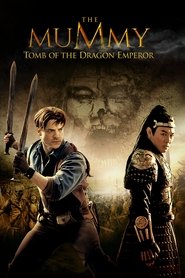
Rob Cohen
All that stuff you hear in the soundtrack was stuff that I did with sound designer and sound effects editor Bruce Stambler, who's done xXx, The Fast and the Furious, Stealth for me, the wonderfully vivid sound environments that are created around those films. The soundtrack is literally half of your impact in the viewing.
1:20:21 · jump to transcript →
-
Rob Cohen
that I've had all my life, as I've explained to you. So when I heard that even though it was Mummy 3, as it was called then, it had the allure of a chance to do an epic fantasy in China. And my friend Randy Edelman, who wrote the score, did a beautiful thematic job and with some additional cues by John Debney, a terrific composer as well.
1:42:59 · jump to transcript →
-
-




Related topics
Other topics that frequently come up in the same commentaries.