Topics / Editing & post
The score
117 commentaries in the archive discuss this, with 416 total mentions and 49 sampled passages on this page.
Filter commentaries
Filter this topic by the film's decade or the type of commentary.
Showing 26 of 117 commentaries
Clear filtersBy decade
Across the archive
ranked by mentions · click any passage for the moment in the transcript
-
director · 1h 31m 7 mentions
Alex Cox, Michael Nesmith, Victoria Thomas, Sy Richardson + 2
-
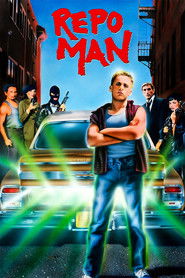
Universal's interested, they're not interested. They're interested again. What is their problem? You know what the funny thing, speaking about the music of Repo Man, was that it seems like that was one of the first compilation of soundtracks of bands, actual bands, instead of just a composer. You know, the only other thing I can think of that's analogous to that would be Easy Rider. Because remember the Easy Rider album was a great compilation album, and very of that time.
12:25 · jump to transcript →
-
It's amazing. Sometimes you just call them up. People are afraid to call. They just call you up and just say, will you come do this? That's the way I did a thing for a guy that called me up to score a movie. I said, sure.
35:01 · jump to transcript →
-
He fainted. That was before he heard the score or after? No, after he heard the score. Alex, how long did it take you to write this, or what were the circumstances writing this? It was what you said. I wrote the speech for Cy and the speech for Tracy as audition speeches. Right. And we included part of Cy's speech in the film and part of it on the song, and most of Tracy's in this scene. And you just...
35:17 · jump to transcript →
-
-
-
by proximity to the score. They dump their clothes when they come out because it could be metal filings and that saves them better themselves in the clothes. And they're distancing themselves from any forensics investigation that would link them to the score. That's why they drop their clothes in the alley. That's why they have separate cars. So by the time these guys get out of their work car, the blue car on the right, and jump into the private cars and take off, they could be stopped for popping a red light and there's nothing on them that could tie them to the robbery that they've just done.
9:22 · jump to transcript →
-
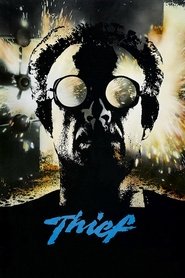
One thief's cousin had married this detective's wife. Well, it's just like in my neighborhood, people don't realize, or don't come from, Michael does come from the neighborhood, and I come from the neighborhood in, you know, Brooklyn and Queens, where it was not uncommon for one brother to be a thief and another brother to be a policeman. And what you were saying, everybody was sitting around. We were sitting around, and they started talking about these old scores, a score being a robbery.
10:21 · jump to transcript →
-
Some of my other work that I really appreciate right here. This is a local character, a guy dancing to polka. We found him in a bar. Again, authentic. This bar as well. Hey, Jose Greco, sit down. Jose Greco was a flamenco dancer who was big in the 50s. I got this business deal from your end of the L.A. score.
1:02:43 · jump to transcript →
-
-
-
William Friedkin
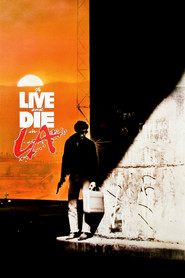
When I asked them to write the score for the film, I said, one thing I don't want you to do is write a theme song. Don't write a song that has any lyrics, let alone the lyric to Live and Die in L.A. To my amazement, they, one day in the editing room, handed me a song that they had written and recorded with that title, and it was meant to be the signature song of the picture.
3:15 · jump to transcript →
-
William Friedkin
but the beat and the melody were insinuating and sinuous and very sensual and evocative, I thought. And so I met with the two fellows, Jack Hues and Nick Feldman, who comprised this group, and I told them I would be interested in having them write a score for To Live and Die in L.A., but I hadn't made the movie yet, and I didn't even finish the script at that time.
1:16:15 · jump to transcript →
-
William Friedkin
I had done this once before with the group Tangerine Dream for a film I had made called Sorcerer. I heard that group playing in an abandoned church out in the Black Forest in Germany at 3 o'clock one morning, and it struck me as being the perfect soundtrack for the film that I hadn't made yet. And so I approached them to do the same thing that Wang Chung did. I think in both cases the scores turned out to be very good, although
1:18:11 · jump to transcript →
-
-
multi · 2h 34m 4 mentions
James Cameron, Gale Anne Hurd, Stan Winston, Robert Skotak + 8
-
Bill Paxton
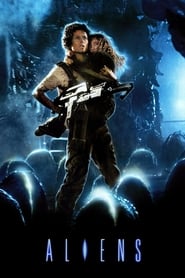
James Horner came up with this music sting here and I always thought it was totally over the top. When I saw the whole film put together with the score, I thought "No, that's what we need." I thought "How can you sting somebody opening their eyes?" But it works. Oh! Mm-hm. She shouldn't have had the bangers and mash. Kill it. Fry it. Come on. What are you doing, Hicks? Bad-ass nasty shot. That's a nasty shot of that thing. That's a good shot of it there getting fried. Gosh. Here they come. I think our chestburster looks a little cooler than the one in the first film. Stan Winston's guys really did a good job on it. John Rosengrant and Shane Mahan. Look who's back. Another one of our problems to solve for this movie was creating the whole army of warrior aliens and being legitimate to the original movie but having to improve on it for movement and for the look of being able to study them. In the original A/ien they were rubber suits and very difficult for the actor to move around in. And yet he was very tall and very skinny. And Jim wanted to do a lot of very interesting moves with the warrior aliens, so we came up with a technique to create the suit that really involved a lot of spandex and pieces on it. And then we designed the set pieces for the aliens to fit into the walls, like the one that is behind him there, so that the camouflage would work. An enormous amount of wirework for all of these stunt alien performers, which required that the alien costumes be extremely user-friendly. This was inspired by the scene in the first film where Dallas is in the air vents and they see the signal moving and get a little freaked, and Veronica Cartwright says "Get outta there" and he makes the wrong move and gets killed. That's one of the most suspenseful scenes in the first film. I took that idea that they're getting these readings that are getting them spooked and then they make some bad moves. Form follows function. This is a perfect example of it. You start with what it is you wanna achieve, and once you have that, you can design it, so the actions and the performance is consistent with what you want in the finished film. Believe it or not, very few people work that way. They just wanna come up with something that's cool, and then you spend hours and hours trying to get it to work for the ultimate film. I happen to agree with Gale. My background is as an actor. I really come from a place where the creatures and the characters are wonderful to look at, but it's always about their performance. We have to figure out how they're gonna be able to act, and create a good performance, or it's a waste. And so that's really always at the top of the priority list when we're creating any creature - what is it gonna do and how is it gonna do it? What he does is create a character, and that's why I think his work is So unique. When you look at a film, you can always tell who's done the creatures, if they actually have a character. Because he creates a character that can act and perform. The whole film builds to this moment, where the power transfers from the authoritarian structure to the individual who takes action. Ripley's not supposed to do anything. She's just there as an observer. We're coming up to a sequence where Sigourney takes control of the APC and this sequence is comprised of live-action shots, but as it comes down this hallway and is banging into pipes and walls and sparking, that's all done in miniature. In some cases, the cameraman - cos the set was mounted at an angle - was on a cart, a wheeled cart, and was rolling backwards as the radio-controlled APC was coming at camera. There was a point when he was just put into free fall, rolling backwards downhill, photographing what was in front of him as he went backwards. Here we go. - This is the shot. This is also miniatures. There was a shot with the full-size when the brakes didn't work, and took out the camera, and luckily it was a remote-operated camera. It was the shot where we were actually crushing an alien warrior, when it broke through. This is the shot, actually, when it took the camera out. Then there's another shot where it takes down an alien.
1:12:00 · jump to transcript →
-
Bill Paxton
Look at this. Big old queen inside that little elevator. We'll just keep it dark inside. It's a black curtain at the back of it that she's coming through. You think it's all lost and there it is. It's hard to imagine how fast that actually moved in real time. Any time the miniature is supposed to be traveling fast, it had to be traveling three, four, five times as fast. This down-view was extended with mirrors on the stage floor. It was not apparent in the shot with the fireball coming up, the earlier cut, as you see this set continuing very far down, but those are mirrors on the studio floor. IIn addition to the pyro, we used flashbulbs, buried in the set, to give extra flashes. This is another instance where the score is so terrific as well. When we were in the scoring stage, this was the last cue that Jamie had finished. And then there was no... It was like "OK. And then what?" "I didn't get around to the last cue of the film." And in a miraculous burst of creativity, he generated the final cue overnight. I didn't know how to work with an orchestral composer when I made this. I don't think James knew how to work with directors that well. I think he was a brilliant composer, but he had a lot to learn and so did I. By the way, that nuclear explosion is a big light bulb. Literally, a light bulb covered with cotton. We didn't have any budget for a big effect there, so we just made something up. But it didn't create problems between us personalitywise but I went to the scoring session expecting to hear the movie, and an orchestra started to play stuff that didn't work. The music was beautiful, but it didn't work on a scene-by-scene basis. I didn't know what to do. There was no second round. It was like "Here's your score." And James went off to another film. We wound up doing an awful lot of music editing and moving stuff around. He was never happy with the outcome even though he got an Academy Award nomination cos it didn't reflect what he had created, and I didn't like the process. So when we got together on //fanic, I said: "What can we do so that doesn't happen again?" "Cos I like your music and I want you to do this film." So we worked out a methodology by which we'd communicate better. And that was a great experience, by contrast.
2:20:46 · jump to transcript →
-
Bill Paxton
Interesting that we chose not to score this. I just felt it had a greater sense of reality and it might seem a little over the top if it was being driven by music, whereas it plays very real, somehow, without music.
2:27:49 · jump to transcript →
-
-
-
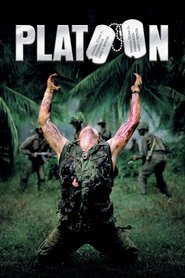
Oliver Stone
I looked for a man with a death's head. Crossing Dollies, I remember we did that at the airport. That was an interesting shot. And Adagio by Samuel Barber sort of came about because we wanted a noble theme, a solemn theme, an austere one. And in the temp dub, while we were editing the film, we cut it to Barber. We asked our composer, Georges Delarue,
2:32 · jump to transcript →
-
Oliver Stone
French composer who worked with Francois Truffaut to follow this style of this. And he worked very hard, Georges, and worked very difficult hours to match the majesty of Barber, but it's impossible. We ended up using much of Georges' music in the movie, and we'll see that later, but this opening theme could not be matched, so we went with the adagio from the temp job and we left it into the final
3:00 · jump to transcript →
-
Oliver Stone
These soldiers, I would say, were not politicized in any sense. They knew the war sucked. They had that feeling already. And, you know, Muhammad Ali characterized it. I ain't got no dispute with the gooks, he said something like that, with the Viet Cong. I ain't got no dispute with the Viet Cong. And he went to jail for it. And these guys all knew the score. They knew that the war was a lot of bogus political maneuvering.
32:02 · jump to transcript →
-
-
-
You told me, let's have it so that he's going to party with the waves. Uh-huh. So we were working on it to the very last minute, getting that whole sense of he's going to party with the waves and all that, which is so great. And then, you know, we had to put it on cue cards for him. And there was something about what he did that day. It just felt like, whoa, this is really good. So I asked for the cue cards, and they're,
33:22 · jump to transcript →
-
Do you remember what this restaurant was? I think I know it. It's like a big German restaurant, I think, in the valley. Very woodsy-looking and, you know, theme restaurant. Now, I don't know if you remember our situation with our composer who didn't pull through with any compositions, but...
38:15 · jump to transcript →
-
You saw the future of rock. You definitely did. Well, the 10 seconds of punk. And Walter, the punk extra. Yeah. And then here it comes again. I think we just have to deal with the fact that you made a movie which has the most complete collection of Southern California singer-songwriter music maybe ever in a soundtrack. That I didn't want to be using.
58:04 · jump to transcript →
-
-
-
Jim Piddock
He's gone, in a sense. Well, well beyond words, like a great composer. Although the great composer will always need his notes. So I suppose the analogy doesn't quite hold in that sense. There's the dog again. Wonderful, natural motion. You really would never know, would you? It's remarkable. Anyway, as I was saying, the great composer will never get beyond music, whereas the great writer may sometimes soar well beyond words. And this may be why many consider writing to be the higher art. At any rate, here...
24:22 · jump to transcript →
-
Jim Piddock
what do you call it, not the fairway, the Grand Promenade, the Midway, that's what they call it, the Midway. There's a sort of test your arm affair and you can win prizes by hurling a softball at pyramids of milk bottles and she jumps up and down and points at the ceramic walrus. Something about it has struck her fancy and she simply must have it. That makes no sense, but you know how lovers are. All done in pantomime with calliope music on the soundtrack. Very effective silent storytelling.
1:03:22 · jump to transcript →
-
Jim Piddock
To wit, for his own childish score-settling reasons, Mr Adrian Butts is trying to scuttle the deal. And Forever Young is about to lose all the Merchant Ivories. And Merchant and Ivory and the woman Ruth Prawa Javala have probably not even heard about our offer and are being put to unwitting use in the service of an appallingly petty personal vendetta being waged by a sibilant little rodent named Adrian Butts. Well, we'll see about this.
1:14:53 · jump to transcript →
-
-
-
Gary Goddard
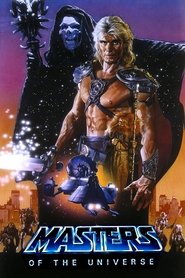
And I like that shot. We moved from a, I don't know if you noticed, we just moved from a medium shot into a tight two shot with them as they move forward. If you really look at this whole sequence, I think we tell this whole story in three shots, if I remember correctly. The first one that came in that grabbed them, then this one. Now we follow them to the car, I believe. Yeah, I like the way that moves. If you listen to the back and the soundtrack there, that's my voice somewhere in there. I can't remember where, but...
40:33 · jump to transcript →
-
Gary Goddard
prior to the scoring being done so it would appear fairly realistic rather than having him hum something or whistle something and filling it in later. So that theme, I met with Bill Conti early on and we established that theme. That became the theme for The Cosmic Key and became one of the key themes for the movie itself when the score was being done.
1:19:51 · jump to transcript →
-
Gary Goddard
and Robbie's eyes, and these fantastic creatures come into different scenes, and you don't question it. You go, well, you don't say, that looks weird, that looks stupid, that looks dumb. I think Bill Stout's contributions in terms of the design and the costumes and the look, I think the cinematographer's contributions once we got the look right, I think that Bill Connie's score was a big help.
1:42:59 · jump to transcript →
-
-
-
Barry Levinson
The aspect of the drum, which plays throughout the movie, has a certain kind of rhythm to it. And then ultimately, Hans Zimmer's score, which is very percussion-oriented, has no strings at all. One of the things we talked about very early on is I didn't want any kind of strings at all in it, because I thought it would make the movie too melodramatic.
2:03 · jump to transcript →
-
Barry Levinson
The piece of music here is Scatterlings of Africa, which is a piece of music I heard, and somehow I thought that it was appropriate to the movie. And what it did was inspire the score that Hans Zimmer ultimately did, which is kind of an African sound, again, because it is rhythmic and it's percussion-oriented. And as it turns out, that is something that autistics respond to because of the rhythms of it all. So, as I say, I thought that it seemed appropriate to us and it kept us away from that.
8:18 · jump to transcript →
-
Barry Levinson
This sequence was really designed, in a sense, to see through the eyes of an autistic, the things that would draw his attention. So we look at the road as he may see it. And then again, as I said earlier about scatterlings of Africa, which was used at the beginning of Palm Springs, now in Hans Zimmer's score,
1:18:46 · jump to transcript →
-
-
-
Paul Davis
It's a beautiful score of Elmer Bernstein. There's very little music, scored music, in an American Werewolf in London, because it's probably most notable for the use of songs that all have moon in the title. Not something that was anything significant on John Landis' part. He just says that it was a stupid thing that an 18-year-old writing a screenplay does.
5:56 · jump to transcript →
-
Paul Davis
Again, beautiful score by Elmer Bernstein, which was recorded at, I believe it's Olympic Studios in Barnes, which is, you know, the Beatles recorded there, the Stones. And Elmer Bernstein really wanted to write the music for David's transformation. And John knew...
47:57 · jump to transcript →
-
-
-
I wanna say something about the music here. Electronic music really didn't exist in movies... ...very much at all. High-tech music was pretty low-tech at the time. And Arthur Rubinstein, who did the score... ...was actually trying to mimic a German group... ...who did wonderful electronic scores. But the equipment that we had in Los Angeles at the time... ...was very, very primitive. I mean, they were literally putting microphones in 5-gallon glass jars... ...putting the glass jar underneath the piano and playing it... ...to get, you know, wacky sounds. And they would record all kinds of things... ...that we could never really hear in combination. We would hear just a bass track, or a treble track, or, you know... ...assorted noises, but have no idea what the whole score sounded like. Only Arthur knew what it sounded like. And so we didn't know till we got on the final mixing stage... ...in the weeks before release what this music score... ...was gonna come out like. It could've been terrible. It could've been good, you know. But it was anxiety-making. --
25:56 · jump to transcript →
-
This music has been used over and over and over... ...in various commercials along the... - Oh, yeah. Well, Arthur Rubinstein told me that-- First of all, he got a lot of work on other movies out of this movie. And he would go in to see the other movie he'd been hired for... ...and they would've used this score... ...to put temporarily on to their movie.
1:47:46 · jump to transcript →
-
-
-
And it's good, old, romantic, sweeping music. And basically that's what this is, is effectively a silent movie dominated by this incredible score. Myrtle Devenish is the only woman in it. Myrtle had been kind of my good luck charm. She had been in Brazil. She was the secretary of typing for Mike Palin's Torturer. She'd been in Time Bandits. She was just...
4:06 · jump to transcript →
-
They're harder to do than you can imagine. I forgot, we had another set here. We had this bit here, the modern building. Now that I'm looking at this thing, I realize why it costs so much. It just keeps expanding. It goes on and on, endless shots. The good thing on this DVD is the soundtrack is much better than it was in the original film.
10:00 · jump to transcript →
-
-
-
who went on to have a huge, huge hit with Born Slippy in the 1990s. And I presume that they had some fondness for their recollection of having done the soundtrack to Underworld, given that they renamed their band Underworld. They had a fallout with the management. The management owned the name Freur, so they had to change it to Underworld, and that's why they chose the name from the film. Yeah. I think it's one of those instances where if...
1:22:06 · jump to transcript →
-
If it was too late to make changes with the soundtrack, then obviously you just had to roll with it. But it would be fascinating to see what a different kind of score would do to the overall mood of the film. Sure. I mean, it's grown on me, you know. I'll admit that it has grown on me. There are places where I wish it was different. There are places where I really like it. But, yeah, again, it's just one of the things I had no control over.
1:22:34 · jump to transcript →
-
-
-
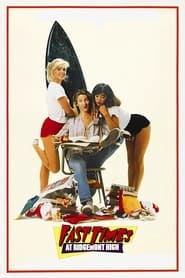
I'm not sure I agree, but it's possible. This man should not be teaching. Proof is right here in these test results. Look for yourself, Mr. Shoop. Passing is 70. Average score here was 63. They failed. That is not true, Mr. Gills. You mean we passed? Well, no, no, not all of you. But that's not what's important here. Larry, what from an 18 to a 51?
1:30:01 · jump to transcript →
-
No previous test score because you ditched every test, but a 38. Honey, that's terrific. We'll get him next time. Kevin. Yeah. From a 48 to a 75. Yeah! I'm back on the team! Yeah! Yeah!
1:30:59 · jump to transcript →
-
-
-
And this is acid, literally acid on a styrofoam countertop. Now, that was a rule. Like, who came up with the rules of the blob? By the way, the use of no score in this is masterful. Because when the reveal hits and the sting happens. There it is. There it is going up over his face. That shot. There's a makeup on him, but all that stretching is the real face. Yeah, there's a whole rig that he's in that's rolling across the floor. Look at that. When she's running up to him, she looks like miniature. Miniature.
26:31 · jump to transcript →
-
I think this is some of Michael Hoenig's best work in the movie. Like at this point, you know, that percussion, like that hits for when the truck comes out. It strengthens Shawnee's part too. He did a great job, our composer. No shortage of cliffhangers at this scene. Everyone's on the edge of their seat. This is really a miniature. This one kind of feels good. This is the water tank that never happened. We had the...
1:25:08 · jump to transcript →
-
-
director · 1h 24m 2 mentions
The Naked Gun: From the Files of Police Squad! (1988)
David Zucker, Robert K. Weiss, Peter Tilden
-
An excellent musical score by Ira Newborn. Yeah. Steering clear of the jokes, yet conveying the appropriate drama of the scene. Oh, that's right. With music, you have to be very careful about comedy. Bob's his agent, too. Available for bar mitzvahs, weddings. Now, I think you see this joke coming a couple of miles ahead of time. For some. There were some people who were surprised. I think you give people a lot of credit. I think they just watched the movie in the moment. Don't you think? Such as we're doing now. Yes, absolutely. Here's...
45:37 · jump to transcript →
-
Oh, women didn't like it. Women didn't like it. We cut the puking down. Women liked it better. Score shot up. We went to the bank. And you took out all the puking. Yeah. There's no puking. It's a very short scene now. It's a short scene. Barely in there. So that was like minutes longer with puking. Way longer. The concept was... Now look at that. Is that not a great rendition of the Queen's face? If you get in a fight in a rendering plant, you're not only in that horrible putrid smell, but you're getting slugged in the stomach.
53:16 · jump to transcript →
-
-
-
director · 1h 30m 1 mention
A Nightmare on Elm Street (1984)
Wes Craven, Heather Langenkamp, John Saxon, Jacques Haitkin
-
director · 1h 29m 1 mention
Jeff Kanew, Robert Carradine, Timothy Busfield, Curtis Armstrong
-
-
cast · 1h 36m 1 mention
Anthony Michael Hall, Judd Nelson, Jason Hillhouse
-
-
-


Related topics
Other topics that frequently come up in the same commentaries.