Topics / Editing & post
The score
117 commentaries in the archive discuss this, with 416 total mentions and 19 sampled passages on this page.
Filter commentaries
Filter this topic by the film's decade or the type of commentary.
Showing 10 of 117 commentaries
Clear filtersBy decade
Across the archive
ranked by mentions · click any passage for the moment in the transcript
-
-
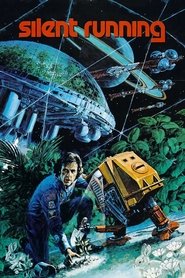
That's what this movie is. You mentioned folk songs. That's interesting because we should talk about Peter Schickele, who wrote the score, who is also, of course, PDQ Bach and had a successful... Yeah, you'd better explain who that is because the waters have kind of closed over. They have. Who knows who he is now? So they were a series of popular arrangements of Bach which enjoyed a vogue.
17:00 · jump to transcript →
-
The use of music in science fiction cinema is a whole fascinating subject, isn't it? Probably the most influential musical score in science fiction in the 1950s would be Louis and Bebe Barron's Electronic Tonalities on Forbidden Planet. And that sort of established that...
17:45 · jump to transcript →
-
John Williams' Star Wars score, which is... It's not classical music, is it? It's old-time Hollywood music. It's also pure 19th-century symphonic music. Now, you mentioned Kubrick's use of music, which is interesting to compare with this. So when Kubrick uses Also sprach Zarathustra, he's using music which is about rebirth. This is a film which is almost, correct me if I'm wrong, totally lacking in a philosophical dimension. Oh, I think it has a philosophy, but it is very much a...
18:53 · jump to transcript →
-
-
-
Francis Ford Coppola
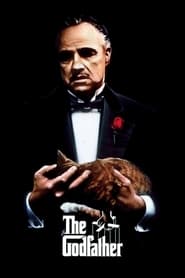
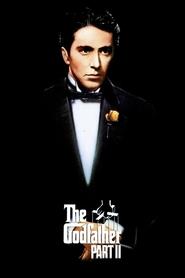
basically making a mistake, but I guess no one else notices it. It's an interesting story. I chose to work with Nino Rota to write the score, and the studio was not very comfortable with this choice.
24:43 · jump to transcript →
-
Francis Ford Coppola
The Last Godfather, we actually went back to each of those places again, and if you see the pictures, you'll see a continuity of them over and over again. Interesting thing about the love theme from this movie, it's very famous now, but the composer was having a terrible time coming up with something. I had wanted a theme that was a little almost...
1:43:38 · jump to transcript →
-
Francis Ford Coppola
and the other had like a BB in compressed air, so on the cue for the effect, the ball bearing or the BB was shot outward, and the air blew any shards of the plastic lens away from the eye, and then the blood came out second. This was A.D. Flowers dreamt this up. I thought, very, very ingenious way to do that.
2:40:15 · jump to transcript →
-
-
director · 1h 28m 4 mentions
Don Coscarelli, A. Michael Baldwin, Angus Scrimm, Bill Thornbury
-
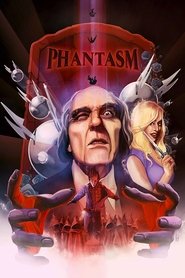
Actually, the score that we play over this, the cue, is the main title theme. And originally, there was some other music scored by the composers Fred Myrow and Malcolm Seagrave. And in listening to the whole, the score as a whole, I realized that the real guts of the music is that main title theme. And so we just took it and put it over the scene because I really felt that this is where the movie gets going and where the real
30:33 · jump to transcript →
-
This is a good time to talk about Fred Myrow and Malcolm Seagrave, the composers of the film. Fred has been a guru to me for many years, has taught me a lot about film. And one of the things that I learned in this scene he taught me was the fact that you don't always have to add music to create an effect. You can actually take it away. Because if you listen to the soundtrack here, what happens is we have an atmosphere playing. And right now, we start to take the atmosphere away so the ear starts to reach, listening and listening for the effect of it.
46:40 · jump to transcript →
-
And how we would shoot that, you know, Mike still keeping them on fire. I think we, uh, didn't they shoot the, uh, the smoke right up into your clothes there just before the takes? Yeah. So you actually looked like you were burning. And this is the door to their planet. Yeah. These guys are all ready to go. You can hear the dwarves talking there. If you listen to the soundtrack, they're, like, saying no. No.
1:12:39 · jump to transcript →
-
-
-
Double Life of Veronique. And Kieslowski talks about how important it is for not just the actors, but everybody, the director and the cameraman and the composer, for everybody to get in touch with their unconscious. And that's a hard thing to do. And so anything that interferes with that, I think, is detrimental. Yeah.
57:08 · jump to transcript →
-
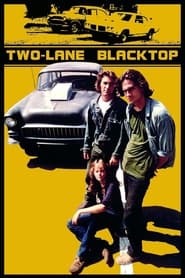
I don't know if these guys, you know, you get a sense that they're almost like an old couple in a way, that they're kind of shorthand with their talk. They don't have to talk as much because they kind of know everything that's going on there with each other. Well, I always likened the dialogue to an effects or a music score.
1:12:15 · jump to transcript →
-
propels something. Here it doesn't do anything other than act as a kind of score. Right. Well, you still have, I mean, this movie lives on in a whole other subculture besides film people and film fans because you've got the car, the people who are fans of the car who are in love with the movie, but also I think that
1:13:10 · jump to transcript →
-
-
multi · 1h 59m 2 mentions
David Naylor, Guy Hamilton, Tom Mankiewicz, John Barry + 14
-
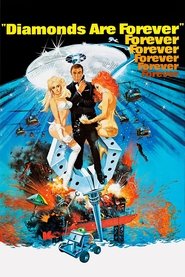
As I say, being only 27 years old now, I was writing a James Bond movie with Sean Connery, no less. Composer John Barry remembers the first time he played the title song for producers Cubby Broccoli and Harry Saltzman. Cubby was very good about music. He had a good ear. He knew when he heard a song or a melody. He always had very good instincts about that. Harry was absolutely toned up.
6:08 · jump to transcript →
-
But they were very humorous. The villains were humorous in the early ones. And even when the tarantula was crawling on him and he started pounding the tarantula, the score went with the pounding. I mean, it was done with a tongue in cheek. And I found that they got very serious after a while. And Sean, as it turned out in Diamonds Are Forever, there was a lot of humor in that, and he was so thankful for it.
1:49:06 · jump to transcript →
-
-
-
-
multi · 1h 43m 1 mention
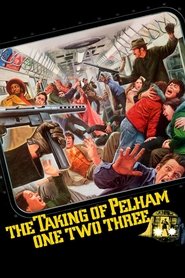
The Taking of Pelham One Two Three (1974)
Nathaniel Thompson, Steve Mitchell
-
-
Related topics
Other topics that frequently come up in the same commentaries.