Topics / Editing & post
The score
117 commentaries in the archive discuss this, with 416 total mentions and 11 sampled passages on this page.
Filter commentaries
Filter this topic by the film's decade or the type of commentary.
Showing 4 of 117 commentaries
Clear filtersBy decade
Across the archive
ranked by mentions · click any passage for the moment in the transcript
-
-
David Kalat
It's the calm before the storm, a moment of preternatural quiet in which for a full 90 seconds the soundtrack goes dead. There's a lot weighing on these people's minds, too much really to say. Emiko has failed to tell her fiance that she loves someone else because he distracted her with a demonstration of a doomsday device. Ogata is fretting from the sidelines about their illicit love affair. Shinkichi is an orphaned survivor of Godzilla who knows he hasn't escaped the monster at all.
42:17 · jump to transcript →
-
David Kalat
Do you hear that low rumble in the background? That ominous bass line? Wow. Somehow I've managed to drone on this long without yet telling you anything about composer Akira Ufukabe.
1:13:08 · jump to transcript →
-
David Kalat
The Ainu had no written language, and so it was a very musically-oriented culture with a rich oral tradition. And young Ifukube soaked all these cultural influences up like a sponge. As a professional musician and composer, his music would be identified by short, repeating motifs, ostinatos, just like the Ainu folk music he grew up with.
1:14:32 · jump to transcript →
-
-
scholar · 1h 32m 4 mentions
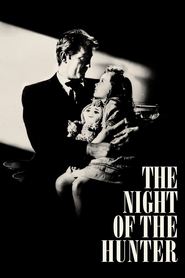
The Night of the Hunter (1955)
Terry Sanders, Robert Gitt, F. X. Feeney, Preston Neal Jones
-
Bob Gitt. And Preston Jones. This film is all about good and evil, light and shadow, love and hate, and that duality is heard in Walter Schumann's score right at the beginning of the credits. We started with the demonic theme for Preacher, and now you hear the angelic theme, which is the lullaby for the children.
0:39 · jump to transcript →
-
Robert Golden, the editor, felt that Walter Schumann was next to Lawton, the most important person on the film. And I'll try to say some more things about the score later. Lawton perhaps felt that the most important person was Lillian Gish, who's the first person we'll see after the credits. Lawton was trying to recreate the power of the silent era, especially D.W. Griffith, and he loved Lillian Gish. Now, Terry, the
1:02 · jump to transcript →
-
Now, unusual for the time, and really for any time, Lawton had his art director, his editor, and his composer on the set with him, working as part of the creative unit all the time. Lawton didn't want Bob Golden to do any editing until all of the film was shot. This is the one scene in the picture that Bob Golden did start editing ahead of time because they wanted to be sure to clear it with the Breen office. It's a dicey, very dramatic scene.
29:22 · jump to transcript →
-
-
-
Alan K. Rode
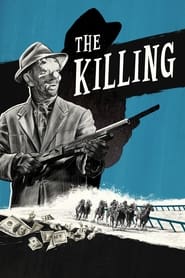
As we view footage shot at the Bay Meadows Racetrack in San Mateo, California, accompanied by the booming brass of Gerald Fried's score, I'm author Alan K. Rode discussing Stanley Kubrick's legendary caper film, The Killing. Kubrick was just 27 years old, and The Killing was really his second bonafide feature film. It's been said Kubrick's movies are about mastery that fails. The Killing certainly fits that category of a masterful caper that goes, well, to use a cliche, to hell in a handbasket.
0:02 · jump to transcript →
-
Alan K. Rode
The horses are approaching the starting gate. And as we see more of Singer's film from Bay Meadows, Gerald Fried's score adds so much to the killing. Fried was another old Kubrick friend from the Bronx. He went to movies with Kubrick, remembering, our discussions after seeing them were primarily listening to Stanley kind of smirking at the tasteless sentimentality of most pictures. Fried was originally an oboist who attended Juilliard, and he composed the music for all of Kubrick's early films.
54:27 · jump to transcript →
-
Alan K. Rode
Day of the Fight, Fear and Desire, Killer's Kiss, The Killing, and Paths of Glory. Fried also composed some wonderful scores for early horror films like I Bury the Living using a harpsichord. He later composed the music on the original Star Trek TV series and shared an Emmy with Quincy Jones for the score of the groundbreaking miniseries Roots. And Fried is still living at age 94.
54:56 · jump to transcript →
-
-
-
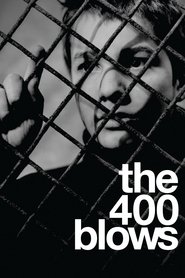
There is thus what dramatists call an antithesis between the season and Antoine's actual sentiments, which are of course being magnified by the mournful flute and guitar on the soundtrack. We see the milk being delivered, a sign of very early morning, outside a cheese store. Witnessing Antoine's first theft, we cannot judge it harshly, because this boy is neglected. He's deprived of affectionate interest on all sides.
39:09 · jump to transcript →
-
Note that we will hear only the crickets and Antoine's footfalls during his run, so we can deduce that they have been added to the soundtrack by Foley artists in post-production. Live sound would give us the engine noise of the truck on which the camera is mounted, so Truffaut is using his art to conceal itself here. The upcoming continuous shot of Antoine running lasts one minute and 21 seconds, making it the longest single shot in the film.
1:36:03 · jump to transcript →
-

Related topics
Other topics that frequently come up in the same commentaries.