Topics / Production
Production design
138 commentaries in the archive discuss this, with 776 total mentions and 72 sampled passages on this page.
Filter commentaries
Filter this topic by the film's decade or the type of commentary.
By decade
Across the archive
ranked by mentions · click any passage for the moment in the transcript
-
-
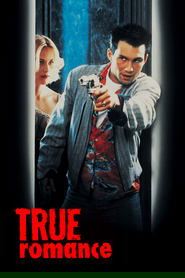
Tony Scott
And it was funny, I didn't think about that. The taxi driver referenced Robert De Niro's character until the end of that first day of shooting. And that's what put us both on the same page. The next morning came to the set, the second day in the bar and said, I got it. Now I know what you're talking about. So after that, we were in sync and right on track. The scene you're looking at here is the title sequence, which we actually shot in Detroit when we arrived in Detroit.
3:56 · jump to transcript →
-
Tony Scott
I'm, you know, some of what I regard as the best actors in the world, and everybody wanted to do it. Everybody wanted to do it. They wanted to come to the set and just do the words that were on the page. Nobody wanted to actually, you know, normally when you do a movie, people come to the set and they want to rethink the characters or rethink the words, but I had such a smorgasbord of brilliant cast, and everybody just wanted to come to the set every day and do the words that were on the page, which I have to applaud Quentin for.
6:14 · jump to transcript →
-
Tony Scott
You know, a handwritten page, nobody reads it. It's sticking on the back of the dolly or on their chairs and nobody pays any attention to it. But you give people pictures, you know, you give them a comic strip, you know, and they can digest the day's work in a heartbeat. You know, we're shotless, they've got to think about it. It's a great, great document to have on the set for the whole crew so they know what they're looking at for that particular day. Would you like to get pie after you see a good movie? Yeah, I'd love to get pie after a movie.
8:08 · jump to transcript →
-
-
-
Ron Howard
but also the production designer Michael Corenblith made a really interesting observation early in his research. And that is that the Spanish architect Antoni Gaudí actually created works around the late 1800s, early 1900s that looked very Seussian. In fact, they predate Theodor Geisel and Seuss and his work as Dr. Seuss. And doing a little bit more research, we realized that Geisel was a fan of Gaudí's whimsical designs.
2:57 · jump to transcript →
-
Ron Howard
we decided to not only tweak the sets, there are no right angles on any of these sets designed by Michael Corenblith, but also to constantly dutch the camera and have it slowly moving. I didn't want it to be disturbing to watch, but if you notice it, none of the angles ever really stay put. There's always motion, and they're always shifting, and again...
9:13 · jump to transcript →
-
Ron Howard
countering the angles of the set, so there's never anything that looks flush or that's a right angle. Here's Bill Irwin. He worked this bit out with the ladder himself. I sent him off with some of our stunt guys, and he sorted out this routine. Very creative guy.
9:39 · jump to transcript →
-
-
-
I mean, you know, I tried to explain to her that if we use suntan lotion, she wouldn't die. She wouldn't suffocate. I don't understand. Okay. But the snake pit, which is what I call the makeup department, was telling her, oh, you're going to die. You better have special insurance. Then her agent called me just as I was ready to shoot the scene and said, Steve, I want you to have a doctor and an ambulance on the set. I said, she's not going to die. Don't be stupid.
30:11 · jump to transcript →
-
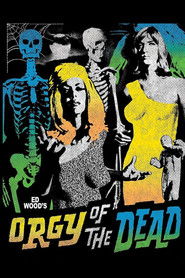
uh for that was shot on the set of uh orgy of the dead like tests with that so yeah so that explains that uh you know the other credits of most of these girls you know it's you know they just went oh my god now he's getting now he's getting nasty uh way chriswell looks like he's blasted he does doesn't he was he a drinker
38:25 · jump to transcript →
-
Okay, I have a little bit about... I can mention something interesting. Yeah. Please, somebody needs to. Well, I have a still of Orgy the Dead on the set. And in this still, you can see most of the people. Right, right. But also, Kathy Wood. Oh, really? And I was always thinking, what is she doing there? And then I just thought about the other day. Well, it's got all these, like,
52:16 · jump to transcript →
-
-
director · 1h 28m 8 mentions
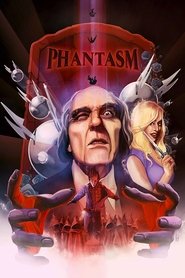
Don Coscarelli, A. Michael Baldwin, Angus Scrimm, Bill Thornbury
-
built into the story with the production designer. So this is where you learned how to drive, huh, Mike? I learned how to drive in that car right there. That Cuda. Which reminds me, had you always been in love with the Cuda? Was that a car that you particularly dug and so you thought you'd use it? I mean, everyone always loves this car. It was that stick shift right there. And you don't see them around very often. No, it's true. There was a kid in high school that had one. It was really beautiful, and I always aspired to own one.
11:01 · jump to transcript →
-
Oh, man. Can we fast forward through this section? Derby. What inspired the derby in this scene? Yeah, I don't know. Where did that come up? Not me. Well, that was our Jack of All Trades costume designer, who also happens to be my mother and was also the production designer and makeup. She came up with that, I guess. Very An Souchant. Now, Bill, you wrote this song, didn't you? Yes, Michael, I did. Uh, we, uh...
16:12 · jump to transcript →
-
Actually, Coscarelli kicked me off the set that night because I wouldn't do it. But he got over it and we went to the Dodger game the next week. Yeah, we're still buddies. It wasn't in my job description. I just want to point out, you have those PAs in your mouth, Bill. That was in my job description. If we got this film rated today, you would not be able to get that past the rating board, which I thought is ridiculous.
22:22 · jump to transcript →
-
-
-
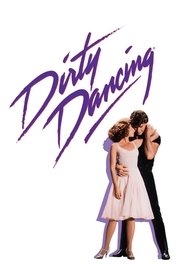
Eleanor Bergstein
brand new track of other music or new music or I think one suggestion might have been the Fine Young Cannibals and so I walked around the set with an apron that had all the cassettes of the original songs and we played all the original songs behind the scenes and as I said to the sound men, play them on another track just to inspire the actors and what we thought this would do finally was just make the dailies sound better but
28:45 · jump to transcript →
-
Eleanor Bergstein
We didn't have enough rain, and the first days, we had a rain machine, I think something like one day, and so we took every shot we could find in Virginia so that we'd be able to use it. You see there we have what is presumably rain. This is, now again, as I said, we had the most brilliant production designer, David Chapman, who is one of the unsung geniuses of this, who made it look so wonderful.
39:37 · jump to transcript →
-
Eleanor Bergstein
to come or has come when they have to examine what they've done. We call this the tense family breakfast. And I should say a little word now about the fact that I was down on the set all the time, obviously, and very...
59:17 · jump to transcript →
-
-
multi · 2h 24m 8 mentions
Alex Thomson, Terry Rawlings, Alec Gillis, Tom Woodruff Jr. + 3
-
You notice in these sequences, the camera is near the ground so the ceiling becomes more important than the floor and one is shooting up people's nostrils. This was an approach David Fincher wanted, which I think is terribly effective indeed and makes it more distinctive than the other three, rather, in my opinion. I tried to keep it fairly shadowy, so that it looks moody. Where I could, I brought the light from the top because it's unusual for the light to come from the floor, but one had to be careful about it obviously. The difficulty was getting light into the eyes so we could see what the actors were thinking but not at the expense of the mood. I remember at Pinewood Studios when the sets were going up, Fincher would have us walk through the sets just looking at the scope of them. It was truly amazing to see these things go up. Norman Reynolds is a great production designer. He builds the world. It's very difficult to control him cos George would tell him on Star Wars "Don't build that. We're gonna paint it", and the next day - "It's too late. It's built." When they sent us over, we said "Why are we going to London?" They said "It's the sets, the set design, the artistry and the craftsmanship." And it really was very true. British actors is another good reason to go there. Somehow the British accent does a lot for these movies, I think. Vincent has had a deep, abiding interest in Luddite monks, and had done a great movie called The Navigator, where these monks dig their way through the earth, coming out into the 20th Century. It was a great movie. But, anyway, the original idea was that this was a wooden planet built by the Luddites and in the bottom of the planet, symbolically, the reactor was kind of hell. The technology that kept this thing going was emanating from the bowels of Lucifer. What drew me to the project first was that it wasn't a retread kind of sequel. It was a completely new idea, and some of it survived in the final script. David was entirely in control from the beginning. He put his stamp on it. He was the director and nobody ever questioned it. He was completely in control of the set and everybody hung on his words. He was definitely doing it. There was no weakness in it at all. He was very, very confident in what he was doing and wouldn't be swayed. He had this vision and that was what he was going to do. He came under quite a lot of pressure from 20th Century Fox to hurry up or do it the quickest way or the most expedient way, but he wouldn't listen. He would do what he wanted to do, quite rightly, in my opinion. As I say, his compositions are marvelous and the use of the frame, and so on. David had been a cinematographer before he became a director, so he knew lighting. He knew what was good and what was bad. That's not to take away from David Worley, the operator. His contribution was enormous as well.
10:16 · jump to transcript →
-
My name is Paul McGann. I played Golic in Alien³. It's fairly standard practice, particularly on such a big venture, that things are necessarily going to change. Until that point, I'd never worked on anything on that scale. But there seemed to be these characters moving around, particularly when Fincher was there, in unison, watching him or watching us. Any shenanigans or machinations behind the scenes tend to be kept from the actors, but we were well aware of the atmosphere and the changes coming down from on high. That said, the atmosphere was good. If there were changes in the strands of the story, then we'd get decent warning. But it became apparent, even just after two weeks, that there was a chance that that sequence we just shot may not make it, so we're gonna shoot another version of it. It seemed expensive... and just unsure. I remember when I first met Fincher, Fincher was incredibly energetic. It was at the start of this 12-month process. I remember seeing him in LA towards the end of the thing and he was exhausted, naturally. But at that time, meeting him, he was full of beans, full of ideas. Don't forget, Walter Hill, David Giler, these people were very experienced filmmakers. Any of the things that were happening, obviously the advice Fincher was receiving was from highly experienced people. It was a nice idea that Sigourney's wearing a contact lens in the left eye. And the bruising, I think that's a rather nice touch there. Most of the sets had ceilings on because we saw the ceilings so often, so one used to have to hide the light where you could to the best effect. This going in and out of light... I put a cukaloris on the lamp. A cukaloris is a shape - just cutouts on a piece of wood. It creates patches of light that she goes in and out of. Sometimes it doesn't work because the actors are concentrating on what they're saying, and they forget to find a light on their faces. and they forget to find a light on their faces.
13:58 · jump to transcript →
-
The light coming from the top was a 4K xenon lamp, which gives you very straight beams, which I thought would be quite a good idea. I shot it up through a mirror because you can't tilt them down or the condenser burns. But we had a mirror above the set and I shined it from the floor onto the mirror. This autopsy scene was a favorite of Fincher's, too, because we had created a body of Newt that had multiple layers of tissue, skin and musculature that could be cut through, and the bones opened up. It's a lot of graphic coverage that's not in the final movie. The body of Newt was actually based on... Alec and I had done a life cast of Carrie Henn during Aliens, and while we were in London Bob Keen's shop actually had a casting of the head. We were able to get that and remold it, so we were able to duplicate what the actress had looked like some five or six years previously. There is intercutting here with the real girl as well. She has a lot of fuzz on her face. - Yeah. Backlit fuzz.
17:31 · jump to transcript →
-
-
-
over the top. I think it's nice. I think though they're vibrant, the palette is terrific. Yeah, I had a great production designer, Naomi Slotky, who really designed the sets, and she was very good, and I think she was somewhat new. I know she's off doing great things now, but a lot of people have gone on to do better stuff. Not that this wasn't the best, but...
4:30 · jump to transcript →
-
For some reason, this blue dress you're going to see is one of my favorites. She has blue shoes. Holly Davis, who was terrific, was our wardrobe girl. I just think that was a nice outfit for her, and we should have kept her in that dress. She has beautiful legs. Yeah, cute. Notice I put mushrooms there in front, our production design. That's a colorful little mushroom, plastic mushroom. Again, trying to kind of get a...
11:56 · jump to transcript →
-
It was nice. I was actually, after the fact, I was very impressed that I actually got through it, and it actually looked pretty good. There's the shoes. See, again, nice lighting by Levy with the light through the window, and, you know, the set looks good. Yeah, it's a very nice scene to introduce him in contemporary times. Yes. Here you go.
22:29 · jump to transcript →
-
-
-
And this shot here done by ILM, it's a combination of live action and matte painting. The whole background, the moon, the sky, a lot of those statues are visual effects. I love this shot. This will be fun. This is Allan Cameron, my production designer at his finest. Alan also did The Jungle Book with me. This sequence was a problematic sequence editorially.
4:00 · jump to transcript →
-
We only shot one take, that's it. Rachel's now crawling in as the stuntwoman is crawling under the camera and I told her to stand up and perfect. Take one, one take only, that's it. 12,000 bucks. Steve called me from the location saying, okay, so what does it look like? Do we need to shoot it again? And I thought, well, I'm not sure what else you'd do to that shot. I think it's about as good as it could be. Yeah, it was a real pain because we arrived on the set
13:29 · jump to transcript →
-
I don't think we have his real voice here. I wish we did. He's Scottish. He has a very thick Scottish accent. I used to tease him on the set all the time, asking for an interpreter. Because literally the second I'd call cut, he'd go right into his thick Scottish accent. And he was nervous about playing this role because he had to play English. And I told him, no worries, he'd do it. He'd have no problem.
17:11 · jump to transcript →
-
-
-
E. Elias Merhige
create anxiety and intrigue on many different levels. When I see Charon on the side of the train it reminds me of, I have to speak about my production designer Assheton Gorton, what a magnificent man to work with, what an extraordinary person. We had many discussions on esoterics and metaphysics and
12:58 · jump to transcript →
-
E. Elias Merhige
Han Budala is a Slavic word meaning the inn of the fool, and that corresponds to the tarot card of the fool that Albin Grau, being the esotericist that he was in real life, was very fond of the tarot and carried a tarot deck with him. Even on the set he had it with him. How long have you been here? Not long.
16:29 · jump to transcript →
-
E. Elias Merhige
And when I realized that we were all standing on this steaming horseshit, I was just, at first I was very upset, but then I just had to laugh because this farmer completely misunderstood and the assistant completely misunderstood. There were like six or seven different languages being spoken on the set. And I think it just added to the scene somehow. I just think it,
23:13 · jump to transcript →
-
-
-
The funny thing about the set, by the way, is that I kept talking to Scott Chambliss, our production designer, about what the set should look like, the home. And I kept talking about my house, where Katie, my family, and I live. And so finally he just went to my house, started taking pictures, and the set he built was essentially... I remember walking to the set, and I looked at you. Here's Greg. And I thought, this is... It was so weird being on the set with Greg, because...
4:57 · jump to transcript →
-
I like the ice thing. When you told me about the ice thing, I don't know what it is. That shot, it's so funny. There's things in movies sometimes that people just don't realize, but that you just, you love it. That ice thing for me. Me too, though. What is it about that? It's so funny you say that. There's the shot going in, and how much conversation you have, ridiculous conversation. People go, these people are nuts about putting ice in there. Yes, Sherry. Sherry's there that day. She was so lovely. She came to the set. We were hanging out, and we were shooting that one shot. I remember saying, this is one of my favorite shots, the ice shot.
7:51 · jump to transcript →
-
We could not control any of the crowds there. So what we did is, about a block and a half away from this location, we set up a phony shoot. And we had three girls in bikinis and three old women dressed as nuns. And we had a camera, and we had a tent, and we had a whole thing. We pretended to be shooting something. The interesting thing about shooting on this set was my tendency was to want to shoot the set and make a lot of the set, but I felt
43:18 · jump to transcript →
-
-
director · 2h 10m 8 mentions
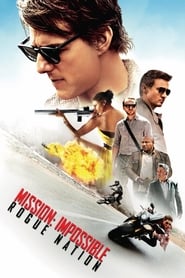
Mission: Impossible - Rogue Nation (2015)
Tom Cruise, Christopher McQuarrie
-
the course of the entire production. We kept saving this record booth and going back and shooting little pieces. As the story was developing. Yeah. Your mission, should you choose to accept it, is to face your fate. Pursue us, you will be caught. Resist us. And there's, on the phone, that's from... That's from Mina, right? That's from... We needed more pictures of Tom. We just sent it from the set of the film I was shooting after. That shot was the last day. That was the very last shot. The very last day, like...
8:39 · jump to transcript →
-
an obstacle for you. You remember we were struggling with the scene. And then you came in, you said, look, I wanted the gate, and she locks me out and she's forcing him away. Yes. And then we changed the direction. Remember, you guys were coming around the corner. Yep. Instead of coming straight towards the gate. And it was just, it was much more dynamic. So we kind of rebuilt the set on the day a little bit. Where they're running down the hall was, we were never supposed to use that piece of the set. And the world's worst marksman.
17:26 · jump to transcript →
-
All that cast, we just picked up these little shots. And you remember, you came to the set and you were like, what are we doing? And I was like, I just, I've got this idea. I just want to feel like a little bit of a, it's almost like a great escape moment. You know, I want to feel like a buddy moment between the two of you. And as soon as you looked at the shot, you were like. I got it. Yeah, you're like, I know what to do. And you two guys just did it. It was so great. I like this idea of the old IMF.
45:02 · jump to transcript →
-
-
-
Francis Lawrence
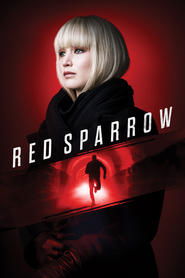
Red Sparrow was a novel by Jason Matthews, and it was sent to me by Fox as I was finishing working on the Hunger Games movies. I think we were actually in post-production on the final Mockingjay, and had actually started to promote the final Mockingjay film when the book landed on my desk. I took a look at it and immediately fell in love with it. I've always loved spy movies. And this spy story I thought was quite unique. It's by far I think the most genre-specific story that I've ever done. But I just found the character of Dominika, as you can see here, played by Jen Lawrence, to be quite a unique and unlikely hero, and a really unique way in to a spy Story. It becomes a much more personal spy story with her in the lead. I actually, even while reading the book, Started to think of Jen immediately for the part. You know, she and I had done three Hunger Games films together over the course of five years. I thought she was a fantastic actress, and we had a great time working together. So I thought it would be fun to find something new to do together. And specifically, because we had done this... We'd been working together with the same character over the course of five years it would be really fun to do something totally different, use different muscles. And I thought she could also look Russian, but thought it would be fun for her to look different and speak differently and move differently, and push herself into new territory. So when I had read the book, and I was gonna go pitch the studio, I actually called her first, and said, "Hey, hypothetically, would you be into doing a Story like this?" And she said yes, and, you know, I just pitched it very briefly. And then made my pitch to Fox about my approach in the story, which was to make Dominika the kind of heart and soul of the story, and to follow her story, and I had a couple of tweaks that I wanted to do to the last act of the book. And also spoke a lot about the tone, and the kind of hard-R quality that the movie... I thought the movie was gonna need. And everybody agreed. We got cracking, and I went to work with Justin Haythe, who is a writer that I've known for a long time, and we had developed something together before that had never been made. But we had a great time working together. And he also saw eye to eye with me in terms of the tone and the point of view of the story. And so we got working and it came together really quickly. So that by the time we had finished and released the final Mockingjay film in the Hunger Games series, we were pretty ready to go, and we were almost ready to start prepping this. We ended up bringing a bunch of people from the Hunger Games film with us. Jo Willems, the cinematographer that did my three films came with us, and our camera operator, who's worked with me since I Am Legend, and has also done numerous other films with Jen, 'cause he does the David O. Russell movies, came with us, and Trish Summerville, who did costumes. The new big addition for me, in terms of crew here, is Maria Djurkovic, the production designer. She had done Tinker Tailor and many other great films, and I just really enjoyed her work. And we really bonded over the references that we had found, and the kind of color palette that we both thought that the movie should follow. And she joined us, and we shot the film in Budapest. And primarily all practical locations. Some little set builds within locations, but primarily all practical locations.
0:22 · jump to transcript →
-
Francis Lawrence
One of the fun things for me about this whole sequence is the intercut. I just thought that it could be a great introduction to the two characters and to the two worlds. And one of the things that I played with throughout the sequence is screen direction. So if you notice even from the very beginning, I typically have Jennifer facing left to right, and Joel facing right to left, as you can see here. It was a trick that I learned. I remember watching old Hitchcock movies, and watching Strangers on a Train, and there's... In the opening sequence, you see the two men who are moving toward one another, and eventually gonna meet. And it's something that I've employed a lot, I think, that screen direction is actually a huge benefit in storytelling. But especially in a sequence like this where you feel like these two characters are gonna end up on a collision course with one another, that narratively, you know that at some point, that they're gonna come together. American! Most of this ballet sequence here was shot in the Budapest opera house. And we had support of the Budapest opera, and the Budapest ballet company. And most of the other dancers there are all dancers with the Budapest company, and from a variety of places. There's some Americans, actually, and some Hungarians. Great group of people. And there was our nice leg break, one of the first specific, kind of, tonal hits in the movie. It was something I wanted to do with the movie, was to not hold back too much in terms of some of the shock, and audacity of some of the moments that take place within the story. And so to see the real damage done to her leg there... I just remember seeing, you know, there's been sports injuries over the years. And not too long before we shot this, there was a French athlete in some, I want to say some Olympic games or something, who had done some vaulting, and just kind of landed slightly wrong and bent his leg at this really horrible angle. And it was really difficult to look at, but we basically modeled the bend in her leg based on the images of this French Olympian. Word is they were vice cops, looking for Chechen dealers... or some family guy getting a blow job in the bushes. They weren't there for Marble. They just got lucky. Chances are they would have questioned you, and let you go. You can see here, one of our really cool locations. Maria, my production designer, was just really fantastic at looking for locations and scouting. And I think she had gone out to Budapest a few months before me. And we had also hired Klaus, who was our location manager for the Berlin portion of the Hunger Games films, and we liked him a lot. And he was nearby, and so he came down to Budapest and they worked together, and they found these fantastic places. These old abandoned hospitals, where the surgery Is, and where she's about to wake up, was this old, abandoned maternity hospital. And this fantastic space is part of a library in the seventh district of Budapest. Undercover narcotics agents saw what they thought... was a drug deal in process. You can see outside of Jen, too, that we really put together a fantastic cast for this movie. Jeremy Irons, who's an icon and a fantastic guy, and I think one of the best actors to have ever existed, was my first choice to play Korchnoi. And luckily he said yes. And Matthias, we brought in. I'd been a fan of his since seeing him in Bullhead and Rust and Bone and things like that. And he's so versatile. But he became a choice when we actually decided to skew the age of Dominika's uncle down a little bit. I wanted to add a little bit of creepiness to their relationship. And so the idea that, you know, maybe her father had a much younger brother, so that, as she was growing up, there was this, you know, charming, handsome, much younger uncle, you know, somebody that she might have even been attracted to, and he might have been attracted to her, was something that I wanted to play with in the course of this. And I thought he was just perfect for it. He's such a fantastic actor.
6:35 · jump to transcript →
-
Francis Lawrence
This moment here was also another piece that we kind of debated, this phone call. This is something that's quite easily lifted, and she could just go home after having seen the blood on her hands. But this idea that she could do something so violent in the steam room, but then have this moment of conscience and call the action in was very important. And then we have this moment here of finding her mother, which was the moment where she knows that the ballet company that's been supporting her has kind of pulled the plug on any money and any help for her mother, and she is gonna have to go and find help from her uncle. I'm going to take care of us. So one of the fun things about this job and in terms of the world-building, was finding all the various kinds of architecture that exist in this world. And this place here was actually in Bratislava. So we went on a search. We shot primarily in Budapest, but we also shot in Bratislava, which is in Slovakia, and Vienna, and London. And we went on a big search for buildings and sites that could feel like Moscow or places near Moscow. And Maria, the production designer, had found these great Brutalist buildings in Bratislava, including this one, which we decided would be perfect for Matthias's character's office building. Just a big monolithic, very Stark, stark building. The problem here was actually... We shot this scene very, very quickly, even though there's a lot of dialogue, because it gets front-lit quite quickly after about 7:00, 7:30 in the morning. This is near the end of our schedule on the movie. And so we Set this up at sunrise and dawn, with multiple cameras, and shot the whole scene within about 45 minutes, I think, 'cause otherwise, if the sun came up, it was gonna be really unflattering, and it wasn't gonna feel as bitingly cold as we wanted it to. Do this for your mother, Dominika. He has dinner at the Hotel Andarja every Friday at 9:00. A car will arrive at your apartment to bring you to the hotel. Now, you carry nothing with you. We will arrange a room and something for you to wear. This is back in Budapest, shooting in a hotel in downtown Budapest. We were originally modeling the idea of this hotel in Moscow, with the Metropole. Which is a classic, really upscale hotel that's been around fora really long time in Moscow. And then we, kind of, ended up going in our own direction. We searched, you know, in London for hotels, searched all over Budapest for hotels, and we pieced together various things, and we used the exterior of a hotel in Budapest, and we ended up using a room... This room is part of an abandoned building in Budapest. And Maria built that bathroom attached to the room in that abandoned building, and just did a great job. She brought in these great Italian scenics to create all that fake marble. It's actually just wood that's been painted, but just looks unbelievable.
16:11 · jump to transcript →
-
-
-
Paul Davis
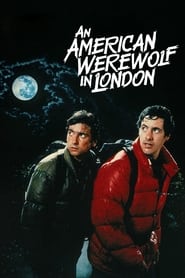
is an actual place that is nearby but then the third one on there is Les Shire which John Landis put on there as a little joke in reference to the production designer or the art director as he was credited on this Les Dilley who was John Barry's protege John Barry was the production designer on Kelly's Heroes who John met when he worked on that and John was talking about it with John Barry saying I'm going to make this movie I'm going to come get you to do it
3:27 · jump to transcript →
-
Paul Davis
And then John Barry would kind of brush John off because he was a kid and say, well, if I'm not available, you should get Les. And that's what happened. And Les was still an art director at that point and was very uncomfortable about working his way up to a production designer because this was going to be his first movie as a production designer. And he didn't want to do it. He felt he'd make mistakes. And Landis said, I'm not going to let you make any mistakes, OK? Just do it. And he did. But he kept the credit of art director.
3:57 · jump to transcript →
-
Paul Davis
And they let them use that clip because it specifically spoke about Punch and Judy and violence. This was one of the last things shot on the movie because they had to destroy the set. And this was all the stunt guys like Vic Armstrong and getting to wear these pullover masks that Rick and his crew made pretty early on. Because there was a Screen Actors Guild strike while they were
32:00 · jump to transcript →
-
-
-
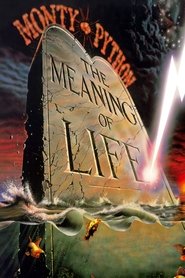
There was the set, the interior, which was on the stage. We spent a lot of time just picking up gags with old Victorian accounting gear. How can you transform that into swords and weapons of, well, not mass destruction, but certainly ugly, nasty little things? And so we had rubber stamps. We had the blades of old fans.
2:20 · jump to transcript →
-
He took all this stuff and turned it into weapons of war. Roger Pratt lit this. Roger had done Brazil with Maine, so this was a second chance to work together. And John Beard, who had been the art director on Brazil, came on as the production designer of this.
2:47 · jump to transcript →
-
That's an 18- or 16-inch model that's chugging away from us there. On the set, of course, we had to keep blowing wind nonstop. We had smoke always. We had pigeons being thrown around. And it went on and on, the shoot on this thing, much longer than I expected. I was looking at it again here. I think there are probably as many shots in this short as there are in the entire rest of the film. And each one is complicated, folks.
8:05 · jump to transcript →
-
-
director · 1h 29m 7 mentions
Jeff Kanew, Robert Carradine, Timothy Busfield, Curtis Armstrong
-
because it was so fake. Yeah. We got Lewis. Besides, we're college men now, right? Right. Good ad lib by Anthony, taking the punch in the arm and reacting with pain. And now the boys are going to take a walk. And I guess we set up most of this. I love that brownie camera. That was our production designer's idea. Bye, Dad.
6:03 · jump to transcript →
-
president of Lambda Lambda Lambda, played by Bernie Casey, former pro football player, an excellent actor, and a brilliant painter, actually, in real life. And the first night on the set, we were shooting the bonfire scene. It was four in the morning. It was cold in Tucson. And I heard him whisper to somebody, I'm sick of this fucking movie already. But we actually had fun working together after that. But he did scare me.
33:28 · jump to transcript →
-
Not gay and not happy. Because they asked him if he would be an extra, and he agreed to it. And then by the time he got out of wardrobe and makeup, they'd made him Larry's. And the crew would not leave him alone. Thanks. Where are all those good-looking sorority girls you're supposed to have dates with? You know women. This was something we came up with right on the set, this song. We did? Yep.
38:01 · jump to transcript →
-
-
cast · 1h 36m 7 mentions
The Garbage Pail Kids Movie (1987)
Mackenzie Astin, Katie Barberi, William Morris
-
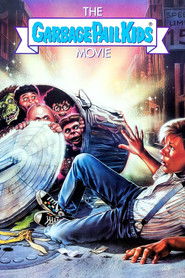
The exteriors and then the interiors were the sets. It was really, it was not what our imagination probably took us to in the script, but it was extraordinary what the art department managed to do. It was very impressive. Oh, yeah. Art department is the MVP of this motion picture. Absolutely. For as much guff as people give for how things appeared, there's some sleeper, sneaky, beautiful art department stuff. Yeah.
3:14 · jump to transcript →
-
uh antique shop which is again the gorgeous set decoration of this film and anthony here it goes yeah real trouble yep when we found out anthony newly was playing captain manson that was it
9:45 · jump to transcript →
-
Mac and I thought we were making a film for young adults and for children. You know what I mean? And it kind of wasn't that. From the minute I crossed my heart to, which we'll see in a little bit, I crossed my heart, which was actually much more my breast, in order to seduce this young man. It's not a children's movie anymore. You know what I mean? Well, I mean, that's where kids get their food to start off with. Well, and I believe that's what that was said on the set. But be that as it may.
37:48 · jump to transcript →
-
-
multi · 2h 19m 7 mentions
Martin Scorsese, Nicholas Pileggi, Ray Liotta, Lorraine Bracco + 9
-
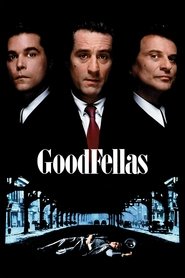
And then I took the transcripts and re-edited the transcripts to make it the scene, which was then inserted into the script. And that was very carefully worked on on the set at the Hawaii Kai restaurant on 49th Street and Broadway, wherever it is. I don't know if it's still there. It was above the place that we showed Cats. Cats was there for like 100 years. The Winter Garden was above there. And that day we did that. And I remember that it started to go another way. And I kept saying, no, you've got to go back to the script, the script based on
20:27 · jump to transcript →
-
As we're walking off the set, you know, Bobby doesn't talk a lot. He just stands there, and he's a great actor, that's all. So we're walking off the set, and surprisingly, he just turns to me, throws his arms around me, and he says, Paulie, you're great, which was really a wonderful thing to happen. That was a very, just personally, I'm not talking about my acting. I just think he just meant it was great to work with me, but it was a wonderful thing from a man who I esteem greatly as an artist, as a fellow artist. They always wanted to talk to Henry about this or that.
49:36 · jump to transcript →
-
Marty's parents don't come to the editing room much... ...but they always are on the set, and they used to work on the set. They used to press the collars of the shirts that the people... ...particularly in the Mafia films, wear... ...because only they, Marty said, knew how to do them properly. But it was great how much they were involved in his filmmaking.
57:00 · jump to transcript →
-
-
-
section and the cryo prism was interesting because the idea of cryogenic suspension had been done so many times before in films and there are so many flavors of the way the subject would be in suspended animation and in this case i wanted something that would break out of the convention of alien etc etc and i actually designed this set with the production designer to be a fully horizontal
7:12 · jump to transcript →
-
Are you sure? Joel, absolutely. Joel showed them scenes from this movie and that got her speed. And anytime I run into Sandra Boggs, she acts like we started a career, which I'll take. And this is, again, the set design is, we worked very hard to make everything work practically. Even the...
16:56 · jump to transcript →
-
Sandra Bullock, I remember. Yeah, that dress weighed about 30... Yes. It weighed about 35 pounds. She had a hard time walking around it. I remember visiting... I visited the set that day, and she was... I was complimenting her about her performance, but she was, like, complaining that she's weighing a 900-pound dress. And that was Dan Cortez, who was a MTV personality. Definitely a 1990s icon, singing the Jolly Green Giant song. We should add more...
57:29 · jump to transcript →
-
-
-
really magnificent. I mean, he's able to create like a little city here using what remained of the ruins of castles and building onto them and around them. That was no exception. Speaking of the sets, I mean, he...
20:49 · jump to transcript →
-
He's, uh... He was actually one of the funniest guys on the set. I'm a lassie.
41:49 · jump to transcript →
-
huge pitch battle but I knew that the you know the set piece was yet to come and I didn't want to overdo it here so we found a shortcut we managed to shoot this entire sequence in a day and wherever we got the opportunity to burn a set we simply burnt it whether it was in the script or not
58:20 · jump to transcript →
-
-
-
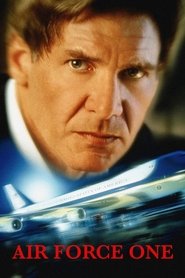
They actually let you on board Air Force One so you can take a look at the interior? Yes. What we see right now that Gary gets a tour of the plane. I got the same tour together with Harrison Ford and Michael Ballhaus and our production designer. And so we, this, you know, this plane is so protected. Nobody gives you any information about the plane. So when President Clinton invited us to go and see his real plane because he just loves the idea of Air Force One, the movie with Harrison and so on.
12:36 · jump to transcript →
-
And so we talked about Wendy. Here's the kiss. And now I tell you a little bit about the set again because we now cut upstairs to the MCC. That's the communication room right here.
17:50 · jump to transcript →
-
Not really, but Harrison was so nice when they had their only scene together over the phone, because Harrison, of course, was on the plane and she was down here. Harrison came to the set and did his lines for real. So he was there on the phone, right a few feet away, and talked to her. I thought it was nice. And same with Gary Oldman, who, for example, for this scene here,
34:54 · jump to transcript →
-
-
-
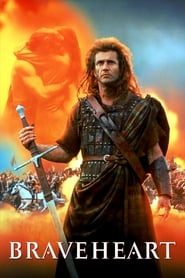
So we were so lucky to have Thomas E. Sanders as a production designer. He's a great guy. He did Dracula, Braveheart, Saving Private Ryan. He's just incredible. So in this movie, all I want is a
21:33 · jump to transcript →
-
to make it look more warm and passionate. So he came up with the idea of a color. He was suggesting using more of a red, orange, and green as a key color. That will make it totally different from the first one. The first one was a little cold and have a blue lighting, and even though the set is pretty dark, but I want this one a little more charm, more open.
22:03 · jump to transcript →
-
and greeting everyone, and I called him, sir. He said, please call me Tony. It kind of made me so relaxed. And he was so happy to be on the set. He said he's a big fan of It's Impossible. He loved It's Impossible. He loved Tom Cruise, and he liked my movie. And all he wanted, just wanted to be a part of the movie. And he was very happy. And then we talked about the scene, and then
25:27 · jump to transcript →
-
-
-
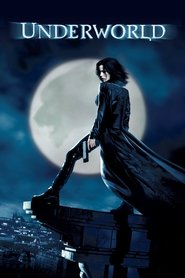
My name is Len Wiseman. I'm the director of the film. I'm sitting here with Kate Beckinsale and Scott Speedman. And Kate plays Selene, obviously. And Speedman, I think you were one of the set PAs. Yeah, set PA. I got promoted. That's Speedman right there. - That's me. That's me. Or Michael. Michael. - Yeah, it's Michael. You've got a lovely young back. - I do, really nice little back. So we're watching... This is an extended cut. This is not a director's cut. What it is, It's a version that's put together... ...to show you what's missing from the original film... ...and what had been cut out and what's been changed. And I'll go into some detail, not too boring... ... about why that happened. I like that type of thing. Do you? - That was Nate, right? That was Nate. That was Nate Robinson.
0:06 · jump to transcript →
-
You got off lightly with the costumes. - Me? Yeah, you. - I had one. Well, then I got screwed. Why? - With my second costume. I remember some producer trying to get him into a beige cardigan. What was it? - Yeah. Yeah. That was the first time I ever met you. That's right. Horrifying. - Yeah, I think Richard had brought in.... We were talking about how much rain there was going to be... ...and all of that. And so he comes in with a... I think it was a beige sweater from... I think it was, like, a Gap sweater. I wasn't liking it. No offence to Richard. That was quite funny. We used to have meetings about whether we should shave you or not. We still do. - Oh, we did. What, shaving my face, my head? Do you know we had conversations about that? We did the test. We did a test, you still had the scruff... But it looked stupid. With the lighting, it didn't look right. I agree. No, actually, I remember, because we... - You couldn't decide. You were so damned attractive. Because we went up to my room, and we checked oult.... We checked out that tape. And there was some younger pictures of you. Oh, yeah, those horrifying... - No, you looked nice. I think I didn't decide to actually shave your beard until the day... ...of the first-- The first day. - Pretty much. Who's that? What's going... - That's your best friend. Have you seen this movie, Scott? - Who is that guy? What was his name? - Oh, him. Erwin. Erwin. - Erwin Leder. Loved him. - Erwin, the set poet. How do you pronounce his name? - Leder. Yeah, it is, right? - Yeah, I guess. He wrote, like, three poems a day. He did? - Yeah, he did. Did you read them, ever? Well, a lot of them were in German, so I had a good try.
17:50 · jump to transcript →
-
Yeah. Do I confess or not? Go ahead, because it was quite a bit of a problem for me. This actor here. Well, first... - This actor is such a nice actor. This is one of our deleted scenes... ...where Scott goes in to check on the gunshot girl. What's the story? - The story is, this lovely actor... He was such a nice guy. He was there for a short time. - Couple of days. Wentworth Miller. - Wentworth Miller. I happened to have gone to school with a boy called Forrest Wentworth. So I constantly called him Forrest Wentworth when I was referring to him. And it just messed everybody up. She would refer to.... She would talk to me about Forrest... .all the time, to where I would go up to Wentworth, and I swear to God... I may have just, like: "Forrest, can you take two steps?" "What are you talking about?" I don't think he knew that pretty much everyone on the set... ...Was constantly trying not to call him Forrest. Yeah, all your fault. Kevin with his G-string. Where? - He has a G-string... ... Just to hide the package.
20:39 · jump to transcript →
-
-
-
Not that cursing. - Still makes me laugh. This kid... I swear, if Nial lived in Los Angeles... - Comedy gold. ...he would be on every sitcom in the world. He's a Star. - Every week, you'd just see him on different sitcoms, playing this exact part. I think he worked, like, six days for us, and I think we probably paid him about $130. It was $166. His character Bert, because we paid him $166, we began to discuss all expenses in terms of Berts as a method of payment. A very expensive dinner might be a Bert. Yeah, or like, "Oh, God, that's going to cost us two Berts." And it was-- One of the great things about shooting in Prague was cheap labor, cheap construction. Later in the movie, we get to the Vatican. Good labor and good construction. Fantastic. - The artisans are unbelievable. Great infrastructure, just great people that make movies. I mean, we put a crew together out of, you know, just really very few people from out of Prague and they were just fantastic. Especially because we'd never done this before. Our background was originally sitcoms. We all worked together on Seinfeld. Also Conan, Saturday Night Live, and so... I'll never forget it. I'm sorry. Bruce, the drummer of the band, has to sit next to Kristin and Matt and they all have to have their shirts off and Bruce says, "I don't know if I want to, because I have a rash." No, he said, "I'm just getting over the shingles." Shingles. That's what he said. He said it in front of Kristin. Kristin was like, "Oh, God, what have I gotten myself into?" I'm like, "He's joking, he's joking. He's a very funny musician." Without shingles, I promise. Actually, I remember we shot Mieke talking in English and in German, and we decided to use the German with the subtitles. We didn't think German would sound sexy or attractive, but she's Jessie. Somehow, when it comes out of Jessica Boehrs's mouth, she sounds sexy. Yeah, she's so warm and charming that even German sounds great. This is Jeff's favorite thing in the entire movie, that stupid jackalope T-shirt, which is not funny, but he swears is a joke. I don't think it's a joke. I just think it brings pleasure to those who see it. To you. - It's really a terrible T-shirt, especially compared to the many good T-shirts. This is actually-- I would almost... This is my favorite scene in the movie. This is the scene where the movie, to me, works the best, where these two guys were just sort of dialed in and their relationship... It helped very much that we shot this scene way toward the back of the shooting schedule. Yeah, if you look at the first bedroom scene where we already were, which is one of my least favorite scenes in the movie... Day three, we did not know where to put the camera. We did not get... We didn't take a wall out that we should have. It would've saved us time. We should've taken a wall out to get a master shot, a shot that allowed everything to happen and the camera to get it. We did not get that shot and got everything in little pieces and just then edited together the little pieces, and it just created... It took the entire day, which it just shouldn't have taken, and in this scene, which is basically a month and a half later, probably, we shot it... - Yeah. ...we knew which wall... We took the front wall out from when Jacob first walks into the room. Got our master shot, a really nice master. I think they were there performance-wise, in terms of their friendship. And, if I may, the jackalope T-shirt... - And the jackalope T-shirt... Also, it's sort of what we learned doing this movie that... The longest we ever shot in one location on this movie was three days, and this was probably the third day we were shooting on this set and we learned how to shoot this set. We definitely learned how to shoot the set. What wall to move and how to shoot it. The larger issue, I think, would be that I think any other... any person who had ever directed would've known, get a master. And so, an excellent lesson learned. - Yeah. I also think the actors were more comfortable with each other, we were a little bit more comfortable, and also we knew the set and we knew how to shoot it a little bit more. And that was one of the hardest things about this movie is, every day, we were shooting one, sometimes two, sometimes three locations, and you didn't have any time to learn each set and learn how to shoot it and what the easiest way to shoot it was, and as soon as you learned, you were done shooting there. - We had a location fall out, a Vatican location sort of fall out, which is how that other bedroom scene got moved up. And the initial schedule was sort of built to accommodate a little bit easier scenes with guest casts, things that maybe weren't as important and then that bedroom scene kind of got moved up and I do think it suffers.
14:17 · jump to transcript →
-
The hooligan next to Vinnie... - With the "Kill Something" T-shirt. "Kill Something," which you'll see a little bit better later. His name is Paul... - Paul Oldham. Oldham, yeah. Just another good guy who really enjoyed his role as sort of Vinnie's... Vinnie's right hand. - ...assistant hooligan. Exactly. And they fell into that off camera. - Off the set. He's also a real beer-swilling soccer... football-loving man from Manchester. Yeah. I don't think... Was he a Manchester fan? Yeah. I think he was from Manchester. - I didn't remember that. We shot a lot of fun Manchester United songs, which aren't in the movie, but it was fun teaching these hooligans these songs. Many of them did not speak English. Yeah. Try teaching "Morning Train" to 40 Czech people phonetically. And this is Petr Jákl. Who's a local Prague resident who you may recognize from XXX and a few other movies that were shot in Prague. He is about 6'8". - Yeah. We never got the right nerdy glasses on him. No. That was an issue. We thought we had the glasses and then we showed up on the day... They lost them. - ...we said, "Where are the glasses?" They said, "Aren't these them?" We said, "No, we had different ones." We had more of a Clark Kent glass in mind, just the idea that... He'd be a little nerdier. A little nerdier, but clearly not. Clearly a big guy. This is our helicopter shot. This is our big-money-production shot. And this we shot on a highway that was under construction, about an hour outside of Prague. There's a couple of other scenes we shot on the same highway.
23:32 · jump to transcript →
-
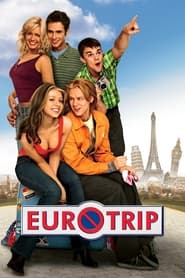
The driver is... Now that-- I'm sorry to interrupt. That Eiffel Tower is not actually there. That's Kevin Blank's work again. We're back in Prague. We're still in Prague. But we're on an incredible actual street that looks so much of Prague. That's the Paris... the Hotel Parizska that they're going by. An amazing thing happened when we were putting the movie together, which was we had to interview production designers. And Prague was not bombed during the war, something that they're very proud about. It's a beautiful city and it very much looks like Paris, as do many European cities. We spoke with a French production designer, who when we were talking to him about these scenes was Just like, "There is no way you can shoot Paris in Prague. It's impossible." "You must shoot Paris in Paris. It's the only city that will look like Paris." "The rest of the cities are fine, but not Paris." And, needless to say, I'm not a production designer, but you could've shot Paris on 40 different blocks in Prague. This is all Prague and it looks pretty Parisian. Although, some of... Besides it looking great... This is I guess where we should mention Oscar-winner Allan Starski, who is just... Our production designer. - Our production designer. Just such a great guy. - Who did Schindler's List, The Pianist, and also built the hot tub where we see naked Candy. The career trifecta. So we're hoping-- We have high hopes for another Oscar for him. This, I believe, is where the run of luck with Michelle and the weather started. Every time we tried to do a single on Michelle, it would rain. If I owned a farm, I would get Michelle out there and I would start shooting her close-ups because it would rain all the time. The stuff no one will ever care about, though, is all the little signage in the back and stuff is real Parisian stuff that Allan did up. Attention to detail is amazing. We are not... We never went to the Louvre either. This is... - This is all Kevin Blank. Kevin Blank created this out of nothing. And created the line. Shooting just different sections... This is all cobbled together from 50 different pieces of footage that he shot in different places.
27:34 · jump to transcript →
-
-
-
Matthew Vaughn
You can be brave. I think films are better if they start slow and speed up compared to other movies that you start at 10 out of 10 and there's only one way to go from there. So this is a set. We shot this in Pinewood. And about three days before we shot it, it was still pouring with rain and the set was sort of flooded.
5:45 · jump to transcript →
-
Matthew Vaughn
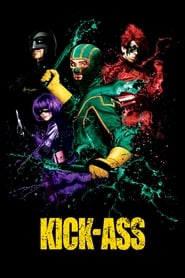
had real problems. And when I say a set, we got told it was impossible to create what we created because it was just scaffolding. And Russell De Rozario, I'll have to call him the costume designer, the production designer, did a brilliant job. In fact, I think someone should open a comic store like this. The idea of a diner-stroke comic book store would be a place I think my son and I would go to. Here is the kid that does not like to be called McLovin.
6:14 · jump to transcript →
-
Matthew Vaughn
And that is the town that used to be the... ...GLC headquarters in London. That's actually the production designer there, the fat guy. He's now thin, so I can say that. He's must have lost 100 pounds. It's like, unreal. Now we're in the art world. I thought it'd be cooler. This is a whole set we built. I thought, wouldn't it be great to have it instead of... You know, you always see the gangsters living in sort of...
19:09 · jump to transcript →
-




Related topics
Other topics that frequently come up in the same commentaries.