Topics / Production
Production design
138 commentaries in the archive discuss this, with 776 total mentions and 72 sampled passages on this page.
Filter commentaries
Filter this topic by the film's decade or the type of commentary.
By decade
Across the archive
ranked by mentions · click any passage for the moment in the transcript
-
-
Tim Burton
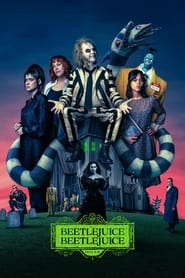
Coming up with a character, then seeing them all come together on the set in real life, you know, it just gives it something we don't get every day. I'm investigating. Recognize this puss? Never seen that chick before in my life or after life.
20:28 · jump to transcript →
-
Tim Burton
I was respectful to what we did in the first one, but then expanding on it was important. I never, myself included, never wanna feel like I'm copying something or making something exactly the same. So that's why I didn't even watch the first movie before I did this one, because I didn't really know if it, it didn't feel like it was gonna help me. I just wanted to make this movie. So in terms of the set designs, I didn't go back and study everything and do this and do that. It's like the house was the house.
31:41 · jump to transcript →
-
Tim Burton
The only reason I wanted to make this Beetlejuice is because it felt personal. Working again with Michael and Catherine and Winona, I was shocked at how I felt on the set when I saw them together. You know, it was, like, quite emotional. It was like a weird family reunion. And I was surprised by those feelings, and I was surprised at how much fun... I mean, I don't usually say I have fun on a movie, and it's not... Movies aren't fun, but the energy... And again, I think...
41:35 · jump to transcript →
-
-
-
Hi, this is Jim Brooks. And this is Richard Marks. We're sort of dedicating this to Polly Platt, who was, is, you know, just one of the trailblazing women in film, associated, just Google her, with more great films than you can imagine. And she was a producer and also had a role to play because she was, in her past, she was a preeminent production designer.
0:20 · jump to transcript →
-
I mean, that is what everybody hopes for. It's always this thing you say that, you know, I think the big thing is, you know, two actors are going to the set that day, each with an idea of how the scene should work. The director is going there with an idea of how the scene should work. The great day for all of them is when something happens that nobody anticipated. I mean, that's what movies are. I love that there's a little mistake he makes here, which is...
33:05 · jump to transcript →
-
when he expresses opinion like that. And now, of course, it's commonplace. The latest message seems to indicate that the Libyan pilot was acting on his own without authority from anyone else. In other words, I think we're all okay. Okay, Tom, wrap it up. Who the hell cares what you think? Coming up, you'll see Holly Hunter, whose nose... Because of the set, she wasn't able to look towards anybody. Her nose ends up two inches...
51:58 · jump to transcript →
-
-
director · 1h 24m 6 mentions
The Naked Gun: From the Files of Police Squad! (1988)
David Zucker, Robert K. Weiss, Peter Tilden
-
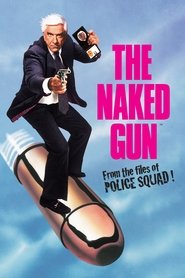
And that's important to future writers? It is. Fluker dialogue? Know your Fluker. How many pages of Fluker dialogue is in a good script? Most of it. That's right, we have the whole glossary of terms. I know. Well, we might talk about some of those. Terms, rules, well, nothing worked. And here comes the joke from the set-up. This actually happened to our rabbi. Was it based on that story or did it happen after the fact? He was with the mayor guarding the queen. Life imitating art.
14:33 · jump to transcript →
-
And hopefully we'll remember some of that and talk about it. We always shoot an elaborate ending to each movie that never makes it. No, that's always rejected. And you never know that it's not going to make it? You never get a sense of it? We always hope for the best and we hope no one will notice, but... It was almost midnight when I got to my door. I just wanted a glass of vodka... Pretty good structure. You talking about the set or...? Do you still see stuff you want to change?
35:28 · jump to transcript →
-
Correct. Was there any kind of sexual tension on the set between any of the actors? No, but between David and myself, there were sparks. I understand. Good thing we're married now. This shirt looks familiar. It's yours. I didn't want to get stained or wrinkled. At least, not yet. Ooh. Do you mind if I slip into something? Was this all at Raleigh? You mean where we shot this? I believe it was.
36:55 · jump to transcript →
-
-
-
You just have to feel it. You're just there on the set. You know, that's not working. It's got to be like this. You're doing that too self-consciously. You've got to do that straighter. The humor comes from the fact that you don't understand you're being funny. It's all inspired by the screenplay, definitely. It's inspired by the screenplay, but then I think what the director does is he has to hold on to it and keep it from falling off. Of course, the movies that work best are
10:21 · jump to transcript →
-
planes had to be shot in two parts. One where we actually had Forrest or Tom Hanks running carrying Michael T. And then we cleared everybody out of the set and set off these explosions here on this island in South Carolina. And then blended the two parts of the shot together to look like he was actually running through the scene with the real explosions. And isn't there a rig also helping him carry Bubba?
55:01 · jump to transcript →
-
My ultimate vision for everything is ultimately compromised. And I think that that's what you have to do as a filmmaker. You have to just turn it over. You have to give up. Because in the morning, you're going to the set, and you've got this long list of 20 setups to do this sequence really great and get all the coverage you need and have everything you need. And then by lunch, you haven't gotten one single shot yet. And you just start crossing them all off. And at the end of the day, you've been able to scramble and get four setups.
1:08:31 · jump to transcript →
-
-
-
for any sort of comparison. Or thank you for the compliment. Oh, please. This is an insult. But Jeffrey was so funny in this scene, putting the hand against his head. Did a great job. And it's a good thing that most people don't know straight off the bat that he's really Juliette's father in real life. Yes. No, nobody knows that. Every time I tell people that, they're surprised to hear it. Actually, Juliette was surprised to hear it. We had to do a blood test on the set.
34:27 · jump to transcript →
-
I offer my humblest apologies to you guys. And Francesca eating the shrimp. Oh, Kristin Lehman is a vegetarian. Oh really? How much did you pay her? Kristin Lehman's a vegetarian and she read the script and never said anything. And we got to the set that day and I could see her having some kind of problem. I said, are you okay? And she said,
53:47 · jump to transcript →
-
But as for costumes and cinematography and production design, it was always about minimizing, just being as real as humanly possible. I think I was the only one in the film allowed to break that rule. Yes, and in the beginning you were not. It was only when we realized that something had to break in order to save the film
1:16:10 · jump to transcript →
-
-
-
And this is actually a set. Part of it we did film on an actual location in Berlin. And I think it's seamless, the way that it moves from the actual location to the set. Mm-hmm.
5:40 · jump to transcript →
-
Great production designer, Andrew McAlpine. Yes. Did a really incredible job.
11:32 · jump to transcript →
-
He's a New Zealand production designer who did such amazing films as The Piano. And we did have a limited budget, and I don't think that you would guess that, given what he was able to do. And also, I think it's interesting that Stuart Dryburgh, who was our director of photography, and Andrew had worked together before. They're both from New Zealand.
11:53 · jump to transcript →
-
-
-
Len Wiseman
Please prepare for gravity reversal. You know, once they actually turn around, which is happening now, this whole thing turns. Now, we didn't turn the set, actually. We just turned those big ribs that you see moving right now. Those are the only things that moved. The actors stayed in the same place. So just to give the illusion that it's moving, we set our camera on a rotator that the camera...
11:08 · jump to transcript →
-
Len Wiseman
And that's one of the reasons, too. Tell me to ask for Mac. It's right inside. Thanks. This was the first scene we actually shot was this set. First actual moment that we shot was that fight that Colin does, because we had to kind of build this massive, like, truss and camera system within the set.
20:20 · jump to transcript →
-
Len Wiseman
that we had to kind of tear apart. So we started with that fight, and then we tore that down, and then we were able to patch up and build the rest of the set. Welcome. Hey. You're a friend of Merrick's? Yes. Yeah, we, uh, we work together. Is that it? And John Cho was really on board with letting me dye his hair. It feels like real life.
20:47 · jump to transcript →
-
-
-
puzzled us, but then we got absolute complete rock solid confirmation the night before the first day of principal photography that there was a wall. And so the next morning called the production design team, said, you need to build a wall at the top of the stairs and it's just gonna have to be a real wall. And Taylor's gonna have to knock it down with a sledge just as you would with a real wall. And the whole thing was, that thing dried
6:30 · jump to transcript →
-
gandalf for those out there a nine line is essentially a kind of a list or a protocol of like how you call an aircraft it's got these like line items of critical information the pilot needs to to either drop ordinance or two that's just like i was just that's the standard i mean that's his that's what a jtech does so we were considerably far away from the house the set
12:39 · jump to transcript →
-
moments themselves that are true to their characters now whether that stops it being truthful or not i i don't know but but that's what that little sequence is about we're seeing what those guys have inhabited was that callous from uh training oh it's a great like little detail because every guy has one of those like from flipping safeties or fascinating yeah there's what i'm just gonna chuck in one thing here so it's said because it's about the production design because we're looking down the scope and we're seeing
16:55 · jump to transcript →
-
-
-
David Kalat
Grant, an A-list star of light comedy and amiable action films whose popularity would keep him a top marquee name for many decades. In contrast to Kochi's insecurity, Takarada swaggered onto the set and introduced himself as the star. The grizzled crew chuckled, Godzilla's the star. And since the monster is the star of the show, to talk about the cast, we really need to talk about the special effects director, Aiji Tsuburaya.
17:56 · jump to transcript →
-
David Kalat
But these preoccupations didn't just pop into place on the set of Godzilla. Honda had been ruminating on Japan's post-war zeitgeist for some time. When he served as Kurosawa's assistant director on Stray Dog, Kurosawa tasked Honda with directing the sequence in which the detective, played by Toshiro Mifune, takes his first walk on the wild side, exploring the criminal underbelly of the city, an extended, wordless sequence that stands out as one of the more memorable set pieces in that film.
30:06 · jump to transcript →
-
David Kalat
It was, in fact, the very first scene shot by the special effects crew. It was a pretty inauspicious beginning. As they were dressing the set in preparation for the shoot, one of the crew members broke through the floor of the set by accident and fell onto the miniature diet building, which had been pre-stressed to break on cue. Well, sure enough, it shattered. They spent hours putting it back together again and restoring the set. Finally ready to proceed, Nakajima put on the Godzilla suit and took his position, only to crash through the floor himself.
1:04:06 · jump to transcript →
-
-
-
Nick Pinkerton
On the set, there'd been chatter about tensions running high between Eastwood and his director, Ted Post, who, as mentioned, had directed Eastwood only five years before on Hang 'Em High. But those five years, as we've seen, have done a lot for Eastwood's reputation and for his view of himself as the most qualified man on almost any given set.
1:08:49 · jump to transcript →
-
Nick Pinkerton
On the set, to a reporter visiting, Post said, he hasn't changed since I first knew him, he being Eastwood. He was just the same in Rawhide days, always supplying imaginative ideas. I'm no auteur director. I'm interested and happy working with someone who collaborates and contributes. But, privately, Post would tell another story.
1:09:41 · jump to transcript →
-
Nick Pinkerton
He figures he can go right in and sail through these things. Cimino, who remained ever after extremely grateful to Eastwood for the opportunity to direct his first picture, remembers a very amiable relationship on the set. He remembers asking Eastwood for feedback
1:13:15 · jump to transcript →
-
-
-
Do you know that we wanted to use this logo? This is against Richard Hartley's piano playing, I think. Of the 20th Century Fox theme. - Yes, maybe I will... We wanted to use that for the denouement. Ah. - Instead of the RKO sign. So that was interesting. Michael White and Lou Adler's names there, our producers. Yes, that's correct. - Erstwhile people. I'm rather... And now whose mouth do you think this might be? Ooh. M-m-m-mine. Yeah, it is. Now, interesting... - There we go. Course, when we did the stage play, it was you that sang this song. That's right. - And then they offered you the part of Magenta in the movie, and what did you say to them? I said-- well, they told me that I wasn't going to be able to sing the song 'cause they couldn't have an usherette open the film, so I'd lost my song "Science Fiction." And, um, I said, "Well, you can take your movie and shove it up your..." Where the sun don't shine. Yes. - Mm-hmm. And they were very amazed 'cause they'd taken me to a restaurant Yeah, yeah. - Jim Sharman. Always do it after lunch. Always tell them no after lunch. Yeah, after lunch. And I said I'm not interested. Don't want to do it. Then they took me round to John Goldstone, one of the other producers, round to his house to see the sets. They said, "No, please, Pat, come and see. Come and just have a look." And then they showed me the pink room, the laboratory. And then they showed me all the drawings of the costumes and whatever, whatever, whatever, and, um, I said, "I can't wait." "I'll begin tomorrow." I didn't mind about the song. Yeah, well, I didn't know anything about that until this moment in time and, uh... Well, I have blamed you for it ever since. Well, you see, I got along to the studio, and they'd done the backing tracks... Richard Hartley and the crew had done the backing tracks at Olympic Studios. I love my name dripping like that. Oh, yes. And... Sorry. It was a bit of a drip. And... - I said-- They said "We want you to sing the opening title song because you're the author of the show," and I said, "What do you mean, as a backing, guide vocal for Pat?" They went, "No, we want you to sing it." And, um, so I did, but until that moment in time, I had no idea that I was... Well, ladies and gentlemen, or whoever's listening, today is the first time this has been revealed in how many years? Oh, um, 25? So in all these years, I have begrudged you taking my song. And in all these years, I've begrudged you for being you and having that delightful mouth. Thank you. I mean, look, it's a wonderful mouth. One wonders, you know, oh, well, wonders, just wonders, really. Has your dentist seen this movie? Yes, I really wanted to give her a plug today. Veronica Morris. Because, really, she's been keeping my teeth in great order. This is marvelous. And Veronica'll be so pleased. This mouth, of course, is Brian Thomson's idea. It was the Man Ray photograph of the mouth and the sky is where he got that from. Yes, it... Is ita photograph or was it a painting? It's a photograph. - It's a photo. Lios Over Hollywood. Yeah. - Is that what it is? That's what it's called. It's over the Hollywood sign-- a mouth. Man Ray picture. - And this was the first mouth. I mean, I'd never seen a mouth this symbolic before. The Rolling Stones got a mouth after that, didn't they? Yeah, they got a mouth after. Not a mouth before. Bit mouthy. - A bit mouthy. No, no, and it was wonderful when they asked me to do this 'cause they asked me to do this mouth on the very last day of the film. Mm-hmm. Jim Sharman came up to me, it was a wrap, finished. We'd done it, and he came up and said, "We've got an idea about this mouth." Yeah. - "And will you do it?" And they painted all your skin black. Yes, they did, And I went out to Elstree Studios... - But your timing was perfect. I mean, your lip-sync is fantastic. Yes, well, I'm good at that. And I sort of know how you do things. So, uh, so we... We, uh... Ramon Gow. Look, the hairdresser, Ramon Gow. We'll talk about Ramon a little bit later on. Yes, he was wonderful. - Yeah. He kept us happy. Did he keep you happy? And Pierre. Pierre did the makeup, didn't he? Pierre La Roche. Oh, God. He did Bowie's makeup. You know, for what was that Bowie thing? You know, when he had the makeup. - When did Bowie never have makeup? All right, with Bowie. Ziggy Stardust. Yes, and it was fantastic. And I thought Guy La Roche will give me the most fantastic face in the world. And he looked at me, and he said, he gave me no bones... No, Pierre La Roche. - Pierre. Pierre La Roche. Guy de la Roche is... - I beg your pardon. Pierre La Roche. And I was so shocked that he just said, "We're going to totally whiten the face." And what-- here we are. And what-- here we are. And what-- here we are. The fade into the cross there. - Fade into the cross, yeah. And down the old... And now this is interesting 'cause this was just a facade, wasn't it? That little room-- There's a little room on stilts behind that door. Just tiny little room. There's darling Henry Woolf. He's just such a darling friend. A great, um, Pinter. Pierre Bedenes in the front here. Now, Perry was the boyfriend of Brian Thomson at the time. Uh, we should say... that little girl there, where is she? She's gone now, but that was... what's her name? She was the photographer that went out with Prince Andrew for a while. What was the name? - Koo Stark. Koo Stark there, yeah. She's in the back there. She's there. Uh, I was gonna point at the screen as if that made any difference. Yes, -Gaye Brown. There's Pierre. And Henry. - And Henry. Henry was in my house the other evening. He now teaches in Saskatchewan. Yeah. He's been over here doing the Harold Pinter plays, hasn't he? That's right. He was in the first play that Pinter wrote. He made him write it, actually. Well, there they are. - There's our Brad. The two lads-- so very butch. Ouch, that hurt. And there she is, Susan Sarandon. We didn't know either of these people when they arrived, did we? No, we didn't, but they... - Weren't familiar with their background. Although he'd been doing Grease on Broadway. Great dancer, great legs. But it was wonderful. - Wonderful. There's my wife there jumping up and down. My ex-wife. My first wife. Is it Kimi? - Yes, in that little plaid dress there. Yes, and that lovely handbag. - With the bangs. Yes. Gorgeous. And this is Rufus Thomas, I think, driving the car. Rufus was with the-- there he is. He was with The Living Theatre for some years. He choreographed Jesus Christ Superstar in its first British incarnation. Gosh. Such class we had in this. Oh, yeah, we were all, yes, very groovy. - I remember those two. Now there's us in the background being American Gothic. Yes, which was such a surprise to me, and it was freezing cold that day. And I swore I'd never talk about the cold again on this film... We were walking to that set the first day we ever walked to that set, and we'd smoked something rather exotic. And I'd never smoked before. - No, no. Richard really led me into really bad ways. It was a bit difficult clinging on to reality, wasn't it? It was wonderful. I loved it. Ah, there we go. - There's our signs. In the graveyard. - "Denton." "The Home of Happiness." "Dammit Janet." "Dammit Janet." "Dammit Janet." She looked very pretty. Sue Blane did some wonderful costumes, and they've really hung on, even though we do the stage show 20... well, it's longer than 25 years from the movie, the stage show. But we still use Sue's designs. She reinvents them, and it's still the same kind of look. Well, I must say, the thing... she's stunning-- is at the time... I demand that Sue Blane invented punk, and this film invented punk. And down the road was Vivienne Westwood with a shop called Sex, and she thought she'd started it, but no, sorry. She'd copied us from up the road. We were on the stage at the time. I think there's a certain amount of truth in what you say. I think we were a precursor of Malcolm McLaren and Vivienne. That's correct. - But then again, you say, as Coco Chanel said, "Anyone who thinks they're original has got no sense of history." 2 If there's one fool for you Then lamit > Janet 2 I've one thing to say And that's damn it, Janet > Now look at that heart there. I want you to see that heart there, 'cause when we go back and rub it out, I think this is... Maybe it's the same heart. I thought it was a different one. Maybe they got it... There's a boom microphone shadow we'll see, I think, soon. Somewhere out there. - Why do you point out the faults? Well, why not? You know... I mean, that's what the fans do. - Do they? Yes. Oh, look, she dropped it. What a shame. Wasn't she meant to? I have no idea. - Or was she not? Now, this is interesting. This room, we could only afford this end and the other end. The altar end, and we didn't have any sides to the room, so we could only shoot it looking this way or looking the other way. We couldn't pan around 'cause there were no sides to this room. 'Cause we didn't have enough money. So there we go, you see, walking towards camera without background. Good heavens. And walking away from camera to there, but there were no sides. > Oh, Janet 2 For you? 2 I love you too } They were very good, these two, weren't they? When you consider we'd been doing this for the show... We were like a family, and they came in, and they joined in, like, so easily, so quickly. I find them astonishing. This must be... I don't want to go into detail, but it's a very small coffin, isn't it? Oh. - One does wonder. About what? Could have been a rabbit in there probably. Well, every day was a great surprise to me on Rocky Horror. I never knew what was going to happen next. Yeah, me neither. I mean, I didn't know what even American Gothic was. Till I saw the painting in the hall a few days later. I thought, "Why am I dressed like this?" Were you not familiar with that picture? - No. There we are... three good-looking people. And those opticals were rather good I thought. And those opticals were rather good I thought. And those opticals were rather good I thought. They really were mechanically derived by... But, you know, today, of course, you'd have optical wipes and all sorts of things with video. There's dear Charles Gray who's departed from us recently. Yes, Charlie has parted from us. And I loved it when you said to me it'd be wonderful if you and I were Charles Gray and Ava Gardner. We could visit each other often. Yes. - 'Cause they were great friends. They lived next door to each other. And I thought they've both gone. So we've got to now move into the same street. I think they're probably on a similar street in the sky somewhere doing the same things.
0:05 · jump to transcript →
-
And Sinatra phoning every day. Yeah, did Sinatra... - Phone Ava every day? Did he? - Yeah. Heavens to Murgatroyd. There's the lovely Jonathan Adams who was our original narrator. Brilliant. Yes. - Plays Dr. Scott in this movie. And Brian Thomson used to put in hidden detail in those things, so there would be stuff inside that file. There might have even been stuff in those files behind him there. In that it was relative, but nobody was ever going to see. No. Well, to me, Brian Thomson's set was astonishing. It was unbelievable, and I've just been to see he King and /... Mm-hmm. - ...and the set he's just done for that. I adored it. - Yes, good, is it? Mm-hmm. Pity about the... - Sumptuous. Nah, nah, nah. - What? I didn't say anything. Nothing. You didn't say a thing. - Never heard a dicky bird there. Yeah. What a charming person. He'll be remembered in my will, actually.
11:02 · jump to transcript →
-
Weird Fantasy, I think, is the title of that particular magazine. Ah. Of course, all his stuff was shot in a day. Because the marvelous thing about the dining room scene, that I read about in a magazine... I didn't realize why, which we will see when we come to it. I'll talk about the set of the dining room scene. Okay, I'll bear that in mind. - All right, thank you. I'll just write that down. - Write that down. No, I'll remember. Is that what I think it is, is you just rolled up over there, skinned up over there? Sorry? I never really liked the way you took so much pleasure in looking at that. What? - Your voyeuristic sense. Oh. You see that... Making those noises and things, I got rather embarrassed. Oh, really? - Yes. Do you see that thing around the television screen? I still have that. - Where? It's in my shed. I've got it in my shed. In your shed? It's in my wee shed. And what do you do with it? Well, it's at the back of the house. The kids have actually shown interest in it. - I see! Linus wants it. My son would like it. You know, and actually Joshua... - What, with all the thingies? With all the pulls and handles? Just-just the square that goes around the television screen and the handle on it, yeah. - All right. It's lost a couple of its rivets... Hmm. - ...aS one does over the years.
48:30 · jump to transcript →
-
-
technical · 1h 35m 5 mentions
Steven Lisberger, Donald Kushner, Harrison Ellenshaw, Richard Taylor
-
One little thing I noticed... I mean, I didn't catch it when I was directing Jeff with this, is that when he plays Clu, he plays it with this strange computer accent, this mechanical accent. And now, when he's being tortured, he loses that, and I wonder whether he noticed it. We got so caught up in being in the scene that nobody realized that at the time. Clu's torture sequence is a great example of how light is used to create emotion. Lots of different filters were used on him as a part of that torture sequence. There are, basically, ripple glass effects, there's silk screen steel mesh, exposure changes, hand-done animation. When he's energized by the MCP, there are other filters that were used on the camera to give him that multiple-effect look. In this particular case, it was silk screen mesh, steel silk screen mesh that was on the taking camera and was spun around on the lens as a part of that effect. Dillinger's arrival to ENCOM in his personalized chopper was an interesting sequence. I took drawings of the chopper, schematic drawings, and created the design motif that you see on the chopper. And then over a two-day period, I applied these designs to the chopper myself with these varying sized, 3M reflective tapes. So, when we are shooting this sequence, what we are basically doing is flying air-to-air in another chopper parallel to this chopper. And we have a very low-intensity light source right near the lens of the camera, which is shooting across and reflecting directly back at the camera off of this 3M material. And it was a red light source, so it gives you the appearance that the chopper is either backlit or has some kind of neon lighting system on it. Again, there was the attempt to, for the outside, the window, to have the grid type of atmosphere and, kind of, cross-pollinize the electronic world with reality. Oh, I remember this stuff. Nice desktop computer built right into the glass. Touch screen. - Touch screen. I still want this desk. This was done with rear projection under the desk. The whole set had to be built up on the stage so that we could put a giant mirror under the set and project it in the old-fashioned way. There were technicians who were basically controlling light switches to different light boxes underneath this desk to light up different areas. The type itself, when it writes itself on, is actually matted into the scene from a computer graphics created type. And again, the view behind Dillinger is indistinguishable from the electronic world. And whose voice is the MCP? It's David Warner's voice. - Yeah. Yeah. It was just electronicized a little bit. End of line. Someone pointed out that they finally figured out that the reason that Bruce Boxleitner's character was wearing glasses is because he was supposed to be a little bit of a nerd. I think that was the intent. Just the readouts on the computers in the real world had to be pre-programmed ahead of time so that they wouldn't have rolling bars on them when we photographed them. Here you see another attempt to link the electronic world with the real world. The cubicles that the office workers are in are not dissimilar to the cubicles that the game players are in. And the intent was to have them go on forever or almost for infinity. Now, what thematically is happening is that at the time, computer people... Programmers were very concerned that the IBMs were going to take over the world of computers and exclude people. That they were going to be... That the system was going to be tyrannical. And what we're trying to show here is that the... Corporately, they've put a stranglehold on the system, and that the programmers are not being allowed the access that they want. And access for them is vital for their work. This character, Alan/Tron, is still inside the world of ENCOM and is more in balance. He seems... He's one of the people that's going to deal with the system from the inside. He's got a very methodical program in Tron, whereas Flynn is no... He's a renegade now. He just doesn't fit in and he's at war with the Dillinger character. The name Tron is derived from electron. Some programmers think it refers to "trace on, trace off." But that... We learned about that afterwards. There's a program in Japan called TRON, which is an educational school program, which has been running since 1985. And ENCOM was the only name we could find that wasn't already registered as a corporate name. Whereas Alan and Flynn are aligned with their counterpart programs, Dillinger has aligned himself with the tyrannical Master Control Program. So, the MCP is the ultimate controller, the big mainframe, the antithesis of the personal computer. The sequences that take place at the Lawrence Livermore Laboratory were interesting in their concept and in production. It was a very complex place to work. It was a very tight area, and we worked on this film with 65-millimeter equipment. And Bruce Logan, the DP, had his hands full. Sixty-five-millimeter film technology is quite cumbersome compared to Panaflexes and Panavision cameras. The size of the camera body itself, the limitations of the lenses, blimping the cameras... They're huge, so to get them in these cramped quarters was difficult. We were the only ones... Only film company ever allowed access to shoot in there. And nobody's been back since. A lot of this was lit, practically, by the fluorescents that are in there. It almost looks like a set. Yeah. We were very lucky that Lawrence Livermore let us use this facility. Because the cost of building a set this elaborate would have been astronomical. The Lawrence Livermore Lab is where they had the largest laser in the world. I don't know if it still does today. And they did a lot of research for NASA. Lawrence Livermore Lab was very cooperative with us, and allowed us to, really, kind of, run free through this particular area of the laboratory, which was their linear accelerator. So, we went into the one particular area, which we found most interesting for the area where Flynn gets de-rezzed, and where you first see the matter transportation effect, where the orange is digitized and deteriorated and then reassembled. In this particular case, we are seeing an orange, which was created by CGI by Triple-l. Animation that was done by the effects animation department, which was headed up by Lee Dyer and the effects animators, John Van Vliet, and John Norton, Barry Cook and Michael Wolf, Chris Casady. The name of that laser, by the way, Is Shiva, the Hindu goddess of creation and destruction. The 16 billion-year life cycle, she's got the drum of creation in one hand and the fire of destruction in the other. ...femain suspended in the laser beam. Then, when the computer plays out the model, the molecules fall back into place and voila! So simple. Why didn't I think of that? - That's right. Use that on Star Trek all the time. It's funny how they just kind of, just blow it off. Another afternoon's work down in the lab. Exactly. - Teletransportation, okay. Just digitized matter, no problem. Tomorrow we'll do watermelons. In a week, a human being. No, that comes sooner than that. A-ha! Oh, you're giving it away now.
7:08 · jump to transcript →
-
One little anecdote here is that the cameraman that was up on the platform shooting this, the viewfinder of his camera was broken, the pellicle mirror had shattered, and he couldn't see anything through the camera and he just aimed and shot. He didn't want to slow down the production by telling anyone that he couldn't see anything, and held his breath all the way till dailies, and the shot worked out. Oh, that's right. 'Cause there weren't very many 65-millimeter cameras available, and all this was shot in 65 millimeter. Yeah. When we opened these cameras, they still had the sand of Lawrence of Arabia in them. Well, Flynn's arcade was in Culver City. Yeah, it's across the street from the old MGM lot, which is now the Columbia lot, but now renamed as Sony Pictures. Now, there was actually a loft at the location. But then the re-shoot... The close-ups were the re-shoots on a stage. Yeah. That's the... The actual... The practical location. Space Paranoids. Space Paranoids. I take my son to the arcade in Westwood. We go once in a while. I have to bring my earplugs. But I've never seen an old couple like that in a video game arcade. That's right. We knew that Bally was going to release a video game simultaneous to the release of the picture, and therefore we wanted to have the design of the game in the arcade and the game in the real world that people would actually play be very similar. So, we go to Flynn's, and we see Flynn playing the electronic game and fighting off a Recognizer. That is the console which we created for the film that represented the game that Bally was going to create. Although, obviously, at that time, there was no way that a computer game could have real-time, interactive, full raster graphic imagery. So, it was a prediction of the future of the way games were going to evolve, and that is what we're now seeing in CD-ROM games and the games that are in home computers and arcades today. Jeff did get very good at video games. We had some on the set. Yeah, he was remarkable, and one day you suggested that we videotape him while he was actually doing it. And look at the neon in the back. I'd forgotten about that. OA, right. I don't think any of the actors actually went so far as to get themselves a computer and spend hours backstage... Programming. -... learning how to program and... That didn't happen, but they got as far as games. Battle Tank. We used to play a lot of Battle Tank. Battlezone. Yeah. Battlezone. There you go. Now, as! recall, you... We re-shot this sequence. Yeah, and I don't even remember... The lighting... To match, I think, the lighting of the game arcade. Well, I think, actually... - We changed dialogue. Did we? - Changed dialogue. And here's a little secret. We told the studio that we needed to redo it to match the lighting. Well, see, /... Still using the same excuse. That's right, you're still... You're still well-programmed... - /'// never tell. The lighting didn't match. The casting process was interesting. Originally, I'd pictured Jeff's character being younger and the Tron character being older. We were affected by some things that were definitely outside of our control. Tron predates Splash, and people forget that, really, Disney was having a hell of a time getting popular actors to work for the studio. And it had been a tough time for Disney. And it didn't help that we were saying, "Yeah, we want you to wear these funny costumes." And Jeff was always enthusiastic about being part of the picture. The Tron character... Bruce was... I don't think Bruce was quite as adventuresome at first, although he got into it after a while. I would have liked to have seen Bruce possibly be a little, I think... I had pictured him as sort of a younger Kirk Douglas. I think he would have been better if he had been a little older like he is now. I like the way he looks now. And I think Jeff... I was surprised at how physical Jeff was. I thought that... I pictured Flynn being a little more geekish or a pencil neck, and Jeff is very physically strong. So, in that sense, the two became somewhat similar, although their personalities and what they represent are completely different. One little anecdote is that... I can't point back at the character of Tron and say, "There were all these actors." Or, "It was between this one and that one." But I do remember one surprising actor who really wanted to play this part, and it was Peter O'Toole. - Yes. Oh, he wanted to play the part of Dillinger. No, it was Tron. Tron, that's right. I think we wanted him for Dillinger and he said, "No." And I had this amazing scene with him in the Beverly Wilshire Hotel where... In his hotel room where he said, "I can do this!" And he started leaping from one piece of furniture to the other and screaming that, "I want Tron on my tombstone right next to Lawrence of Arabia!" And who knows, maybe he would have been great, maybe I really missed it right there. All these interiors... Shooting them, these low-light interiors, in 65 millimeter is very difficult, because the depth of field, the focus plane is incredibly short, and it was a real struggle. And some of the close-ups, we actually had to run light stands up the backs of the actors through their jackets as braces, so that they would stay in the exact same spot, so that we could keep their eyes and faces in focus. You know, if your file was in there... - Hey, wait a minute. If we can get in there, I can forge us a Group 6 access. Well, shall we dance? And ENCOM was shot in downtown Los Angeles. I forget the building. Of, the Transam building? Oh, yeah, the Transamerica building. At the top of that was the helicopter pad. This sequence between these two heads of the company really expresses the philosophical problems that the other characters are going through. Again, the office is designed to mirror the other world in terms of its graphic look. Wasn't there something about the cold, corporate look as well, Steven? There's your door. - There's the door. The scene where they sneak into ENCOM and open the door that is 10 feet thick or 12 feet thick, that's a real door, that's not a prop movie door. That's an actual radiation door at Lawrence Livermore. ENCOM isn't the business you started in your garage anymore. In one scene, you see a number of things flip up into four corners. Images. That was a traditional optical that had to be done, and opticals in those days would take two, three, four, five weeks at least, and it was a big task. It was like making its own little movie. You know, you can remove men like Alan and me from the system, but we helped create it, and our spirit remains in every program we designed... That line is one of the key lines in the whole script, about the human element that the programmers put into the system. And it's this discussion between those two characters that really elevates the picture well beyond a video game movie. Now, the reverse was shot, actually, on the Iot, so there's a reverse... Getting into the Disney vaults? Yeah. Lawrence Livermore was quite proud of the fact that although this door weighed tens of tons, or whatever it was, it was so well hinged that you could open it by just pushing it. One person could. In fact, you found... I believe you saw that door as we were taking a tour of the facility and you Said, "This would be a great place for them to sneak in." So, you kind of re-wrote the scene to accommodate that huge door. And the irony is, as he punches the buttons, that the giant door opens, and no strength is exerted, but it's opened automatically. I kind of inherited the job of not only setting up the giant rear projector and the mirror and all that stuff, but I also had the job of putting together what would end up going onto the desk. That's an actual wireframe on there, for the carrier, as you See... Right. - ...in the film. I began searching around for footage to go onto the desk, and it was getting late, and we were about to shoot this thing in a couple of days, and I just ran out of stuff, so I put the flowchart from the film on there, and probably things out of my address book and anything I could... I was down to pulling things out of Life magazine and re-photographing those. I was just running out of stuff to put on the desk. What's interesting about this protagonist, Jeff Bridges' character, is that he's actually, um... He's a creative, technical type, and he's fighting for his creations, he's fighting for his work. I think that's pretty unique. He is somewhat of a paranoid character. But with some reason. With some... Yeah. - Some good reason. Dillinger will never know we've been in here. Good luck, hot shot.
16:15 · jump to transcript →
-
We just passed a Cray computer, that large, refrigerator-like computer. That was, at the time, the most powerful computer in the world. This Is... - Was this set at Triple-/? Where is this? No, this was picked up at... Wasn't this picked up at Lawrence Livermore? Yes, I think this is right, this is Lawrence Livermore. And again this is another kind of discovery. As we were getting the tour, you said, "Well, we could use this for their transition." This is a Set. So, af this point we've got two hackers, one, in essence, illegal, and the other one legal, both trying to correct the system, get on the network, what we now call the Internet. Bruce Logan, the cinematographer on the film, and Peter Anderson, the cinematographer on the second unit, did a miraculous job of lighting up the set with a lot of light, but taking all the light off of the desk so that you could see the rear projection come up through it. It's pretty clever.
26:45 · jump to transcript →
-
-
director · 1h 31m 5 mentions
Alex Cox, Michael Nesmith, Victoria Thomas, Sy Richardson + 2
-
Except for this one thing. Fox didn't know how to drive. No, that's right. He couldn't drive a car, and he showed up on the set and took off and drove it right into a bridge. He almost showed up at the gas station. He hit a gas pump. Well, subsequently, me and...
1:38 · jump to transcript →
-
It wasn't near as traumatic as when the Malibu got stolen. That was bad. We'll get to that, won't we? Well, this is that car. It is. Because when we started shooting, we only had one of these Chevy Malibus. Yes, and I kept saying, don't rent the picture car. Buy them. Let's buy three. Yeah, but we only ended up getting one. And the Teamsters suggested to me that I should, since I didn't have a car, I should drive that car to the set every day. And this went on for about a day and a half, and then the car vanished.
3:49 · jump to transcript →
-
who, by the way, when I met them on the set, they were totally disinterested in me. I said, hi, I'm Xander. I play Kevin the Nerd. And they said, so? But I later on ended up joining the band and playing with them for about 12 years. There's Jennifer Balgobin. You're still in the Circle Jerks, aren't you? Well, yeah, you could say so. You know, we keep breaking up and having reunions, and now we're all kind of getting on in years, so...
6:35 · jump to transcript →
-
-
-
Roger Moore
of horses that they owned. Cubby was a great gambler. He loved it, he loved Shemmy. But we played, every day we played backgammon on the sets. Cubby Broccoli was married to Dana, and their daughter, Barbara, is now producing the Bond films.
38:25 · jump to transcript →
-
Roger Moore
in Udaipur. And Maud would speak to him every day on the phone, and then he finally arrived. And he said my first words to him were, you don't by any chance happen to have a Hershey bar with you? Desperately missing Hershey bars in India. But they were visiting the set, so...
59:53 · jump to transcript →
-
Roger Moore
When we were shooting the Sicilian cross, we had a little problem with controlling traffic until we had a little chat with the chief of police who happened to be Italian. And then all of a sudden we had a lot of motorcycle policemen who were all in Italian. They said, come on the set. And the great thing for us shooting in San Francisco
1:03:32 · jump to transcript →
-
-
-
Hey, that's you. - That's me. So this was, uh-- I guess we... We could start about... Talking about the beginning of how this whole movie came about, really. I was in dire straits at the time, in terms of my career. I had just come off of a complete disaster, a big bomb. I didn't know if I was gonna direct again. I thought I'd have to go back to writing. So I was in Chicago staying at my in-laws' house... ...and my first daughter was just born... ...and John Hughes sent me, out of the kindness of his heart, two scripts. One was called Reach the Rock and the other was called Home Alone. One of them, it was rumored... I think it was this one. was written over a weekend... ...which some critics would probably jump on the bandwagon... ...and say, "Well, we always knew that." - Exactly. Ha, ha. So I read Home Alone and immediately responded to it. I thought it was just a great, great piece of material. And it talked about some of the things that I was interested in making a film about. Now, we had a meeting, I remember, in New York. I just-- It was-- You and my father were talking most of the time... ...and I was just imitating everything you were doing. Everything I was doing. - Yeah. You'd drink your water, I drank my water. Like that. I think I did that... I think I way overdid it. I think I just kept doing it the whole, like, hour. Well, you know, the interesting thing is we... Again, it was the kind of situation where we looked at hundreds of kids, again. And I was like-- Even though I didn't know if I'd ever direct a film again... ...I was like, "Well, you know, Macaulay was in Uncle Buck... ...and I don't wanna just cast him based on John Hughes producing the movie... ...because then it looks like I'm gonna give in to John Hughes and be a wimp." And I met all these... I met hundreds of kids. And when I met Macaulay, there was just no one else who came close... ...to what we needed for this film. I mean, really, in terms of an actor... ...a Child actor, at the time, you were the most unique, original kid I'd ever seen. So that was pretty... - Oh, thank you. I mean, I totally agree with you, but thank you anyway. But it really is-- It's sort of, uh... Because it was the fact that you, um... The camera loved you, obviously. You see the shots from the film. The camera loves you, but at the same time, uh... ... you were relatable to every kid in America... ...because you weren't an idealized version of a kid. Kids are used to-- Accustomed to seeing this ridiculously... Shirley Temple, and the curls and the whole thing, you know. And there was just something enormously real about you. That, and I could remember my lines and I had a lot of energy. That is true. You did have a lot of energy. Almost a sad amount of energy. It was, I mean.... Still do too. Uh, now, do you remem--? Like, this particular scene. We're starting from the beginning of the film. And I'm curious, because there were so many scenes in the film... We were talking before we started. where we would shoot your coverage first and then send you home... ...or I'd still be in jail. - Child labor laws. Yes, I'm still well-versed in the child labor laws. So there are obviously certain elements of the film-- Like this. Do you remember this being shot? - No. Because you weren't here. - I remember we did the whole... There was a whole sequence with, you know... ...people coming up the stairs, down. - Right. He's there, and the pizza guy's there. I remember that, and just like, you know, trying to coordinate that whole thing. But, no, in general, there's a lot of stuff... There's a lot of holes in it... In my memory. And this guy went on to do something on Nickelodeon. My kids know him. Yeah, Pete & Pete. - Yeah, Pete & Pete. Is it still on the air? - No, no. It lasted a couple years. It was actually a really kind of neat show. Yeah, my kids loved that show. But what was interesting about the whole look of this film... I guess we could talk about it a little bit. You'll even notice... Some people will think, "Well, this wasn't intentional." But we intended the film to feel like Christmas sort of. I wanted the house to feel very warm. You look at... - Greens, reds. Macaulay's wearing greens, a green and red shirt. There's a green and red jumper sweater on this guy back here. The wallpaper is all... - That's very clever. All conveying a warmth of Christmas and something that, uh... It just was interesting to us. So it wouldn't be over-the-top, but it'd feel warm. I wanted the house to feel like a warm place. Joe Pesci. What do you remember about Joe Pesci? What is, like, your first--? My first-- Gosh, I don't even... I have-- I still show this. I have a scar on my finger. - Uh-huh. We'll get to that part near the end... - Ha-ha-ha. ...when, you Know, he says, you know: - Okay. "I'm gonna bite each one of your fingers off, one at a time." During rehearsal, he actually bit my finger a little harder than I think he thought. I still have a little scar on my finger. It's my little Joe Pesci tooth mark. I'm telling you something, I believe... And I know Joe would probably get a little upset with me about this... ...but there was a little professional jealousy from a lot of the actors on set... ...because you were the star. There's this little kid who was the star, who we were all paying attention to... ...who was carrying the film. And there was a lot of passive-aggressive stuff going on. And I don't think Joe meant to bite through your finger... But, heck, you know, you never know. He was not particularly happy during the course of making this film. And I don't-- I think he would probably say the same thing. He had just come off of Goodfellas and Raging Bull, and he was... I don't know, did he win the Academy Award? He won for Goodfellas. His acceptance speech was, "Thanks," and that was it. Okay. Well, there you go, so, um.... And when he... I remember I was such a fan of his. Asking him to do the Goodfellas... The clown speech, you know. "Make me laugh," you know? "What do--? Am I funny to you like a clown?" And he would do that every day, and it was great. But at the same time, I could feel it from the actors. Because there's always a sense of rivalry between actors. There was this feeling of, you were the star of this movie, and that was un... That was not really common at the time. - Yeah, yeah. It created an interesting tension on the set, I have to say. Yeah, see, I never really felt that, but I was 9. Everyone around here knows he did it. It'll just be a matter of time... ...before he does it again. What's he doing? He walks up and down the streets every night... ... Salting the sidewalks. Maybe he's just trying to be nice. No way. See that garbage can full of salt? That's where he keeps his victims. The salt turns the bodies... ... Into mummies. Wow. - Mummies!
0:21 · jump to transcript →
-
That's also the reason I got the part. I'm such a ham. You are such a ham. - I'm such a ham. But what's amazing is, at the time... ...I was only the father of an infant, really. My daughter... - It was Rory's age. They were both born same month. Yeah, and, uh.... So I was, uh.... I thought, "Well, he's-- This kid is really kind of over-the-top... ...In terms of the way he treats his family. He's kind of a brat." Little did I realize then, after four children later, that this is kind of par for the course. This is the way kids just treat their parents. John knew what he was talking about. - Oh, yeah. He had lived through it. John-- The meetings on this film... We would be in preproduction before we'd shoot... ... then I'd have to go to... John was a night owl, so I'd have to go to John with a... John Hughes' house from about 9 at night to 5 in the morning. I would get home and get in a half-hour's sleep and go back to the set. It was just insane, and he liked to work those hours, and we'd... That's how we basically worked on the script... ...and worked on the production design. It was literally a 24-hour-a-day job. Now, oddly enough, you know, which is gonna sound odd to some people... .all of this sort of imagery... ...Was inspired by David Lean's Great Expectations. So I was-- Obviously, we didn't fully get to that point... ...but some of the black-and-white photography in that film... ... really inspired this sequence for me.
11:55 · jump to transcript →
-
Someone I got to work with, Maureen O'Hara... ...on a picture right after this... - Mm-hm? ...SO... - I did a day on that. Yeah. We cut your big scene with John Candy. You cut all my lines out. - Yeah. It was kind of like we were trying to duplicate Uncle Buck. Yeah, yeah. - I remember that, and it was just kind of... Felt like we had been there, in a sense. Um.... More people saw this picture, so you're Okay. Yeah, no, I'm.... Thanks, Chris. Now, this... - Ha-ha-ha. Thank you. We resorted to stock footage for any shots you'll see of airlines... ...coming up, shots of Paris. We had no money to go shoot those things. And this was a set that already existed... ... that we put back together so we could actually shoot. The, uh-- This is first-class when you could actually have real silverware on the plane. Yeah. - Yeah. Most of our sets, incidentally, were in a... A lot of them were in a high school outside of Chicago. We shot Uncle Buck there too. - New Trier High School. Yeah, yeah. - And, um.... Some of the sets-- I'm trying to remember where the house set was. We were in some warehouse, weren't we? Or was this New Trier as well? It was in the gymnasium. - Yeah. It was all in that school, the interiors. - Gymnasium. We also shot a lot at the house, at the real house. Oh, yeah. - The second one... ...[I think we spent half a day in the real house. Because they... The people who own the real house... ...wanted a little more money in the second one. Everybody wanted more in the second one, and rightly so. Me included.
18:20 · jump to transcript →
-
-
-
Paul M. Sammon
Then I had a three-man team, a guy named Mike Ripple, who was wonderful. He was the artist. I was the supervisor. And then we had another guy on set who would feed the things into the monitor's live time. Basically, we would dump all our computer graphics that we did there in the office, production often in Houston, onto a three-quarter cassette, run down to the set, throw it into the recorder, onto the monitor, and there you go.
17:07 · jump to transcript →
-
Paul M. Sammon
So he told me the day before this was going to shoot, we need mug shots of people. So I ran around the set, and I would literally grab who was ever there, throw them up against a wall, take a Polaroid on full facial, and then turn them on a profile, run that up, scan them in our incredibly primitive scanner, and then have Mike Ribble put a layer of...
44:40 · jump to transcript →
-
Paul M. Sammon
Frank Miller was rewriting the script on a daily basis. And by the way, there is a rumor that he was off the film. He was not. He was there. He was enthusiastic. He was right across from my office. I was right next to John Davison's office, right next to Kirsch's office, right next to Miller's office. Frank was literally writing every single day and running dialogue down and scenes down to the set. So this was a film that was written as it went along, which is never a good idea.
47:29 · jump to transcript →
-
-
-
is his own, but it's like, you can see some of the production design where you've got this kind of religious aspect, the guys are all religious as well, you have, you know, where their clothes, how their clothes are hung is a bit like monks as well, and they'd be getting all the big coats on and the hood, so you kind of, there is that sort of, the building blocks of what he'd wanted is kind of there in structure, but it's, it has become this, just a prison planet, which, you know, I'm not...
7:36 · jump to transcript →
-
But I mean, there's nothing wrong with the way it looks, is there? Clearly, the sets are absolutely fantastic. I didn't realise, again, until digging in research, that they are all sets. I figured that at least some of it must be some horrendous foundry in the north somewhere that they've found that's been abandoned since the... But no, it's all built. It shows you, though, like the first Alien, $8 million it cost. Also, we all know it was like four that doubled due to Ridley Scott's
31:03 · jump to transcript →
-
Fantastic storyboarding. Aliens, what, 16 million maybe? Yeah, something like that. So then it's gone from that to 50 million for Alien 3. And I don't know if that accounts for the reshoots. Well, 20 million of that they'd spent before they even started filming, didn't they? Because they'd spent 7 million on, according to the figures I've come across, they spent 7 million on sets for versions of the movie that were then abandoned. So the sets were just destroyed.
31:33 · jump to transcript →
-
-
-
Michael Mann
The most fascinating about this set was that we built it in a place called Sawyer's Cove, and everything you're seeing was real. It's not a set. We built the cabin out of felled logs, all the set dressing, antiques that had been purchased. In deciding to build it, it became both cost-efficient, practical, and aesthetically much more rewarding to just go ahead and build a real cabin. Even the crops...
4:32 · jump to transcript →
-
Michael Mann
and built the fort partially out of some of that lumber. So the fort was built as a real place on three sides, interior and exterior. All the work on built the set for something under a million dollars, they had the benefit of being real and practical. So when they enter through a sally port, as they're doing right here, into the interior, we really are walking into the interior of the real fort.
38:10 · jump to transcript →
-
Michael Mann
The canoes were built by Wolf Kroeger. Wolf did a fantastic job building the fort and every other structure in this piece, as well as constructing the cave behind the waterfall. I mean, he was just a great, great production designer. Nothing is too intimidating for him. He'll take on anything and just relish the challenge. The detail he afforded me at the poltroons was quite amazing.
1:20:33 · jump to transcript →
-
-
-
Now, you mentioned Hilda Stark before, your production designer. She does some really, truly amazing work in this movie, some really diverse set pieces, some very real, natural, lived-in stuff like the catacomb sequences and very arch-stylized sets like the James Bond set pieces you mentioned before. How did you come to work with Hilda on this, and what was she like? I love Hilda. She just had a wonderful portfolio, very inventive, very humble. She wasn't brassy or, you know, it's got to be this, it's got to be that, just really complicated.
41:44 · jump to transcript →
-
collaborative. And she had also done a show for Michael Mann called Crime Story, which I was a big fan of. And so I knew that she could pull off that kind of stylized kind of retro stuff that I gravitate towards. Because I think this was her first feature as a full-fledged production designer. Yeah. She had done work before this, obviously, but this was her first big feature as a production designer.
42:13 · jump to transcript →
-
Although it's funny, our sound mixer, Kirk Francis, you know, he's got his headset on all day, so he hears everything. And we had a lot of looky-loos. We had a lot of onlookers, and some of them were sort of inner-city folk, and they would say amusing things at the periphery of the set, and he would write them all down. And I think we actually had a crew T-shirt. I love this shot of Nico when it goes back to her. You know, looking at this again recently, I mean, she's good. Look at her.
55:50 · jump to transcript →
-
-
-
They're always brass films, and brass's films are set in his own time and place. But the production design here is very different, despite being, as we've said, this is kind of the leitmotif of this commentary. It is brass, but different. And in that sense, even the production design, it is brass, but also different. The person responsible for the...
38:49 · jump to transcript →
-
Set design is Carlo De Marino. For anybody wondering, nothing to do with director Alberto De Martino. De Martino is a very popular, very common surname in Italy. He had already worked as a production designer on the previous Frivolous Lola. Will continue working with Brass on Fallo and Mon Amour. So he's kind of
39:18 · jump to transcript →
-
the scenes are staged and the way the sets are designed. What do you think? Yeah, I would agree with that. And interestingly enough, for a film that involves London as part of its plot, it's curious it doesn't go for an English look at all. I mean, normally when you have something like that, you'd go for sort of like a colder kind of grayer look, which doesn't do at all. But yeah, again, this is just Tinto Brass Land where he's shooting it. This shot right here, by the way, looks much more classical brass as well, with that sort of rose-colored light pouring through the window. That's...
40:16 · jump to transcript →
-
-
director · 3h 29m 5 mentions
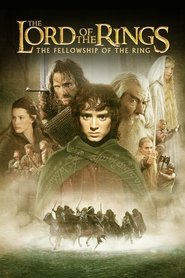
The Lord of the Rings The Fellowship of the Ring (2001)
Peter Jackson, Fran Walsh, Philippa Boyens
-
That shot of Mary looking backwards was actually, I remember that night, that was Dominic on his knees in the mud with the scale doubles in front of him, wasn't it? Yeah. And then we're tilting up to see a matte painting of Bree. And the set that we built for Bree, these streets, is actually an old army base, Fort Dorset. It was a military barracks from World War II. And we just nailed all these facades right onto the side of the army barracks.
58:01 · jump to transcript →
-
which is basically like a big swimming pool that was outside in Wingate, which was right next to a railway line. If you hear the real sound that we recorded on the day, it's just full of trains rumbling past the set. In fact, I think people could look out of the window of the train and actually see what we were shooting. This little moment here was studio request from Mark Ordesky. Because he was worried about what the audience might think.
2:00:43 · jump to transcript →
-
Real fans of the book have loved that scene and not objected to it at all, which is great. It's hard to tell from the pictures, but this was actually shot on a massively hot summer's day. I mean, there were probably 40-degree temperatures, like over 100 degrees Fahrenheit. And we were literally carrying Urukais off the set who had fainted and all that, because you can imagine these poor guys wearing all that rubber and those leather costumes and stuff in the...
3:04:41 · jump to transcript →
-
-
-
Andrew Niccol
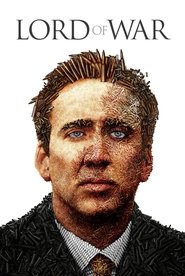
This opening shot looks like a production designer's fantasy, but it's inspired by an actual photograph by a photojournalist after a gun battle in Monrovia. There really was a carpet of bullets like this. I suppose it's obvious, but a military consultant pointed out to me that for every bullet that kills or wounds the enemy, thousands of rounds of ammunition are expended.
0:40 · jump to transcript →
-
Andrew Niccol
Again, I didn't dress the rooftop. That old chair Yuri is sitting in was actually there. I gave the production designer the day off. This is the Berlin Arms Show, shot naturally in Cape Town. It's actually an air museum at Cape Town Airport.
12:07 · jump to transcript →
-
Andrew Niccol
This Beirut set was brilliantly constructed by my production designer, Jean-Vincent Puzos. He made it out of a demolished fertilizer plant at the back of the studio lot in Cape Town. And the way he put together these piles of M16s was also a stroke of genius. There's no back to the piles, so you could halve the number of guns you needed.
14:36 · jump to transcript →
-
-
-
James Mangold
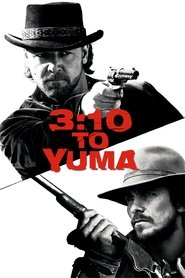
Them beeves of yours, they wouldn't even fed a hungry dog. I tell you what, that should cover it. Watching TV this fall, I realized that the entire town of Bisbee that we shot on in New Mexico has become the set for the reality show Kid Nation, which is slightly alarming to watch all these feuding children.
33:15 · jump to transcript →
-
James Mangold
and the room that they're going to be staying in. And Andrew Menzies, the production designer, and I had many, many discussions about what this room was going to be like and how the view out the windows was going to work in relation to the layout of the town. One of my only regrets in this town was because we got hit with so much snow, it was impossible for me to shoot any kind of geographical shots of the landscape.
1:19:05 · jump to transcript →
-
James Mangold
The day I was shooting this sequence where the marshal walks out, I literally went downstairs and we were shooting their surrender, where they put down their guns, which is going to happen in a moment. And I watched them putting down their guns and stepping outside, and Faden Papamichael turned to me, he's the director of photography, and he said, don't you think this looks stupid? And I said, yeah, it does. They should kill him. And we decided there and then, on the set that day we shot it,
1:31:44 · jump to transcript →
-
-
-
Tom Hooper
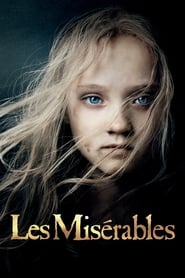
slightly in order to allow this moment of spiritual conversion to land. The interior here we actually found in Paddington in London. It's in the crypt of a beautiful church which Eve Stewart, my brilliant production designer, adapted to be the bishop's lodgings. Here we fleetingly set up Jean Valjean's relationship to God at this point and his lack of connection.
8:30 · jump to transcript →
-
Tom Hooper
So Anne had her hair cut for real and she was very keen to do that I think because she wanted to go through some of the emotions of what it's like to lose your hair in that way and because she thought she could feed those into her performance and also you know both Hugh and Anne were always looking to make the film as real and ground as possible in terms of what she did with her characters. The set actually stank because we had
24:45 · jump to transcript →
-
Tom Hooper
an unbelievable amount of fish imported into the set, which then slowly rotted. So when you went onto the set, it really did feel real, and we left the heating off to keep that cold feeling, so it was pretty unpleasant.
25:13 · jump to transcript →
-



Related topics
Other topics that frequently come up in the same commentaries.