Topics / Editing & post
Practical effects
93 commentaries in the archive discuss this, with 224 total mentions and 33 sampled passages on this page.
Filter commentaries
Filter this topic by the film's decade or the type of commentary.
Showing 18 of 93 commentaries
Clear filtersBy decade
Across the archive
ranked by mentions · click any passage for the moment in the transcript
-
-
uh the film kind of chronologically and then we moved into stats so this was all on location and uh yeah i was there on on top of a building nearby watching waiting for the explosion wesley snipes was there his posse was there it was it was a long wait but it was worth it i can still remember have a sense memory of the heat the heat against my face it was a real explosion yeah i was too close i think i had 13
2:44 · jump to transcript →
-
as reference for the way the building would be collapsed, the way it would appear at the end. And it's interesting because it actually came very close to that. Like you see the building kind of... And this is something that with a lot of the CG work that's being done today on films, it lacks a certain organic realism. And in this case, this is all done absolutely for real. The implosion was for real. All the fires are for real. There's no...
6:21 · jump to transcript →
-
Oh, wow. And of course, Elon Musk is working on Neuralink, which will plug in directly to your nervous system. Now, this is a scene where I hired a company called Colossal Pictures in San Francisco. And I loved what the work they did on the right stuff, where they shot a lot of practical effects.
1:10:05 · jump to transcript →
-
-
-
We'll see him later in the movie, but I thought it was great to be reunited again in a movie, finally. I did in Germany five films with him, including this boat, and now it's the first American in number six, even if this is just more like a cameo, you know, a little guest part. So this was all done all for real, no tricks here in Cleveland. And this big explosion, that's a special effect we did right there on that scene. Nothing was added later.
5:07 · jump to transcript →
-
Not really, but Harrison was so nice when they had their only scene together over the phone, because Harrison, of course, was on the plane and she was down here. Harrison came to the set and did his lines for real. So he was there on the phone, right a few feet away, and talked to her. I thought it was nice. And same with Gary Oldman, who, for example, for this scene here,
34:54 · jump to transcript →
-
He came also to the set of the White House and did it for real. I always like that if actors do that, because it's so hard for an actor to just talk maybe to the continuity or to first assistant, and you don't have the great actor on the other side. So I like that. And it was here the same. I think this is a very, very... I think I should...
35:21 · jump to transcript →
-
-
-
That's the magic of movie making. I just love passing posts in front of the camera. He's a first-time director, so we like our dolly shots. It's good, though. All the things you've been writing for and the hits and misses, you were able to put all the positive stuff into your first picture. Yeah, it was a lot of fun. I really did have a lot of fun. It's interesting that it's still...
24:44 · jump to transcript →
-
Forgive me, I'm getting excited watching my stuff all over again. Actually, that was a cut we made. We actually had the camera move up like this in one shot, but pacing, we had to do certain cutting. Nathan, come on, what are you doing? But I think Tori, or Jennifer, looks adorable, and I don't know, she was so cute and really did have a presence on the set and sort of a charisma, I'm sure, gave you...
31:11 · jump to transcript →
-
So these are the things that just drive you crazy, but, you know, overall, I guess it's only going to drive me crazy. We're, like, really scared. Stay here. I'm going to check it out. I'm chuckling because we really did have fun making this movie, and I, you know, just can't take it serious. And sometimes, you know, I got beat up a lot.
51:04 · jump to transcript →
-
-
multi · 1h 54m 3 mentions
Jean-Pierre Jeunet, Hervé Schneid, Alec Gillis, Tom Woodruff Jr. + 5
-
I love this shot because it's a simple effect. The ball is on the hand at the beginning of the shot, we do just a pan, and it works. I remember, Sigourney Weaver didn't believe me. She told me "Jean-Pierre, it doesn't work. It's so silly, so weird." I said "Believe me, I am sure." But I was pretty worried about this shot. And it works. There's a shot that you could claim, Pitof, as a digital shot, except it's real. When she throws that ball? It's amazing. This shot was supposed to be digital. What Jean-Pierre wanted is to make an impossible throw. Sigourney did it for real. This shot is real. Look at that. How many takes? I think it was six takes. - Six takes. Yeah. I was here when we shot that, and I feel in her eyes that something was weird. And she made it. Wow. - I had a little problem with Sigourney. The ball is going out of the frame and then back in the frame. I said "Sigourney, I'll fix that and I'll make a perfect path." So you feel the impression that the ball is always in the frame - like this ass - and... That's a silicone butt that we made. That's my favorite shot. I love this part of the film. And... Tell the story of this shot, Hervé. That's one of the famous Jean-Pierre Jeunet's favorite scenes, where somebody's putting polish on his shoes. When I got the rushes, I said to Jean-Pierre: "Well, you remember you did already that scene before." And you just didn't realize it. You didn't remember. The design of the wheels, something Eric Allard had developed way back, right after Short Circuit. Each wheel, instead of treads, they had ball bearings that would roll independently, so it could turn and maneuver. I think he had it patented, and I think NASA was using the design as well. This is a stupid idea. When you arrive in the States the first thing you see is the TV, because you don't sleep. And what do you see on TV? This kind of show. This miniature was not very big. This was pretty small - three meters diameter. That's nine feet to you non-metric folk. And this - you composited Aliens. Exactly. That's miniature and greenscreen. A very composite shot. Was a lot of passes to have the light and the texture and the depth and the atmosphere. For the alien, obviously, it's man in suit. It's very difficult to shoot an alien with a man inside, because it looks like a man inside. You are obliged to shoot very close. Here's Tom Woodruff. - Here's Tom. You were talking about being on the set. Here's the deal for me: being on set in these suits, it's even more claustrophobic than being on set, because I'm literally... I've got some slots for my eyes and breathing, but there's no real interaction between what I'm doing and anybody else on set, in terms of talking or just getting a break. I can interact with the actors and they can respond during the course of the action, but then, once the shot is over, it's like total isolation. But people love you when you're in the suit, Tom. Brad Dourif was great here. It was creepier for me on my side of the glass than it was for him being on his side watching me. I like Brad Dourif in this film. Yeah, he's twisted. Wonderfully imaginative actor. Brad and that creature were dating for a few months right after they completed this scene. I love what Darius did - the slime. He put a lot of care into shooting these and designing the lighting. He, at times, would almost build a cage of fluorescence around the alien, so that you'd get a million little kicks off of the slime. so that you'd get a million little kicks off of the slime. He kept coming back to us and asking for thicker slime, because the stuff in the other movies was too runny. He wanted a quarter-inch build-up, so we went to a slime that was almost like gel. It really had a different look. It was a pleasure to work with Winona Ryder. I remember, sometimes I tried to direct her, and she told me: "Jean-Pierre, take it easy." "I have a lot of imagination. I'm going to give you some improvisation." Remember, at the editing room, everything worked, all the time. In this scene, Winona was feigning drunkenness so she could slip out. Since she's a robot, she can't be drunk. This is a nice shot with the 10mm. It was a very short corridor and it looks so huge. This is a matte painting from a French guy, Jean-Marie Vives. He worked on Delicatessen and City of Lost Children, too. It's fascinating how there's a hint of City of Lost Children in the look of the sets. That's what I love about style, ultimately it just permeates everything that somebody does. That's a clever idea. That's gotta be Jean-Pierre. Very Jean-Pierre. It's great. This set is pretty high, and we used it again at the end of the film in the chapel. The same set but horizontal. - Really? Yeah. - I didn't know. When Jean-Pierre started the movie, he spoke little English - he always had an interpreter with him - and by the end spoke better English than me. Than I. - You see? That's what I'm talking about. It's amazing, because he didn't speak a word of English when he started. Sigourney Weaver loves to have the director very close to her. She hates when the director is very far away behind the video. It was a very good relationship, because, I remember, after a take she looked at me and it was unnecessary to speak. Just one look and we knew if the take was perfect or not. It was unnecessary to speak about the take - just a look. This is a scene that's almost vaguely erotic between Ripley and Call, the two females discovering each other inside of that tube.
27:46 · jump to transcript →
-
I remember, I had to fight against the studio to get the smoke on the knife, because it wasn't on the budget. Here, same thing, it's for real. Sigourney gets it through the hand. No. Of course it's a cheat. On one side it's a retractable blade and on the other side it's a real one. A CG blade. So we CG-ed the second part of the blade. And the smoke is CGI? - The smoke is CGI, too. Lot of times, those little effects - like that - are the ones that have the most effect. Yeah, because it seems to be normal. It would be possible to have a fake hand... They talked to us about that, and it was impractical and too costly, because to give the hand enough life so it didn't look artificial was a lot of work. And to make it move, then stop... Too limiting in your shot. That was a great approach. On the shooting, it didn't take a longer time than just to play it. So it was very cost-effective. Tom, didn't you get together with Sigourney about the style of her movements? Yeah, right, because of her alien heritage now as a clone. We talked a little bit about movements that she saw me doing in the alien suit. We tried to find a way to integrate some of those into her performance. There's some later where she's swimming, there were some movements we worked out. Also when she escapes from her cell, there's an element where we were figuring out: "What is it about the alien when it's retreating that's the most noticeable feature?" The tail. And without a tail, we ended up doing something where she kicks her leg out as she's moving into the chamber and escaping from her cell. In the preproduction, I did some research for Jean-Pierre on animals, to find out the way for the alien to move, to find a halfway between feline and insects. So we did a lot of research on footage, to have an idea of this hybrid between feline and insect. It was cool. I met Ron Perlman in The City of Lost Children - he played One. I love him. I can't wait to work with him again. This isn't a modest thing to say, but I like the way the guns look in the film. Jean-Pierre's idea was: he'd seen the guns get bigger - especially in the second film - and he thought it can get quite absurd if we go too far, so it'd be a nice idea to shrink the sizes again and have guns that are more about efficiency. He wanted guns that snapped when they fired. He wanted to feel and hear every bullet as it ricocheted and hit the floor. He wanted something that was a bit more credible than the giant "Rambo" guns. So we designed with that in mind. It was something that felt very basic.
35:17 · jump to transcript →
-
So out of the water and up onto the tower, up onto the ladder. From underwater to sparks and steam. After three weeks of being underwater we ended up... For another two, three weeks on this set. Climbing the ladder. High, too. Perilously high. Like, three stories high. The stunt people on this film really earned their keep. Big stunt. Big, big stunt. For real. We showed just Winona falling in the water, and I just remember staying up there with the stunt girl doing that thing. I was very impressed by what she did because I was at the same height. Oh, God. And I saw this little hole there and I thought she would never... Every day we received some sparks from the top and it was hot, if I remember.
1:14:52 · jump to transcript →
-
-
-
I mean, they do make flashes for real, but they don't do it every time you need it to, and sometimes the actor's not actually firing the gun for real, and we need them to shoot at a particular point. This whole sequence is just a blast to film. I mean, it was very hot. It was about 130 degrees in the desert, but just to have all these guys on horsebacks firing guns, I mean, you know, this was so much fun. We were just, the whole crew and I were just laughing. We were having so much fun doing this, as difficult as it was.
9:36 · jump to transcript →
-
And we find out, no, that's literally what they do. They just wander around the country firing their guns in the air and riding their horses aimlessly. And aimlessly is what they're doing in a lot of the shots. Actually, some of the wider photography, it's pretty interesting. If you go and take a look at it closely, you'll see that there's just guys going around in circles. And in fact, if you look at it closely, it's quite lame. But we try to move things along. We shot a lot of footage and cut quickly. And it turned out quite well. Now this is a practical effects.
11:02 · jump to transcript →
-
always key to me. I always told ILM, I've got to see through him. I've got to see through him. I kept really pushing them to make sure that we got to see through his head, see through his ribs. It can never feel like a man in a mummy suit. And I think they really did it. There's some very impressive work on those last couple of shots there. All those bandages that are dangling from him there, those are basically just a bunch of zeros and ones on a computer. None of that is real stuff, and it looks very convincing.
1:05:30 · jump to transcript →
-
-
multi · 2h 19m 2 mentions
Martin Scorsese, Nicholas Pileggi, Ray Liotta, Lorraine Bracco + 9
-
In the scene when you see Karen on top of Henry, I remember it being very difficult to shoot, especially since when you learn filmmaking with Marty Scorsese. I really did that to the camera, not so much to Ray. Michael Ballhaus, who was our director of photography,
1:13:20 · jump to transcript →
-
When I watched the movie this morning, and I just fell in love with him all over again. I really did. I have to say, I think he's extremely gorgeous, sexy, exciting man. And I'm sure that the real Henry Hill for the real Karen Hill was all of those things. And I think we got that right. Every day when we walked into Hair and Makeup, we were Karen and Henry.
1:40:09 · jump to transcript →
-
-
-
Paul M. Sammon
And he's not playing the violin. He's mimicking it, but he is for real. And this whole thing, this silliness with having this fundraiser for the city of Detroit, I get it, but the lines are open. But as far as I'm concerned, except for the violinists, this is a bit of dead air. Okay, and now we are in the hideout, excuse me, with the remaining people.
1:13:18 · jump to transcript →
-
Paul M. Sammon
And we finally found a piece I cannot remember where. By the way, the music on RoboCop 2, people have asked, why did not Basil Polidorus do the music for RoboCop 2 when he did such a great score for Robo 1? The answer is quite simple. Because the film came together so quickly, Kirshner really did not have a lot of choices as to the crew members. John Davison was the one who was primarily responsible for putting a lot of the package together.
1:34:43 · jump to transcript →
-
-
-
And this actually resonated quite a bit for me because it really did feel like, even though we were on the East Coast, it felt like a very similar situation. You know, when I came up from L.A. to San Francisco and marched to Golden Gate Park,
1:06:08 · jump to transcript →
-
I am a man of my word. Now, in those days, you did that the old-fashioned way. For real. I like to compare this whole debate, I guess, or question about digital effects to the microphone. You know, nobody says...
1:33:00 · jump to transcript →
-
-
-
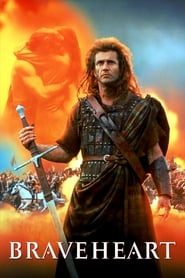
Wallace really did have an idea that he could unite people. He was a kind of a revolutionary who was way ahead of his time. How is the time to declare a king? And you're prepared to recognize our legitimate succession? You're the ones who won't support the rightful queen. Those were lies when you first wrote them. That's true.
1:34:12 · jump to transcript →
-
and how to react, and the stunt guys work with them to minimize injury and so that people wouldn't get all excited about it and flustered and start whacking one another for real, because that can happen if they're not experienced. And we told them that whole thing about, what does a camera see? And if you close one of your eyes, it sort of takes the three-dimension aspect out of what you can see. You can see things, but you can't see depth as well. So there's no depth perception.
1:51:48 · jump to transcript →
-
-
-
rate his contribution to this I mean as you say all of these because I mean I think all of these changes are part of like why he's a great screenwriter like he really did you know Michael Crichton was really good at like the cliffhangers you know read like a movie anyway but I think the the changes improved it yeah especially for a movie I wanted to really quick before we move on
41:18 · jump to transcript →
-
we want to talk about. He had worked with Frank Marshall and Kathleen Kennedy on three of the Steven Spielberg movies they were involved with, E.T., The Color Purple, and Empire of the Sun. He basically, his interest in cinematography started when he was a young man. He worked in camera stores and film labs as a teenager.
1:14:04 · jump to transcript →
-
-
-
-
-
-
-
-
-

Related topics
Other topics that frequently come up in the same commentaries.