Topics / Editing & post
Practical effects
93 commentaries in the archive discuss this, with 224 total mentions and 33 sampled passages on this page.
Filter commentaries
Filter this topic by the film's decade or the type of commentary.
Showing 18 of 93 commentaries
Clear filtersBy decade
Across the archive
ranked by mentions · click any passage for the moment in the transcript
-
-
Was ribbed part of your childhood as well? The actual ribbed event is a totally true story. I wish I could take credit for making that up because it's a good comedy gag. A guy from my high school really did go to a pharmacist before his date. It turned out right around the time the pharmacy closed, that night, after buying the prophylactic, he went home to meet the girl's father on a high school date, and that was the pharmacist he had just bought a prophylactic from. When, when, when? When the timing's right.
4:07 · jump to transcript →
-
Still remarkable to me. Yeah. That was all in camera. That was done today. That's 17 different visual effects plates. Easily. And there's something about the real thing that makes that small stud still. Maybe because I was there and I was on the edge of my damn seat. And the sun was coming up and we gotta go, we gotta go. Worried for everybody. This was, by the way, this was kind of the first film I shot in Hollywood in Griffith Park in the classic A Tree is a Tree shooted in Griffith Park. So all these scenes took place
12:02 · jump to transcript →
-
the classic thing you need to do as a director when you can, which is don't let the actress watch while you're rigging all this stuff. And it was terrifying looking, for real. What really worked best here for me was that in terms of directing, everything was neutralized. The audience feels like, oh, this is calm. Yeah. Everything's fluorescent. There's no shadows. There's no contrast. So that's, for me, as a lighting cameraman, I want to make sure that that is there. But to get into this room and then
23:51 · jump to transcript →
-
-
-
to a whole other section of the song. And now suddenly fingering was way out of whack. And we went in and re-recorded parts that tried to match that fingering so that people could see that, yeah, we were playing and it really did look right. Let's talk about your reviews a little bit regarding Intravenous to Milo. These covers, when were these generated? Do we remember? I have the Intravenous to Milo cover. What size is it? What do you mean?
11:55 · jump to transcript →
-
They made a real amp that goes up to 20. That's the one that people can buy in the stores now for real. But mine goes up to infinity. This has been ripped off just big time. Almost every amp company now sells knobs that go to 11. And guitar knobs. Where can you go from there? Where? I don't know. Nowhere. Exactly. What we do is if we need that extra push over the cliff, you know what we do? Put it up to 11. Do we know where this was? It was backstage.
23:26 · jump to transcript →
-
Wonderful Smith. Originally cast in the part was a man named Spodey Odie. But he died right before, you know, his call time. I also had this experience for real. My friend Danny Rifkin is occasional manager of the Grateful Dead, who have years of occasional management to their credit. And he invited me to see them at Madison Square Garden. I was living in New York. Madison Square Garden has a circular rotunda to it. And I went around and around and finally went in the wrong door and was in Felt Forum and watching two light heavyweights boxing.
49:00 · jump to transcript →
-
-
-
Well, I thought you made it better than the script was, Carl. I really did. Well, I think you're supposed to if you're directing. If you make it worse, you shouldn't be there. I can name a lot of them who do. I love the little kick you do on the way out the door.
4:24 · jump to transcript →
-
You know, I was very aware when you were doing things like this and being this guy. I said, this is a guy who was a quarterback on the football team, for real. You were one of my... You see, to actors, a man who can get on a football field and play seriously like you did is something we admire. So I'm looking at this guy and I don't see... Well, that's a good thing. What a compliment. No, I'm not kidding. No, that's great. I take it as a huge compliment. Files on your students.
7:11 · jump to transcript →
-
am i well i might be asking yeah you like chinese i hate it yeah people always think of that when they watch your pictures they do these two get it on because dick van dyke and mary tyler moore everybody thought they had they really did love each other they they admitted later on that neither one would marry they would have made a team of it
9:36 · jump to transcript →
-
-
cast · 1h 36m 4 mentions
The Garbage Pail Kids Movie (1987)
Mackenzie Astin, Katie Barberi, William Morris
-
these people from outer space that are, you know, garbage pail kids. Well, we discovered they were from outer space because we didn't know that when we read the script. Right. But the fact that they happen to be, like, master seamstresses is, like, is pretty impressive. Yeah, they kicked ass. They really did. They were quite good at the 80s stud applications. Right. It was great. Tangerine was all over it. She was going to use the heck out of him. It was a bad, bad situation.
22:29 · jump to transcript →
-
Now this is, I think we're about to see a wig happen. I think, is this a moment where he's going to flip over? Anthony's going to become, Tony's going to become an acrobat? Oh, right. Yes, that's right. That was pretty impressive. He did the stunt himself. He did. That is so not true. Oh, but I have a story. I have a story real quick, completely unrelated to the film. So I really did become very, very good friends with Shelby Newley. And I practically lived at the Newley's house.
51:56 · jump to transcript →
-
We did. Okay. That's some psyche fucking right there. All right. Now, I had to be mean to him in this scene. Really, really mean. Oh, man. And he cried, and he really did a beautiful job. The kid's really trying as hard as he can to serve up a good performance. Yep. And I asked him, and I wasn't really talking too much to him because we were in that space of trying to seem super tough and like nothing mattered and we were all cool.
1:16:01 · jump to transcript →
-
-
-
Paul Davis
And he kind of put it into a crouching position and built a fake back and shoulders. And they had an additional mold of the head. And that was just a little thing that was rod puppeted from underneath. But that transformation sequence, for me, that and Rob Bottin's work on the thing are still completely untouched in terms of practical effects.
1:01:29 · jump to transcript →
-
Paul Davis
But yeah, that's an American Werewolf in London and you know, here we are 38 years later and it still holds up. And you know, I don't think that we'll ever have a movie with practical effects quite like this. It's still the benchmark when people talk about
1:34:42 · jump to transcript →
-
-
-
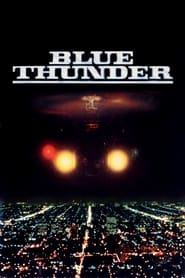
Is that right? Warren was so terrific in this scene. Oh, yeah. Warren had a wonderful, dry humour. With the other actor, Jack Murdock, I wanted somebody who sounded like... ...he could piss Jack Daniel's. Like he had had so much... ...go through his system with that gravelly, gravelly voice. Now, at the time that we did this picture... ...computer technology really did not exist. So that almost all the day footage... ...that we see here in the helicopter, was shot up in the sky. And our guys are actually up in the sky... ...as we fly along with them. And we're looking not at a computerised background here... ...but shooting from the little control tower that we had built on top of... ...what's known as the Piper Tech facility in Downtown Los Angeles. And it's where the city of Los Angeles keeps all of its vehicles... ...and including its helicopter that's on-- Helicopters, that is on the top pad.
2:42 · jump to transcript →
-
Were you up there much? I got to go up there lots and lots. I really love flying in a helicopter. It's quite exciting... ...and Gavin was actually teaching me how to fly, a little bit. Roy Scheider really did learn how to fly it. I'll show you some shots where he was actually flying the helicopter... ...and not just being a passenger pretending to fly the helicopter.
1:17:58 · jump to transcript →
-
-
cast · 1h 36m 2 mentions
Anthony Michael Hall, Judd Nelson, Jason Hillhouse
-
Judd Nelson
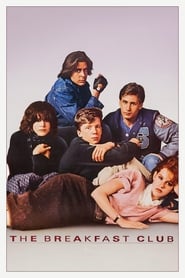
See, this is where it was cool where we had John. He was definitely a collaborative director and sought to get the best out of us all, and was looking for behavior, you know. So, I think, the wisdom of he and Dede Allen and their choices in making this all work, 'cause we had so much footage, it was great to see. All these years later, we take it for granted, what we see the final cut to be. But the truth is that, like we were talking about, Dede would come to the set and she would closely work with John. And also, he gave us the freedom to play and just have fun. And certain things, like the stuff you're seeing with Judd spinning around. I'm sticking a pen in my mouth, stupid stuff. We had no idea whether it would arrive in the film or be a part of it. I didn't. We were just having fun. But once we knew what the space was, we had the parameters. Rehearsal was key. - Yeah, it was like shooting a play. That's how I recollect and look back at it. We shot this play for 35 days and we were... Mostly in sequence. - Yeah. Yeah, we were fortunate to be extracted from Hollywood, and all of a sudden in this suburban gym of Illinois, not far from where John had grown up. So, it was a fortunate thing that we felt like we were shooting a play, 'cause we also had a week of rehearsal, which was... No, we had more than a week. - Was it more? We had more than a week. In fact, we weren't done with our rehearsal time when Hughes went, "We're ready. Let's go." All the work we've done keeping our faces in the industry since and maintaining our careers, it's still... To this day, I don't think I've ever had that since. So, it was a real... A real rehearsal. - Yeah, it was a real luxury. It was also a lot of fun, 'cause it really bonded us and gave us a chance to get a sense of where we were all at, and also made the work better, yeah. And we built real history, as opposed to that you believe you've made up a history. We actually had real experiences. Even if it's something as simple as dinner four nights in a row, you at least have some real past and things will reveal themselves to you further along in the work. And Hughes really wanted it to sound authentic. So, he never limited us. If you came up with something, you never felt like, "Oh, wow, "we took it beyond the text." Big deal. And he was always looking for it to get to that point, anyway. The freedom that he gave us, the idea that he would trust us like that, which is the point of the film. Just because they are 17 years old doesn't mean they are 17 years dumb. There's a weird thing, though, about rehearsals and stuff like that, where you think... You even said, "I've never done that before or since." It always seems to work out when actors and stuff get those chances. You hear those stories over and over. But, for the most part, people, they just don't do it. Yeah, in terms of genre, too, this is something that broke a mold, in a way, 'cause it was, in the industry talk, a talking heads film. It's really about a bunch of people sitting around, talking. So again, the play analogy comes into play. We really felt like... I remember rehearsing, and we were in these positions. I remember walking into that space, and John going, "Okay, you sit over here." We would rehearse these scenes. So, by the time we shot them, we all had a good sense of each other. We were a solid group, and we also knew where we were going with it. Now it looks like a luxury, but to this day, I've often looked back and thought about that, that it was great intelligence in just doing that, putting us in together. We sat in a room... - I thought they were all gonna be like that. I really did. I look back on that and that is a high-water mark in terms of the importance of having everyone being on the same page. Right. If you get rehearsal time and if you shoot in sequence, it's not like you are trusting the other actor to know that in the scene before this they actually threatened to kill me. So, it's a little bit heavier. You don't have to do that because before we shot this scene, we shot the scene where he threatened to kill me, so we know that. It's a great collaboration. You don't realize it till you're blessed enough to work in the business. When you're on the set, you see that there's... You know, sometimes the best idea will come from the script supervisor, or sometimes it's the guy at the crafts service table. It's a great collaboration, even though it's a director's medium. I think that sense of support was instilled in us with John, 'cause he gave us these roles and we all knew what we were doing, but he always was collaborative that way. I think that was his intelligence, too, that he allowed his scripts to transcend even the beauty that they had, because he hired people that he believed in. But there's a great collaboration, always. When you're talking about rehearsal, you're talking about the five of you guys. Were Paul and Kapelos kept away a little bit, to let you guys have your thing, a little "us vs. them" a little bit for that? Well, that was happening right away. Also, 'cause Paul wanted to hang with us, so that was perfect, 'cause it gave us the power to say, "No." So, we could. But you guys rehearsed those scenes, right, with you and Paul? But he wouldn't necessarily be sitting there on a day when... Just the five of us. - ...it was the five of us in that rehearsal, if we were gonna get to that stuff. We wouldn't do necessarily whole read-through of it. We would be taking it from the first scene and rehearsing it till it made some sense to us, and John knew, basically, how he wanted to see it and how he wanted to shoot it. It's a business, at the end of the day, like anything else, so there's always such a sense of the clock and rushing, so, as Judd said, a high water mark in our careers to start with this great project, and we had these great roles and a well-developed script. But he was smart enough to sit us all down and get our input and let us work through it. So, once we got on our feet with this and we were shooting the scenes, we had a closeness and a vibe already flowing between us. But it's funny you said that, 'cause I thought the same, too. I thought it would be like this after, and usually the director is the most stressed-out, doesn't know what the next shot is. It's like the world changed after this. But part of it was the good fortune we had to be in Chicago and do this. It was at the beginning of his career, after Sixteen Candles did pretty well, even though it was a small film. I think I remember him telling us that his intent was to do this first. I think the studio was gonna make this film first and they flipped them. So, we were fortunate to be away from everything and... Flipped it and Sixteen Candles, you mean? Yeah, exactly, in terms of the making of the films. So then we did this project second, and then we were, again, just in Chicago, and that sort of remote quality helps it, too. It's a lot of the fun of it. 'Cause then you came back here to do Weird Science, right? Yeah, that was fun. There is something about that, pulling it out of Hollywood. That's clichéd, "Hollywood's bad and you can't get anything done." But there is something to be said about that. Well, the story takes place there, and that's where he lives. Why not put it there? It's easier, it makes the most sense, and for the actors, it's one less thing you have to imagine, and hope everyone else is imagining the same thing. In fact, it is the same room where we're gonna go every day. It's a school. - Right. I remember, I went to some local schools, too, in that area at the time. It was fun just to get a sense of what... 'Cause I hadn't had that kind of upbringing. I grew up in New York City at a liberal arts high school. It was a different experience. It was a boys' reformatory, wasn't it? I was away a lot and... Very religious, wasn't it? - That's part of the fun, actually, just to get out of the mix, to be somewhere else. As an actor, the gift is getting the job, and then the sense of exploration is enhanced, I think, by being somewhere on location. It's fun. Makes it part of joining the circus, I guess. So, what, you guys went to an actual school, went in, mixed with the kids, did that whole... Yeah. Yeah. - I did some of that, yeah. Yeah, Hughes arranged it for us to go. I know that Ally, Emilio and I went to this high school, and the principal knew, but most of the teachers didn't, and it worked out perfectly. It was a school that had two halls, one called Jock Hall and one called Freak Hall. And I was like, "Are you kidding me? That's perfect." I just waved to Emilio, "See you at the end of the day," and then went over to the other side. It's great 'cause I was over 18, so I met some guys and I could buy them beer. I was like, "Yeah, I got an ID that'll work. Come on, let's go get some beer." Just treating it so poorly, it was perfect. You didn't get put in detention at that school, did you? No, but I did get sent to the principal's office, the one guy who knew that it was okay for me to be there, so it was perfect. I hadn't found my classroom yet, out of Freak Hall, and I didn't have a classroom, so I was always going to be found out there. Bender, that's school property there, and it doesn't belong to us. It's something not to be toyed with. That's very funny. Fix it. You should really fix that. - Am I a genius? No, you're an asshole. - What a funny guy. Fix the door, Bender. Everyone, just... I've been here before. I know what I'm doing. No. Fix the door! - Shut up! God damn it!
8:42 · jump to transcript →
-
Judd Nelson
That school really did look like a prison, didn't it? Look at that. Yeah, it did. - Here comes Ron Dean. Chicago's own. - Looking at her like, "She's going to blow your ride?" "Who's the chickie?" - Yeah I like how he looked at her ass out the window there. "That's a class act from Chicago." - "That's my boy." Yeah. "From a Chicago guy."
1:33:09 · jump to transcript →
-
-
multi · 2h 34m 2 mentions
James Cameron, Gale Anne Hurd, Stan Winston, Robert Skotak + 8
-
Pat McClung
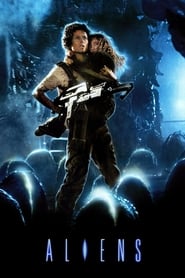
Even though I liked the symmetry of the fact that she had had a daughter and lost her - that's Sigourney's mother, so there's an interesting inversion here. She's looking at the face of her mother but playing it as her daughter. As an actor, it allowed her to work the connection. All my movies are love stories. This one is about parental love, protectiveness and a sense of duty, and the ultimate sacrifice that a person would make, given that sense of duty. That was a nice touch. That was Sigourney's idea. This was one of the seminal scenes in the movie and was one of the ones that had to be deleted and omitted from the theatrical version because of length. We didn't have multiplexes, and there were only so many showings a day that you could have of a film, and we had to get it no more than two hours ten minutes in order to get the maximum number of screenings per day. Peter Lamont came up with a simple and austere look for our future sets. I watched this film recently and I was amazed at how little we see of the conventional future world, as opposed to the spacecraft interiors. She's actually on Gateway Station here. She hasn't returned all the way to earth. She never sets foot on earth in the whole series of films, which is interesting. This is as close as she gets until the end of the fourth movie, where she's re-entering the atmosphere. But this is earth for all intents and purposes. This is everyday life circa a couple of hundred years from now. And Peter came up with a very spartan look. It's not overworked at all, which I think was quite clever. We wanted to do it minimalist. We didn't have her walking around corridors. We didn't create a world because we weren't interested. We were interested in the through-line of her story and her character's dilemma and problems, the fact that she's not believed, that she understands there's this great threat. The same applied to the costumes. We didn't wanna suggest a wildly separated future from our present one. This might be one of the first science fiction movies where men still wear coats and ties. The thinking was people will still wear coats and ties. They may not look exactly the same. We turned up the collar on the jackets. It's no big deal but it's a subtle change. We wanted to have a place to go. We wanted the space environment once they get to the colony planet to be exotic and so we didn't wanna overwork earth. We also wanted to understand who these people were, and a Suit Is a suit. These characters are suits and we wanted to reinforce that. If everybody's in Star Wars type costumes, it's harder to relate to them as characters. I was thinking more of a writer than a designer when I was making my picks of what things should look like from amongst the suggestions made by the costume designer. Denny, did they shoot at 25 frames per second for all the video playback stuff? Do you remember? They did. The 24-frame issue was messy. It can be done, but it's such a big procedure. Shooting 25 frames per second on the camera puts the video in sync with the film camera very easily. There's a slight speed differential but it's almost impossible to perceive. In Britain they have a different television system, a 25-frame-per-second system. 625 resolution instead of 525. Later in the film there's some video footage that was used, appearing on video monitors. But the PAL system is better than NTSC, which is our system here in the United States. It almost looked like a slightly too fuzzy version of film, sort of in between. It's not as good as it should be for film, but it wasn't obvious it was video. Jim realized and made the video images noisier or break up more often so it was more obvious. The tag of this scene is gonna be a throw to this big sequence that takes place on the colony which is before the aliens attack. That's cut out of the release version, so coming up Is the biggest single change from the release version of the film. It's an entire reel. I'll never forget Gale Hurd, who was my wife and producer at the time, trying to shorten the film by 20 minutes. I just could not see how it was possible to do a cut here, a cut there, a few seconds, a bit of a scene, the tag of a scene maybe. She said "I've been thinking about this for days." I said "Go ahead." She said "Reel three." Which starts here. "You can take out reel three." I immediately rejected that as completely absurd. Then I thought about it. Reel three ends with Newt's scream when her father has the facehugger on his face. It works flawlessly. It's a brilliant cut and I have to credit Gale with that. I had poured a lot of energy into the design of these scenes and the alien derelict ship. The problem for me was that I couldn't imagine this film without the cognitive tether to the first film of the alien derelict, but it turns out that it works perfectly. A little dialogue bridge and it works fine. I like this tractor a lot, this tractor with this articulated leg design. This is one of my favorite effects. You see the big tractor driving by and in the background you see these people struggling to put a tarp over that tractor. That was done in perspective. There were full-size people back there, and a miniature in the foreground with distance between. It put everything in camera all at one time without any opticals or anything beyond that. The trick was that the actors had to act at double their normal speed of acting, because the camera was running at 48 frames per second. We had a Ritter fan on them to really kick those tarps around in excess of what it would be in real time, but because we were overcranking, that motion would then look normal. The multi-wheeled vehicle at the beginning is a fifth-scale miniature, radio-controlled, that Jim designed. On the airplane coming over from Los Angeles to London he just doodled it. Ron Cobb, I believe, fleshed it out.
10:08 · jump to transcript →
-
Bill Paxton
James Horner came up with this music sting here and I always thought it was totally over the top. When I saw the whole film put together with the score, I thought "No, that's what we need." I thought "How can you sting somebody opening their eyes?" But it works. Oh! Mm-hm. She shouldn't have had the bangers and mash. Kill it. Fry it. Come on. What are you doing, Hicks? Bad-ass nasty shot. That's a nasty shot of that thing. That's a good shot of it there getting fried. Gosh. Here they come. I think our chestburster looks a little cooler than the one in the first film. Stan Winston's guys really did a good job on it. John Rosengrant and Shane Mahan. Look who's back. Another one of our problems to solve for this movie was creating the whole army of warrior aliens and being legitimate to the original movie but having to improve on it for movement and for the look of being able to study them. In the original A/ien they were rubber suits and very difficult for the actor to move around in. And yet he was very tall and very skinny. And Jim wanted to do a lot of very interesting moves with the warrior aliens, so we came up with a technique to create the suit that really involved a lot of spandex and pieces on it. And then we designed the set pieces for the aliens to fit into the walls, like the one that is behind him there, so that the camouflage would work. An enormous amount of wirework for all of these stunt alien performers, which required that the alien costumes be extremely user-friendly. This was inspired by the scene in the first film where Dallas is in the air vents and they see the signal moving and get a little freaked, and Veronica Cartwright says "Get outta there" and he makes the wrong move and gets killed. That's one of the most suspenseful scenes in the first film. I took that idea that they're getting these readings that are getting them spooked and then they make some bad moves. Form follows function. This is a perfect example of it. You start with what it is you wanna achieve, and once you have that, you can design it, so the actions and the performance is consistent with what you want in the finished film. Believe it or not, very few people work that way. They just wanna come up with something that's cool, and then you spend hours and hours trying to get it to work for the ultimate film. I happen to agree with Gale. My background is as an actor. I really come from a place where the creatures and the characters are wonderful to look at, but it's always about their performance. We have to figure out how they're gonna be able to act, and create a good performance, or it's a waste. And so that's really always at the top of the priority list when we're creating any creature - what is it gonna do and how is it gonna do it? What he does is create a character, and that's why I think his work is So unique. When you look at a film, you can always tell who's done the creatures, if they actually have a character. Because he creates a character that can act and perform. The whole film builds to this moment, where the power transfers from the authoritarian structure to the individual who takes action. Ripley's not supposed to do anything. She's just there as an observer. We're coming up to a sequence where Sigourney takes control of the APC and this sequence is comprised of live-action shots, but as it comes down this hallway and is banging into pipes and walls and sparking, that's all done in miniature. In some cases, the cameraman - cos the set was mounted at an angle - was on a cart, a wheeled cart, and was rolling backwards as the radio-controlled APC was coming at camera. There was a point when he was just put into free fall, rolling backwards downhill, photographing what was in front of him as he went backwards. Here we go. - This is the shot. This is also miniatures. There was a shot with the full-size when the brakes didn't work, and took out the camera, and luckily it was a remote-operated camera. It was the shot where we were actually crushing an alien warrior, when it broke through. This is the shot, actually, when it took the camera out. Then there's another shot where it takes down an alien.
1:12:00 · jump to transcript →
-
-
-
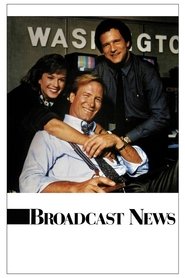
Oh, man, why does a guy like that have to lose? And the audiences felt the same way. They really did. They did. I think they went this far. I think many in the audience overcame their anti-Semitism. It's one of the killer facts of life, I think, that the kind of intimacy they have as friends...
57:37 · jump to transcript →
-
I did relate to it, I really did. It was unusual for you to cut to yourself when you teared up, and that might not have been my choice. You know, maybe that's the beginning, the beginning of what could have led to love, I guess, you know, when you begin to challenge your own thoughts because somebody else represents the alternative. Okay. Okay.
1:12:20 · jump to transcript →
-
-
-
Gary Goddard
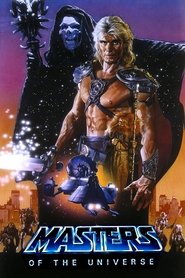
This was one of the largest sets built in Hollywood in probably the 10 years or so before that. This throne room set is the real deal. It was so large, we actually used two sound stages. And that hall right there that he's walking by, it connects two sound stages. That's actually outside. That runway you're seeing there is a real runway. Now, of course, we've matted in the upper shots on top. That's a matte painting. But the actual runway and the throne room and the scale of that is all for real.
3:05 · jump to transcript →
-
Gary Goddard
and to meet the budget and schedule and get it out for summer, but we did do that. I like this shot also, this shot where you have Skeletor overpowering on an epic scale, dominating the screen, and you introduce your hero here against him as he turns in camera. It was very deliberate, pitting him, hero, who is watching the devastation of his world, Eternia, and the overpowering presence of Skeletor.
5:16 · jump to transcript →
-
-
-
It really did. Just personally, it's one of those things you always keep way down deep inside. I remember finally being in a situation with the girl that I really, really, really wanted to be with. What about this scene, though? I know. I'm going to wrap this up quickly so I can talk about this scene. But I shivered, and she felt protective of me, and I was so embarrassed about it. I was embarrassed for a very long time that I was just so unused to being in this position with something that's unattainable that I shook.
53:38 · jump to transcript →
-
Just a little side. Oh, yeah. Oh, yeah. 13 years. I always thought you connected to this stuff. I did. I obviously did. You really did. In a pretty primal kind of way. Yeah, I really think I really did. But I know what you mean. Like, if this had happened with my dad, I don't know. Yeah, just think. I don't know if I would have been able to cut him off. But her ideals and her standards are such because. Well, it's not a, you know, it's.
1:21:24 · jump to transcript →
-
-
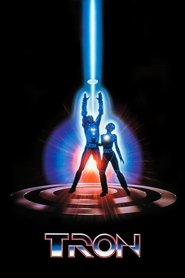
technical · 1h 35m 1 mention
Steven Lisberger, Donald Kushner, Harrison Ellenshaw, Richard Taylor
-
director · 1h 31m 1 mention
Alex Cox, Michael Nesmith, Victoria Thomas, Sy Richardson + 2
-
director · 1h 29m 1 mention
Jeff Kanew, Robert Carradine, Timothy Busfield, Curtis Armstrong
-
-
-
-


Related topics
Other topics that frequently come up in the same commentaries.