Topics / Production
Location & scouting
131 commentaries in the archive discuss this, with 816 total mentions and 38 sampled passages on this page.
Filter commentaries
Filter this topic by the film's decade or the type of commentary.
By decade
Across the archive
ranked by mentions · click any passage for the moment in the transcript
-
cast · 1h 36m 2 mentions
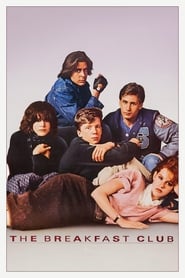
Anthony Michael Hall, Judd Nelson, Jason Hillhouse
-
Judd Nelson
See, this is where it was cool where we had John. He was definitely a collaborative director and sought to get the best out of us all, and was looking for behavior, you know. So, I think, the wisdom of he and Dede Allen and their choices in making this all work, 'cause we had so much footage, it was great to see. All these years later, we take it for granted, what we see the final cut to be. But the truth is that, like we were talking about, Dede would come to the set and she would closely work with John. And also, he gave us the freedom to play and just have fun. And certain things, like the stuff you're seeing with Judd spinning around. I'm sticking a pen in my mouth, stupid stuff. We had no idea whether it would arrive in the film or be a part of it. I didn't. We were just having fun. But once we knew what the space was, we had the parameters. Rehearsal was key. - Yeah, it was like shooting a play. That's how I recollect and look back at it. We shot this play for 35 days and we were... Mostly in sequence. - Yeah. Yeah, we were fortunate to be extracted from Hollywood, and all of a sudden in this suburban gym of Illinois, not far from where John had grown up. So, it was a fortunate thing that we felt like we were shooting a play, 'cause we also had a week of rehearsal, which was... No, we had more than a week. - Was it more? We had more than a week. In fact, we weren't done with our rehearsal time when Hughes went, "We're ready. Let's go." All the work we've done keeping our faces in the industry since and maintaining our careers, it's still... To this day, I don't think I've ever had that since. So, it was a real... A real rehearsal. - Yeah, it was a real luxury. It was also a lot of fun, 'cause it really bonded us and gave us a chance to get a sense of where we were all at, and also made the work better, yeah. And we built real history, as opposed to that you believe you've made up a history. We actually had real experiences. Even if it's something as simple as dinner four nights in a row, you at least have some real past and things will reveal themselves to you further along in the work. And Hughes really wanted it to sound authentic. So, he never limited us. If you came up with something, you never felt like, "Oh, wow, "we took it beyond the text." Big deal. And he was always looking for it to get to that point, anyway. The freedom that he gave us, the idea that he would trust us like that, which is the point of the film. Just because they are 17 years old doesn't mean they are 17 years dumb. There's a weird thing, though, about rehearsals and stuff like that, where you think... You even said, "I've never done that before or since." It always seems to work out when actors and stuff get those chances. You hear those stories over and over. But, for the most part, people, they just don't do it. Yeah, in terms of genre, too, this is something that broke a mold, in a way, 'cause it was, in the industry talk, a talking heads film. It's really about a bunch of people sitting around, talking. So again, the play analogy comes into play. We really felt like... I remember rehearsing, and we were in these positions. I remember walking into that space, and John going, "Okay, you sit over here." We would rehearse these scenes. So, by the time we shot them, we all had a good sense of each other. We were a solid group, and we also knew where we were going with it. Now it looks like a luxury, but to this day, I've often looked back and thought about that, that it was great intelligence in just doing that, putting us in together. We sat in a room... - I thought they were all gonna be like that. I really did. I look back on that and that is a high-water mark in terms of the importance of having everyone being on the same page. Right. If you get rehearsal time and if you shoot in sequence, it's not like you are trusting the other actor to know that in the scene before this they actually threatened to kill me. So, it's a little bit heavier. You don't have to do that because before we shot this scene, we shot the scene where he threatened to kill me, so we know that. It's a great collaboration. You don't realize it till you're blessed enough to work in the business. When you're on the set, you see that there's... You know, sometimes the best idea will come from the script supervisor, or sometimes it's the guy at the crafts service table. It's a great collaboration, even though it's a director's medium. I think that sense of support was instilled in us with John, 'cause he gave us these roles and we all knew what we were doing, but he always was collaborative that way. I think that was his intelligence, too, that he allowed his scripts to transcend even the beauty that they had, because he hired people that he believed in. But there's a great collaboration, always. When you're talking about rehearsal, you're talking about the five of you guys. Were Paul and Kapelos kept away a little bit, to let you guys have your thing, a little "us vs. them" a little bit for that? Well, that was happening right away. Also, 'cause Paul wanted to hang with us, so that was perfect, 'cause it gave us the power to say, "No." So, we could. But you guys rehearsed those scenes, right, with you and Paul? But he wouldn't necessarily be sitting there on a day when... Just the five of us. - ...it was the five of us in that rehearsal, if we were gonna get to that stuff. We wouldn't do necessarily whole read-through of it. We would be taking it from the first scene and rehearsing it till it made some sense to us, and John knew, basically, how he wanted to see it and how he wanted to shoot it. It's a business, at the end of the day, like anything else, so there's always such a sense of the clock and rushing, so, as Judd said, a high water mark in our careers to start with this great project, and we had these great roles and a well-developed script. But he was smart enough to sit us all down and get our input and let us work through it. So, once we got on our feet with this and we were shooting the scenes, we had a closeness and a vibe already flowing between us. But it's funny you said that, 'cause I thought the same, too. I thought it would be like this after, and usually the director is the most stressed-out, doesn't know what the next shot is. It's like the world changed after this. But part of it was the good fortune we had to be in Chicago and do this. It was at the beginning of his career, after Sixteen Candles did pretty well, even though it was a small film. I think I remember him telling us that his intent was to do this first. I think the studio was gonna make this film first and they flipped them. So, we were fortunate to be away from everything and... Flipped it and Sixteen Candles, you mean? Yeah, exactly, in terms of the making of the films. So then we did this project second, and then we were, again, just in Chicago, and that sort of remote quality helps it, too. It's a lot of the fun of it. 'Cause then you came back here to do Weird Science, right? Yeah, that was fun. There is something about that, pulling it out of Hollywood. That's clichéd, "Hollywood's bad and you can't get anything done." But there is something to be said about that. Well, the story takes place there, and that's where he lives. Why not put it there? It's easier, it makes the most sense, and for the actors, it's one less thing you have to imagine, and hope everyone else is imagining the same thing. In fact, it is the same room where we're gonna go every day. It's a school. - Right. I remember, I went to some local schools, too, in that area at the time. It was fun just to get a sense of what... 'Cause I hadn't had that kind of upbringing. I grew up in New York City at a liberal arts high school. It was a different experience. It was a boys' reformatory, wasn't it? I was away a lot and... Very religious, wasn't it? - That's part of the fun, actually, just to get out of the mix, to be somewhere else. As an actor, the gift is getting the job, and then the sense of exploration is enhanced, I think, by being somewhere on location. It's fun. Makes it part of joining the circus, I guess. So, what, you guys went to an actual school, went in, mixed with the kids, did that whole... Yeah. Yeah. - I did some of that, yeah. Yeah, Hughes arranged it for us to go. I know that Ally, Emilio and I went to this high school, and the principal knew, but most of the teachers didn't, and it worked out perfectly. It was a school that had two halls, one called Jock Hall and one called Freak Hall. And I was like, "Are you kidding me? That's perfect." I just waved to Emilio, "See you at the end of the day," and then went over to the other side. It's great 'cause I was over 18, so I met some guys and I could buy them beer. I was like, "Yeah, I got an ID that'll work. Come on, let's go get some beer." Just treating it so poorly, it was perfect. You didn't get put in detention at that school, did you? No, but I did get sent to the principal's office, the one guy who knew that it was okay for me to be there, so it was perfect. I hadn't found my classroom yet, out of Freak Hall, and I didn't have a classroom, so I was always going to be found out there. Bender, that's school property there, and it doesn't belong to us. It's something not to be toyed with. That's very funny. Fix it. You should really fix that. - Am I a genius? No, you're an asshole. - What a funny guy. Fix the door, Bender. Everyone, just... I've been here before. I know what I'm doing. No. Fix the door! - Shut up! God damn it!
8:42 · jump to transcript →
-
Judd Nelson
I never did it, either. At this point, too, just where the industry was, there was no video village, so one of my best memories is of John being there. He would just sit behind the camera. He would be sitting on the floor with us, just like the camera operator would be on the floor to get these low angles. He was really there, part of it all. It was great. Was he a good audience? - He definitely was. Yeah. And he was a real audience. He wanted to be moved. In fact, that was a great lesson, to see a director lens his project like that, to be that invested in it. It was cool. It's a tricky thing where you have a director and sometimes it can be, everything you do is great. Like they want you to feel comfortable and they want you to feel like, "Everything you do is great!" But there's a bullshit meter that I think you get as an actor, where you go, "No, it wasn't." And you gotta get that level of trust, where if John says it's good, it's good. Yeah. - That kind of thing. Was he pretty good about that, too? Without telling you, you suck or something. No, that's the thing, you have to be very pragmatic as a director, always aware of the clock, so in lieu of all that, I never felt like he was rushing us. It was just the opposite. I think he would work on your performance with you. It was cool. And he would give us the freedom to try things. He would allow us to know that we maybe tried something that was no good, too. If you did something that was no good, he wouldn't say, "That's not very good." He would look at us and be like, "Yeah, I guess that one wasn't so good." You know what I mean? He would let us find it for ourselves. There's a paternal instinct, I think, that directors need to have. But with him, he felt more like a big brother. He wanted us to shine. He wanted to see us get the best out of it. So, he was never really precious about his words or anything, which I found to be really cool. - It was cool that even after all that rehearsal, even once you get on set, the crew's around, the pressure is on a little bit, like you said, time is a factor, trying to get the day. And he still gave you time, even after all that. You know that classic image of... It was a saying of, I guess, Jack Lemmon's, where he talked about "magic time." John was a director that appreciated that. When the camera's rolling, he was the first audience. He was the guy right there with you, watching as if it was one of your parents in the bleachers or something. So, that was a really cool thing because he was the writer, and, of course, in that sort of paternal spirit, we wanted to impress him, him to be happy with what we were doing. At the same time, it was never any finger pointing. He just guided you through the performance. And he had a great way of, I think, empowering all of us to put our best foot forward. It was cool. His scripts have a lot of heart, and Hughes has a lot of heart. He can hear the truth, I think, and if we did something that had strayed that sounded like that color of truth that he wanted, then it would stay. He also was... I just found him very encouraging. Yeah. - As a person and as a director. And that's like a captain. If the director is the captain of the ship, I would like the captain to be encouraging if we're gonna come upon some high seas or dangerous times. Crunch time, you want the captain to not be treating you like you're something he wants rubbed off the bottom of your shoe. Because I think we would have done anything for him. I think we probably still would. It's interesting, too, because in the structure of the film, it all leads back to these scenes. I guess for everybody it becomes therapy at the end here, where we're all sitting around literally like a group therapy, as is the image of the wide shot. - Yeah, that trust is important. You want your other actors to be alive in the scene. And because this, in real time, came later for us, as it does in the movie, shooting in sequence, you don't have to earn the respect from the people around you. Right. - It's already done. Suddenly, the only redemption that we can find is with each other, and that's the surprise, I think, at this point. Where everyone is peeling away, becoming naked to each other. I think that's part of the reason why it's so important, too, the way they cut this. Emilio is doing the thing, and the camera pans around him, right? And then we go and we get everybody's reaction shot while he's still talking because you guys are going through it, too. - Yeah. He's like this... He's like this mindless machine that I can't even relate to anymore. "Andrew! You've got to be number one! "I won't tolerate any losers in this family. "Your intensity is for shit! Win! Win! Win!" You son of a bitch.
1:10:08 · jump to transcript →
-
-
-
Richard Donner
This little sequence was shot downtown in LA by the railroad yards. 3rd Street. I think it was really 3rd Street. I assume all these buildings are gone now. But there were things that don't exist on the lot. I don't think we shot very much on the lot. Locations were locations.
53:55 · jump to transcript →
-
Richard Donner
This was in that building actually, downtown. A location.
55:58 · jump to transcript →
-
-
-
To the tunnel and everything, that same road. Everyone goes there. Since probably silent films, Griffith Park has been the cheap go-to location. If you ever want to see a little bit of all the movies you've ever seen, visit Griffith Park. It's a museum of previous shoots. It kind of is. I did the big tribal camp in Scorpion King. In Griffith Park? The same place we shot Dreamscape, Bronson Canyon.
50:45 · jump to transcript →
-
Exactly. I'm not going to go to sleep. I'm taking control of my life. That's the moment that actually, it helps Kevin's character too because you're like, ah, you know what? The rogue will be back. At least we can hang our hat on this character, Shawnee. There's hope. She did such a terrific job. So this location, this was part of town. This was in Louisiana. This was the town hall in Abbeville. The real place. And just what you don't see is all the Spanish moss and the...
1:00:24 · jump to transcript →
-
-
multi · 2h 19m 2 mentions
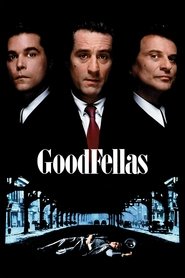
Martin Scorsese, Nicholas Pileggi, Ray Liotta, Lorraine Bracco + 9
-
I think that is one of the geniuses of any director in making their actors feel safe and loved. We rehearsed in the location before we started to film. So that gave us an incredible leeway to know the environment
1:44:20 · jump to transcript →
-
shows how a guy in his young age could slip into that group of people and become one of the low guys. I thought it was very important to show that. I wasn't planning to do a pretty-looking movie. It should have more like a dirty look. What we tried is when you walk into a location, like in a bar or a restaurant, I looked at it and said,
1:47:04 · jump to transcript →
-
-
-
Carla Cipriani and we commented obviously on the fact that as most people know she was most often than not this continuity or script supervisor for her husband although we we know that she she was also very much involved in the casting in the pre-production and even in the locations but it is first with the frivolous Lola
24:48 · jump to transcript →
-
I would say, in a non-definitive era. There are obviously mobile phones from the time and it's obviously set in, as we said, in an urban context, but always Brass is never really faithful entirely to whatever city or location setting he's placing his stories in.
38:21 · jump to transcript →
-
-
-
Or it was an unopened, it's since been opened, an unopened section of tunnel in Limehouse and part of the Limehouse link. And we were very lucky to get that because this kind of thing is impossible to do without a real location. And again, Tilsley and the art department did a brilliant job piling up these cars. And again, we got this idea of where are all the cars then? There'd be so many cars around. So we thought we'll put them all here as though there's been some huge pileup.
43:58 · jump to transcript →
-
The location manager, Alex Gladstone, phoned this for us, which I'd never seen before. It was a fantastic... When you get a good crew working, people add things to the script, in a way. And he brought this idea up of someone with them to stop for a picnic. And, of course, I loved the idea of the past, really, again, that they were surrounded by something very, very old, and obviously the horses, very beautiful. But one area that almost looked like...
53:45 · jump to transcript →
-
-
-
Tom Tykwer
will be over and then you can come back to reality. It's their final game and they take it very serious. There's a strong sadness but a determination in them that I can only think of when I think of children. Finding this location, the whole farmhouse and the surroundings was one of the most difficult.
1:25:44 · jump to transcript →
-
Tom Tykwer
getting closer to eternity and of course closer towards their own end but finally doing what this movie was waiting for all the time for their unification. I was so happy to have found this location because it gave me the opportunity to
1:28:01 · jump to transcript →
-
-
-
Rob Cohen
So with the magic of movies, we basically made three locations into one. And again, here's Rick about to get a blast from the past and look at this costume of his from the French Foreign Legion, which is the actual costume he wore in the first Mummy, and to long for the days
11:00 · jump to transcript →
-
Rob Cohen
I thought I'd just put in my political plug. Hopefully, by this time, you're getting this DVD. He's the president-elect of the United States. Here, this crash landing is totally CG. We, of course, never could go to this kind of location, and to do a crash landing on a glacier would be very hairy indeed, as you now see.
51:37 · jump to transcript →
-
-
multi · 1h 33m 2 mentions
Wes Anderson, Peter Becker, Roman Coppola, Jake Ryan + 3
-
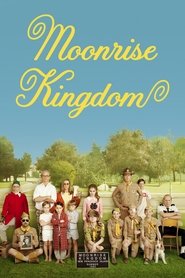
Wes Anderson
That's a needlepoint, by the way. You'll see over the course of the movie, there's many little needlepoint pictures of some of our main locations.
0:51 · jump to transcript →
-
Jake Ryan
Yeah, where is your current location at? I'm in a recording studio in Charleston, South Carolina.
30:42 · jump to transcript →
-
-
-
Shows Amy did, tiny location, she did a few beginning of 2007 and everyone that's anyone in the industry was there. That's the moment when America discovered Amy. And of course, happier times, appearing on the biggest late night chat shows, Letterman, Leno.
1:01:43 · jump to transcript →
-
You know, if you're a Londoner, you'd know a lot of these locations that Amy's in. These are all places in Soho that she's frequenting and moving from one place to another. They're just down the road from where we are right now. But again, another very telling piece of footage that absolutely, from the time, that fitted exactly with what was going on in her life. One of our drone shots. See the messages on the tree there, on the right-hand side. Yeah, right, yes.
1:48:51 · jump to transcript →
-
-
multi · 1h 25m 2 mentions
Marcel the Shell with Shoes On (2021)
Dean Fleischer Camp, Jenny Slate, Nick Paley
-
This location felt like a big win. Definitely. It's pretty much common knowledge that... Early when we were talking about the movie and we were starting to dress that first house that we were going to shoot in, you had mentioned Chris Van Allsburg as an influence for the look of this. And I feel like this living room really has a Chris Van Allsburg look. Yeah. Jumanji vibes. Mm-hmm.
1:53 · jump to transcript →
-
pops in my mind is that when we found this house which I loved but which was not like it was not a I think an easy house to secure and it wasn't like even in the right location and whatever and I was like I feel like this is it and I was like taking photos and found a a poetry book on the bedside table and it was that Philip Larkin book and the the trees poem was dog-eared and that was already in the script yeah it was already in the movie yeah relax and spread
59:05 · jump to transcript →
-
-
-
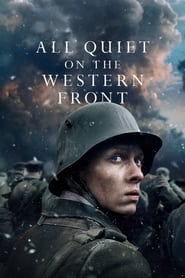
Edward Berger
about this because he had said, we got to start shooting in March. And I always said, I want to start shooting in February because my biggest panic was that the summer would come and that I wouldn't have these awful weather conditions because I couldn't bear the thought of having any sun. But in case there was any sun, this airfield is perfectly south facing.
19:17 · jump to transcript →
-
Edward Berger
And so the entire afternoon, while I was shooting in that barn, you see now Felix, Paul Bäumer, Felix Kammerer, the actor, is running up to the barn. And while I was shooting, I was thinking that this became, by the way, cut standing. No, while he was shooting inside the barn, I was thinking, I'm gonna have to shoot this. But luckily,
1:52:05 · jump to transcript →
-
-
-
I'm sure somebody will say it, and if they don't say it, I'm going to say it right now, and you can edit this out if Damien has final approval or not. But they shot this whole sequence, and we had a joke because all production would tell us was the location is Scott's dad's house. Scott was a gentleman who worked on the set and obviously knew Damien, and they were all friends going way back.
1:46:21 · jump to transcript →
-
Scott's dad had this house, and they're using it as the location to shoot this whole sequence of the aunt and uncle's home. And so the joke was, it was like, where are we shipping this to? And it's like, Scott's dad's house. And we would try to put on our best Jersey accent, Scott's dad's house. And so everything was Scott's dad's house. And this is Scott's dad's house.
1:46:51 · jump to transcript →
-
-
-
It felt to me like we were on location a lot of the time, because wherever you looked, it was true to itself. And we could then take these strange decisions, like we're very much locked with their experience. This whole section of the film, we never really step outside the house and what is happening inside the house, but if we wanted to, it's there. So then when we pop out,
17:56 · jump to transcript →
-
or we see through a scope, or when we actually go out into the street, it's a little bit like the radio stuff. It's just another layer of reality that there aren't. The isolation, yeah. Yeah, and also there aren't six locations or sets spread over Pinewood or some place where they shoot films. It's just in one spot. And if you looked out of a window, you would see what you saw out of the window. It was super helpful, and they did a great job.
18:21 · jump to transcript →
-
-
-
-
-
-
-
multi · 2h 34m 1 mention
James Cameron, Gale Anne Hurd, Stan Winston, Robert Skotak + 8
-
-
-
-





Related topics
Other topics that frequently come up in the same commentaries.