Topics / Creative decisions
Influence & homage
102 commentaries in the archive discuss this, with 264 total mentions and 49 sampled passages on this page.
Filter commentaries
Filter this topic by the film's decade or the type of commentary.
Showing 22 of 102 commentaries
Clear filtersBy decade
Across the archive
ranked by mentions · click any passage for the moment in the transcript
-
-
Stephen Prince
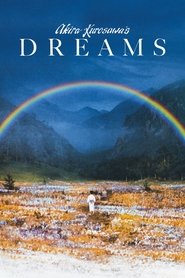
He moved away from the kind of suggestion and indirection that irony makes possible. There's very little of that in these last three films. In them, Kurosawa speaks directly with viewers, speaks openly and with sincerity, rather than through the masks that a dramatist wears. Dreams is nonlinear. It's not a narrative. We have eight episodes that Kurosawa tells us are inspired by dreams that he has had since childhood.
1:52 · jump to transcript →
-
Stephen Prince
and Kurosawa's visual treatment presents them as if they were an ensemble in a play wearing masks. So the episode then is a kind of warrior ghost play, not done in the style of Noh, but influenced by its general template. He salutes their passage and the music score provides some martial notes on the trumpet.
1:01:44 · jump to transcript →
-
Stephen Prince
So the eye character in this episode is the incarnation of Kurosawa's youthful dream. And the episode is an homage to Van Gogh, as well as an account of why Kurosawa did not follow his original plan in life. This is the Langlois Bridge at Arles with women washing, one of the early masterworks done at Arles in 1888.
1:04:16 · jump to transcript →
-
-
-
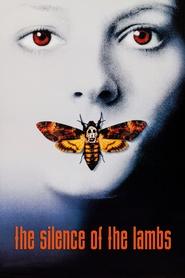
sort of recent conversation Foster and Hopkins had in the last couple of years regarding this film is he actually mentioned how he was more inspired by Hal 9000 the computer character so to speak in Stanley Kubrick's 2001 A Space Odyssey and he wasn't really
15:16 · jump to transcript →
-
Um, to the extent that there isn't really draft of Ted Talley's screenplay where they were unsure if they were going to be able to get the rights to the characters from Dino De Laurentiis. Hannibal Lecter almost became Abel Gideon, which if you've seen the TV show Hannibal, you'll know is a separate unrelated character who was created for that show played by Eddie Izzard, who is very heavily inspired by the novels version of Hannibal.
18:59 · jump to transcript →
-
Yeah, obviously, Buffalo Bill, James Dunn, was inspired by the serial killer Ed Gein, who basically skinned his victims and basically used it as furniture, I believe even costumes. And yeah, the public fascination with that has its own very strong cinematic legacy.
27:33 · jump to transcript →
-
-
-
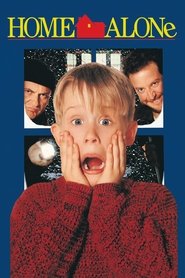
That's also the reason I got the part. I'm such a ham. You are such a ham. - I'm such a ham. But what's amazing is, at the time... ...I was only the father of an infant, really. My daughter... - It was Rory's age. They were both born same month. Yeah, and, uh.... So I was, uh.... I thought, "Well, he's-- This kid is really kind of over-the-top... ...In terms of the way he treats his family. He's kind of a brat." Little did I realize then, after four children later, that this is kind of par for the course. This is the way kids just treat their parents. John knew what he was talking about. - Oh, yeah. He had lived through it. John-- The meetings on this film... We would be in preproduction before we'd shoot... ... then I'd have to go to... John was a night owl, so I'd have to go to John with a... John Hughes' house from about 9 at night to 5 in the morning. I would get home and get in a half-hour's sleep and go back to the set. It was just insane, and he liked to work those hours, and we'd... That's how we basically worked on the script... ...and worked on the production design. It was literally a 24-hour-a-day job. Now, oddly enough, you know, which is gonna sound odd to some people... .all of this sort of imagery... ...Was inspired by David Lean's Great Expectations. So I was-- Obviously, we didn't fully get to that point... ...but some of the black-and-white photography in that film... ... really inspired this sequence for me.
11:55 · jump to transcript →
-
That was the key. Some reviewers at the time... Some people complained that the film was too violent, you know? Yeah, I remember that. - But that is... I think that's what made it funny to adults as well as kids. It's because there's this theory about soft comedy and hard comedy... . ll talk about in a bit... ...but it's like, when it hurts, the more it hurts, the funnier it is. It's Three Stooges, you know? - Itis Three Stooges. It is, and I was always reluctant to say I was inspired by The Three Stooges... ...because I was more inspired by the Marx brothers. But nevertheless, when you see The Three Stooges, you realize it is that kind of pain... And it's funny today. It's fun-- It just-- There's something about people getting hurt. Now, these are our stuntmen. This was just Leon. And the hook. Try to get the crowbar to fall at the right time. Oh, yeah. - I remember this.
1:17:40 · jump to transcript →
-
Again, you can understand why an Academy Award-winning actor... ...would be a little concerned that he's doing something like this... ...at this stage in his career. But, uh, it's important to always get back there... ...and remember how much fun you had doing these kinds of goofy, silly things. This was our little homage to Raiders of the Lost Ark.
1:20:11 · jump to transcript →
-
-
-
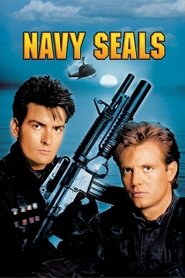
He's very complimentary about this movie and about Chuck Farr. And he said that actually all of these guys were based on real guys initially, were inspired by real guys that Chuck Farr knew. And he actually got to meet them and hang out with them at least one night. But something that happened with all the guys in this movie is they were hanging out with Navy SEALs all the time. So whether it was those original guys
14:27 · jump to transcript →
-
the inspiration for the lead character of current who is Michael bean, but he has kind of a light funny side and he has the more serious all business side. And so they ended up splitting those into two characters, which is how we get the two leads or that's supposedly the story. Um, but, uh, and then I don't know if we should talk about, uh, Wally Kilmer now. Oh, is she, uh, is she coming up?
22:32 · jump to transcript →
-
the inspiration for like the modern triathlon, that that was just, you know, a 10 mile run followed by a 10 mile swim, you know, followed whatever that went on and on and on. Like it's there's so few people who can do it. And then also the
42:47 · jump to transcript →
-
-
-
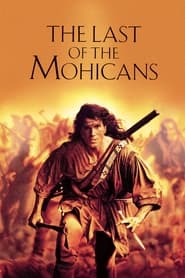
Michael Mann
wanted to know in the preparation for the role was what were her attitudes towards courtship, towards marriage, towards what do I do with my life? To what extent am I influenced by what my father thinks or what is expected of me because of my station? And so when Hayward advises her that what her father thinks and what he thinks
13:39 · jump to transcript →
-
Michael Mann
Much of the war paint that you're seeing among the Huron was inspired by the artwork of Catlin, that's C-A-T-L-I-N, who moved throughout the plains, I believe, around the 1820s.
1:13:36 · jump to transcript →
-
Michael Mann
The design on these canoes is an homage to Wyeth. It's lifted right out of his work. When you fall into British hands again,
1:19:49 · jump to transcript →
-
-
-
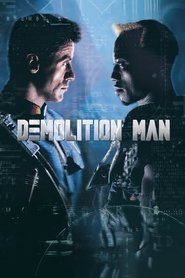
actual computer generated effect so um this is uh based this was inspired by a kurt vonnegut novel where uh i think it was a sirens of titan where there's a substance called ice ice nine that that's cat's cradle buddy okay it's cat's cradle okay don't try to try not don't try to out vonnegut me stay in your lane buddy
9:54 · jump to transcript →
-
So Ice Nine was the inspiration for this substance. Oh, no shit. You never told me that. That's amazing. That would instantly create the solid stasis for the character. We got some great people working on this movie. Bob Ringwood, David L. Snyder, and we just saw Stuart Baird, who I compare to Dr. Smith in Lost in Space. He was a...
10:17 · jump to transcript →
-
we came up with, which was basically a teleporting, there was an interesting Philip K. Dick novel where you have a psychiatrist in a briefcase called Dr. Smile. So the inspiration for this was from Philip K. Dick and it gives you this kind of inspirational greeting and you're able to talk to the computer here and be motivated. Yes, I want an ego boost button on my ATM.
23:17 · jump to transcript →
-
-
-
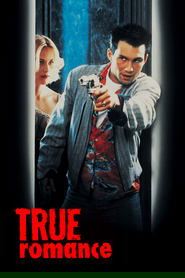
Tony Scott
The city had a whole different feel, and I thought, wow, this can work for us, not against us. So I redesigned that morning, I did my storyboards, and I redesigned the boards based upon shooting that day with Snow, and I think we captured something which was unique and very much in character with the rest of the movie, which was this opening title sequence in Snow. I think what also is a big part of the opening title sequence is the music, and the music was inspired by...
4:52 · jump to transcript →
-
Tony Scott
The music that was used in a movie called Badlands, which was a composer called Karl Orff. And when I met with Hans Zimmer and talked to Hans about the music for the movie, I said, I want to pay homage to Badlands. Badlands is one of my top five favorite movies. And so therefore, I didn't have any qualms about wanting to pay homage to that particular film. So that's why we took Karl Orff as a basic idea for our music.
5:20 · jump to transcript →
-
Tony Scott
It is a classic in Mexican standoff, and I say I was inspired by a lot of John Woo's movies. I looked at Better Tomorrow Part II, I think, was the one that inspired me the most. It was actually Quentin who said, you got to look at a lot of John's movies, yeah. So we cut from the insanity of all the guys screaming to the bathroom with Elvis. And this is the first real look we got at Elvis, or the closest we got to seeing Elvis, is a very soft focus shot of Val Kilmer in the bathroom mirror looking like Elvis, but it's so soft that...
1:48:18 · jump to transcript →
-
-
-
You just have to feel it. You're just there on the set. You know, that's not working. It's got to be like this. You're doing that too self-consciously. You've got to do that straighter. The humor comes from the fact that you don't understand you're being funny. It's all inspired by the screenplay, definitely. It's inspired by the screenplay, but then I think what the director does is he has to hold on to it and keep it from falling off. Of course, the movies that work best are
10:21 · jump to transcript →
-
That was inspired by finding this piece of footage where he turned around in the Oval Office and looked back at the camera. And so we said, okay, that's where we could put the punchline of a joke. And then we figured out this whole peeing thing, which backed into that piece of film. So it was a very complicated process, constantly changing, going back and forth.
31:20 · jump to transcript →
-
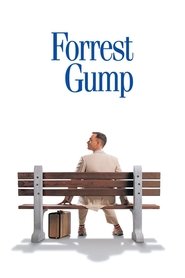
The scene, like, you know, Mama always had a way of explaining things, you know, in between lines of dialogue. So I had to get a rough idea of how Tom was going to do that. And I had those with me, and we tried our best during the shooting to build in those pauses. Then, like I said, I had Tom perform on film because, see, I was inspired by Amadeus.
32:44 · jump to transcript →
-
-
-
three of the Spice Girls got tired of waiting in line to be part of the open casting call and said, screw this, we're going to start a band. And they always talk about it. They always credit it as how they got together because three of them met just waiting in line for the open casting call. Oh, there's our homage to Clockwork Orange right there. Yep. You mean the bowler hat? Yeah, the bowler.
12:14 · jump to transcript →
-
A little homage to Spielberg jumping across the moon. That's cool. Backwards E.T. The too hip for Spielberg moment. That's awesome. How sweet is boo-boo? I know. Then we get into the banquet. This was fun. I like my little flip, too. I like my little...
1:15:21 · jump to transcript →
-
Just something you've never seen before was the hope. Well, that's what I was going to say. You know what? It's not art if people are comfortable with it. Then that means they've already seen it. Then that means, who cares? It's another plaid shirt, you know? But like you said, love it or hate it, but just don't go, eh, okay, don't say that, you know? Yeah, that was all I wanted. That's why, you know, when Jamie and... You see my homage to Michael Jackson tape on my fingers I have in every movie? That's where he came.
1:17:17 · jump to transcript →
-
-
multi · 1h 54m 3 mentions
Jean-Pierre Jeunet, Hervé Schneid, Alec Gillis, Tom Woodruff Jr. + 5
-
This gun - "Taxi Driver" guns we called them - they were inspired by Robert De Niro's wonderful Taxi Driver shoot-out, where he's actually got a device like that.
17:40 · jump to transcript →
-
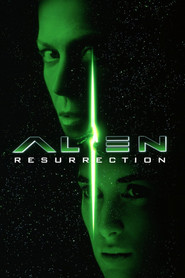
At the beginning I thought "Okay, they are going to fire me after one week." And, no, because it's like another movie. After a while, you are inside and you work, you're friends with good guys. And it's just a process. Like when I did my first short film. But when I made a short film, we were five. And for Alien Resurrection, 905 people. But, then again, it's the same thing. And I'm very proud, because for me, it's my own thing now. I am very proud because I did it. It was so heavy, so big, and the inspiration was Giger, and he is very happy about the film. I know, because I met him recently in Paris, and I'm very happy and proud of that. You wonder about what it's like to direct a film in a language that isn't really your mother tongue. And you wonder whether or not somebody fully understands, um... It's interesting. Something I've wondered. I don't know if Jean-Pierre is actually familiar with all of the actors
1:27:28 · jump to transcript →
-
You are going to see in a couple of minutes the nest. It was a kind of homage to Giger because in the script it was an action scene and I didn't like it. I prefer to imagine this disgusting nest with tails and parts of alien. It was really disgusting with lots of slime and Sigourney loved that, to jump on this very disgusting nest. I love this idea when she catches the tongue. It hasn't happened yet, but this whole business about getting Ripley away from the rest of the pack... She falls into this ocean of alien... alienness which I quite like, actually. And she's supposed to sink into this like into an ocean, which was a precursor to this bit at the end of the film where they were floating in alien goo and the aliens swam in it like crocodiles. This shot seems very easy. It was a nightmare because it's a Steadicam. You can't see the crew, you can't see cables. You can imagine the nightmare because we turn around Sigourney and Winona.
1:28:42 · jump to transcript →
-
-
-
and the moon was put in and it was processed to look like day, as was this shot. To look like night. To look like night, rather. And if, in fact, if you go back to the beginning of the picture, you'll see a shot from the sequence with Ardith Bay. We used the same close-up twice. That we stole from this scene. Again, trying to clarify that problem in the first scene, which... But you don't notice because one's during the day and one's at night. Now, all this is, if you know, sky replacement. This was a, we shot this early in the morning.
36:34 · jump to transcript →
-
almost everything in here you're going to say pulled it out of our ass weren't you? Yeah, I was going to say that. Almost everything in this movie is based on some sort of fact, but actually we just stole that name from Sam Neill played Colonel Brydon in The Jungle Book, and I just thought it was a little homage to my own movie. We originally, or for a time rather, we had the front end of the scene cut off, you know, again for pace reasons, but what it did was it removed the
1:08:47 · jump to transcript →
-
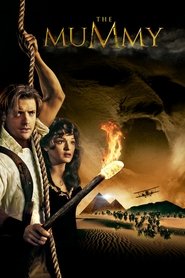
I love these shots, this one and the next one of the chariot taking off. They're totally reminding me of, I don't know, Ghostbusters or something along those lines. Really 80s fantasy visual effects shots. Right, a lot of stuff with the soldier mummies and the priest mummies. I was always a big fan of Ray Harryhausen's movies, especially Jason and the Argonauts, the big skeleton battle in that movie. In fact, I used Ray Harryhausen's name several times in the script just to pay homage to the man who...
1:50:39 · jump to transcript →
-
-
-
Paul M. Sammon
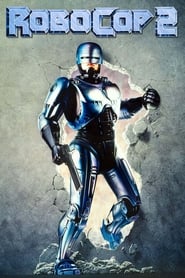
for Roger Corman, and John is a, John loves Roger Corman. He learned everything he could. So that was a little homage to John Davison's background on that monitor. Let me clear my throat. Okay, now I don't sound like I've got five bullfrogs. Yeah, so this shootout here, again in downtown Houston with the Little League team was very much a Frank Miller kind of thing. And it's very funny because this is RoboCop not being violent.
52:34 · jump to transcript →
-
Paul M. Sammon
And, of course, all of the machinery we're seeing here is, at that time, state-of-the-art. Now, this is a prop, and it's an interesting one because anyone who has seen aliens will remember the facehuggers that were in the glass containers. I can't help but to think that this was something that was influenced by that. However, this was done by Rob Oteen's crew.
1:12:04 · jump to transcript →
-
-
-
I mean, I would imagine... Back then, I mean, the PG-13 rating was not even 10 years old at that point yet, so I would imagine it's difficult to try to figure out when to pull back and when to, you know, try to push it to as far as you can, certainly in a movie like this. I imagine that's a challenge. This is my Empire of the Sun homage here. This is completely Empire of the Sun. You know, because we want to love this... We'll talk about Remy Lyon's character, Nico. We'll talk about her more, but I really wanted us to love her, and this...
5:57 · jump to transcript →
-
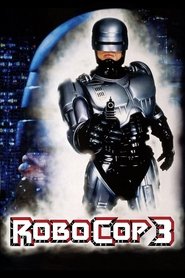
Donald Wilkes' character from the movie Angel, which had come out in 84. The hooker with, you know, the high school student by day, hooker by night movie. You're referring to Angel 1. There were actually, I believe, four of them. Yeah, there had been four, yeah. And so I always thought it was strange. Like, someone was paying homage to that, I think. Maybe I'm reading too much into it, but I always thought that was like, well, that's interesting. They look exactly the same. See, now, if we did this now...
1:09:19 · jump to transcript →
-
-
-
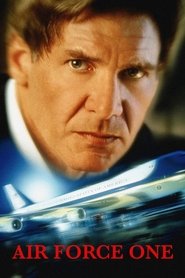
that we don't have a rap like that. And I believe that. I think that's probably not true. But for our story with the escape scene with all these hostages flying off the plane, we just invented that. But they don't have that now. This press conference, by the way, was a little bit inspired by that Alexander Haig press conference in 1981, remember? When Ronald Reagan got shot. Yes, especially at the beginning of it.
1:18:47 · jump to transcript →
-
The secretary there was talking about, I have no idea what happened, I don't know, blah, blah, blah. It was done basically, you know, it was very much inspired by that. Alexander Haykin of press conference. Great job here again with Glenn. And you see also, if you take, again, the work of the first assistant director, if you get the right extras, look at how real I think this press conference really feels. And they're all extras. They're not even actors, they're extras.
1:19:16 · jump to transcript →
-
-
multi · 2h 12m 2 mentions
Andrew Sarris, James Ellroy, Brian Helgeland, Michael Nathanson + 10
-
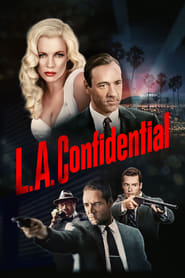
how brilliant the song choices were in the soundtrack. And they made the transitions from character to character really punch home. But I thought the actual theme was such a beautiful combination of something that was fresh because you hadn't heard it for a while, but it was something that was so completely influenced by the period that the film was set in. I'll take the results.
36:38 · jump to transcript →
-
Here. As I say, I think the inspiration from Robert Frank and seeing these old photographs and working with Janine and obviously with Curtis, one day I remember telling Curtis, hey, you know, Curtis, it could be maybe a good idea
1:22:50 · jump to transcript →
-
-
-
Darren Aronofsky
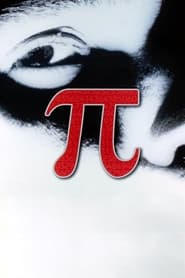
like that, a rotary phone, to sort of create this timeless space. We were sort of inspired by Terry Gilliam's Brazil of taking old technology and reinventing it for the present. We didn't have anywhere near his production value, but we tried to learn from a master. That's Joanne Gordon, who is my mom's best friend, helped raise me, and was actually craft services on the film, playing the mean landlady.
5:04 · jump to transcript →
-
Darren Aronofsky
Sean is really deep in it here. I mean, the amazing work he's doing here. You can't pay for a look like that. You gotta work for it. The whole phone in the background is, for any of you film buffs out there, is a lift or an homage to Sergio Leone in Once Upon a Time in America.
58:13 · jump to transcript →
-
-
multi · 2h 19m 1 mention
Martin Scorsese, Nicholas Pileggi, Ray Liotta, Lorraine Bracco + 9
-
-
-
-
director · 1h 31m 1 mention
David Steinberg, Dave Foley, David Higgins, Jay Kogen
-

Related topics
Other topics that frequently come up in the same commentaries.