Topics / Creative decisions
Influence & homage
102 commentaries in the archive discuss this, with 264 total mentions and 52 sampled passages on this page.
Filter commentaries
Filter this topic by the film's decade or the type of commentary.
Showing 29 of 102 commentaries
Clear filtersBy decade
Across the archive
ranked by mentions · click any passage for the moment in the transcript
-
-
Noah Baumbach
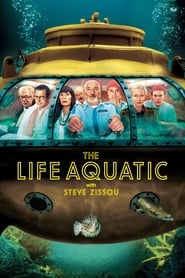
And I'm Noah Baumbach. We're the co-writers, and I'm the director of The Life Aquatic. This is the Criterion Collection edition of the movie, which I think is the only one. Right. And we are at Bar Pitti in New York, sitting at a table where we wrote the film. Right, we actually came here every day from-- Usually for lunchtime around 1:00, sometimes 1:30, sometimes 2, depending what-- It was later. When we got up or when we went to bed the night before, and we would write together all day and into the evening. And have two meals. - Yeah. The films within the film, maybe we could say something about... Right. - Steve Zissou, his documentaries are sort of inspired by... Jacques Cousteau's films, and are more than a little... And we shot these on Ektachrome stock, a reversal stock, to get this highly saturated, dated feeling. To feel like a 16 millimeter. A number of the parts were written for the people who play them. Bill Murray's role and Owen Wilson's... Anjelica Huston's, Bud Cort... - Right. The Bond Company stooge was always Bud. - Yes, the Bond Company stooge. And then also on Team Zissou we have a favorite actor of ours, Noah Taylor, who plays Wolodarsky. Robyn Cohen, came out of Jeff Goldblum's acting class. Right. - She plays Anne-Marie Sakowitz, the topless script girl. It's not all science.
0:35 · jump to transcript →
-
Noah Baumbach
These are the Team Zissou interns, who are all typecast. One of them is an actual intern of yours, or was. Yes, Matthew. Matthew Gubler. Cousteau was always an interesting figure to us because as kids, we idolized him and watched his shows. But he was one of those characters that seemed just like a... You know, a star incarnate in some way. You know, it was like Jacques Cousteau, Evel Knievel, and, you know, Bill Murray or something. And I think the... Zissou, what was fun for us writing this was, sort of, Zissou in some ways is like a kid's idea of what an adult is. It's sort of like-- Or what a celebrity is. And then at the same time, we're dealing with a character, Zissou, who is in some ways, you know, has to get in touch with his own humanity, his own past, in some way strip away this identity that he's created for himself. Right, yeah, right. We always liked the idea of starting-- The idea of one of these movies, which I guess you generally associate with a kind of like ABC special, you know, that's where we saw them on television. And you generally associate them with TV or sort of educational films. But we always liked the idea of this playing a world where this kind of movie would play at a major film festival. Yes, yes. It could be-- It's a world where there's such things as hit documentaries. Right. - Although there actually are now. Fahrenheit 9/1 1. - Documentaries-- Remember we called them-- We like the idea that they might be called swimming films, but I don't know that they ever made it into... We never quite got swimming films in there, a genre. The festival director is played by Antonio Monda, a friend of ours in New York, who's a teacher at NYU, a film professor, and who also hosts a kind of a salon where he has people over, all sorts of interesting people over to his house, and a good friend of ours. And we wrote this part for him. Yeah, we always... Somehow it just seemed like Antonio would be this guy, I think, who, you know... He's done it a million times. At the MoMA and the Guggenheim. And he's Roman. Right, so you knew he could speak Italian. And at the premiere of the movie in New York, he introduced the film before the film. In very much the same way. - Yeah. This is the opera house in Naples, the Teatro di San Carlo. It's a great setting for something, and we always liked the idea of the film festival being set in a place that's like an opera house, and in this case it is an opera house. Isabella Blow plays Antonia Cook, the new head of the film commission. I had, I guess, first come in contact with Isabella when I was at Brasserie Lipp in Paris with my girlfriend, and she walked by and looked at us and said, "Très sexy." Beaucoup de sexe. - Beaucoup de sexe. And I came back and told you I'd seen this very interesting woman, and you said, "Would this woman be out of place in a matador's outfit?" Yes, because I had seen her previously in a hotel lobby in Paris where she was dressed as a matador. It was amazing my story was so specific that you knew exactly who it was. And it was her. We're here at a film festival, which can be the most awkward thing. You're in the midst of all these people watching, and in the case of this character, it's exposing all these different problems that he has in his life that are kind of just laid out in front of him over the course of one miserable evening. We'd talked about 8 1/2 as in some ways an inspiration for this, the Guido character that Marcello Mastroianni plays, because he sort of-- That movie opens with a dream, it's different, but at the spa, he's sort of faced with all these people from his life who keep kind of appearing. Here it's less surreal, but it's, you know, Steve is sort of dealing with, in some ways, every aspect of his life. Yeah. It is surreal to go through the experience of presenting a movie in this kind of context. - Right. The one thing I think that-- We often talk about all the-- We're both big movie buffs. We often talk about the movies that have influenced us and the different inspirations, but for this movie, for me, in the end, a lot of it has to do with my own feeling about making films, and just the luck of being able to do it and being in a situation to have been able to make some movies, and how, for me, that's just the central event of my life was, you know, getting to do this. Right. - I feel like that's part of what the movie is about, is somebody who is-- That is, the thing that kind of clicked with him, getting together a group of people to go make these things. Mm-hm. You know, there's something kind of magical about movies to me. And Steve is dealing with, in some ways, the toll that... I mean, he's sort of at a point, you know, unlike you, I guess, where he is not sure what he wants to be doing next. You know, these... You know, at a real sort of crisis in his career and his life, and also dealing with the fact of the toll his career has taken on his life. ...my little nephew, Werner, he wanted to meet you. How you doing, Werner? He brought you a present. A crayon pony fish. Steve Zissou is obviously and clearly partly inspired by Jacques Cousteau, but just as much of an inspiration for him is Bill Murray, who I had gotten to know for a long time and who Noah also knows. And... I remember when we were writing, we were sort of in the middle of this scene. You had actually seen a movie with Bill, I think, at the Sunshine Theater. And you had a... You could tell that story. The guy came up to Bill... Yes, this is interesting. Bill and I had an episode where we went in to see a movie at a theater on Houston Street. And while we were-- You know, we went in, some kid said hello, and then when we came out, there was a gang of kids who were waiting there with things to sign. Rushmore DVDs and Bill Murray paraphernalia. And Bill was signing all the things and we talked to the kids. And then-- Should I tell this? And then at the end of it... It was funny because one of them then came up after we finished and came up and asked Bill for $10. And Bill said... "Get lost. Get out of here." And the guy turned and walked away. And it was funny because there's something about the way Bill handles that situation that is in Zissou, and I remember when we were filming it, I said, "Well, the way you really said it in real life was like this." And then Bill went into some crazy hysterics over the idea that it was something that had happened. He had no memory. - He had no recollection. But I'm not sure if this story should go on there or not. An abridged version of it maybe, or maybe not. Yeah. Don't put this in until Wes has maybe called Bill and asked if it's okay if he puts it in. Well, Bill badmouthed me in Esquire saying he'd kill me if the movie wasn't one of the best films of all time. Oh, really? - Yeah. He didn't run that by me.
2:21 · jump to transcript →
-
Noah Baumbach
This is his ship, the Belafonte. We bought this ship in South Africa and sailed it up to the Mediterranean and renovated it and made it into this research vessel. It never ran that well, but we really did fall in love with this ship. The crew of the film was always very sort of loyal to it. Now, we have Michael Gambon, who plays Oseary Drakoulias, the producer, a sort of Carlo Ponti, Dino De Laurentiis-style mogul, although he does produce these documentaries. He has the longest fingers that I think I've ever seen in real life. He understands. Amin needs to make a projection of the world grosses to see if he can get a tax break and run it through his output deal. I think that Zissou sees himself and wants to be the kind of person who gives kids secret messages in the cereal boxes. Right. That's an inspiration for him. And the movie is about this, theoretically, a real person, but he's inspired by a sort of fantasy version of himself. And there's things sort of peppered throughout the movie, but this whole red caps and the uniforms and the whole thing. And Owen, in some ways, is our stand-in, I mean, of the child who looks up to this person. And I think another layer of that that we were always dealing with was how our cinematic idols in some ways were like surrogate fathers for us. Movies we loved that sort of took the role of things we looked up to, things we sort of wanted to live vicariously through. And I think Owen and Ned's character sort of stands in for that. This is a kind of an unusual role for Owen Wilson, I think. Right. He has a sort of recognizable comic persona that he's developed. And this is, I think, very different from that. I think when we were writing it, we often talked about that even though Ned was, as written, very naïve and kind of an innocent, I think there's always a kind of somewhat devilish nature to Owen. You can see the light is on behind his eyes all the time. There's some Zissou in him. Yeah, that's interesting. And I think also it made us feel more comfortable writing such a naïve character because I think if it was played too much that way, it would kind of wash out. Yes, and I think Owen's concern was, he was like, "What am I gonna do?" Because he felt like the character is so innocent and so sincere that he's not used to playing someone who's that sincere. He usually plays somebody who's a little bit wily on some level, or something like that anyway. And I think for him, when he really became comfortable with it was because we were sitting on the roof of this hotel in Rome, and he told me this funny story about Will Patton on the set of Armageddon, and he did Will Patton's voice, this southern accent. And I asked him, "Do you think you could do this whole movie in that voice?" And what he ended up doing-- He liked it. We read through the whole script reading all his lines with that, and it was funny and it gave him a sort of genteel feeling and something a little bit not quite real. And the accent's certainly not real. The accent hasn't existed certainly since the Civil War. Right. - Even if then.
9:42 · jump to transcript →
-
-
director · 3h 43m 7 mentions
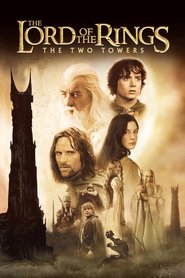
The Lord of the Rings The Two Towers (2002)
Peter Jackson, Fran Walsh, Philippa Boyens
-
...to where you were a year ago watching The Fellowship of the Ring... ...and to reorientate you into the world of the movie... ...before you have to start giving new information... ...and having people think about new things. There was also that great John Howe painting that you fell in love with, Peter. Yeah, well, that's true. This entire scene way, way back in our scriptwriting days, years ago... ...was inspired by one single John Howe painting... ...because I would have never, ever thought about showing... ...the fight between Gandalf and the Balrog, but...
2:45 · jump to transcript →
-
very evocative spooky dead marsh stuff in the book i love the the corpses lying under the water of course a few people have said that tolkien got the inspiration if you can call it inspiration for this stuff from the first world war when he saw bodies of soldiers lying in the shell holes the flooded shell holes and no one's going to really realize if they haven't read the book but the
45:37 · jump to transcript →
-
The elven cloaks that they were given at Lothlorien have a very magical quality in which they camouflage and blend into anything that they're surrounding. So if they're against rocks, then the cloaks are grey. If they're against trees, then the cloaks are green. And we could never really do that properly in the film. And this is almost like tipping our hat, the only time really that we ever do it, to this special elven cloak. But I remember this...
1:05:34 · jump to transcript →
-
-
director · 3h 29m 6 mentions
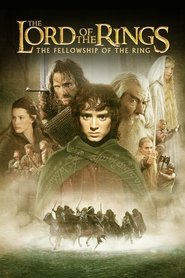
The Lord of the Rings The Fellowship of the Ring (2001)
Peter Jackson, Fran Walsh, Philippa Boyens
-
And even though our movie obviously is stylistically very different and the design is different, there is one shot which I regard as my homage to the cartoon, because it did inspire me to want to read the book, and that's the shot of Proudfoot shouting Proudfeet, where I deliberately copied the angle that Ralph Bakshi used, which I thought was brilliant. If you look very closely in the wide shots, you'll actually see that the cake is on fire.
24:08 · jump to transcript →
-
And that was done with a rubber puppet that we morphed a rubber puppet into Ian's face for a few frames. So it's half Ian, half rubber puppet. It's like a combination of the two. It's absolutely a moment from the book, though, that. Yes, it is. It is, where it says a shadow passes across Bilbo's face and suddenly Frodo sees something horrible and grasping and groping. Yeah, yeah, yeah. No, definitely inspired by the book.
1:47:57 · jump to transcript →
-
informed Tolkien's view of life, his Catholic faith. The sequence in the Dwyerdale Hall was inspired by a painting that Alan Lee did for the centenary edition of The Lord of the Rings. Wonderful watercolour painting of these huge towering columns that seem to go on and on forever with these tiny little group of people
2:09:46 · jump to transcript →
-
-
director · 2h 10m 5 mentions
Richard Curtis, Hugh Grant, Bill Nighy, Thomas Sangster
-
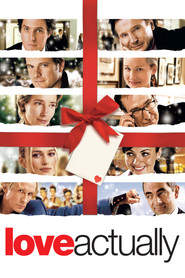
Bad hair for the prime minister, wasnt it, really? I think I was still shooting another film and I couldn't change it. That's such a pretty shot. This guy is a real vicar. Now if I can just say a little bit about this scene here. This was in fact inspired by Jim Henson's funeral, which was the most moving thing I've ever been fo, and at the end of it Frank Oz was talking and he suddenly lifted up Kermit's puppet and started to sing this song called One Voice. And it turned out that all the guys in the memorial service had brought their puppets with them and they lifted them up, and when you turned around and looked backwards, there were 50 puppets, all singing. And Big Bird walked down the aisle of St. Paul's Cathedral and they all came forward and just this massive chorus of puppets, all singing. It was an extraordinary thing. So this was our little stab at that. ... that can't be done It... Nothing you can sing... This is David Lynden Hall, who is such an adorable man. When he came in to talk to us in the offices, he sat there with his guitar and charmed the girls more than I think was necessary.
9:56 · jump to transcript →
-
This is not quite so influenced by Sergio's work.
42:51 · jump to transcript →
-
This next scene is inspired by
52:24 · jump to transcript →
-
-
-
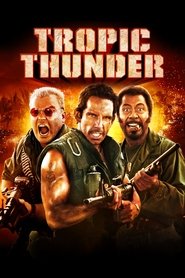
Hey, Robert, maybe I'll just take this opportunity to ask you where you came up with the inspiration for Osiris and for the characterization. I don't remember. Hide at home. All I remember is that I was going to do a movie with Ben Stiller and Jack Black, and I thought, fuck, man, I don't have a clue in my head what I'm going to do with this dude. I also said, I don't want to get in trouble now. So the voice came...
7:02 · jump to transcript →
-
This is our, yeah, the reveal of them. So originally, actually the way we shot it was he took his hook and he scraped it across the window. Quint style. Very Quint style. That didn't work. It was a little too Quint style. The Robert Shaw character. Oh, yeah, totally. Yeah, and it just was a little bit too much of an homage. It felt like, I think, a little too self-conscious.
19:36 · jump to transcript →
-
So obviously here's our little homage, our apocalypse homage that was too homagey. That water was most filthy. But Ben did not give a rat fuck. I come all with respect. Hold your cock! So there you go. Now, Jack, you didn't love being on the back of the water buffalo. I feel like Robert had a better connection with the water buffalo than you did.
1:18:22 · jump to transcript →
-
-
-
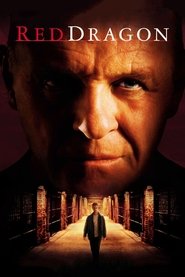
I went to New York with Dino, and I was very nervous. This was Tony, Anthony Hopkins. The thing I did know and what I was confident about was the type of movie I wanted to make. Like I said, I went in there knowing the tone of the movie, my approach to the movie, how I wanted to not show any of the gore. I didn't want to make a horror film. I wanted to make a film that was psychological, emotional, and smart. That was what was on the page. And the only scene that Tony had a concern with when I sat with him was this scene right here. Tony was concerned that as originally written, his attack on Graham here was too graphic. By the way, it's an interpretation because 10 directors would direct a scene in 10 different ways and show various degrees of violence. It's about showing the details of the guts falling out of his stomach, or the blood, how much blood to show. And I chose to play it mostly on their faces. Once the attack happens... Here's my little homage to Silence. You see the... - I see the bug. You like that. So I chose to play the violence part of this scene on their faces. I love this book. This is an original. My prop guy, Brad, found this original book from France, Larousse... When I read it, I had no idea what the hell it was. It's the bible of cookbooks. - Yes, I learned that quickly. He found this real old French cookbook. There was a lot of dialogue about how do we sell his moment? It's really just a subliminal thing. It wasn't really supposed to be so pointed where it was like, "Oh, sweetbreads." I thought sweetbreads was brains but it's not. It's actually... Thyroid. -... thymus. I learned so much about anatomy on this film. If you work on a Lecter movie, you learn a lot about cooking. I thought Edward was fantastic. There is a tremendous intensity of performances in this movie. And really a dream cast as Brett already said. If you could have anybody in the world for these parts and be lucky enough to get them. It's pretty much what happened to us. Great actors want to play good characters. They want to play great characters and all of these characters, down to Freddy Lounds, and other smaller roles, were just written so well. They were interesting and dynamic. And these actors were interested in playing this. To convince these actors to do a third in the series, all that went out the window when they read the script. Certainly once they started working. There's our cold opening. I'm very proud of this title sequence because it was actually done two days before we had to lock picture. My editor, Mark Helfrich actually was the brainchild behind this because... You re-shot the journal here in a very interesting way. Initially, this was done in a much more straightforward way with the images very flat against the screen. Yes, a lot of times. Mark is kind of... Everybody on my team, from my AD to my production designer, are filmmakers. Mark is a filmmaker in his own right and he just understands the visuals and storytelling. I love how, you know... But this was written. - Yes, it was. But the way that the camera roams over these pages and when we go in very close and it gets grainy, the camera movement left to right, up and down, is all not scripted, of course. This is something I don't really have the patience for. Mark kind of took this book that he was fascinated by. I think he has a copy of it in his closet at home. He just knew every page, every frame and went with Dante and literally just shot. This is a wonderful opportunity. This kind of title sequence is sort of old-fashioned in a way. But it's a wonderful opportunity for a screenwriter to get information in quickly to cover a lot of ground between the arrest of Lecter and where we are when the movie is going to start. Covering a period of several years, you are doing that without any dialogue just by these images. It's a very useful shorthand. Danny did the same thing that Ted did with the script in this sequence that Mark did with the visuals in this sequence. Danny did the same thing with the music. I think the music here is so fantastic. It's very much like a Bernard Hermann score, which I knew was a big inspiration for Danny. Danny is a big fan of Bernard, and this was his chance. He's done darker scores, but they've had a kind of lightness, or comedic darkness to it. Danny did something here that kind of made people's skin crawl in the theater, like, "You're in for it. "If you're gonna sit through this movie, you'll experience some stuff. "Shit's gonna go down."
6:02 · jump to transcript →
-
And here we had sort of a challenge as we were working over the script and getting ready to make the movie, because we're going here to a second house of murder victims. You don't want it to be repetitive, and you've got to find a way to make it quite different and move more quickly. Mark Helfrich, the editor, had some wonderful ideas for increasing the pace of this, which was a little bit longer. In the script, initially, I believe Graham goes into the house and has a few moments in it. Anything repetitive will never be in the film with Mark's editing. So we eliminated a couple of brief moments of him going into the house because it was too much like the other house he went into. And you try to move ahead to what's really new, dramatically, in the story. I love this shot. Jimmy Muro, my Steadicam and first camera operator, did this as one. A lot of good shots in this movie are in one, which I love, you feel like you're with him. And this was built. It's like the most incredible tree house in the world. It took about a week to build it. -/t looks pretty real. The tree is real, but we built the tree house. A platform, so that we didn't have to have Edward climbing up there. And it was awesome. It was so much fun that it was scary. Now he's looking from the killer's point of view at the murder victims' house and figuring out that the killer must have sat in the same place. But you cut the shot where he imagines the killer's point of view here. Yes. - Why was that? I cut it because I didn't want people to think he was psychic. I was worried that the audience... No. It was scripted that he would see in a sort of flashback what the killer saw, which was the woman walking past the window. I was really worried about it. I mean, it worked. I was worried that some people might be confused about his visions. I only wanted the visions when he was drinking in his hotel room alone. Where people sometimes have visions, you know? This was a great location. There was a real house here that was from 1770, that was the home of two congressmen. This is outside Baltimore, I guess. - Yeah. And here's the house that we built that we transitioned here... To a house built. ... that was inspired by the house from 1770 that they wouldn't let us use because... This entire house was built just for the movie outside of Los Angeles. - On the Disney Ranch. And here we have Kristi Zea in full-blown design glory. This is the voice of Ellen Burstyn, believe it or not, uncredited. That's interesting. You didn't know that? -/ did know that. I had Kristi do the still photographs because she's so great. In every single shot here, you see hundreds of separate decisions made by Kristi Zea and her team. Take off your nightshirt, and wipe yourself... I love this upstairs kind of lair of Dolarhyde. This was a big debate about the voice and... Now! - Please! Yeah. Should we... What are these voices? ls it Grandma's voice that has been transitioned into the Dragon's... Is it the imaginary voice of the Red Dragon? Originally, it was scripted that we heard the Red Dragon's voice in Dolarhyde's head. I got great actors reading the Dragon's voice, but I just could never make it work. I just felt it became hokey. It was a potential for people laughing where you didn't want them to. This is a CGI shot where we erased his teeth. So that you just see gums. - Yes, you just see gums.
39:12 · jump to transcript →
-
He didn't take this character for granted in any way. He tried to find every possible nuance within him. Mrs. Jacobi in human form. Do you see? - Yes. I love the William Blake stuff. The painting and the inspiration for him. It goes much deeper in the book. Personally, I always thought we shouldn't see any more photographs here. I would not have shown these photographs. I would have only shown reactions on their faces, but it's the kind of thing you go back and forth on forever in postproduction. No what? Not me. Philip was really terrified here. Both these guys together, the excitement of having two great actors in the room. Ralph talks about how when you're working with great actors, it raises your game. You give a performance you didn't even know that was in you for that day. Yeah. I am the Dragon... This is the performance. You are privy to a great becoming... It's his monologue. ...and you recognize nothing. You are an ant... Is he saying this right into the camera, or is he saying it to Philip on the set? Philip's there. It is a little close to eye line, because I feel like... The camera is pushed almost into his face. He has to ignore it while performing. And then I love this move, which comes around. I like the light on his eye. You owe me awe.
1:15:36 · jump to transcript →
-
-
director · 4h 13m 3 mentions
The Lord of the Rings The Return of the King (2003)
Peter Jackson, Fran Walsh, Philippa Boyens
-
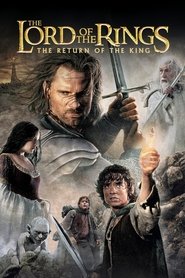
to pull a mat off the edge of people's hair and replace the sky above them, especially because sometimes the sky tends to burn out and you lose your edges around the hairline and it gets a bit tricky. This was inspired by a scene in the book of Frodo swatting invisible flies, walking along, which I always remember that passage and wanted to portray it in the movie. This particular scene is Sean Astin's last scene that we ever shot.
3:15:14 · jump to transcript →
-
This was another moment which I always imagined too, which is just this fade to black. So I wanted a real feeling that it might've been the end and I wanted this long black patch. And then I just wanted this image. This was an image that was based or inspired by a painting that John Howe did. It was this moment, this exact moment. And I remember seeing the painting. It was while we were in pre-production on the film. We hadn't shot anything yet. And that painting just gave me
3:39:17 · jump to transcript →
-
No, well he did obviously meet with her afterwards. But beforehand it was just this instinct, it was pure instinct that she would be the right person and she so was. Into the West was a song that was actually inspired by a young man called Cameron Duncan. Going into our last...
4:04:24 · jump to transcript →
-
-
-
Andrew Niccol
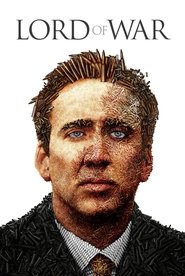
This opening shot looks like a production designer's fantasy, but it's inspired by an actual photograph by a photojournalist after a gun battle in Monrovia. There really was a carpet of bullets like this. I suppose it's obvious, but a military consultant pointed out to me that for every bullet that kills or wounds the enemy, thousands of rounds of ammunition are expended.
0:40 · jump to transcript →
-
Andrew Niccol
Unfortunately, Kalashnikov kids like these are all too common in Africa. Both sides use child soldiers. In Liberia and Sierra Leone, where much of the film takes place, this was very common. Some of them wear wigs, or masks, which is inspired by old West African tribal superstitions.
58:14 · jump to transcript →
-
Andrew Niccol
the idea that even shredded paper can be put back together if given enough time. This jail set also looks like some sort of homage to Gattaca.
1:07:59 · jump to transcript →
-
-
-
Again, in this part of the movie, we linked the family concept with the introduction of the kid arriving to London. And how now they are prepared to... to start a new life in their city which is now... with the presence of the militaries, trying to help these people to live again in this part of the city, which is the Isle of Dogs. This is the main location that we used in the movie as District One, the place that now the Londoners, the newcomers, are trying to live. Probably American audiences are not going to notice, but the T-shirt that Mackintosh Muggleton is wearing is a Real Madrid T-shirt. We are not supporters of Real Madrid, but this is one of our things we add from Spain. Yeah, this is a kind of homage of our country.
14:58 · jump to transcript →
-
This is the iconic London we talked about. We were inspired by the Charles Dickens movies, by the photography of the Second World War, the bombing of London. Most of these scenes were shot in... at sunrise. That means six o'clock in the morning, five o'clock in the morning. It was the only way to get control in these places, because, as everybody knows, London is a very busy place and the only way to, you know, to deal with a city that... That was the Millennium Bridge. ...there is no life there. This is the theatre, the district of theatres. In a way, we are making a trip through the city, through this iconic city, which is London, and... discovering every place through the eyes of the survivors, or through the eyes, in a way, of the infected people taking over the place.
1:08:18 · jump to transcript →
-
Well... - And cut. That's the end. We hope you enjoyed it. Our Spanish crew was really small. One was obviously Jesús Olmo, he's a co-writer with us. He's one of the infected which are... In the car park when the infection is triggered, you see a lot of people getting infected, and Jesus was one of them. I think it was a kind of homage to his work in this movie. The other one is Kote Camacho. Kote Camacho was the storyboard artist. Absolutely amazing work. This is work... Normally, you don't see the images but it's underlying every time in any moment of the film. We worked with him shot by shot, and his work was really amazing, and I really want to thank him. This film would be impossible without Fred Chandler. Fred Chandler is a Fox executive in postproduction. And he really not only helped us to bring to the film all his knowledge and all his... his... great approach to the genre. I think his experience is pretty important, you know, if you want to... Specifically, when you are dealing with a lot of elements in terms of visuals, effects and audio, music. So I think Fred was very precise, you know, and he helped a lot in this postproduction. And, for me, the most, and for Juan Carlos I think it's the same thing, the most important help was from DNA and Fox. From DNA, from Andrew Macdonald, Allon Reich and their crew. A fantastic crew. They were very supportive, and Andrew and Allon, not only extraordinary people but also very creative at the same time, very supportive to all our crazy ideas. and always trying to bring the logic to these crazy ideas, so I think we made a fantastic team together. We'd love to make more movies with them. And also, obviously, the people from Fox were very supportive, having in mind we had to do all this postproduction in barely two months. Thank you for everybody, because I think we had an amazing crew, and, you know, having in mind the difficulty of the postproduction... So they... they did an amazing job, so thank you to everybody. Thank you for listening to us. And I think our movie is a good example of all the things that we wanted to make, and I hope you enjoyed it.
1:33:23 · jump to transcript →
-
-
director · 1h 36m 3 mentions
Aliens vs. Predator - Requiem (2007)
Colin Strause, Greg Strause, John Davis
-
our nickname for the Predalien. And he's establishing his dominance over the little newly shedding warriors. Bitch-smacked the warrior around and then gets to have his way with the homeless lady. And this is one of the homage shots, the original Predator. It's very, you know, the whole layout and composition of the shot was very similar to the opening of the original film. And again, obviously, this is a visual effects. You want to talk about Hydraulx a second, guys?
19:22 · jump to transcript →
-
So I like this scene a lot because it's not too often you get to use the word dickhead in a movie. We're sort of bringing that back. That's a real throwback to it. Yeah, it was like, well, it's also how me and Greg talk to each other. We always call each other, like, asshole and stuff like that. So, like, in the sewer scene, he's like, oh, you're accused, asshole. You know, that was very much influenced by the way we talked to each other. So we were going over the script stuff for Shane. We're like, that's some of the brotherly kind of stuff you got to put in there. And, by the way, this was unusual in that
1:00:37 · jump to transcript →
-
It's like, it was impossible. We would have needed two weeks to film that scene. And it was like, and we literally had a day to film it all. So that's why, that was actually the original reason why we picked the APC more than just homage to aliens. It was like, we needed a contained set with no rain in it that we could actually shoot. And we kind of didn't like the idea of a minivan. No, yeah, minivans, we hate minivans. Which is one of the things when you're going to have military vehicles in a movie, it's always very difficult.
1:17:48 · jump to transcript →
-
-
-
Kat Ellinger
Things like Last House on the Left, for example, which was inspired by Bergman's The Virgin Spring. The male family member or the boyfriend or the husband or the father wanting to take back that honour as if it's a family thing. You know, it addresses that. That's what sends Manu over the edge. And then with Nadine, it's the constant criticism. It's the showdown between the flatmate. Now, this is exaggerated.
20:33 · jump to transcript →
-
Kat Ellinger
that punk period, or was coming of age in that punk period, and pay homage to that. Certain aspects of that are played down in Baise-moi, but the music is still there, played down compared to the book. But it is still a really huge part of Virginie Despentes and her work, her writing, and her film work.
55:16 · jump to transcript →
-
-
-
I admit, arguing to keep this in. Music up. But it's really, to me, this is almost, this is my homage to Hong Kong cinema right here. Forget the martial arts stuff. But it was fun to go full throttle on this kind of thing. As I said, very operatic.
1:07:57 · jump to transcript →
-
We talked before about tradition. And there's this one, obviously the wonderful, the homage that's being made here is that wonderful sequence in King Hu, I assume in King Hu, Touch of Zen, which had that great, great fight sequence in the bamboo forest. Of course, they were always on the ground in the bamboo forest. In the middle section sometimes. A little bit. Well, he used to use those trampolines. He would position trampolines just outside of frame.
1:35:27 · jump to transcript →
-
-
-
which was sort of influenced by stories that we'd heard about, particularly like stuff you read about Rwanda and places like that with corpses ending up in churches and things like that. And we thought it'd just be a dumping house for corpses, some kind of mortuary or makeshift cemetery for the corpses. And it gave us the next kind of... It felt like the film was evolving then out of the circumstances and that he was understanding as he went along in the way that
14:20 · jump to transcript →
-
the clear, the digital house, we'd paint them out, the neon lights. So they're actually self-lit by the lights in the supermarket store. So we didn't have to do any lighting, but they just took it all out in post and we tried to avoid it as much as possible. That was a little Homer Simpson homage there. And in a way, the whole scene is a respectful nod towards George Romero's Dawn of the Dead set in a shopping mall, which is...
47:53 · jump to transcript →
-
-
-
Tom Tykwer
but still to me as i'm considering myself something like a spiritual agnostic this is not a religious movie it is a movie that is heavily influenced by spiritual knowledge that of course recurs to to religion and to theology and of course there's a many theology
1:10:56 · jump to transcript →
-
Tom Tykwer
But they don't go into the confession booth. They don't follow the rituals. They just are inspired by them, which is a small but important difference to me. We've just seen that scene with the shaving of the heads, which is a rather shocking element when you read a screenplay. You know you have an idea of an actress, because I was very early thinking of Cate to play Filippa.
1:11:50 · jump to transcript →
-
-
-
And the interior of this location was inspired by a fencing facility that we location scouted that was adjacent to the Olympic Stadium from the 1930s. But we weren't able to shoot in that location, but we did replicate it in CGI and on the stages at the Babelsberg Studios, which have quite a history. Mm-hmm.
9:40 · jump to transcript →
-
It would be impossible to do that. And I thought that Enzo Angileri, who designed and cut this hair, thought that he did such a great, it was such a great throwback and homage to the original and yet something that we could work with. I just thought he did such a brilliant job. And it was also one of the first things that Peter Chung said when he came to the set was that he loved the hair, which was really great.
40:29 · jump to transcript →
-
-
director · 1h 37m 2 mentions
John Cameron Mitchell, Justin Vivian Bond, Sook-Yin Lee, Paul Dawson + 1
-
Some of James' film we shot before principal photography, like his face in the water and the band-aids and all kinds of little bits and pieces. I remember me biting my nails and letting them bleed. How much was inspired by Jonathan Coet's Tarnation? Well, you know, Paul documents his life also with photography over the years, and there was a little bit of that and a little bit of Jonathan...
51:17 · jump to transcript →
-
was perfect. You're doing an homage there. That was a filmic reference. I didn't want to tell you because I didn't want to make you self-conscious about laying, but it happened anyway. Remember, it just fell out of your panties. Look at how gorgeous Justin looks. This is not a shot of Justin. That's Justin. That's Kurt and Bart. I have to say, yes, thank you, Kurt and Bart. They did a good job on making me these fantastic costumes. I was so jet-lagged and tired and
54:03 · jump to transcript →
-
-
-
influenced by the Blair Witch Project for this sequence. And I think one of the key ideas was that the actors in that film were really horrified in all of those sequences. They weren't the hero that were going up against the villain, you know, with courage. But here we have Will petrified, and you just never see that. And I think we are just living in this world in his shoes, and if he's petrified, we have to be petrified. Remember we had a version of this sequence years ago that was in the U.N.?
28:06 · jump to transcript →
-
Or are you excited to see somebody? And what's funny is it all informs the behavior in the scene, but then it all landed exactly back to the way that it was written, Wishes. It now exists again in its simplest form, yet the performances are now influenced by all of that play and workshopping, and I really enjoy that. And it's a scene that I'm really proud of just because I think it's entirely accurate.
1:07:18 · jump to transcript →
-
-
director · 1h 26m 2 mentions
Underworld Rise of the Lycans (2009)
Patrick Tatopoulos, Len Wiseman, James McQuaide, Richard Wright + 1
-
We went for, like, one... One big transformation that I really like is the one where, you know... ...when Lucian regresses. We often see transformation one way, from a man to wolf. This time, it was like from the creature to the man. I was really pleased with that. Michael again gave us the whole choreography there. Beautiful shot. And Dan built us so many corridors. This is all like... I mean, we had a big chunk of corridors. We kept playing, turning around corners. lt was actually quite a big set. It was huge. lt was a three-storey set... ...basically all the way up to the ceiling of the thing. And with short ceiling on the lower floor... ...and then in the dungeon chamber, two storeys. And again, that's the big set. - The courtyard set. And this next action sequence too is an example... ...of just really squeezing everything out of what you've got... ...to make a sequence. I think we had, at the time... ...maybe two practical arrows that came in and maybe two hallways. And one real firing arrow, and just... We were able to be creative and make a whole sequence out of it. Well, this was one of the sequences that benefited the most... ... from Clint coming back with more money. I'm so glad we did that shot of the man in the face too. It was... - Excellent. Again, only one crossbow actually fires. Everything else was, you know, just editorial. You know, there's a huge culture of the weaponry... . like the machine gun in Underworld 7 and 2... ... that when you do a period, you just have bows and thing. lt was important that we have big bad-ass crossbow. They were more like machine guns than anything else. Just because I'm sure the audience liked what you had... ...with the guns, and the rifle and the other one. And that sort of like replaces it in some ways. The very powerful... We played with sound a lot there. So they look like when they shoot, they're really massively powerful. Same arrows. - Same arrows, yup. And who did the CG for the actual men that are getting pierced? We did extensive post vis with a company called Proof. And they had never done final VFX shots. Oh, Proof did that. - They came in and did the finals. They did a great, tremendous job. - Yeah, they're great. No! My lord. I wanted to do that shot so it feels like how big the corridor. I think it's kind of cool to see them walking across. It's a bit of an homage to Jacques Tati. Some things he's done, we see people walking for two hours before they... It's risky, but it sort of worked well with Bill in the foreground.
43:56 · jump to transcript →
-
That, if anybody is interested... I called that on the day when I saw that bloody scar. That was actually the same one that Guy used for Singe. For Singe. When he gets busted by... - Exactly. When Viktor punches him in the crypt in number one. You see, if you never said that, nobody would have known. Now they... Hey, cost-effective. - That's right. There's a lot of recycling like this in makeup effect. If you're clever, you know... - Of course. I love this scene between them. - Yeah. And just the tension and, you know. And the next time you see them together... ...when they go in that room is one of my favourite moments. That one was like the little homage I wanted to make... ...at Murnau's Nosferatu. You know that creature that comes into that room. It feels like you don't know if he's gonna strike at him or stuff. And then we were really worried about this whole daylight. Forest daylight. Not Knowing what colour to get. We'd never gone outside before in the Underworld series at all. It just popped out and felt kind of, we had our... ...Xena conversations and worries. You know, with the combination of just... The costumes could only be but so different, you know. These guys are supposed to break out of prison and grab what they can... ...from the other soldiers. And then putting them in the forest. You know, Lucy Lawless comes in and it's all over. So we finally got, like a... Went with a bit more of a green stylized than normal daylight. That's the shot. What's funny is that Steven and Bill were actually very, very close friends. And they had dinner every night together... ...and in between takes they'd be sitting there talking to each other. And then get time to get back on the set. And then Bill would be bullying... I need to make a-- Oh, yeah, here. Just to make a little note, we haven't talked about the music here. Paul Haslinger was just... That was a challenging one. You don't wanna be too over-the-top with the music. Yet you wanna create a little suspense. And I think... He did the first Underworld as well. He did the first one as well. - Yeah. I love that. That was a... It's a perfect display of what Viktor is about and what he's like. And then Tannis' reaction to that I really loved. This was another shot that was vastly improved... ... after Clint fattened the visual-effects budget. Before it was like three guys standing around. It was seven guys. Don't be... - There was smoke, no flame. And no fire. It was nothing. The whole mountain behind Michael was CG.
47:34 · jump to transcript →
-
-
-
-
-
-
multi · 1h 3m 1 mention
Star Wars: Clone Wars, Volume Two (2005)
Genndy Tartakovsky, Bryan Andrews, Paul Rudish, Darrick Bachman
-




Related topics
Other topics that frequently come up in the same commentaries.